Missing the selling season is a nightmare. I’ve seen it happen to good brands. They have a great design. They have eager customers. But the fabric arrives late. The factory in Vietnam or Mexico misses its production window. The container sits on a dock somewhere. And by the time the clothes hit the stores, the season is half over. Discounts start at 30%, then 50%, then 70%. That collection that should have been a profit center becomes a loss leader.
I’ve been on the supplier side of this equation for over 20 years. I’ve seen the patterns. And I’ve learned that missing the season is almost never bad luck. It’s almost always bad planning. The good news is that bad planning is fixable. With the right approach, you can align your fabric orders with your selling season and hit your launch dates with confidence.
At Shanghai Fumao, we help clients from New York to London to Sydney plan their fabric orders around their selling seasons. We’ve developed systems and timelines that work. Let me walk you through exactly how to plan your fabric orders so you never miss your window again.
What Is the Ideal Timeline for Ordering Fabric from China?
The biggest mistake new buyers make is underestimating lead times. They think they can order fabric in March for a summer collection that launches in June. That’s not realistic. Even if the fabric is in stock, shipping alone takes 4-5 weeks to the US or Europe. Production, if it’s a custom order, takes another 4-6 weeks. Before you know it, your June launch is an August delivery.
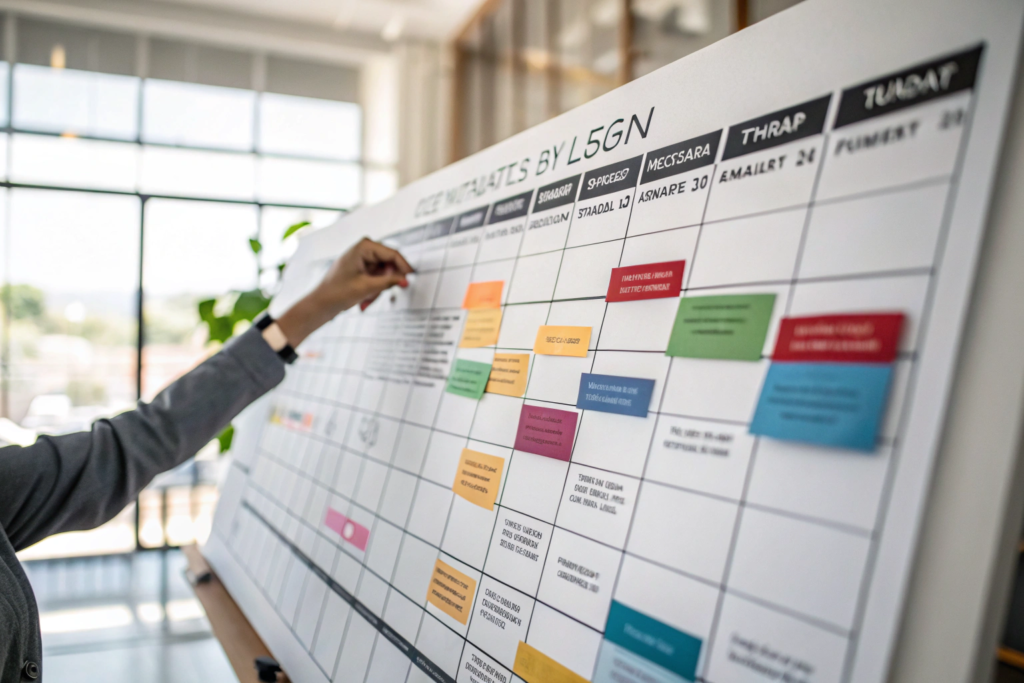
How Many Weeks Do You Actually Need from Order to Delivery?
Let me give you a realistic timeline based on real orders we’ve shipped. This is for a standard custom fabric—nothing too complex, nothing too rushed.
| Stage | Typical Duration | Cumulative Weeks |
|---|---|---|
| Design and tech pack finalization | 2 weeks | Week 2 |
| Yarn sourcing (if not in stock) | 1-2 weeks | Week 4 |
| Sample development and approval | 2 weeks | Week 6 |
| Bulk production (knitting, dyeing, finishing) | 4-5 weeks | Week 11 |
| Quality inspection and packaging | 1 week | Week 12 |
| Sea freight to US/Europe | 3-4 weeks | Week 16 |
| Customs clearance | 3-7 days | Week 17 |
| Inland transport to factory | 3-5 days | Week 18 |
That’s 18 weeks from order to delivery. That’s four and a half months. If you want fabric in your factory by March 1 for a spring collection, you need to place your order by mid-October of the previous year.
A client from New York learned this in 2023. They placed an order for a custom woven fabric in January, thinking they’d have it by March for their summer collection. We delivered in early May. Their production in Mexico didn’t finish until July. Their summer clothes hit stores in August, right when back-to-school promotions were starting. They sold some, but not at full price. Now they plan their orders 6 months ahead.
What’s the Difference Between Stock and Custom Timelines?
If you’re ordering fabric we already have in stock, the timeline is much shorter. We have over 30,000 stock designs. If we have the yardage you need, we can ship within 1-2 weeks.
Here’s a stock fabric timeline:
| Stage | Typical Duration |
|---|---|
| Order confirmation | 1 day |
| Quality verification | 2-3 days |
| Packaging | 2-3 days |
| Sea freight | 3-4 weeks |
| Customs and inland | 1 week |
| Total | 5-6 weeks |
That’s about a third of the time for custom fabric. If you’re in a rush and you can find a stock fabric that works, that’s your fastest path.
A client from London needed fabric for a last-minute collection in 2024. Their original supplier had let them down. They came to us in early March for a summer collection. We had a stock organic cotton jersey that was close to their specs. They approved a sample in 3 days. We shipped 5,000 yards by air freight. They had fabric in 2 weeks. They hit their June launch. They paid more for air freight, but they saved their season.
How Do You Backward Plan from Your Selling Season?
Backward planning is the most reliable method. Start with your launch date. Work backward through every step. Add buffer at each step.
Here’s an example for a US brand launching a Fall collection on September 1:
- September 1: Launch date
- August 1: Garments need to be finished and shipped to retailers (4 weeks for distribution)
- July 1: Production needs to be complete (4 weeks for cutting and sewing)
- June 1: Fabric needs to arrive at your factory (4 weeks for production buffer)
- May 1: Fabric needs to clear customs and arrive at port (1 week for clearance)
- April 1: Fabric needs to depart China by sea (4 weeks transit)
- March 1: Fabric production needs to be complete (4 weeks production)
- February 1: Sample approval and yarn sourcing (4 weeks pre-production)
- January 1: Order placed
That means you need to place your Fall collection fabric order in January, 8 months before your September launch. That seems early. But that’s the reality of global supply chains.
A client from Australia used this method in 2023. They wanted a Summer collection to launch in December (summer in the Southern Hemisphere). They worked backward and placed their fabric order in April. The fabric arrived in August. Their factory produced in September and October. The collection launched in December, right on time. They told me, “Backward planning felt weird at first. But now we do it for every collection. It takes the stress out.”
How Do You Align Fabric Orders with Seasonal Demand Patterns?
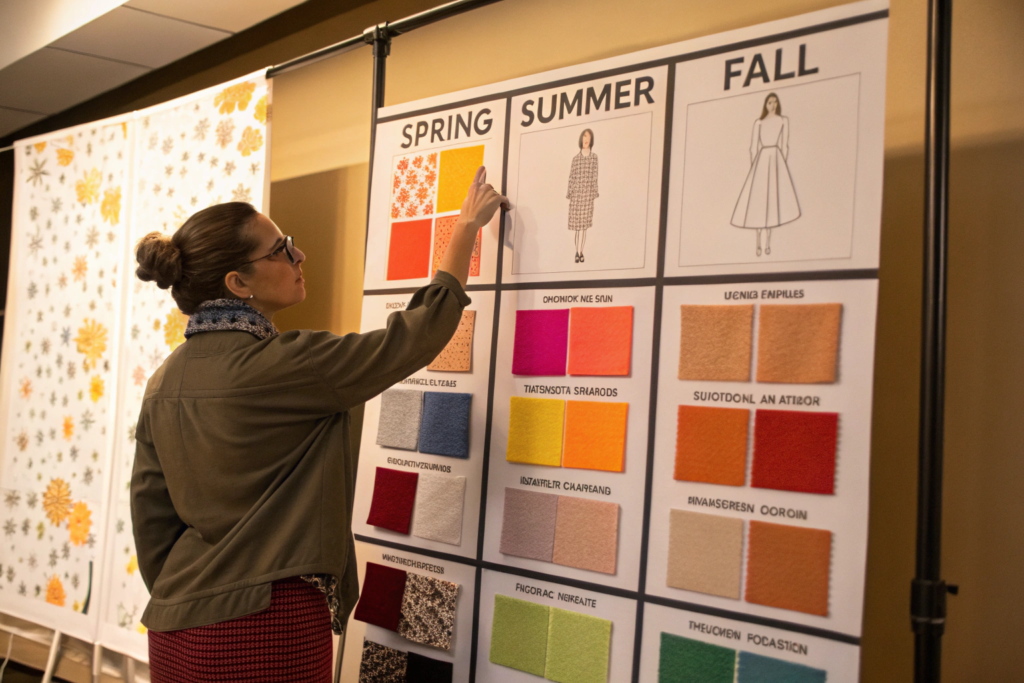
Different seasons have different fabric requirements. A summer weight linen won’t work for a winter coat. A heavy wool won’t work for a resort collection. Aligning your fabric orders with seasonal demand means understanding what fabrics work for which seasons and when to order them.
What Fabrics Work for Which Seasons?
Here’s a quick guide based on what we produce for our clients:
| Season | Typical Launch Dates (Northern Hemisphere) | Recommended Fabrics | When to Order |
|---|---|---|---|
| Spring | March – May | Lightweight cotton, linen blends, Tencel, light twills | September – October (previous year) |
| Summer | June – August | Linen, cotton voile, rayon, seersucker, lightweight jersey | November – December (previous year) |
| Fall | September – November | Mid-weight twill, denim, flannel, wool blends, fleece | January – February |
| Winter | December – February | Heavy twill, wool, quilted fabrics, thick fleece, double cloth | March – April |
These timelines assume custom production. If you’re ordering stock fabric, you can push the order date closer to the season by about 4-6 weeks.
A client from Sweden who makes outdoor wear follows this calendar strictly. They order their winter fabrics in April, before the summer peak in Chinese production. Their summer fabrics are ordered in December, before the Chinese New Year shutdown. They told me, “We never scramble. We never rush. We just follow the calendar.”
How Do You Handle Transitions Between Seasons?
The shoulder seasons—late spring and early fall—are tricky. The weather is unpredictable. One week it’s hot, the next week it’s cool. For these collections, we recommend transitional fabrics that work across temperature ranges.
Light to mid-weight wool. Cotton with a bit of structure. Linen blends with some body. These fabrics can be layered or worn alone. They give your customers flexibility.
A client from New York who makes women’s wear uses a 280gsm cotton twill for their spring-to-summer transition collection. It’s heavier than a summer fabric but lighter than a fall fabric. They order it in January, and it arrives in March, just as the weather starts to warm up.
What About the Southern Hemisphere?
If you’re in Australia, New Zealand, South Africa, or South America, your seasons are reversed. Summer is December to February. Winter is June to August.
That means your ordering calendar is shifted by six months. For an Australian brand launching a Summer collection in December, you need to place your fabric order in April or May of the same year.
A client from Sydney learned this in 2022. They followed a US ordering calendar and placed their summer fabric order in November. By the time the fabric arrived, summer was over. Now they have their own calendar. Summer fabrics ordered in May. Winter fabrics ordered in November.
How Do Chinese Production Cycles Affect Your Order Timing?
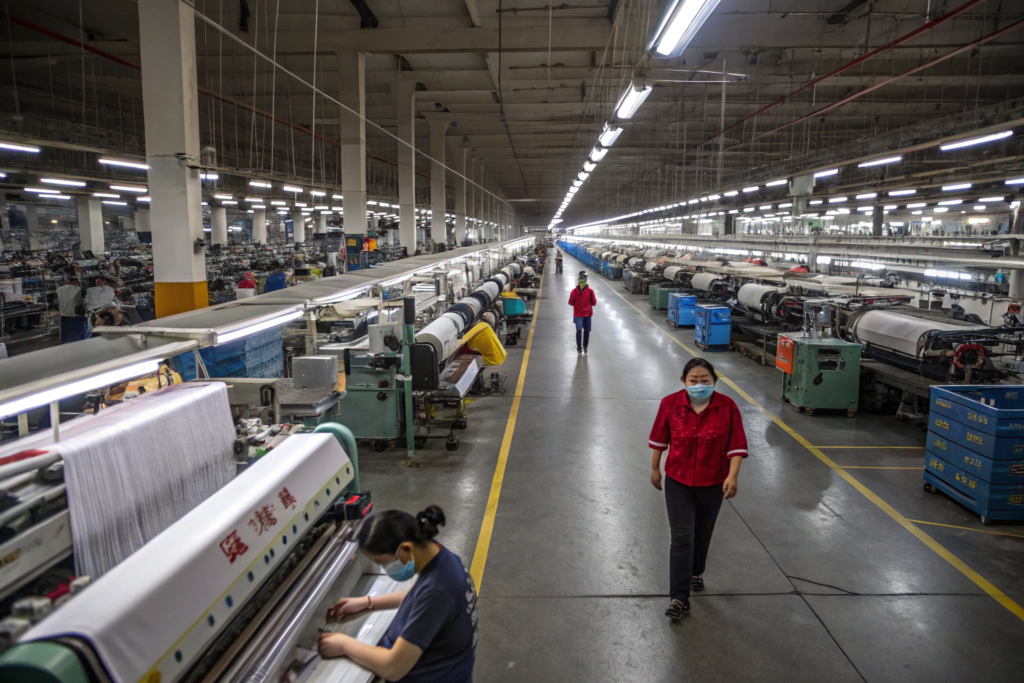
You can have the perfect internal timeline. But if you don’t account for Chinese production cycles, your fabric will be late. The factories in Keqiao have their own rhythms. You need to dance to their music.
What Are the Peak and Slow Seasons in Chinese Fabric Production?
We covered this in an earlier article, but it’s worth repeating because it’s that important.
Peak Season 1: March to May
This is for Fall/Winter fabrics. Every factory is running at capacity. Dyeing lines are booked weeks in advance. If you place an order in March, expect longer lead times.
Peak Season 2: August to October
This is for Spring/Summer fabrics. Same story. High demand, limited capacity.
Slow Season 1: June to July
This is the summer lull. Factories have capacity. This is the best time to order Fall/Winter fabrics for the following year.
Slow Season 2: November to December
This is the pre-holiday lull. Before Chinese New Year, there’s a window. This is a good time to order Spring/Summer fabrics.
If you can align your orders with the slow seasons, you’ll get faster production, more attention from the factory, and sometimes better pricing.
A client from Canada figured this out in 2023. They needed fabric for a Fall collection. Instead of ordering in August (peak season), they ordered in June (slow season). Their fabric was produced in 3 weeks instead of 6. It arrived in July. Their factory had the fabric two months before production started. No rush. No stress.
How Do You Plan Around Chinese New Year?
Chinese New Year is the biggest disruption in the global textile calendar. The entire industry shuts down for 3-4 weeks. If you don’t plan around it, you lose a month.
Here’s our advice: treat Chinese New Year as a hard deadline. If you need fabric to ship before the holiday, place your order at least 8 weeks before the holiday starts. That gives you time for production and shipping.
If you miss that deadline, accept that your fabric won’t ship until after the holiday. Don’t try to rush it. You’ll just create problems.
In 2024, Chinese New Year was in early February. A client from Germany placed an order in mid-January. They asked if we could ship before the holiday. We said no. The order shipped in early March. They accepted it. They planned their production accordingly. No drama.
What’s the Impact of Golden Week?
Golden Week is the first week of October. It’s a national holiday. Factories close for 5-7 days. It’s not as disruptive as Chinese New Year, but it creates a backlog.
If you need fabric in October, order it in August. If you order in September, your order will be caught in the Golden Week shutdown.
A client from the US learned this in 2023. They ordered fabric in late September. We told them it would ship after Golden Week. It shipped in mid-October. They received it in late November. They missed their production window. Now they order their October fabrics in August.
How Do You Build Buffer into Your Fabric Order Plan?
Even with perfect planning, things go wrong. Machines break. Dyeing batches fail. Vessels get delayed. Ports get congested. That’s why you need buffer. Buffer is not wasted time. Buffer is insurance.

How Much Buffer Should You Add?
Based on our experience with thousands of orders, here’s how much buffer we recommend at each stage:
| Stage | Typical Duration | Recommended Buffer | Total with Buffer |
|---|---|---|---|
| Yarn sourcing | 1-2 weeks | +1 week | 2-3 weeks |
| Sample development | 2 weeks | +1 week | 3 weeks |
| Bulk production | 4-5 weeks | +2 weeks | 6-7 weeks |
| Inspection and packaging | 1 week | +3 days | 10 days |
| Sea freight | 3-4 weeks | +1 week | 4-5 weeks |
| Customs clearance | 3-7 days | +3 days | 6-10 days |
Total recommended buffer: about 6 weeks on top of your base timeline. That means if your base timeline is 18 weeks, you should plan for 24 weeks.
That sounds like a lot. But here’s the thing: if you don’t need the buffer, you get your fabric early. Early is fine. You can store it. Late is a disaster.
A client from the UK used to plan with zero buffer. Every order was a nail-biter. Something always went wrong. Now they build in 6 weeks of buffer. They told me, “It feels wasteful. But we haven’t missed a launch in two years. The buffer is the reason.”
What Should You Do When a Delay Happens?
When a delay happens, you need to act fast. Don’t wait. Don’t hope it will fix itself.
First, assess the delay. Is it a few days? A week? A month?
Second, adjust your plan. If the delay is small, you might be able to make up time later. If it’s large, you need to make decisions.
Third, communicate. Tell your factory. Tell your freight forwarder. Tell your customer if necessary. Bad news doesn’t get better with age.
In 2023, we had a delay at the dyeing stage for a client in the US. A machine broke. It added 10 days. We told the client immediately. They decided to split the order. They air freighted a small portion to keep their factory running. The rest came by sea. They hit their launch date. The extra cost was worth it.
Conclusion
Missing the selling season is not inevitable. It’s the result of poor planning. And poor planning is fixable.
Start with backward planning from your launch date. Work back through every step—design, sampling, production, shipping, customs, inland transport. Add realistic timelines. Then add buffer.
Understand Chinese production cycles. Order during slow seasons when you can. Plan around Chinese New Year and Golden Week. Don’t fight the calendar. Use it.
Choose the right shipping method. Sea freight for most orders. Air freight for emergencies. Split shipments when it makes sense.
And most importantly, work with a supplier who understands all of this. A supplier who will give you realistic timelines, not optimistic ones. A supplier who will tell you when there’s a problem, not hide it. A supplier who will help you plan, not just take your order.
At Shanghai Fumao, we’ve been helping clients hit their selling seasons for over 20 years. We know the timelines. We know the cycles. We know the pitfalls. And we know how to avoid them.
We don’t just take your order and hope for the best. We sit down with you and build a plan. We show you the critical path. We identify the risks. We build in buffer. And then we execute.
If you’re tired of missing your launch dates, I want you to reach out to our Business Director, Elaine, at elaine@fumaoclothing.com. Tell her about your next collection. Tell her your target launch date. She’ll work with you to build a fabric ordering plan that gets your fabric to your factory on time, every time.
Your selling season is too important to leave to chance. Let us help you protect it.