Let me paint a picture you might recognize. You spend three weeks messaging twenty different "verified" Alibaba suppliers. You ask for 100% Tencel twill. Everyone says yes. You get fifty digital swatches that look gorgeous on a backlit screen. You pick the cheapest one with a five-star rating. The sample arrives, and it feels like sandpaper. The color is off. You go back to the chat, and suddenly the agent says, "Oh, for that quality, price is different." Or worse, they ghost you completely. Now you’ve burned a month of your development calendar and you’re no closer to cutting fabric. I’ve watched smart, ambitious brands get trapped in this pixelated purgatory. The promise of Alibaba is infinite choice. The reality is often an exhausting, high-risk lottery where the house usually wins.
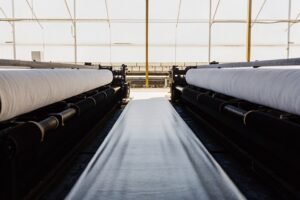
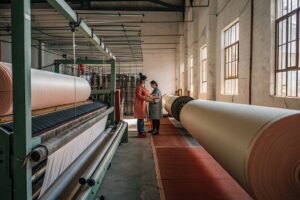
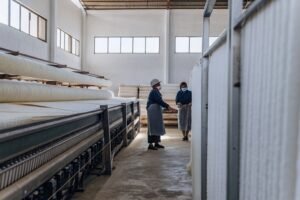
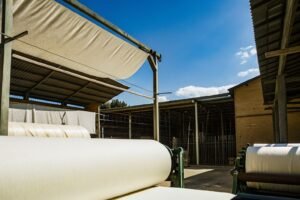
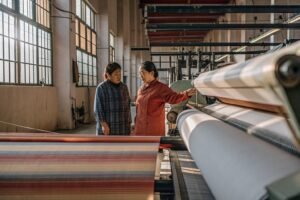
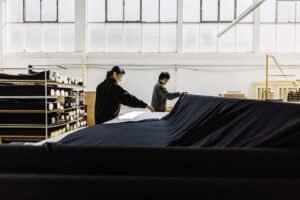
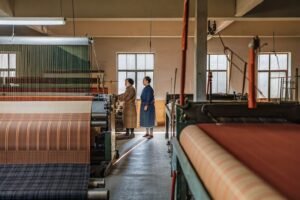
Here’s the fundamental mismatch: Alibaba’s platform optimizes for the transaction, not the relationship. A sourcing agent makes money when you click "Order." I make money when you reorder. At Shanghai Fumao, our entire business model is built on the opposite premise of a marketplace middleman. We are not a virtual catalog; we are a physical factory. We own the looms that weave the greige, we contract the dye vats that color it, and our hands pack the cartons that end up on the ship. This vertical control eliminates the information asymmetry that Alibaba agents exploit to mark up prices and cover up quality gaps. When you email our Business Director Elaine, you’re not talking to a sales rep who’s never seen a yarn cone; you’re talking to a team that can walk fifty steps to the production floor and send you a real-time video of your specific batch running on the stenter frame. Over the next few minutes, I’m going to break down exactly why a direct supplier like us beats a generic platform agent in quality, cost, transparency, and long-term innovation—and I’ll back it up with the physical realities of how fabric actually gets made in China.
This isn’t about bashing a platform. It’s about understanding where value truly lives in the textile supply chain.
How Does Factory-Direct Pricing Eliminate Hidden Sourcing Agent Markups?
When you buy through an agent on Alibaba, you aren’t just paying for the fabric. You’re paying for their office rent, their premium listing fees, their commission-to-sales staff, and often an additional "service charge" you never see. The agent’s real skill isn’t manufacturing; it’s buying low from whoever is desperate and selling high to whoever is ignorant. I’ve been inside enough Keqiao trading offices to know how this works. An agent gets your inquiry for "recycled polyester fleece," and immediately blasts it out to fifteen small mills via a WeChat group, asking for the "lowest quote.” The mill that’s running empty machines quotes $2.80/m. The agent shows you $3.80/m, pockets the dollar, and has zero control over whether the mill uses actual recycled chips or virgin polyester residue. The transaction is built on a margin of deception.

How Do I Decode a Real Factory Cost Sheet Versus an Inflated Agent Quote?
A factory like ours lives in a world of physical input costs. Cotton prices fluctuate daily on the Zhengzhou Commodity Exchange. Polyester chips follow crude oil futures. A real factory can show you a dynamic cost breakdown tied to these indices. An agent will give you a static "special price, valid for today only" to create false urgency. Ask for the "Grey Fabric Cost per Meter." This is the raw cloth before dyeing. If you are buying a 60/40 Cotton/Poly poplin, the greige cost is a known mathematical formula: (Yarn Price x Consumption Rate) + Weaving Charge. An honest mill will share this formula. An agent will refuse, because exposing the base cost would reveal their markup.
Here’s a concrete example from March 2025. A client from a US workwear brand asked us to reverse-engineer a quote from an Alibaba agent. The agent wanted $4.50/m for a basic cotton canvas. I asked our weaving manager to calculate it live. The cotton yarn cost, at current warehouse spot prices, was $1.80/m. The weaving charge on our air-jet looms was $0.60/m. The greige cost was $2.40/m. Dyeing and sanforizing added $0.80/m. Total factory cost: $3.20/m. With our fair margin, we quoted $3.70/m—a full 18% lower than the agent, for fabric coming off our own looms where we could guarantee the yarn ply and tensile strength. The agent wasn’t adding value; they were adding air.
Another way to smoke out a hidden markup is to ask for a "Raw Material Locking Receipt." When we agree on a price for a large order, we immediately buy the yarn futures and send you a copy of the commercial invoice from the spinning mill. This holds your cost stable. An Alibaba agent can’t do this because they haven’t bought anything yet. They are gambling on the greige price dropping before your delivery date. If it goes up instead, they come back with a sad story about "market fluctuations" and ask for a surcharge. This is the most common bait-and-switch in online sourcing. We price according to physics—the weight of the yarn, the energy to run the loom, the chemicals to fix the dye—not according to how much commission the salesperson wants to make on a Tuesday afternoon. If you’re serious about understanding how to verify a textile supplier’s factory-direct claims in China, demand the yarn invoice. It’s the one piece of paper that separates a manufacturer from a marketer.
Do Alibaba Fees and Commissions Inflate Per-Meter Costs Over Time?
This is the silent killer of long-term brand margins. Alibaba charges suppliers annual membership fees, keyword advertising ("P4P" clicks), and a transaction commission on Trade Assurance orders. A mid-sized agent might spend $15,000–$30,000 a year just to appear on the first page. Who pays for that? You do. Every meter of fabric you buy carries an invisible "platform tax" of anywhere from 5% to 15%, layered on top of the agent’s own profit margin.
Let’s run the numbers on a typical running fabric order of 10,000 meters of poly chiffon for a fashion brand. An agent offering this on Alibaba might price it at $1.50/m, or $15,000 total. Inside that $15,000, there’s likely $0.10/m going to platform operational overhead. That’s $1,000 just evaporated into the digital ether. And the agent’s markup might be another $0.20/m, so $2,000 for their sales commission. Compare that to working directly with Shanghai Fumao. We price the same chiffon at $1.20/m ex-works. Over one order, that’s a $3,000 difference. Over a year and six replenishment orders, that’s $18,000 of pure margin you could reinvest into better photography, a new designer, or simply lower retail prices to beat your competitors.
And it gets worse. Platform agents often push you toward standardized, low-quality "hot sale" items because they earn higher kickbacks on volume commodities. They have no incentive to optimize your fabric’s hand feel, durability, or sustainable certifications. In fact, ensuring how to get competitive wholesale pricing on custom printed fabrics in China requires a factory who can engineer the construction to reduce waste. We recently saved a US startup $0.40/m on a custom jacquard simply by adjusting the weave density to use less yarn without affecting the visual pattern. An agent would never do that analysis; they’d just take the mill’s first quote and add 30%. The per-meter cost inflation from sourcing agents isn’t a one-time sting—it’s a recurring hemorrhage that bleeds your brand dry quietly, every single season.
What Hidden Quality Risks Do Alibaba Sourcing Agents Conceal?
An Alibaba agent is structurally motivated to hide your problems. Their commission is locked the moment you confirm receipt. Your quality headache six months later? That’s your problem. They sit in a virtual office between you and a factory they barely know, playing a game of telephone with your technical specifications. I’ve seen the catastrophic results of this game when brands bring their "failed Alibaba swatches" to our lab for reverse engineering. The most dangerous quality risks are the ones you can’t see in a glossy JPEG: false fiber composition, illegal chemical residues, and construction shortcuts that cause seams to grin open on day one.

How Do "Ghost Factories" Fake Certifications for Polyester and Organic Cotton?
This is the dark art of the textile underground. A "ghost factory" is a small, unregistered workshop with five shoddy rapier looms in someone’s back alley. They can’t pass a real SGS audit because their dye water would poison the local river, and their fire safety would give an inspector a heart attack. But online, they look like a legitimate 50-employee enterprise with ISO 9001 badges and OEKO-TEX certificates. How? They steal them. They Photoshop the certificate number from a legitimate company’s listing, change the company name to theirs, and re-render the PDF. The print is pixel-perfect, but the registration number points to a hardware factory in another province.
I exposed one of these for a children’s wear brand from Australia in April 2024. The agent provided a GOTS certificate for cotton interlock that looked flawless. But I told the client to do a "Tracer Check" on the organic certification portal. The certificate number was valid, but it was issued to a completely different entity—a company in Jiangsu that sold organic soybeans. The fabric itself? When we ran a gas chromatography test on it at our CNAS lab, it lit up like a Christmas tree with restricted phthalates used in cheap plastisol printing. This fabric was destined for baby onesies. The brand owner nearly vomited. She had paid a 25% premium for the word "organic," and she got toxic waste.
You can replicate this check yourself and verify how to validate organic fabric certifications from Chinese textile suppliers. Never accept a PDF as proof. Go to the certification body’s website and use their "Label Check" or "Scope Certificate" lookup tool. Enter the certificate number. If the company name, address, and product scope on the live site don’t match the PDF perfectly, walk away instantly. Also, ask for a "Transaction Certificate." This is the document that traces a specific batch back to the organic raw material. A real organic supply chain issues a TC for each shipment. Ghost factories never have these because they never bought organic cotton in the first place. They bought cheap Indian cotton at $0.80/kg and sold it to you as organic at $2.50/kg. The gap in their knowledge is always the paper trail behind the fiber. If your agent looks confused when you say "TC," they are either complicit in the fraud or dangerously incompetent. Either way, your brand is the one that goes to jail in the court of public opinion.
Why Do Intermediary Agents Struggle with Technical Fabric Construction and Shrinkage?
An agent speaks the language of price. A factory engineer speaks the language of warp density, twist per inch, and stenter overfeed. When you buy a fabric for tailored trousers, you need 2% residual shrinkage maximum, otherwise the customer’s first dry clean turns a $200 pant into a $20 crop top. Achieving that 2% requires an intimate physical knowledge of the tension between the weft straightener and the compressive shrinkage machine. An agent has never touched a weft straightener. They don’t know if their supply factory has a functioning Monforts sanforizing line, or if they are just spraying water on the fabric and hoping it shrinks before you test it.
I consulted for a US menswear brand that had been buying cotton-stretch twill through a Guangzhou agent. Every batch had inconsistent shrinkage—sometimes 3%, sometimes 8%. The agent’s solution was always "I will tell factory improve next time." Empty words. We took the fabric into our lab and diagnosed the problem immediately: the twill line was spiraling because the weft yarn tension was uneven during weaving, a defect correctable only by adjusting the loom’s let-off motion. We re-wove the twill on our machines with a controlled 0.5% variation. Shrinkage stabilized. The agent couldn’t solve this because they don’t own the loom. They can’t walk up to the technician and adjust a pneumatic valve. They can only forward your angry email and hope the boss at the ghost factory bothers to reply.
This technical disconnect is fatal in performance fabrics. A client developing UV-protective soccer jerseys needed mesh with a specific UPF 50+ rating that survived 30 industrial washes. An Alibaba agent assured them the "UV coating" would work. The jerseys arrived, and after five washes the UPF dropped to 10. The agent had bought cheap knitted mesh and sprayed it with a low-quality UV-inhibiting solution that sat on the surface like a temporary sunscreen. At our coating factory, we dope-dye the polyester masterbatch before the yarn is even extruded. The UV protection is embedded inside the fiber molecule itself. It doesn’t wash off. It’s physics, not a topcoat. These are the kinds of invisible quality architecture that decide whether your brand earns a 5-star review or a 1-star lawsuit.
How Does Direct R&D and Customization Outpace Platform Intermediaries?
Buying fabric from an Alibaba agent is like buying food at a fast-food drive-through. You can get a predictable, pre-defined burger quickly. Try asking for a custom Wagyu beef patty with truffle aioli? The teenager at the window stares blankly at you. The agent’s menu is limited to what’s already in the digital catalog. Real clothing innovation—the kind that makes a brand iconic—requires a seat at the chef’s table. Direct manufacturer relationships unlock true R&D collaboration. At Shanghai Fumao, we don’t just "customize"; we co-invent. Our 20+ material scientists and textile engineers actually get excited when a client brings a crazy idea—a self-cleaning coating, a zero-elasticity biodegradable stretch, a jacquard pattern with 12 colors instead of 6.

Can I Iterate Lab Dips and Strike-Offs Faster Without an Online Middleman?
Speed in fabric development is not a luxury; it’s the weapon that slaughters your competition. If you are a New York brand and you see a trending color on a Milan runway, you have maybe 6-8 weeks to get that color into a garment before Zara owns it. An Alibaba agent’s process for a lab dip is slow by design. You send them a Pantone code. They forward it to a mill. The mill dips it, air-dries it, and sends it to the agent. The agent takes a photo, emails you. You say "needs more red." The agent translates this to Chinese. The mill tries again. Three rounds like this can burn four weeks, and you still haven’t seen a physical sample. The friction is insane.
Our digital-physical hybrid system collapses this timeline. You email us a color. We have two printing factories and a dye lab in-house. Within 48 hours, we’ve mixed the spectro-matched dye recipe, run a lab dip, and cut a physical swatch. But here’s the real unsung value: we ship that physical swatch to you before we even talk about price. I did this for an LA-based fashion brand in May last year. She needed a specific "ocean-blue" silk charmeuse for a celebrity red carpet event. I received her request on a Monday. By Tuesday night, my dye master had run three variations using different acid dye concentrations. By Wednesday morning, a DHL envelope with the stamped swatches was in the air. She had them in her hand by Friday. Total elapsed time: 4 days. An agent would still be asking which ocean she was referring to on their WeChat group. This speed-to-sample is why working directly with a factory looking for how to develop custom jacquard fabric samples with Asian mills beats the marketplace every time. The physical sample is the only truth that matters. Pixels lie. Dyes in a steaming dye bath don’t.
Beyond the color, there’s the strike-off for prints. We invested in a digital textile printer for rapid sampling. We can print a 2-meter strike-off of your new geometric floral design within 24 hours. This lets you drape it on a mannequin, feel the handle, and see how the pattern scales. An agent typically only offers a paper printout or a low-res simulation. That visual gap between a paper printout and a real strike-off is where bad buying decisions get made. The ink sits differently on the fiber; the hue shifts under store lighting. By cutting out the middleman, you are effectively iterating in real-time with the person who actually operates the printer nozzle.
How Do Direct Supplier Agreements Protect My Original Textile Designs?
This is a dark fear many brands don’t articulate until it’s too late. You painstakingly design a unique jacquard motif or a proprietary moisture-wicking knit structure. You send the tech pack to an Alibaba trading agent in good faith. Six months later, you see a suspiciously identical fabric in a competitor’s lower-priced line, shipped from the same region. The agent sold or leaked your design because their relationship is with the highest bidder, not exclusively with you. Intellectual property in textiles travels fastest through the gray market of brokerage.
A direct, legally binding Master Supply Agreement (MSA) with a recognized manufacturer like Shanghai Fumao protects your creative work. We formalize design exclusivity through a "Reserved Loom" protocol. For our clients, especially those developing custom lace and intricate double-face wovens, we sign a non-disclosure agreement that ties the specific design file to your unique client code in our ERP system. The digital jacquard file cannot be accessed or loaded onto a loom without a management-level password that logs every instance of access. If that file is opened, the system timestamps it and sends an automatic alert. This isn’t just a locked drawer; it’s an electronic lockdown.
Furthermore, a professional agreement specifies that all "residual production" and "B-quality" goods with your custom design must either be shipped to you or physically destroyed, with photos of the cut-up fabric provided as proof. We do this regularly for high-end lifestyle brands. The agent economy doesn’t think in these terms. To the Alibaba middleman, your over-run is free inventory to be dumped on the Vietnamese market at half price, completely undermining your global pricing strategy. Your fabric is your exclusive property, an asset you commissioned. If you’re concerned about intellectual property protection for textile surface patterns sourced abroad, a direct factory with a traceable digital vault is your only real fortress. Agents traffic in information; factories traffic in machinery. It’s much harder to steal and replicate a design when it’s locked inside a specific Dornier loom’s operating system and protected by a legally enforceable IP clause with a physical legal entity.
Conclusion
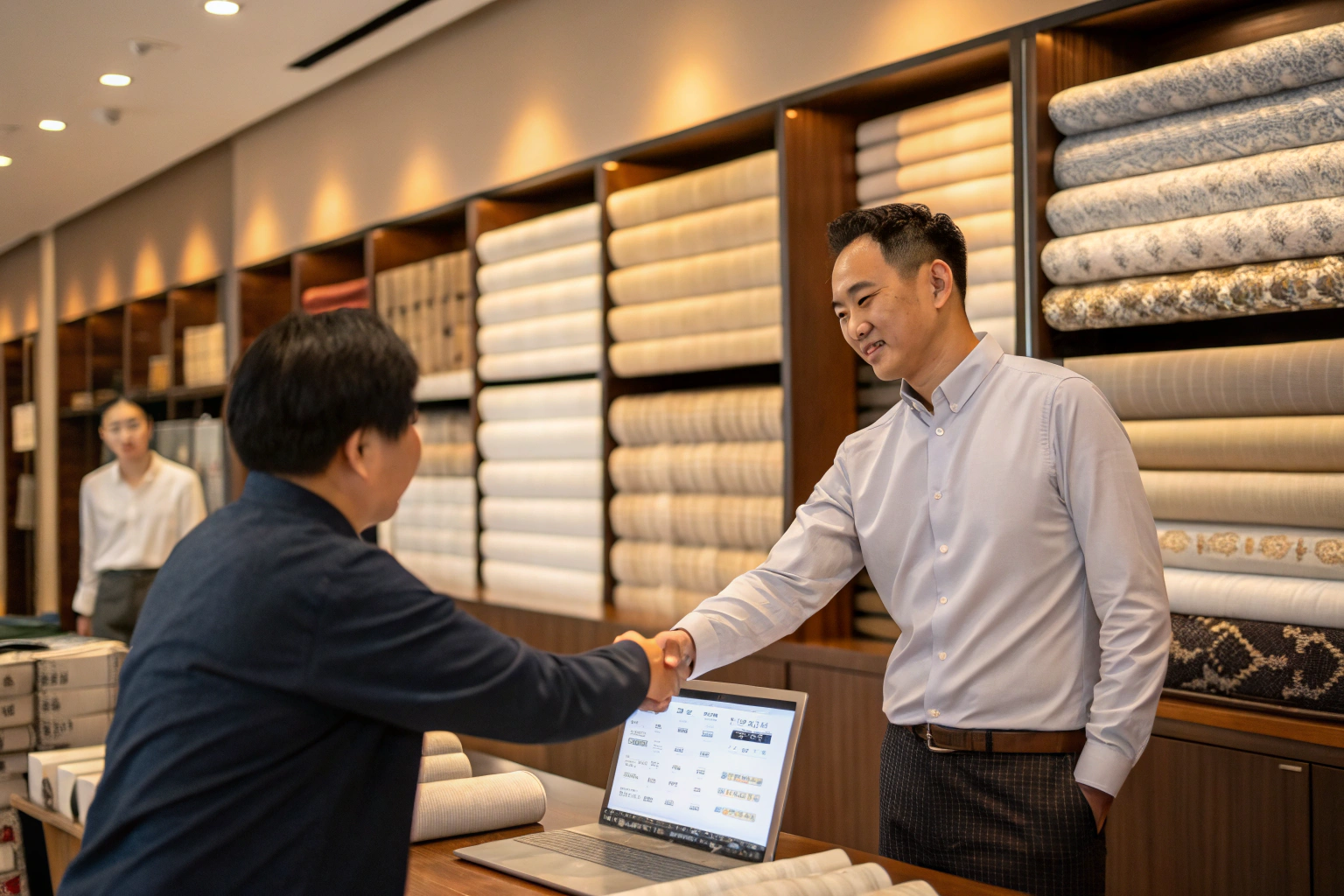
The choice between a supplier like Shanghai Fumao and an Alibaba sourcing agent ultimately comes down to a single philosophical question: do you want to buy a product from a screen, or do you want to build a competitive advantage from a partnership? The platform agent offers the illusion of convenience—a search bar, a chat window, a "Buy Now" button. But beneath that glossy interface lies a world of hidden markups, unverified certifications, ghost factories, and stolen intellectual property. The promise of infinite selection quickly collapses into an ocean of commoditized mediocrity, where the only real differentiator is a manipulated price.
A direct factory partnership stands on entirely different ground. It rests on physical reality: the roar of air-jet looms that we own, the precise acidity of a dye bath we control, the tangible yarn invoice from a spinner we’ve trusted for a decade, and the locked digital vault that guards your custom weave patterns from your competitors. This isn’t just supply; it’s co-creation. It transforms the fabric sourcing process from a transactional gamble into a strategic, sustainable pillar of your brand’s identity.
I’ve spent over two decades inhaling the steam and cotton dust of this industry, watching trading offices rise and fall like the tide. The ones that survive and deliver genuine value to international fashion brands are the ones who get their hands dirty. They’re the ones who can tell you honestly, "Yes, that construction will work," or "No, let’s adjust the twist to fix your pilling problem." They don’t just sell you what exists; they invent what’s next with you.
If you are exhausted from the pixelated lottery of online sourcing, if you’re ready to stop gambling with your brand’s reputation and start engineering your fabrics with a partner who owns the machinery and the expertise to back up every promise, then let’s open a direct conversation. You can reach our Business Director, Elaine, directly. She’s the person who translates your creative vision into a production timeline and a transparent cost sheet. Send her an email at elaine@fumaoclothing.com. Tell her what you’re building, what went wrong with your last agent, and what quality standard you actually need. Let’s move beyond the chat window and into the weave room.