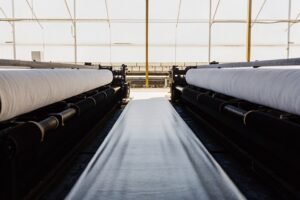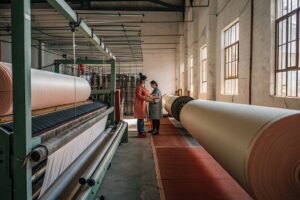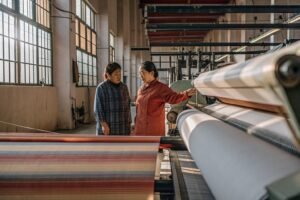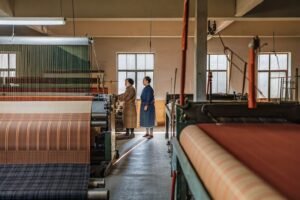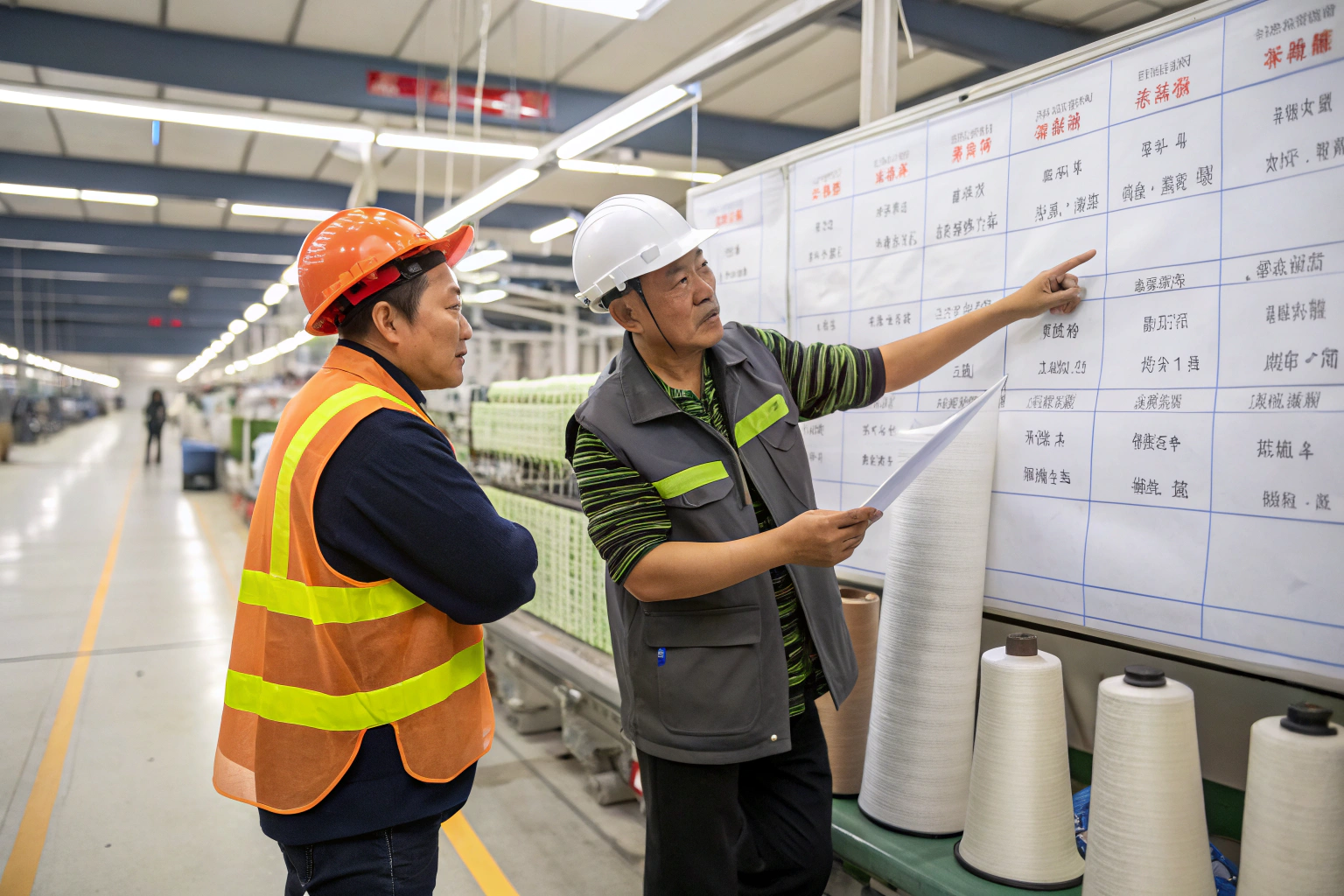
Let’s be honest about why you clicked this. You’ve been burned by the smile. You know the one—the sales rep who promises "Yes, we can do this, no problem," but then your order of 5,000 yards of brushed organic flannel gets pushed to "next week" for the sixth time. The salesperson’s job is to close the deal. Their emotional survival depends on making you feel warm and confident, even when the dye house is backed up and the greige delivery hasn’t arrived. They are professional optimism machines. The production manager, on the other hand, is a professional pessimism machine. They stare at broken rapier heads, unlevel dye lots, and a workforce that might vanish for a cousin’s wedding. If you want to know the truth about your delivery date or whether that specific yarn twist will actually hold, you need to talk to the person whose command is the factory floor, not the trade show booth.
Here’s the thing: at Shanghai Fumao, we actually want you to talk to our production team. I know that sounds counterintuitive. Most mills build walls between the customer and operations because they’re hiding chaos. We build bridges because our operations are the core of our value. When you work directly with our weaving foreman or dye master, you bypass the "game of telephone" that distorts technical specifications and inflates timelines. You get raw, physical truth delivered by the hands that will actually make your fabric. But accessing this level of a Chinese textile factory requires a specific approach, a cultural fluency, and knowing when to push and when to listen. I’ll walk you through exactly how to earn that direct line, what language to use to get past the gatekeeper, and how to verify that the person you’re talking to isn’t just a "back-office sales rep" wearing a different hat.
Why Do Textile Sales Reps Gatekeep Factory Managers from Buyers?
The separation between sales and production in a Chinese textile firm isn’t always malicious, but it’s always deliberate. To solve a bottleneck, you first need to understand the architecture of the bottleneck itself. Sales reps gatekeep factory managers for three core reasons: protecting their commission turf, preventing the client from hearing operational failures, and simply because the production manager’s English is often limited and they’d rather fix a loom than practice verb tenses. A sales rep lives in a world of quotas, CRM pipelines, and closing ratios. If you, the buyer, bypass them and build a relationship with the production chief, you might place your next order through that backchannel, and the rep loses their 2% commission. Their instinct is to insert themselves into every communication, translating and filtering information to maintain their irreplaceable status.

What Psychological Sales Tactics Block Direct Technical Conversations?
Spotting these tactics is your first defense. The most common move is the "I’ll Check with the Workshop" deflection. You ask a specific technical question: "What’s the exact reed count per inch you’ll use on my jacquard?" The rep says, "Let me check with the workshop and get back to you." Two days later, you get a one-line WhatsApp: "Factory say 120 reeds." You have no idea if that’s true or if the rep just guessed. They’ve positioned themselves as the sole conduit of knowledge. The fix? Ask a question that requires a photograph of the readout screen on the actual loom’s control panel. A sales rep can lie in text; they can’t easily fake a real-time photo of a machine interface showing the live reed count.
Another classic is the "Quality Guarantee" overpromise. You express a concern about pilling on a lambswool blend, and the rep waves it away: "Our quality is the best, don’t worry about it." That statement has zero mechanical substance. It’s emotional reassurance, not engineering data. A real production manager would respond with, "We’ll use a 28 gauge knitting machine with an anti-pilling finish applied at 2% concentration in the softener bath." One answer is a lullaby; the other is a recipe. Push for the recipe, not the lullaby. Also, watch out for the "Busy Season" shutdown. The rep says, "Production manager is too busy with urgent orders to talk." That might be true, but it also might mean your order is at the bottom of the pile, and they don’t want you to know. Ask for a 5-minute video call, not a scheduled one-hour meeting. Say, "Just walk the phone through the weaving shed, show me the machines running." If they refuse even a 5-minute live walk, they’re hiding idle machines or subcontracted work.
Can a "Business Director" Serve as Both a Seller and a Technical Liaison?
This is where a company’s structure reveals its soul. In a typical trading company, the salesperson is a 24-year-old with a British accent and a marketing degree who couldn’t identify a plain weave from a twill in a lineup. In a vertically integrated manufacturer like Shanghai Fumao, the person you talk to—like our Business Director Elaine—is a hybrid. She started her career tracking lot numbers in the finishing department. She knows that a coating of polyurethane at 15g/m² feels different than 20g/m². But she also knows how to structure a contract and manage the emotional arc of a brand launch. This hybrid role cuts through the "gatekeeper" problem because she can switch languages. With you, she speaks design briefs and delivery windows. With our dye master Mr. Wang, she speaks chemical concentrations and steamer temperature curves.
This structure works because she is incentivized on long-term partnership revenue, not a one-time commission. If a buyer asks her a deeply technical question about how to validate factory-direct sourcing claims for performance textiles, she’ll say, "Hold on, let me put you on speaker with Mr. Chen, our lab manager." She doesn’t lose anything by introducing you to the production authority; she gains your trust. Her job isn’t to guard a secret; it’s to prove that our factory floor is more competent than any sales pitch. If you’re dealing with a company where the "Business Director" refuses to ever introduce you to the person who actually mixes the dye, you are being managed, not partnered with. That director is a sales rep with a better business card.
The true test is to ask for a "Pre-Production Handover Meeting." Before we commit to cutting fabric, we offer a 20-minute call with the pattern maker and the head tailor. The sales team sets it up, shuts up for most of it, and takes notes on the technical resolutions. If a company tells you this is "not standard practice," they’ve just confirmed their production floor is a problem they don’t want you to see.
What Phrases Unlock Direct Communication with a Chinese Factory Floor?
Language is the key that turns a locked door into a handshake. You don’t need to be fluent in Mandarin, but knowing specific, factory-floor-coded authority phrases instantly shifts how you’re perceived. When a foreign buyer sends a WeChat message that reads, "Néng kàn yīxià shēngchǎn jìhuà biǎo ma?" (Can I see the production schedule?), the tone on the other end changes. You’re no longer a "laowai" (foreigner) waiting for a price; you’re a professional asking for operations data. These phrases signal that you understand manufacturing reality, and they bypass the social filter a sales rep relies on to keep you managed.

Which WeChat Messages Earn You a Video Call with the Weaving Foreman?
Forget "How’s my order?" That’s a sales question, and it will get a sales answer. Frame your request as a quality collaboration, not a status check. Send something like this: "Wǒ duì jīngxiàng mìdù yǒu yíwèn. Néng hé zhībù zhǔguǎn shìpín kàn yīxià ma?" (I have a question about warp density. Can I video call the weaving supervisor to check together?). This is magic. It shows you’re not an anxious beginner; you’re a technically curious partner who knows what warp density means. The sales rep can’t easily block this because you’ve articulated a specific technical concern that falls squarely within the production manager’s expertise.
Another high-success message is the "Live Sampling Request." While the order is running, message: "Xiànzài néng pāi 10 miǎo zhèngzài yùnxíng de zhībù jī ma?" (Can you film 10 seconds of the weaving machine running right now?). Ten seconds is nothing. It respects their time. But the video you get back is a truth serum. Does the machine look well-maintained? Are there piles of scrap fabric on the floor indicating chaos? Is the lighting good enough for precise work? I train all my long-term clients at Shanghai Fumao to use this specific request. It opens a direct window to the floor without anyone having to leave their station.
Also, use the "Worker Validation" technique. Ask to speak to the specific technician and show respect. Say, "Qǐng zhuǎngào Chén shīfu, tā shàng cì tiáozhěng de shāxiàn niǎndù hěn wánměi." (Please tell Master Chen that the yarn twist he adjusted last time was perfect). That compliment gets back to Master Chen in the weave room. He feels seen. Next time you need a fast adjustment, he’ll take your video call because you know his name and you respected his craftsmanship. This bypasses the sales rep entirely because you’ve built a direct emotional bridge to the worker. I saw this work brilliantly for a Canadian brand that was struggling with creasing on a bamboo-organic cotton jersey in February 2025. They learned the dye house supervisor’s name through me, sent a thank-you WeChat, and suddenly their technical queries were getting answered in minutes, not days. Language isn’t just about words; it’s about bypassing the formal hierarchy and touching the human pride of the maker.
How Should I Time My Requests to Match Chinese Factory Shift Patterns?
This is pure operational empathy, and it wins enormous loyalty. A factory’s daily rhythm is sacred. The production manager is not sitting at a desk checking email; they are walking the floor. The best time to request a live technical conversation is during the "Shift Handover" window: 7:30 AM to 8:30 AM China time, and 3:30 PM to 4:30 PM. Why? The night shift manager hasn’t gone home yet, the day shift manager has just arrived, and the machines are briefly paused for cleaning and calibration. For a 15-minute window, you have the entire brain trust of the factory standing around, often looking at a problem together. A video call at this moment gives you access to an unscheduled, face-to-face technical huddle that a sales rep would never arrange in a month.
Never, ever send a complex technical request at 5:00 PM Friday China time. It will sit unread on a WeChat account while the manager deals with weekend shutdown protocols, gets your fabric on a truck, and then collapses from exhaustion. By Monday morning, your message is buried under a hundred new "URGENT" messages from other buyers. Send it on a Tuesday at 8:00 AM, with the subject line: technical verification from buyer. Also, understand the seasonal psychological calendar. If you need a direct line to the finishing department during the pre-Chinese New Year peak, you must acknowledge the pressure. Start the message with: "Zhīdào nǐmen xiànzài hěn máng, zhège wèntí zhǐyào 2 fēnzhōng." (I know you’re very busy now, this question only needs 2 minutes). Respecting the temporal reality of how to manage production timelines during Chinese peak manufacturing seasons makes you a collaborator, not a demander. They’ll find those two minutes for you because you saw them as human beings on a deadline, not just fabric-dispensing robots.
How Do I Verify I’m Speaking to a Real Production Chief, Not a Sales Proxy?
Trust, but verify physically. I’ve seen the "proxy production manager" trick too many times. You think you’ve finally broken through to the factory floor, but it’s actually just the sales rep’s cousin wearing a dirty polo shirt, standing in a corner of the warehouse next to some random rolls of fabric, pretending to be the operations boss. His English is surprisingly good, but his answers about machine calibration are suspiciously vague. You need a verification protocol that ties the person on the screen to the physical machinery they claim to command. This isn’t about paranoia; it’s about ensuring that the urgent technical decision you’re about to make—changing the elastomer denier in your stretch denim—is executed by someone with the actual authority and knowledge.

What "Live Machine Challenges" Expose a Fake Production Manager?
You put them on video and give them a physical task that only a real, present manager can perform. My favorite is the "Serial Number Read-Back." Say, "Néng bǎ shèxiàngtóu duìzhǔn nà tái Méngfúcí yùsuōjī, kàn yīxià jīqì xùlièhào ma?" (Can you point the camera at that Monforts sanforizing machine and show me the serial number?). A real production chief walks twenty steps, grumbles about the dust on the plate, and points the camera at a specific metal tag. A fake one looks confused, hesitates, and makes an excuse about "not being allowed to film the machines." Every legitimate machine has a plate. If they can’t show it in real-time, they aren’t standing next to it.
Another quick check is the "Live Thermometer Test" in the dye house. If you’re developing a dark-colored fabric and worried about colorfastness, ask: "Bǎ wēndù jì fàngjìn rǎnsè gāng pángbiān de shuǐ cáo, ràng wǒ kàn yīxià shuǐwēn." (Put the thermometer in the water tank next to the dye vat, let me see the water temperature). This proves they are standing next to an active dye bath, not a cold machine in a storage area. A proxy operator won’t have immediate access to a thermometer or a hot water tank. Also, watch the body language. A real manager walks quickly, with purpose, oblivious to the camera’s gaze while navigating narrow aisles between machines. A fake one makes nervous eye contact, walks slowly, and frames the shot like a real estate agent trying to hide a crack in the wall.
The most powerful verification, however, is the "Spontaneous Greige Trace." Ask them to walk to the raw fabric storage area—right now—and show you the chalk markings on a specific roll of greige destined for your order. Greige rolls in a real factory have a "birth certificate" written in chalk by the weaving inspector: the loom number, weaver’s ID, date, and internal job ticket code. Ask the manager to read these chalk marks aloud. If they can instantly walk to your roll and point at the handwriting, they are embedded in the production flow. If they hesitate and say they’ll "send a photo later," the connection is fake. These physical rituals connect the digital verification to the tangible assets of the mill, a technique that works exceptionally well for companies seeking custom woven fabric development and sampling from Asian manufacturers who actually own their equipment rather than renting time on others’.
Does Speaking Mandarin Guarantee Access to Higher-Quality Manufacturing Insights?
Not automatically. But it’s a skeleton key. If you speak zero Mandarin, you are permanently at the mercy of the bilingual guide. However, even B1-level "textile Mandarin"—knowing fifty specific technical nouns—can fundamentally shift the information asymmetry. When you call polyester "díquèliáng" (the colloquial old-school term) or ask about "suōshuǐ lǜ" (shrinkage rate) instead of the generic English "shrinkage," the production manager’s eyes typically widen slightly. They realize they can speak to you in their native technical comfort zone. The quality of the data you receive instantly sharpens. They stop simplifying and start sharing nuance: "The shrinkage is 2.8% if we stent it hot, but we can bring it to 1.9% by slowing the line speed 15%, which costs more."
However, the higher guarantee of insight comes from pairing Mandarin requests with "operational humility." I’ve seen bilingual buyers march into a factory in Shaoxing, demand changes in flawless Mandarin, and get terrible results because they spoke like an emperor addressing peasants. The production manager gave them exactly what they asked for, watched it fail, and said nothing because the buyer’s arrogance invited no collaboration. Then I’ve seen a Swedish designer with terrible tones but a huge smile point at a weft break and mime "How to fix?" The entire workshop gathered around, eager to show off their skill. She got better technical data and a faster fix than the arrogant linguist. Access is about trust, not verbs. Show respect for the master craftsman’s tacit knowledge—the stuff not written in any manual—and suddenly, the factory floor opens its secret library to you.
What Are the Hidden Benefits of a Direct Manager Relationship at Fumao?
Earning a direct line to our production managers at Shanghai Fumao isn’t just about solving today’s problem faster. It’s a career-level advantage for your sourcing strategy. The benefits accrue quietly, but their compounding effect over years can single-handedly transform a good brand into a dominant one. When you move beyond the sales office and into the daily operational huddle, you unlock capabilities that a transactional Alibaba relationship can never offer: proactive failure alerts, capacity reservation without financial penalties, and access to material innovations that haven’t even hit the trade shows yet. You become, in effect, an insider.

How Can a Production Manager Proactively Save My Brand from Trending Mistakes?
A sales rep reacts to your complaints. A production manager who respects you anticipates your vulnerabilities. In the summer of 2024, a UK-based client of ours, who had a direct WeChat relationship with our cutting-room supervisor, got a late-night message: "The linen you ordered, the humidity is very high this week. We are seeing 4% growth in width after relaxing. We can pre-shrink it again, but it will add 48 hours. Do you want us to proceed?" The sales department wouldn’t have even known about the width variation until the rolls were packed and the QC report was generated three days later. The manager’s alert allowed the brand to adjust their cut-and-sew markers before the fabric landed, avoiding potentially $18,000 in wasted cutting and unsewable panels.
This proactive protection extends to chemical regulatory shifts. A dye master on our floor knows immediately when a specific dyestuff formulation is flagged by the EU’s REACH regulation or the ZDHC’s Manufacturing Restricted Substances List. Recently, a direct relationship with our lab manager allowed a children’s wear client to reformulate their ochre yellow pigment before the updated standard legally prevented its use, avoiding a recall. An agent selling "safe fabric" wouldn’t have that real-time chemical horizon scan; they’d just sell the old stock until it was illegal.
The most valuable alert is the "Mechanical Intuition" call. A seasoned weaving foreman can hear when a loom’s bearing is starting to degrade, creating a barely perceptible vibration that will, in three days, begin causing subtle warp streaks in your delicate silk-cotton blend. A sales rep hears nothing. A connected foreman sends you a voice note: "Listen," holding the phone to the machine. It sounds like a faint grinding. He says, "I’ve stopped your batch and shifted to the backup loom. You won’t lose three days; you lose zero." That’s not customer service; that’s guardianship.
Can a Direct Factory Floor Relationship Influence My Payment and Priority Status?
Yes. And let me be blunt: in the textile world during peak season, human relationships directly override formal contracts in the daily battle for machine time. If you are a "nice buyer" who treats the cutting master with respect, sends small red packets during Chinese New Year to the QC team, and doesn’t scream about minor delays, your order physically moves to the front of the queue when capacity tightens. I’ve seen it happen on our own floor. In the chaotic pre-Christmas rush, when three clients all have orders scheduled on the same printing machine, the production scheduler—a real person, not an algorithm—makes a judgment call. The client who helped the technician troubleshoot a mesh alignment issue last spring gets the 2:00 PM slot; the anonymous Alibaba order gets pushed to midnight.
This relational priority extends to payment flexibility. A standard contract might say "70% balance before shipment." But if you’ve built a genuine human relationship with our operations director, and you have a temporary cash flow crunch, a quick WeChat voice call from you—not your lawyer—can result in "Okay, pay 50% now, and the remaining 20% in 30 days." No agent can offer this because agents have no capital reserves to float; they are pass-throughs. The production director can make this call because they trust that you’re not just a company; you’re someone who bought their team dinner last time you visited Keqiao.
Furthermore, your status shifts from "client" to "collaborator" during the development of innovative, sustainable textile manufacturing for high-end streetwear labels. You learn about a new GRS-certified recycled nylon with a soft, cotton-like hand feel before it goes into general sampling. Your direct line to the weaving manager means you get the first 50 meters off the experimental batch for your next capsule collection. You launch a unique fabric to the market while competitors are still scrolling through an agent’s catalog of last season’s generic twill. This information asymmetry—knowing what’s chemically possible and getting it first—is the ultimate competitive edge. It’s hidden from anyone whose sole connection to the factory is a long email chain and a sales rep’s curated smile.
Conclusion
Bypassing the sales rep and connecting directly with production management isn’t an act of aggression—it’s an act of professional maturity. It’s the difference between reading a menu and walking into the kitchen. The path requires you to be technically literate enough to ask meaningful questions, culturally aware enough to time your requests within the factory’s human rhythm, and operationally savvy enough to verify that the person holding the phone is actually standing next to a hot dye bath, not a storage closet. But once that line of trust is established, the walls dissolve. You stop being "the customer" and start becoming "the partner," and the quality of information that flows to you transforms fundamentally.
At Shanghai Fumao, this open architecture is not a bug in our sales process; it’s the very feature that distinguishes us from the faceless trading companies that litter Alibaba. We built our business on the philosophy that a well-informed buyer, in direct contact with the hands that weave and dye their fabric, is a loyal buyer who will come back season after season. I’ve personally witnessed the relief on a designer’s face when they realize they can message our dye master directly and get an answer about pigment concentration that no salesperson could ever fake.
This is the level of partnership we invite you to claim. If you’re tired of curated vagueness and optimistic lies, if you want to speak directly to the people who will physically transform your tech pack into a bolt of fabric, then reach out to our Business Director, Elaine. She is the gateway, not the gatekeeper. She will onboard you into our collaborative ecosystem, connect your specific technical challenges to the right specialist on the mill floor, and ensure your voice is heard in the production planning meeting every Monday morning. Send her an email at elaine@fumaoclothing.com. Tell her you want the "production floor direct access" protocol, and let’s start building something honest together.。