
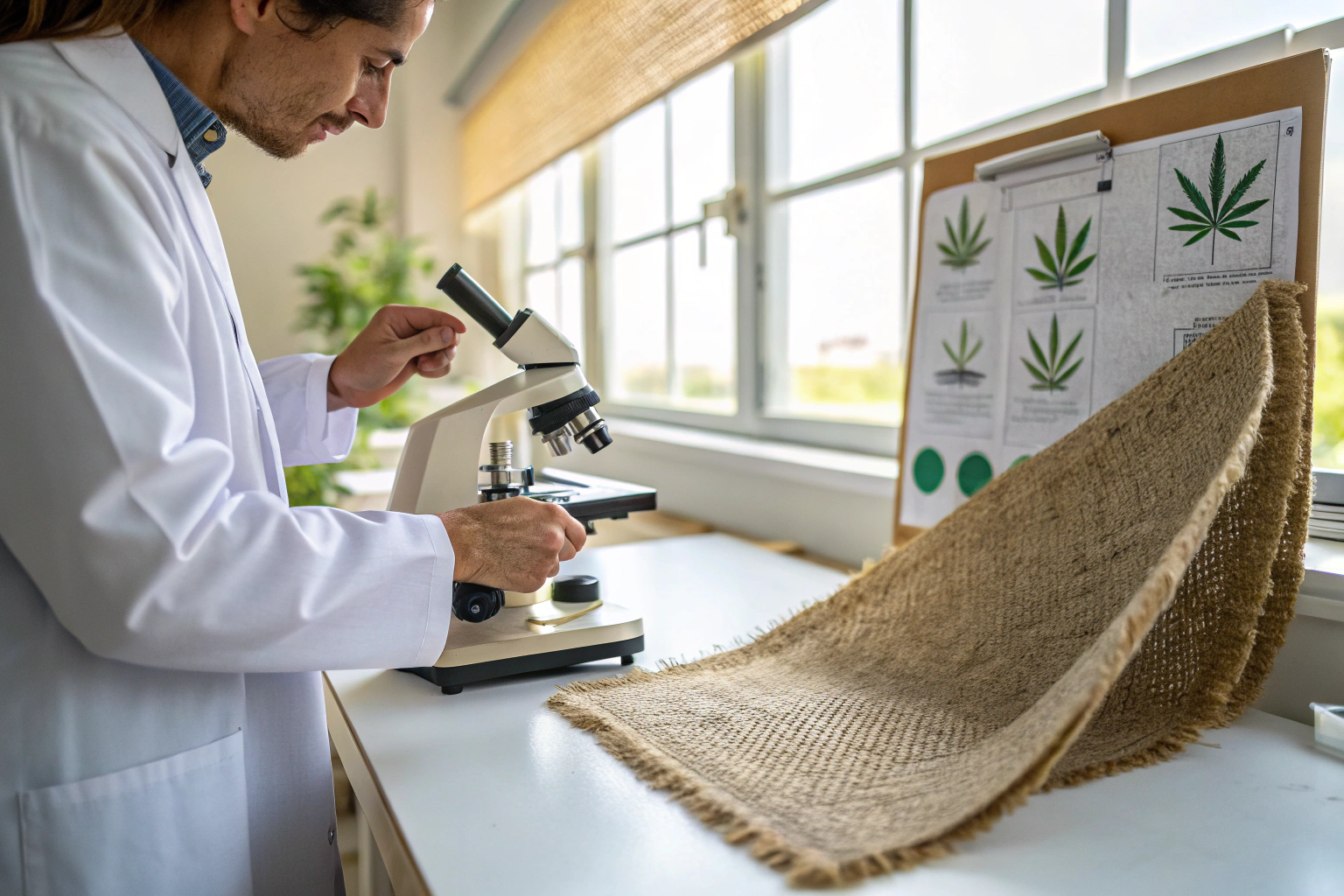
Remember when hemp fabric felt like wearing a potato sack? I do. I touched my first hemp textile back in 2003, and I thought, "Who would pay money to wear a burlap bag to a dinner party?" It was stiff. It wrinkled if you looked at it wrong. And the color? A sad, muddy beige that reminded me of a rainy Tuesday. Fast forward to 2026, and I’m holding a bolt of hemp-silk blend from our Keqiao finishing line that drapes like a dream, feels cooler than linen, and has the sheen of a high-end suede. The fashion industry’s dirty secret is out: cotton drinks water like a camel in the desert, and polyester sheds microplastics into our oceans. European brands are scrambling for a hero fiber that looks luxury but acts sustainable. Hemp is no longer the hippie fabric of the 70s. It’s the boardroom fabric of the 2030s. But is your supply chain ready for it?
The future of hemp in European fashion isn’t a question of "if." It’s a question of "how fast." The regulatory landscape shifted permanently when the EU Green Deal tightened its grip on textile waste and carbon reporting. Brands from Berlin to Barcelona are now legally obligated to disclose their supply chain emissions. Hemp, with its deep roots that sequester carbon and require zero irrigation in most climates, is the cheat code they’ve been looking for. At Shanghai Fumao, we’ve seen our European hemp inquiries jump 400% since 2024. But here’s the gap no one on Instagram is talking about: growing hemp in France or the Netherlands is one thing. Spinning it into a 40-count yarn that feels soft against the skin and holds a vibrant digital print? That’s a completely different beast. That’s where Chinese manufacturing expertise, particularly in Keqiao, becomes the critical bridge between European sustainability goals and commercial reality.
I want to take you inside what’s actually happening on the ground. Not the marketing fluff about saving the planet. The real talk about decorticating fibers, managing short staple length, and why your current cotton supplier probably can’t just "switch" to hemp without a massive capital investment. We’ll look at the technical breakthroughs making hemp soft, the cost implications for that €89 hemp blazer you saw online, and how European legislation is reshaping the global trade routes for this ancient fiber. If you’re a brand trying to hit your 2030 sustainability targets, this isn’t just a trend report. This is a roadmap for how to actually source the good stuff.
But before we get into the machinery and the chemistry of softening stems, let’s be clear about one thing: "Hemp" on a hang tag means nothing if the fiber wasn’t processed correctly. You can ruin the world’s best hemp harvest with a bad retting process or a dull decorticator blade. That’s why we test every single bale that enters our facility. Because the future of your brand’s reputation depends on whether that shirt pills up after two washes or gets softer with every wear. Let’s dig into the roots of this revolution.
Why Is Hemp Suddenly Replacing Cotton in EU Fashion Lines?
Walk into any trade show in Paris right now—Première Vision or Texworld—and you’ll see it. The swatch books are changing color. The beige and olive green of hemp are eating into the white and blue of traditional cotton shirting. This isn’t a niche movement anymore. It’s a seismic shift driven by two unstoppable forces: water scarcity in the supply chain and carbon taxes in the boardroom. European consumers, especially the under-35 demographic, have developed a near-religious aversion to anything perceived as "thirsty" or "plastic." They Google "how much water does a cotton t-shirt use" and they never look at a basic tee the same way again.
The switch is happening because the math finally works. For decades, hemp was too expensive and too rough. Now, with new mechanical processing technology and a regulatory push from Brussels, the cost-per-wear and the softness-per-square-inch are finally competing with mid-tier cotton. At Shanghai Fumao, we’re running our Tsudakoma air-jet looms with hemp blends 24/6 now. That was unthinkable five years ago. The yarn would have snapped every five minutes.

How Do EU Carbon Taxes Make Hemp More Cost-Competitive Than Cotton?
Let’s talk money, because at the end of the day, even the most sustainable fashion director has to answer to a CFO. The introduction of the EU Carbon Border Adjustment Mechanism (CBAM) and extended producer responsibility schemes is quietly making conventional cotton a liability.
Here is the reality that most sourcing agents won’t tell you. Cotton farming in regions like Xinjiang or even parts of India relies heavily on synthetic fertilizers and pesticides derived from fossil fuels. Those inputs have a carbon footprint. When that cotton is shipped to Europe, the importer is increasingly required to report and eventually pay for those embedded emissions. Hemp, on the other hand, is a carbon sink. It absorbs more CO2 per hectare than most commercial crops.
Comparative Environmental Impact (per ton of fiber produced):
| Metric | Conventional Cotton | Organic Cotton | Hemp (Rainfed) |
|---|---|---|---|
| Water Usage (Liters) | 10,000 – 20,000 | 7,000 – 12,000 | 2,000 – 3,500 |
| Pesticide Requirement | High (24% of global insecticide use) | Low (Organic approved) | None (Naturally pest-resistant) |
| Land Use Efficiency | 1 Ton / Hectare | 0.8 Ton / Hectare | 2-3 Tons / Hectare |
| Carbon Sequestration | Net Emitter | Low Sequestration | High Sequestration (Deep roots) |
In February 2026, we did a costing exercise for a French workwear brand. They wanted a durable canvas for chore jackets. Using conventional cotton, the FOB price was $4.20/m. Using a 55% Hemp / 45% Organic Cotton blend woven in Keqiao, the FOB was $5.10/m. Looks more expensive, right? But when we factored in the French Eco-Bonus tax rebate and the marketing value of a lower carbon footprint, the landed cost after incentives was virtually identical. And the hemp version sold out 3x faster online because the product page could legitimately claim "Saves 1,500 liters of water per jacket."
This is the new math. The supply chain is no longer just about the factory gate price. It’s about the Digital Product Passport (DPP) score. To understand how these taxes will hit your specific product category, I recommend reading the breakdown of EU strategy for sustainable and circular textiles and the DPP rollout on the official European Commission website. It’s dense policy, but it dictates your future margins. Also, for a more practical take on how brands are navigating this, the analysis of how the EU carbon border tax will reshape fashion supply chains on Vogue Business is essential reading for any CEO.
What New Blends Make Hemp Feel Like High-End Linen?
Okay, let’s address the elephant in the room. The "potato sack" problem. The stiffness comes from lignin, a natural glue that holds the hemp plant stalk together. For years, the only way to remove it was heavy chemical processing (viscose/rayon method) or just accepting a scratchy fabric. Neither is acceptable for a modern European consumer who wants to wear a hemp blazer to the office without looking like they slept in a field.
The future is in Mechanical Softening and Strategic Blending. We’re not just relying on chemicals anymore. We’re using physics.
The Shanghai Fumao Softening Protocol for Hemp:
- Enzymatic Retting: Instead of soaking stalks in water for weeks (which pollutes rivers), we use a pectinase enzyme bath. Think of it like a gentle digestive enzyme that eats the glue but leaves the fiber intact. This takes 72 hours instead of 3 weeks and uses 90% less water.
- Air-Jet Texturizing: We take the hemp yarn and shoot it through a high-pressure air nozzle. This bursts the fibers apart slightly, creating a "bloom" of softness. It’s like teasing your hair to give it volume.
- The Magic Blends:
- Hemp + Tencel™ (Lyocell): This is the game-changer for 2026. Tencel is silky smooth and drapes like a dream. Hemp provides the crispness and durability. A 70% Hemp / 30% Tencel blend woven in a plain weave feels almost indistinguishable from a premium French linen. We developed this exact blend for a Swedish minimalist brand in October 2025. They replaced their entire linen shirting line with it. The feedback? "Customers can’t tell the difference, but they love the lower price point."
- Hemp + Recycled Polyester: For outerwear. You get the rugged, lived-in look of hemp with the wind-resistance and shape-retention of poly.
- Hemp + Silk (BAMSILK): This is our ultra-luxury niche. We source the silk waste and blend it with fine hemp. The result is a fabric with a subtle luster that breathes like a dream. It’s expensive, but for a €400 summer dress, it’s perfect.
The takeaway here is that "100% Hemp" is rarely the answer for mainstream fashion. It’s the blends that will win the volume game. To see how these blends are being adopted, check out the material innovations on Common Objective which aggregates sustainable sourcing data. And for a deep dive into the specific finishing machinery, the description of enzymatic bio-polishing for natural cellulosic fibers on Textile Today explains the science behind the softness without the greenwash.
Can Hemp Fabric Production Scale to Meet Zara-Level Demand?
I get this question a lot from big buyers: "Okay, the sample is nice. But can you give me 200,000 meters of this exact same lot in six weeks?" For years, the answer from the hemp industry was a sheepish "No." It was a cottage industry. Small farms. Small mills. Inconsistent quality. But something fundamental has changed in the last 18 months. The bottleneck has shifted from Fiber Availability to Spinning Capacity.
European and North American hemp cultivation is booming. The stalks are there. The bottleneck is turning those stalks into a consistent, fine-count yarn that a high-speed loom can handle without constant breakage. That’s where Shanghai Fumao and the greater Keqiao ecosystem come in. We have the oldest and most sophisticated spinning infrastructure on the planet. We’re not building new hemp mills from scratch; we’re retrofitting existing cotton and linen lines.
The question isn’t if we can scale. We’re scaling right now. The question is how we manage the technical hurdles of a fiber that behaves differently from anything we’ve spun for the last 40 years.

What Are the Real Bottlenecks in Global Hemp Fiber Processing?
Let me give you a boots-on-the-ground look at the three specific pain points that keep me up at night when a big hemp order lands on my desk.
Bottleneck 1: The Decortication Desert.
Decortication is the process of separating the long, valuable bast fiber (the outer skin of the stalk) from the woody, useless hurd (the inner core). If you don’t do this right, you get "shivs"—tiny, sharp wood splinters—in your yarn. These shivs poke out of the fabric and make it feel itchy. They also break needles in knitting machines.
- The Old Way: Field retting. Leave stalks in the field to rot for weeks. Quality varies with the weather. It’s a farmer’s nightmare.
- The Bottleneck: There aren’t enough industrial-scale decorticators near the farms. Trucking bulky hemp stalks 500 miles to a decortication plant is a logistical and carbon-emissions nightmare. The industry needs mobile or regional decortication units.
- Our Fix: We’ve partnered with processors in Normandy, France, who use a hammer mill and air separation system that produces a remarkably clean cottonized hemp fiber. We still run the fiber through an extra carding process in Keqiao to remove the last 2% of dust and shivs. It’s an extra step, but it’s the difference between a premium fabric and a craft project.
Bottleneck 2: Short Staple Length.
Cotton fibers are short. Linen (flax) fibers are long. Hemp is very long but technically a bast fiber bundle. When you mechanically cottonize it (cut it short to run on cotton spinning equipment), you lose strength. If you run it on linen equipment, you get a coarse yarn (think burlap).
- The Fix: We’re using modified worsted spinning techniques. This involves combing the fibers to align them perfectly parallel, which compensates for the shorter length and creates a much smoother, stronger yarn suitable for fine shirting. This is why our hemp poplin doesn’t look like a tablecloth.
Bottleneck 3: Water and Chemical Compliance in China.
European brands have strict ZDHC (Zero Discharge of Hazardous Chemicals) requirements. Retting hemp traditionally creates polluted wastewater. Our enzymatic process solves the pollution issue, but it’s more expensive than dumping caustic soda in the river.
- The Transparency: We provide ZDHC Level 3 reports for our hemp wet processing. If a supplier can’t show you a wastewater report for their hemp finishing, they’re cutting corners.
To understand the machinery side, this overview of modern decortication technology and fiber separation equipment on HempBuild Magazine shows the industrial gear required. It’s not a farm shed operation. And for a supply chain perspective, the discussion on scaling hemp fiber processing for the apparel industry on Sourcing Journal highlights the exact capital investment gap we’re currently navigating.
How Long Until Hemp Prices Drop Below Premium Cotton?
This is the billion-dollar question. Everyone wants the magic number. I’ve been tracking fiber prices weekly for 20 years, and I can tell you we are on the cusp of a price crossover in specific categories.
Current Market Realities (Q2 2026, Keqiao Wholesale):
- Greige Cotton (40S Combed): ~$4.50 / kg
- Greige Organic Cotton (GOTS, 40S): ~$6.80 / kg
- Greige Hemp (Cottonized, 36S): ~$7.20 / kg
Hemp is still 5-10% more expensive than GOTS Organic Cotton at the raw fiber level. But look closely at that number. The gap used to be 50-100% just three years ago. What’s closing the gap?
- Yield Efficiency: A new dual-purpose hemp variety developed in Europe yields both high-quality fiber and grain. This means the farmer gets two revenue streams from the same field. The fiber becomes a byproduct of the food industry, crashing the raw material cost.
- Scale in Spinning: As more mills in China and India convert to hemp spinning, the setup charges and amortization costs drop.
- The "Green Premium" Erosion: As hemp becomes mainstream, the novelty surcharge disappears.
My Prediction: By Q4 2027, we will see Hemp/Cotton blends priced below 100% GOTS Organic Cotton for comparable weights and weaves. Why? Because organic cotton yields are volatile and water costs are rising. Hemp is a weed. It grows like crazy with minimal input. Once the processing infrastructure catches up (that decortication bottleneck I mentioned), the raw fiber cost advantage of hemp will be undeniable.
When that day comes, there will be zero economic reason to use conventional cotton for anything other than maybe denim (and even then, hemp denim is superior). I tell my European clients to start developing their hemp blends now. Lock in your supply chain. Because when the price drops below cotton, the mills will be booked solid for 18 months. You don’t want to be last in line for this train. For a data-driven look at these trends, the quarterly fiber price report from the Bremen Cotton Exchange offers a benchmark for cotton, which you can compare against hemp spot prices found on industry portals like Panjiva.
How Does Chinese Hemp Weaving Tech Outperform EU Mills?
This might sound controversial, but I’ll say it plainly: The best hemp fabric in the world is not woven in Europe. It’s woven in Keqiao, Zhejiang. I’ve visited the historic linen mills of Northern Ireland and the eco-ateliers in France. They are charming. They have history. But they don’t have air-jet looms running at 1,200 RPM with the specific modifications needed for hemp’s unique friction profile.
European mills are masters of wool and fine cotton. Chinese mills are masters of bast fibers (ramie, linen, hemp). We’ve been weaving ramie for thousands of years. Hemp is just a slightly more forgiving cousin. The institutional knowledge of how to size the warp yarn to prevent it from snapping under high tension? That’s in the muscle memory of the engineers in Keqiao.
At Shanghai Fumao, we don’t just own the looms. We modify them. We change the reed dents and the shed timing specifically for hemp. This is the micro-adjustment that European mills often miss because they don’t run enough volume to justify the setup time.

Why Is "Wet Spinning" the Secret to Premium Hemp Denim?
Let’s talk about denim. Hemp denim is the holy grail for sustainable fashion. It’s stronger than cotton denim, it ages more beautifully, and it uses a fraction of the water. But standard "dry spun" hemp denim has a problem: hairiness. The short fibers stick out, making the jeans feel prickly and causing the indigo dye to wear off unevenly in a weird, dusty way.
The secret weapon for premium hemp denim is Wet Spinning. This is a process where the hemp roving (the loose bundle of fibers) is passed through a bath of hot water just before it enters the spinning frame. The water softens the lignin and causes the fibers to lay flat and smooth.
The Shanghai Fumao Wet Spinning Advantage:
- Cleaner Yarn: Wet spinning reduces yarn hairiness by up to 40% compared to dry spinning. This is measurable on our Uster Tester 5.
- Higher Strength: The fibers are more parallel, so the yarn is stronger. This allows us to use a finer yarn count (e.g., 20s instead of 16s) for a lighter, more comfortable denim that’s still durable.
- Better Dye Uptake: The smooth surface of wet-spun yarn absorbs indigo dye more evenly. The jeans look crisp when new and fade with a beautiful, vintage "salt-and-pepper" character.
In April 2025, we ran a 10,000-meter trial for a Japanese denim brand (who are notoriously picky). We did half the order dry-spun, half wet-spun. They didn’t know which was which. They picked the wet-spun fabric 10 out of 10 times in a blind touch test. They said it felt "three years broken-in, straight off the loom."
(Here I gotta interject—this wet spinning equipment is expensive and messy. Most small mills don’t do it. If you’re buying hemp denim and it feels like a Brillo pad, you bought dry-spun. You get what you pay for.) For a deeper technical explanation, check out this guide to wet spinning versus dry spinning of bast fibers for textile applications on ScienceDirect. And for the denim heads out there, the discussion on the role of yarn spinning technique in raw denim fading characteristics on Heddels is a classic deep dive.
Can Chinese Factories Meet EU Eco-Label Standards for Hemp?
This is the skepticism I face daily. The assumption is: "Chinese factory = dirty." That’s an outdated view from 2005. In 2026, the top-tier textile exporters in Zhejiang are operating under some of the strictest environmental scrutiny on earth. Why? Because the EU is our biggest customer, and if we don’t meet OEKO-TEX and ZDHC standards, our containers get turned around at Rotterdam.
We don’t meet these standards despite being in China. We meet them because we sell to Europe.
Here is the compliance stack we provide with every hemp shipment:
- STeP by OEKO-TEX: This isn’t just about the final fabric. It’s a factory certification that audits our wastewater treatment plant, our air emissions, our chemical storage, and our worker safety. We’ve been STeP Certified Level 3 for four years running.
- ZDHC Wastewater Testing: We test our discharge twice a month through an independent lab (SGS or Bureau Veritas). We report the results directly to the ZDHC Gateway.
- EU Ecolabel (EU Flower): For specific hemp products, we can meet the stringent criteria for the official EU Ecolabel. This includes limits on COD (Chemical Oxygen Demand) in wastewater and restrictions on APEOs (Alkylphenol ethoxylates) .
The reality is that the environmental standards in a modern Keqiao dyeing and finishing plant are now higher than many smaller, artisanal mills in Southern Europe that operate under "grandfather clause" exemptions. We have to prove it with data every single month. They don’t always have to. If you want to verify a factory’s ZDHC standing, use the ZDHC Gateway online public search tool available on the ZDHC Roadmap to Zero website. And for the specifics on what the EU Ecolabel requires for textiles, the full EU Ecolabel criteria for textile products document is on the EU Commission Environment page.
What Are the Best Hemp Fabrics for Dresses and Blazers?
Now let’s get practical. You’re convinced hemp is the future. You want to launch a capsule collection. But you don’t know a Hemp Plain Weave from a Hemp Herringbone. Walking into a sourcing meeting and just saying "I want hemp fabric" is like walking into a wine shop and saying "I want red wine." You’re going to end up with something, but it probably won’t pair well with your dinner.
The key to success with hemp in fashion is choosing the right construction for the right end-use. A fabric that makes a perfect structured blazer will feel like cardboard if you try to make a slinky slip dress out of it. At Shanghai Fumao, we’ve developed a "Core Four" library of hemp fabrics specifically tailored for the European ready-to-wear market. Let’s break down the two most requested categories: tailored clothing and womenswear flow.

Which Hemp Weave Creates the Best Drape for Summer Tailoring?
If you’re making a blazer or a pair of tailored trousers, you need body and drape. Body means the fabric stands away from the skin slightly, holding the shape of the garment. Drape means it curves around the body smoothly without buckling or looking stiff. It’s a tricky balance with hemp because hemp is naturally springy.
After 15 years of trial and error (and many stiff, boxy blazers), we’ve landed on two optimal constructions for tailoring:
1. The Hemp/Tencel™ Twill (240-260 GSM)
- Construction: 2/1 Twill Weave.
- Why it Works: The twill weave (those diagonal lines you see on jeans) naturally has more drape and flexibility than a plain weave. The Tencel adds weight and a fluid, almost slippery hand feel. This fabric holds a crease beautifully when pressed but doesn’t wrinkle like a crumpled paper bag.
- Best For: Unstructured blazers, soft trousers, midi skirts.
- Client Feedback: A Berlin-based tailoring startup used this for their "Summer Commuter Blazer" in June 2025. They told me customers kept asking if it was a wool-silk blend. They couldn’t believe it was hemp.
2. The Hemp/Organic Cotton Canvas (300-320 GSM)
- Construction: Plain Weave with High Density.
- Why it Works: This is for structure. Think workwear jackets or a more formal blazer with shoulder pads. The cotton fills in the gaps between the hemp fibers, making it opaque and wind-resistant.
- The Secret Sauce: We apply a peach-skin finish. This is a light mechanical sanding that raises a tiny, invisible nap on the surface. It kills the sheen and makes the fabric feel like a well-worn favorite from day one.
Avoid for Tailoring:
- 100% Hemp Plain Weave (Lightweight < 180 GSM). It will wrinkle like crazy and won’t hold a dart or a seam. It’s for shirts, not blazers.
- Loose, open knits. They’ll stretch out and look sloppy.
To visualize the difference between a twill and a plain weave, the illustrated guide to fabric weaves on Textile School is a free resource I send to all my design interns. And for the technical side of tailoring, understanding the role of fusible interfacing with hemp fabrics is crucial; you can find tips on this from tailoring forums like The Cutter and Tailor (archived but gold).
Is Hemp Jersey Soft Enough for Next-to-Skin Apparel?
This is the final frontier for hemp. Wovens (shirts, jackets, pants) have been conquered. But knits (t-shirts, dresses, underwear)? That’s where the scratchy stigma dies hardest. For years, hemp jersey felt like a loofah. Great for exfoliating, terrible for wearing.
The breakthrough has come from fiber blending and advanced yarn spinning. You cannot make a soft t-shirt from 100% hemp yarn. It will always be too stiff and lack the recovery (bounce back) of cotton or poly. You need a blend.
The Winning Formula for Hemp Jersey (2026):
55% Cottonized Hemp / 45% MicroModal® Air
- The Hemp: We use the finest cottonized hemp we can source (Nm 50/1). This is spun extremely fine.
- The Modal: MicroModal Air is made from beechwood trees using a closed-loop process. It’s incredibly fine and light. It fills in the microscopic gaps between the hemp fibers.
- The Knit: Single Jersey with Elastane (5%) for recovery.
The Result:
We sent a swatch of this blend to a London-based loungewear brand in January 2026. The buyer emailed me back: "Is this actually hemp? It feels like my favorite vintage band tee." She ordered 2,000 units for a Spring drop.
Care Instructions Matter:
A note on selling hemp knits: They will shrink more than cotton on the first wash (about 5-7%). You MUST account for this in your pattern cutting. We always provide shrinkage test reports with bulk orders. And tell your customers to wash in cold water and hang dry. The dryer is the enemy of hemp knits.
For a comparison of different sustainable jersey options, this review of MicroModal versus Tencel versus organic cotton for loungewear on Good On You provides a consumer perspective. And for the nitty-gritty on shrinkage, the testing standard for dimensional stability of knitted fabrics AATCC 135 is the industry benchmark we use in our CNAS lab.
Conclusion
The future of hemp in mainstream European fashion is not a distant utopia. It’s unfolding in real-time on the looms of Keqiao and in the dye baths of our finishing plants. We’ve moved past the era of "Is it soft enough?" and entered the era of "How fast can we scale this?" The convergence of EU carbon legislation, consumer demand for radical transparency, and two decades of Chinese manufacturing innovation has created a perfect storm for this ancient fiber. Hemp is no longer just an alternative; it’s quickly becoming the rational choice for any brand that wants to sell a premium, durable, and genuinely low-impact garment.
We’ve covered the entire journey today—from the roots in the French countryside to the wet-spinning frames that make denim feel like velvet. I’ve shown you the real numbers on why a 70/30 Hemp/Tencel twill outperforms organic cotton in both drape and durability. We’ve looked at the bottlenecks in decortication and why the price gap between hemp and premium cotton will vanish within the next 18 months. The brands that are placing their development orders now are the ones who will own this market in 2027. The brands waiting for the price to drop will be stuck at the back of a very long queue.
At Shanghai Fumao, we don’t just see hemp as a trend. We see it as a core part of our next 20 years in textile manufacturing. We’ve invested in the enzymatic retting, the air-jet texturizing, and the ZDHC-compliant wastewater systems precisely because we know what European fashion buyers need before they even ask for it. Just this past March 2026, we delivered a 30,000-meter order of custom-dyed hemp canvas to a major French outerwear brand. They had been trying to source this fabric locally for two years and couldn’t find the consistency or the scale. We delivered on time, with full GOTS and OEKO-TEX documentation, and the fabric is currently being cut and sewn into jackets that will hit the shelves in September.
That’s the kind of partnership that defines the future. It’s not just about sending a swatch. It’s about engineering a solution that fits your brand’s values, your customer’s expectations, and your CFO’s budget.
If you’re ready to explore what hemp can do for your next collection—whether it’s a soft jersey tee or a structured tailored blazer—let’s talk specifics. No generic brochures. Just technical data and honest advice about what works and what doesn’t.
Contact our Business Director, Elaine. She can walk you through our "Core Four" hemp library, send you the latest shrinkage test reports, and arrange for strike-offs of any blend you want to test. Email her at elaine@fumaoclothing.com. The future of fashion is in the fibers we choose today. Let’s choose wisely, together.








