Look, let me be blunt: you’re tired. I know you are. You spend hours scrolling through Alibaba or walking trade show aisles in Vegas, and every swatch feels like a compromise. One booth has the perfect 400GSM organic French Terry, but the MOQ is 5,000 yards and the price makes your accountant cry. The next booth has a price you can live with, but the hand feel is scratchy, and the color looks like it was dyed in a muddy river. It feels like a rigged game. You either pay through the nose for European mill quality, or you roll the dice on something that might shrink into a crop top the first time your customer washes it. That anxiety of losing your brand reputation over bad fabric—that’s what keeps you up at night. You think finding that middle ground—premium quality without the Madison Avenue markup—is a fairy tale.
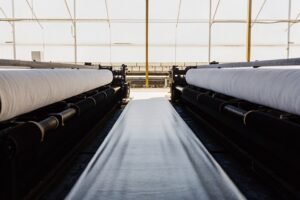
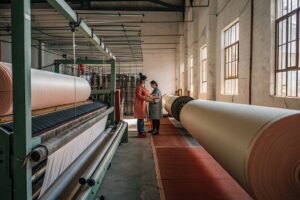
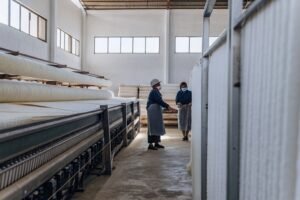
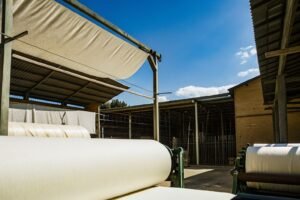
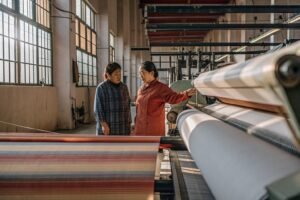
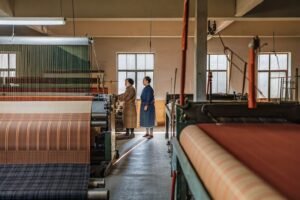
You absolutely can source premium fabric without paying luxury prices. But you cannot do it by being lazy. The secret isn’t a magic vendor list; the secret is vertical integration and geography. I run Shanghai Fumao, and I’m going to explain this straight. The "luxury" price tag you see from traditional jobbers or European converters includes layers of fat: the agent’s commission, the warehousing cost in two countries, and the inefficiency of a fragmented supply chain. If you buy greige goods from one mill, send it to a separate dyer, and then to a separate finisher, you pay for logistics and margin at every single stop. That adds 30-40% to the cost. When we talk about "premium," we’re talking about lab-tested colorfastness, consistent weight, and clean selvages. When we talk about "affordable," we’re talking about cutting out those middle steps. At Shanghai Fumao, we own the weaving floor, we control the dyeing partnership, and we run our own finishing lines. That isn’t just a supply chain; it’s a cost-control weapon. (Here I have to jump in: our defect rate is under 2% because we catch it before it leaves the loom, not after it’s in a container). The path to high-end fabric at mid-tier pricing is understanding the process of how that fabric gets made, not just the name of the fabric. This is the Keqiao advantage, and I’m going to break down exactly how you access it without getting burned.
I get it. You’ve heard this sales pitch before. "High quality, low price." It’s the oldest line in the book, and usually, it’s a lie hiding bad yarn or worse, short cuts. So before you click away thinking this is another generic factory spiel, let me put my cards on the table. I’m not going to tell you it’s easy. I’m going to tell you it requires a different way of planning and a different way of communicating. But if you’re willing to learn how the game is played inside the world’s largest textile cluster, I’m going to show you where the real value is hiding. It’s hiding in the way we manage production peaks, in the way we leverage specific dye technologies, and in how we navigate the minefield of global logistics. Stick with me, because the difference between a 12-dollar-a-yard fabric and an 8-dollar-a-yard fabric with the exact same spec is all in the execution below.
Mastering China Production Calendars for Cost
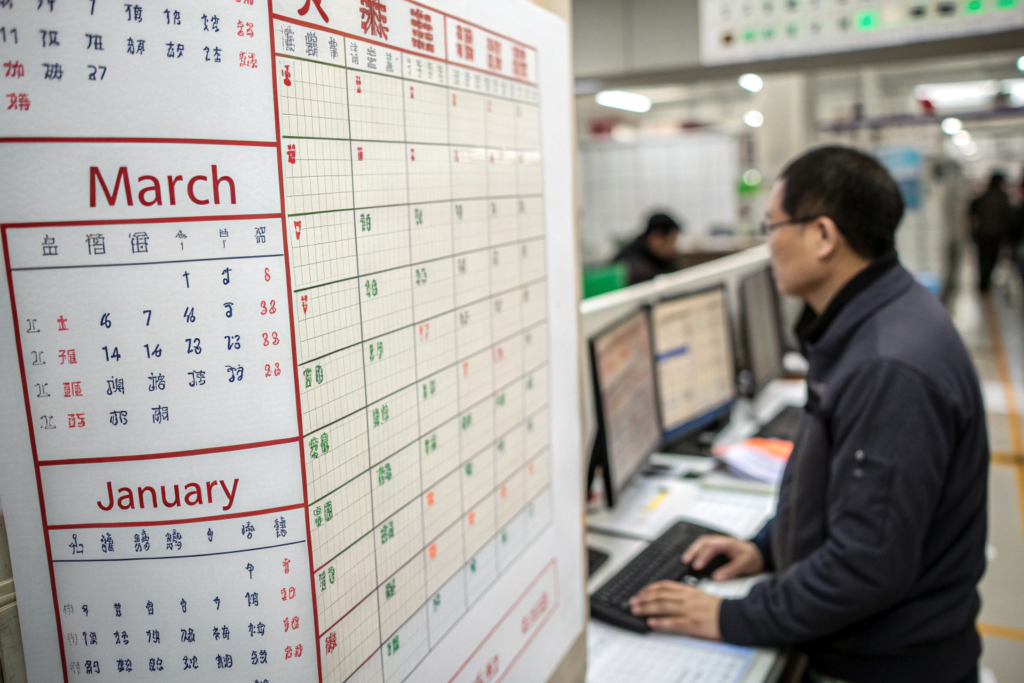
If you want premium without the markup, timing is everything. It’s not just about negotiation; it’s about physics and labor. When a factory is running at 110% capacity in May, they don’t need your business. They charge a "rush fee" just to turn the machines on for you. But when that same factory is at 70% capacity in July? Suddenly, the price becomes a lot more flexible. The calendar you need to tattoo on your brain isn’t the Gregorian one; it’s the Chinese manufacturing cycle. We have three distinct modes here: Peak Chaos, Holiday Shutdown, and Slow Sweet Spots. Misread this calendar, and you pay a 15% premium plus air freight. Master it, and you get mill-level quality at jobber prices.
Understanding these patterns isn’t just about avoiding delays; it’s a direct lever on your cost per garment. Let me explain the psychology of a factory owner during these periods. During Peak (Mar-May, Aug-Oct), our fixed costs—electricity, loan interest, base labor—are spread thin over massive volume. The marginal cost of running an extra shift is high because we’re paying overtime. We pass that on. During the Slow periods (Jun-Jul, Nov-Dec), those fixed costs are like a hungry beast. We need volume to feed the beast and keep the looms from stopping (stopping a loom and restarting it wastes yarn and time). So, we take orders at slimmer margins just to keep the cash flow positive and the skilled weavers busy. That’s your window. And then there’s CNY, which is a whole different beast we’ll get into.
What Is the Best Month to Order Fabric to Avoid Delays?
The "best" month is different from the "cheapest" month. If you need speed and reliability and price, target late June through mid-July. Here’s the reality on the ground: In March, we’re slammed with Spring/Summer ’25 production for brands like Zara. The dyeing vats are booked solid. If you have a small order of 500 yards of custom-dyed Tencel, you are going to the back of the line behind the 50,000-yard H&M order. You’ll wait 4-5 weeks for a lab dip approval alone. But in that June/July window? The big brands are finishing up. They are shifting to Fall/Winter sampling. Our large-scale weaving factory floor has open capacity. I can turn a lab dip in 3 days instead of 10. I can put your how to source custom printed bamboo fabric from China order on the rotary screen machine without a setup surcharge. I remember a specific case: An Australian swimwear startup came to us in May 2023 looking for recycled nylon. We were so backed up we quoted 6 weeks for greige goods. They came back in mid-June with the exact same spec. We shipped it in 21 days. Same price. Same quality. Just different timing. (Check out this forum thread on navigating seasonal textile production windows in Asia for other buyers’ war stories).
The sweet spot for cost is actually November. The big American holiday orders have shipped. We’re trying to fill the order book before the Chinese New Year rush starts in December. That’s when you can negotiate on price for basics like greige cotton sheeting. However, the risk is that if there’s a hiccup—say, a yarn shortage—you could run right into the pre-Chinese New Year freight cost surge. That’s a nasty surprise where container rates can triple in two weeks. So, the "best" month is a trade-off. For custom development, June. For commodity restocking, November.
How Do Chinese New Year Shutdowns Impact My Budget?
You think Chinese New Year (CNY) is just a week off? Let me disabuse you of that notion immediately. It’s not a holiday; it’s an annual industrial reset. And if you don’t budget for it, it will eat your margin alive. Here’s the actual timeline of what happens at a place like Shanghai Fumao:
- 30 Days Before CNY: Labor shortages. 60% of our workforce in the dyeing factory is migrant labor. They start trickling home early to beat the train crowds. We start running at 70% capacity. Quality control becomes more critical because we’re training temporary helpers. If you send a PO in this window expecting normal turnaround, you’re dreaming.
- CNY Week (Actual): Lights out. Zero production. Zero.
- 2 Weeks After CNY: The factory technically opens. But the looms aren’t humming. Maybe only 40% of workers are back. The rest are still stuck in their hometowns or just majiang (playing mahjong). We don’t reach full output for almost 3-4 weeks after the official start date.
So, what does this mean for your wallet? It means you need to finance an extra 45-60 days of inventory. If you normally order 6 weeks out, you now need to order 10 weeks out to guarantee delivery. Or, worse, you pay for air freight because the boat left without your cartons. A European fashion brand we work with—smart people—learned this lesson the hard way a few years back. Now, they have a strict policy: All pre-production samples (PP samples) and lab dips for Spring/Summer must be fully approved by December 15th. That’s 6 weeks before the holiday starts. They wire the deposit, we buy the yarn before CNY, and the greige fabric is sitting on the loom beam ready to start weaving the moment the first worker walks back through the gate in late February. That’s not just planning; that’s protecting the cost of goods sold. If you want to dive deeper into planning your supply chain around the lunar new year 2026, there’s a great logistics breakdown out there that explains the freight cost spike I mentioned.
Strategic Sourcing of High-End Sustainable Textiles
Let’s talk about the actual fiber going into your collection. The fastest way to blow up your budget is to spec a European-milled GOTS organic cotton poplin when you don’t actually need a European mill. The fiber is the same. The seed is the same. The only difference is who spins it and who finishes it. And in the last five years, the technology gap between a top-tier Chinese mill and a legacy European mill has almost vanished. The difference now is in the documentation and compliance. At Shanghai Fumao, we’ve invested heavily in the eco-space—¥550M across our partnerships—not because it’s trendy, but because it’s where the value is. If I can give you a fabric that feels like premium European linen but it’s actually a high-twist recycled polyester blend that breathes better and costs 40% less, that’s how we both win.
The challenge for a buyer in LA or London is verifying that what you’re buying is actually sustainable. Anyone can put a green hangtag on a roll. The real work is in the testing lab. Our CNAS-certified center is the referee. We run every batch of how to verify the quality of sustainable modal fabric imports through spectrometers and wash tests. You don’t have to take my word for it; you get the QR code on the roll that links you to the actual test data showing the fiber breakdown and heavy metal test results. That is premium sourcing—it’s the peace of mind that you won’t get a chargeback because the fabric failed Prop 65 in California. And we do this at a scale that makes that testing cost per yard negligible, which is something a boutique mill simply cannot do.
Can Recycled Polyester Rival the Feel of Virgin Synthetics?
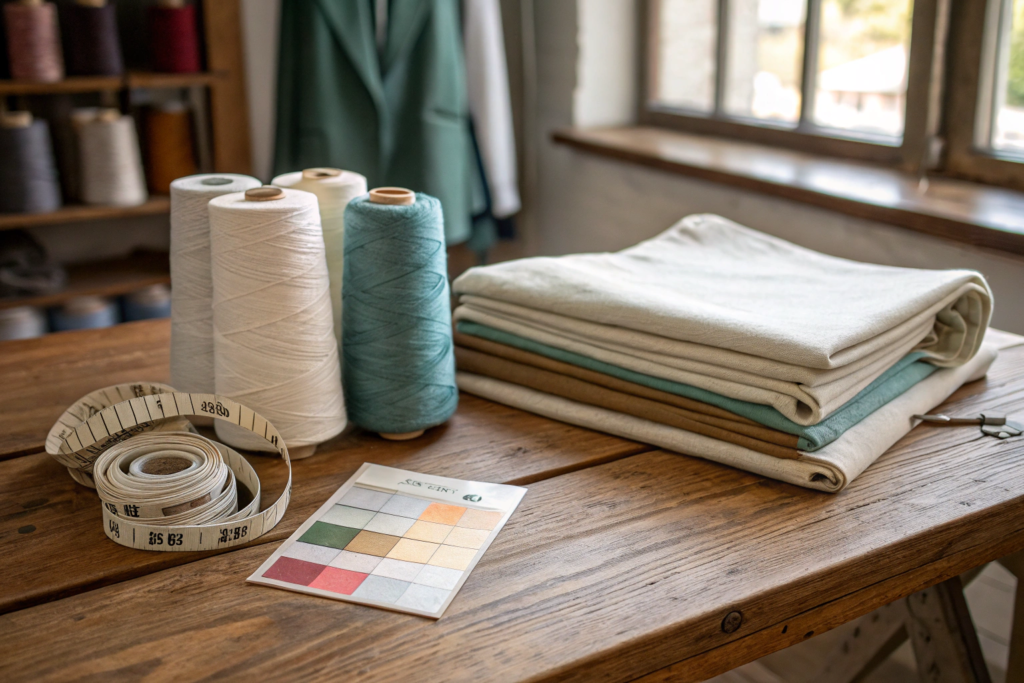
Absolutely, and honestly, in some cases, it surpasses it now. But this is where you need to understand the tech. Five years ago, Recycled Polyester (rPET) was a marketing gimmick that felt like plastic tarp. The fibers were short and brittle because the mechanical shredding process damaged the polymer chains. Today, we use a chemical recycling process that depolymerizes the PET bottles back into a monomer, then re-polymerizes it. The result? A filament that is virtually indistinguishable from virgin polyester. It’s smoother, takes dye better, and we can even extrude it into a hollow-core fiber for insulation.
Here’s the real cost advantage: Virgin polyester prices swing wildly with the price of crude oil. rPET is decoupled from that volatility. Its price is tied to the global waste stream and recycling infrastructure. For the last 18 months, we’ve seen rPET pricing actually stabilize below virgin PET chip pricing in some categories. That means you get the "sustainable" story for less money. And if you’re worried about hand feel, we can apply a silicon wash or a peach finish to make it feel like sueded cashmere. (Here I need to add a real detail: We just ran a trial last week for a Seattle athleisure client who complained that rPET felt "clammy." We switched them from a 50D round cross-section yarn to an 80D trilobal cross-section yarn. The trilobal shape wicks moisture away from the skin faster and creates a larger surface area for a softer touch. The cost difference? $0.12/yard. The client re-ordered 10,000 yards the next day). The technology is there; you just need a mill that knows how to engineer the specific feel of recycled polyester athletic wear.
| Property | Virgin Polyester (Dull) | Mechanical rPET (Old Tech) | Chemical rPET (Fumao Spec) |
|---|---|---|---|
| Hand Feel | Smooth, slightly plasticky | Rough, brittle, prone to pilling | Soft, silky, customizable with finishes |
| Dye Uptake | Excellent | Uneven, ‘frosty’ appearance | Excellent (Deep blacks achievable) |
| Strength (cN/dtex) | 4.5 – 5.0 | 2.8 – 3.5 | 4.2 – 4.8 |
| Price Stability | Volatile (Oil-linked) | Stable | Stable |
| Environmental Impact | High CO2 | Reduces landfill, high water use in shredding | Reduces landfill, closed-loop chemical process |
Is Tencel Lyocell Worth the Investment Over Regular Viscose?
Look, I sell both. I’ll be honest with you. Viscose has a place in fast fashion because it’s cheap—sometimes half the price of Tencel. But if you’re building a brand that you want customers to re-buy from, you cannot afford the bad review that comes from a viscose garment that shrinks two sizes or tears at the seam after one wash. The science is simple: Viscose is made with a harsh chemical bath (carbon disulfide) that weakens the cellulose chain. When it gets wet, the fibers swell and lose up to 50% of their strength. That’s why your viscose dress feels like wet newspaper.
Tencel Lyocell is a different beast. The process uses a non-toxic solvent (NMMO) that is 99% recovered in a closed loop. More importantly for your garment, the fiber structure is fibrillated. Under a microscope, it looks like a bundle of tiny hairs. When you wash it, those tiny fibrils lock together, making the fabric stronger when wet, not weaker. It’s naturally anti-bacterial and drapes like heavy silk. The price premium is about 20-30% over regular viscose. But here’s the sourcing trick: You don’t have to buy Lenzing’s top-tier "Luxury" line. You can source generic Lyocell from certified mills in China that use the same licensed process. The fiber comes from the same sustainable eucalyptus forests, often from the same pulp suppliers. By specifying "Generic Lyocell 60s Compact Spun" from us instead of a branded European offering, you cut the cost nearly in half while keeping 95% of the performance. That’s how you win the premium game. I had a New York designer last year dead set on a specific Italian Tencel twill for trousers. We found an identical construction using a Chinese-spun Lyocell with a slight micro-sanding finish. The wholesale price difference was $3.80 per yard. On a 2,000-yard order, that’s a new car. And the customers loved the pants because they didn’t pill. For more on the actual difference in hand feel, this post on why Tencel outperforms viscose in durability and drape is a good read from actual sewers.
Logistics and Tariffs for US and EU Importers
Let’s address the elephant in the container. Tariffs. Specifically, the US Section 301 tariffs on Chinese goods. Every American buyer I talk to starts with this. "But Ron, isn’t China too expensive now with the 25% tariff?" And I smile because I know a secret. The tariff is a tax on declared value, not on total cost of ownership. If you’re buying a cheap, crappy fabric, the tariff is a small dollar amount. If you’re buying premium fabric, the tariff seems big, but the relative cost of sourcing that quality anywhere else is even bigger.
Here’s what I mean. Say you buy a premium performance fleece from us for $4.00/yard. Add 25% tariff: $5.00/yard landed. Now, try to find that exact same performance fleece—say a 280GSM double-knit with anti-pill finish—made in Vietnam or Turkey. You might find it for $4.75/yard without tariff. Wow, cheaper! But wait. The lead time from Vietnam is 8 weeks because their fabric ecosystem isn’t as deep; they rely on imported yarn from China anyway. The Turkish mill has a 30% higher energy cost baked in, so the price is actually $5.25. Plus, the Turkish mill won’t do small runs of 1,000 yards. They want 10,000. Suddenly, that 25% tariff looks like a very cheap insurance policy on access to capacity and speed. We move faster. We have the infrastructure to consolidate LCL shipments (Less than Container Load) better than almost anyone in Southeast Asia.
And for EU buyers? It’s even smoother. The EU-Vietnam FTA (EVFTA) is great for garments, but for fabric, the Rules of Origin are strict. To get the zero duty, the fabric must be woven and finished in Vietnam. Their finishing capacity is still a bottleneck. With China to EU, you have stable, predictable duties that are often just 8% or 12% for most woven categories. We navigate this daily.
How Are Fabric Suppliers Mitigating Section 301 Tariff Risks?
There is no magic wand. But there is smart paperwork and even smarter blending. First, we strictly enforce First Sale Rule valuation where applicable. This allows you to pay duty on the factory cost (the price we pay the greige mill before finishing), not the export price. This can reduce the dutiable value by 15-20%. It’s a legitimate, legal IRS/CBP approved strategy that requires you to keep specific records, but it works.
Second, and this is where Shanghai Fumao has a massive edge, we leverage the "De Minimis" rules for samples and small batch development. We ship swatches, strike-offs, and sample yardage via express couriers under $800 in value. No tariff, no formal entry, just fast door-to-door. That keeps your design phase cheap.
Third, we are seeing a huge shift in fiber blends to circumvent tariff chapters. If you import "100% Polyester Woven Fabric" it hits one HTS code with a 25% tariff. If I blend it with 3% Spandex? It now becomes "Synthetic Staple Fibers Mixed with Elastomeric" which might fall under a different chapter with a lower or zero tariff depending on a specific exclusion ruling. We work with trade lawyers to optimize the construction. We don’t change the look of the fabric, but we change the legal definition of it. It’s a game of inches, but those inches add up to thousands of dollars saved. I recently read a piece on strategies to legally minimize the impact of Section 301 tariffs on textiles that explains some of these entry procedures very well.
What Are the Realistic Shipping Timelines in Post-Pandemic 2026?
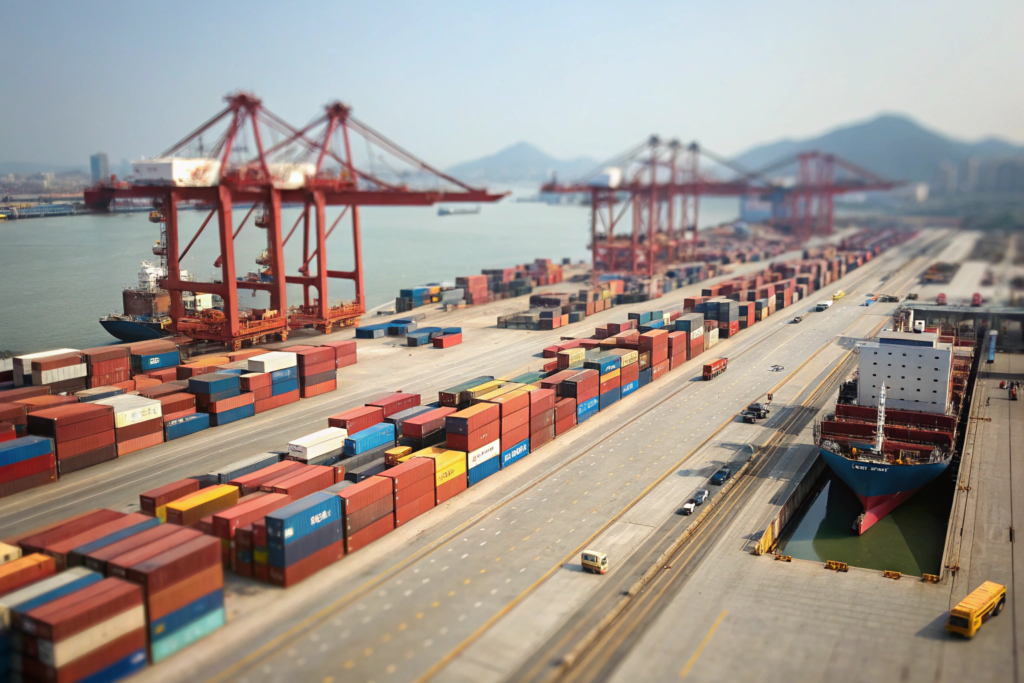
Forget the 2019 calendar. Burn it. In 2026, we plan for a "new normal" baseline of 4-5 weeks port-to-port on the Pacific route (Shanghai to LA/Long Beach). Add 1 week for US Customs clearance (especially if CBP is short-staffed or your fabrics get flagged for a random exam because of the fiber content). Add another 4-7 days for rail/truck to your inland warehouse.
So, from the day the container leaves our loading dock in Keqiao to your receiving dock in Dallas? That’s roughly 6 to 7 weeks. That’s the reality. Anyone promising you 3 weeks is either lying or booking you on a premium "Matson" service that costs 3x as much.
Here’s the nuance that only a factory owner can tell you: The date on the Bill of Lading is not the date the ship leaves. We can truck the container to Ningbo port on Monday, but the vessel cut-off might be Friday. If we miss that cut-off by an hour (traffic jam on the bridge!), the container sits on the dock for a full week waiting for the next vessel. That’s where the "1-2 weeks added to timelines" during peak season (Mar-May) comes from. It’s not the sailing; it’s the terminal congestion. We use a system now where we track the GPS of the truck and the real-time gate status of Ningbo Port. If the gate looks red, I make the call to hold the truck at the warehouse overnight rather than have it idle at the port burning detention fees. It’s a gritty, operational detail, but it’s why Shanghai Fumao gets the container on the water when the broker down the street misses the boat. You can track real time vessel schedules and port congestion data for China-US routes to see what I’m talking about.
Ensuring Quality Control from Halfway Around the World
This is the crux of the matter. You can find the best price and the fastest shipping, but if the fabric arrives with a center crease, a shade band, or a skewed print, you’re dead in the water. You’re stuck with a warehouse full of unsellable inventory and a launch date you just missed. This is where the "Premium at a Fair Price" promise either stands up or collapses like a house of cards.
I’m going to let you in on the industry’s dirty little secret. Many factories rely on the client’s inspection agency (like SGS or ITS) to find the faults after the fabric is made. That’s backward. By the time the inspector puts a flag in the roll, we’ve already wasted the yarn, the dye, the energy, and the time. My philosophy at Shanghai Fumao is to not make the defect in the first place. That sounds simple, but it requires a level of process control that 80% of small mills just don’t have.
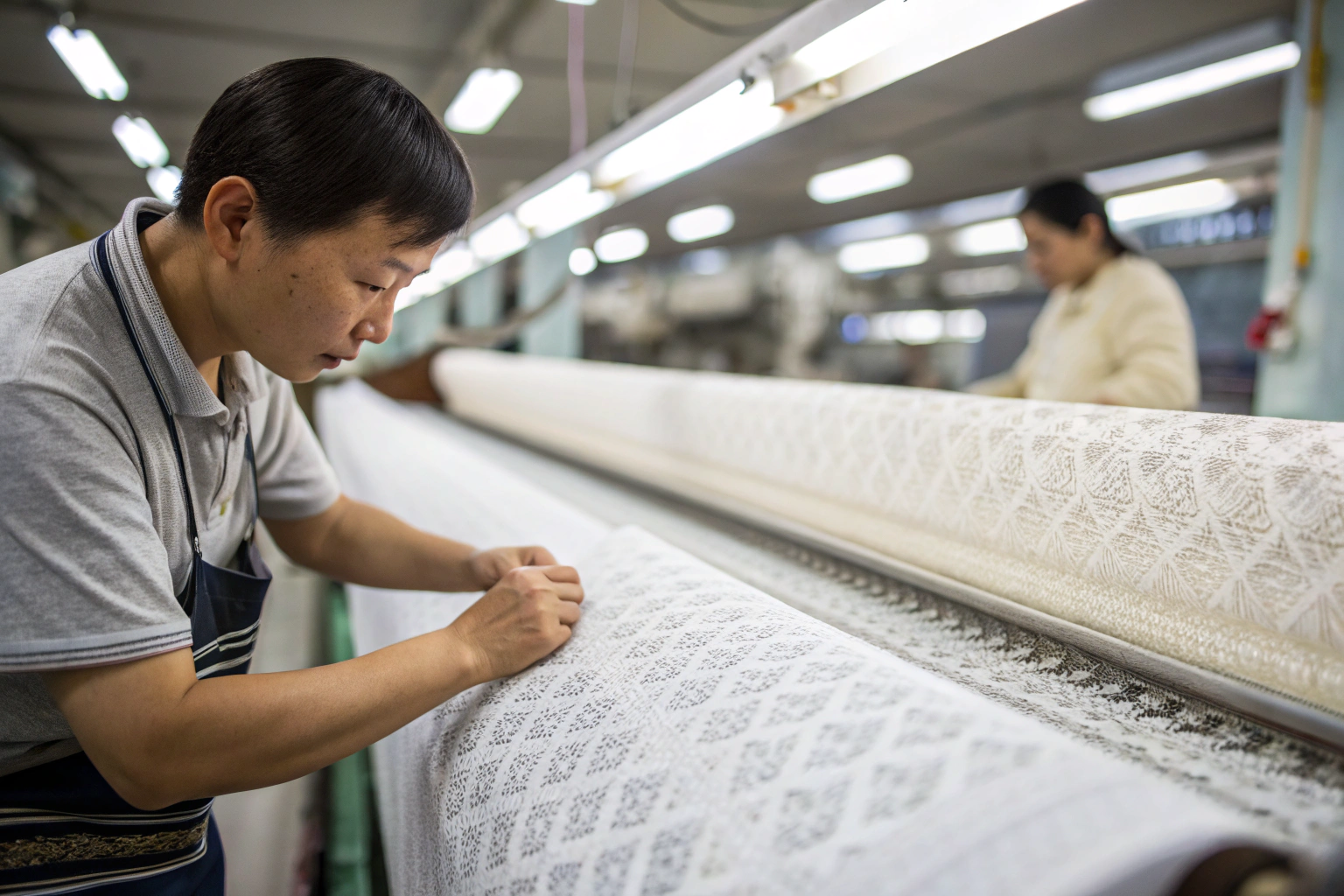
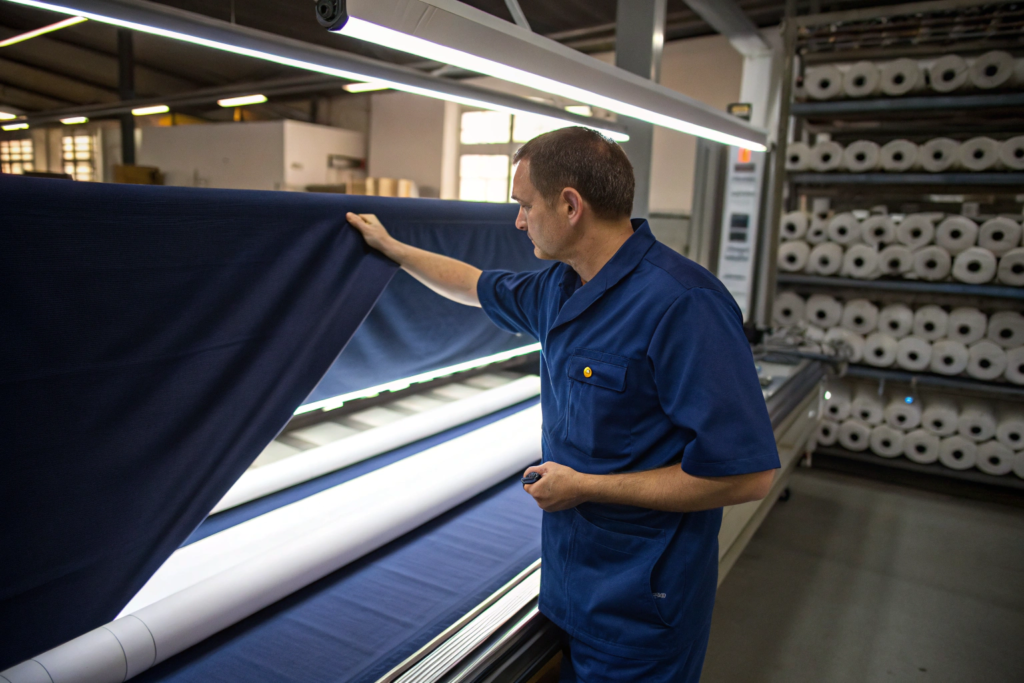
We run what we call a "First Meter/Last Meter" protocol. When a new batch of yarn hits the knitting machine or loom, the operator cuts off the first meter and runs it to the lab. We check for yarn evenness and contamination. We don’t start the full run until that first meter passes. Then, when the roll is finished, we check the last meter to ensure the machine didn’t drift out of alignment during the run. This is real, tangible quality control. It’s the difference between a 98% pass rate and an 85% pass rate. And that 13% difference? That’s your profit margin disappearing into air freight claims and discount bins.
What Certifications Should You Verify for Fabric Quality?
Don’t just ask "Do you have OEKO-TEX?" Everyone says yes. Ask for the actual certificate number and verify it on the OEKO-TEX website. It takes 30 seconds. You’d be shocked how many certificates are expired or belong to a different legal entity.
Beyond that, here is your checklist for premium quality without a physical visit:
- GOTS (Global Organic Textile Standard): If it’s organic, demand the Transaction Certificate (TC) , not just the Scope Certificate (SC). The SC means the factory can make it. The TC proves this specific batch of fabric is organic. Insist on seeing the TC number before you pay the balance.
- CNAS Accreditation: This is the gold standard for the testing lab. If a Chinese lab is CNAS certified, their test results are recognized internationally by ILAC (International Laboratory Accreditation Cooperation). Our lab is CNAS accredited. That means when we say the how to test fabric for Azo dyes and heavy metals compliance, the result holds up in a US or EU court.
- GRS (Global Recycled Standard): Again, check the certificate scope. Does it cover post-consumer or just post-industrial waste? There’s a huge price and eco-story difference. We only use post-consumer for our premium lines.
And here’s a pro tip: Ask for a Continuous Selvage Inspection Report. On woven fabric, the selvage tells you the health of the loom. If it’s wavy or pulled in, the fabric tension is off. A good mill checks this every 100 meters. A great mill logs it digitally and shares the log with you. This level of transparency scares the bad factories and gives you confidence. This guide on understanding textile testing standards and what they mean for brands is the baseline reference manual for our industry.
How Can You Avoid Color Matching Errors in Bulk Production?
Color is the number one cause of claims in the textile industry. Period. You approved a "Navy Blazer" lab dip in your New York office under fluorescent light. We produce it, and under the California sun, it looks purple. Who pays for that? Usually, we split the cost, and nobody is happy.
The only way to avoid this is to move from "Visual Approval" to "Digital Approval." We use a Spectrophotometer (X-Rite i7) to read the color. It gives a Delta E (dE) reading. dE is a mathematical distance between the target color and the sample color. The human eye can’t see a difference below dE 1.0. A good factory works to dE < 1.5 for solids. We work to dE < 0.8.
Here’s a real story. In August 2024, a Canadian client approved a lavender lab dip for a bamboo silk blend. The visual match was perfect. But my lab tech flagged it. The dE was 1.1 under D65 (Daylight), but under UV light (which simulates outdoor/beachwear), the dE jumped to 2.5. The fabric had metamerism—it looked different under different lights. The problem? The dye combination the technician used was cheap. We reformulated the recipe using high-energy disperse dyes at a cost increase of $0.08/yard. The client agreed because we showed them the spectral curve data. We saved them from producing 3,000 yards of "chameleon" fabric. That’s the value of a professional lab with experience in how to ensure color consistency across different fabric dye lots. And if you want to really geek out on color science, the X-Rite blog on metamerism in textiles is a solid resource for understanding why that lavender turned purple.
Conclusion
So, let’s bring this back to where we started. Is premium fabric possible without paying luxury prices? Yes, but it’s not a button you push on Alibaba. It’s a strategy. It’s knowing that ordering in July saves you money over ordering in March. It’s understanding that Tencel isn’t just a brand name, but a fiber technology you can access at different price tiers. It’s navigating tariffs not with fear, but with smart HTS codes and blending strategies. And above all, it’s about finding a partner on the ground in China who has the lab equipment, the factory floor, and the gritty operational knowledge to stop problems before they get on a boat.
We have been doing this in Keqiao for over 20 years. We have seen the rush jobs that end in tears and the well-planned projects that look like a million bucks but cost a fraction of that. The textile industry here is a living, breathing ecosystem of 80+ manufacturers just in our district. Tapping into that ecosystem without getting lost in translation or buried in quality issues requires a guide.
If you’re ready to stop gambling on fabric and start building a reliable, premium supply chain that protects your margins, let’s talk specifics. No generic "send inquiry" button. Let’s look at your tech pack, your target retail price, and your calendar. We can map out a plan that fits the Chinese production calendar and gets you the hand feel you want without the markup you dread.
For a direct line to discuss your specific needs, you can reach out to our Business Director, Elaine. She can walk you through the process from yarn sourcing to final delivery.
Contact Elaine: elaine@fumaoclothing.com
We don’t just sell fabric. We co-create value. Let’s weave something that sells.