Look, I've spent over two decades in the textile game here in Keqiao, and I've watched trends come and go faster than a shuttle on a loom. But the minimalist and capsule wardrobe movement? That's not a trend. That's a fundamental shift in how people think about clothing. And honestly, it's the smartest way to buy.
The problem is, most people get it wrong. They think minimalism means owning less, so they buy cheap, basic pieces in black, white, and grey. Six months later, those pieces are faded, pilled, or stretched out, and they're back to square one, buying again. That's not minimalism; that's just fast fashion in neutral colors. The real secret to a capsule wardrobe isn't just owning fewer items; it's owning the right items, built from fabrics that earn their place in your closet.
So, what are the best fabrics for this? The answer isn't a single fiber. It's a philosophy: durability, versatility, and timelessness. You need fabrics that feel good, look better with age, and can transition from a Monday morning meeting to a Sunday afternoon coffee run. At Shanghai Fumao (shanghai fumao), we've been supplying these workhorse fabrics to global brands for years. We've seen what holds up and what falls apart.
In this post, I'm going to share that hard-won knowledge. We'll break down the absolute best natural and performance fabrics for a minimalist wardrobe, why they work, and exactly what to look for when you're sourcing them. We'll talk about the feel of a perfect linen, the surprising durability of Tencel, and why a certain type of wool is worth every penny. By the end, you'll know exactly how to build a wardrobe that's not just simple, but truly sustainable.
1. Why is natural fiber quality so important for capsule wardrobes?
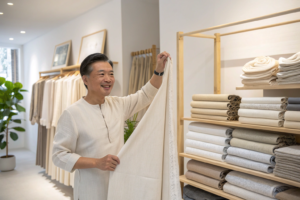
This is where the rubber meets the road. You can't have a capsule wardrobe without quality, and you can't have quality without understanding natural fibers. Synthetic fabrics have their place, don't get me wrong. But for the core pieces of a minimalist wardrobe—the white shirt, the black trousers, the perfect knit—natural fibers are king. They breathe, they age gracefully, and they have a hand feel that synthetics just can't replicate.
But here's the thing: not all natural fibers are created equal. I see this every day. A buyer comes to us with a sample of "linen" from another supplier, and it feels like cardboard. Or they're proud of their "cotton" t-shirt, but after one wash, the collar is wavy. That's because they bought fiber content, not fabric quality. The real value is in the construction of the fabric, not just the label. For a capsule piece, you need a fabric that's been engineered for longevity. That means high fiber quality, tight yarn spinning, and a stable weave or knit construction. We spend a lot of time in our mill working with our spinning partners to get this right. I remember in early 2023, a Dutch minimalist brand came to us. They had a beautiful design for a simple shift dress, but they were using a standard 140gsm cotton jersey. We suggested upgrading to a 180gsm combed, ringspun cotton jersey with a tighter knit structure. The result? Their dress held its shape after 50 washes, not 10. That's the difference.
What does "long-staple cotton" mean for my t-shirt durability?
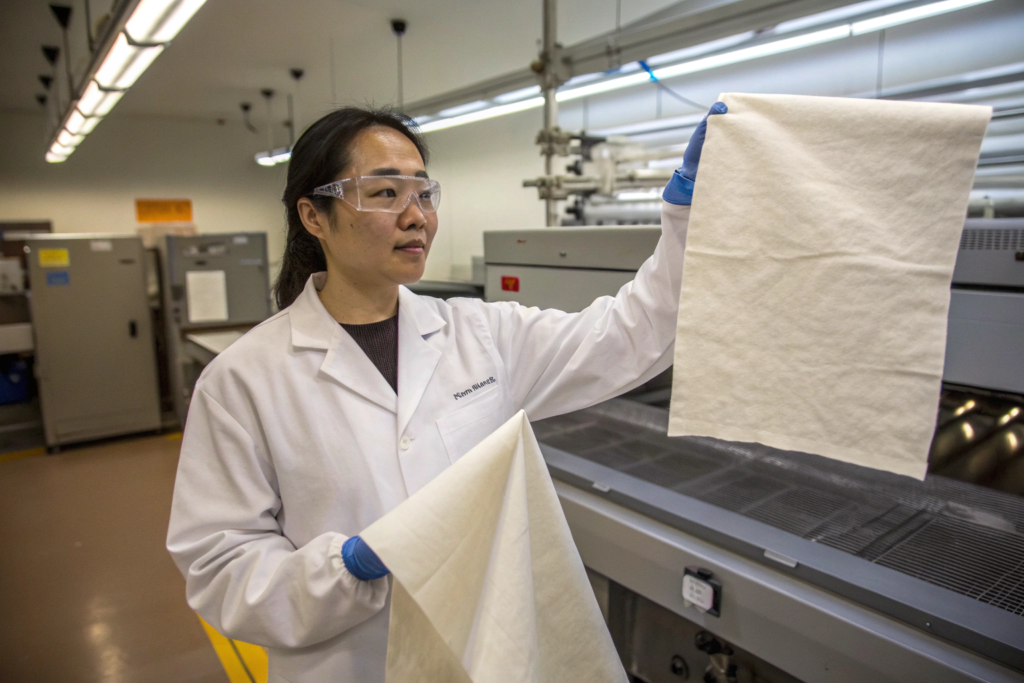
Let's get specific. "Long-staple" refers to the length of the individual cotton fibers. Think of it like hair: long, smooth hair makes a stronger, silkier braid than short, broken pieces. Long-staple fibers (like those from Supima or Egyptian cotton) can be spun into finer, stronger yarns with fewer ends sticking out. Fewer ends mean less pilling and a smoother surface. When you're sourcing for a capsule wardrobe, you want that. You want a t-shirt that doesn't look fuzzy after three wears. We source our long-staple cottons from specific farms. In our mill, we then use a combing process to remove the short fibers, leaving only the long, premium ones. This adds a step to production, but it's non-negotiable for quality. The difference in the finished fabric is night and day. You can feel it—it's denser, smoother, and has a subtle luster. For a deeper dive into the different types of cotton, I recommend checking out this resource from Common Objective's guide to cotton sourcing, which breaks down the supply chain and quality grades.
How does linen quality affect the garment's lifespan and feel?
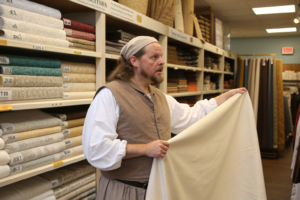
Linen is a favorite for minimalists, and for good reason. It's the ultimate warm-weather fabric: breathable, absorbent, and it gets softer with every wash. But bad linen is a scratchy nightmare. The key is the fiber itself. High-quality linen comes from longer flax fibers. When these long fibers are wet-spun (a traditional process that uses water to soften the natural pectin), the resulting yarn is smoother, stronger, and more uniform. This yarn is then woven into a fabric with a higher thread count. A well-made linen will feel substantial but soft, and it will have a beautiful, natural slub (the slight irregularities that give it character). Cheap linen is often dry-spun from shorter, chopped fibers. It feels rough, is prone to breaking, and won't develop that legendary softness over time. I tell our clients: if you want a linen blazer that will last a decade, invest in a high fabric weight (around 180-220gsm) made from long-staple, wet-spun flax. We had a Japanese client in 2022 who was making unisex overshirts. They insisted on the finest Belgian flax, wet-spun and woven here in our facility. The final product was a thing of beauty—heavy, drapey, and built to last a lifetime. You can learn more about the nuances of flax cultivation from discussions on forums like The Sustainable Angle's material focus, which often highlights best practices.
2. Which sustainable fabrics offer the best durability for everyday wear?
Sustainability and durability are two sides of the same coin. The most sustainable garment is the one you don't have to replace. So when we talk about eco-fabrics for a capsule wardrobe, we're not just talking about organic cotton (though that's great). We're talking about innovative, high-performance cellulosic fibers that are engineered to last. These are the fabrics that are changing the game.
I'm talking about fibers like Tencel™ Lyocell, Modal, and Hemp. These aren't your grandma's "eco" fabrics that feel like burlap. Modern processing has turned them into luxurious, durable, and incredibly versatile materials. They offer the breathability of natural fibers with the performance characteristics of synthetics, often with a much lower environmental footprint. At Shanghai Fumao, we've invested heavily in these areas. We have a dedicated R&D team that works on blends and finishes for these fibers. In 2024, we developed a new hemp-cotton-Tencel blend specifically for a German workwear brand. They needed something breathable for summer, but tough enough for daily use. The blend we created tested at over 50,000 cycles on the Martindale abrasion test—that's serious durability.
Is Tencel durable enough for daily-wear pants and blazers?
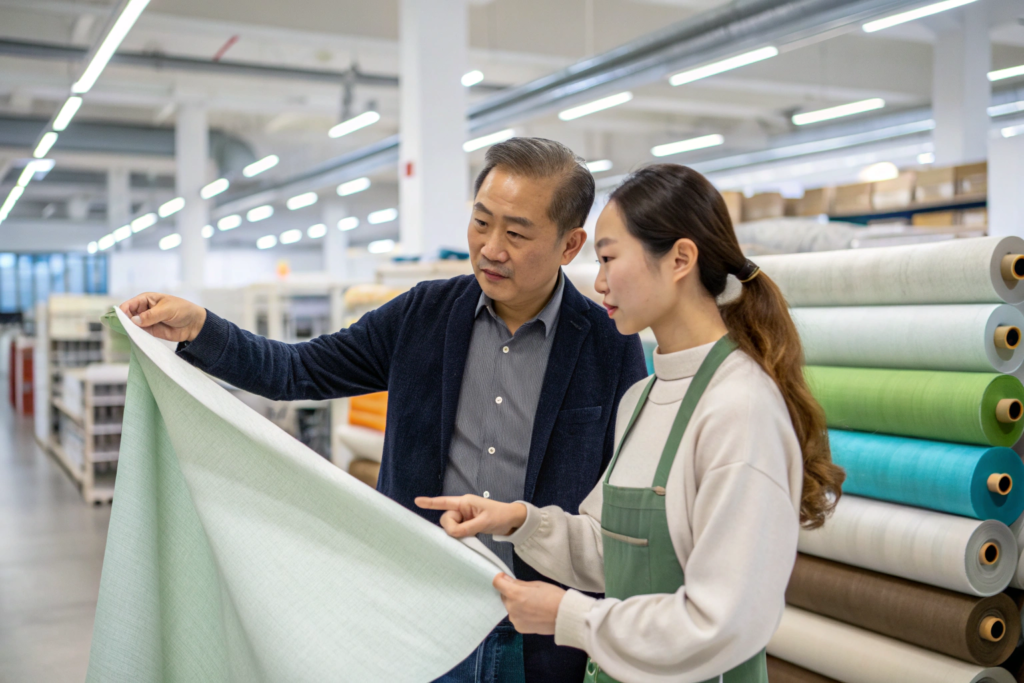
Absolutely. And it's one of the best-kept secrets in the industry. Tencel (the brand name for Lyocell) is made from wood pulp, usually eucalyptus, in a closed-loop process that recycles 99% of the water and solvents. But the result isn't just eco-friendly; it's a powerhouse fiber. It's stronger than cotton, and it has a natural resistance to wrinkles. For pants and blazers, this is a dream. It drapes beautifully, it breathes, and it holds its shape. We produce a lot of Tencel twills and suiting fabrics for European clients. The key to its durability is the fiber's length and the way it's spun. The long, continuous filaments create a smooth, strong yarn. We then weave it into a tight construction, often with a bit of elastane for comfort. The result is a pair of trousers that looks sharp all day and can be worn twice a week for years without showing wear. I remember a Swedish client who was skeptical about using Tencel for a men's blazer. They thought it would be too soft. We sent them a sample of our 3x1 twill Tencel with a mechanical stretch finish. They were shocked at the structure and recovery. It's now their best-selling item. For more technical data on fiber strength, you can look up industry publications like Textile World's articles on lyocell innovations, which often feature performance comparisons.
How does a hemp-cotton blend perform compared to pure cotton?
Hemp is an ancient fiber that's making a massive comeback, and for good reason. It's incredibly strong—some say up to eight times stronger than cotton. It's also naturally antimicrobial, UV-resistant, and requires very little water to grow. The old problem with hemp was that it could be coarse. Modern processing, particularly enzymatic treatments, has changed that. When you blend hemp with cotton, you get the best of both worlds: the strength and performance of hemp with the soft, familiar hand of cotton. A common blend we do is 55% hemp / 45% organic cotton. This fabric is fantastic for casual jackets, chore coats, and heavy-duty shirts. It has a beautiful, slightly textured look. It softens over time, but it never loses its integrity. We tested a 55/45 hemp-cotton canvas against a 100% organic cotton canvas of the same weight for a US workwear brand last year. The hemp blend had a tear strength 40% higher than the pure cotton. That's a massive difference. If you're interested in the agricultural side of hemp, a great resource is the European Industrial Hemp Association's publications, which provide detailed market data and quality standards.
3. What are the best wool and cashmere options for a minimalist winter?
When the temperature drops, a minimalist wardrobe relies on a few key investment pieces: a great sweater, a classic coat. And for these, wool and cashmere are the undisputed champions. But navigating the world of animal fibers can be confusing. There's a huge range in quality, from a scratchy, cheap wool sweater that feels like sandpaper to a cloud-like cashmere that costs a month's rent. The secret is knowing what you're paying for.
The best options for a capsule wardrobe are, in my opinion, Merino wool and high-quality Cashmere. Merino is the workhorse. It's fine, soft, breathable, and naturally odor-resistant. It's perfect for base layers, lightweight sweaters, and even travel clothing. Cashmere is the luxury piece. It's incredibly soft, lightweight, and warm. But it requires more care. The key with both is the fiber diameter, measured in microns. The lower the micron, the finer and softer the fiber. Superfine Merino is around 17.5-18.5 microns. Top-tier cashmere is under 15.5 microns. We source our wool and cashmere from trusted partners in Inner Mongolia and Australia, and we test every batch in our lab to ensure the micron count is consistent.
What is the difference between Merino wool and regular wool for sensitive skin?
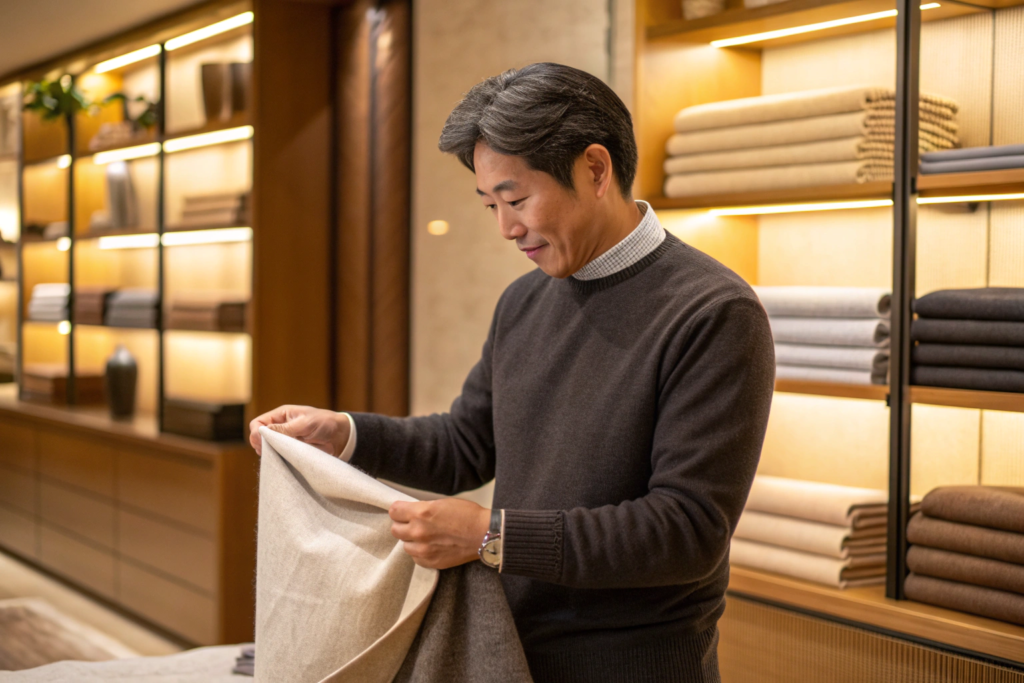
The main difference is the fineness of the fiber. "Regular wool" can come from many breeds of sheep, and the fiber diameter can vary wildly, often being quite coarse (over 25 microns). This coarseness is what causes the "itch." Your skin's nerve endings are literally being poked by stiff fiber ends. Merino sheep, particularly those bred in Australia and New Zealand, produce a much finer fiber. A good quality Merino for next-to-skin wear will be around 18.5 microns or less. It's so fine that it bends and flexes against your skin rather than poking it. It's a game-changer for people who love wool but can't stand the itch. We produce a lot of Merino jersey for base layers. The fabric is soft, stretchy, and warm, even when wet. For a minimalist traveler, a couple of Merino t-shirts can replace a whole suitcase of cotton. They don't smell, they regulate temperature, and they dry fast. A reliable source for understanding wool grading is the The Woolmark Company's resource library, which sets the industry standards for quality.
How can I tell if cashmere is high-quality before buying?
This is where experience comes in. You can't just trust the label. High-quality cashmere has a few telltale signs. First, the hand feel. It should be incredibly soft, but also have a certain density and "bounce." Cheap, low-quality cashmere often feels thin and limp, or it's been overly processed with chemical softeners that wash out after one wear. Second, look at the fiber length. Long fibers create a smoother, more durable yarn. Short fibers mean more pilling. You can sometimes see this by looking closely at the surface. High-quality cashmere has a very fine, even halo. Third, the fabric construction. A tighter, denser knit or weave will hold its shape better. At Shanghai Fumao, we source cashmere from Inner Mongolia with fibers that average 36-38mm in length. We then spin it into a high-quality yarn and knit it to a tight gauge. The result is a fabric that feels substantial and will last. I had a French designer in 2023 who wanted a cashmere coating fabric for a minimalist coat. We sourced a 2-ply, 100% cashmere with a micron count of 15. It was expensive, but the final coat was a masterpiece of softness and warmth. For insights into ethical sourcing and quality benchmarks, the Textile Exchange's Material Snapshots are an excellent, data-rich resource.
4. How do fabric blends enhance the functionality of minimalist clothing?
Here's a truth that might surprise a purist: the best minimalist fabrics are often blends. While 100% natural fibers are beautiful, they have limitations. Cotton wrinkles easily and can lose its shape. Linen wrinkles even more. Pure wool can be too warm for some. By blending fibers, we can engineer a fabric to be perfect for its intended use. We can take the softness of cotton, the strength of polyester, and the recovery of elastane, and combine them into one fabric that performs.
This isn't about cutting corners; it's about enhancing performance. Think about a pair of "travel pants." They look like chinos, but they don't wrinkle and they stretch. That's almost certainly a blend. A common one is a cotton-Tencel-elastane blend. You get the natural look of cotton, the drape and durability of Tencel, and the flexibility of elastane. It's a modern fabric for a modern lifestyle. Our R&D team spends a lot of time on these blends, testing different ratios to get the exact feel and performance a client needs. For a London-based athleisure brand in early 2024, we developed a custom blend of organic cotton, recycled polyester, and a small amount of elastane for their "commuter chino." It had to look like a classic cotton chino but move like sportswear. We ran dozens of tests to get the recovery just right, so the knee didn't bag out after a day of wear. That's the power of a well-designed blend.
What are the benefits of adding a small amount of elastane to natural fibers?
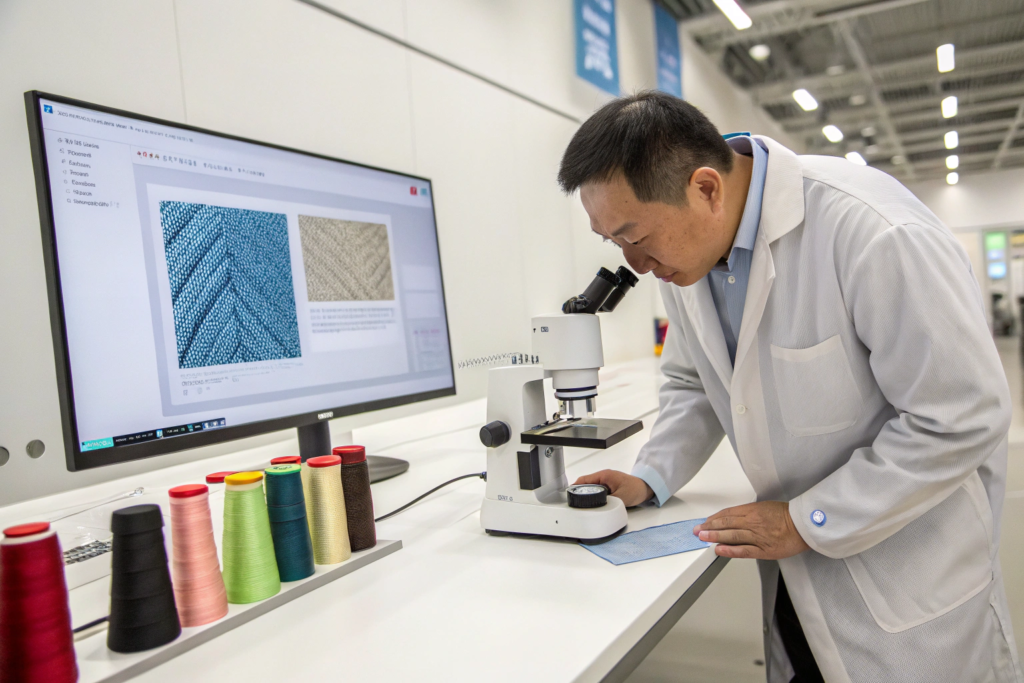
Elastane (also known as Spandex or Lycra) is the secret ingredient for comfort. A small amount, usually between 2% and 5%, can transform a rigid natural fiber fabric into something that moves with you. Think about a pair of 100% cotton jeans. They feel great when you buy them, but after a few hours, they can feel restrictive. A pair with 2% elastane will stretch as you sit and move, then snap back into place. The same goes for a linen shirt. A touch of elastane adds just enough give to prevent the fabric from pulling at the seams, which is a common point of failure in 100% linen garments. It also helps with recovery, meaning the garment is less likely to get baggy at the elbows or knees. For a capsule wardrobe, where each piece has to work hard, this extra comfort and durability is invaluable. We use a high-quality elastane from a top supplier and ensure it's properly covered by the natural fiber yarn so it doesn't lose its stretch over time. It's a small addition that makes a huge difference in the longevity of the garment.
Why would a minimalist choose a wool-nylon blend for socks?
Socks are a perfect example of where a blend outperforms a pure natural fiber. 100% wool socks are warm and soft, but they wear out quickly, especially at the heel and toe. This is where nylon comes in. Nylon is a synthetic fiber known for its incredible abrasion resistance. By blending wool with nylon (typically 70-80% wool, 20-30% nylon), you get a sock that has all the warmth and moisture-wicking properties of wool, but with the durability to last for years. The nylon acts as a reinforcing "skeleton" for the sock, taking the brunt of the friction from your shoe. For a minimalist, this is a no-brainer. You buy one good pair of wool-nylon socks, and they last longer than three pairs of pure wool socks. It's more sustainable in the long run. We produce a lot of yarn for this purpose. It's a classic example of a "performance blend" that simply makes the product better. For a detailed look at sock construction and materials, you can often find great technical posts on industry forums like The Fiber Year's reports, which cover global trends in fiber consumption and blends.
Conclusion
Building a minimalist or capsule wardrobe isn't about deprivation; it's about intention. It's about choosing each piece because it's the best tool for the job, because it feels right, and because it will last. The fabric is the foundation of that intention. Whether it's the enduring strength of a well-woven linen, the innovative performance of Tencel, the luxurious warmth of fine cashmere, or the smart functionality of a thoughtful blend, the right fabric makes all the difference.
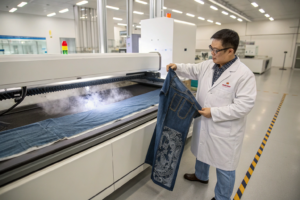
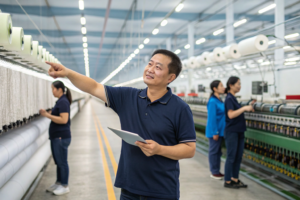
At Shanghai Fumao, we've dedicated our business to understanding these fabrics at the deepest level. From our own weaving and dyeing factories to our CNAS-certified lab, we have the infrastructure to not just supply fabric, but to develop it. We can take your vision for a perfect, timeless garment and find or create the exact textile to bring it to life. We work with brands around the world to ensure their core pieces are built on a foundation of uncompromising quality.
If you're ready to stop searching and start sourcing, let's have a conversation. Whether you need a few hundred yards of sample yardage to perfect your design or a full production run of a custom-developed, sustainable fabric for your new collection, our team is ready to help.
Contact our Business Director, Elaine, directly to discuss your project. She and her team are experts in helping brands build better wardrobes from the fabric up.
Email Elaine at: elaine@fumaoclothing.com
Let's create something timeless together.