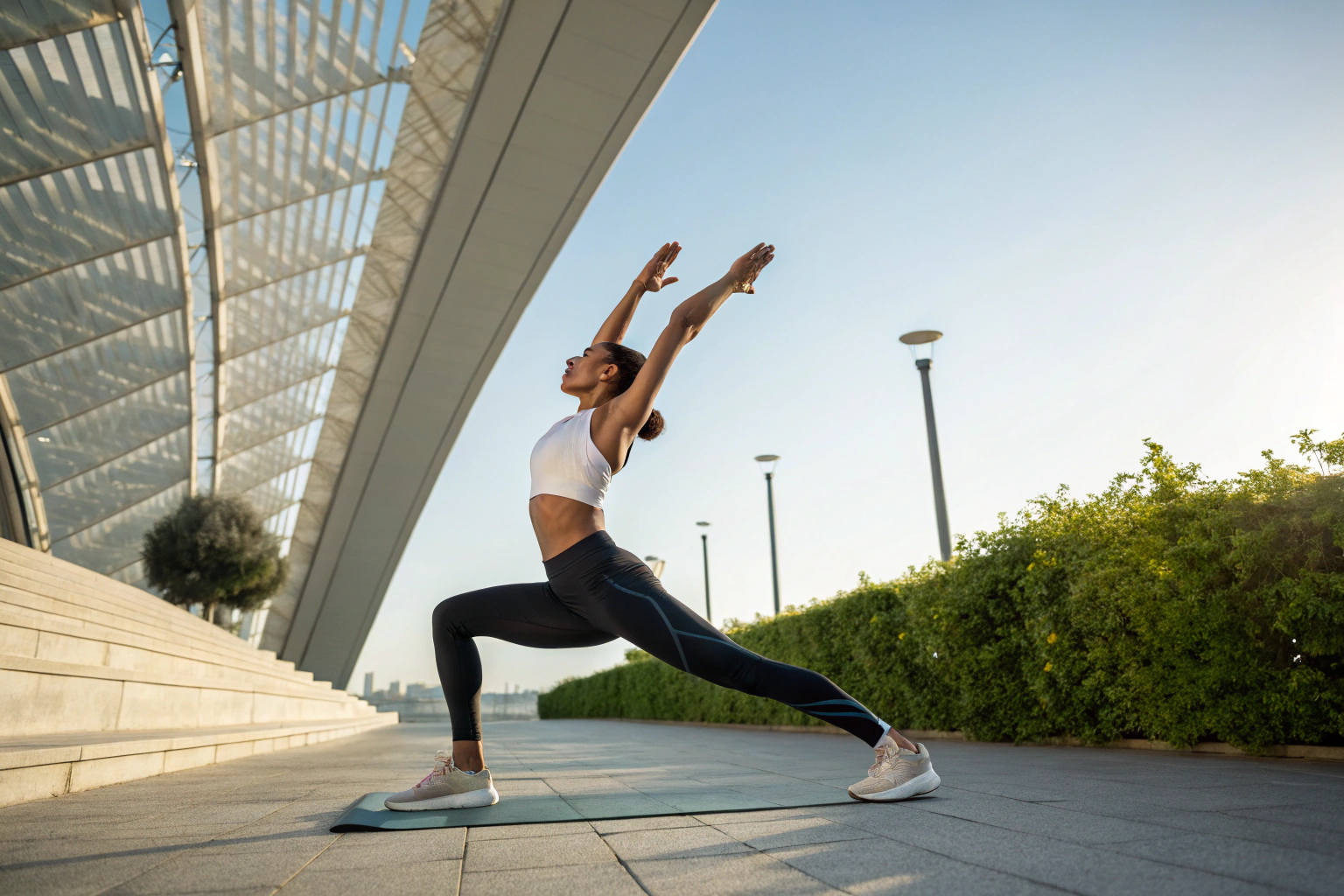
I've been in this industry for over two decades, and nothing gets my phone ringing faster than an activewear brand with a stretch problem. Just last month, a buyer from Colorado called me in a panic. Their new leggings line passed every design review, looked beautiful on the rack, but failed the moment customers actually worked out in them. The knees bagged out permanently after three downward dogs. The waistband rolled down during running. And the fabric? They'd chosen what they thought was a performance woven, but it simply couldn't deliver the stretch their customers demanded.
Here's the straightforward answer: knitted fabrics stretch significantly more than woven fabrics, which is why they dominate the activewear industry. A quality knit activewear fabric can stretch 25% to 200% depending on the construction and fiber content, while a woven typically stretches less than 5% on the grain. But that's not the whole story. In activewear, stretch alone isn't enough. What matters more is recovery—the fabric's ability to snap back to its original shape after you've stretched it. And that's where things get interesting.
Let me walk you through everything I've learned supplying fabrics to activewear brands across Europe, North America, and Asia. We'll look at real test data from our CNAS-certified lab, examine specific fabric constructions that work for different activities, and help you make the right choice for your next collection. Because when your customer is in the middle of a workout, the last thing they should worry about is their clothing.
How Much Stretch Do You Actually Need for Different Activewear Applications?
Not all activewear needs the same amount of stretch, and this is where many brands make expensive mistakes. A yoga legging requires high stretch in multiple directions because you're moving from forward folds to backbends. A cycling jersey needs stretch primarily in one direction for an aerodynamic fit. A weightlifting singlet needs moderate stretch but exceptional recovery to hold muscles in place. Understanding these differences saves you from over-engineering or under-performing fabrics.
Let me share some numbers from our actual testing at Shanghai Fumao. For low-impact activities like walking or light gym work, fabrics with 15-25% stretch work perfectly. Think basic cotton-spandex jersey or lightweight poly-spandex knits. For medium-impact activities like cycling or aerobics, you want 25-40% stretch with good power—the fabric should feel supportive, not loose. For high-impact activities like yoga, dance, or intense training, you need 50% or more stretch, ideally in both length and width directions.
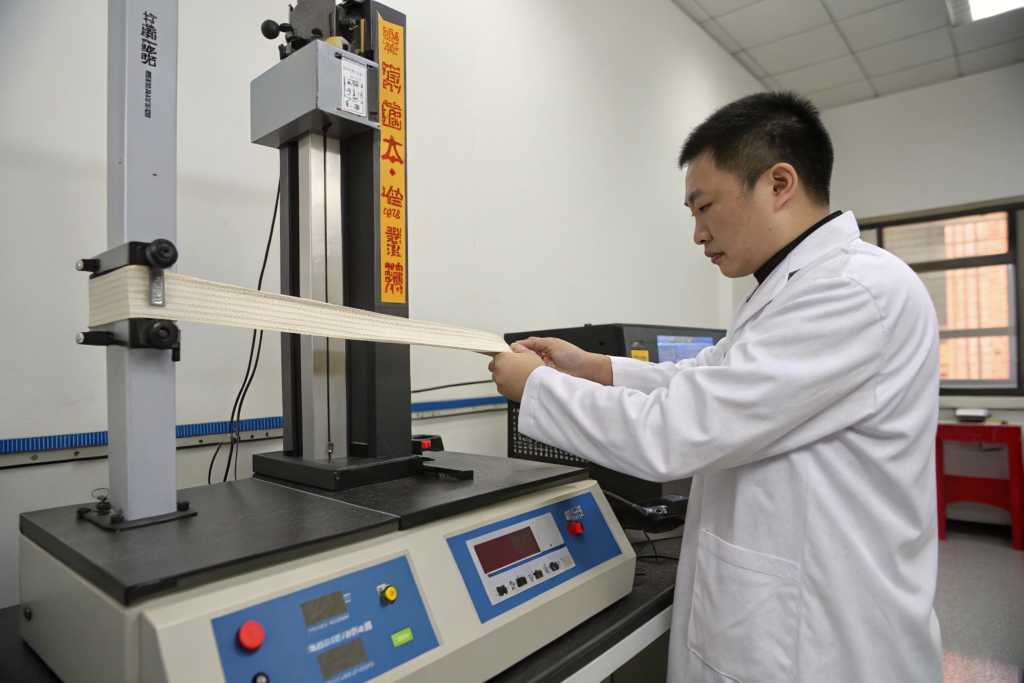
But here's the catch I emphasize to every client: stretch percentage means nothing without recovery data. We test every activewear fabric on our Instron machines, stretching samples to specific percentages repeatedly—sometimes 20, 50, even 100 cycles. We measure how much the fabric "grows" or permanently deforms after each stretch. A fabric that stretches 80% but retains only 60% of its original length after testing is useless for activewear. Your customers will complain about saggy knees within weeks.
What's the Ideal Stretch Percentage for Yoga and Pilates Apparel?
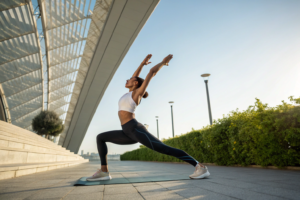
Yoga and Pilates place unique demands on fabric because movements are slow, controlled, and often extreme. Your customer might go from a standing forward fold to a deep lunge to a shoulder stand, all in the same session. The fabric must accommodate this without restricting movement or losing shape. Based on feedback from dozens of activewear brands we supply, the sweet spot for yoga apparel is 60-75% stretch in the width direction and 30-40% stretch in the length direction.
The fabric construction that delivers this consistently? A high-quality nylon-spandex or polyester-spandex knit with a dense interlock or jersey structure. The nylon provides durability and a soft hand, while the spandex (usually 15-20% of the blend) provides the necessary stretch and recovery. We recently developed a new recycled nylon-spandex knit for a German yoga brand that tested at 72% stretch with 98% recovery after 50 wash cycles. They've reordered three times since launching.
One thing I always warn clients about: be careful with cotton blends for hot yoga. Cotton absorbs moisture, becomes heavy, and loses stretch when wet. A Swedish brand learned this in 2023 when their cotton-modal blend yoga pants, which tested perfectly in dry conditions, stretched out permanently during hot yoga sessions. We helped them reformulate with a moisture-wicking polyester face and cotton inner layer, solving the problem while maintaining the natural feel their customers loved.
Can Woven Fabrics Ever Provide Enough Stretch for Running Wear?
This question comes up constantly, especially from brands that love the crisp, structured look of wovens for running shorts or jackets. The short answer is yes, but with significant limitations. Woven fabrics can achieve stretch through two methods: using stretch yarns (like spandex-core spun yarns) or through mechanical stretch constructions like stretch-woven technologies. However, even the stretchiest wovens typically max out at 15-20% stretch, far below what most runners need in a tight-fit garment.
Where wovens excel in running wear is for looser-fit items like shorts, singlets, and jackets. A woven running short with 10-15% stretch provides comfort during stride without the compression of a knit tight. The fabric moves with the body but doesn't cling. We supply a Japanese running brand with a stretch-woven recycled polyester fabric that has 18% stretch and excellent breathability. They use it exclusively for their 5-inch running shorts, and it's been their bestseller for three seasons.
For running tights or compression wear, though, wovens simply can't compete with knits. The loop structure of knits allows for the multi-directional stretch and recovery that runners need. A woven tight would either restrict movement too much or, if made stretchy enough, would lack the recovery to stay in place during a marathon. I always tell clients: match the fabric construction to the garment's intended fit. Loose and breezy? Wovens work great. Tight and supportive? Stick with knits.
What Makes Knit Fabrics the Undisputed Champion for Activewear Stretch?
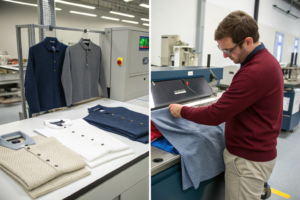
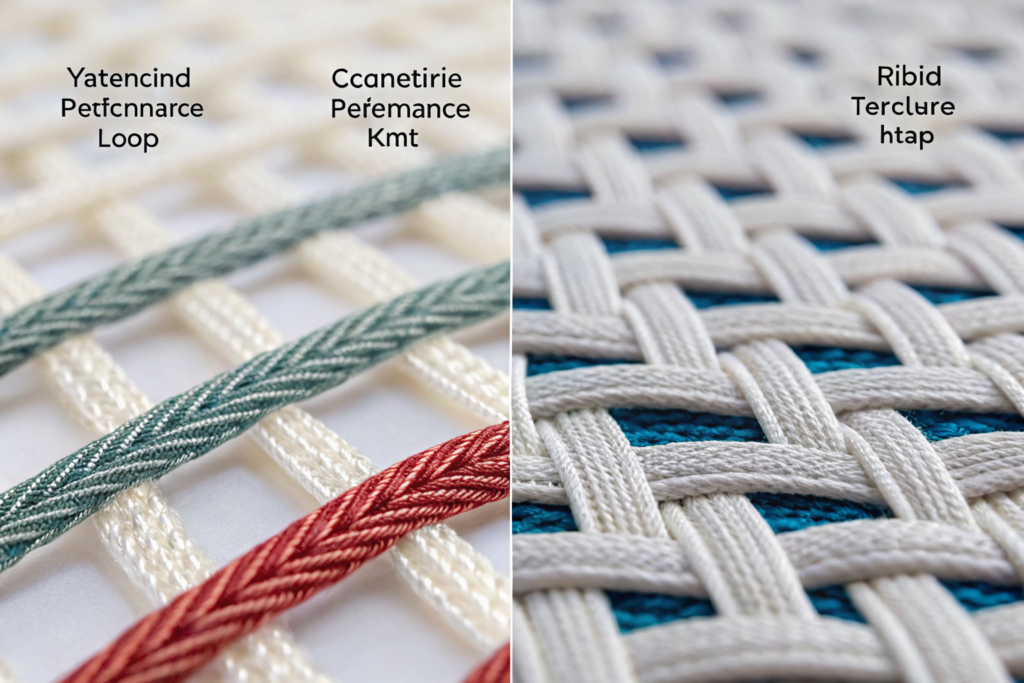
The secret lives in the loops. I've explained this to countless clients standing in our showroom, holding up two swatches. A knit fabric is essentially a series of interlocking loops, like a chain-link fence made of yarn. When you pull on a knit, those loops simply slide and reshape, distributing the tension across multiple connection points. This is why a good activewear knit can stretch to twice its original width and still bounce back. It's not magic—it's structural engineering at the microscopic level.
Woven fabrics, by contrast, are built like a basket. Warp yarns run straight up and down, weft yarns run straight across, locking each other in place at every intersection. To make a woven stretch, you either need to use inherently stretchy yarns or create gaps in the weave that allow movement. But even then, you're fighting against the fundamental construction. The yarns in a woven can only straighten or bend slightly, while knit loops can actually change shape and position.
This structural difference explains everything about activewear performance. It's why a knit legging can accommodate a deep squat while a woven trouser would split at the seams. It's why knit tops can be pulled on over your head without zippers while woven shirts need buttons. And it's why, when your customer complains that their workout gear doesn't move with them, they're almost certainly wearing the wrong fabric construction.
How Does Fiber Choice Impact Stretch and Recovery in Knit Activewear?
This is where technical expertise separates good activewear from great activewear. The knit structure provides the platform for stretch, but the fibers determine how well that stretch performs over time. In our development center, we work with four main fiber categories for stretch:
Nylon (Polyamide) is my personal favorite for premium activewear. It has excellent elasticity, dries quickly, and takes dye beautifully for rich, lasting colors. A nylon-spandex knit from Shanghai Fumao typically achieves 90-95% recovery after repeated stretching, which is why luxury activewear brands prefer it. The downside? Cost. Nylon is more expensive than polyester.
Polyester dominates the mass market for good reason. It's affordable, moisture-wicking, and highly durable. However, standard polyester has lower inherent elasticity than nylon. We compensate for this by adjusting knit structures and increasing spandex content. Our recycled polyester-spandex knits, popular with eco-conscious European brands, achieve 85-90% recovery at a more accessible price point.
Spandex (Elastane) is the workhorse, typically comprising 10-20% of activewear fabrics. But more spandex isn't always better. Too much creates a "plastic" feel and can actually reduce durability as the spandex filaments break down faster than the companion fibers. We've optimized our blends to use exactly enough spandex for the required performance—typically 15-18% for high-compression garments, 10-12% for mid-support, and 5-8% for light stretch applications.
Natural fibers like cotton, modal, and Tencel bring comfort and sustainability but have poor inherent stretch and recovery. When clients want "natural feel" activewear, we recommend blends with synthetic cores. For example, a cotton-spandex knit where the spandex provides the stretch while cotton touches the skin. We recently helped an Australian brand develop a Tencel-spandex jersey for their low-impact line that tested at 85% recovery after 30 washes—impressive for a predominantly cellulosic fabric.
What's the Difference Between 4-Way Stretch and 2-Way Stretch Knits?
Every activewear buyer asks this, and understanding it saves enormous headaches. Two-way stretch knits stretch primarily in one direction—usually the width (from selvedge to selvedge). Four-way stretch knits stretch in both width and length directions. For most activewear applications, four-way stretch is superior because the body moves in multiple planes. Your customer's hip stretches widthwise during a lunge, but their torso lengthens during a reach overhead.
The construction difference comes down to knit structure and spandex placement. A basic jersey knit with spandex only in the course (horizontal) direction will give you two-way stretch. An interlock knit with spandex in both the course and wale (vertical) directions, or a knit with spandex-covered yarns throughout, gives you four-way stretch. The latter is more expensive to produce but delivers significantly better performance.
Here's a practical example from our production floor. In 2024, a Canadian brand ordered 15,000 yards of what they thought was four-way stretch jersey for their signature legging. Their spec sheet called for 60% stretch in both directions. Our QC team tested the first production sample and found only 35% stretch lengthwise. Investigation revealed their yarn supplier had substituted standard spandex instead of the high-stretch variant we'd specified. We rejected the yarn batch, sourced the correct material, and delivered the order three weeks late but with perfect performance. The brand later told us that delay saved them from a catastrophic product launch with faulty fabric.
Why Do Some Woven Fabrics Seem Stretchy and How Are They Made?
This confuses almost everyone at first. You pick up what looks like a crisp woven shirting fabric, give it a tug, and it stretches. How? The answer lies in specialized yarn technology, not the weave structure itself. Stretch wovens use yarns that have built-in elasticity—typically core-spun yarns where a spandex filament is wrapped with a non-stretch fiber like cotton or polyester. When you stretch the fabric, the spandex core extends while the outer fibers accommodate the movement.
The amount of stretch possible in wovens is limited by the weave geometry. Even with stretch yarns, the warp and weft yarns still cross each other at fixed points. Those intersections create friction that resists movement. The best stretch wovens achieve about 20-25% stretch, usually in one direction only. For comparison, a performance knit easily achieves 50-100% stretch. So while stretch wovens exist and serve important purposes, they're not substitutes for knits in high-movement applications.
We produce stretch wovens for clients who need the aesthetic of wovens—the crispness, the structure, the professional appearance—with a little give for comfort. Business shirts with slight stretch, tailored shorts that move during cycling, fashion jackets that flex during wear. These fabrics fill an important niche. But when a client asks for compression or high-performance activewear, we always steer them toward knits.
What Are Core-Spun Yarns and Why Do They Matter for Stretch Wovens?
Core-spun yarns are the secret sauce of quality stretch wovens. Picture a yarn with a spandex filament at its absolute center, wrapped tightly with staple fibers like cotton, wool, or polyester. The spandex core provides the stretch, while the outer fibers determine the fabric's hand feel, appearance, and performance. When you stretch a fabric made with core-spun yarns, the spandex extends and the outer fibers slide along with it, then return to position when released.
The quality of core-spun yarns varies dramatically between suppliers. Cheap versions use low-quality spandex that loses recovery quickly, or inconsistent wrapping that leaves bare spandex exposed. The result? Fabric that stretches out, feels uneven, or shows visible "grin-through" where white spandex shows through dark dyes. At Shanghai Fumao, we source our core-spun yarns from specialized mills that we've audited personally, and we test every batch for wrap uniformity and elastic recovery.
A Danish workwear brand came to us in 2023 frustrated with their stretch cotton chinos. After three washes, the knees bagged out and never recovered. Testing revealed their previous supplier used cheap core-spun yarns with only 60% recovery after 10 stretch cycles. We developed a replacement using high-tenacity cotton wrapped around a premium spandex core, with recovery testing at 94% after 50 cycles. Their customer complaints dropped by 80% within six months.
Can Mechanical Stretch Wovens Compete with Yarn-Stretch Technologies?
Mechanical stretch wovens achieve elasticity through weave construction rather than stretchy yarns. Techniques like using very fine yarns in open weaves, or creating crimp in the yarns during finishing, allow the fabric to extend slightly. The classic example is "comfort stretch" denim made with loose weaves that have natural give. These fabrics typically offer 5-10% stretch—enough for comfort, not enough for performance.
The advantage of mechanical stretch is durability. Because there's no spandex to degrade over time, mechanically stretched fabrics maintain their properties for the garment's entire life. They're also easier to recycle since they're made from a single fiber type. We supply mechanically stretch wovens to outdoor brands for hiking shirts and lightweight trousers where comfort matters but compression doesn't.
The disadvantage is limited stretch range. You'll never get 20% stretch mechanically without creating a fabric that's too loose or unstable. For applications requiring more than about 8% stretch, yarn-stretch technologies are necessary. The choice comes down to your priority: maximum stretch and recovery (go with yarn-stretch) or maximum durability and recyclability (mechanical stretch may win).
How Do You Test Fabric Stretch and Recovery Like a Professional?
Professional testing isn't complicated, but it requires consistency. At Shanghai Fumao, we follow standardized methods (ASTM D3107 for wovens, ASTM D2594 for knits) that give us reliable, comparable data. But you don't need a million-dollar lab to get useful information. You can perform meaningful tests with simple tools and consistent methods.
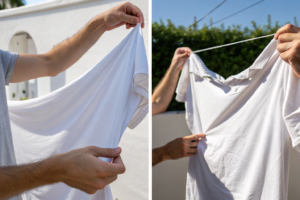
The first test is stretch percentage. Cut a fabric sample exactly 10 inches wide by 20 inches long. Mark two points 10 inches apart in the center. Hold the fabric at the edges and pull gently until you feel firm resistance—don't yank, don't over-stretch. Measure the distance between your marks. If it's now 15 inches, you have 50% stretch. Do this in both directions. Record your results. Test multiple samples because fabric varies across the roll.
The second test is recovery, which matters more than initial stretch. Stretch your sample to a consistent percentage—say, 75% of maximum—and hold for 30 seconds. Release and let it rest for 60 seconds. Measure again. If your 10-inch sample returns to 10.5 inches, you have 5% growth or 95% recovery. Repeat this five times. Recovery often decreases with each cycle. A fabric that recovers well after one stretch might fail after five.
We share all this data with every activewear client. When a brand orders our signature performance jersey, they receive a technical data sheet showing stretch percentage, recovery after 1, 5, 10, and 20 cycles, and wash stability after three home launderings. No surprises, no guesswork.
What Simple Tests Can You Do Without Expensive Equipment?
You absolutely can test fabrics effectively without a lab. I train every new client on these methods because they work and they're free.
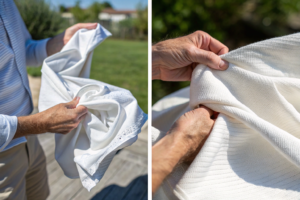
The hand-stretch test is your first tool. Hold the fabric widthwise between both hands, about shoulder-width apart. Pull gently but firmly. Feel how much resistance you encounter before the fabric stops stretching. A good activewear knit should stretch smoothly with consistent resistance, not suddenly lock up or keep stretching indefinitely. Now release quickly. Watch how fast it snaps back. Instant snap-back indicates excellent recovery. Slow, lazy return suggests poor elastic quality.
The knuckle test reveals recovery problems. Stretch a section of fabric over your closed knuckles, hold for 30 seconds, then release. Lay the fabric flat and observe the stretched area. Can you still see the impression of your knuckles? Does the fabric remain slightly distorted? If yes, recovery is inadequate for activewear. This simple test has saved countless clients from bad fabric choices.
The wash test is non-negotiable. Cut a 20-inch square of fabric, measure precisely, and note the measurements. Wash and dry it three times according to your intended care instructions. Remeasure. Fabric that shrinks more than 5% or grows more than 3% will cause fit problems in production. A UK brand once skipped this test, ordered 8,000 yards of what tested perfectly in the greige state, and discovered after garment production that the finished fabric shrunk 8% in the first wash. The entire collection had to be re-graded and re-cut.
Why Do We Test 50 Wash Cycles Before Approving Activewear Fabrics?
Because activewear gets worn hard and washed often. A yoga enthusiast might wash their leggings after every session—that's 3-4 times weekly, over 150 times yearly. If fabric degrades after 20 washes, your customer will complain within two months. Our 50-wash cycle test simulates about a year of regular use, compressing the timeline so we can predict long-term performance.
What do we look for after 50 washes? Stretch percentage often decreases as spandex fibers fatigue. Recovery typically degrades—the fabric grows permanently. Color may fade or change. Surface appearance can pill or fuzz. Dimensional stability matters—some fabrics shrink progressively over multiple washes. We document all these changes and share them with clients so they know exactly what to expect and can write accurate care instructions.
A Swedish swimwear brand learned this lesson painfully. Their previous supplier's fabric tested beautifully initially but after 20 chlorine exposures and washes, the spandex completely failed, leaving baggy, shapeless suits. We now produce their fabric with a chlorine-resistant spandex that maintains 90% recovery after 50 swim/wash cycles. Their warranty claims dropped from 12% to under 1%. That's the difference testing makes.
What Common Activewear Stretch Problems Ruin Garments and How to Fix Them?
I've seen every activewear failure imaginable over 20 years, and they almost always trace back to stretch and recovery problems. Let me walk you through the most common issues and exactly how to prevent them.
Bagging at knees and elbows is the number one complaint. Your customer buys beautiful leggings, wears them for three months, and suddenly the knees look like wrinkled elephant skin. This happens when fabric recovery fails. The spandex fatigues, the knit structure relaxes, and the fabric permanently stretches where the body bent most. Prevention requires three things: adequate spandex content (minimum 15% for high-compression garments), quality spandex (not cheap alternatives), and proper heat-setting during finishing to lock in the recovery.
Waistband roll-down drives everyone crazy. The garment fits perfectly standing still, but during movement, the waistband slowly migrates downward. This is typically a tension mismatch between the waistband elastic and the body fabric. Either the elastic is too weak, or the main fabric lacks the recovery to pull the waistband back up after stretching. We solve this by engineering the waistband zone specifically—sometimes using higher spandex content in that area, sometimes adding silicone grip strips, always testing the assembled garment under movement conditions.
Seam puckering and failure happens when sewing thread doesn't match fabric stretch. If your thread stretches less than your fabric, the seams will pop during wear or pucker unattractively. Activewear requires stretch threads—typically textured polyester or nylon corespun with spandex—and stretch stitches like coverstitches or zigzags. We advise clients on thread and stitch selection for every fabric we sell, because even perfect fabric fails with incorrect sewing.
Why Do Some Leggings Become See-Through When You Squat?
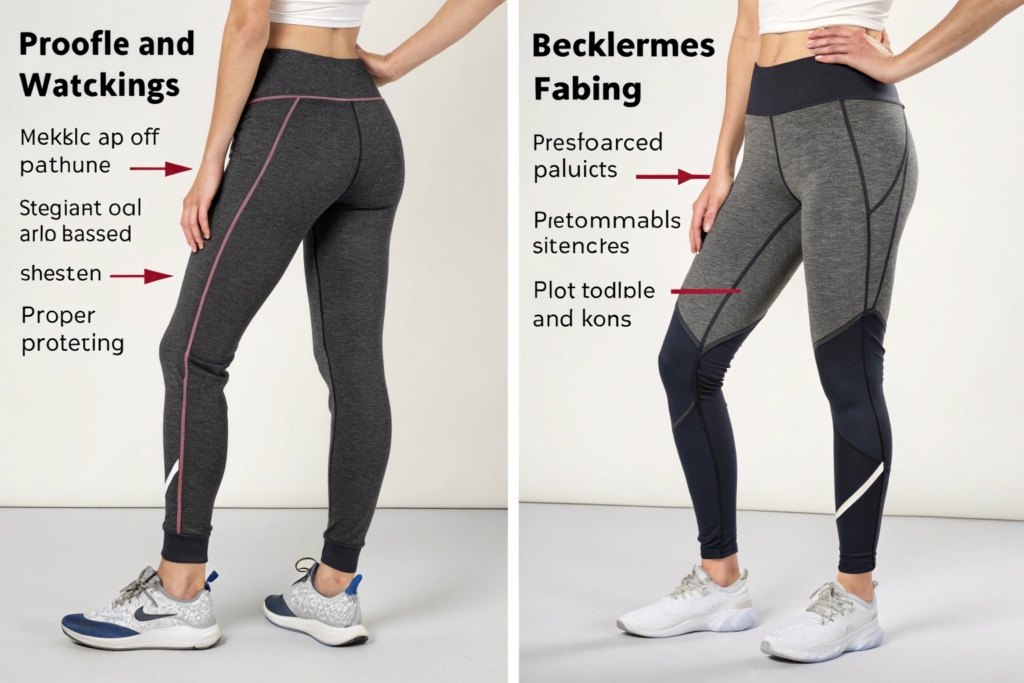
This is called "fabric sheer" or "grinning," and it's both embarrassing for your customer and damaging for your brand. It happens when the fabric structure opens up under tension, allowing skin or undergarments to show through. The causes are multiple: inadequate fabric weight (too light for the application), insufficient yarn coverage (poor knitting density), or excessive spandex content (ironically, too much spandex can actually open the structure).
Prevention starts with fabric selection. For squat-proof leggings, we recommend minimum 200-220 GSM fabric weight with dense knit construction. We test every potential legging fabric on a "stretch-to-transparency" protocol—stretching samples to 100% and photographing against a standardized background. If we can see the background pattern through the stretched fabric, it fails for squat-proof applications. Simple, visual, definitive.
We also test after laundering because some fabrics open up as they relax over time. A French activewear brand discovered this when their best-selling leggings, which tested opaque initially, developed sheer areas after 10 washes. Investigation revealed that relaxation shrinkage had reduced the fabric's density. We reformulated with a more stable knit structure and added a relaxation heat-setting step to their finishing process. Problem solved permanently.
How Do You Fix Fabric That "Pills" Between the Thighs?
Thigh pilling is the activewear killer. Those tiny fuzzy balls that appear where thighs rub together during walking or running. They make expensive leggings look old and cheap within weeks. The cause is fiber shedding—short fibers work loose from yarns and tangle into pills. The friction area between thighs accelerates this process dramatically.
Fixing this requires both fiber selection and fabric construction choices. Long-staple fibers pill less than short-staple fibers because they're anchored more securely. For cotton-containing activewear, we specify only long-staple, combed cotton. For synthetics, fiber geometry matters—trilobal or shaped cross-sections pill less than round fibers. We also recommend tighter knit constructions that hold fibers more securely.
Surface finishing makes a huge difference. Singeing—passing fabric over open flames to burn off loose surface fibers—removes the fuzzy layer where pills start. We singe every activewear fabric destined for high-friction applications. Mechanical brushing can actually worsen pilling by lifting fibers, so we avoid it for thigh-contact areas. A German marathon apparel brand switched to our singed, long-staple polyester fabric in 2024 and reported a 70% reduction in pilling complaints within six months.
Conclusion
The debate between knitted and woven fabrics for activewear stretch isn't really a debate at all. Knitted fabrics win hands-down for applications requiring significant stretch and recovery, which includes almost all close-fitting activewear. Their looped construction allows multi-directional movement that wovens simply cannot match, regardless of technological enhancements. Wovens serve important roles in looser-fit items and provide aesthetic options that knits can't replicate, but they're complementary rather than competitive in the stretch category.
What matters most is matching fabric performance to your specific application. Yoga demands different stretch properties than running, which differs from weightlifting or casual wear. Testing matters—both professional lab testing and simple field tests you can perform yourself. Recovery matters more than initial stretch. Fiber selection, knit construction, and finishing processes all interact to determine how your fabric performs when your customer actually wears it.
At Shanghai Fumao, we've spent two decades perfecting activewear fabrics for clients worldwide. Our CNAS-accredited lab tests every production batch against rigorous standards. Our development team works with clients to customize stretch, recovery, and hand feel for specific applications. And our integrated supply chain—from yarn sourcing through knitting, dyeing, and finishing—ensures consistency that sample-based suppliers can't match.
Whether you're launching a new activewear line or improving an existing collection, understanding fabric stretch is your first step toward customer satisfaction. Don't leave it to chance.
Contact our Business Director, Elaine, today to discuss your activewear fabric needs. She and her team will guide you through our testing data, recommend constructions proven for your specific application, and ensure your garments perform as beautifully as they look. Email her directly at: elaine@fumaoclothing.com. Let's create activewear that moves with your customers, not against them.