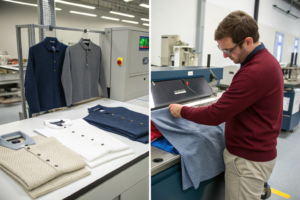
I've spent over two decades supplying fabrics for uniforms, and let me tell you—there's nothing quite like the pressure of a uniform contract. One mistake and hundreds of employees are wearing ill-fitting, quickly-worn-out clothing while their employer questions why they trusted you. A few years back, a hotel chain client called me in a panic because their staff's uniform trousers were wearing through at the knees after just three months. Thousands of employees, thousands of replacements, and a reputation on the line. That call still drives how I think about durability.
Here's the straightforward answer: woven fabrics are generally more durable for most uniform applications, but it's not that simple. Woven constructions like twill, poplin, and canvas resist abrasion better than most knits, hold their shape through repeated wear and laundering, and withstand the rigors of daily use in demanding environments. However, for certain uniform components—polo shirts, sweater vests, stretch-required applications—high-quality knits with proper fiber selection and construction can deliver excellent durability while providing comfort that wovens can't match.
Let me walk you through everything I've learned supplying uniforms for hotels, schools, corporations, healthcare facilities, and industrial applications across five continents. We'll look at real test data from our CNAS-accredited lab, examine specific fabric constructions that work for different uniform types, and help you make the right choice for your specific requirements.
What Durability Factors Matter Most for Different Uniform Types?
Uniforms face challenges that consumer clothing never encounters. They're worn longer, washed more frequently, and subjected to harsher conditions. A corporate shirt might be worn 8-10 hours daily, laundered weekly, and expected to look professional for two years. A hotel housekeeper's uniform rubs against furniture, withstands aggressive cleaning chemicals, and endures constant movement. Understanding these demands is the first step in fabric selection.
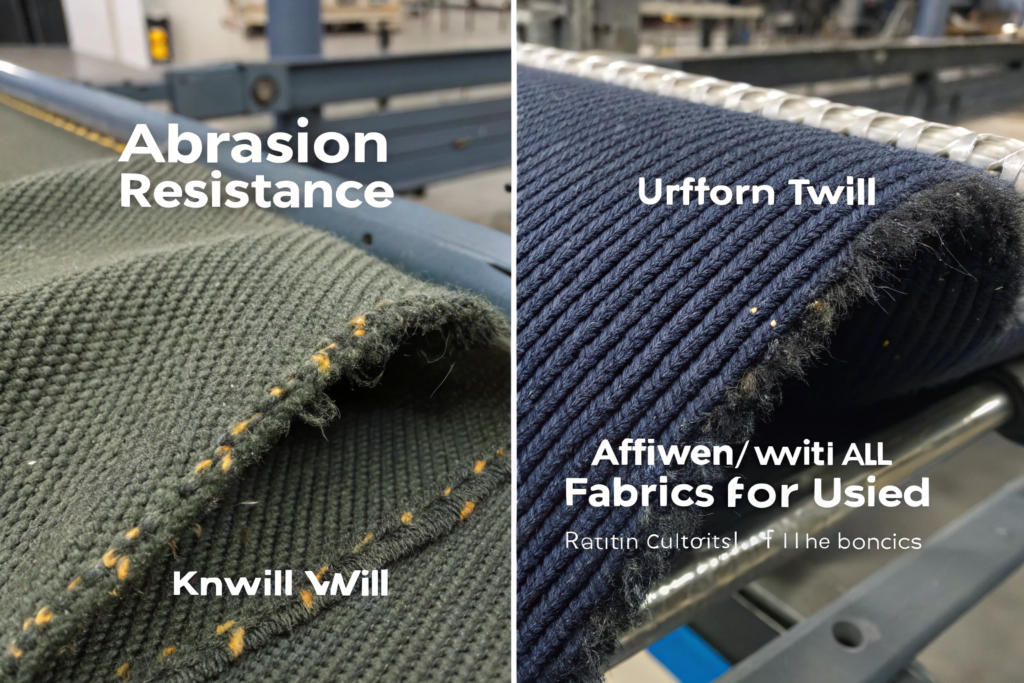
Abrasion resistance tops the list for most uniforms. This is the fabric's ability to withstand surface wear from rubbing—against desks, chairs, countertops, equipment. Wovens typically excel here because the tight, stable structure distributes abrasion across many yarn intersections. A tightly woven twill can withstand tens of thousands of rubs before showing wear. Knits, with their looped structure, can snag and abrade more easily, though high-density knits perform better.
Tear strength matters for uniforms that snag on equipment or experience sudden stress. Industrial uniforms, in particular, need fabrics that resist tearing when caught on machinery. Wovens generally have higher tear strength than knits, especially in balanced constructions. The interlaced structure requires multiple yarns to break before a tear propagates.
Colorfastness is critical for uniforms that are washed frequently and need to maintain a professional appearance. Both knits and wovens can achieve excellent colorfastness with proper dyeing and finishing, but the requirements differ. Dark uniforms need resistance to fading; light uniforms need resistance to yellowing; all need resistance to crocking (color transfer).
Dimensional stability—resistance to shrinking or stretching—determines whether uniforms continue to fit after repeated laundering. Wovens typically have better dimensional stability than knits, especially if properly finished (sanforized). Knits require careful compacting and sometimes spandex to maintain shape.
A Singaporean hotel chain learned this when their uniform supplier used low-quality knit polos that stretched out after six months. Staff looked sloppy, guests noticed, and the hotel's image suffered. They switched to our high-density cotton-polyester knit with optimized finishing, and the replacement cycle extended to 18 months.
What Abrasion Resistance Levels Do Different Uniforms Require?
Abrasion resistance is measured in cycles on a Martindale tester—the number of rubs a fabric withstands before showing wear. Here are the minimums we recommend based on decades of uniform supply:
Corporate office uniforms (shirts, blouses, trousers worn in desk environments): 20,000-25,000 cycles. These garments face moderate abrasion from chairs and desks but aren't subjected to harsh conditions. A good quality cotton-polyester woven poplin or twill easily meets this.
Hospitality uniforms (hotel front desk, restaurant staff): 25,000-30,000 cycles. These roles involve more movement and varied surfaces. Front desk agents lean on counters; servers brush against tables and chairs. Higher abrasion resistance extends garment life.
Healthcare uniforms (scrubs, lab coats, patient care garments): 30,000-40,000 cycles. Healthcare workers move constantly, lean against equipment, and wash uniforms frequently. Knits dominate this category for comfort, but they need high-density construction and quality fibers to achieve these levels.
Industrial uniforms (factory workers, mechanics, maintenance): 40,000+ cycles minimum, often 50,000-75,000 for heavy-duty applications. These garments face constant abrasion from equipment, tools, and work surfaces. Heavyweight wovens like canvas or ripstop are standard.
A German industrial uniform supplier requires 60,000 cycles minimum for their mechanic pants. They use our 10 oz cotton-polyester canvas, which tests at 65,000 cycles. Their uniforms last two years in demanding environments—double the industry average.
How Does Laundering Frequency Affect Durability Choices?
Uniforms are washed more often than consumer clothing—sometimes weekly, sometimes daily in healthcare and food service. Each laundering cycle stresses fabric through mechanical action, chemical exposure, and heat.
For frequently laundered uniforms (healthcare, food service, hospitality), fiber selection matters enormously. Polyester blends outperform 100% cotton because polyester is more chemically resistant and maintains strength when wet. A 65/35 poly-cotton woven will outlast 100% cotton by 2-3x in frequent laundering scenarios.
For less frequently laundered uniforms (corporate, executive), natural fibers can perform well. Cotton and wool blends offer comfort and appearance that justify more careful care. The key is proper finishing—resin treatments can improve durability and appearance retention.
Industrial laundering (commercial washers with high heat and aggressive chemicals) requires special consideration. Uniforms processed through industrial laundries need maximum chemical resistance. Polyester-rich blends (80%+ polyester) survive industrial processing best. Cotton blends degrade faster under these conditions.
A US healthcare system switched from 100% cotton scrubs to our 65/35 poly-cotton knit and saw uniform life extend from 6 months to 18 months. The initial cost was slightly higher, but replacement savings were enormous.
How Do Woven Fabrics Perform for Different Uniform Applications?
Woven fabrics are the traditional choice for uniforms that need structure, durability, and a crisp professional appearance. When you think of a classic uniform—corporate shirt, tailored trousers, blazer—you're thinking of wovens.
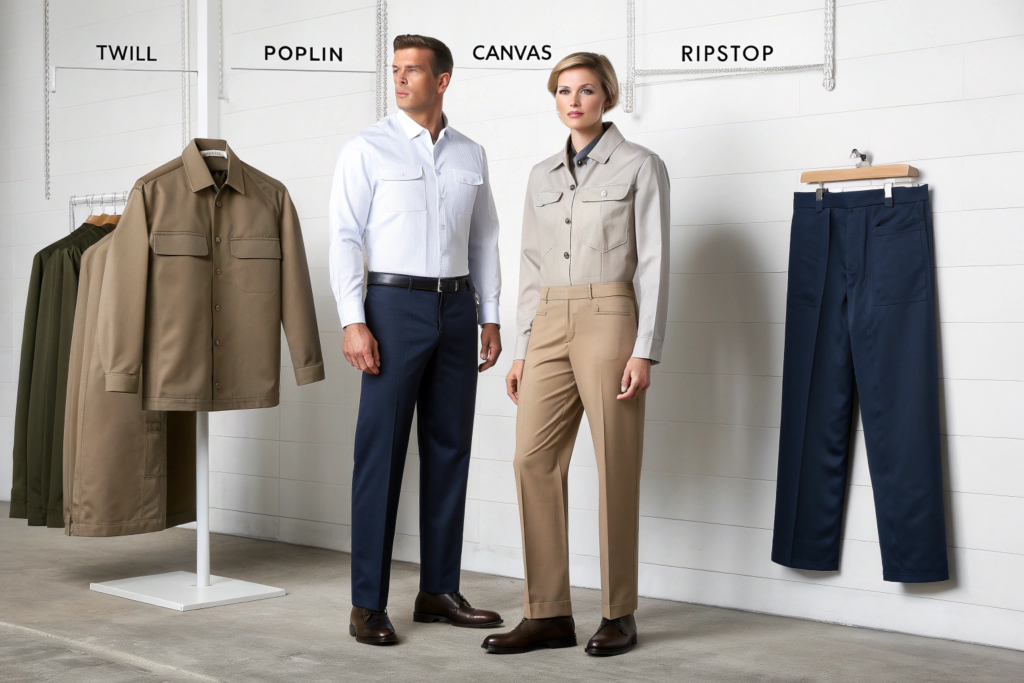
Twill weaves dominate uniform bottoms for good reason. The diagonal rib structure hides dirt and wrinkles better than plain weaves, drapes nicely, and provides excellent durability. Police uniforms, hotel bellman pants, corporate trousers—all typically use twill. For heavy-duty applications, multiple twill lines (like cavalry twill) add even more durability.
Poplin (broadcloth) is the workhorse for uniform shirts. The plain weave with fine warp yarns and coarser weft creates a smooth, crisp surface that looks professional and accepts printing or embroidery beautifully. Uniform poplin typically uses higher thread counts (100-120 threads per inch) for durability, often in cotton-polyester blends for easy care.
Canvas and duck weaves handle the toughest applications. Industrial uniforms, workwear, and utility garments use these heavyweight wovens (8-12 oz and up) for maximum abrasion and tear resistance. The plain weave with heavy yarns creates a fabric that's almost indestructible under normal conditions.
Ripstop weaves add another durability dimension. These fabrics incorporate reinforcement threads at regular intervals, creating a grid that stops tears from propagating. Originally developed for military parachutes, ripstop is now common in industrial uniforms and outdoor workwear.
What Makes Twill Weaves Ideal for Uniform Trousers?
Twill's durability secret lies in its structure. Unlike plain weave where each weft yarn goes over and under each warp yarn (creating maximum intersections), twill has a floating pattern—weft yarns go over multiple warp yarns before going under. This creates longer floats that distribute stress and abrasion across more yarn surface.
The diagonal ribs of twill also hide wear better. As the fabric abrades, the ribs continue to catch light and shadow, masking the early stages of surface wear. A plain weave shows abrasion as obvious flattening; twill hides it longer.
Twill's draping properties matter for trouser appearance. The structure allows fabric to fall smoothly over curves while maintaining shape. Uniform trousers need to look crisp all day; twill delivers that.
Weight options range from lightweight (6-7 oz for summer trousers) to heavy-duty (10-12 oz for industrial use). For most uniform applications, 8-9 oz twill hits the sweet spot of durability and comfort.
A Middle Eastern airline chose our 8 oz polyester-viscose twill for their cabin crew trousers. The fabric resists abrasion from seats and galley equipment, maintains its press through long flights, and has enough give for comfort during service. They've used the same specification for seven years.
How Do Poplin Shirts Compare to Oxford or Pinpoint Weaves?
Uniform shirts face different demands than trousers. They need to look crisp, accept embroidery or printing, resist wrinkling, and withstand frequent laundering.
Poplin (broadcloth) offers the smoothest surface for printing and embroidery. The tight plain weave creates a flat canvas that reproduces logos crisply. It's also the most wrinkle-prone, requiring resin treatment for easy-care performance. Uniform poplin is typically 50/50 or 65/35 cotton-polyester for the best balance of appearance and easy care.
Oxford cloth has a basketweave structure that's softer and more textured than poplin. It's less formal but more comfortable and slightly more wrinkle-resistant. Oxford uniforms are common in less formal corporate environments and schools. The textured surface hides minor wrinkles better than smooth poplin.
Pinpoint oxford is a finer version of oxford, with smaller yarns creating a tighter weave that approaches poplin's smoothness while retaining some texture. It's popular for executive uniforms where appearance matters but comfort can't be sacrificed.
End-on-end weaves use alternating colored yarns in the warp to create a subtle visual texture that hides soil and wrinkles. Common in premium uniforms where appearance must last through long days.
A Swiss hotel chain uses pinpoint oxford for front-of-house staff—formal enough for their luxury positioning, comfortable enough for 10-hour shifts, and durable enough for 18 months of daily wear and weekly laundering.
How Do Knitted Fabrics Perform for Uniform Applications?
Knits have transformed uniforms over the past two decades. Once limited to t-shirts and polo shirts, advanced knit constructions now serve in roles traditionally reserved for wovens—including tailored looks with comfort that wovens can't match.
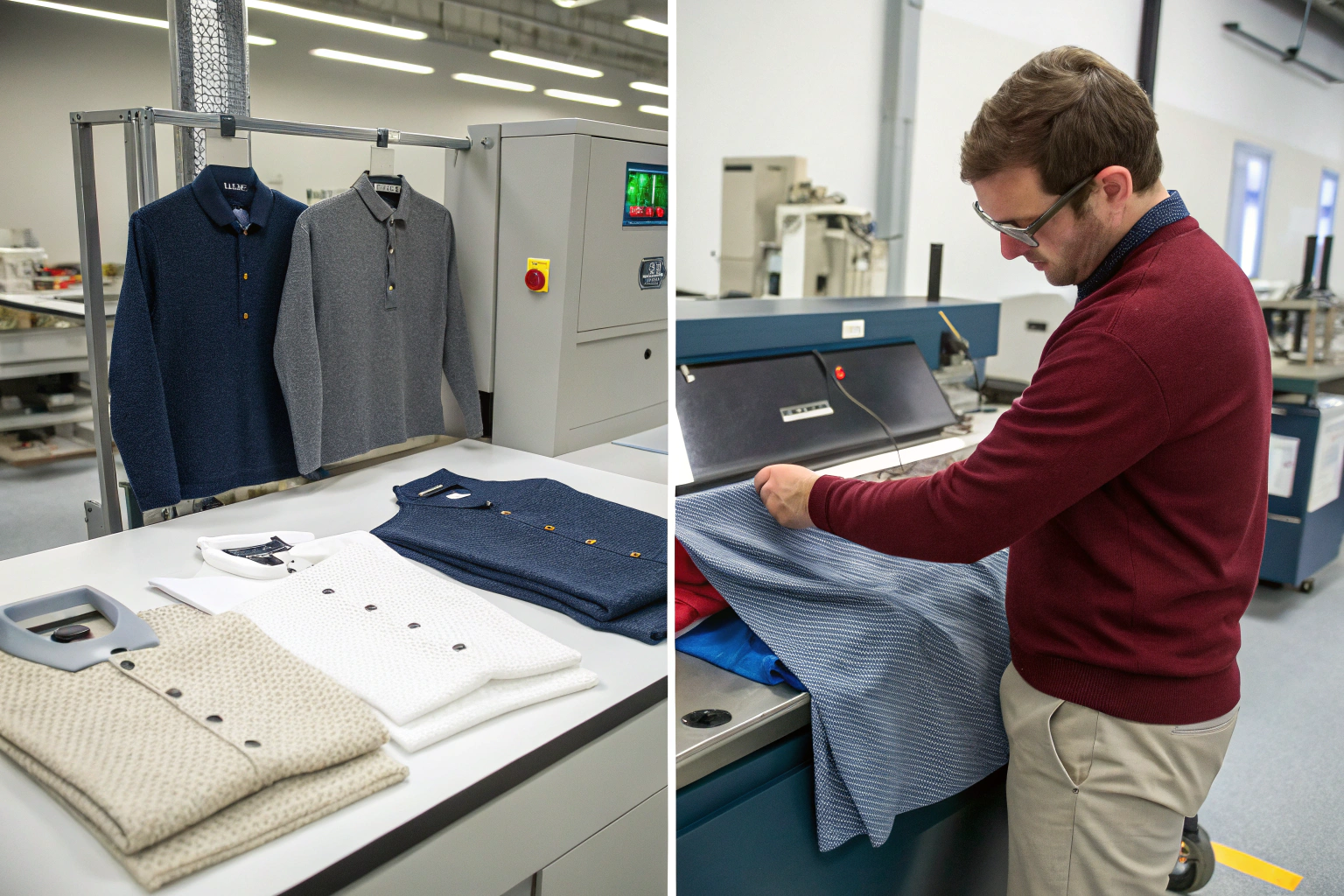
Polo shirts are the most common knit uniform garment. A well-constructed polo in cotton or cotton-polyester pique knit offers the comfort of knit with the collar and placket detailing that reads as "uniform" rather than "t-shirt." The key durability factors: collar retention (does it curl after washing?), pique structure stability (does it shrink or distort?), and colorfastness.
Sweater vests and cardigans in uniform colors provide layering options. Knit structures from fine-gauge interlock to chunky cables create different aesthetics while maintaining the comfort and flexibility knits offer. Uniform sweaters need excellent dimensional stability—nothing looks worse than a stretched-out cardigan.
Scrubs have become almost exclusively knit. The demands of healthcare—constant movement, frequent laundering, comfort for 12-hour shifts—align perfectly with knit properties. Jersey and interlock knits in polyester-cotton blends dominate this category, with advanced moisture-wicking and antimicrobial finishes common.
Knit blazers and tailored knit garments represent the frontier. Double-knit constructions with wool-like aesthetics and performance now serve in roles where traditional woven blazers would be too restrictive. The fabric stretches with movement while maintaining a tailored appearance.

What Makes a Polo Shirt Durable Enough for Daily Uniform Wear?
Polo shirts face unique durability challenges. The collar must stay crisp, the placket must lie flat, the cuffs must retain shape, and the body must resist sagging—all while providing the comfort that made you choose knits in the first place.
Fiber selection matters enormously. Cotton-rich polos (80%+ cotton) feel great but require careful finishing to maintain shape. Cotton-polyester blends (typically 50/50 or 60/40) offer better durability and easier care at a slight comfort trade-off. Performance polos may include spandex (3-5%) for recovery.
Construction details separate quality polos from disposable ones. Collar construction—knitted collar versus cut-and-sew—affects how well it holds shape. Reinforced placket buttons resist pulling. Taped shoulder seams prevent stretching. Rib-knit cuffs must be dense enough to resist curling.
Finishing processes matter. Compacting stabilizes the knit structure, preventing shrinkage and distortion. Resin treatments can improve wrinkle resistance and shape retention. Anti-pilling finishes extend the garment's new look.
A Japanese hotel chain tested polo shirts from six suppliers. Ours lasted 24 months with twice-weekly laundering; the cheapest lasted 4 months. The difference wasn't initial cost—it was construction details and finishing quality. They now specify our construction exclusively.
How Do Knit Uniforms Handle Heavy Laundering Compared to Wovens?
This is where knits have both advantages and disadvantages versus wovens.
Advantage: Knits generally tolerate the mechanical action of washing better because they have give. The loop structure accommodates agitation without the fiber damage that can occur in rigid wovens. This is why scrubs—washed constantly in healthcare settings—are almost always knits.
Disadvantage: Knits can shrink and distort more than properly finished wovens. Without adequate compacting and heat-setting, a knit uniform can lose shape after just a few washes. The solution is proper finishing and, for critical applications, spandex blending to maintain recovery.
Advantage: Knits dry faster than many wovens because the loop structure allows air circulation. This matters for uniforms that need quick turnaround—hotels and hospitals often need same-day laundering.
Disadvantage: Knits can pill more than wovens, especially in high-friction areas. Underarm seams, side seams where arms rub, and areas where bags or equipment contact can develop fuzz. Anti-pilling finishes and fiber selection (long-staple fibers pill less) mitigate this.
A Canadian healthcare network compared our polyester-cotton knit scrubs against woven alternatives. The knits lasted 30% longer despite being washed in industrial machines twice weekly. The combination of comfort and durability made the choice obvious.
What Fiber Blends Optimize Durability for Different Uniform Types?
Fiber selection is the foundation of uniform durability. The right blend can double or triple garment life compared to single-fiber fabrics, even with identical construction.
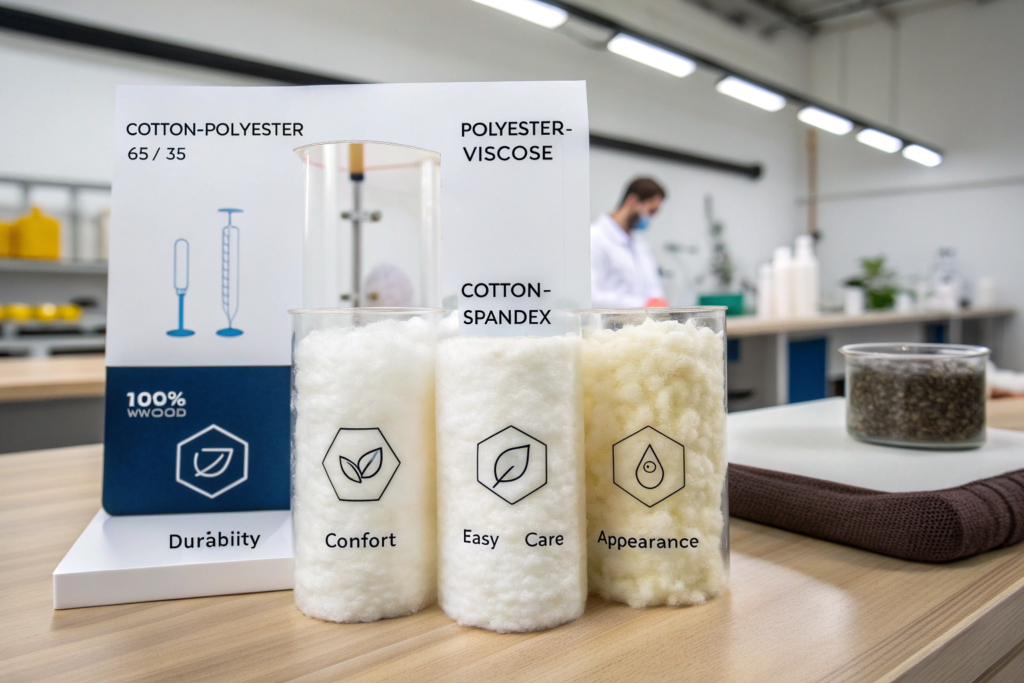
Cotton-polyester blends dominate the uniform market for good reason. Cotton provides comfort, breathability, and natural appearance; polyester adds strength, chemical resistance, and easy care. The classic 65/35 poly-cotton blend (65% polyester, 35% cotton) offers maximum durability with acceptable comfort. The 50/50 blend shifts toward comfort while maintaining good durability. For premium uniforms, 80/20 cotton-polyester prioritizes natural feel with some performance benefits.
Polyester-viscose blends (typically 65/35 or 70/30) are popular for women's uniforms and tailored garments. Viscose adds drape and softness that cotton can't match, while polyester provides durability. These blends take color beautifully and have a subtle luster that elevates appearance. The trade-off is lower abrasion resistance than cotton blends—viscose fibers are weaker when wet.
Cotton-spandex blends (typically 97/3 to 95/5) add stretch and recovery to cotton-dominant fabrics. The small spandex percentage transforms how the fabric performs during wear, resisting bagging and maintaining shape. For uniforms requiring movement with cotton comfort, this is the solution.
Wool blends serve premium and cold-weather uniforms. Wool-polyester (typically 70/30 or 80/20) combines wool's natural performance (insulation, moisture management, appearance) with polyester's durability and easy care. These are expensive but can last for years with proper care.
Why Is 65/35 Poly-Cotton the Gold Standard for Heavy-Duty Uniforms?
The 65/35 poly-cotton ratio isn't arbitrary—it emerged from decades of testing and real-world use. Here's why it works:
At 65% polyester, the fabric has enough synthetic fiber to provide excellent durability and chemical resistance. Polyester fibers are stronger than cotton, resist abrasion better, and don't weaken significantly when wet. They also resist the alkaline chemicals in commercial laundry detergents that can damage cotton.
At 35% cotton, the fabric retains enough natural fiber for comfort and appearance. Cotton provides moisture absorbency (important for comfort), a natural hand feel, and the ability to take prints and embroidery cleanly. The cotton component also reduces static buildup common in high-polyester fabrics.
The blend also processes well in dyeing and finishing. The two fibers take dye differently, creating a subtle heather appearance that hides soil between launderings. Solid shades are achievable with careful dye selection.
A US postal service uniform specification has required 65/35 poly-cotton twill for decades. The fabric withstands daily wear, frequent industrial laundering, and the demands of letter carriers in all conditions. Attempts to change the specification have always resulted in lower durability.
When Should You Choose 100% Cotton for Uniforms Despite Lower Durability?
Sometimes durability isn't the only priority. 100% cotton uniforms have their place despite shorter life.
Executive and luxury uniforms often specify 100% cotton for appearance and prestige. The natural hand feel, superior breathability, and traditional aesthetic justify more frequent replacement. A five-star hotel's front desk staff might wear 100% cotton shirts replaced annually rather than poly-cotton shirts lasting two years. The image matters more than the cost.
Heat-stress environments benefit from cotton's breathability. Kitchen staff, outdoor workers in hot climates, and anyone working in extreme heat may need cotton's moisture absorption and breathability. The comfort and safety benefits outweigh durability concerns.
Allergy considerations occasionally require 100% natural fibers. Some individuals react to synthetic fibers or the chemicals used in polyester processing. For these cases, cotton is the only option.
A Middle Eastern construction company uses 100% cotton uniforms for outdoor workers despite shorter life. The breathability difference in 45°C heat reduces heat stress incidents enough to justify more frequent replacement.
How Do Construction Details Affect Uniform Durability Beyond Fabric Choice?
The best fabric in the world won't save a uniform with poor construction. Seams fail, buttons pop, pockets tear—all due to construction details, not the fabric itself.
Seam construction matters enormously. For wovens, seam slippage (where fabric pulls apart at the seam line) indicates either insufficient stitches per inch or fabric with poor seam strength. For knits, seam popping occurs when the seam doesn't stretch with the fabric. Both require proper needle, thread, and stitch selection.
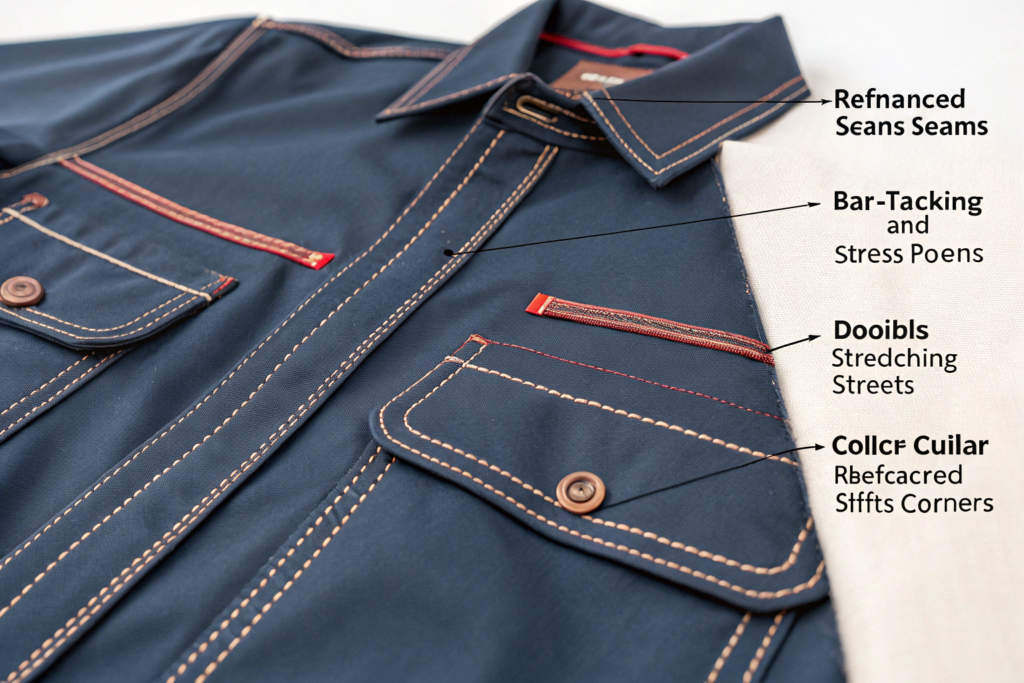
Reinforcement at stress points extends uniform life dramatically. Bar-tacking at pocket corners, crotch seam intersections, and belt loops prevents these high-stress areas from failing first. Double-needle stitching on side seams adds strength and a professional appearance.
Button and buttonhole quality affects both appearance and durability. Cheap buttons break; poor buttonholes fray. For uniforms that see daily wear and frequent laundering, these details determine whether shirts last 6 months or 18 months.
Pocket construction varies widely. Reinforced pocket openings, properly secured pocket bags, and adequate pocket depth all affect how long pockets survive daily use. A hotel bellman's pocket carrying keys and phones needs different construction than an executive's shirt pocket holding a pen.
A British school uniform supplier lost a contract because their blazers' pocket bags tore after three months. The fabric was excellent; the pocket bag construction was cheap. They switched to our specification with reinforced pocket bags and haven't had a complaint since.
What Stitching Details Should You Specify for Maximum Durability?
Thread type is the foundation. Polyester core-spun thread offers the best balance of strength, stretch, and chemical resistance for uniforms. Cotton thread looks traditional but degrades faster in laundering. Nylon thread is strong but can melt under high heat.
Stitches per inch (SPI) varies by fabric and application. For wovens, 10-12 SPI is standard for most seams; 8-10 SPI for heavier fabrics. Too few stitches reduces strength; too many can weaken the fabric by perforating it excessively. For knits, 8-10 SPI with ball-point needles prevents fabric damage.
Seam types matter. Flat-felled seams (like on denim jeans) offer maximum durability but add bulk. Safety stitches (combination of chainstitch and lockstitch) provide strength with flexibility. Overedge stitches prevent raveling on woven fabrics.
Reinforcement techniques: Bar-tacks at stress points, back-tacking at seam ends, and reinforced pocket openings all add marginal cost but significant durability. A few cents of additional thread and labor can add months of garment life.
A German workwear brand specifies all these details in their tech packs. Their uniforms cost 15% more than competitors but last 50% longer. Their customers have done the math and keep coming back.
How Do Finishing Treatments Extend Uniform Life?
Finishing treatments applied after weaving or knitting can dramatically improve durability.
Resin treatments cross-link cellulose fibers (cotton, rayon) to improve wrinkle resistance and reduce fiber swelling during laundering. Treated fabrics resist abrasion better and maintain appearance longer. The treatment must be carefully applied to avoid weakening fibers—over-treatment causes strength loss.
Anti-pilling finishes for knits use enzymes or polymers to reduce surface fuzz formation. These treatments are essential for uniform knits that see high-friction areas. Without them, even quality knits can develop an unsightly fuzzy surface.
Stain-release finishes (fluorochemicals) make it easier to remove organic stains without harsh scrubbing that damages fabric. For hospitality and food service uniforms, this feature extends life by reducing the need for aggressive stain treatment.
Moisture management finishes improve comfort in active uniforms. While not directly extending life, they reduce the likelihood of garments being discarded due to discomfort.
A Singaporean airline applies all three finishes to their cabin crew uniforms. The resin treatment maintains crisp appearance through long flights; anti-pilling keeps knits looking new; stain-release handles food and beverage spills. Their uniforms last three years—double the industry average.
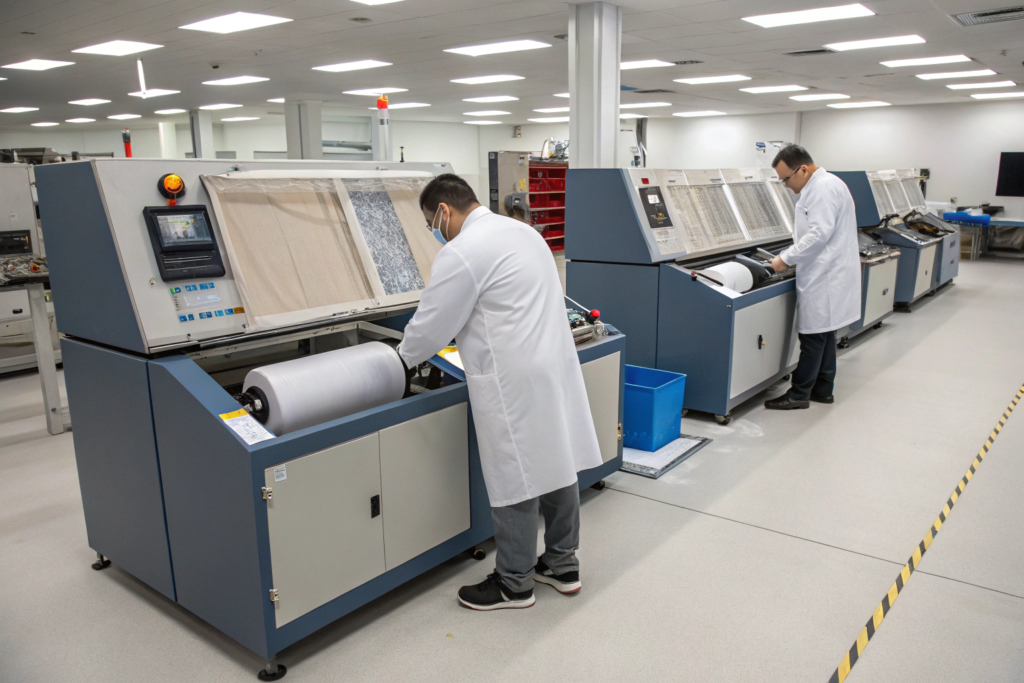
What Testing Should You Require Before Committing to Uniform Fabrics?
Before committing to a uniform fabric, testing protects you from expensive mistakes. The cost of testing is trivial compared to the cost of replacing thousands of failed uniforms.
Abrasion testing (Martindale or Wyzenbeek) tells you how the fabric withstands surface wear. For uniforms, Martindale is more common. Request cycles to failure—not just "pass/fail." Compare results to your requirements: 20,000 cycles for office, 30,000+ for hospitality, 40,000+ for industrial.
Tensile and tear strength testing measures how fabric withstands sudden stress. ASTM D5034 for tensile strength, ASTM D2261 for tear strength. For uniforms that might snag or experience sudden pulls, these tests matter.
Seam slippage testing (ASTM D4034 for wovens) measures how well seams hold under stress. Uniforms with poor seam slippage will fail at the seams long before the fabric wears out. Acceptable seam slippage is typically 1/8 inch or less under standard loads.
Colorfastness testing covers multiple dimensions: to washing (AATCC 61), to light (AATCC 16), to crocking/rubbing (AATCC 8), and to perspiration (AATCC 15). Uniforms need all four. A fabric that fades after 20 washes or bleeds onto other garments is unacceptable.
Dimensional stability (shrinkage) testing (AATCC 135 for home laundering, AATCC 158 for industrial) tells you how the uniform will fit after laundering. Acceptable shrinkage is typically under 3% in both directions.
A French hotel chain requires all four test categories before approving any new uniform fabric. They've used this system for ten years and haven't had a uniform quality failure in that time.
What Test Results Indicate a Fabric Will Last in Your Specific Environment?
Interpretation matters as much as testing. Here's how to read results for common uniform environments:
For office/corporate: Abrasion 20,000+ cycles, tensile strength 50+ lbs, tear strength 5+ lbs, seam slippage under 1/8", shrinkage under 3%, colorfastness to washing 4.0+ (on 5-point scale). These fabrics will last 1-2 years with weekly laundering.
For hospitality: Abrasion 30,000+ cycles, tear strength 7+ lbs, seam slippage under 1/16", colorfastness to light 4.0+ (uniforms near windows fade faster), stain release rating 3.0+ (on 5-point scale). These face harder use and more varied conditions.
For healthcare: Abrasion 30,000+ cycles, shrinkage under 2% (scrubs must fit after industrial laundering), colorfastness to washing 4.5+, antimicrobial performance if specified. Healthcare uniforms face the most frequent laundering.
For industrial: Abrasion 50,000+ cycles, tensile strength 100+ lbs, tear strength 10+ lbs, seam slippage under 1/16". These are minimums; heavy industrial may require 75,000+ cycles.
A Dutch logistics company requires 40,000 cycles minimum for their warehouse uniforms. They tested cheaper fabrics at 25,000 cycles and found they lasted 8 months instead of 18. The math on replacement costs made the higher specification the obvious choice.
How Do You Compare Test Results from Different Suppliers?
Testing methods must be consistent for comparison. Ensure all suppliers use the same standards (ASTM, AATCC, ISO) and report results in comparable units.
Ask for actual test reports, not summary sheets. A summary might say "passes abrasion requirements." A test report shows the actual cycles to failure—20,000 versus 40,000 matters enormously.
Request tests on the actual production fabric, not just development samples. Sample fabric may be specially prepared and not representative of bulk production. We provide test reports from production batches as part of our quality documentation.
Consider the full test battery, not individual results. A fabric might excel at abrasion but fail at seam slippage. The overall profile determines uniform suitability.
A Swedish uniform buyer maintains a database of test results from all suppliers. They can compare actual numbers, not marketing claims. When a new supplier claims "better than your current fabric," they ask for the test data. Usually, it's not.
Conclusion
The choice between knitted and woven fabrics for uniforms isn't about picking a winner—it's about matching fabric properties to uniform requirements. Woven fabrics offer superior abrasion resistance, dimensional stability, and structure—ideal for trousers, blazers, shirts, and heavy-duty applications. Knitted fabrics provide comfort, stretch, and ease of movement—perfect for polo shirts, scrubs, and situations where comfort drives performance.
Within each category, fiber selection, construction details, and finishing treatments dramatically affect durability. A 65/35 poly-cotton twill will outlast a cheap 100% cotton twill by years. A well-constructed poly-cotton polo with anti-pilling finish will look good long after a basic cotton polo has been relegated to the rag bag.
Testing protects your investment. Require abrasion, tensile, tear, seam slippage, colorfastness, and shrinkage testing before committing to any uniform fabric. Compare actual numbers, not marketing claims. The cost of testing is trivial compared to the cost of uniform failure.
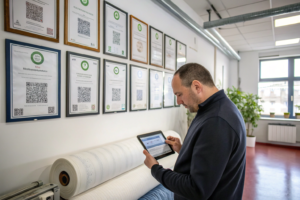
At Shanghai Fumao, we've supplied uniform fabrics for over two decades to clients ranging from five-star hotels to industrial workwear companies. Our CNAS-accredited lab tests every uniform fabric against the specific requirements of each application. We provide full test reports, not summaries. And we work with clients to develop specifications that balance durability, comfort, and cost for their specific needs.
Whether you need twill for hotel uniforms, poplin for corporate shirts, pique knits for polo shirts, or specialized fabrics for industrial applications, we have the expertise and quality systems to deliver.
Contact our Business Director, Elaine, today to discuss your uniform fabric requirements. She and her team will guide you through fabric options, provide test data for comparison, and ensure your uniforms perform as long as your people need them. Email her directly at: elaine@fumaoclothing.com. Let's create uniforms that last.