You’ve got the designs, the vision, and the brand story. Now you need to bring it to life with custom apparel made in China. The price is right, the capabilities are there, but a silent question lingers: "How do I know these clothes are actually safe for my customers?" The nightmare isn’t just about delayed shipments or quality defects—it’s about a customer, or worse, a child, having a reaction, or your brand being exposed for harmful chemicals you never knew were there. Safety isn’t a feature; it’s the foundation.
Sourcing safe custom apparel from China is a proactive, system-driven process, not a hopeful checkbox. It means moving beyond just finding a factory that can sew. It requires building a "Safety-First" supply chain where every component—from yarn and dye to zipper and print—is selected and controlled against stringent, verifiable standards. The goal is to transform opaque sourcing into a transparent, accountable partnership where safety is engineered in, not just inspected for at the end.
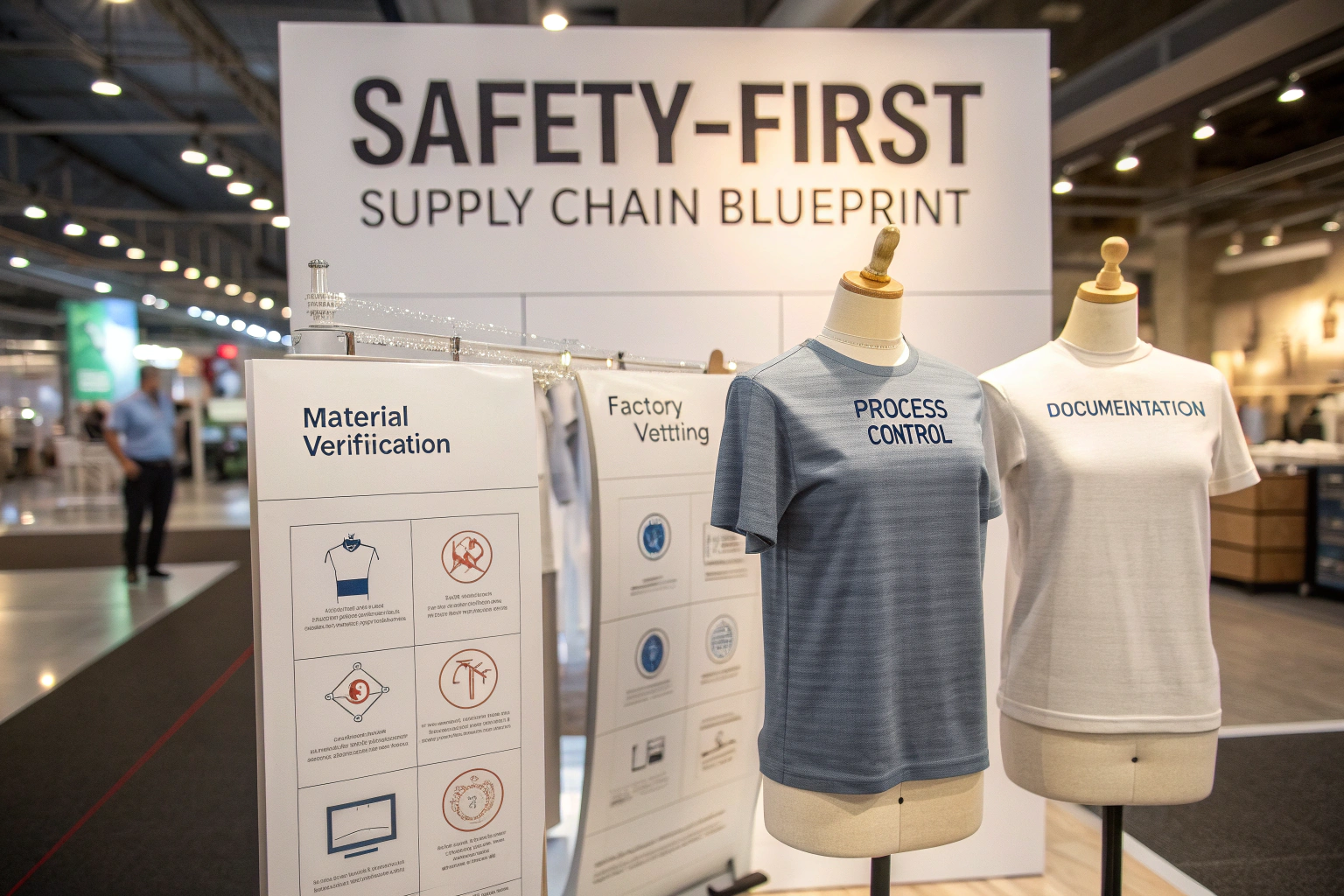
Think of it like building a house. You wouldn’t use untested, substandard materials for the foundation and hope it passes inspection. You’d source certified lumber, approved electrical wiring, and inspected plumbing from the start. This article is your blueprint. We’ll walk through the four critical pillars of sourcing safe custom apparel: Material Verification, Factory Vetting, Process Control, and Documentation Trail. Let’s build your brand on a foundation of trust.
Pillar 1: Material Verification – It All Starts With The Fabric
The safety of your garment is determined up to 80% at the material stage. A beautifully constructed shirt made from fabric laden with heavy metals, formaldehyde, or allergenic dyes is an unsafe product. Your first and most powerful control point is insisting on certified raw materials.
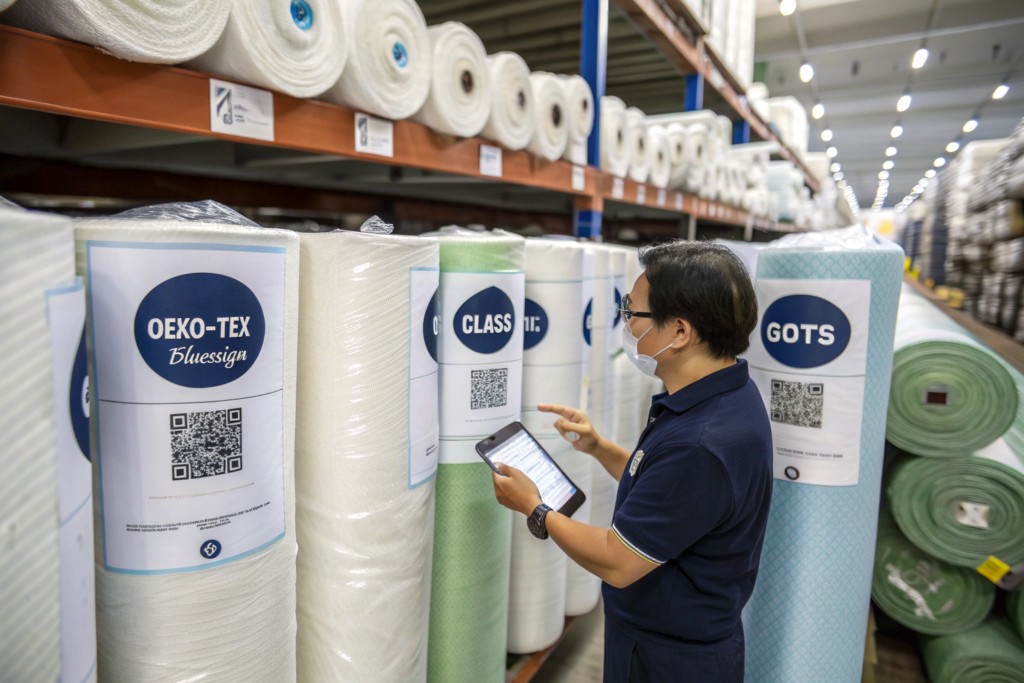
Do not accept vague promises of "good quality" or "export standard." Demand internationally recognized, third-party certifications that are specific to human-ecological safety. For most brands, the baseline should be OEKO-TEX® STANDARD 100. This certification tests for over 350 harmful substances. Specify the correct Product Class (e.g., Class I for babies, Class II for adult skin contact). For organic claims, GOTS (Global Organic Textile Standard) is the gold standard, covering both organic fiber content and environmentally responsible processing. For performance wear, bluesign® certification ensures chemical and environmental safety from input stream to finished fabric.
How do I verify a fabric supplier’s certifications?
Asking for a certificate is step one. Verifying it is what separates professionals from amateurs. Follow this checklist:
- Request the Full Test Report: Not just a summary, but the detailed report from an accredited lab (look for ISO 17025 accreditation).
- Check Validity & Scope: Is the certificate current (valid for one year)? Does the described product (e.g., "100% Cotton Jersey, 200GSM") exactly match what you’re buying? Does it cover the right product class?
- Use the Online Database: Both OEKO-TEX® and GOTS have online databases where you can enter the certificate number to verify its authenticity and status.
- Ask About Batch Testing: How does the mill ensure ongoing compliance after the initial certificate? Do they do batch-specific testing?
A client from Australia in 2023 avoided a major issue when we provided the OEKO-TEX® certificate for a bamboo jersey. They cross-referenced the number online and found it was valid and for the correct product class. Their previous supplier had provided a fake, photoshopped certificate. Trust, but verify.
What about trims and accessories?
The "small stuff" causes the biggest fails. Buttons, zippers, drawcords, labels, and prints must be held to the same standard. A perfect OEKO-TEX® certified fabric can be rendered non-compliant by a nickel-plated button or a plastisol print containing phthalates. Your sourcing checklist must include:
- Metal Components: Must be nickel-free if in direct skin contact.
- Plastic/PVC Components: Must be free of banned phthalates (e.g., DEHP, BBP).
- Prints & Embellishments: Require specific testing for heavy metals and plasticizers.
You must collect Declarations of Conformity (DoC) or test reports from all trim suppliers. At Shanghai Fumao, our integrated service includes sourcing and validating compliant trims as part of our package, creating a unified safety dossier for your entire product.
Pillar 2: Factory Vetting – Auditing Beyond The Sewing Floor
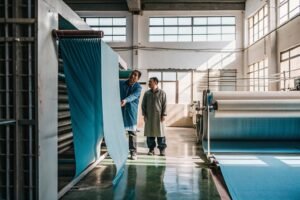
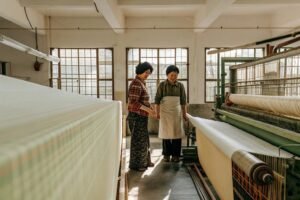
A factory that can sew a straight line is common. A factory that manages chemical safety, maintains a controlled production environment, and documents its processes is rare. Your vetting must go beyond capacity and price.
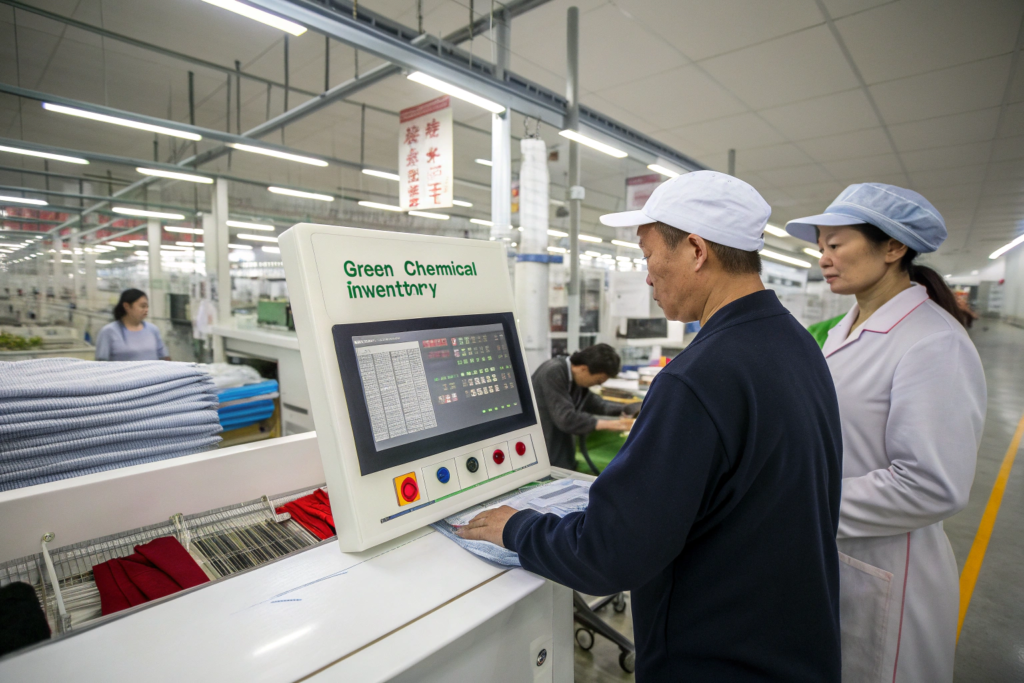
Conduct a Chemical Management Audit, either in-person or via a detailed questionnaire and virtual tour. Key areas to probe:
- Chemical Inventory: Do they maintain a "Positive List" of approved, safe dyes and auxiliaries? Can they show you the MSDS (Material Safety Data Sheets)?
- In-House Testing: Do they have a basic lab for pre-checks? Look for pH meters, colorfastness testers. Do they keep logs?
- Production Segregation: How do they prevent cross-contamination? For example, are machines cleaned between runs of different colors or fabric types? Is dark/light production separated?
- Wastewater Treatment: Basic treatment is a sign of environmental responsibility and reduces the risk of chemical recirculation.
What questions reveal a factory’s true safety mindset?
Move beyond "Are you certified?" to operational questions:
- "Can you walk me through what happens if a new dye arrives? How is it approved and tested before use?"
- "Show me your procedure for cleaning printing screens or dyeing machines between lots."
- "How do you train workers on handling chemicals safely?"
- "What was the main corrective action from your last third-party audit?"
Their answers will tell you if safety is a system or just a slogan. A great factory will have documented procedures and be proud to show them.
Should I prioritize vertically integrated partners?
Yes, where possible. Vertically integrated suppliers (or tightly coordinated networks like Shanghai Fumao’s) who control or closely ally with weaving, dyeing, and finishing stages offer a massive advantage. They control the "recipe." The risk of communication gaps and finger-pointing between separate dye houses, printers, and sewing factories is eliminated. You have one point of accountability for the entire production chain’s safety. This integration is often the most effective way to ensure consistency and traceability from fiber to finished garment.
Pillar 3: Process Control – Managing Every Step of Production
Safety can be compromised at any stage. Your order’s journey from fabric to finished goods needs defined control points. This is where a detailed Tech Pack transforms from a design document into a safety contract.
Your Tech Pack must include explicit safety specifications:
- Approved Fabric & Trim List: Referencing specific certified materials by supplier and certificate number.
- Banned Substance List (RSL): Provide your own or adopt the OEKO-TEX® RSL. Make it a contractual appendix.
- Critical Process Parameters: Specify wash temperatures for shrinkage and chemical residue removal, approve all dye and print recipes.
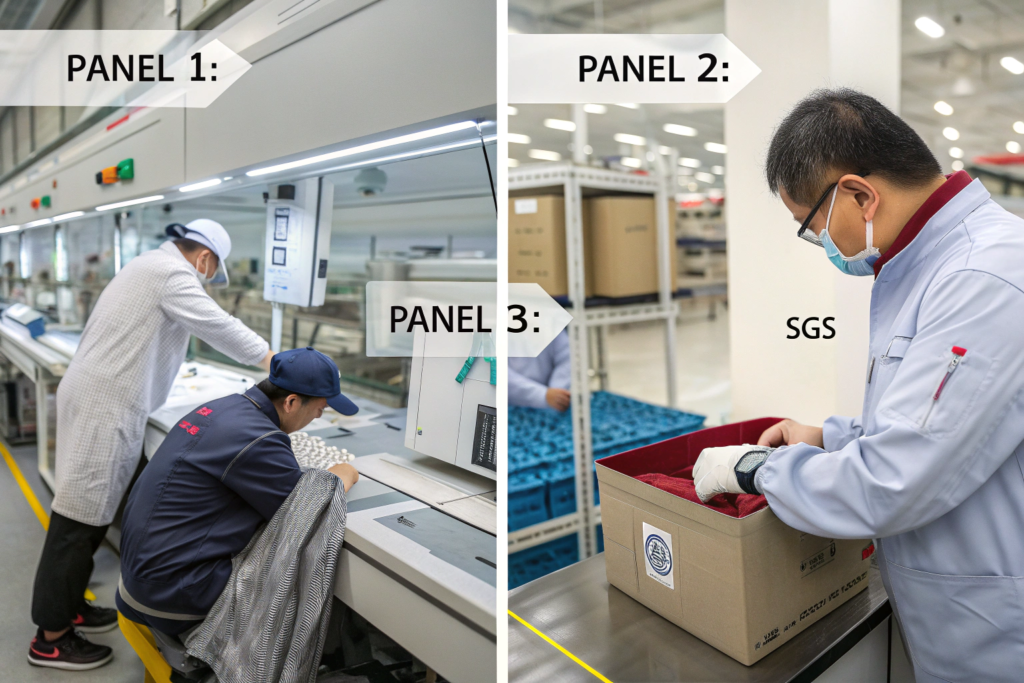
Implement Inline and Pre-Shipment Inspections (IPS) that focus on safety. An inspector should:
- Verify that bulk fabric matches the approved, certified lab dip.
- Randomly select finished garments and send them for third-party laboratory testing before the entire order is shipped. This is non-negotiable for safe sourcing.
What is a Restricted Substance List (RSL) and how do I use it?
An RSL is your brand’s official list of banned or restricted chemicals. It should be based on your target market regulations (EU REACH, US CPSIA, California Prop 65) and your own brand values. Provide this RSL to your factory before production starts. It becomes a binding part of your purchase order. The factory must then obtain signed compliance statements from all their material suppliers. This formalizes the chain of responsibility. You can find comprehensive guidance on building an RSL through resources like the AFIRM Group’s RSL toolkit.
How does batch testing work and who pays for it?
Batch testing is your final safety net. Before shipment approval, randomly select sealed samples from finished production (AQL sampling). Send these to an accredited third-party lab (e.g., SGS, Bureau Veritas, ITS) for testing against your RSL or the relevant standard. The cost is typically borne by the brand, but it is the best insurance you can buy. A failed test here, while painful, prevents a catastrophic recall. The key is that the factory must be contractually obligated to cover the cost of re-production if the test fails, incentivizing them to get it right the first time. We build this clause into all our client agreements.
Pillar 4: Documentation Trail – Your Proof of Due Diligence
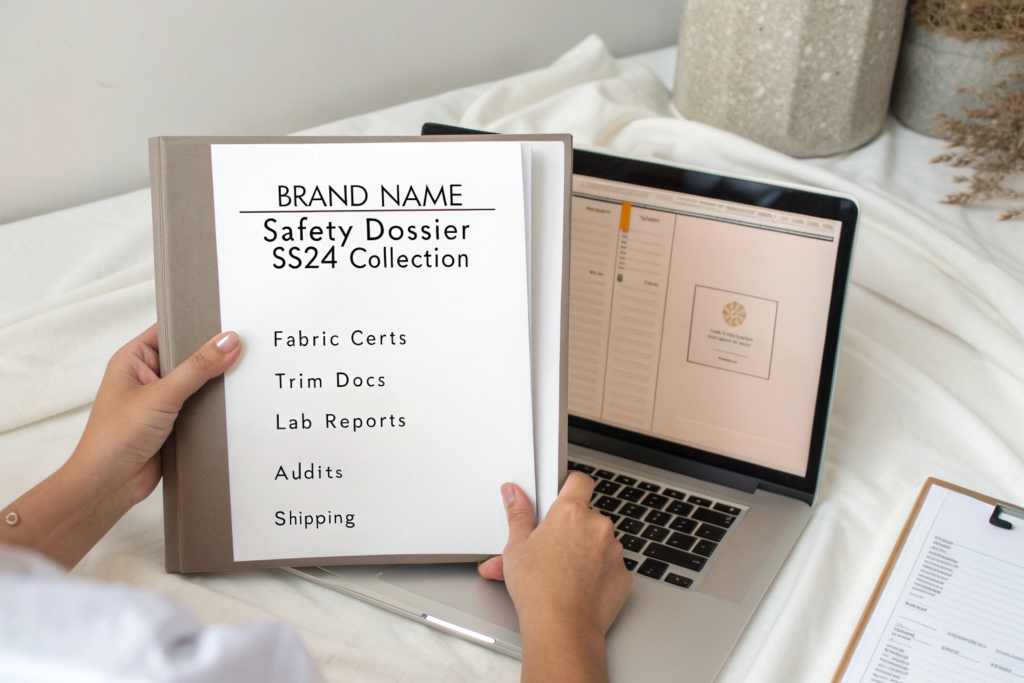
If it isn’t documented, it didn’t happen. In the event of a challenge from a retailer, consumer, or regulator, your comprehensive documentation trail is your legal and reputational shield. This dossier proves you exercised due diligence.
Your Safety Dossier for each production order should include:
- Material Certificates: OEKO-TEX®, GOTS, etc., for fabric and all major trims.
- Declarations of Conformity (DoC): From all suppliers for components.
- Lab Test Reports: Pre-production lab dip/strike-off tests and the final batch test report from the third-party lab.
- Factory Audit Reports: Your own or a third-party’s chemical management audit.
- Shipping Documents: Commercial invoice and packing list that accurately describe the goods.
This organized folder is what you provide during a retailer’s compliance audit. It turns a stressful interrogation into a smooth, professional review.
How do I handle logistics and customs for safe shipping?
Your responsibility doesn’t end at the factory door. To prevent issues at import, use DDP (Delivered Duty Paid) Incoterms with a reliable partner. This means your supplier (or their agent) handles export, freight, import clearance, and pays all duties. Why is this safer? They ensure the commercial paperwork (invoice, packing list) accurately reflects the product and its certifications, minimizing the risk of customs holds for inspection. They also manage the correct HS code classification, which determines duty rates. A seamless logistics chain protects your safe product from getting stuck in a port warehouse. Our DDP service at Shanghai Fumao is designed specifically for this, providing a worry-free door-to-door solution for certified goods.
What are the legal implications of not having proper documentation?
Without a documentation trail, you have no defense. If a product is alleged to be unsafe:
- Retailers: Will immediately delist you and may impose fines.
- Regulators: (e.g., EU’s RAPEX system) can issue a mandatory recall. You may face penalties.
- Civil Liability: You could be sued by consumers.
Having your dossier demonstrates you took every reasonable step to ensure safety, which can significantly limit your liability. It shows you were not negligent. It’s not just paperwork; it’s your risk management strategy in document form.
Conclusion
Sourcing safe custom apparel from China is a deliberate and systematic journey. It replaces hope with verification, and vague promises with documented proof. By mastering the four pillars—Material Verification, Factory Vetting, Process Control, and Documentation—you transform your supply chain from a cost center into a cornerstone of your brand’s integrity.
This approach does more than mitigate risk; it builds immense value. It empowers you to tell an authentic story of responsibility, to confidently pass retailer audits, and to build unshakeable trust with your customers. The safe choice is ultimately the most profitable and sustainable one for your brand’s future.
You don’t have to navigate this complex landscape alone. Partner with a source that has engineered safety into its core operations. At Shanghai Fumao, we provide not just certified fabrics, but an integrated, transparent, and accountable sourcing service. From certified material libraries to managed production and DDP logistics, we are your partner in building a safe, successful brand. Ready to source with confidence? Contact our Business Director, Elaine, to develop your Safety-First sourcing plan. Email Elaine at: elaine@fumaoclothing.com.