Look, I've been in this game for over 20 years. I’ve seen a lot of entrepreneurs, especially from the US, jump into the home gym market thinking it’s just about stitching some covers. They focus on the design, which is great, but they forget the engine: the fabric. Then they get stuck. They find a supplier who gives them a cheap price, but three months later, the cover is peeling, the stitching is ripped, and their customer reviews are a disaster. I get it. Sourcing fabric for fitness equipment isn't like sourcing cotton for t-shirts. It's a different ball game.
So, how do you actually source fabric that won't fall apart after a few months of sweat and tension? The short answer is: you need to partner with a manufacturer who understands technical textiles, not just fashion fabrics. You need a team that can engineer the material for your specific needs, from the denier of the polyester to the type of waterproof coating. At Shanghai Fumao (shanghai fumao), we don’t just sell you a roll of fabric; we build the foundation of your product.
We’ve spent two decades in Keqiao perfecting this process for global brands. In this post, I want to walk you through exactly how to navigate this process. We’ll talk about the right materials for the job, why quality control is your best friend, the hidden costs of tariffs, and how to time your production to avoid the Chinese New Year headache. By the end, you’ll have a clear roadmap to get your home gym project off the ground with the right fabric partner.
1. What type of fabric is best for weight bench covers?
This is the million-dollar question, and honestly, I see people get it wrong all the time. They pick a fabric that looks good on a mood board but fails in the real world. The best fabric isn't a single thing; it’s the right combination of strength, durability, and finish for your specific machine. For a weight bench or a treadmill cover, you're dealing with abrasion from sliding weights, constant stretching, and direct sunlight if it’s near a window.
In our factory, when a client like Ron from the US asks this, we immediately shift the conversation to technical specs. We talk about denier (the thickness of the fibers), tear strength, and UV resistance. For 90% of home gym covers, 600D or 1680D polyester Oxford fabric with a PVC or PU coating is the workhorse. It’s tough, water-resistant, and holds its color. If you’re making a high-end, padded cover for a multi-gym station, you might want to look into synthetic leather (PU leather) backed with a polyester knit. It feels premium and wipes clean easily. I remember in late 2022, a startup from Texas came to us with a design for an elliptical cover. They initially wanted a heavy vinyl. We suggested switching to a solution-dyed 600D polyester with a waterproof backing. Why? Because vinyl can crack in cold garages, but our polyester stays flexible down to -20°C. We saved them from a potential warranty nightmare right there.
Why is 600D Polyester the go-to choice for waterproof covers?
You see "600D" thrown around a lot, but here’s the real deal. The "D" stands for denier, which is the weight in grams per 9,000 meters of the fiber. 600D hits that sweet spot: it’s strong enough to resist tearing from sharp corners of equipment but still lightweight enough to fold and store. But the real magic for waterproofing is in the finishing. We apply a water-resistant coating, usually a clear acrylic or a more robust PVC layer on the back. This isn't just a spray-on; it's a lamination process done in our coating factory that physically blocks water droplets. It's the same tech we use for outdoor furniture covers. For instance, if you are interested in learning more about the different finishes available, you can check out this detailed explanation on textile standards from industry forums like Textile School's guide to fabric coatings. This process ensures your customer's equipment stays bone dry, even if they leave it on a damp basement floor. We always tell our clients: don't just ask for waterproof fabric, ask for the coating specification and the hydrostatic head test results.
Can I use synthetic leather for a premium look on my exercise bike cover?
Absolutely. If you want that gym-quality, professional look, synthetic leather (PU leather) is the way to go. It gives you that soft, supple touch that real leather does, without the maintenance or the cost. But (and this is a big but), you have to be careful about the base fabric. A cheap synthetic leather will start peeling ("delaminating") within months. At Shanghai Fumao, we use a high-density knitted or woven backing, usually polyester, and bond the PU layer to it in our own facilities. This is crucial for any cover that will experience friction, like a bike cover where the handlebars rub. We learned this lesson back in 2021 when a Canadian client had a bad batch from another supplier. The PU layer on their yoga mat straps was separating. They came to us, and we re-engineered the product with a double-pass coating process. The result? Zero delamination issues in two years. We also make sure to use phthalate-free PU, which is better for the environment and meets strict EU standards. For more insights into choosing sustainable synthetic leathers, this article on Ecotextile's news section about bio-based leathers is a great resource.
2. How do I manage quality control for imported gym fabrics?
Quality control is where most of the money gets lost. You can have the perfect design and the best fabric concept, but if the execution is sloppy, the product is dead. Managing QC from 7,000 miles away feels impossible, but it’s really about building a system, not just hoping for the best. For Ron and other US buyers, this is often their biggest pain point. They're worried about getting a container full of fabric that doesn't match the color, or has hidden flaws.
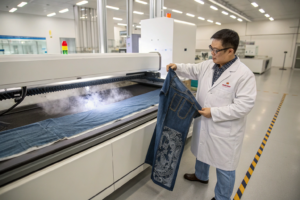
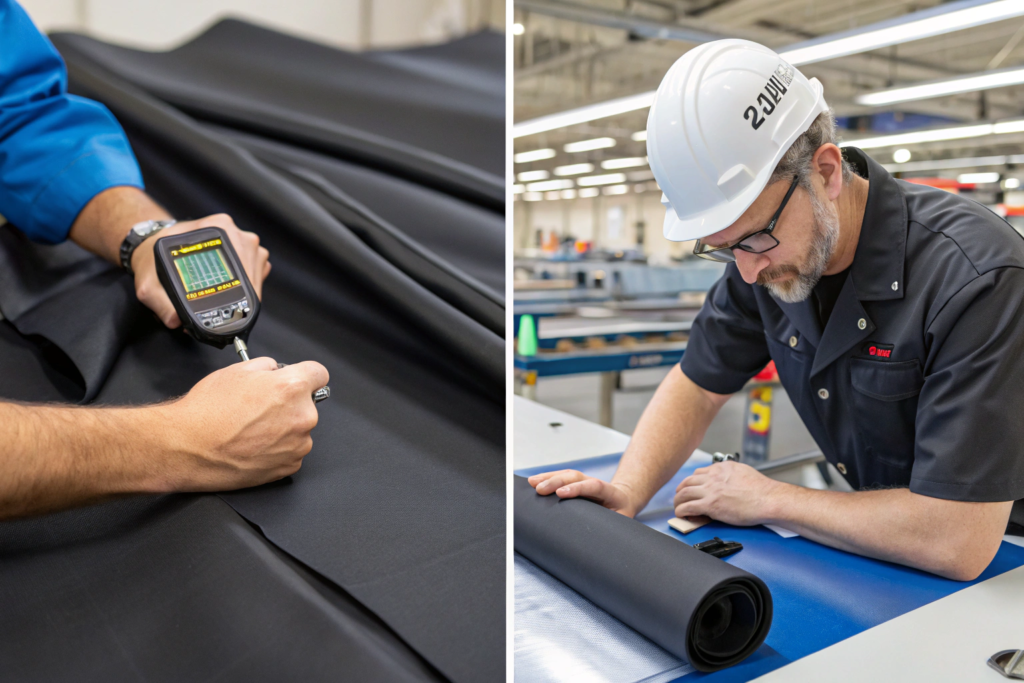
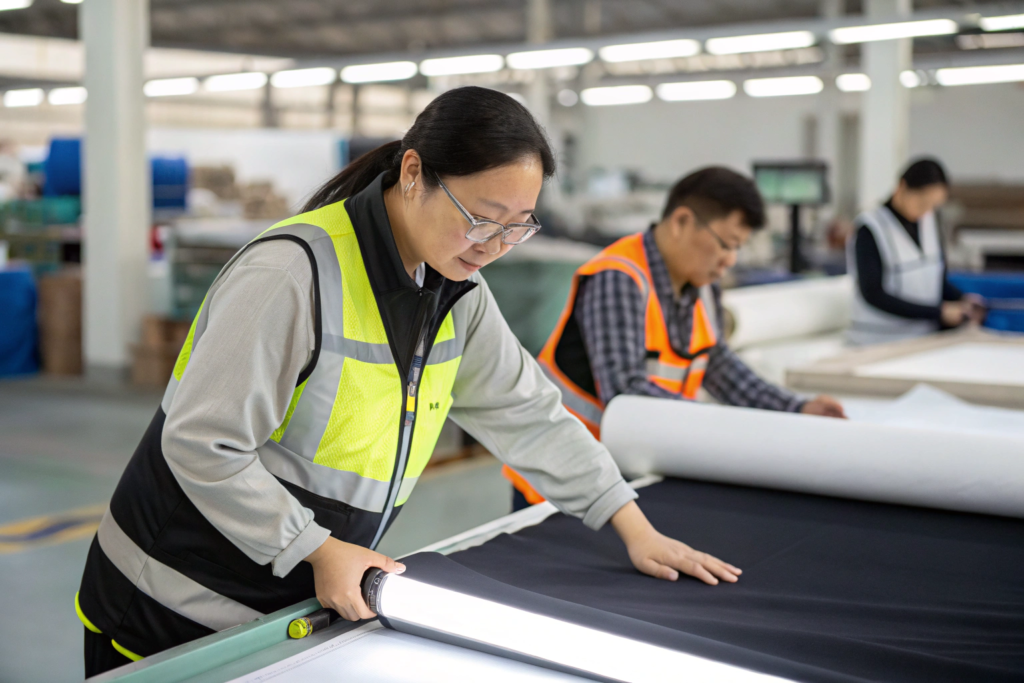
I always tell our partners: "Don't just trust us, verify us." That's why we built our own CNAS-accredited lab right inside our facility. We don't outsource our testing. When we produce a run of 600D polyester for your bench covers, we run it through our own testing center. We check for tear strength using the Elmendorf tear test, we check colorfastness to light and rubbing (crocking), and we check the waterproof rating with a hydrostatic head tester. We have a 5-step QC process: incoming fiber inspection, in-production weaving checks, first-piece inspection after dyeing, final fabric inspection (using a 4-point system), and pre-shipment random sampling. We caught a major issue for a UK sportswear brand in early 2023: the shrinkage rate on a batch of their custom-dyed fabric was 1% higher than their spec. Because we flagged it before cutting, we saved them 30 days of rework on the production line.
What specific lab tests should I request for tear strength?
You can't just pull on a fabric and say "yep, that's strong." You need data. For gym equipment covers, the two tests I recommend are the ASTM D2261 (Tongue Tear) or ASTM D1424 (Elmendorf Tear) . The Elmendorf test is my preference. It uses a pendulum to actually measure the force required to propagate a single-rip tear. It gives you a numerical value in Newtons or pounds. For a home gym cover, you want a tear strength of at least 50N in both the warp and weft directions for a standard 600D fabric. If a supplier can't provide you with a test report from a lab like SGS, ITS, or our own in-house lab, that's a red flag. We do these tests for every batch of fabric destined for heavy-use items. I remember in 2022, a German client sent us a sample from a previous supplier. Our lab tested it and found the tear strength was only 30N. We re-engineered the weave structure for them, increasing the pick density, and got it up to 65N. That’s the difference between a cover that lasts one year and one that lasts five.
How do I verify the waterproof coating is applied correctly?
This is a great question because a coating can look fine but fail immediately in use. There are two simple ways we verify this. First is the hydrostatic pressure test (AATCC 127) . We mount a fabric sample under a column of water and increase the pressure until three drops of water leak through. The higher the water column (measured in mm or cm), the more waterproof the fabric. For a good gym cover, you want a minimum of 200mm. The second is a spray test (AATCC 22) , which measures water repellency by spraying water on the fabric and comparing the wetting pattern to a standard chart. But a visual check is also crucial. In our factory, our inspectors check the coating uniformity with a backlight. If light shines through evenly, the coating is even. If you see dark spots, the coating is thin there. A practical tip from the floor: we also do a simple rub test. If the white coating powder comes off too easily when we rub two pieces of fabric together, it means the binding agents weren't applied correctly. We insist on a minimum 3,000 rubs on the Martindale test for any coated fitness fabric to ensure the finish stays put.
3. How can I save on shipping and US tariffs for fabric?
Let's talk money. Shipping and tariffs can eat your margin alive if you don't plan for them. Ron, like many of our US clients, is always concerned about the final landed cost. It’s not just the price per yard; it's how you get it there and what Uncle Sam charges you when it arrives. There are ways to be smart about this. It’s not about cutting corners, but about optimizing the process.
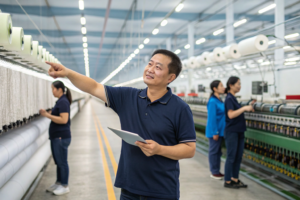
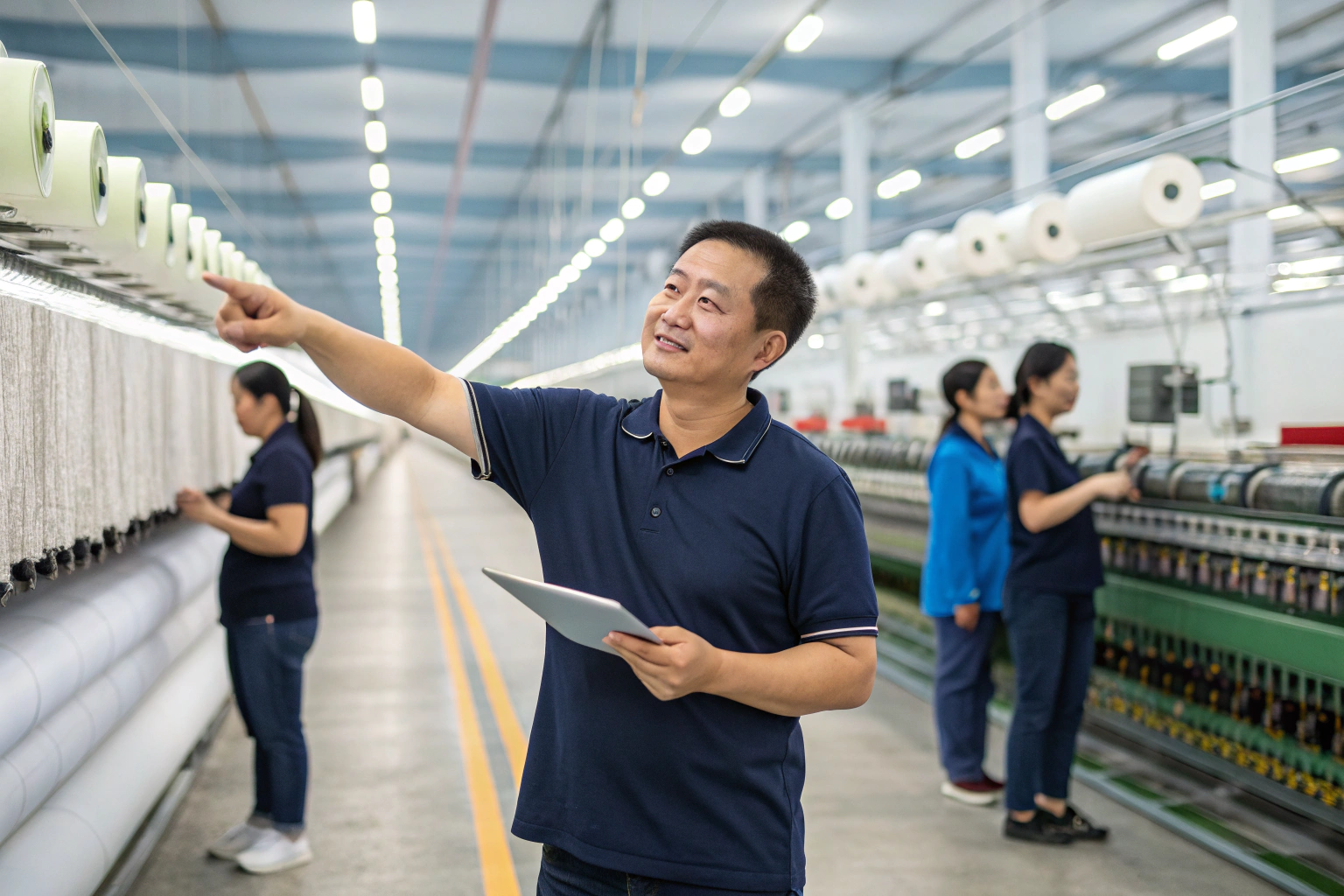
Our advantage in Keqiao is that everything is local. Our weaving factory, dyeing plant, and coating partners are all within an hour's drive. This hyper-local supply chain means we can consolidate your entire fabric order into one shipment. We don't have to wait for yarn from one province and coating from another. This consolidation saves you on inland freight and reduces the risk of delays. Then, we work with our freight partners to choose the right Incoterm. For US buyers, we often ship FOB Shanghai, which gives you control over the international leg. And here's a critical point on tariffs: many of our technical performance fabrics, especially those made with recycled polyester, can qualify for different HTS (Harmonized Tariff Schedule) codes than standard fabrics. We’ve been doing this long enough to know how to properly classify your goods. A wrong classification can lead to big fines and delays.

Can classifying fabric as "recycled polyester" reduce tariff costs?
Potentially, yes. And this is a huge lever for saving money. The US tariff code isn't a flat rate; it varies depending on the specific material, construction, and use. Many recycled polyester fabrics (made from rPET, like plastic bottles) can fall under different subheadings than virgin polyester. While it doesn't always guarantee a lower rate, it ensures you're paying the correct rate. Misclassification is a bigger risk, often leading to penalties. More importantly, from a strategic point, using recycled materials aligns you with the USDA BioPreferred program or other green initiatives that are becoming increasingly important for US federal contracts and eco-conscious consumers. In 2024, we helped a Californian yoga brand classify their new mat straps correctly. By documenting the entire production chain of our recycled yarn, we provided the CBP (Customs and Border Protection) with the proof they needed to clear the goods without issue. It saved them from a potential 15% penalty for misclassification. To understand the specifics, you can look up the HTSUS database online, but a good rule of thumb is to source from a supplier who understands these nuances. We often advise our clients to check for updates on trade policy from reliable sources like the US Fashion Industry Association's blog on trade, which covers these regulatory changes.
What is the best Incoterm for a first-time fabric importer?
For your first few shipments, I always recommend FOB (Free on Board) . Let's say you're working with us at Shanghai Fumao. We quote you a price "FOB Shanghai." That price includes everything to get your fabric to the port of Shanghai: the materials, labor, inland transport to the dock, and export customs clearance. You then take over. You pay for the ocean freight, insurance, and the import clearance in the US. This gives you a clear line of sight on costs. You get to choose your own freight forwarder, someone you trust, who can help you navigate the US side of things. It’s a very common and well-understood Incoterm. Later, once you're comfortable and have a steady volume, we can discuss other terms like CIF or DDP. But for a start, keep it simple with FOB. It puts you in the driver's seat for the international leg, which is exactly where you want to be when you're learning the ropes.
4. How do Chinese holidays like Golden Week affect my production timeline?
I can't stress this enough: timing is everything. The Chinese manufacturing calendar has rhythms, and you need to dance to them. If you don't, you can find your production delayed by a month. The three big periods are the Chinese New Year (CNY) shutdown (3-4 weeks), the Golden Week holiday in October (1 week), and the peak production months. Understanding this is the secret to keeping your supply chain moving.
We just talked about a European brand in the background that plans for CNY perfectly. That’s the gold standard. They have their tech packs and fabric orders finalized 6-8 weeks before the holiday. That way, their yarn is in our warehouse, our looms are scheduled, and the moment we’re back from the holiday, we hit the ground running. For a US client like Ron, if he needs fabric for a spring product launch, he needs to have his orders in by mid-December to beat the CNY rush. If he waits until February, he’s looking at April shipment. I’ve seen it happen a hundred times. In 2023, a new Australian brand ignored our advice and placed their order for 5,000 yards of printed mat fabric just as the CNY shutdown began. They thought it would be a short delay. They didn't account for the two-week ramp-up period after the holiday when factories are at 50% capacity. They ended up six weeks late for their summer launch. We did everything we could, but the holiday is non-negotiable.

Why is production slower in June-July and November-December?
These are what we call the "shoulder seasons." June and July are hot and humid in Zhejiang. While our factories are running, it's not the frantic pace of the peak seasons. This can be an advantage for you. We have more capacity to take on smaller, experimental orders or to really focus on the development of a tricky fabric. For instance, if you need a complex jacquard weave for a premium bench cover, July might be the perfect time to book loom time. We have more flexibility to run samples and do trials. Similarly, November and December are after the autumn rush and just before the CNY frenzy. It's a great window for getting bulk orders placed if you want them in the warehouse before the holiday. The key takeaway? If you need speed and high volume, aim for March-May or August-October. If you need development support or have a complex custom order, the slower months are your friend. We once used a quiet July to perfect a new antimicrobial finish for a client's gym mat straps, something we couldn't have rushed during a peak season.
What does 'pre-production' mean, and why do it 6 weeks before CNY?
Pre-production is the work you do before the main manufacturing starts. It includes everything from yarn sourcing and dyeing to creating the lab dips (the small color samples) and the strike-offs (sample lengths of the fabric on the actual loom). For a complex order, these steps can take 2-4 weeks on their own. By completing this 6 weeks before CNY, you're ensuring that all the materials are ready to go. When the factory reopens after the 3-week break, your order is at the front of the line. The workers are back, the machines are ready, and your specific yarn is sitting there, already dyed and waiting to be woven. This is a massive advantage. If you wait until after the holiday to start the pre-production, you join a long queue of other brands doing the same thing. You could easily add another 3-4 weeks to your timeline. That European brand I mentioned? They've been doing this for 5 years. They treat our production schedule like their own. It’s a partnership. They know that a little planning on their end saves a ton of headaches later.
Conclusion
Sourcing fabric for home gym equipment covers isn't just a transaction; it's a strategic partnership. It's about understanding the materials, the quality systems, the logistics, and the cultural rhythms of manufacturing. You need to move from just asking for a price to asking for a solution. You need a partner who can guide you through the technical landscape of deniers and coatings, who has the lab data to back up their promises, and who can navigate the complex world of international shipping and tariffs.
At Shanghai Fumao, we've built our entire operation around being that partner. With our in-house weaving, dyeing, coating, and our CNAS-certified lab, we take the guesswork out of fabric sourcing. We've helped hundreds of brands, from solo entrepreneurs to global giants, turn their concepts into durable, high-quality products that stand up to the toughest workouts. We know the pitfalls—from hidden QC issues to the timing of Chinese New Year—and we know how to avoid them.
So, if you're ready to stop worrying about your supply chain and start focusing on your brand, let's talk. Whether you need a run of sample yardage for a prototype or a full container of custom-developed, waterproof fabric for your new line of weight bench covers, we're here to help. Contact our Business Director, Elaine, directly to discuss your project. She and her team are experts in bringing these complex textile projects to life.
Email Elaine at: elaine@fumaoclothing.com
Let's build something great together.