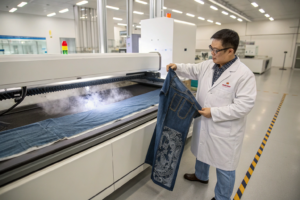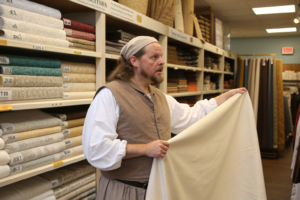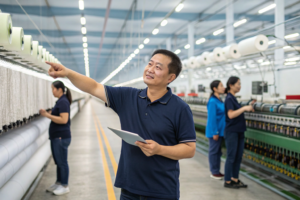
Look, I've been in the textile business for over 20 years here in Keqiao, and I thought I'd seen it all—fast fashion, technical sportswear, luxury evening gowns. But some of the most challenging and rewarding projects we've tackled come from a community that refuses to compromise on authenticity: historical reenactors. And I get why it's so hard for them.
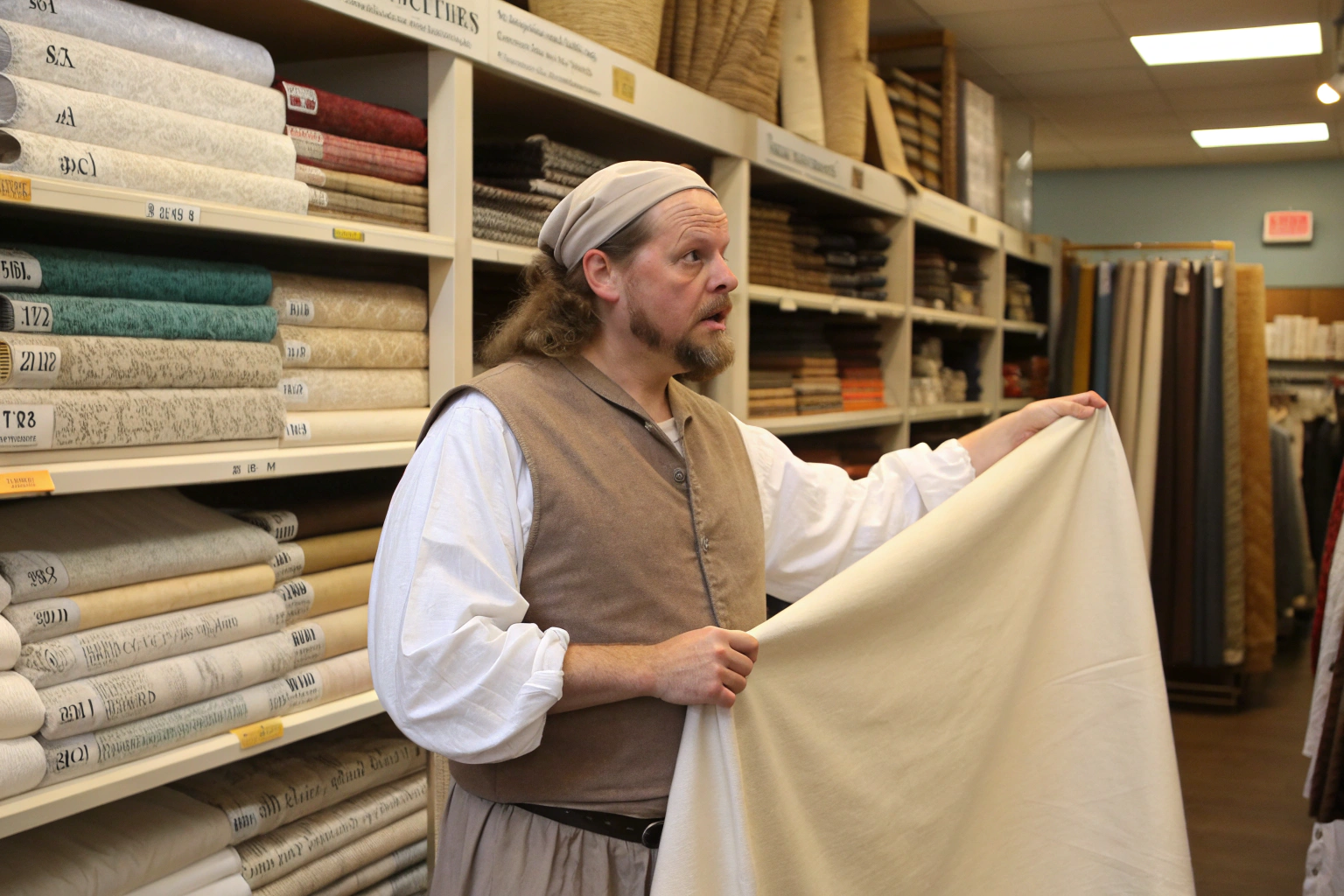
The problem is simple: modern fabric suppliers think in terms of seasons and trends. A reenactor thinks in terms of centuries. You walk into a typical fabric store, and everything is polyester, spandex, and blends with unpronounceable names. Try finding a simple, undyed, 100% linen with the exact weight and weave of an 18th-century work shirt. It's nearly impossible. Or if you do find it online, you have no idea if the quality is right, if the color is accurate, or if the supplier will just disappear after you place your order.
So, how do you actually find a supplier who gets it? The short answer is: you need a partner, not just a vendor. You need a manufacturer who understands fiber, weave, and finish at a fundamental level—someone who can look at a museum photo and reverse-engineer the fabric. At Shanghai Fumao (shanghai fumao), we've taken on these challenges because they push us to be better. We love the precision, the historical research, and the passion of the reenactor community.
In this post, I'm going to share exactly how to navigate this unique sourcing landscape. We'll talk about the specific fabrics you need for different eras, the quality checks that separate authentic materials from costume-shop garbage, and the logistical realities of getting these specialty fabrics shipped to the US or Europe without breaking the bank. By the end, you'll have a clear path to finding fabrics that would make a museum curator do a double-take.
1. What linen and wool are correct for 18th-century reenactment?
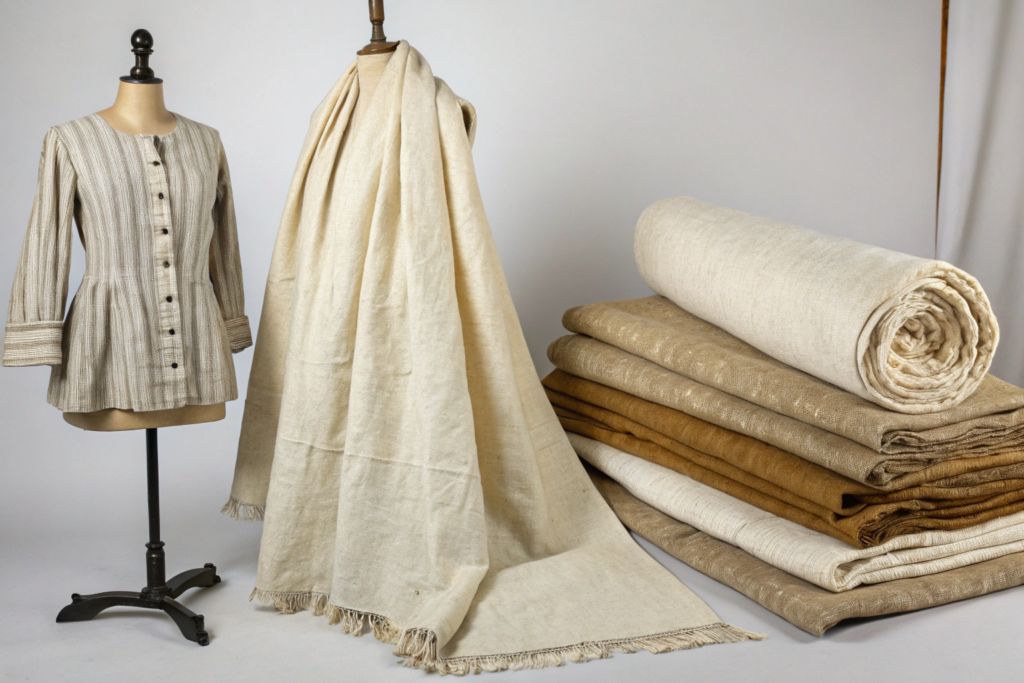
This is where authenticity lives or dies. For 18th-century reenactment, you're looking at two primary workhorses: linen and wool. But not just any linen and wool. The fabrics of the 1700s were fundamentally different from what most mills produce today. They were often woven on narrower looms, with less uniform yarns, and finished using traditional methods that imparted a specific hand feel and drape.
I remember a few years back, a group from Colonial Williamsburg reached out to us. They needed linen for a specific regimental coat reproduction. The sample they sent was unlike anything in our standard catalog. The yarn was irregular—what we'd call "slubby" today, but back then it was just how it was. The weave density was lower than modern linen, and the finish was matte, not the slightly shiny, calendered finish you see on most modern linens. We had to go back to basics. We sourced long-staple flax from Europe, had it wet-spun to replicate the traditional method, and wove it on a slower loom to get that slightly open, authentic structure. It took time, but the result was spot-on. That's the level of detail you need.
What weight of linen is historically accurate for military uniforms?
Military uniforms of the 18th century varied, but for things like regimental coats and waistcoats, the linen was often substantial. We're talking about fabric weights that would feel heavy to the modern hand. For a typical soldier's coat, the linen lining might be around 7 to 9 ounces per square yard. The outer wool fabric was even heavier. But for the shirt underneath? That was a different story. A common soldier's shirt was made from a much lighter linen, often in the 4 to 6 ounce range. It was the only layer against the skin, so it needed to be breathable and washable. The key identifier for authenticity is the thread count and yarn irregularity. A modern, perfectly uniform, high-thread-count linen is wrong. You want a fabric where you can see the individual yarns, where the weave has a bit of character. If you look closely at museum pieces, you'll see that inconsistency. For more on identifying authentic linen weaves, the journal of the Costume Society of America is an excellent scholarly resource that often publishes fiber analysis from original garments.
How can I source wool that matches 18th-century broadcloth?
Broadcloth was the king of 18th-century wool fabrics. It wasn't just any wool; it was a densely woven, heavily fulled (felted) fabric that was then napped and sheared to create a smooth, almost velvety surface. It was warm, wind-resistant, and had a beautiful drape. Finding modern wool that mimics this is tough. Most modern wool suiting is much lighter and more loosely woven. For true broadcloth reproduction, you need a woolen-spun yarn, not a worsted-spun one. Woolen yarns are fluffier and trap more air, which allows for that dense, felted finish after fulling. We've worked with a few historical commissions where we had to source wool from specific breeds, like English Leicester or Cotswold, because the fiber length and crimp were right for the period. Then we weave it at a high density—think 100+ ends per inch—and send it to a specialist finisher for the fulling and napping process. It's a lot of work, but for a high-stakes project like a museum display or a dedicated reenactor's officer's coat, it's worth it. A great place to learn about historical wool production is The Woolery's blog on fiber history, which occasionally features articles on traditional processing methods.
2. How do I verify fabric authenticity for medieval reenactment projects?
Moving back a few centuries, the challenges change. For medieval reenactment, the documentation is sparser, and the range of fabrics is both narrower and, in some ways, broader. You're looking at wool, linen, and for the wealthy, silk. But the construction techniques were different. Looms were narrower, dye sources were natural, and the concept of "finished" fabric was not what it is today.
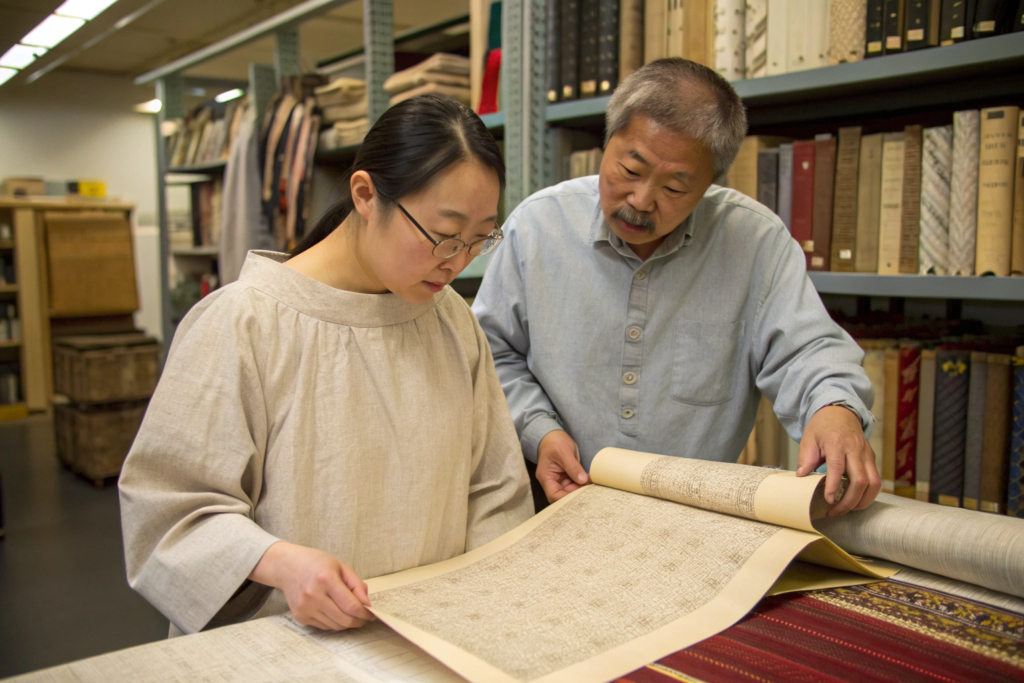
Verifying authenticity for medieval fabrics is a detective game. You can't just order "medieval wool" from a catalog. You have to understand the period and region you're portraying. A 12th-century English peasant's tunic is a world away from a 14th-century Italian merchant's doublet. We've had clients send us photos of effigies, brasses, and manuscript illuminations, asking us to match the fabric. It's a fun challenge. We look at the drape, the apparent weight, the weave structure visible in the art. For one client doing a Norman conquest reenactment, we reproduced a diamond twill wool based on fragments found at archaeological sites in York. We analyzed the archaeological reports, matched the spin direction (S-twist vs. Z-twist), and replicated the weave on a modern loom that could be set up for that specific pattern. That's the level of commitment it takes.
What weave structures are correct for 12th to 14th-century clothing?
This is a deep rabbit hole, but let's cover the basics. For most of the medieval period, the simplest weave, plain weave (or tabby) , was the most common for all classes, especially for linen and lower-grade wool. It's just over-one, under-one. But for wool, you also see a lot of twill weaves, particularly 2/1 and 2/2 twills. These create a diagonal rib and make a denser, more durable fabric. Herringbone twill is also found in archaeological digs. The key detail is the spin of the yarn. In many periods and regions, the warp and weft yarns were spun in opposite directions (one Z-twist, one S-twist). This is a subtle detail that most modern mills ignore, but it affects how the fabric wears and drapes, and it's a hallmark of authenticity for serious reenactors. When we reproduced a 13th-century wool for a German client, we had to specially order yarn spun to the correct twist direction. It's a small thing that makes a huge difference to those who know. For deeper research, the archaeological textiles review from the University of Oslo often publishes open-access papers on finds and reconstructions.
Should I use vegetable-dyed fabrics for historical accuracy?
If you can, absolutely. But it's a trade-off. Modern synthetic dyes were invented in the mid-19th century. For anything before that, all color came from natural sources: plants, insects, and minerals. Using a fabric dyed with modern chemical dyes on a pre-1800 impression is technically inaccurate. The colors are often too bright, too even, and lack the subtle variations of natural dyes. That said, naturally dyed fabrics are more expensive, less colorfast (they can fade in sunlight), and the range is limited. A good compromise for many reenactors is to use fabrics that are in the right color family. A madder root red is a specific, slightly brownish-red. A modern "fire engine" red is wrong. We work with a couple of specialist dyers who do small batches of vegetable-dyed wool and linen using traditional recipes: woad for blue, weld for yellow, madder for red, and walnut for brown. The results are beautiful and nuanced. For a Viking reenactor in 2023, we did a run of walnut-dyed wool that had this incredible, deep, earthy brown with slight variations—exactly what you'd get from a medieval dyepot. For more on the process, The Wild Dyery's blog is a fantastic resource for understanding natural dyeing from a practitioner's perspective.
3. What are the challenges of sourcing custom-weave historical fabrics?
Let me be straight with you: custom-weave historical fabric is not for the faint of heart or the thin of wallet. It's the difference between buying a print of a famous painting and commissioning the artist to paint a new one. The challenges are real, and they fall into three main buckets: minimums, setup costs, and expertise.
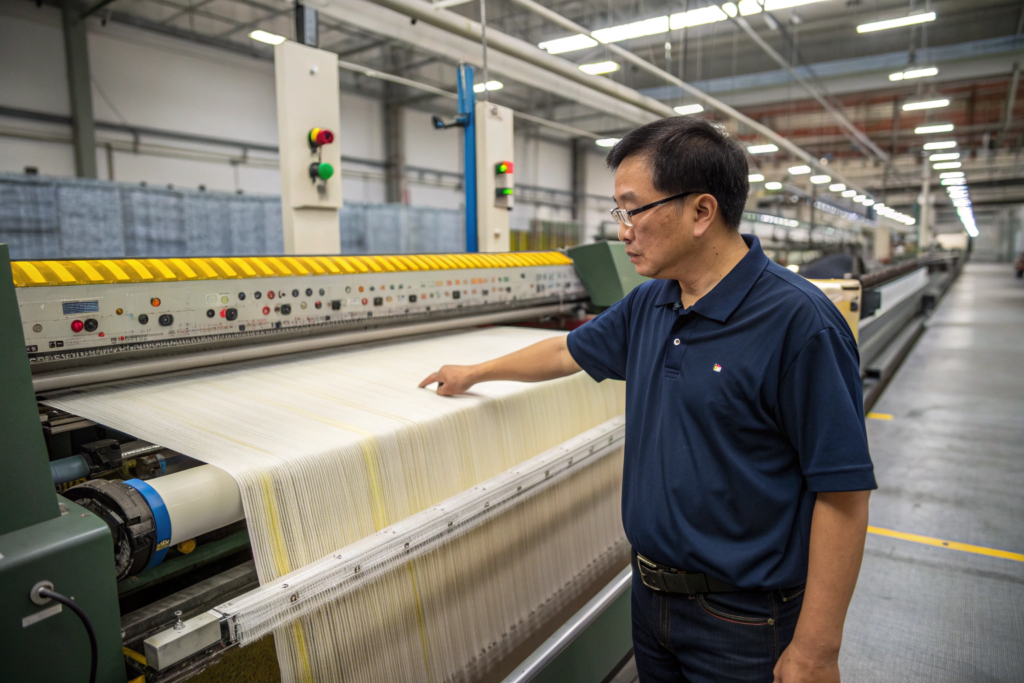
First, the minimums. A modern weaving mill is built for efficiency. We run looms at high speeds to produce thousands of meters of fabric. When you ask for a custom weave, even a simple one, we have to stop production, clean the looms, and set them up with your specific yarns and weave pattern. This "downtime" is expensive. So most mills have high minimums—often 1,000 to 3,000 meters per color. That's a lifetime supply for a single reenactor. But here's where we're different. Because we work with a network of smaller partner mills and have our own sampling looms, we can often accommodate much smaller runs for historical projects, sometimes as low as 100-200 meters. We did this for a French museum in 2022 that needed only 80 meters of a specific 16th-century wool for a costume exhibit. It wasn't our usual bulk business, but we made it work because we value the craft.
Why do custom fabric orders have high minimum order quantities?
It's all about the setup. Think of a loom like a printing press. To change the "plate," you have to re-thread thousands of individual warp yarns through the heddles and reed. This is called "loom dressing," and it's a highly skilled, time-consuming job. For a simple weave, it might take two workers a full day. For a complex weave, it can take a week. That labor cost has to be spread across the fabric produced. If you only run 100 meters, the setup cost per meter is huge. If you run 3,000 meters, the setup cost per meter becomes negligible. That's the economics of it. At Shanghai Fumao, we've tried to bridge this gap for the historical community. Our in-house development team can do smaller runs on our sample looms. It's not as cheap as bulk production, but it's a way to get authentic fabric without mortgaging your house. I remember a US civil war reenactor group that needed 200 yards of a specific jean cloth (a cotton-wool blend) for Union sack coats. We worked with them to adapt their spec to something we could run on our sample equipment, saving them about 40% compared to a full-scale mill setup.
How do I communicate weave specifications to a Chinese supplier?
This is the biggest hurdle. You can't just say "I want it to look old." You need to speak our language. The good news is, it's a learnable language. You need to provide three things: yarn size, thread count, and weave pattern. Yarn size is often given as "Ne" (cotton count) or "Nm" (metric number) for linen and wool. Thread count is the number of warp ends and weft picks per inch or centimeter. The weave pattern is the order in which the warp and weft interlace (e.g., a 2/2 twill). If you can give us these specs, or even better, a physical sample, we can reproduce it. We once had a client from the UK send us a tiny fragment, about the size of a postage stamp, of an 18th-century wool that they'd had professionally analyzed. It had the spin direction, yarn count, and weave structure all documented. We were able to replicate it almost exactly. It was a thing of beauty. For help with this language, there are great resources like the Oscha Slipjacht's guide to weave structures, which explains these terms visually. And don't be afraid to ask us questions! We'd rather guide you through the process than guess and get it wrong.
4. How can I save on shipping and manage small-batch orders?
For most reenactors and even small historical groups, you're not ordering container loads. You're ordering 50 yards here, 100 yards there. The challenge then becomes: how do you get that fabric from our factory in China to your workshop in Ohio or London without the shipping cost exceeding the fabric cost?
It's a valid concern, but there are ways to be smart about it. The key is consolidation and choosing the right shipping method. For small orders, air freight is fast but expensive. Sea freight is cheap but has high minimums (usually a cubic meter). The sweet spot for many of our historical clients is using a consolidated air freight service or shipping via express couriers like FedEx or DHL for very small samples and urgent orders. We handle this every day. We know how to pack fabric rolls efficiently to minimize volume, and we have long-term contracts with shipping lines and couriers that give us better rates than an individual could get. We pass those savings on. For a Canadian client last year who ordered 150 yards of heavy wool for kilts, we consolidated it with another small order going to the same region and shipped it via sea freight. It took a bit longer, but we cut his shipping cost by 60%.

What is the most cost-effective way to ship 50-100 yards of fabric?
For that quantity, your best bet is usually air freight through a consolidator, or sometimes express courier if you need it fast. Here's the breakdown:
- Express (DHL/FedEx/UPS): Best for under 20kg (about 40-50 yards of medium-weight fabric). It's door-to-door, fast (3-5 days), but the most expensive per kg.
- Air Freight Consolidation: Best for 100kg to 500kg. You share container space with other shipments. It goes to a major airport near you, and you clear customs and pick it up or arrange truck delivery. It's much cheaper than express but takes 7-10 days.
- Sea Freight (LCL): For a full cubic meter or more (which could be 300-500+ yards, depending on fabric thickness). This is the cheapest per yard, but the slowest (4-6 weeks) and involves more port handling.
We always advise our clients to be patient. If you're planning a project for next year's reenactment season, order early and use sea freight. If you're in a panic because an event is in a month, prepare to pay for air. We had a group from Texas in 2023 who needed fabric for a last-minute event. We got it to them via DHL in 4 days. It cost more, but it saved their project. We're transparent about these options and will always help you choose the right one.
Should I combine my order with other reenactors to save costs?
Yes! This is one of the best strategies I've seen. If you can get a group of 5 or 10 reenactors together who need similar fabrics, you can pool your orders. Suddenly, 50 yards becomes 500 yards. This might unlock a small production run on our sample looms, or at least qualify you for a better volume discount on the fabric itself. More importantly, it makes the shipping much more efficient. One shipment of 500 yards can be packed on a pallet and sent via sea freight, costing a fraction per yard of five separate express courier shipments. We've facilitated this for several historical societies. They designate one person as the "order master." That person collects the orders and payment, works with us to finalize the specs, and then distributes the fabric when it arrives. It requires organization, but the savings are substantial. For inspiration, look at how some of the larger SCA (Society for Creative Anachronism) guilds manage their group purchasing. It's a model that works.
Conclusion
Sourcing fabric for historical reenactment is a journey, not a transaction. It requires patience, research, and a willingness to dive deep into the details of fiber, weave, and finish. But the reward is incomparable: the ability to step back in time wearing something that feels and moves like the real thing, because it's built on the same foundations.
At Shanghai Fumao, we've made it our mission to be a bridge between the modern textile industry and the passionate communities that demand authenticity. With our own weaving, dyeing, and finishing capabilities, backed by decades of experience and a CNAS-certified lab, we have the tools and the expertise to take on these challenging projects. We've helped museums, historical societies, and dedicated individual reenactors from over 20 countries bring their visions to life in fabric.
If you're tired of compromising on authenticity, let's start a conversation. Whether you need a small batch of accurately woven linen for a Viking tunic, a custom run of fulled wool broadcloth for a Revolutionary War coat, or just some guidance on how to specify what you need, our team is ready to help.
Contact our Business Director, Elaine, directly to discuss your historical project. She and her team understand the unique needs of the reenactment community and are passionate about getting the details right.
Email Elaine at: elaine@fumaoclothing.com
Let's make history together, one yard at a time.