Let's be honest: you've seen those breathtaking, high-end lace garments with four-figure price tags. The intricate details, the perfect drape, the undeniable aura of luxury. For your own brand or project, achieving that same look feels financially out of reach. Using cheap, poorly-made lace screams "fast fashion" and undermines your entire design. The problem is real: how do you bridge the gap between aspirational luxury and practical budget constraints without sacrificing perceived quality?
The secret isn't about finding a magical cheap silk lace. It's about strategic sourcing and intelligent design. Luxury is a perception built on specific details—rich texture, thoughtful application, precision finishing, and cohesive styling. By mastering where to allocate your budget within the lace itself and where to compensate with clever design and production techniques, you can create pieces that feel expensive but are built on a cost-effective foundation. It's the art of illusion, backed by smart textile knowledge.
At Shanghai Fumao, based in the heart of Keqiao's textile ecosystem, we work with everyone from fledgling indie designers to established mid-market brands. We've seen firsthand how the smart ones create "wow" factor without blowing their fabric budget. It comes down to a few key principles: fiber blending, strategic placement, and finish over flash. Let me walk you through the practical steps to get that luxe look for less.
Can Blended Fiber Laces Mimic Luxury at Lower Cost?
Absolutely. This is your most powerful tool. Pure silk, fine wool, or pristine cotton laces command premium prices. But luxury is often about the handfeel and visual depth, not the purity label. Blending a small percentage of a luxury fiber with a cost-effective workhorse fiber can deliver 80% of the sensory experience for 50% of the cost.
Think of it like a gourmet dish where a small amount of truffle oil transforms a simple pasta. The key is identifying which luxury fiber characteristic you want to emulate—is it the matte richness of cotton, the fluid drape of rayon, or the soft halo of wool? Then, find a blend that strategically incorporates that element while using an affordable base like polyester or acrylic to carry the structure and reduce cost.
The Rayon-Polyester Blend: Your Secret Weapon for Drape
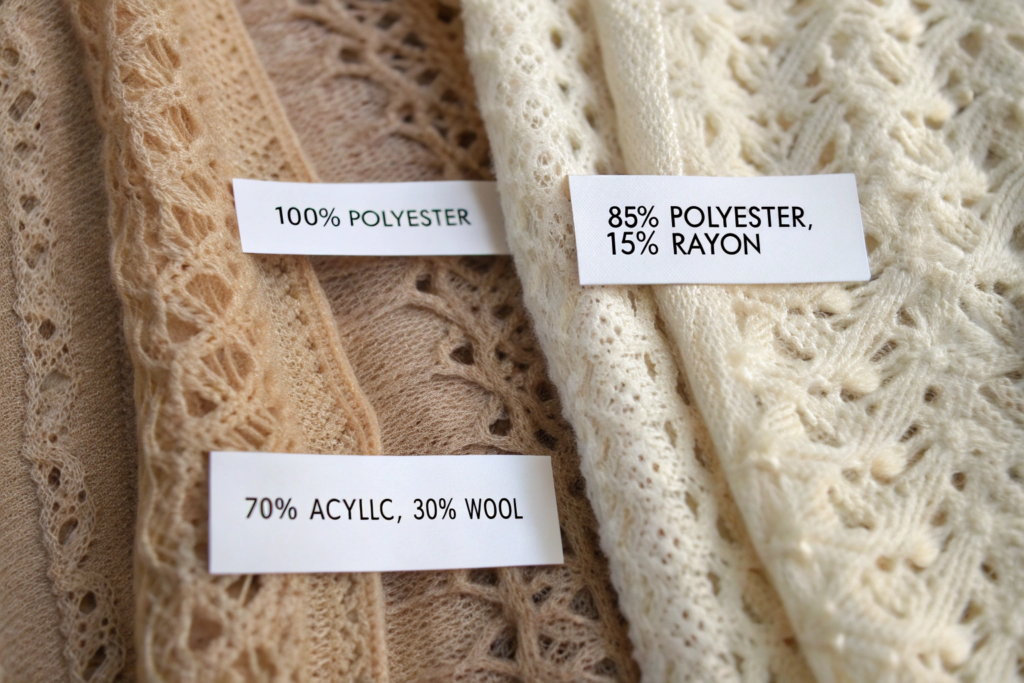
Pure polyester lace can be stiff and plasticky. Pure rayon lace drapes like a dream but can be more expensive and less durable. The Rayon-Polyester blend (common ratios: 70/30, 60/40, or 50/50) is a superstar for budget luxury.
- Why it Works: The rayon instantly imparts weight, fluidity, and a soft, subdued luster. The polyester provides strength, shape retention, and cost stability. The resulting lace has a much more expensive hand than 100% polyester.
- Sourcing Tip: Don't just ask for "poly lace." Specify you are looking for a "poly-rayon blend lace with a soft drape." Ask for the blend percentage. A 50/50 blend will feel more luxurious than an 80/20. We guided an Australian boutique brand towards a 55% Polyester, 45% Viscose (Rayon) burnout lace for a slip dress. The cost was 40% less than a similar pure viscose lace, but the customer-facing drape and feel were virtually indistinguishable.
For designers looking to master fabric blends, resources like A Practical Guide to Textile Fiber Blends and Performance are invaluable. To understand the cost drivers, reading about the price factors in synthetic versus regenerated cellulose fibers provides crucial context for negotiation.
How Can Acrylic-Wool Blends Create Textural Luxury?
For laces that need a cozy, wintery, or tweed-like luxurious texture (think Chanel-style bouclé laces), pure wool is costly. An Acrylic-Wool blend is a brilliant alternative.
- Why it Works: Acrylic excels at mimicking wool's bulk and softness at a fraction of the price. Blending in 20-30% real wool adds that authentic, slightly irregular fiber halo, natural odor resistance, and a more nuanced matte finish that pure acrylic lacks. The blend gains a perceived natural fiber "authenticity."
- Application: Perfect for collar trims, cuff details, overlay on winter coats, or structured bags. In 2023, a UK brand created a bestselling "luxe knit look" sweater by using a 80% Acrylic, 20% Wool blend guipure as a yolk overlay on a simple acrylic knit. The texture contrast made the whole garment feel high-end.
Where Should You Strategically Place Lace for Maximum Impact?
Luxury is often about restraint and punctuation, not saturation. The most budget-savvy way to use lace is not to make an entire garment from it, but to use it as a strategic accent. This reduces the total meterage you need to buy, allowing you to allocate a higher budget per meter to a truly exceptional lace for those key areas.
This approach also aligns with high-fashion thinking. Look at designer pieces: a stunning lace panel on a bodice, exquisite lace sleeves on a simple slip dress, or a lace trim along a neckline and hem. The contrast between the lavish detail and a quiet, quality base fabric elevates both.
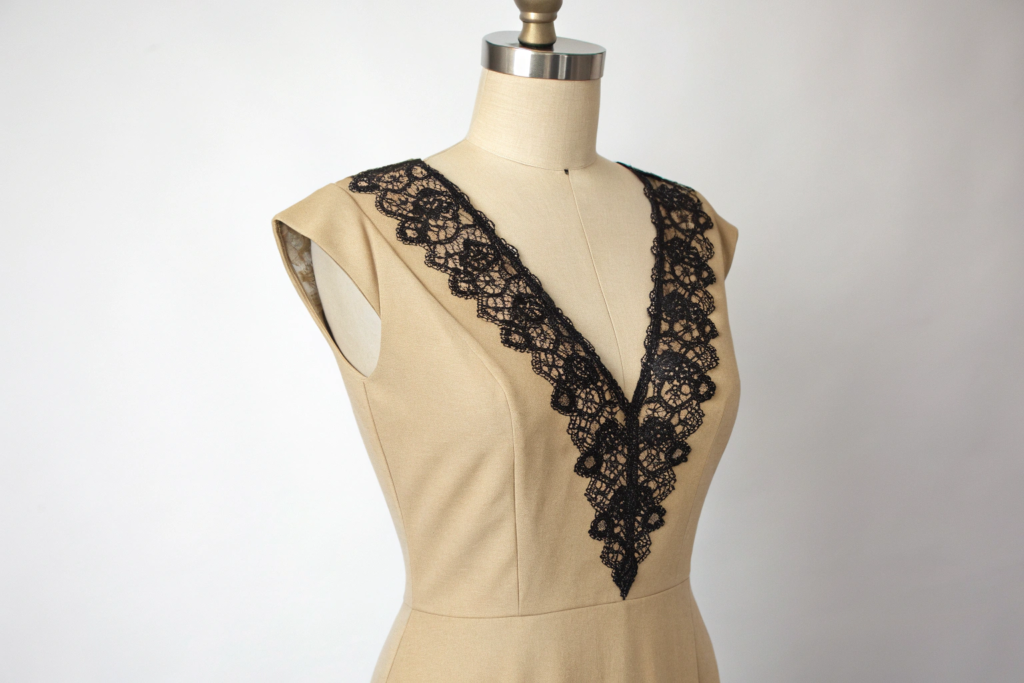
The Power of Contrast: Lace as a Focal Point
Using lace as a contrast against a different, complementary fabric is a double win.
- Cost Efficiency: You only buy a small amount of lace.
- Visual Pop: The contrast inherently draws the eye and feels designed, not just fabricated.
- Idea 1: The Lace Yoke or Bodice. Use a more substantial, textured lace (like a cotton or poly-blend guipure) on just the front bodice of a simple chiffon or satin dress. The structure of the lace provides shape, while the flowing skirt maintains ease.
- Idea 2: Lace Sleeves or Cuffs. Transform a basic silk or rayon blouse by replacing the sleeves with lace. This works beautifully with both sheer chantilly lace for romance or a geometric laser-cut lace for modernity.
- Idea 3: Lace Trim and Edging. Sometimes, just a 5cm width of a fantastic embroidered scallop lace along a hemline or neckline is enough to elevate an entire garment. It whispers luxury rather than shouting it.
How to Choose the Perfect Base Fabric?
The base fabric must support the luxury illusion. A cheap, shiny polyester satin will undermine a beautiful lace appliqué. Invest in a base fabric with a good natural hand:
- Matte Jersey: A mid-weight cotton or rayon blend jersey provides a luxe, casual base for lace trims or panels.
- Crepe: Polyester crepe de chine or rayon crepe has a beautiful drape and subtle texture that pairs elegantly with lace.
- Faux Silk Habotai: A high-quality polyester habotai can mimic the sheen and fluidity of silk at a lower cost, creating a perfect backdrop for lace.
Can Finishing Techniques Elevate Inexpensive Lace?
This is where the magic happens in the factory. A modest lace can be transformed through professional finishing techniques that add depth, softness, and a custom feel. These processes are often more cost-effective than sourcing a inherently expensive lace, and they add a layer of "special treatment" that mass-market items lack.
Think of it like a great haircut. The same hair (fiber) can look cheap or expensive based on the cut, color, and style (finish). Your manufacturing partner should be your ally in this.
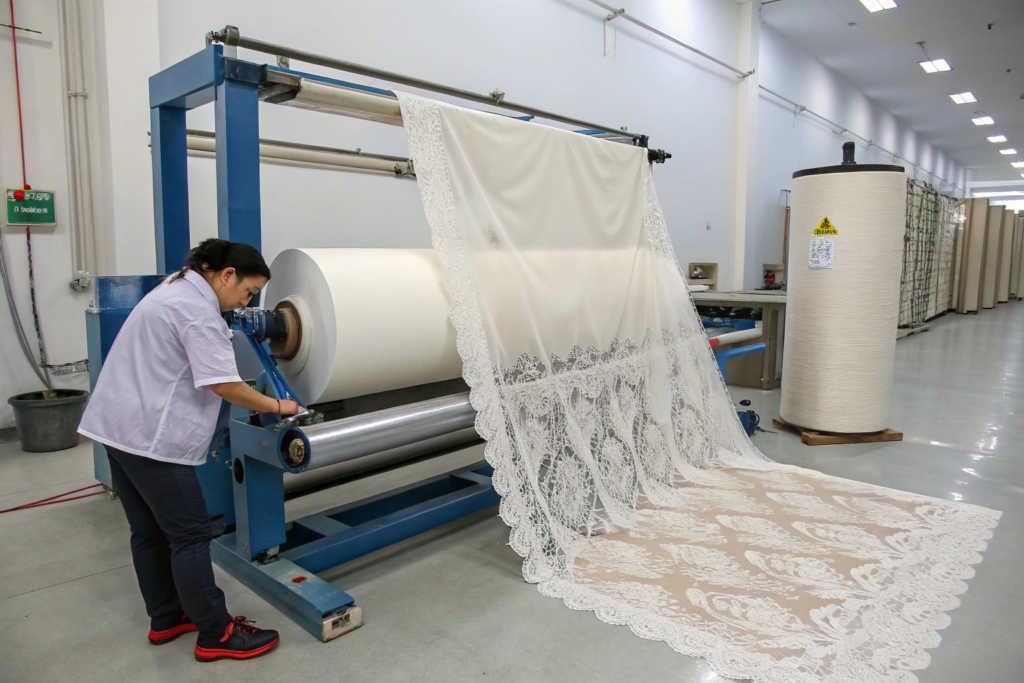
The Luxury of Custom Dyeing: Beyond Stock Colors
Stock white, black, and ivory laces are commodities. A custom-dyed color immediately signals a higher level of production.
- Why it Works: It creates exclusivity. That perfect dusky rose or deep slate blue isn't available to every fast-fashion brand off the shelf. It makes your product feel considered and unique.
- Budget Approach: Work with a supplier like Shanghai Fumao that has in-house or tightly partnered dyeing facilities. Ordering a custom color in a medium-sized bulk run (e.g., 500 meters) often has a minimal per-meter surcharge but a massive perceptual upside. We helped an online boutique create a signature "blush nude" for their lace trims, which became a key part of their brand identity.
How Washing and Softening Create Expensive Handfeel?
Nothing feels cheap faster than stiff, scratchy lace. Professional fabric washing (garment washing or fabric milling) is a game-changer.
- Processes: Garment washing (after sewing) or fabric pre-washing (before cutting) can soften fibers, reduce shrinkage, and give a slight lived-in, comfortable feel. Enzyme washing can gently break down fibers for exceptional softness, especially in cotton or rayon blends. Stone washing can create a subtle, vintage matte finish.
- The Impact: A polyester lace that undergoes a controlled softening wash loses its plastic-like crispness and gains a much more pleasant, expensive-feeling drape. For a client's premium loungewear line, we specified a "light enzyme wash" for all their cotton-blend laces. The resulting buttery-soft hand became a major selling point in customer reviews.
What are the Common Budget Lace Pitfalls to Avoid?
Trying to look luxurious on a budget is a tightrope walk. Certain cost-cutting choices will backfire spectacularly, instantly labeling your garment as cheap. Knowing what not to do is as important as knowing what to do.
These pitfalls often stem from choosing the wrong type of inexpensive lace or applying it poorly. They are the telltale signs that separate a thoughtfully crafted mid-market piece from a discount rack item.
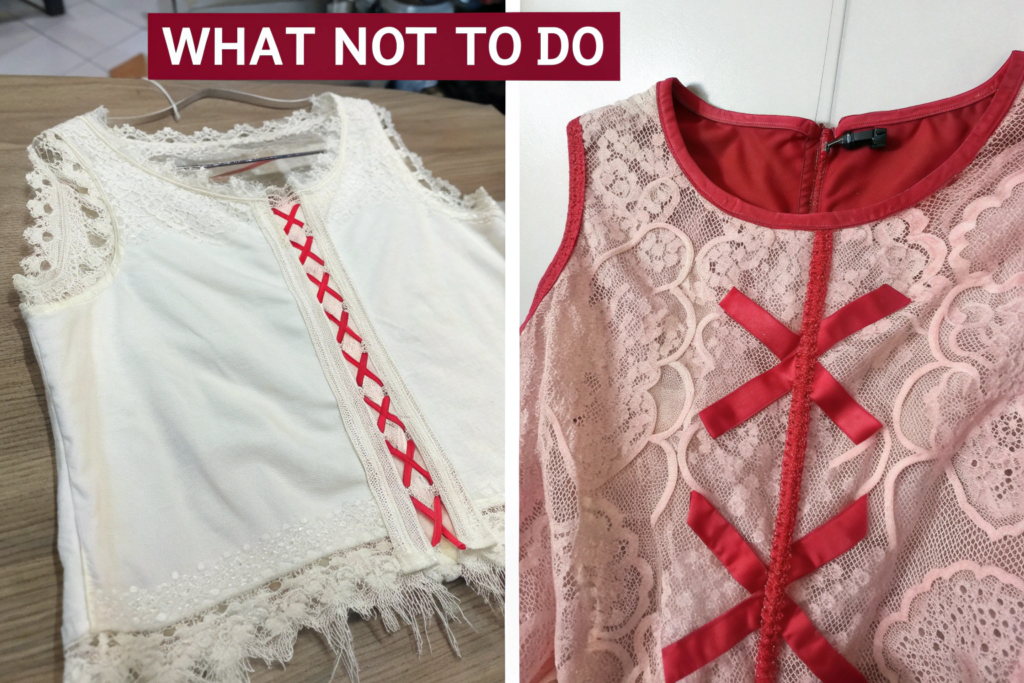
Why Shiny, Plasticky Lace is the Enemy of Luxury
High-gloss, non-breathable polyester lace that feels like gift wrap ribbon is the most common budget destroyer. It reflects light harshly, looks artificial, and feels unpleasant against the skin.
- The Fix: Always opt for matte or semi-matte finishes. If you need shine, source a dull polyester filament blend or a lace with a pearlized yarn that gives a softer glow. As a rule of thumb, if the lace sample crackles when you crush it in your hand, reject it. We maintain a "matte-first" sample library for our cost-conscious clients at Shanghai Fumao for this exact reason.
How Poor Construction and Finishing Betray Cost?
Luxury is in the details you don't immediately see, but definitely feel.
- Pitfall 1: Raw, Unfinished Edges. Exposed, fraying lace edges on seams or hems look sloppy. Always specify cleanly finished seams (rolled hems, narrow serging with matching thread) or design the garment to encase edges.
- Pitfall 2: Misaligned Patterns and Poor Matching. On patterned lace, failing to match the design at seams (especially center front/back or side seams) looks careless. Factor in extra fabric for pattern matching; it's a non-negotiable for a luxe look.
- Pitfall 3: Weak Embellishment Adhesion. If using beaded or sequinned lace, ensure the embellishments are securely attached. Specify a rub test (e.g., 20 rubs with a mild abrasive) in your QC check. Nothing says "falling apart" like loose beads.
A small brand learned this the hard way when a batch of beaded lace trim shed its sequins after minimal wear. We helped them switch to a supplier using a higher-grade adhesive and a lock-stitch embroidery technique, solving the issue with only a 10% cost increase that saved their reputation.
Conclusion
Creating a luxurious look with lace on a budget is a deliberate strategy, not a compromise. It hinges on intelligent material choices—leveraging fiber blends like poly-rayon for drape or acrylic-wool for texture—to deliver high-end sensations at accessible prices. It’s about strategic design, using lace as a powerful accent rather than an all-over cover, and investing in transformative finishing techniques like custom dyeing and softening washes that add perceived value far beyond their cost.
Most importantly, it requires vigilant avoidance of the pitfalls that scream “cheap”: plasticky shine, poor construction, and sloppy finishing. By focusing on texture, thoughtful application, and impeccable execution, you can craft garments that feel exclusive and expensive, building a brand reputation for quality that belies your careful cost management.
Ready to source lace that delivers luxury aesthetics without the luxury price tag? Let’s collaborate. At Shanghai Fumao, we specialize in guiding brands through this exact challenge, offering a curated range of cost-effective blended laces and the technical expertise to finish them beautifully. To discuss your project and request our “Luxury on a Budget” lace swatch kit, contact our Business Director, Elaine, at elaine@fumaoclothing.com. Let’s make your elegant vision a financially smart reality.