I've been doing this for over twenty years, and I still remember the phone call that woke me at 3 AM in 2018. A client from New York was screaming—literally screaming—because their container of woven shirting fabric hadn't arrived. Their summer collection launch was in two weeks. The retailer penalties were mounting by the day. And their entire business was about to collapse because someone somewhere missed a deadline. That call still haunts me, which is why I've spent years building systems to ensure it never happens to another client.
Here's the uncomfortable truth about sourcing woven fabrics from China: late shipments are almost never accidents. They're the predictable result of poor planning, communication breakdowns, and suppliers who promise what they can't deliver. The good news is that with the right approach, you can avoid almost all delays. It requires understanding the production calendar, building realistic timelines, maintaining constant communication, and working with suppliers who are honest about what's possible.
Let me walk you through exactly how to prevent late shipments when ordering woven fabrics. I'll share our internal production schedules, the real lead times for different woven constructions, the warning signs that a delay is coming, and the systems we use at Shanghai Fumao to keep every order on track. This isn't theory—it's what I've learned shipping millions of yards to over 100 countries.
What Realistic Lead Times Should You Expect for Different Woven Fabrics?
The biggest cause of late shipments is unrealistic expectations. A buyer emails on Monday wanting samples approved by Wednesday and bulk fabric shipped by Friday. That's not how woven fabric production works. Understanding real lead times is the foundation of on-time delivery.
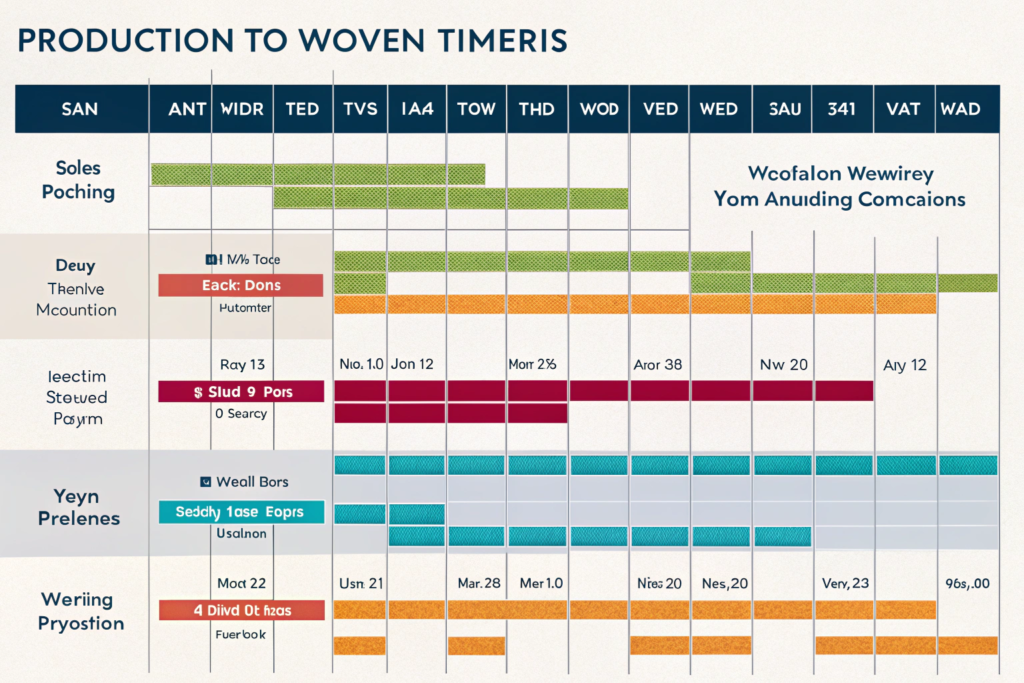
For basic woven fabrics like poplin, plain weave, and basic twills, you're looking at 35-45 days from order confirmation to ex-factory, assuming yarn is available. This includes yarn sourcing (5-7 days), warping and weaving (15-20 days), dyeing and finishing (7-10 days), and final inspection/packing (3-5 days). These are compressed timelines assuming everything goes perfectly—no yarn shortages, no machine breakdowns, no quality issues that require rework.
For complex woven constructions like jacquards, dobby weaves, or fabrics with specialty yarns, add 10-20 days. The programming time for jacquard patterns alone can take a week. Sampling to confirm pattern and hand feel adds another round. We tell clients to budget 50-70 days for complex wovens, and we build that into our planning from the start.
For yarn-dyed wovens (like chambray, oxford, or patterned shirting), the timeline expands further. Each yarn color must be dyed separately before weaving, adding 7-10 days. The weaving itself is slower because yarns must be arranged precisely. Add another 10-15 days compared to piece-dyed fabrics. A yarn-dyed striped poplin typically requires 45-60 days.
Here's a critical point: these timelines assume your supplier has greige goods (unfinished woven fabric) in stock or can access them quickly. If you're ordering a custom weave that requires yarn to be spun specifically for your order, add another 15-20 days. Always ask your supplier: "Do you have greige for this construction, or will it be woven to order?" The answer tells you everything about your timeline.
Why Do Yarn-Dyed Wovens Take Longer Than Piece-Dyed?
This question comes up constantly, and understanding the answer helps you plan realistically. In piece-dyed wovens, we weave the fabric first using greige (unbleached) yarns, then dye the entire fabric in one step. It's efficient—one dye lot, one process, one timeline.
Yarn-dyed wovens require each yarn color to be dyed BEFORE weaving. If your fabric has five colors in the pattern, we need five separate yarn dyeing processes, each requiring its own setup, its own color matching, and its own quality checks. Only after all yarns are dyed and dried can weaving begin.
The weaving itself is slower too. Yarn-dyed patterns require precise yarn placement—each color must go exactly where the design specifies. This means slower loom speeds and more frequent quality checks. A mistake in yarn placement means the entire pattern is wrong.
Then there's the finishing challenge. Different colored yarns can react differently to finishing chemicals and temperatures. What works for one color might affect another. We often need to run samples to ensure all colors behave consistently through finishing.
A British shirt brand learned this when they ordered a yarn-dyed check for their summer collection. They'd budgeted 40 days based on their experience with piece-dyed solids. The actual timeline was 65 days. They missed their launch window and learned to plan differently. Now they order yarn-dyed fabrics for the following season, never the current one.
How Much Buffer Time Should You Build into Your Production Schedule?
This is where experience separates successful brands from those constantly firefighting. Based on shipping millions of yards, here's my rule of thumb: add 20% buffer to your supplier's quoted lead time for basic fabrics, 30% for complex constructions.
If a supplier quotes 40 days for basic poplin, plan for 48 days in your schedule. If they quote 60 days for jacquard, plan for 78 days. This buffer absorbs the unexpected—a yarn shipment delayed by weather, a dye machine breakdown, a quality issue requiring rework. These things happen even at the best factories.
The buffer isn't pessimism—it's realism. When we quote 45 days for a woven fabric, we're giving you our best estimate assuming everything goes perfectly. But I've learned that "everything going perfectly" happens about 60% of the time. The other 40%, something unexpected occurs. Building buffer means those unexpected events don't become crises.
For peak seasons (March-May and August-October), increase buffer to 30-40%. During these months, every factory in China is running at capacity. Yarn suppliers are backed up. Dye houses have queues. Shipping space is limited. What takes 40 days in June might take 55 days in April. We advise clients to avoid peak-season ordering for new styles—order during slower periods for the following peak season.
A Canadian brand uses what they call "the 50% rule" for new suppliers: they add 50% to the quoted timeline for the first order. After three successful orders, they reduce to 30%. After a year, they trust our quoted timelines directly. This approach has eliminated their late shipments completely.
What Pre-Production Steps Prevent Delays Later?
The work you do BEFORE placing an order determines whether that order ships on time. I've seen too many brands rush through sampling to "save time," only to discover problems during bulk production that cost weeks or months. Investing in proper pre-production saves far more time than it costs.
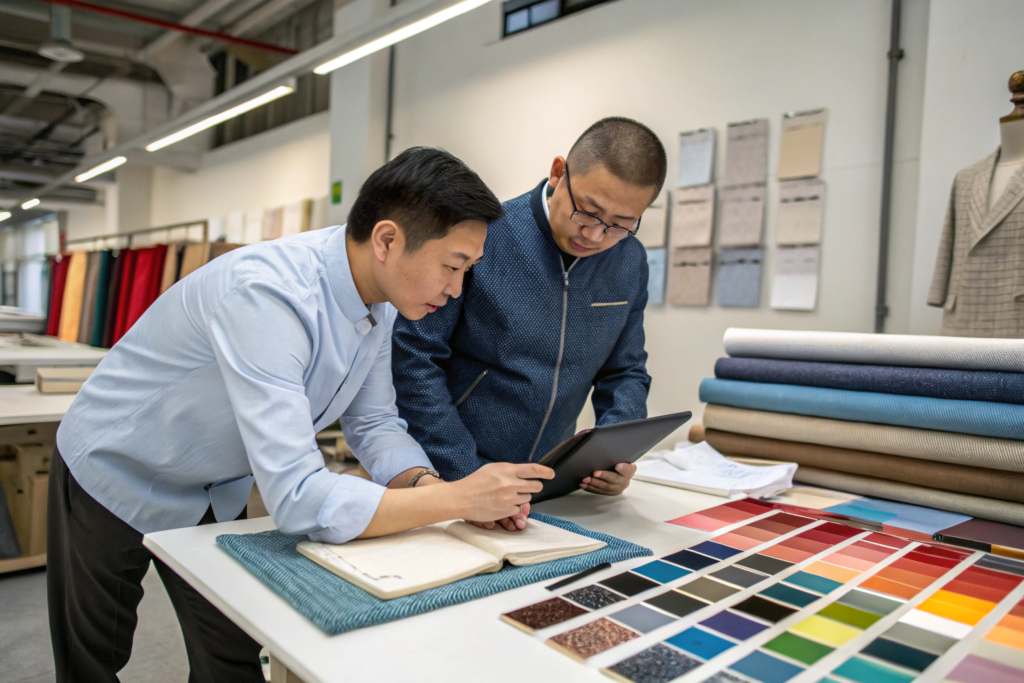
Color approval is the most common delay point. A client sends a Pantone reference, we dye a lab dip, they say "close but not perfect." We adjust and send another. This cycle can take weeks if not managed properly. The solution is clear communication about acceptable color range. We ask clients: "What's your tolerance? If we hit within 1.0 delta E, is that acceptable? Within 0.5?" Knowing the answer prevents endless rounds.
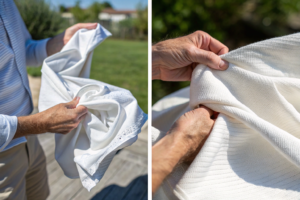
Hand feel approval is equally critical. A lab dip shows color on a small swatch, but it doesn't tell you how the finished fabric will feel. That requires a handloom sample or, better, a strike-off from production-equivalent machinery. We always provide hand feel samples before bulk production, and we ask clients to be specific: "Softer" or "crisper" means different things to different people. "Reduce warp tension to increase drape" is specific and actionable.
Technical specifications must be documented and agreed. Weight (GSM or oz/yd²), width, shrinkage limits, colorfastness requirements—all should be in writing before production starts. When both sides agree on specs upfront, there's no debate later about whether the fabric meets requirements.
A Swedish brand once skipped hand feel approval to save two weeks. The bulk fabric felt completely different from their original sample—stiffer, less drapey. They rejected the entire 8,000-yard order. The fabric had to be reprocessed, costing six weeks and significant money. All because they skipped one pre-production step.
How Many Sampling Rounds Are Realistic Before Bulk Production?
This varies by fabric complexity, but here's what works for most woven fabrics:
Round 1: Lab dips for color approval (3-5 days). We provide 2-3 color options per requested shade, allowing clients to choose the closest match or request adjustments.
Round 2: Adjusted lab dips if needed (2-3 days). Most color approvals complete in two rounds. Some complex colors (neons, certain grays) may need three.
Round 3: Handloom or mill-run samples for hand feel and drape (7-10 days). This sample uses the actual yarns and approximate construction of your bulk fabric. It confirms weight, hand, and appearance before we commit to production.
Round 4: Pre-production samples (optional, 10-15 days). For critical orders, we run a mini-batch (50-100 meters) through full production to confirm everything works at scale. This adds time but eliminates risk.
Total sampling time: 3-4 weeks for straightforward fabrics, 5-6 weeks for complex constructions. Rushing this process to save a week often costs months later when bulk production reveals problems the samples should have caught.
A US brand we work with insists on all four rounds for every new fabric. They've done this for five years and haven't had a single bulk production rejection. Their sampling timeline is longer, but their on-time delivery rate is 100%.
What Information Must Your Tech Pack Include to Avoid Delays?
A complete tech pack prevents the "I thought you meant something else" conversations that cause delays. Here's what we need from every client:
Fiber content with percentages: "Cotton" isn't enough. "95% organic cotton, 5% spandex" tells us exactly what yarns to source.
Construction details: Weave type (plain, twill, satin), thread count (ends and picks per inch), weight (GSM or oz), and finished width. For yarn-dyed, include pattern details with color placement.
Color specifications: Pantone numbers or physical standards. Describe acceptable tolerance—Delta E 1.0 is typical for premium, 1.5 for commercial.
Finishing requirements: What finish do you want? Enzyme wash? Sanforizing? Resin treatment for wrinkle resistance? Each adds time and cost.
Testing requirements: What standards apply? ASTM, AATCC, ISO? What acceptance criteria? Shrinkage under 3%? Colorfastness 4.0 or higher?
Quantity and delivery date: Be realistic. "ASAP" isn't a delivery date. "Ex-factory by June 15" is.
A German client sends tech packs that are works of art—thirty pages of specifications, diagrams, and standards. Their orders never have misunderstandings. A startup once sent a napkin sketch with "blue fabric, need soon." That order took three months of back-and-forth just to figure out what they wanted.
How Do You Monitor Production Without Micromanaging?
Once your order is in production, you need visibility without becoming a nuisance. The goal is to catch problems early, not to check up every hour. A good supplier provides regular updates; a great supplier involves you in solving problems before they become delays.
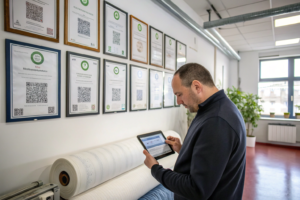
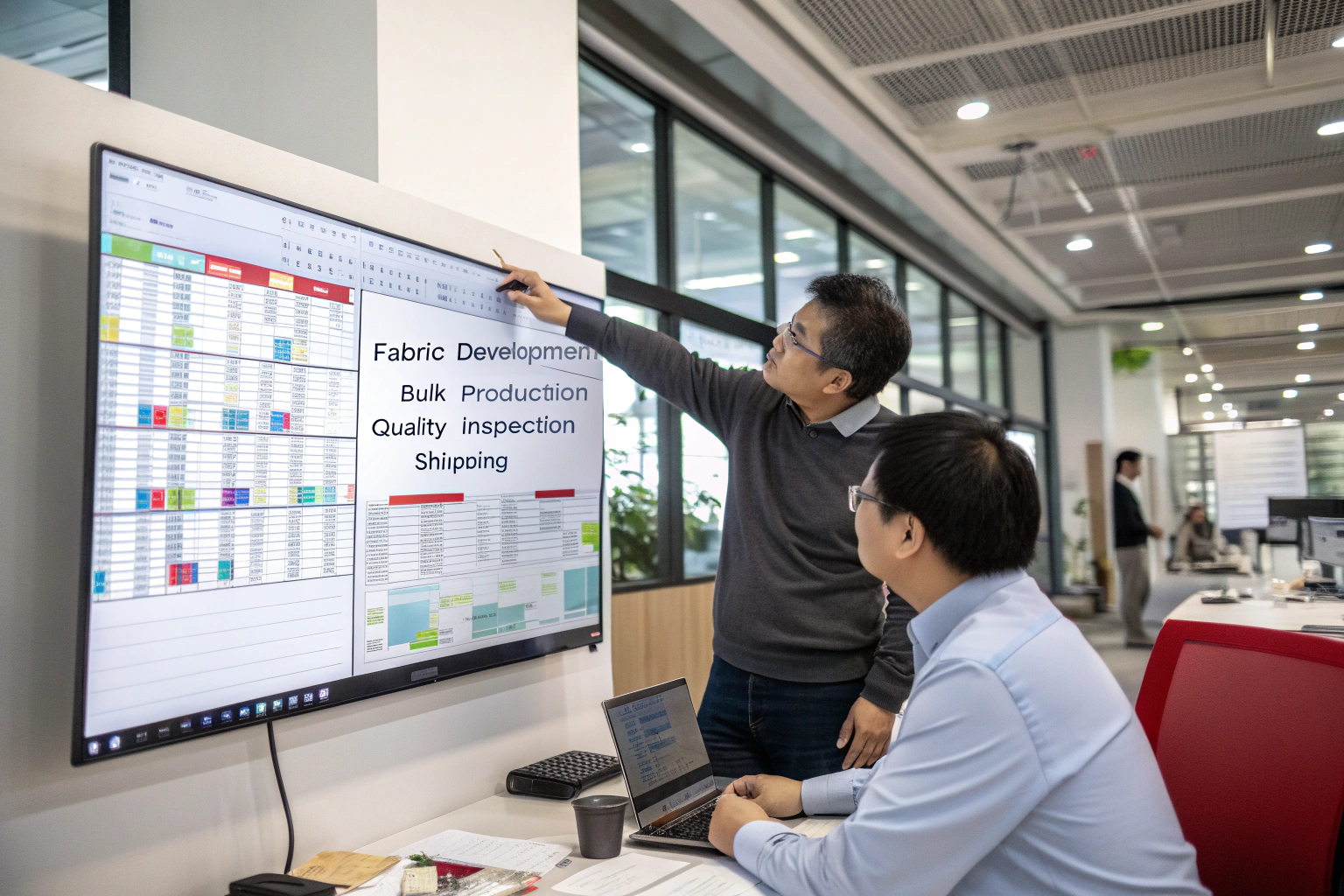
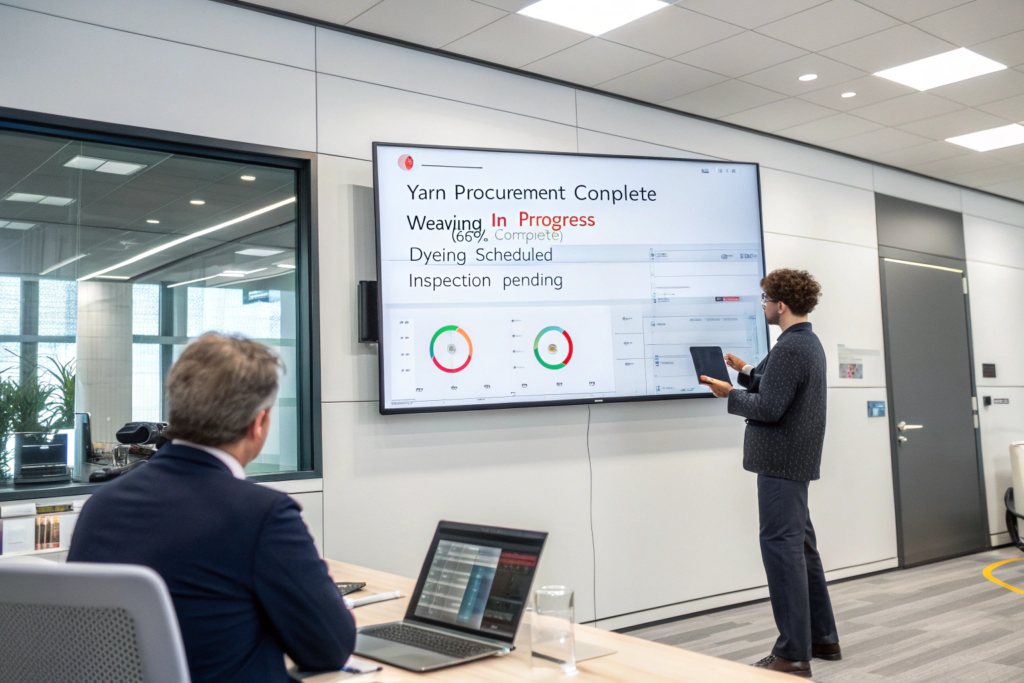
At Shanghai Fumao, we provide a production tracking system with QR code access. Clients can see real-time status: yarn received, warping started, weaving progress, dyeing scheduled, finishing complete, inspection passed, packing, shipping. This transparency builds trust and eliminates the "where's my order" emails that waste everyone's time.
For critical orders, we schedule weekly update calls. These aren't just status reports—they're opportunities to discuss potential issues before they become problems. "We're seeing slightly higher shrinkage than expected in finishing. We can adjust the compacting process, but it will add two days. Do you want us to proceed?" That conversation happens during production, not after the fabric is finished and fails testing.
The key milestones to monitor:
Yarn confirmation: Have the yarns been sourced? Are they the right quality and quantity? This happens in week 1.
Warping start: This is the first irreversible step. Once warping begins, changes become expensive. Confirm everything is approved before this point.
Weaving progress: For large orders, weaving takes weeks. Periodic updates confirm the looms are running and quality looks good.
Dyeing/finishing start: This is where hand feel and color are finalized. Sample approval at this stage prevents finishing disasters.
Inspection results: Before fabric is packed, it's inspected. Request the inspection report. If there are issues, they're caught before shipping.
A French client once noticed from our tracking system that weaving was progressing slower than expected. They called to ask why. We investigated and discovered a yarn quality issue that required replacing some cones. Because they caught it early, we adjusted the schedule and still made the shipping date. If they'd waited for the original delivery date, they'd have been shocked by a delay.
What Warning Signs Indicate a Delay Is Coming?
After two decades, I've learned to spot problems before they cause delays. Here's what you should watch for:
Vague answers to simple questions. "When will yarn arrive?" "Soon" is not an answer. "Yarn arrives Friday, we'll start warping Monday" is an answer. If your supplier can't give specific dates, they probably don't know—and that's a problem.
Excuses about holidays or weather. Chinese New Year, Golden Week, and typhoon season are predictable. A good supplier plans around them. If they're mentioned as surprises, planning is poor.
Sample issues that don't get resolved. If color matching takes more than three rounds, or hand feel samples keep being rejected, bulk production will face the same challenges. Solve sampling problems before proceeding.
Communication gaps. If your contact stops responding or responses become shorter and less helpful, something's wrong. Maybe they're overwhelmed, maybe there's bad news they don't want to share. Push for transparency.
Rushed approvals. "Just approve it so we can start production" is a huge red flag. Bulk production should never start without complete approval. If they're pushing, they're behind schedule and trying to catch up by cutting corners.
A Danish brand noticed their contact was avoiding video calls and giving short email answers. They flew to China unannounced and found their fabric had failed inspection and was sitting in a corner waiting for rework. The supplier was hoping to fix it before the client noticed. The visit cost money but saved the order.
When Should You Visit the Factory in Person?
Virtual communication works for routine updates, but there's no substitute for being there when things matter. Here's when a visit is worth the investment:
Before placing a first order with a new supplier. Visit, see the facilities, meet the team, understand their capabilities. This prevents partnering with traders who can't actually produce.
At sampling approval for a complex fabric. Being present to approve hand feel and color in person eliminates the "the photo doesn't match" problem.
Mid-production for critical orders. A visit during weaving lets you spot issues before they become finished fabric problems.
When problems arise. If delays or quality issues emerge, being on-site shows you're serious and allows real-time problem-solving.
We welcome client visits at any time. A Swiss client visits twice yearly, and their orders always run smoothly because we've built personal relationships. A US brand visited during a quality issue, and together we solved it in two days—faster than weeks of emails would have achieved.
What Role Does Quality Control Play in On-Time Delivery?
Here's a paradox that surprises many buyers: spending time on quality control actually speeds up delivery. How? Because catching problems at inspection means they're fixed BEFORE shipping. Shipping defective fabric and dealing with returns, replacements, and unhappy customers takes far longer than fixing issues at the source.
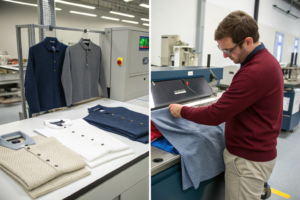
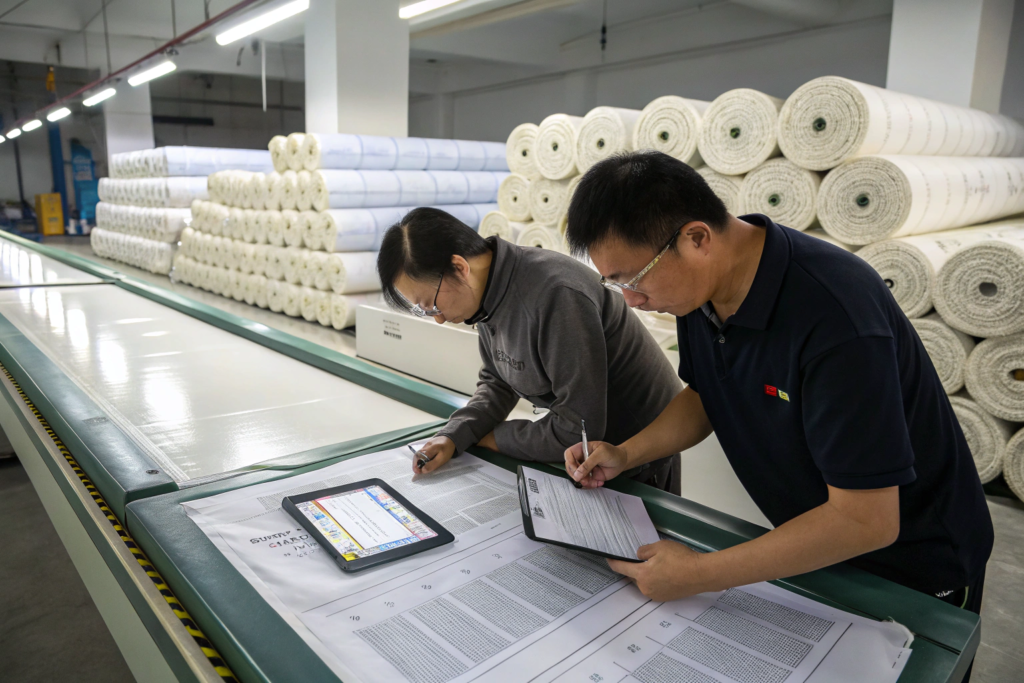
In-process quality control catches problems early. At Shanghai Fumao, we inspect yarn quality before weaving, monitor looms during production for defects, check greige fabric before dyeing, test samples during finishing, and inspect every roll before packing. Each step prevents problems from propagating to the next stage.
Final inspection is your last chance to catch issues before fabric ships. We use AQL (Acceptable Quality Level) standards—typically 2.5 for major defects, 4.0 for minor. Every roll is examined on a lighted table, with defects marked and recorded. If a roll exceeds acceptable defect levels, it's rejected and either repaired or replaced.
The critical point: inspection takes time. A full container of fabric (30,000-40,000 yards) requires 2-3 days for proper inspection. Rushing this to save two days risks shipping defective fabric that will cost weeks to replace. We never skip inspection, and we advise clients never to ask us to.
A Spanish brand once begged us to skip inspection to make an earlier ship date. We refused. They found another supplier who agreed. That fabric arrived with 15% defects, and they spent three months fighting for refunds and reorders. Their "saved" week cost them three months.
What Defects Are Worth Delaying a Shipment For?
Not all defects justify delaying shipment. Understanding the difference helps you make smart decisions when problems arise.
Show-stopping defects that require delay or replacement: holes, tears, or severe damage; wrong color (clearly different from approved standard); wrong weight or construction (not what you ordered); persistent defects throughout the roll that will affect garment cutting.
Acceptable defects that can be managed: minor slubs or neps in natural fabrics (part of the aesthetic); slight shading within acceptable tolerance (if you can cut around it); edge defects that won't affect garment cutting (if marked and avoided).
The key is communication. When inspection finds issues, we immediately send photos and samples. You decide whether to accept, request a discount, or reject and reweave. Your decision determines the timeline. Accepting minor issues ships on time. Rejecting requires re-production and delays.
A US client once rejected an entire shipment because of 2% minor defects—well within acceptable limits. They waited six weeks for replacement fabric while their original (perfectly usable) fabric sat in our warehouse. The delay cost them far more than the minor defects would have.
How Do You Handle Failed Inspections Without Destroying Your Timeline?
When inspection fails, you have options. The best choice depends on the severity and your timeline.
Minor issues: Accept with discount. If defects are within tolerance but you want compensation, negotiate a credit (typically 5-15% depending on severity). Fabric ships immediately, you get a discount, timeline preserved.
Moderate issues: Sort and repair. We can go through rolls, remove defective sections, and re-inspect. This takes time (add 5-7 days) but salvages the fabric. Good for isolated defects in otherwise good rolls.
Major issues: Reject and re-produce. If the fabric is fundamentally wrong, accept that you'll miss your original timeline. Work with your supplier to prioritize the re-order—maybe they can rush other orders to accommodate yours.
The worst choice is to ship defective fabric hoping it will be okay. It won't be. You'll have unhappy customers, returns, and eventual replacement costs anyway. Better to delay and get it right.
A Dutch brand once faced failed inspection on a custom jacquard. The pattern was slightly off—acceptable to some eyes, but not to their quality standards. They chose to reject and reweave. The six-week delay was painful, but the replacement fabric was perfect. Their customer, a luxury retailer, never knew there was a problem. If they'd shipped the defective fabric, they'd have lost the account permanently.
How Do Shipping Logistics Affect Your Delivery Timeline?
Your fabric can be finished and inspected on time, then sit for weeks waiting for a ship. Shipping logistics are often the least understood part of the timeline, and they cause as many delays as production.
Booking space is the first hurdle. During peak seasons, container space sells out weeks in advance. If you wait until fabric is finished to book shipping, you'll wait. We advise clients to book space as soon as production is confirmed—ideally 3-4 weeks before the estimated ex-factory date.
Transit times vary by destination and service. Shanghai to Los Angeles: 15-20 days for standard service, 12-15 days for premium. Shanghai to Hamburg: 25-30 days. Shanghai to Sydney: 20-25 days. These are estimates—actual times vary with weather, port congestion, and carrier schedules.
Customs clearance adds time at both ends. China export clearance typically takes 1-2 days if documentation is correct. Import clearance at destination can take 2-5 days depending on the country and whether inspections are required. For US-bound shipments, ISF (Importer Security Filing) must be filed 24 hours before loading.
Documentation errors cause major delays. A single mistake on a bill of lading, commercial invoice, or packing list can hold a container for weeks. We triple-check every document and send drafts for client approval before finalizing.
A Canadian client once had a container held for three weeks because their customs broker's address was wrong on the bill of lading. The fabric was perfect, the production was on time, but a typo caused a three-week delay. Now we verify every detail before documents are issued.

Should You Use Air Freight to Recover from Delays?
Air freight is expensive but sometimes necessary. When you're facing retailer penalties or a missed launch window, the cost may be worth it.
Cost comparison: Sea freight for a 40-foot container (40,000-50,000 yards of lightweight woven) might cost $3,000-5,000. Air freight for the same volume is impossible—air freight is weight-limited, not volume-limited. For urgent orders, you'd air-freight a partial shipment (5,000-10,000 yards) to cover immediate needs while the rest comes by sea.
Timing: Air freight from Shanghai to US West Coast takes 3-5 days including customs. To Europe, 4-6 days. To Australia, 5-7 days. Compare to 20-30 days by sea, and the value becomes clear for time-sensitive situations.
When to use it: If you're facing stockouts, retailer penalties, or launch deadlines, air freight can save the business. If the delay is inconvenient but not catastrophic, wait for sea freight.
A New York brand once air-freighted 8,000 yards of woven shirting to cover a Nordstrom launch. The air freight cost $12,000—painful, but the launch generated $200,000 in sales. They'd have lost the placement without it.
What Documentation Prevents Customs Delays?
Customs delays are almost always documentation issues. Here's what must be correct:
Commercial invoice: Must match exactly what's in the container. Quantity, value, description, HS codes. Discrepancies trigger inspections.
Packing list: Roll numbers, quantities per roll, total meters, gross/net weight. Customs may verify against this.
Bill of lading: Correct consignee, notify party, port of discharge. Errors here stop the shipment.
Certificates: If you claimed GOTS, GRS, or OEKO-TEX, have certificates ready. Customs may request them.
Country of origin: "Made in China" must appear correctly. Some countries have specific labeling requirements.
We send all documents to clients for review before finalizing. A second pair of eyes catches errors we might miss. A UK client once noticed we'd used the wrong HS code—a mistake that would have caused a week-long delay. Because they reviewed, we corrected it before shipping.
Conclusion
Late shipments from Chinese woven fabric suppliers are avoidable. They're not inevitable acts of God—they're the result of poor planning, communication breakdowns, and working with suppliers who prioritize promises over honesty. With the right approach, you can achieve on-time delivery rates above 95%.
The foundation is realistic timelines. Understand that different woven constructions require different lead times. Basic poplin is faster than complex jacquard. Piece-dyed is faster than yarn-dyed. Build buffer into your schedule—20% for basic fabrics, 30% for complex, more during peak seasons.
The next layer is thorough pre-production. Invest time in sampling and approvals. Document everything in complete tech packs. Solve problems before bulk production starts. The weeks you spend here save months later.
Active monitoring keeps you informed without micromanaging. Use supplier tracking systems, schedule regular updates, watch for warning signs. When problems emerge, address them immediately rather than hoping they'll disappear.
Quality control protects your timeline by catching issues before shipping. Understand what defects justify delays and what can be managed. When inspection fails, make smart decisions about whether to accept, repair, or reject.
Shipping logistics require as much planning as production. Book space early, ensure documentation is perfect, understand transit times. Air freight is expensive but sometimes necessary for recovery.
At Shanghai Fumao, we've built our reputation on on-time delivery. Our average on-time rate over the past five years is 97%. We achieve this through realistic quoting, transparent communication, rigorous quality control, and logistics expertise. When we quote 45 days, we deliver in 45 days—or we tell you immediately if something changes.
We don't promise what we can't deliver. If your timeline is too tight, we'll tell you upfront and help you adjust expectations or find alternatives. That honesty has built relationships that last decades.
Whether you need basic poplin for a basics line or complex jacquards for luxury fashion, we have the systems and experience to deliver on time, every time.
Contact our Business Director, Elaine, today to discuss your woven fabric needs. She and her team will provide realistic timelines, detailed production schedules, and the transparent communication that keeps your supply chain moving. Email her directly at: elaine@fumaoclothing.com. Let's build a partnership based on reliability, not excuses.