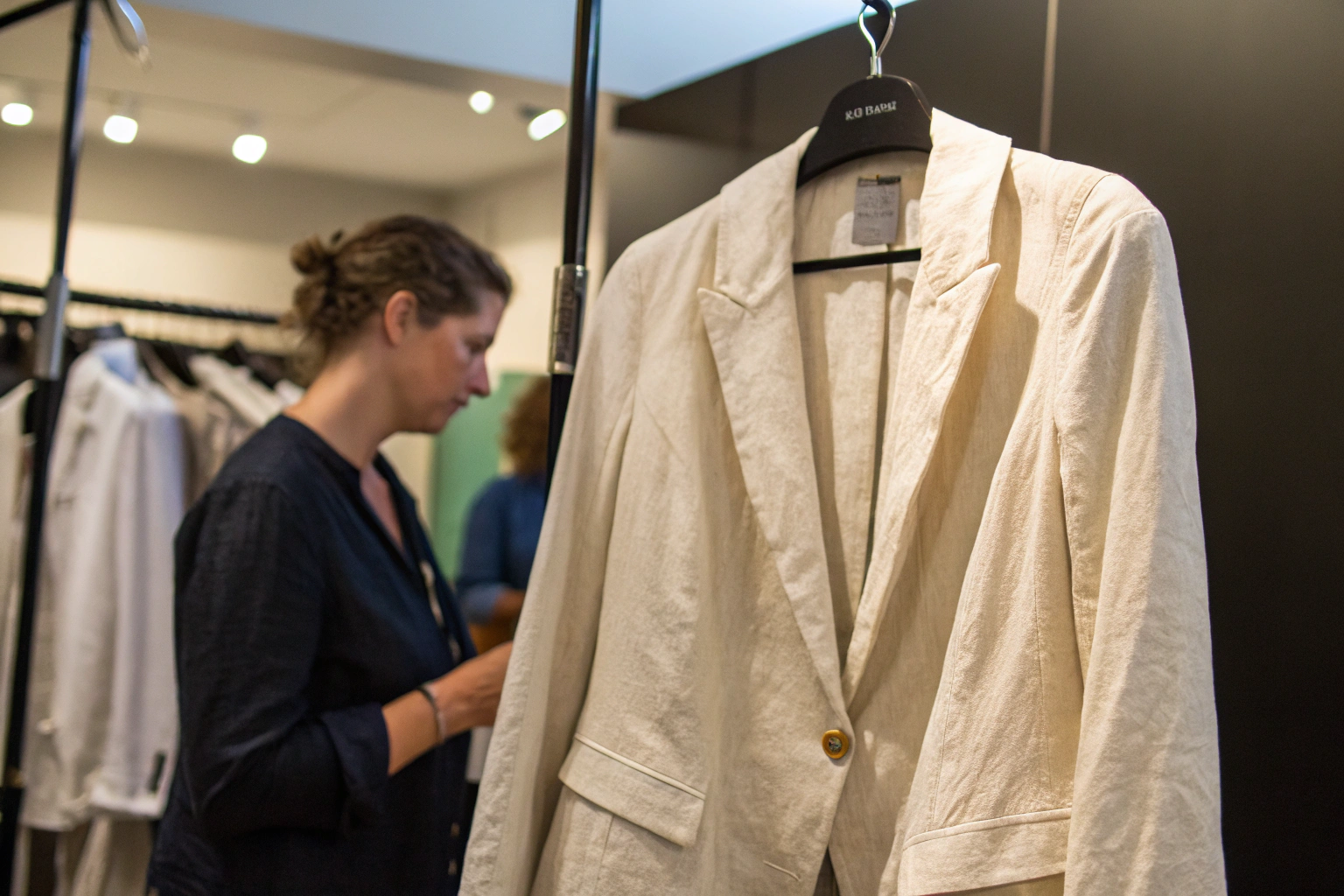
You design a structured blazer that needs to hold its shape. You spec a 12oz linen, but the supplier sends you a swatch that feels more like a limp handkerchief. You try to explain the concept of "body" to the sales rep, but they just nod and offer you a heavier starch finish. The blazer ends up looking like a rumpled mess on the hanger. Your customer tries it on, shrugs it off, and buys the competitor’s jacket instead. I have watched designers struggle with wimpy linen that betrays their silhouette. The problem is almost always a mismatch between the fabric weight they imagined and the GSM they actually ordered.
Our heavy linen range starts at 250 GSM and goes up to 450 GSM, with our most popular heavyweights for suiting and outerwear sitting between 280 and 350 GSM. In ounces per square yard, that translates to roughly 8oz to 13oz. We also produce specialty ultra-heavy linens up to 500 GSM for industrial and upholstery applications. These are not just thick versions of our shirting linen. They are fundamentally different constructions—dense plain weaves, sturdy twills, and double-weave structures—engineered to provide structure, durability, and that satisfying heft that makes a garment feel substantial.
Fabric weight is not a subjective description. It is a number on a scale. Let me show you exactly how we measure it, what each weight class is suited for, and how to spec the right GSM for your project so you never end up with a blazer that collapses on itself.
How Do You Measure And Define Heavy Linen GSM
GSM stands for grams per square meter. It is the global standard unit for fabric weight. Unlike ounces per square yard, which is still common in the US, GSM is unambiguous and universally understood in textile manufacturing. When I say a fabric is 350 GSM, I am stating a physical fact: a one-meter by one-meter square of that fabric weighs 350 grams. There is no interpretation. There is no rounding to the nearest ounce. It is a precise measurement.

What Is The Difference Between GSM And Ounces Per Square Yard?
GSM and ounces per square yard (oz/yd²) measure the same physical property—the weight of a given area of fabric—but they use different units. One ounce per square yard equals approximately 33.9 GSM. So a 10oz linen is roughly 339 GSM. A 12oz linen is roughly 407 GSM.
The confusion arises because some US buyers think in ounces but Chinese mills manufacture in GSM. A designer might request a "12oz linen," but their spec sheet says "340 GSM." Those two numbers are not the same. A 340 GSM fabric weighs 10 ounces, not 12. This mismatch is a common source of sampling errors. We always work in GSM internally because our production machinery is calibrated in metric units. When a US client sends a weight spec in ounces, we convert it to GSM during the quoting process and confirm the GSM number on the lab dip and the bulk order. This eliminates the conversion error. I recommend every designer learn to think in GSM. It is more precise, and it aligns you with how the factory actually works. To understand the conversion properly, you can read about the exact conversion formula between fabric weight in GSM and ounces per square yard for woven linen textiles. It is a simple math equation, but getting it wrong costs money.
How Do You Test The Actual GSM Of A Finished Fabric?
We use a GSM cutter and a digital analytical balance. The GSM cutter is a circular die that cuts a precise sample of exactly 100 square centimeters from the fabric. The technician places the cut circle on the balance. The balance displays the weight in grams. Because the sample area is one-hundredth of a square meter, the technician multiplies the displayed weight by 100 to calculate the grams per square meter.
This test is simple, but the execution requires care. The fabric must be conditioned in a standard atmosphere of 20°C and 65% relative humidity for at least 24 hours before testing. Linen is hygroscopic; it absorbs moisture from the air. A fabric tested on a humid day will weigh more than the same fabric tested on a dry day. Conditioning removes this variable. We also test multiple samples from different points on the roll—the beginning, middle, and end—to verify weight consistency across the production batch. The average of these measurements becomes the reported GSM. For a fabric to meet spec, the average GSM must fall within a tolerance band, typically plus or minus 3% to 5% of the target. If you order 350 GSM linen and receive 340 GSM, that is a 2.8% deviation, which is within a reasonable tolerance. If you receive 310 GSM, that is an 11.4% deviation and a failed production batch. We reject any batch that falls outside the agreed tolerance. For the detailed protocol, you can explore standard conditioning and testing procedures for accurate GSM measurement of linen fabric according to ASTM D3776. The lab method guarantees that what we claim on the invoice matches what you measure in your studio.
What Are The Different Classes Of Heavy Linen We Offer
Not all heavy linen is created for the same purpose. A 450 GSM canvas designed for a durable work apron behaves very differently from a 280 GSM twill designed for a tailored blazer. The weight class determines the garment type, the drape, the warmth, and the durability. I categorize our heavy linen range into three general weight classes: medium-heavy for structured apparel, heavy for outerwear and home textiles, and ultra-heavy for specialty applications.

What Is The 250 To 300 GSM Range Best Suited For?
This is the medium-heavy range, and it is the workhorse for tailored womenswear and menswear. A 280 GSM linen twill has enough body to hold a structured shoulder on a blazer, enough drape to fall cleanly on a wide-leg trouser, and enough breathability to still be wearable in spring and early summer. This range is also popular for structured A-line dresses and skirts that need to maintain their shape without looking stiff.
At this weight, the fabric still has enough flexibility to mold to the body during a pressing or tailoring process. A tailor can shape a 280 GSM linen jacket with steam and tension. The fabric responds. By contrast, a 150 GSM shirting linen is too light to hold a tailored shape. It crumples. The 250 to 300 GSM range strikes the balance between structure and wearability. Our bestselling 280 GSM herringbone linen in this class is used by several European menswear brands for their summer blazer programs. It is heavy enough to feel substantial and light enough to not feel like armor. If you are making a structured jacket for the first time and are unsure about weight, 280 GSM is the safest starting point. To see what this weight looks like in a finished garment, you can explore the ideal fabric weight range for tailored linen blazers and structured summer jackets. The 250 to 300 GSM zone is where most designer blazers live.
When Would I Need A 350 To 450 GSM Linen?
This is the heavy range, and it is for garments and products that need to feel indestructible. A 350 GSM plain weave linen canvas is stiff enough to stand on its own. You can make a chore coat, a work vest, or a structured bucket hat that holds its silhouette even after being crushed in a suitcase. A 400 GSM linen twill is suitable for a heavy winter overshirt or an unlined bomber jacket where the fabric itself provides the structure and warmth.
This weight class also crosses into home textiles. A 380 GSM linen is beautiful for heavyweight curtains that drape in thick, sculptural folds. For upholstery, a 400 to 450 GSM linen offers the durability to withstand daily sitting and abrasion while aging gracefully with a lived-in patina. At these weights, the fabric starts to resist wrinkling simply because the mass of the fiber pulls the creases out under its own weight. A 400 GSM linen blazer will look rumpled but deliberate, not crushed and messy. The key design consideration at 350 GSM and above is seam bulk. You need to plan your seam construction carefully because the fabric is thick. A flat-felled seam on a 400 GSM linen can feel like a rope if not pressed properly. We advise our clients on seam finishing techniques appropriate for the weight they select. For a practical guide on this, you can read about appropriate seam construction and pressing techniques for heavy linen fabrics above 350 GSM. The right GSM choice is only half the battle; the right construction makes it wearable.
Do You Produce Linen Heavier Than 450 GSM?
Yes, we produce specialty ultra-heavy linens up to 500 GSM for specific applications. These are not apparel fabrics. A 500 GSM linen is almost like a soft armor. It is used for heavy-duty upholstery on commercial furniture, for high-end luggage exteriors, and for protective equipment sleeves. We have also produced 500 GSM linen for an artist who used it as a painting canvas substrate that would not warp under heavy gesso and oil paint.
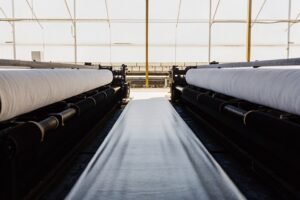
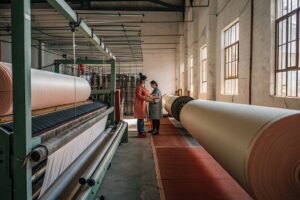
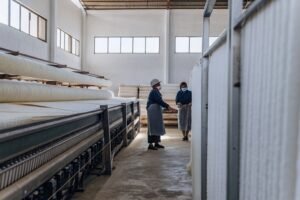
These ultra-heavy weights require a completely different production setup. The yarn is much thicker, often a 6s or 8s count. The loom runs at a significantly slower speed to manage the thick weft insertion. The finishing process must be adjusted because the fabric absorbs chemicals and dyes differently at that density. We do not stock ultra-heavy linens as a standard inventory item. They are made to order with a minimum quantity of 300 meters per color. The lead time is longer, typically 6 to 8 weeks, because the yarn sourcing and loom setup are specialized. If you have a project that requires a linen canvas above 450 GSM, let us know early in your development cycle so we can plan the production schedule. For examples of what these fabrics look like in application, you can explore the uses and production specifications of ultra-heavy linen fabrics above 450 GSM for industrial and upholstery applications. It is a niche but fascinating corner of textile manufacturing.
How Does GSM Affect The Drape And Performance Of Linen
GSM is not just a number on a spec sheet. It is the primary driver of how the fabric behaves when you cut it, sew it, and wear it. The weight of a fabric dictates its drape, its wrinkle resistance, its breathability, and its durability. A designer who understands the relationship between GSM and performance can choose the right weight for the right garment without relying on guesswork.

Why Does Heavier Linen Wrinkle Less Than Lightweight Linen?
Wrinkling is a function of fiber stiffness and fabric mass. Linen fibers are inherently stiff because flax has a high Young’s modulus, meaning it resists bending. When you fold or compress a linen fabric, the fibers bend and create creases. A lightweight linen, say 150 GSM, has very little mass to pull against those creases. The fibers stay where you bend them. The result is a fabric that wrinkles easily and holds those wrinkles aggressively.
A heavier linen, say 350 GSM, has significantly more mass. Gravity is constantly pulling down on the fabric. The weight of the fabric itself overcomes some of the fiber stiffness. When you sit down in a 350 GSM linen blazer and create wrinkles, the fabric’s own weight begins to pull those wrinkles out as soon as you stand up. The creases also tend to be wider and less sharp in a heavy fabric because the bending radius is larger. This does not mean heavy linen is wrinkle-free. It is still linen; it will wrinkle. But the wrinkles are more like soft, rolling waves rather than sharp, crushed lines. The garment looks lived-in and relaxed rather than messy. This is why heavy linen is the preferred choice for tailoring. It has the linen character without the linen messiness. For a deeper technical explanation, you can read about the relationship between fabric GSM and wrinkle recovery angle in woven flax linen for tailored apparel. The physics of creasing is measurable and predictable.
How Does Increasing GSM Affect Breathability?
Breathability decreases as GSM increases. This is intuitive once you think about it. Air permeability is the rate at which air flows through a fabric. A heavier fabric is generally denser, with more fiber packed into a given area. The spaces between the yarns are smaller or fewer. Air meets more resistance as it tries to pass through.
A 150 GSM open-weave linen shirting might have an air permeability of 600 liters per square meter per second. A 350 GSM linen twill might drop to 200 or 250 L/m²/s. It is still breathable compared to a synthetic fabric of similar weight, but it is significantly less airy than a lightweight linen. This matters for garment design. A 350 GSM linen blazer will be comfortable in spring and early summer temperatures, but it will feel warm and heavy on an 85-degree day with high humidity. If you are designing for peak summer heat, stay in the 180 to 240 GSM range. If you are designing for a three-season garment that works from March through June and again in September and October, a 280 to 300 GSM heavy linen is an excellent choice. The weight provides warmth on cooler days while still breathing enough to be comfortable. To make the best decision, you can explore the trade-off between GSM weight and air permeability in heavy linen fabrics for different seasonal apparel applications. The data guides the design choice.
How Do I Choose The Right Heavy GSM For My Project
Choosing the right GSM is a design decision, not a sourcing afterthought. The fabric weight determines the silhouette, the seasonality, and the price of your garment. If you pick the wrong weight, no amount of pattern work or pressing can fix the result. I guide my clients through this decision by asking three questions: what is the garment type, what is the target season, and what is the desired silhouette?

What GSM Should I Use For A Structured Versus Unstructured Jacket?
A structured jacket with shoulder pads, chest canvas, and a full lining needs fabric weight to balance the internal construction. If the fabric is too light, the internal components telegraph through to the surface, creating a lumpy, cheap appearance. The structure overpowers the cloth. I recommend a minimum of 280 GSM for a fully structured linen jacket, with 320 to 350 GSM being the sweet spot. The weight of the linen harmonizes with the weight of the canvas interlining. They move together as one unit.
An unstructured jacket—no shoulder pads, no canvas, half lining or unlined—can work with a lighter heavy linen. A 250 GSM linen is often perfect for an unconstructed summer blazer that feels like a shirt but looks like a jacket. The fabric provides enough body to hold the jacket shape without internal support, but it remains soft and drapey against the body. An unstructured jacket at 350 GSM can feel too stiff and boxy because the fabric wants to hold its own shape rather than conform to the wearer’s shoulders. The garment ends up wearing the person. The key principle is that the fabric weight and the internal structure must match. Heavy structure plus light fabric equals failure. Light structure plus heavy fabric equals a cardboard box. Balanced structure plus balanced fabric equals a beautiful garment. For more guidance on this matching process, you can read about how to select the correct fabric weight for structured versus unstructured linen tailoring projects. It is a fundamental skill for any designer working with natural fibers.
How Do I Account For Shrinkage When Ordering Heavy Linen Yardage?
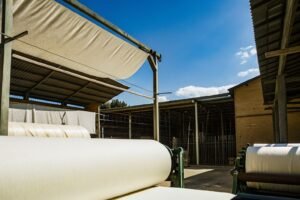
Heavy linen shrinks. Every natural fiber fabric does. We mechanically pre-shrink all of our heavy linens through the rubber-belt compacting machine before shipping. The compaction process reduces residual shrinkage to below 2% in the warp direction and below 1.5% in the weft direction. This means a 40-inch trouser length will shrink by less than 0.8 inches after home laundering.
However, you should still account for this small remaining shrinkage in your pattern grading. I recommend adding a 2% buffer to your cutting measurements for heavy linen garments that will be washed by the consumer, and a 1% buffer for dry-clean-only garments. Also, always wash or dry-clean your pre-production sample before finalizing your graded spec. Measure the sample before and after cleaning. The difference is your actual shrinkage for that specific fabric batch. Use that measured number, not a generic assumption, to adjust your final pattern. This is standard industry practice, and it protects you from delivering a jacket that fits beautifully off the rack but pulls tight after the first cleaning. To understand this process fully, you can explore how to calculate and compensate for residual shrinkage in pre-shrunk heavy linen woven fabrics for garment cutting. A small measurement step in development prevents a large quality issue in production.
Conclusion
Heavy linen is a category with real range. It starts at 250 GSM for a structured-yet-breathable shirting and rises to 500 GSM for an industrial canvas that can last a lifetime. Our core heavy linen offerings sit between 280 and 350 GSM, a zone that delivers the body, drape, and wrinkle resistance that tailored garments demand without sacrificing the natural breathability and textural beauty that makes linen the king of summer fabrics. The weight you choose will dictate the silhouette of your garment, the season it works for, and how it ages. Choose too light, and your blazer collapses. Choose too heavy, and your jacket wears you. Choose right, and the fabric does the work for you.
If you are developing a structured blazer, a chore coat, or a heavyweight home textile, let us send you a physical GSM swatch book that includes our full heavy linen range. You will receive swatches at 250, 280, 320, 350, 400, and 450 GSM in natural and charcoal so you can feel the weight progression in your own hands. Send your pattern requirements to Elaine and she will recommend the appropriate GSM based on your silhouette and construction. Email elaine@fumaoclothing.com with the subject line "Heavy Linen Swatch Book." Let us put the right weight in your hands before you cut a single yard.