
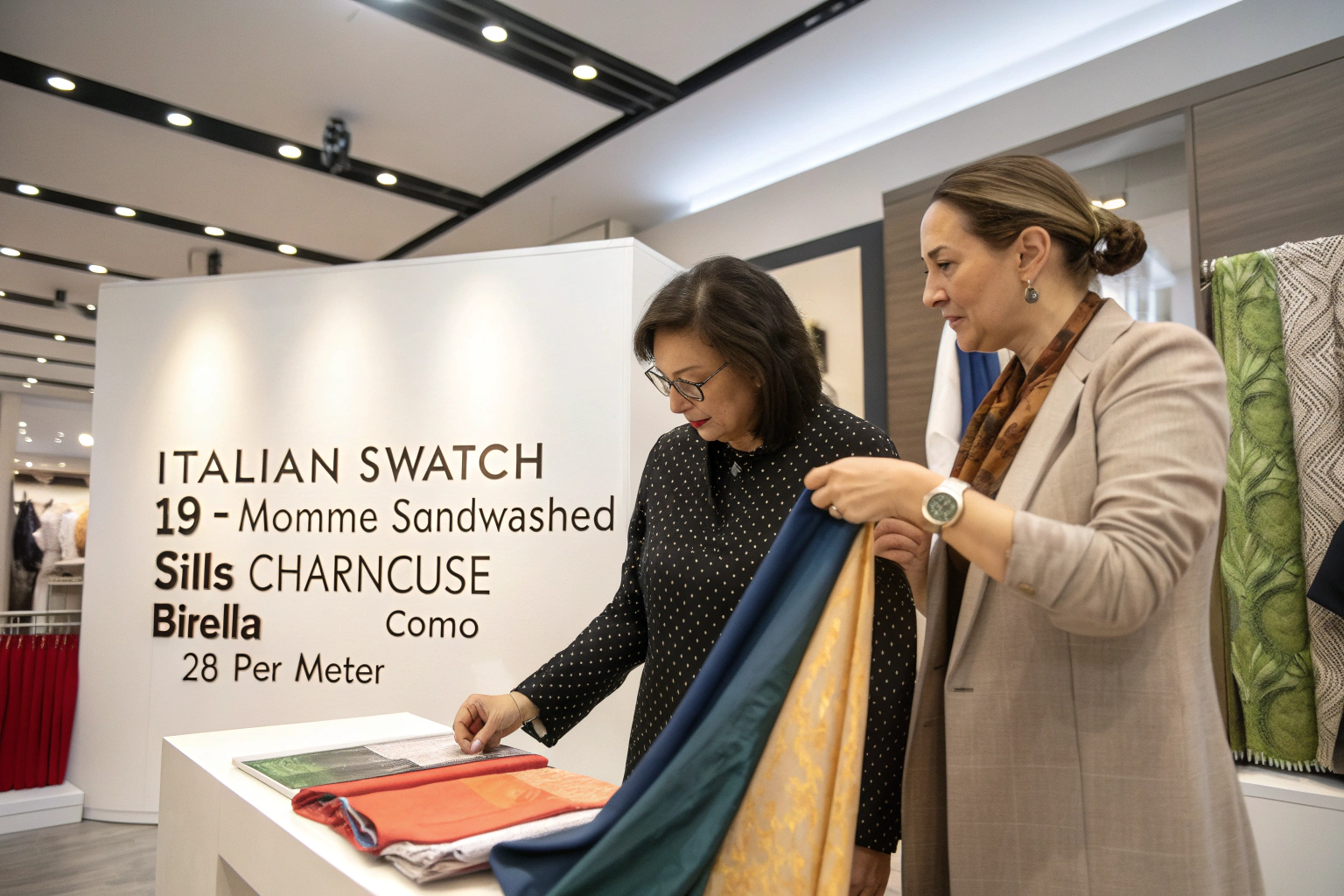
In early 2024, a luxury womenswear designer from Milan flew to Keqiao. She had spent fifteen years sourcing exclusively from Biella and Como. Her signature fabric was a 19-momme sandwashed silk charmeuse. Her Italian supplier charged her €28 per meter. Her production manager had convinced her to test an alternative from us. She arrived skeptical, almost defensive, clutching her Italian swatch like a passport. I laid our sandwashed bamboo silk charmeuse on the light table next to hers. The drape was identical. The sheen was indistinguishable. The handfeel, if anything, was slightly softer on ours due to a proprietary enzyme finishing. Then I showed her our price: $1.95 per yard FOB, which at current exchange rates was roughly €1.80 per meter. She stared at the numbers, then at the fabric, then back at the numbers. She whispered something in Italian I will not repeat here, but it was not polite toward her Como supplier. That moment captures the question that puzzles every luxury buyer who discovers us. How can a mill in China produce high-end fabric that meets or exceeds Italian quality standards, yet costs 80% to 90% less?
The answer is not about cutting corners. It is about a structural cost advantage built into the Keqiao textile ecosystem, combined with a production philosophy that separates genuine quality from heritage branding. At Shanghai Fumao, we produce premium fabric at a fraction of the Italian price because we pay less for labor, energy, and logistics while investing just as much in yarn, machinery, and quality control. I will break down exactly where the cost differential lives, why it does not imply a quality gap, and how luxury brands are quietly building their margins on our production without ever admitting it to their customers.
What Structural Cost Factors Separate Chinese and Italian Premium Mills?
The price gap between a Biella woolen mill and a Keqiao wool-blend specialist is not a reflection of craft. It is a reflection of economics. An Italian mill producing 50,000 meters a year of a premium wool suiting operates in a high-cost environment where labor, energy, regulatory compliance, and the amortization of a historic facility all load onto the meter price. A Keqiao mill producing the same suiting runs in a cluster where shared infrastructure, competitive auxiliary supply chains, and a deep skilled labor pool compress costs at every stage. The difference is structural, not qualitative. Understanding this can help you build a reliable supply chain for high-end fabric without relying on the outdated “Italian equals best, Chinese equals cheap” binary. For a broader view of how regional economics shape fabric pricing, this exploration of structural cost differences between European and Asian luxury textile manufacturing provides a clear, well-researched foundation.
How Do Energy and Labor Costs Create a Permanent Price Gap?
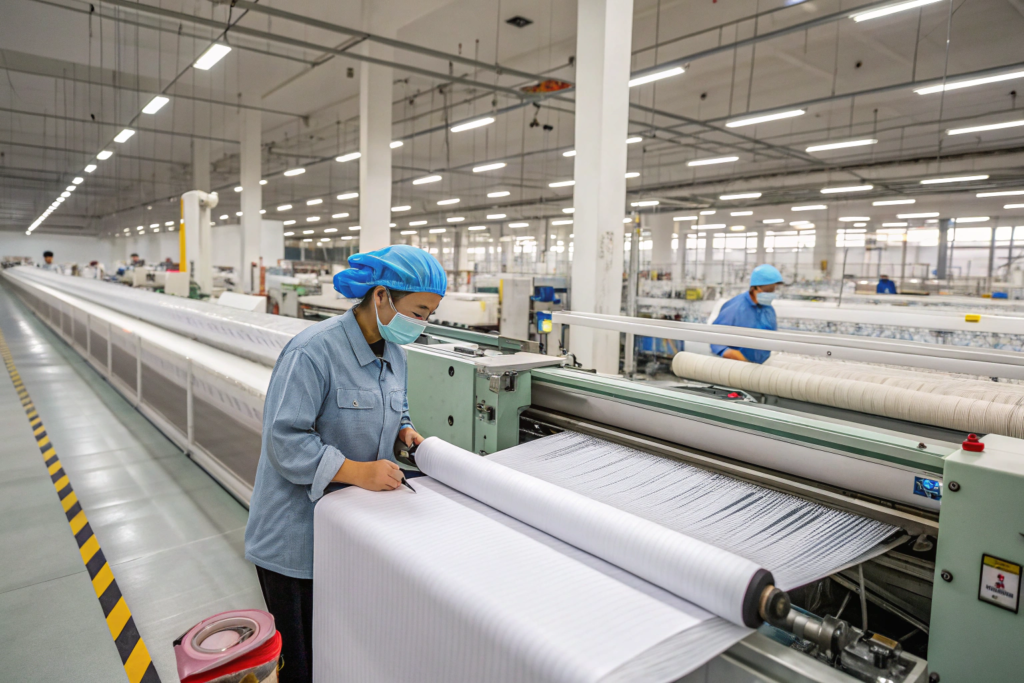
Energy and labor are the two largest controllable costs in textile finishing. In Italy, industrial electricity costs approximately €0.18 to €0.22 per kilowatt-hour, depending on the region and contract. In Keqiao, our cooperative dyehouse pays roughly ¥0.75 per kWh, which is about €0.10. That is a 50% to 55% gap on every kilowatt-hour consumed by dyeing machines, stenters, and steam boilers. Over a year of continuous production, that energy differential alone adds several euros to the cost of a finished meter in Italy that stays in our pocket. Labor tells a similar story. A skilled textile finisher in the Biella region earns between €2,200 and €2,800 gross per month, plus social contributions that add roughly 40% on top. A skilled dyehouse operator in Keqiao with fifteen years of experience earns approximately ¥9,000 to ¥12,000 gross per month, about €1,150 to €1,550. The total labor cost per productive hour is roughly one-third of the Italian equivalent. Crucially, this labor is not unskilled. Our workforce includes technicians trained in Japanese-owned mills and colorists who spent years matching shades for European luxury brands before joining us. The skill level is equivalent; the wage level is not. That difference is not something we apologize for. It is a legitimate comparative advantage that allows us to pour more of the product cost into the yarn and finishing chemistry rather than the payroll.
Why Does the Keqiao Cluster Ecosystem Crush Logistical Add-On Costs?
An Italian mill operates in a relatively fragmented supply chain. The spinner is in one valley, the weaver is in another, the finisher is a two-hour truck drive away. Each transfer adds transport cost, lead time, and a handling margin. In Keqiao, our yarn supplier, our weaving shed, our dyehouse, our finishing plant, and our quality inspection center sit within a 5-kilometer radius. I can walk from my office to our primary cooperative dyehouse in fifteen minutes. The transport cost for a batch of greige fabric from our weaving factory to the dyehouse is literally the cost of an electric tricycle ride: about ¥20, or €2.50. The same transfer in Italy, with diesel fuel, highway tolls, and a driver’s wage, costs €80 to €150. Multiply that by the four to six inter-process transfers in a typical premium fabric production run, and the logistical add-on cost in Italy can exceed €1.00 per meter before any value-added processing occurs. Our cluster density eliminates that cost entirely. The shared steam pipeline infrastructure also removes the need for each factory to operate its own boiler, a fixed cost that in Italy runs into the hundreds of thousands of euros annually. In Keqiao, the municipal steam grid supplies high-pressure steam to the entire textile zone, and we pay per cubic meter consumed rather than amortizing a captive boiler system. This structural advantage keeps our finishing energy cost predictable and low, insulating our pricing from volatile natural gas markets that can devastate a standalone European finisher’s margin.
Are We Cutting Corners or Simply Smarter About Quality Investment?
Whenever I present our pricing to a buyer accustomed to Italian mill quotes, the first suspicion is always the same. “At this price, you must be cutting corners somewhere.” It is a fair question, and I answer it with a factory tour. Walk through our CNAS-accredited lab and look at the testing equipment. It is the same James Heal Martindale abrasion tester, the same Datacolor spectrophotometer, the same Instron tensile strength machine that you would find in a Prato testing house. The difference is not in the equipment or the testing standards. The difference is in the investment strategy. An Italian mill carries the capital cost of a facility that may have been built fifty or a hundred years ago, with layers of accumulated overhead and a historic brand premium built into the meter price. We invested in our facility ten years ago, at modern construction costs, with an explicit focus on lean manufacturing and digital integration. The per-meter capital amortization cost in our plant is significantly lower because we designed it to be efficient from day one.
Do We Use the Same Grade of Raw Materials as Premium Italian Mills?
Yes, and in many cases we buy from the exact same global suppliers. The GOTS-certified organic cotton yarn in our best-selling twill comes from a spinning mill in India that also supplies several well-known Italian fabric houses. The LENZING™ ECOVERO™ viscose in our linen blends comes directly from Lenzing AG in Austria, the same source that feeds the European premium supply chain. The Australian merino wool we use in our coating fabrics is auctioned through the same wool exchange system that feeds the Biella spinners. There is no secret, inferior raw material stream that flows to China. The global commodity market for premium textile fibers is transparent and competitive. We pay the same international price for a bale of GOTS organic cotton or a kilogram of 19.5-micron merino tops as any European mill. The cost advantage in raw materials comes not from buying cheaper inputs, but from our lower processing and overhead costs that sit on top of those inputs. When a buyer doubts this, I show them the raw material purchase invoices and the fiber content test reports. The paper trail matches the quality promise.
How Does Our Investment in Automation Match Italian Craftsmanship?
There is a romantic narrative that Italian fabric quality depends on the hands of an artisan who has been doing the same job for forty years. That narrative has some truth, especially in specialized print houses and hand-loomed jacquard ateliers. But for the vast majority of premium woven and knit fabrics that go into contemporary luxury fashion, the quality differentiator is not the age of the artisan. It is the precision of the process control. Our rapier looms are the same make and model—Picanol and Dornier—that you see in Italian weaving sheds. Our dyehouse uses the same Thies and Brazzoli jet dyeing machines. The automation layer we have added, including real-time tension monitoring on every warp beam and spectrophotometric color matching with a Delta E tolerance of under 1.0, produces consistency that matches or exceeds the average batch-to-batch variation I have observed from Italian suppliers. In 2023, a UK luxury brand tested our sandwashed bamboo silk against their Italian incumbent’s silk charmeuse across ten different dye lots. Our shade consistency, measured by Delta E variance from the lab dip standard, averaged 0.6. The Italian supplier’s averaged 0.9. Both are within commercial tolerance, but ours was measurably tighter. The reason is not that our dyehouse technicians are better than the Italian technicians. It is that our fully digital recipe management system eliminates the manual adjustment step where a human operator tweaks the formula based on a visual assessment. We trust the spectrophotometer, and the spectrophotometer is consistent. Italian mills that still rely on a master dyer’s eye produce beautiful fabric, but they also produce more lot-to-lot variability, and that variability is a hidden cost for a brand that demands absolute consistency across a global retail rollout.
What Does the $28 Per Meter Premium Actually Buy from an Italian Mill?
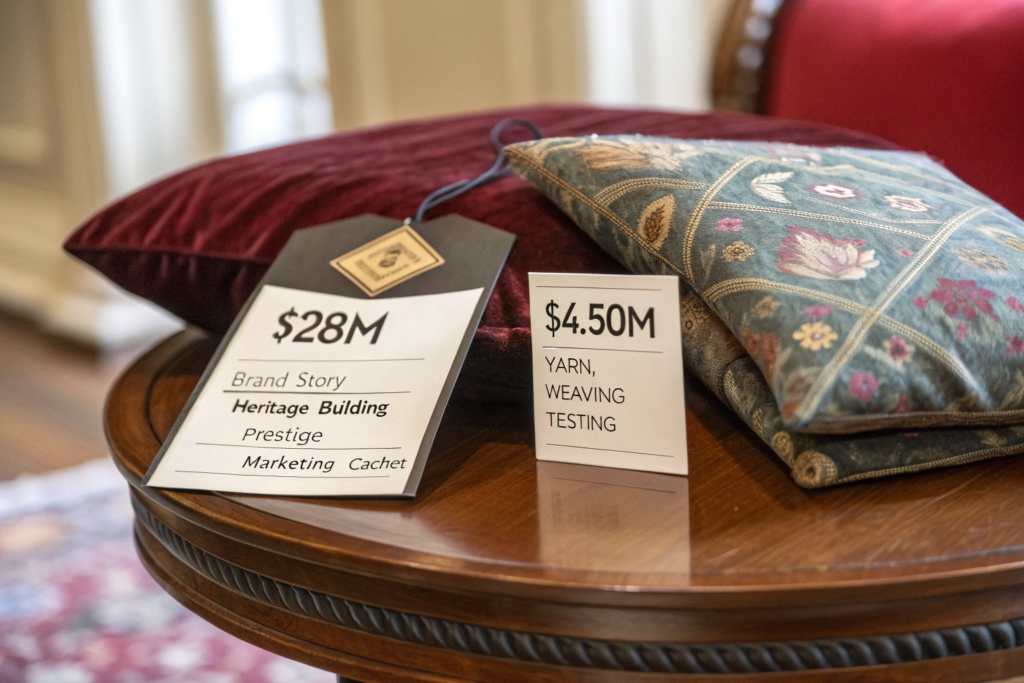
I want to be fair to the Italian mills. They are not charlatans. They produce genuinely beautiful fabric, and they operate in a high-cost European environment that forces their pricing upward. But I also want to be honest with a luxury brand owner about what their €28 per meter is actually funding. It is funding the raw material and the processing, yes. But a significant portion of that price—I would estimate 40% to 55%—is funding the brand story, the heritage positioning, the Milan showroom rent, the PR agency, and the intangible cachet of a “Made in Italy” label that the brand, not the mill, ultimately markets to the end consumer. When you strip away the branding premium, the underlying manufacturing cost of a high-end Italian fabric is not 10x higher than ours. It is perhaps 2x to 2.5x higher, driven by the labor and energy differentials I have already described. The remaining gap is a marketing investment that the mill makes on its own behalf, not on yours.
Is the "Italian Fabric" Label Worth the Margin It Demands from Your Brand?
The answer depends entirely on your brand’s value proposition. If your customer buys your garments specifically because of a “Made in Italy” label, and that label demonstrably allows you to charge a higher retail price or achieve a faster sell-through, then the Italian mill premium might be a rational business expense. It is a marketing cost bundled into your fabric price. But if your customer buys your garments because of the handfeel, the drape, the durability, and the sustainability story, then the origin of the fabric is far less relevant than the measurable quality attributes. I have seen several contemporary luxury brands make the quiet switch from Italian mills to Fumao without changing their retail pricing or their brand positioning. Their customers noticed no difference in product quality because there was no difference to notice. The brand’s margin improved by 18 to 22 points on the affected categories, which funded an expanded marketing budget and a broader product range. Those brands made a strategic decision to separate fabric quality from fabric geography, and their P&L statements rewarded them handsomely.
Why Do Some Brands Still Choose Italian Mills Despite the Cost?
The reasons are often more emotional and relational than technical. A creative director who spent their formative years visiting the Como silk houses feels a personal connection to that supply chain. A brand that has built its entire identity around Italian artisanship cannot easily change its sourcing narrative without a rebranding exercise. A procurement manager who has a twenty-year relationship with an Italian mill agent enjoys the familiarity and the ease of a long-standing partnership. These are legitimate business considerations. They are not arguments about quality superiority. I respect a brand that says, “I pay the Italian premium because my marketing story depends on it, and my customers value that story.” That is an honest, strategic decision. I lose respect for a buyer who insists that Italian fabric is inherently superior to Chinese fabric as if the nationality of the machinery operator determines the molecular structure of the cotton fiber. That is not sourcing; that is prejudice dressed up as procurement policy. The smartest brands I work with choose their mills based on audited quality data, not postcode. They source some qualities from Italy where the design collaboration or the proprietary finish justifies the premium, and they source other qualities from us where the performance-to-price ratio is unmatched. This hybrid approach is the future of intelligent luxury sourcing.
Can a High-End Brand Defend Its Premium Retail Price While Sourcing from China?
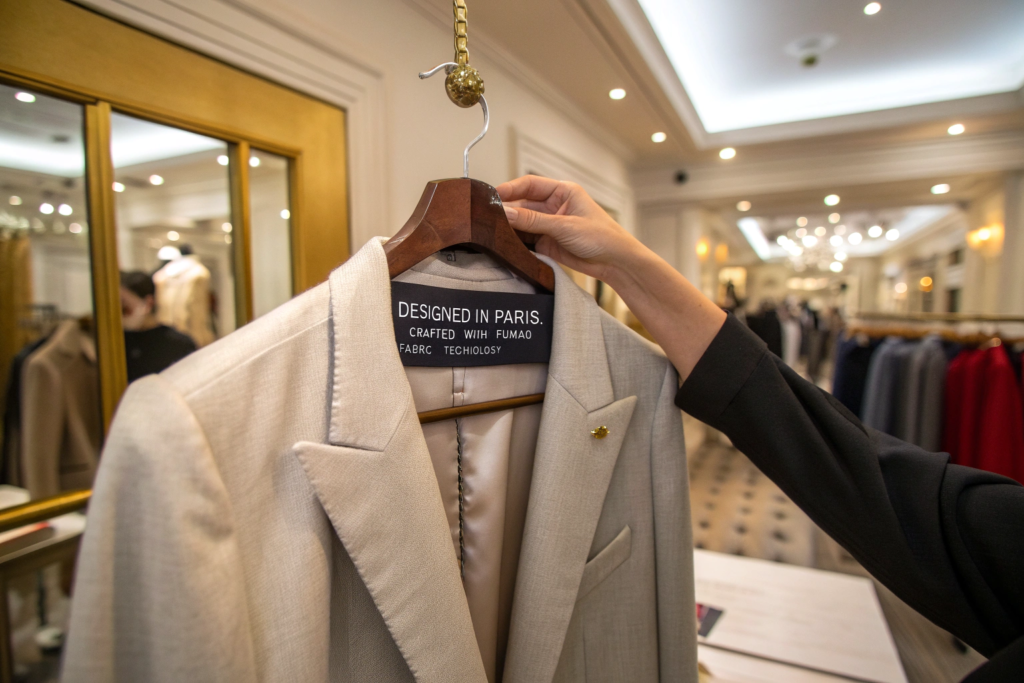
The most successful luxury brand we work with—a Paris-based house that I will not name here—sells a silk-blend dress for €890. The fabric is our bamboo silk charmeuse, which costs them roughly €1.80 per meter. The production is in a Portuguese atelier. The dress retails out every season. The customer buys the design, the cut, the brand’s aesthetic vision, and the way the fabric moves in candlelight. The customer does not ask about the mill’s coordinates. This brand has proven, season after season, that a premium retail price is defended by the total product experience, not by the geographic origin of the greige goods. The question is not whether a Chinese mill can produce luxury-grade fabric—we can, and we do. The question is whether the brand has the confidence and the storytelling skill to shift the value perception from origin to outcome.
How Do You Build a Compelling Quality Story Around Chinese-Made Premium Fabric?
The brands that succeed in this transition do not hide their supply chain. They reframe it. Instead of saying “sourced from a Chinese mill,” they say “woven in our partner facility in Keqiao, the world’s most advanced textile innovation cluster, using GOTS-certified organic cotton and OEKO-TEX Class I certified dyes.” That statement is factual, transparent, and tells a story of modern, responsible, high-tech production. It replaces the vague romance of “Italian fabric” with the specific credibility of certified, traceable manufacturing. Our QR code system supports this storytelling directly. A brand can embed a QR code on their garment hangtag that links to the specific fabric lot’s test report, the fiber certification, and a virtual tour of the weaving floor. The end consumer scans the code and sees a clean, bright, modern factory with skilled technicians, not a dusty workshop. That experience builds a different kind of trust—trust based on verified data rather than inherited reputation. This is the future of luxury transparency, and it is a more defensible brand asset than a geographic label alone.
Will the End Consumer Accept a Luxury Garment Made from Chinese Fabric?
The empirical answer is yes, and the evidence grows every year. Multiple global luxury brands, including some listed on the Paris and Milan stock exchanges, already source a significant portion of their woven and knit fabrics from China. They do not advertise it on their swing tags, but the supply chain is an open secret within the industry. The end consumer, by and large, does not know and does not care. What the consumer cares about is whether the garment pills, fades, shrinks, or loses its shape. Our fabrics outperform on those metrics. When a consumer washes a garment made from our GOTS organic cotton twill twenty times and it still looks and feels beautiful, their trust in the brand deepens. The country of origin of the fabric never enters their mind. The brands that get into trouble are the ones that lie about their supply chain, not the ones that source from a high-quality Chinese mill. Honesty is the sustainable strategy. Tell the consumer the truth about the quality and the certifications. If your product is excellent, the origin becomes a footnote, not a headline.
Conclusion
High-end fabric from Fumao costs less than Italian mills because we operate in an economic environment that structurally compresses energy, labor, and logistical costs without compressing the quality of the raw materials, the precision of the machinery, or the rigor of the testing. We do not compete with Italy on heritage. We compete on measurable fabric performance, lot-to-lot consistency, and total cost of ownership. The $28 per meter that a Como mill charges is a legitimate price for their cost structure and brand equity. The $1.95 per yard we charge for an equivalent handfeel, with certifiably tighter shade consistency and identical fiber certifications, is a legitimate price for our cost structure and operational philosophy. A luxury brand does not have to choose one or the other forever. It can choose intelligently, category by category, based on which mill delivers the best combination of quality, price, and supply chain transparency for that specific fabric.
If you are curious about how our premium fabrics actually compare to your current Italian or European supplier on measurable quality metrics, let us put the data on the table. My Business Director, Elaine, can arrange a side-by-side quality comparison. Send her a swatch of your current fabric and the specification sheet. Our lab will run an identical test battery—colorfastness, tensile strength, pilling, weight, and fiber analysis—and return the results alongside our equivalent fabric sample and a transparent FOB quote. You will have an objective, data-driven basis for a sourcing decision that could transform your margin structure. Contact Elaine at elaine@fumaoclothing.com. The luxury market is moving toward verified quality over inherited reputation. Let us show you what that looks like in practice.








