
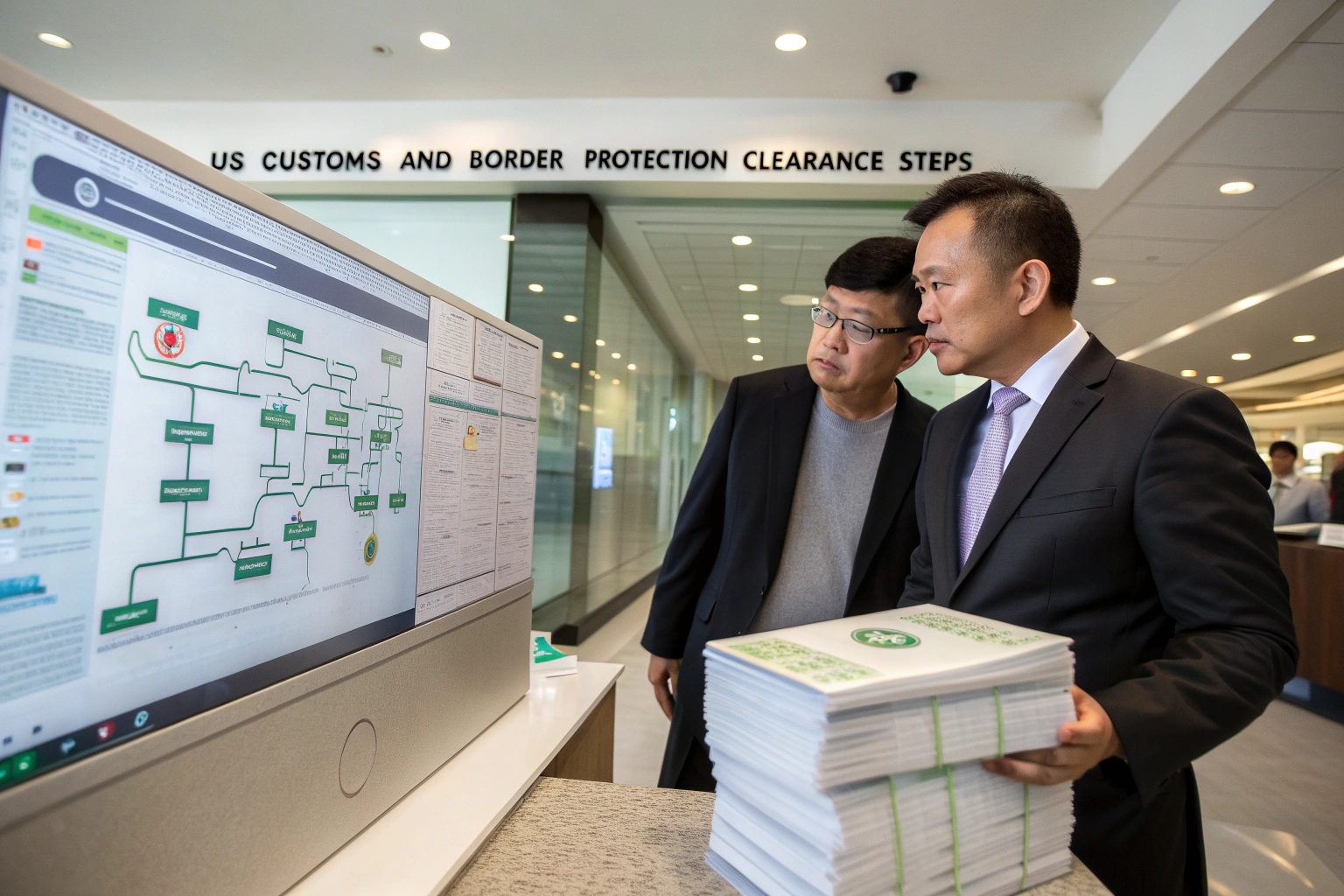
I’m going to be direct. I’ve stood on too many trade show floors and heard the same empty promise from a hundred fabric salesmen: "Customs? No problem. We handle it." Then the container hits the Port of Long Beach, and your customs broker is calling you in a panic because the commercial invoice says "polyester fabric" but the Bill of Lading says "textile piece goods," and the Harmonized System code is a generic 5407.10 that triggers a 25% Section 301 tariff plus a secondary agriculture inspection fee you never planned for. The CBP officers hold your shipment for a formal entry exam. Three weeks of storage fees accrue in a bonded warehouse. Your garment factory misses the cutting date. Suddenly, that "no problem" fabric is a $15,000 logistical catastrophe, and the salesman in China has gone completely silent.
At Shanghai Fumao, we never forget that a yard of fabric isn’t delivered until it passes through the sharp eyes of US Customs and Border Protection or the Canada Border Services Agency. For over two decades, we have treated customs compliance not as a shipping afterthought, but as a core manufacturing discipline. Our logistics team in Keqiao isn’t just a group of document-forwarding clerks. We have in-house tariff engineers, a dedicated North American Free Trade Agreement specialist, and a live digital integration with the customs brokerage platforms used at major US ports. We understand that the most beautiful jacquard weave in the world is worthless if CBP classifies it under the wrong subheading and slaps a retaliatory duty on it. I’m going to walk you through exactly how we navigate the labyrinth of FDA regulations for medical textiles, the punitive Section 301 duty framework, and the nuanced USMCA documentation requirements for Canadian-bound goods.
How Does Fumao Navigate Section 301 Tariffs and US De Minimis Rules?
If you sell fabric into the United States, Section 301 tariffs are the invisible hand that either squeezes your margin to death or leaves your pricing completely uncompetitive against domestic producers. The current tariff landscape for Chinese-origin textiles is a minefield. Many woven fabrics, depending on their specific fiber content and construction, face an additional 25% ad valorem duty on top of the standard Most Favored Nation rate, which can range from 7% to 18%. A misclassified entry—say, reporting a cotton-polyester blend as "Other" instead of the specific "Poplin" subclassification—can result in a retroactive duty bill from CBP with interest and penalties, sometimes arriving 18 months after the entry is liquidated.

What Specific HTS Codes Reduce Duty Exposure for Chinese-Origin Fabrics?
Tariff engineering starts in the weave room, not the shipping office. The Harmonized Tariff Schedule of the United States is a deeply technical document that differentiates fabrics not just by fiber content, but by weave construction, yarn type, weight, width, and even the specific finishing process. For example, a 100% polyester woven fabric can be classified under subheading 5407.61.11 if it’s a "wholly of polyester, dyed, weighing not more than 170 g/m², flat weave," and face a standard rate plus Section 301. But if that same fabric is constructed specifically as a "twill weave" meeting the weight parameters of 5407.61.21, it might fall under a different duty bucket or be eligible for a specific exclusion. The difference between "plain weave" and "twill weave" isn’t just aesthetic; it’s financial, often to the tune of 5-8% on the landed cost.
We have a dedicated "Tariff Engineering Review" as a mandatory step in our pre-production process. When a US customer sends a tech pack, our logistics compliance officer checks the proposed construction against the current HTSUS to identify the most favorable legal classification. In November 2024, we worked with a US importer of brushed microfiber cleaning cloths. The cloths were initially classified by their broker under a generic "made-up textile article" heading that carried a 7% base duty plus a 25% Section 301 tariff. Our review identified that by slightly adjusting the width of the greige fabric and ensuring the roll length exceeded 100 meters, the fabric could be legally entered under a specific woven fabric subheading of Chapter 54. The base rate was slightly higher, but after a successfully filed Section 301 exclusion for that specific industrial fabric, the net duty dropped dramatically. The adjustment saved the importer roughly $22,000 in duties on that first 40-foot container alone. This is the kind of technical literacy you need when looking for strategies on how to reduce Section 301 tariffs on textile imports from China. It requires reading the legal notes of Chapter 54 and Chapter 60 like a detective.
We also rigorously monitor the de minimis thresholds. For low-value sample shipments or small urgent DHL air freight packages entering under the "Section 321" entry type, we ensure the aggregate daily shipment value to one consignee stays strictly below the $800 statutory limit. We don’t split shipments artificially—that’s illegal and invites a CBP audit—but we proactively schedule express packages on different days if the order contains multiple small batches so that legitimate de minimis entries are compliant and unburdened by duty. This careful administrative timing is simple in concept but requires a level of shipping discipline that most mills simply lack.
How Are Countervailing Duties and Anti-Dumping Deposits Handled for Performance Textiles?
This is a less discussed but critically risky area, especially for technical and outdoor fabrics. The US Department of Commerce periodically imposes Countervailing Duties and Anti-Dumping measures on specific textile-related inputs from China—things like narrow woven ribbons, certain coated fabrics, and high-tenacity polyester yarns. If your "waterproof 600D Oxford" backpack fabric inadvertently uses a Chinese-origin high-tenacity yarn that is subject to an Anti-Dumping order, the entire finished fabric roll can be swept up in a customs enforcement action. The deposit rates can be astronomical—sometimes 50% to 100% of the entered value.
Our supply chain mapping is designed to prevent this exposure. When quoting any synthetic performance fabric with industrial applications, we trace the specific yarn source. If the yarn category is flagged in the Department of Commerce’s Access database, we either switch to a yarn supplier based in a non-affected country—like Vietnam or India—or we document an alternative Harmonized System classification pathway that falls outside the scope of the order. I recall a tense situation in January 2025 with a US tactical gear company that ordered a specific nylon webbing. The initial yarn we used fell just inside the scope of an existing Anti-Dumping case. Our compliance officer caught it in the pre-production audit before a single meter was woven. We re-engineered the webbing construction to use a slightly different decitex specification, legally exiting the scope of the order and saving the client from a potential 110% anti-dumping deposit. This proactive monitoring is part of what we mean when we talk about how to verify a textile supplier’s compliance with US trade law enforcement. It’s not checking a box on a form; it’s continuously cross-referencing our raw material purchasing against the Federal Register.
How Do We Manage FDA and CPSC Clearance for Functional Fabrics?
Functional fabrics—the ones with antimicrobial coatings for scrubs, flame-retardant chemicals for children’s sleepwear, or UV-blocking agents for swimwear—cross a regulatory boundary at the US border. They stop being just "fabric" and become "articles" that may fall under the jurisdiction of the Food and Drug Administration or the Consumer Product Safety Commission. An FDA detention at the port is worse than a tariff bill. The shipment is locked down, and you cannot sell a single scrub top until the hold is lifted, which can take weeks of administrative wrestling if the paperwork isn’t flawless.

What Documentation Do Medical Scrub Fabric Shipments Need for FDA Compliance?
If your fabric is destined to be cut and sewn into medical scrubs, lab coats, or hospital privacy curtains, the FDA wants to know about it, particularly if the fabric claims antimicrobial, fluid-barrier, or viral-penetration properties. The core document in our logistics packet for these shipments is the "FDA Medical Device (or Device Component) Data Sheet." This isn’t a marketing brochure; it’s a regulatory declaration. We list the pre-market notification 510(k) number, if applicable, or the specific classification that exempts our fabric from pre-market clearance—for instance, a Class I exempt non-patient-contact textile.
We also include a comprehensive chemical disclosure letter on our CNAS-accredited lab letterhead. This letter discloses every single dyestuff, optical brightener, and finishing resin present on the fabric, cross-referenced against the FDA’s database of approved color additives and food-contact substances. For an antibacterial scrub fabric, we provide the EPA registration number of the active antimicrobial agent incorporated into the fiber or coating, the percentage by weight, and a third-party ISO 20743 test report proving the bacterial reduction efficacy. In August 2024, we shipped a container of antimicrobial polyester-nylon blend scrub fabric to a major US healthcare uniform distributor. The FDA flagged the entry because the "Device Listing Number" on the commercial invoice didn’t exactly match the number in the FDA’s database. Our compliance team, working with the distributor’s US agent, resolved the discrepancy in under six hours by providing the updated annual registration certificate and a corrected pro-forma invoice directly through the FDA’s Import Trade Auxiliary Communication System. The cargo was released without a physical examination.
This deep familiarity with the FDA’s electronic entry process is essential for anybody researching how to import medical-grade antimicrobial fabric into the United States. A supplier that doesn’t know what an "FDA Establishment Registration" or a "Device Listing Number" is shouldn’t be shipping medical fabrics. They’ll walk your container straight into a detention. Our team has a standing operating procedure for FDA-priority entries that includes a pre-arrival notification sent 72 hours before landing, ensuring the reviewing officer has the compliance package before the vessel docks.
How Is CPSIA Compliance Verified for Children’s Wear and Home Textile Fabrics?
The Consumer Product Safety Improvement Act enforces ruthless limits on lead in surface coatings and substrates, and phthalates plasticizers, in any fabric intended for children’s products. A fabric containing a soft, flexible vinyl print for a toddler’s raincoat or a heavily pigmented screen print on a crib sheet is a high-risk item at the US border. The CPSC can order a mandatory recall of the finished product if the underlying fabric fails the lead content analysis (total lead content must be less than 90 ppm in surface coatings and 100 ppm in accessible substrate materials).
Our logistics and QC teams have integrated a mandatory "CPSIA Pre-Production Screen" for any order flagged as "Children’s Product" or "Childcare Article." Before a single yard of the printed fabric is dyed or coated, we send the proposed pigment and plasticizer formulation to a CPSC-accepted third-party laboratory for a preliminary wet chemistry screen. The result must show a total lead reading under 50 ppm and restricted phthalates below 0.1% by weight—well beneath the legal limit, giving us a safety margin. Only then does the print run begin.
When the finished fabric ships, it goes with a "Children’s Product Certificate" generated by our US-based compliance agent, but backed by the raw data from our Keqiao CNAS lab and the independent CPSC-accepted lab. The tracking documents include the specific test report batch numbers, ensuring the CBP officer can trace the physical fabric roll to a test report. This is a critical workflow for brands and distributors developing strategies for ensuring CPSIA compliance for Chinese-manufactured children’s textiles. If a supplier cannot provide a CPC backed by ISO 17025-accredited test data and a sworn declaration, the fabric isn’t legal for a children’s product in the US, and your distribution network will refuse to accept it.
How Does USMCA Documentation Work for Canadian-Bound Fabrics?
While the Section 301 drama dominates US headlines, a quieter but equally technical challenge sits on the northern border. The United States-Mexico-Canada Agreement has largely replaced NAFTA, and its rules of origin for textiles are incredibly specific and restrictive. To get duty-free treatment, a fabric must generally be "yarn-forward"—meaning the yarn must be spun, and the fabric woven, in one of the three USMCA countries. A Chinese-origin fabric, by definition, cannot qualify for USMCA preferential treatment.

What "No Preference" Documentation Still Smooths the Canadian Clearance Process?
A common misunderstanding among importers is that because Chinese fabric is non-originating, you don’t need any USMCA-related documentation. That’s wrong. The Canada Border Services Agency still requires a well-prepared "Non-Preferential Certificate of Origin" or an "Exporter’s Statement of Origin" that explicitly and transparently declares the Chinese origin of the fabric. We provide a "Form A" Certificate of Origin with the Keqiao chamber of commerce stamp, combined with a plain-language "Non-Originating Affidavit." This affidavit states, in legally precise terms, that the fabric was "wholly obtained or produced in the People’s Republic of China" and that "no claim for preferential tariff treatment under USMCA or any other free trade agreement is being made."
This prevents a nightmare scenario: the Canadian broker erroneously claims USMCA duty-free treatment on the entry, the CBSA does a retroactive audit two years later, and the Canadian distributor is hit with a massive back-duties bill plus penalties for a "misdeclaration." We make the non-originating status so glaringly explicit that a broker cannot accidentally file a preference claim. We’ve also integrated this with the Canadian Food Inspection Agency’s requirements for certain natural fiber textiles. For example, untreated raw cotton or wool entering Canada can trigger CFIA phytosanitary inspections. Our pre-shipment protocol for Canadian-bound natural fiber orders includes a fumigation certificate and a CFIA-compliant cleanliness declaration, ensuring that the lack of a USMCA preference doesn’t add a separate biological inspection delay.
For distributors looking for efficient methods on how to clear Chinese textile shipments through Canada Customs without USMCA preference, the key is pre-submitted, electronically filed documentation through the CBSA’s Single Window Initiative. Our logistics team files the Integrated Import Declaration before the truck reaches the border. By the time the driver hands over their paperwork, the entry has been risk-assessed by the CBSA system, and the majority of our consignments are released on a simple "release on minimum documentation" status. The "No Preference" declaration, when paired with a complete set of commercial invoices demonstrating fair market value transaction pricing, ensures that the CBSA doesn’t flag the shipment for a valuation re-determination. Speed at the border is a function of the completeness and honesty of the paperwork filed hours before arrival.
Can a Third-Party Customs Broker Integrate Directly with Fumao’s Export System?
Yes, and this direct digital handshake is where most clearance problems dissolve before they start. A surprising number of Chinese mills still email a scanned PDF of the Bill of Lading to the buyer, who then forwards it to their broker, who then manually types the data into the customs entry system. Transcription errors, version control chaos, and 24-hour delays due to time zone differences are baked into this manual process.
We use a cloud-based export documentation platform that allows your nominated North American customs broker to have a secure, read-only login. As soon as the container is loaded at the Ningbo or Shanghai port, the complete document set—signed commercial invoice, detailed packing list with roll-by-roll weights and Harmonized codes, the bill of lading, the certificate of origin, and any FDA or CPSC compliance certificates—is uploaded as a single transaction package. The broker receives an automated alert and can begin the electronic entry summary filing immediately. This direct broker access eliminates the middleman risk entirely for companies coordinating how to integrate Chinese supplier logistics with a US customs broker for real-time clearance. We’ve built this integration with most of the major brokerage platforms in North America. It means your broker and our logistics desk are essentially working on the same shared digital file cabinet, in real-time, as the vessel crosses the ocean. When the ship is three days from the port, the entry package is already summarized and submitted to CBP’s Automated Commercial Environment, and a release or exam notice is generated before the cranes even start unloading.
Conclusion
So, can Fumao’s logistics team handle complex North American customs? The proof isn’t in a confident smile at a trade show. It’s in the physical and digital infrastructure we’ve built specifically to navigate the three-headed regulatory dragon of USCBP, FDA/CPSC, and CBSA. We don’t just ship fabric; we pre-engineer tariff classifications in the weave room, we pre-screen chemical formulations for CPSIA compliance before the dye master mixes the pigment, and we provide non-preferential affidavits to Canadian brokers before the truck leaves the gate. This is a layer of professional compliance that adds zero texture or aesthetic beauty to the fabric itself, but it adds absolute certainty that the fabric will actually reach your warehouse unpacked, duty-optimized, and regulatory-clean.
Our team has sat through the CBP formal entry exams, navigated the FDA device listing discrepancies, and filed the retroactive Section 301 exclusion claims. We’ve absorbed the arcane vocabulary of North American trade law—from "ad valorem equivalency" to "recon liquidation"—and we’ve automated as much of the compliance data generation as possible. The result for our US and Canadian distributors is a supply line where the customs clearance is boring. Boring is good. Boring means the container moves from the port to your distribution center without a panicked phone call from your broker.
If you’re sourcing fabric for medical, children’s, military, or other compliance-sensitive categories, and you want a supplier whose logistics capability matches their weaving capability, let’s put our team to the test. Please reach out to our Business Director, Elaine. She coordinates the logistics and compliance desk and can walk you through the specific documentation package for your product category and target port. Email her at elaine@fumaoclothing.com with your typical HS codes and the port you import through. She’ll send you a sample customs packet so you can see, before you even place an order, exactly how boring and seamless your next clearance will be.








