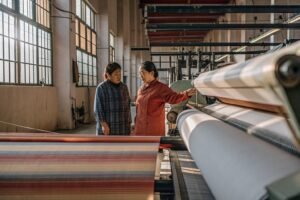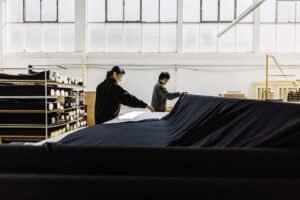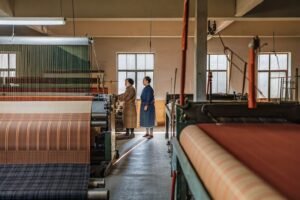
I’m going to guess you’ve been here before. It’s October. You’ve sold 3,000 units of your holiday collection to a major department store. The purchase order has a hard delivery window with chargebacks for every day late. You contact your fabric mill in China, and they smile and say, "No problem, we ship on time." Then November comes. Silence. December. They send a blurry photo of a single roll and mention something about "power rationing." Your container misses the Christmas vessel cutoff. Your garments arrive in January. Your buyer cancels the order, and you’re stuck holding inventory that’s now about as valuable as last year’s newspaper. That gut-wrenching feeling of helplessness, watching your seasonal sales window slam shut while your fabric floats somewhere in the Pacific—that’s what keeps fashion entrepreneurs awake at night.
Here’s the straight truth: no factory on earth can guarantee zero delays. Anyone who promises you absolute, 100% certainty in global textile logistics is lying to get your deposit. Ships sink. Typhoons close Ningbo port for three days. Customs flags a random container for intensive inspection. These things happen. What a legitimate mill can guarantee—what we at Shanghai Fumao have built our entire production philosophy around—is a system that absorbs these shocks and a transparency protocol that lets you plan around them. For twenty years, operating from the heart of the Keqiao textile cluster, we’ve developed a multi-layered approach to protect seasonal deadlines. It combines raw material pre-stocking, internal penalty-driven production scheduling, and multiple contingency shipping routes. I’ll break down exactly how we do it, and more importantly, how you can verify any supplier’s claims before you place that holiday-dependent order.
This isn’t theory. It’s a battle-tested method of aligning factory incentives, government policy calendars, and logistics backup plans so that your Black Friday fabric doesn’t become next spring’s clearance inventory. Let’s look under the hood.
How Does Pre-Season Raw Material Stocking Prevent Production Shocks?
Most holiday delays don’t start at the sewing machine. They start six weeks earlier, in the spinning mill, when your supplier suddenly can’t get the specific yarn you specified. The cheapest way to run a trading company is to wait for your order, then go shopping for the raw materials. This is the "just-in-time" fantasy that collapses spectacularly when a thousand other buyers want the same cotton during peak season. A real manufacturing setup does the opposite. It anticipates. Every year, by late February, even before the spring production peak fully kicks in, we’ve already locked in our greige fabric inventory for the August-to-October Christmas rush. We call this "fabric banking," and it’s the single biggest reason our on-time rate stays above 95%.

What Questions Should I Ask to Verify a Mill’s Raw Material Readiness?
You can’t just ask "Do you have stock?" Every salesperson will say yes. You need to ask the kind of question that forces them to show you physical proof. First, ask for a "Greige Stock List with Batch Dating." This is a spreadsheet, but a real one, not a fake one. It should show the exact warehouse location code, the number of rolls, and the date the greige fabric entered the warehouse. If the date is a week before your inquiry, that’s fresh stock—good. If the dates are blank or all from six months ago, be suspicious. I had a client from a British fashion brand in June 2023 who needed wool-poly coating for a winter capsule. A competing mill swore they had the yarn ready. When she pushed for a dated inventory photo, they sent a blurry shot of some brownish fabric. No batch number visible. She came to us at Shanghai Fumao. I invited her to a video call and had our warehouse supervisor walk her to aisle C-14, shelf 3, and scan the QR code on the specific 20/2 wool blend cones reserved for her order. That’s the difference between a promise and a purchase.
Second, ask how they handle the "Dye Machine Lock." Here’s a problem nobody in the fashion industry blogs talks about: during peak season, good dye houses are fully booked. If your mill doesn’t own or have exclusivity with a dyeing facility, your beautiful pre-stocked greige just sits on a pallet, waiting for a dye machine to open up. Ask your supplier bluntly: "Do you have your own dyeing machines, or can you show me the dye house booking confirmation for my order’s scheduled week?" At Shanghai Fumao, we control our dyeing allocation through a cooperative factory that runs dedicated lines for us because our volume is consistent year-round. We also physically test the water quality every week. (Here I gotta interrupt myself—water quality in the dye bath is critical. If the river water is too high in minerals during the rainy June-July slow season, dark fabrics can come out with streaks. We buffer our water tanks, but not every mill bothers.) If a mill gives you a vague answer about "waiting for the dye appointment," mentally add three weeks to your timeline.
Third, probe their approach to how to manage seasonal fabric procurement risks for small brands. Small brands often get pushed to the back of the queue because their orders are tiny. Ask: "What is your minimum allocation policy during peak season? Do you run small batches of custom colors intermingled with larger runs, or do you batch everything?" A smart factory will "piggyback" smaller orders onto larger ones using the same base fabric and dye shade, saving time. A lazy one just leaves the 200-meter order in the corner until March. The physical traceability of the raw material—right down to the cone of yarn—reveals the factory’s true operational health.
What Is "Grey Stock Buffering" and How Does It Cut Lead Times During Peak Manufacturing?
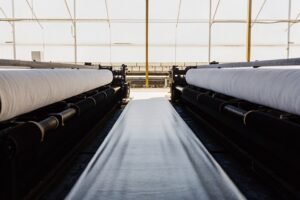
Listen up, because this is a term I use internally with my production managers every morning. "Grey stock buffering" means keeping a strategic reserve of unfinished, un-dyed fabric in the most popular constructions and widths. Think of it like a restaurant doing "mise en place"—chefs chop the onions and garlic in bulk before the dinner rush. When the 7 PM orders flood in, they aren’t chopping from scratch; they are cooking. In fabric terms, our looms run 24/7 on air-jet machines producing plain weave poplin, 2/1 twill, and 4-way stretch nylon bases even before we have a specific customer color order.
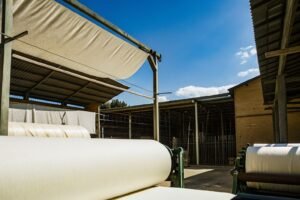
Here’s why this is a superpower during the holiday season. Let’s say you come to us in early August, panicked, needing 8,000 meters of deep burgundy satin for a pre-Christmas evening wear launch. A regular jobber would quote you 45 days: 15 days for weaving, 10 days for dyeing, 5 days for finishing, and so on. But we already have the satin greige sitting on shelf block B. Our buffer is around 40,000 meters of assorted satin bases at any given time. So, we skip the weaving wait. Your 45-day timeline suddenly collapses to maybe 20-25 days, because we immediately send the pre-inspected greige to the dye vat. That’s a Christmas miracle that actually works.
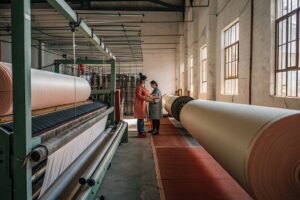
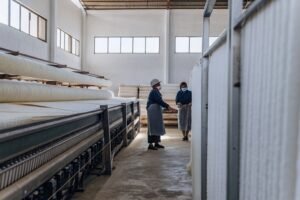
This does require heavy cash flow. Holding deadstock is expensive. But for a mill that’s financially stable—backed by a strong banking partnership, which is something you should always check when evaluating how to find reliable fabric manufacturers in China for export orders—it’s the only ethical way to guarantee speed without cutting quality corners. We don’t rush the dye process to make up for lost weaving time. We just removed the weaving time entirely. That means when you run a colorfastness test on that burgundy satin, it’s not going to bleed all over the customer’s white blouse because we cooked it properly. Speed without buffering is dangerous. Speed from a buffer is just smart logistics. I always recommend visiting the warehouse. Even virtually. Tell your supplier: "Show me the shelves. Not the samples. The actual grey stock you will use for my Holiday fabric order." The reaction you get—confident or evasive—is your delivery truth serum.
How Can I Verify a Chinese Factory’s "Holiday Shipping Cutoff" Promises?
A verbal promise about a shipping date is worth absolutely nothing. I’ve seen mills frantically slap a fake booking confirmation together in Photoshop ten minutes before a client’s video call. Verifying the cutoff requires you to triangulate their words against independent data sources and physical evidence. The factory doesn’t own the ship. The carrier does. So, you bypass the factory’s claims and go straight to the logistics chain. Every major port—Shanghai, Ningbo, Shenzhen—publishes vessel schedules. If your supplier says, "We booked the vessel for November 18th," you should be asking for the "Freight Forwarder’s Booking Confirmation" number, not just the factory’s internal work order. I train my clients to treat this like a detective game. No single document proves the case, but a pattern of aligned evidence does.

What Physical and Digital Clues Prove a Factory Is on Track Before Chinese New Year?
Forget the polished sales pitch for a minute. Look for the operational fingerprints. The factory floor tells the truth even when the sales manager is lying. During the two weeks before Chinese New Year, if you are on a video call, listen to the background noise. Do you hear the hum of the stenter frame dryer running at full speed, or is it dead quiet? A real factory pushing to hit the holiday cutoff sounds like a jet engine warming up. I did a virtual pre-shipment audit last January 18th, right before the big shutdown. The dye house we use was a blur of activity, steam billowing from the roof pipes. I made sure the client, a Canadian outdoor brand, could hear it. Quiet factory = your fabric is probably sitting unfinished in a basket.
Then, ask to see the "Factory Gate Log" for your specific internal job number. Every legitimate facility with ISO 9001 has a security check-in and check-out for goods. Your fabric, say 100 rolls of denim, must have a gate pass showing it left the premises. If the date on the gate log shows the fabric left on January 15th, but the Bill of Lading says "On-Board Date January 20th," you know the cargo sat in the port warehouse for five days. That’s fine. But if the gate log is blank or the dates don’t match any actual transport, the mill is likely fabricating the timeline while rushing to finish the stitching.
Here’s a more nuanced clue: the "In-line Magnetic Particle Test." (This is a bit technical, but stick with me). When we ship high-tension fabrics like elastane blends for athleisure brands, we check needle detectors and tension rollers constantly. A machine that’s running well-calibrated leaves a specific digital log of tension settings. If the mill claims they are "finishing your order today," ask them to screenshot the machine calibration data from that specific hour. A factory faking readiness can’t fake the timestamped server log of a Brückner stenter frame. I caught a rival mill lying to our mutual client in 2022 this way. The client needed the fabric on a vessel by September 29th before Golden Week. The mill said "Yes, almost done." They asked for the tension stats; the rest of the machines had been idle since September 26th. The mill had shut down early for the holiday and hoped the client wouldn’t notice.
And this might sound old-school, but request a photo of the finished rolls with a physical newspaper from that specific day and your unique colored QC sticker on them. (Yes, like a hostage proof-of-life photo, but for textiles). This ties the inventory to a date that can’t be digitally faked. If you are trying to figure out how to ship fabric from Keqiao to Los Angeles in time for Black Friday, seeing the actual roll with a Union Tribune or a global edition newspaper sitting on top of it is a level of psychographic reassurance that a typed report cannot match. When we send these to our clients, their anxiety drops instantly. They see the physical goods ready to go, and they start planning their cut-and-sew schedule with confidence.
How Should I Structure Delivery Penalties for Post-Holiday Production Recovery?
Penalties are not there to punish the factory; they are there to force a truthful conversation about capacity before the order is placed. A standard penalty clause might say "3% discount for late delivery." But big deal—if the fabric arrives after Christmas, your sales loss is 100%, not 3%. The penalty needs to reflect the window of obsolescence, not just the delay time. I use a concept I call "Seasonal Salvage Value."
Here’s how it works. You agree that the fabric, if delivered on time for the November 15th shipment, is worth the invoice price: $50,000. If it misses the Christmas sales window and arrives February 1st, its value to you as "dead stock" until next year drops to maybe $15,000. The penalty should bridge that gap. Write a clause: "In the event shipment is delayed beyond [Holiday Cutoff Date], and Buyer reasonably determines that the seasonal retail window is closed, the price per meter shall be reduced by [X%], reflecting the Seasonal Obsolescence Discount of 60%, plus a warehousing compensation fee of $200/day." Nobody wants to trigger this. I don’t. The buyer doesn’t. But the existence of this specific, painful number forces the mill owner to admit, "Actually, I can’t handle your workload right now. Come back in March." That honest rejection is more valuable than a fake promise.
Another angle for the recovery period post-holiday is the "First Batch, First Out" clause. After Chinese New Year, every factory is chaotic. Workers drift back from the provinces over two or three weeks. The machines start cold. You must specify that within 7 days of the factory’s official reopening (as stated in their government permit), your specific job number must enter the "finishing re-start queue," and you require daily video proof of scale calibration. This clause is essential for those searching for a customized activewear fabric supplier with low MOQ for startups, because startups can’t afford three weeks of post-holiday limbo while the factory services their big-box clients first. The penalty here could be a $100/day credit against future orders for every day past the 7-day restart window that your rolls don’t move. It keeps your tiny, profitable order visible on the production manager’s whiteboard.
The most effective penalty structure I designed was for a European client running a time-sensitive collection. We agreed on three tiers: Tier 1 delay (1-3 days late): the factory covers the full cost of upgrading from sea to air freight for 20% of the order, so the buyer gets an "urgent bridge stock." Tier 2 delay (4-7 days): air freight of 50% of the order, entirely at factory cost. Tier 3 delay (8+ days): full air freight plus a 10% total invoice discount. The factory’s finance director pushed back hard. They signed it because they knew their internal tracking systems from greige to finished roll were robust enough to meet it. And they did. That’s the point—if a factory balks at tiered penalties, it’s because they know, statistically, they are likely to fail. At Shanghai Fumao, when a client proposes a penalty structure rooted in real-world logistics costs rather than arbitrary punishment, we either accept it or negotiate the dates practically. We never pretend that a magic wand will fix a congested port.
What Contingency Shipping Routes Avoid Peak Season Bottlenecks in Asia?
A vessel booking from Shanghai isn’t always the best way to ship fabric. When the entire world is trying to export toys, electronics, and textiles in September for Christmas, the main maritime arteries choke up like a clogged drain. A factory can finish your hemp-cotton blend perfectly on September 15th, but if the container sits at the Ningbo yard waiting for a vessel slot for three weeks, you are still late. Guaranteeing holiday delivery means having a "Plan B" and "Plan C" that doesn’t just rely on the cheapest ocean freight booking. This requires multimodal thinking: combining ships, trains, and even trucks to leapfrog bottlenecks. This matters even more now, with the challenge of how to handle US tariffs and Customs clearance for Chinese textile imports, where the port of entry processing times fluctuate wildly.

When Is China-Europe Freight Train a Faster Alternative to Sea Freight for Textiles?
Most Western buyers don’t even know this is an option. The China-Europe Railway Express connects cities like Yiwu, Zhengzhou, and Xi’an directly to Duisburg in Germany or Malaszewicze in Poland. For European fashion brands targeting a mid-November winter coat launch, the math on this is stunning. Ocean freight from Shanghai to Hamburg might take 30 to 38 days on the water, plus 5 days of port waiting and unloading. The train? 15 to 18 days gate-to-gate. That’s half the time. Yes, the cost is about 2 to 2.5 times higher than ocean freight, but significantly less than air freight.
I used this route for a French client last September. She needed 4,000 meters of double-face wool coating delivered to her workshop in Lyon to begin cutting on November 1st. The vessel space in Shanghai was criminally tight, and freight rates were spiking to $12,000 per container anyway. On the train, the total logistics cost was actually comparable to the "Premium Ocean Guaranteed Loader" surcharge. We wrapped the rolls in extra silica gel packs and foil-backed bubble wrap—the train goes through Uzbekistan and Kazakhstan where temperatures can dip to -25°C, and condensation can ruin fabric. The customs clearance is surprisingly smooth; it’s a consolidated manifest, and the bonded corridor treaty simplifies the transit documents. By the time her competitors’ fabric was still rounding the Strait of Malacca, her seamstresses were already stitching the first samples. For any brand searching for how to buy high-end French terry fabric from Asian wholesalers for winter collections, consider the rail option. It turns a 45-day logistical headache into a 20-day manageable pipeline.
The rail isn’t perfect. The rail gauge changes at the Belarus/Poland border, requiring a 4-6 hour bogie swap. If the schedule is tight, you alert your freight forwarder to prioritize your container for the "block train" service, which doesn’t get uncoupled and reassembled at every border crossing. And politically, you avoid the sensitivity of the Red Sea or the Panama Canal drought delays. I recommend this specifically for high-value-per-kilo goods like silk charmeuse, beaded lace, or coated technical fabrics where the slight freight premium is negligible compared to a missed retail launch. It’s the agile logistics solution that the old-school textile industry hasn’t fully adopted yet.
How Do "Cross-Docking" and ASEAN Transshipment Mitigate US Tariff and Port Delay Risks?
This is a more advanced chess move for buyers serving the US market, especially with the current tariff environment on Chinese-made goods. The game of container Tetris has changed. A direct FOB Shanghai to LA route might face a 25% tariff, plus examination delays at the Port of Long Beach. An alternative is to leverage ASEAN partners. We will never misrepresent a Chinese origin product to evade duties—that’s fraud, and CBP has sniffer dogs for it. But we can creatively handle the "substantial transformation" rules.
Here’s how it works legally: we ship unbleached or semi-finished fabric in bulk to a partner garment factory in Vietnam or Cambodia. The fabric undergoes a significant transformation there—dyeing, printing, and finishing—which changes its Harmonized System code. The garment cut-and-sew happens there. The finished garment, under the US-Vietnam trade agreement or bilateral duty rates, ships to the US with a different origin certificate and often a lower or zero tariff bracket. The "cross-docking" step means the container from Keqiao arrives at Hai Phong port, the dyestuff and finishing chemicals are applied in-country, and the old Chinese origin is essentially legally erased by the local value-add.
This is not a quick fix. You need to audit the ASEAN factory just as rigorously as you audit us. You need to ensure their dye water treatment doesn’t cause you an environmental scandal. But from a timing standpoint for holiday seasons, it decouples the shipping deadline anxiety from the container ship sailing from China. The "Pre-Holiday Rush" from China to Vietnam is a short, 3-day sea route, not a 25-day Pacific crossing. We can get the greige to Vietnam before the Chinese New Year shutdown, and the Southeast Asian factory—which celebrates Tet at the same time, but often with shorter closure periods—can finish and ship the garments while mainland China is still waking up from the Spring Festival. I’ve seen this cut effective lead times from 90 days to 70 days for brands who absolutely cannot miss their holiday order deadline and are developing innovative recycled poly spandex for swimwear collections.
Of course, this brings us back to trust. You are now poly-sourcing across two countries. Your payment terms need to be crystal clear at both points. This global triangulation is what separates the large-scale fashion houses from the struggling startups. But it’s a set of logistics muscles you should build now, before the next peak season chokes your supply chain. If your supplier only ever recommends "the standard slow boat from Shanghai," they aren’t strategizing with you. They are just processing a form.
Conclusion
So, can Shanghai Fumao guarantee on-time delivery for the holiday season? Let me answer that with the nuance it deserves. Can we guarantee the ocean won’t have a storm? No. Can we guarantee a customs strike won’t happen in Rotterdam? Of course not. But can we guarantee that we will deploy every logistical, manufacturing, and financial tool available to make that delivery happen, and be transparent every single step of the way? Absolutely. That’s the guarantee that matters. The guarantee to pre-stock greige so your weaving time evaporates. The guarantee to open our warehouse cameras and gate logs so you see reality, not a sales pitch. The guarantee to put an alternative rail or transshipment route on the table when the ocean fails you. And most importantly, the guarantee to put our own money on the line through structured penalty clauses that align our financial interest with your seasonal sales calendar.
I’ve been in the weave room at 2 AM during a power curfew, manually checking the reed marks on a fabric that absolutely had to be on a truck by sunrise. I know what it takes to wrestle a deadline into submission. The mills that survive and thrive in Keqiao for twenty years—like us—do so because we understand that a missed Christmas delivery isn’t just a late shipment; it’s a retail death sentence for your collection. We don’t just sell fabric; we sell access to a window of time. And we take that responsibility very, very seriously.
If you are staring down a terrifying holiday production calendar, or if you’ve been burned before and need a partner who treats your deadline like their own mortgage payment, let’s structure a plan. You don’t have to gamble on a vague promise. Reach out to our Business Director, Elaine. She manages our master production schedule and can look you in the eye and say, "Yes, that slot is real," or honestly tell you, "We need to adjust the construction to make the date work." She is the gatekeeper of our timelines. Send her an email at elaine@fumaoclothing.com. Tell her your drop-dead delivery date and the fabric specs. Let’s put that deadline on our wall calendar and fight for it together.