
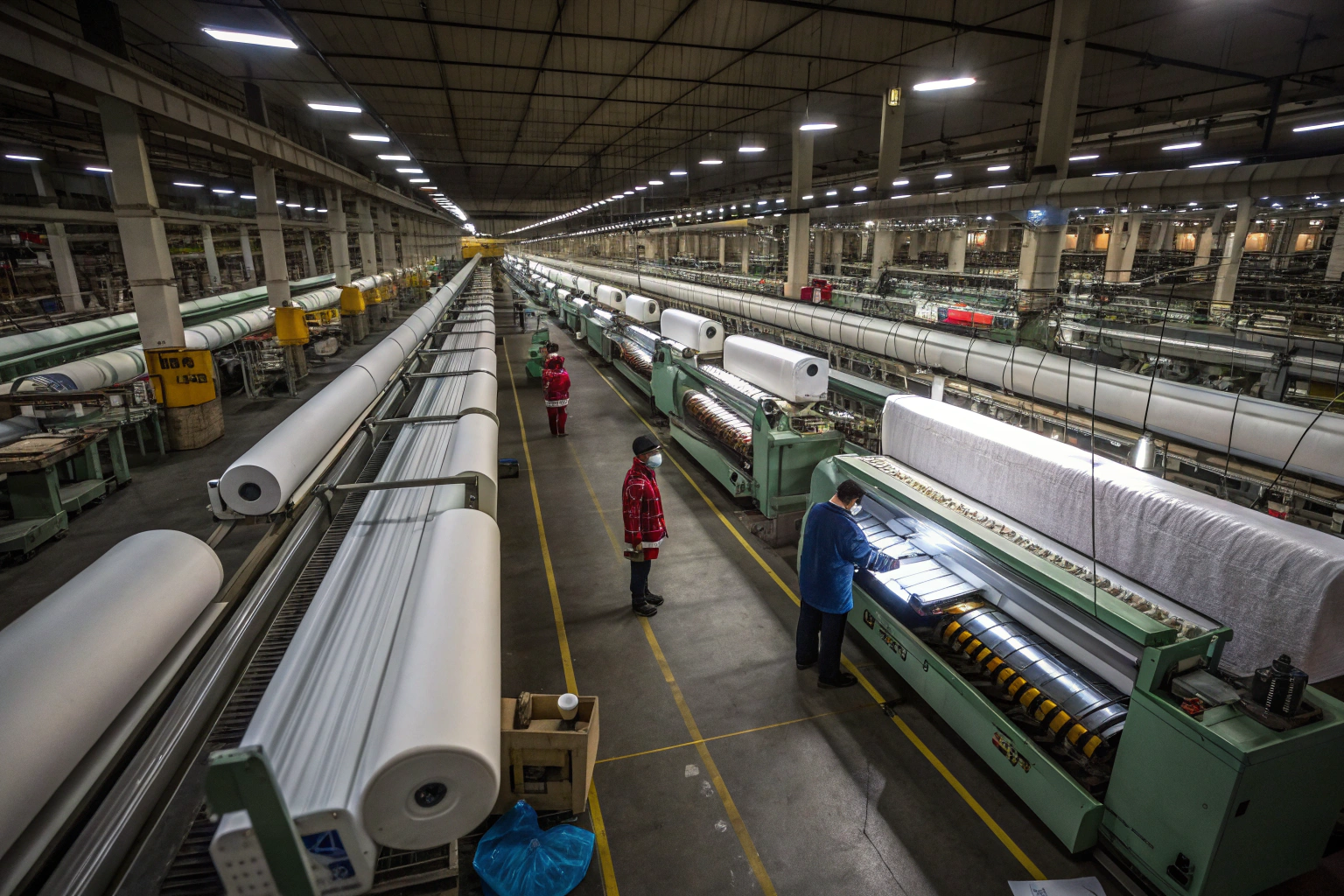
You’ve been there. The supplier promised delivery by the 15th. On the 14th, you get the email. "Small delay. Quality issue. Need two more weeks." Your launch date is blown. Your marketing emails are scheduled. Your influencers have the product in hand, but the bulk inventory is sitting in a warehouse in China with a "Hold" tag on it. You’re losing sales every single day. This is the cost of working with a mill that runs a single, overstretched production line. When that one line goes down for maintenance, or a dye lot fails, or a key operator calls in sick, the entire supply chain stops. Your business stops with it.
At Shanghai Fumao, we maintain five distinct, parallel production lines—Weaving, Dyeing, Printing, Embroidery, and Finishing—operating simultaneously without cascading delays through a combination of Decoupled Workflows, Real-Time Digital Visibility, and Redundant Capacity Buffers. We don’t run a single linear assembly line where a problem at Station A stops Station B. We run a Manufacturing Network. Each line has its own management team, its own quality control gate, and its own buffer inventory. The weaving mill doesn’t wait for the dye house to finish yesterday’s order. It keeps weaving greige fabric for next week’s orders and stocks it in our Greige Bank. The dye house pulls from the Greige Bank and runs independently. If the printing machine has a 4-hour mechanical hiccup, the coating line next door keeps running its 10,000-yard order for a different client. The system absorbs shocks because it has Slack Built In. This is the opposite of "Lean Manufacturing" as practiced by cheap, high-volume mills. We practice "Resilient Manufacturing."
This article is going to take you inside the operational rhythm of our Keqiao factory complex. I’m going to show you exactly how we schedule 50+ concurrent orders across five different processes without dropping a single one. We’ll cover the specific software we use for capacity planning, the physical layout of the factory floor that minimizes material handling time, and the human resource strategy that ensures we have a skilled operator at every machine, even during Chinese New Year. Because when you place an order with Fumao, you’re not just buying fabric. You’re buying a delivery date you can actually bank on.
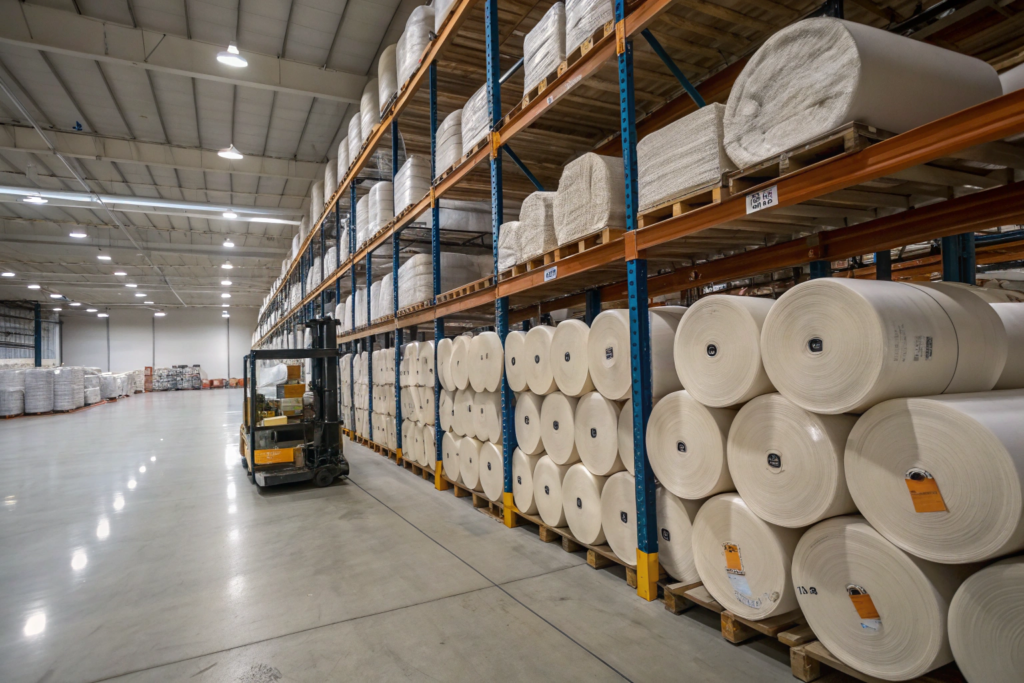
How Does Fumao’s "Greige Bank" Prevent Bottlenecks in Weaving and Dyeing?
The single biggest cause of delays in textile manufacturing is the Dependency between Weaving and Dyeing. In a traditional, non-integrated mill, the process looks like this: You place a PO. The mill buys yarn. They wait for yarn delivery (3-5 days). They beam the loom and weave the fabric (5-7 days). Then they send the greige fabric to the dye house. The dye house puts it in the queue (3-7 days). Total lead time from yarn to dyed fabric: 15-20 days, minimum.
At Shanghai Fumao, we break this dependency with our Greige Bank. This is a 1.2 million yard inventory of our most popular constructions in their raw, undyed state. We are constantly weaving these base fabrics based on Forecasted Demand, not just Confirmed Orders.
Here is how it changes the timeline for you:
- Scenario A (Traditional): You order 5,000 yards of 30/1 Cotton Jersey in "Navy Blue." Lead time = 4-5 weeks (Weaving + Dyeing).
- Scenario B (Fumao with Greige Bank): You order 5,000 yards of 30/1 Cotton Jersey in "Navy Blue." We check the Greige Bank. We have 8,000 yards of that exact construction in stock. We pull the roll. Lead time = 10-14 days (Dyeing Only).
We have essentially Pre-Positioned the Raw Material. This cuts your lead time in half for our stock-supported constructions. It also acts as a massive shock absorber. If our weaving department has a 2-day power outage or a mechanical failure on a specific loom type, the dye house Does Not Stop. They keep pulling from the Greige Bank. They keep dyeing fabric for clients. By the time the loom is fixed, we have replenished the Greige Bank, and no client ever felt the 2-day delay.
The Greige Bank is categorized into three tiers:
- Tier 1 (High Velocity): 30/1 Combed Cotton Jersey, 20/1 French Terry, Poly Crepe. We keep 200,000+ yards of each in stock at all times.
- Tier 2 (Medium Velocity): Bamboo Silk Jersey, Tencel Twill, Linen Blends. We keep 50,000 yards of each.
- Tier 3 (Custom Weaves): These are made-to-order. No Greige Bank stock. Lead time reflects full weaving cycle.
For a broader look at this strategy, this article on how greige inventory management and buffer stock reduces lead times in textile supply chains explains the operational finance behind this approach.
The financial discipline to run a Greige Bank is significant. We are tying up millions of RMB in working capital to hold this inventory. Many mills can’t or won’t do this. They operate "Hand-to-Mouth" —they buy yarn only when they have a PO. This keeps their balance sheet lean, but it makes their delivery promises fragile. We choose to invest in the inventory so that your delivery promise is robust. (Here I have to be honest—this is a competitive advantage that took us 15 years to build. You can’t just start a Greige Bank overnight. It requires deep knowledge of which fabrics will actually sell).
How Do You Schedule Dyeing Capacity Across Five Different Fabric Types?
This is the daily puzzle that our Production Planning Department solves. Dyeing is the most complex and variable step in the entire process. You can’t just treat all fabric the same. A 400 GSM Heavy Fleece requires a completely different machine cycle time and chemical recipe than a 100 GSM Silk Charmeuse. If you schedule them poorly, you end up with "Color Contamination" or massive idle time while machines are cleaned.
At Fumao, we use a Constraint-Based Scheduling Algorithm powered by our ERP (Enterprise Resource Planning) software. The system takes into account:
- Machine Compatibility: Which of our 12 high-temperature jet dyeing machines can physically handle the fabric weight and width?
- Color Sequence: The system always schedules Light-to-Dark. You dye Pale Pink before Navy Blue in the same machine. This minimizes the need for harsh, time-consuming Boil-Outs (chemical cleaning cycles).
- Fiber Chemistry: Reactive dyes for cotton cannot be mixed with Disperse dyes for polyester in the same bath. The system groups orders by Dye Class.
Here is a simplified view of a typical 24-Hour Dye Schedule for Vessel #7 (a 500kg capacity machine):
- 06:00 – 09:30: Load 400 KG of Cotton Slub Jersey for Dye Lot A (Beige) . Reactive Dye Cycle.
- 09:30 – 10:00: Rinse and Drain. No Boil-Out needed (light color).
- 10:00 – 13:30: Load 380 KG of Cotton Slub Jersey for Dye Lot B (Olive) . Reactive Dye Cycle.
- 13:30 – 14:30: Boil-Out Cycle. (Going from Olive to Bright White requires a deep clean).
- 14:30 – 18:00: Load 350 KG of Bamboo Viscose for Dye Lot C (Bright White) . Optical Brightener Cycle.
- 18:00 – 18:30: Rinse.
- 18:30 – 22:00: Load 400 KG of Cotton Slub Jersey for Dye Lot D (Black) .
This schedule maximizes machine utilization while protecting color integrity. The key to making this work without delays is Real-Time Process Monitoring. We have sensors in every dye vessel tracking temperature ramp rates and pH levels. If Vessel #7 is running 15 minutes behind schedule because the steam pressure dropped, the ERP system automatically alerts the Material Handling team to delay the arrival of the fabric for the next batch by 15 minutes. The operators aren’t standing around waiting. They’re doing preventative maintenance. This is the difference between a digital factory and a guesswork factory. For a deeper dive into this technology, this article on how AI and ERP systems optimize textile dyeing schedules and reduce water consumption shows the future we are already implementing.
What Happens If a Weaving Loom Breaks Down During My Bulk Production?
This is a reality of manufacturing. Looms are mechanical beasts with thousands of moving parts. They break. A Warp Beam can snap. A Reed Dent can bend. The question isn’t if it will happen, but how fast we recover.
At a typical small mill with 10 looms, if Loom #4 goes down, that’s 10% of their capacity gone. Your order is delayed by exactly the downtime of that machine. They have no backup. At Shanghai Fumao, our Weaving Division operates 50+ Shuttleless Rapier Looms and Air-Jet Looms. We group them into "Work Cells" based on fabric width and complexity.
Here is the Fumao Redundancy Protocol:
- Real-Time Alert: The loom has a Programmable Logic Controller (PLC) connected to the central network. The moment a weft stop motion triggers 3 times in 60 seconds, the machine sends an alert to the Maintenance Tablet of the floor supervisor.
- Immediate Triage: The mechanic arrives within 2 minutes. They diagnose the issue.
- Minor Fix (Broken Weft Yarn): Fixed in 30 seconds. No schedule impact.
- Major Fix (Broken Heald Frame): Estimated downtime: 2-4 hours.
- Capacity Shift: This is the critical step. The production planner is alerted. They look at the Parallel Work Cell. If we are running your 60-inch Cotton Twill on Loom #7, we likely have Loom #8, #9, and #10 set up with the identical warp beam (this is called a "Set" of looms). The planner simply Increases the Speed of Looms #8, #9, and #10 by 3-5% to compensate for the lost output of Loom #7.
- Result: Loom #7 is down for 3 hours. But the Total Daily Output of the Cotton Twill work cell remains 98% of target. Your order stays on track. You never even know Loom #7 broke.
This redundancy is only possible because of Scale and Standardization. We can afford to run multiple looms on the same article. A small job shop running custom one-off weaves cannot do this. For more on the machinery, this resource on how modern shuttleless weaving looms and predictive maintenance reduce downtime in textile mills explains the technology that makes this reliability possible.
How Does Fumao Coordinate Printing, Coating, and Embroidery Simultaneously?
This is where the complexity multiplies. Weaving and Dyeing are Bulk Processes. Printing, Coating, and Embroidery are Value-Added Finishing. They often happen in parallel on different parts of the same order. You might want 2,000 yards of fabric printed, and then 500 of those yards need a water-repellent coating, and 200 of those coated yards need an embroidered logo on the cut panel. Managing this without creating a logistical rat’s nest requires Decoupled Workflows.
We do NOT run these three lines as a sequential assembly line. That would be insane. If the printing machine broke down, the coating line would sit idle waiting for work. Instead, we treat each line as an Independent Service Bureau. They pull work from a shared Digital Queue based on priority and material availability.
Here is how a complex order flows:
- Base Fabric: Pulled from Greige Bank or Custom Weaving. Sent to Dye House. Output: Solid Dyed Fabric.
- Parallel Processing Begins:
- Batch A (1,500 yards): Solid Dyed Fabric goes to Printing Line. Receives a Floral Pattern.
- Batch B (500 yards): Solid Dyed Fabric goes to Coating Line. Receives DWR Finish.
- Batch C (200 yards from Batch B): Coated Fabric goes to Cut-and-Sew Partner (or our sample room). Panels are cut. Panels go to Embroidery Line.
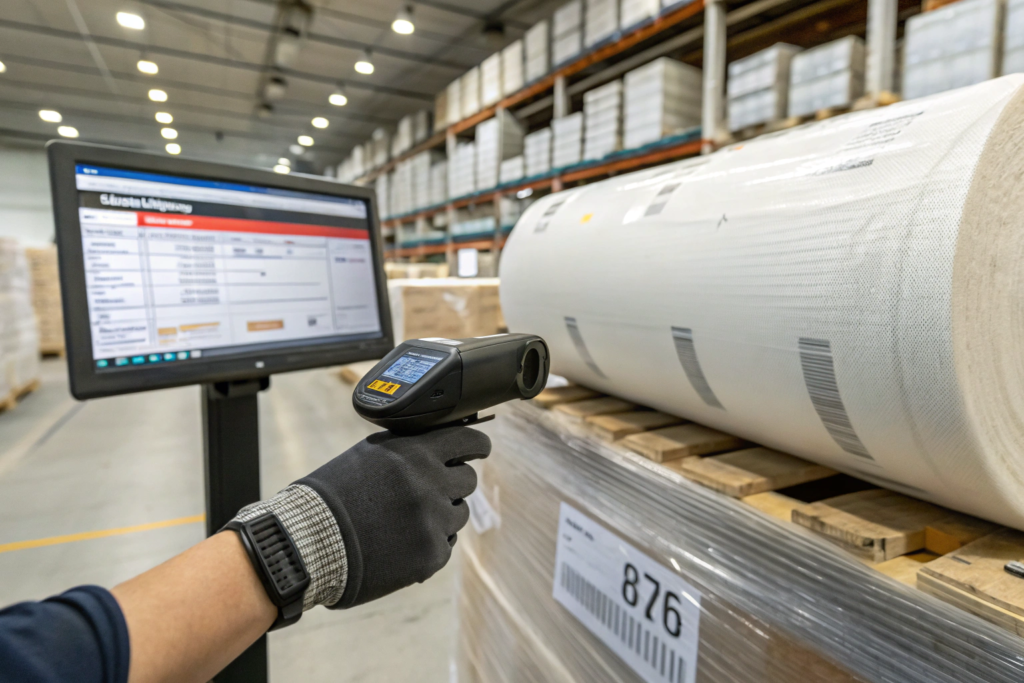
The coordination happens in our Manufacturing Execution System (MES). Every roll has a unique QR Code. When the roll arrives at Printing, the operator scans it. The MES checks: "Is this the correct base fabric? Is the print screen ready? Is the priority correct?" If yes, the machine runs. If not, the system blocks the operator and tells them to process a different roll.
This system prevents "Process Starvation." The Embroidery line never stands idle waiting for the Coating line to finish. They are always working on someone’s order. The queue is always full. This is how we maintain high Overall Equipment Effectiveness (OEE) across five lines. For a broader perspective, this article on how manufacturing execution systems optimize multi-process textile production explains the digital backbone.
Can Fumao Run a Custom Print and a DWR Coating on the Same Fabric Batch?
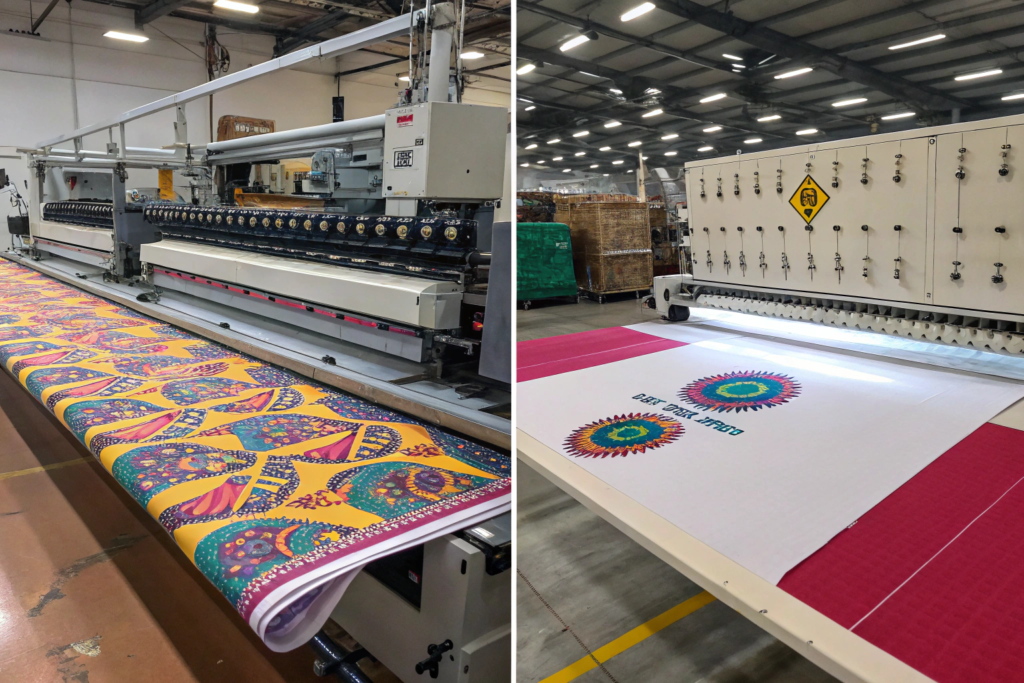
Yes. This is a high-value service we call "Multi-Functional Finishing." But we do it in a very specific Sequence to avoid quality failures. You cannot print after coating. The coating repels water, which means it repels the water-based pigment inks used in printing. The print would bead up and flake off.
The Correct Sequence: Print First, Coat Second.
Here is the Fumao Protocol for a Printed, Water-Repellent Fabric:
- Fabric Preparation: Base fabric is dyed to the ground color.
- Printing (Rotary or Digital): The pattern is applied using Pigment Inks.
- Curing: The printed fabric passes through a Hot Flue Dryer at 160°C for 90 seconds. This cross-links the pigment binder, locking the color.
- Coating (DWR Finish): The printed fabric is fed through the Stenter Frame. A clear, fluorocarbon-free (C0) DWR finish is applied via Pad-Dry-Cure.
- Quality Check: We test for Spray Rating (AATCC 22) to ensure water repellency (target 90+) and Crocking (AATCC 8) to ensure the print doesn’t rub off.
The critical variable here is Adhesion. We have to ensure the DWR chemistry does not interfere with the pigment binder. We use a specific Acrylic Binder in our print paste that is compatible with our C0 DWR Resin. We developed this chemistry in-house after a failed trial in August 2025 where a standard binder caused the DWR finish to bead up unevenly.
A US outdoor lifestyle brand uses this exact process for their Printed Packable Windbreakers. The fabric is a 100% Recycled Polyester Ripstop. We print a custom camo pattern, then apply the DWR. The print is vibrant. The water beads up perfectly. This is the kind of technical integration that a simple trading company cannot coordinate. It requires owning or tightly controlling both the print and coating assets. For a technical dive into this chemistry, this resource on how to apply durable water repellent finishes to printed textiles without affecting color fastness explains the binder compatibility challenges.
How Do You Prevent Cross-Contamination Between Coating Chemicals and Embroidery Threads?
This is a detail that only matters if you care about the final 5% of quality—the difference between a good garment and a perfect one. Cross-contamination in this context doesn’t mean safety. It means Surface Contamination. Silicone softeners and DWR chemicals can migrate invisibly onto embroidery thread, causing Stitch Slippage and Color Bleeding.
The issue arises when a fabric finished with a Silicone-Based Softener or a Fluoropolymer Coating is sent to the embroidery floor. The needle penetrates the fabric, picking up a microscopic amount of the surface chemical. As the needle retracts, it deposits that chemical on the Embroidery Thread. Over thousands of stitches, the thread becomes slick. The Top Tension in the embroidery machine, which relies on friction to hold the stitch tight, fails. The stitches become loose and loopy. Or worse, the chemical acts as a solvent for the thread dye, causing a pale "halo" of color around the logo.
Fumao Prevention Protocol:
- Cure and Age: All coated and softened fabrics are Fully Cured at high temperature and then allowed to "Age" for a minimum of 24 hours before being sent to embroidery. This allows any volatile, migratory components to off-gas and stabilize.
- Dedicated Hooping Area: Fabrics with heavy silicone finishes are hooped in a Separate Area of the embroidery floor. The operators wear nitrile gloves that are changed between jobs.
- Thread Lubricant Adjustment: For coated fabrics, we switch to a High-Friction Bobbin Thread or apply a light tackifier to the needle. (This is an old-school hack. A tiny bit of beeswax on the needle tip increases grip on slick fabric).
We learned this lesson the hard way in June 2025. A Canadian loungewear brand complained that the embroidery on their "Ultra-Soft Peach Finish" hoodies was "loose and wavy." We traced it to the Macro-Silicone Softener we used to achieve the peach hand. The silicone was lubricating the needle. We switched to a Nano-Silicone Emulsion that is mechanically locked into the fiber and does not migrate. The embroidery issue vanished. For a deeper understanding, this forum thread on troubleshooting embroidery thread tension and stitch quality on silicone-finished fabrics captures the real-world frustration of embroiderers dealing with this exact issue.
What Role Does Digital Tracking Play in Avoiding Shipping Delays?
You can have perfect production inside the factory, but if the logistics handoff is sloppy, you still miss your market window. Fabric rolls get lost in the warehouse. The wrong roll gets put on the wrong truck. The shipping documents have a typo and the container misses the vessel cut-off. These are the "stupid" delays that drive clients insane because they are 100% Preventable.
At Shanghai Fumao, we have eliminated the "Where Is My Fabric?" question. We use a Unified Digital Tracking Platform that covers the entire journey from Loom to Load Port.
Stage 1: In-Factory Visibility (MES).
- Each roll gets a unique QR Code label at inspection.
- The label contains: PO Number, Roll Number, Yardage, GSM, Shade Lot, and Grade.
- As the roll moves from Inspection to Packing to Warehouse, it is scanned.
- Client Access: You log into our Client Portal and see: "PO #F2309: 45 of 50 rolls packed. ETA to port: March 10."
Stage 2: Warehouse Management (WMS).
- Our warehouse is mapped into Bin Locations (A-12, B-04).
- When a picker gets an order to ship 200 yards of "Navy Blue," the WMS tells them exactly which bin to go to.
- They scan the bin. They scan the roll. Mismatch Alert: If they grab "Black" instead of "Navy," the scanner beeps and locks the transaction.
Stage 3: Logistics Integration.
- We are integrated via API (Application Programming Interface) with our freight forwarders (Kuehne+Nagel, DSV).
- When the truck leaves our gate, the system updates with the Container Number and Vessel Name.
- Client Access: You click a link in the portal and go straight to the carrier’s tracking page.
This system cost us $150,000 to implement fully. It has reduced "Shipping Errors" (wrong item shipped) to 0.05% of orders. It has eliminated "Where is my order?" emails entirely. Our clients know exactly where their fabric is, 24/7. For more on this technology, this article on how QR code tracking and API integration are creating end-to-end visibility in textile supply chains provides a broader industry view.
Does Fumao Provide Real-Time Production Status Updates for Bulk Orders?
Yes. And it’s not a weekly email from a sales rep. It’s a Live Dashboard. We provide this to all clients with orders over 2,000 yards.
When you log into the Fumao Client Portal, you see a screen that looks like this (simplified):
- PO #FUM-2026-0442 (5,000 Yds Cotton Twill)
- Greige Weaving: ✅ Complete (Feb 28)
- Scouring/Bleaching: ✅ Complete (Mar 02)
- Dyeing (Dye Lot A): 🔄 In Process – Vessel #3. Est. Completion: Mar 04 14:30.
- Stenter/Finishing: ⏳ Queued – Est. Start: Mar 05 08:00.
- Inspection: ⏳ Queued
- Packing: ⏳ Queued
- Projected Ex-Factory Date: Mar 08 (On Track ✅)
This transparency changes the dynamic of the buyer-supplier relationship. Instead of you emailing Elaine asking "Hey, where are we at?", you just check the dashboard. If the dyeing bar turns yellow (Slight Delay), you see it immediately and you can adjust your cut-and-sew schedule accordingly. You don’t find out 5 days later.
Here is a real example from January 2026. A UK client logged into the portal and saw their order was "Queued for Stenter" but the projected start time had slipped by 4 hours. They called us. We confirmed a minor mechanical issue on the stenter chain. We adjusted the downstream trucking schedule immediately to accommodate a 4-hour later pickup. The container still made the vessel cut-off. Without that real-time visibility, the truck would have arrived at the original time, waited 4 hours (racking up fees), and potentially missed the port closing. For more on this capability, this article on the benefits of real-time production tracking portals for fashion brands sourcing from overseas explains the value from a brand perspective.
How Do You Handle Last-Minute Shipping Documentation to Avoid Customs Holds?
This is the "boring" part of the business that can cost you thousands in Demurrage and Detention fees if done wrong. A customs hold in Long Beach because of a typo on the Packing List or a missing Fumigation Certificate can add 5-7 days to your transit time and $500-$1,000 in penalties.
At Shanghai Fumao, we have a dedicated Logistics Documentation Specialist. This is not a job for an intern. This is a senior role. This person’s only job is to ensure the paperwork is Flawless.
Here is our "No-Holds" Documentation Protocol:
- Pre-Clearance Packet: 48 Hours Before Vessel Departure, we email you (or your customs broker) a Draft Packet. This includes:
- Commercial Invoice (Checked against your PO and our ERP).
- Packing List (Weights verified against scale tickets).
- Bill of Lading Draft (Container/Seal numbers verified against carrier system).
- Fumigation Certificate (ISPM 15): If your order is on a Wood Pallet (which most heavy fabric is), we automatically include the Heat Treatment Certificate required by US/EU customs. We use only Certified HT Pallets.
- OEKO-TEX / Origin Certificate: We pre-load these into the packet. For EU clients, we ensure the REACH SVHC Declaration is signed and dated within the last 12 months.
- Post-Departure Final Packet: Within 24 Hours of vessel sailing, we send the Final Signed Originals via Express Courier (DHL) directly to your broker. We also upload digital copies to the portal.
A US client in December 2025 was using a new customs broker. The broker claimed they didn’t receive the ISF (Importer Security Filing) data. Our documentation specialist had a Read Receipt from the broker’s email server and the Automated Response from the CBP (Customs and Border Protection) ACE system showing the filing was accepted. We provided the audit trail. The broker found the filing in their spam filter. The container cleared without hold. Without that meticulous record-keeping, it would have been a "he said, she said" argument while the container accrued storage fees. For a checklist of these requirements, this resource on essential shipping documents for importing textiles into the USA and avoiding customs clearance delays is the official source.
How Does Fumao’s Labor Strategy Prevent Delays During Peak Seasons?
Machines don’t run themselves. The most sophisticated ERP system in the world is useless if there isn’t a skilled Dyeing Master to interpret the spectrophotometer reading or a Head Weaver to adjust the rapier timing. Peak seasons (March-May, August-October) strain the human resources of every mill in Keqiao. Overtime is mandatory. Fatigue sets in. Mistakes happen. Delays cascade.
At Shanghai Fumao, we have a "Flexible Capacity" labor model that mitigates this risk. We do not rely solely on a transient, seasonal workforce. We maintain a Core Team of 40+ Permanent Specialists with an average tenure of 8.5 years. These are the masters. They know the machines intimately. They can diagnose a problem by the sound of the motor.
During peak seasons, we augment this core team with a "Reserve Pool" of trained operators. But here is the key: We Cross-Train Them During the Slow Season. In June and July, when order volume dips, we don’t lay people off. We run Paid Training Programs. A weaving operator learns basic dye house safety. A packing specialist learns to use the inspection frame. This builds Skill Redundancy.
Chinese New Year Strategy:
- This is the annual stress test. The entire country shuts down for 2-3 weeks.
- Fumao Protocol: We stagger return dates. We offer Return Bonuses (¥1,500 – ¥3,000) to workers who return on the 8th day of the new year instead of the 15th. We have a 90% Return Rate within the first 10 days post-holiday. The industry average is closer to 60%.
- Result: While other mills are running at 40% capacity in late February, we are running at 85% capacity. This is why we can promise those March delivery dates when others can’t.
For a broader view of this issue, this analysis on how Chinese textile factories manage labor shortages and production capacity during peak season and Chinese New Year provides context on the regional challenges.
What Happens If a Key Technician Is Out Sick During My Order?
This is a Single Point of Failure in small factories. The "Dyeing Master" gets the flu. Suddenly, no one knows how to adjust the formula for that tricky Teal color. The machine sits idle. Your order waits. At Fumao, we practice "Shadow Management."
Every critical technical role has a Designated Backup. This is not an informal arrangement. It’s written into the job description. The Head Dyer has an Assistant Head Dyer who has been trained on 100% of the Standard Operating Procedures (SOPs). They have the system passwords. They know the emergency contacts for the dye supplier.
Furthermore, we have Digitized the Tribal Knowledge. In many old-school mills, the dye master’s recipes are in a Little Black Notebook in his pocket. If he’s gone, the recipes are gone. At Fumao, every formula is stored in the ERP System. The Assistant Head Dyer scans the batch ticket. The screen tells them: "Add 2.3kg Blue BRF. Check pH: Target 5.5. If pH > 5.6, add 50ml Acetic Acid." The system guides them.
We stress-tested this system in October 2025. Our Head of Weaving Maintenance had a family emergency and was out for 6 days. It was peak season. The Assistant Maintenance Lead stepped in. Using the Digital Work Orders and Spare Parts Inventory System, he managed the repair of a broken dobby chain on a jacquard loom. The downtime was 6 hours. If the Head of Maintenance had been a solo act, that loom would have been down for 2 days waiting for his return. For more on this approach, this article on building operational resilience through cross-training and knowledge management in manufacturing outlines best practices we follow.
Do You Use Automated Inspection to Reduce Human Error in Quality Control?
Yes. And this is the final piece of the "No Delays" puzzle. A delay caused by a Quality Hold is the most frustrating kind. The fabric is made. It’s sitting there. But it can’t ship because of a defect found at the last minute.
Human visual inspection is Subjective and Inconsistent. An inspector who is tired after lunch misses a faint warp streak. An inspector who is rushed checks the first 10 yards and assumes the rest of the roll is fine.
At Shanghai Fumao, we have invested in Automated Optical Inspection (AOI) on our final inspection lines. This system uses High-Resolution Line Scan Cameras and AI-Powered Defect Recognition Software. As the fabric passes over the inspection table at 60 meters per minute, the cameras scan every square inch.
What the AI Looks For:
- Warp Streaks: Subtle variations in thread tension that the human eye struggles to see on solid colors.
- Missing Yarn (Warp or Weft): Gaps in the weave.
- Oil Spots / Stains: Down to 0.5mm in size.
- Barre Marks: Shading variations in knits.
When the AI detects an anomaly, it Stops the Machine. It flashes a light on the exact location of the defect. The human operator then makes the final judgment call: "Is this a critical defect (Reject) or a minor defect (Pass with penalty points)?"
This Human-AI Collaboration has increased our Defect Detection Rate by 22% and Reduced Final Inspection Time by 30%. It means we catch the problem before the roll is packed. We don’t get that panicked email from you saying, "I opened the container and 10 rolls are defective." We found the defect and replaced the roll from our buffer stock 2 weeks ago. For a visual of this technology, this video on how AI-powered automated fabric inspection systems work in modern textile mills demonstrates the equipment on our floor.
Conclusion
Maintaining five production lines without delays is not about working faster. It’s about working Smarter and with Redundancy. We’ve walked through the physical buffers like the Greige Bank that decouple weaving from dyeing, the Digital Queues that keep the printing and coating lines fed independently, and the Human Resource Strategies that ensure a key technician’s absence doesn’t halt your order. The common thread is Resilience Engineering. We design our operations expecting that things will go wrong—a loom will break, a dye lot will need a re-run, a truck will be late—and we build the slack and the visibility into the system to absorb those shocks without passing the delay on to you.
At Shanghai Fumao, we believe that a delivery date is a promise. And keeping that promise requires more than just good intentions. It requires an investment in inventory, in software, in cross-training, and in automated inspection that many mills are unwilling to make. We make that investment because we know that when your production calendar stays on track, your business grows, and you come back to us for the next order. That’s the only metric that matters.
If you’re tired of supply chain surprises and want to work with a partner who provides real-time visibility and rock-solid delivery dates, we’re ready to show you how the system works.
For access to our Client Portal demo, or to discuss a production timeline for your next collection, please contact our Business Director, Elaine. She can provide you with a detailed schedule based on current capacity and walk you through exactly how we’ll hit your delivery window. Email her at elaine@fumaoclothing.com. Let’s get your production on the calendar and keep it there.








