
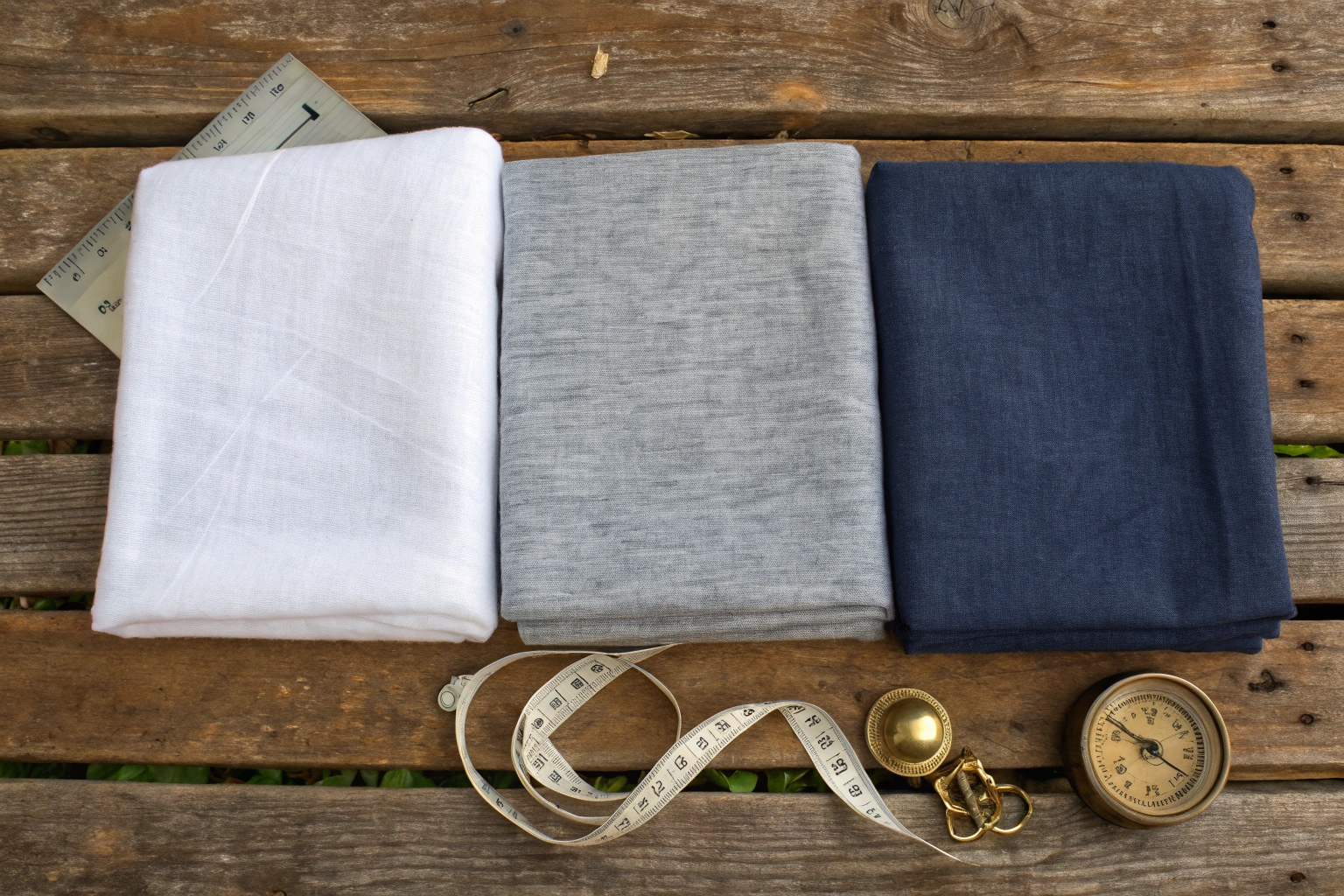
You find a hoodie online. The photo looks thick, structured, premium. You pay $78. The package arrives. You pull it out of the bag. It feels like a cheap Halloween costume. It’s thin. It’s flimsy. It drapes like a wet paper towel. You’ve been duped by good photography and a lack of technical specification. This is the silent epidemic in online apparel. Brands hide behind pretty lifestyle shots and vague words like "premium" or "heavyweight." Without a standardized number to anchor your expectations, you are flying blind. And that flimsy hoodie you just bought? It’s going straight back in the mail, and you’re leaving a one-star review about "cheap material."
GSM stands for Grams per Square Meter. It is the single most important metric for understanding the weight, density, and ultimately the quality of a fabric. It’s not a measure of thickness, though they often correlate. It’s a measure of mass. A square meter of lightweight chiffon might weigh 60 grams. A square meter of our heaviest winter fleece at Shanghai Fumao weighs 450 grams. That number tells you everything about how the garment will drape, how warm it will be, how durable it is, and whether it’s appropriate for a summer dress or a winter work jacket. When you ignore GSM, you are gambling with your customer’s expectations. When you specify GSM in your tech pack, you are taking control of the narrative.
Now, I’m going to break down GSM in a way that actually makes sense for your business. This isn’t a textbook definition you could find on Wikipedia. This is the real-world, factory-floor knowledge from 20 years of weaving and knitting in Keqiao. I’ll show you why two fabrics with the same GSM can feel completely different, why a 200 GSM t-shirt can be either a flimsy rag or a sturdy staple, and how to use GSM as a weapon against suppliers who try to cut corners by giving you "lightweight" fabric when you ordered "heavyweight." Because when you know your GSM, you know exactly what you’re paying for.
What Exactly Is GSM and How Is It Calculated in a Textile Lab?
Let’s get the technical stuff out of the way first, because you can’t spot a fake if you don’t know how the real measurement is done. GSM is Grams per Square Meter. The calculation is brutally simple: We cut a precise piece of fabric with a known area, and we weigh it on a calibrated scale. Then we do some basic math to scale that weight up to one square meter.
At Shanghai Fumao, the process is standardized under ASTM D3776. We use a tool called a GSM Cutter (or Die Punch). It looks like a heavy metal cookie cutter on a pivot arm. We lay the fabric flat on a cutting mat, swing the arm down, and it punches out a perfect circle of fabric. That circle has an exact area—usually 100 square centimeters. That’s 1/100th of a square meter. (Math is easy this way). We then take that little circle and place it on a Digital Analytical Balance that measures down to 0.001 grams. The number on the screen, multiplied by 100, is your GSM.
Here is where the scammers get you. Cheap mills might use a "Fabric Thickness Gauge" and try to estimate GSM based on thickness. That is garbage data. A fluffy, airy fleece can be 2mm thick and weigh 300 GSM. A dense, compact cotton twill can be 1mm thick and weigh 350 GSM. Weight is not thickness. The only valid measurement is Mass per Unit Area. We have had clients send us "380 GSM" fabric from another supplier that we measured at 290 GSM. The supplier was just guessing, or worse, lying. They were selling air, not fabric. For a visual walkthrough of this exact lab procedure, this resource on how to perform the ASTM D3776 standard test method for fabric weight and GSM calculation shows the exact equipment and steps we use daily.
The critical thing to understand about GSM is Tolerance. Fabric is not a machined metal part. It’s made of fluffy yarns that stretch and relax. A 200 GSM fabric will never be exactly 200.00 GSM across the entire roll. The industry standard tolerance is +/- 5%. So a 200 GSM fabric can legally weigh between 190 GSM and 210 GSM. At Fumao, our internal standard is tighter: +/- 3%. Why? Because if you are a brand doing cut-and-sew, a 5% weight variation affects the drape and the shipping cost. A 10,000-yard order at 210 GSM uses significantly more yarn and costs more to ship than a 190 GSM order. You are paying for that weight. We control the knitting machine tension and the finishing compaction to keep that variance as tight as possible.

Why Do Two Fabrics with the Same GSM Feel Completely Different?
This is the question that separates a novice buyer from a pro. You have two swatches in your hand. Both are labeled "200 GSM Cotton Jersey." One feels dense, structured, and substantial. The other feels loose, drapey, and almost sheer. The scale says they weigh the same. What is going on?
The answer lies in Yarn Count and Twist. GSM measures mass, but it doesn’t measure density. Let me give you a concrete analogy. Imagine two bricks. Both weigh 5 pounds. One is made of solid lead. It’s small, heavy, and dense. The other is made of aerated pumice stone. It’s large, light, and full of holes. Same weight, different structure.
In fabric terms:
- Fabric A (Dense Feel): Made with Coarse Yarn (20/1 Ne) and a Tight Knit Loop. The yarns are thick, and they are packed closely together. There is very little air between the fibers. It feels like a sturdy, premium t-shirt.
- Fabric B (Loose Feel): Made with Fine Yarn (40/1 Ne) and a Loose Knit Loop. The yarns are thin, but there are many more loops per inch to achieve the same 200 GSM weight. The fabric is full of microscopic air pockets. It feels soft and lofty, but it’s less durable and more prone to stretching out.
At Shanghai Fumao, we specify both GSM AND Yarn Count (English Cotton Number – Ne) on our tech sheets. You need both numbers to understand the hand feel. A 200 GSM fabric made from 20/1 yarn is a "Hard" 200 GSM. A 200 GSM fabric made from 40/1 yarn is a "Soft" 200 GSM. We had a San Francisco streetwear client in February 2026 who complained our "200 GSM" tee felt "too heavy" compared to a competitor’s "200 GSM" tee. We looked at the competitor’s spec: they were using 32/1 yarn, giving a softer, drapier hand. We were using 26/1 yarn, giving a more structured, boxy hand. Both were 200 GSM. Both were "correct." The difference was the Yarn Construction. Once the client understood this, they realized they actually wanted the softer hand of the 32/1. We switched the yarn spec for the re-order. For a deeper dive into this interaction, this article on how yarn count and twist affect fabric hand feel and perceived weight in cotton knits explains the engineering behind the hand.
Can a Fabric’s GSM Change After Washing and Drying at Home?
Absolutely. And this is one of the most frustrating and misunderstood aspects of garment care. The customer buys a 300 GSM heavy fleece hoodie. They wash it in hot water and dry it on high heat. The hoodie comes out feeling like a 350 GSM cardboard box. It shrunk. The Area decreased, so the GSM (Mass/Area) increased.
This is why we test Dimensional Stability (Shrinkage) alongside GSM. A fabric that shrinks 10% in the wash will see its GSM increase by roughly 10%. The garment gets smaller, thicker, and stiffer. This is especially noticeable in 100% Cotton and Viscose fabrics.
Conversely, some fabrics Relax and Grow. A loosely knitted synthetic jersey might stretch out in the wash. The area increases, so the effective GSM decreases. The garment feels thinner and baggier.
At Shanghai Fumao, we combat this with Finishing Processes:
- Compacting (for Knits): We overfeed the fabric into a compactor machine, which mechanically shrinks it lengthwise before it leaves the factory. This pre-shrinks the fabric and stabilizes the GSM.
- Sanforizing (for Wovens): A controlled compressive shrinkage process for woven cottons.
Here is a real-world data point from our lab. We tested a 100% Cotton 200 GSM Jersey:
- Pre-Wash (Off Loom): 195 GSM.
- After Compacting (Ready to Ship): 210 GSM. (We overfeed to hit the target after the first wash).
- After 3 Home Laundry Cycles (Customer Wash): 215 GSM.
Notice the final GSM is higher than the labeled 200. Why? Because we anticipate the home shrinkage. We engineer the fabric so that it hits the correct feel after the customer washes it, not just on the hanger in the store. A cheap mill sells you "200 GSM" fabric that is actually 180 GSM after one wash. We sell you "200 GSM" fabric that stays near 200 GSM for the life of the garment. This is the difference between a one-star review ("Shrunk and feels like cardboard") and a five-star review ("Washed perfectly and kept its shape"). For more on this phenomenon, this guide on how home laundering affects fabric weight and dimensional stability of cotton apparel provides consumer-focused data.
How Does GSM Impact the Durability and Longevity of My Clothing Line?
GSM is not just a number on a spec sheet. It is the primary predictor of how long your garment will survive in the wild. When a customer pulls a t-shirt over their head, the seams are stressed. When they sit down in a pair of sweatpants, the fabric over the knees is stretched. A fabric with insufficient GSM will fail these tests faster. The yarns will slip, the seams will tear out, and the fabric will develop thin, shiny spots (we call this "burnishing").
There is a direct, observable correlation between GSM and Mechanical Strength. In our CNAS-accredited lab, we run two key tests on every batch: Tensile Strength (ASTM D5034) and Tear Strength (ASTM D1424) . Tensile strength measures how much force (in pounds or Newtons) it takes to pull the fabric apart. Tear strength measures the force needed to propagate a rip. For a given fiber type (say, 100% Cotton), increasing the GSM by 20% typically increases the Tear Strength by 30-40%. That’s a massive jump in durability for a relatively small increase in weight.
Let me give you a practical example from our product line. We offer a 30/1 Cotton Slub Jersey in two weights:
- Lightweight Version: 160 GSM. Suitable for drapey summer tees. Tear Strength: ~1.8 lbs.
- Heavyweight Version: 220 GSM. Suitable for structured boxy tees. Tear Strength: ~3.2 lbs.
The 220 GSM version is nearly twice as resistant to tearing. If a customer snags the 160 GSM tee on a door handle, it’s likely to rip. The 220 GSM tee might just get a small pull. This is why workwear and military uniforms use heavy GSM fabrics. They need to survive abrasion and stress. For a brand, higher GSM means fewer returns for "ripped after one wear" and a longer lifespan for the garment in the customer’s closet, which builds long-term brand loyalty. For a technical comparison, this resource on understanding the relationship between fabric weight and tear strength in woven and knit textiles provides the engineering data behind these numbers.
But it’s not just about ripping. GSM also impacts Seam Slippage. This is when the fabric yarns separate at the seam line under tension, leaving a gaping hole even though the thread didn’t break. Lightweight, low-GSM fabrics are notorious for this. The yarns just slide apart. Increasing the GSM (either by using thicker yarns or a tighter weave) locks the yarns in place, preventing that unsightly gap.

Is a 300 GSM Hoodie Always Better Than a 250 GSM Hoodie?
No. And this is where a little knowledge can be a dangerous thing. Buyers get obsessed with "Higher GSM = Better Quality." That’s an oversimplification. A 300 GSM hoodie is heavier and warmer. It is not automatically better. It depends entirely on the Use Case and the Yarn Quality.
Let’s break down the pros and cons:
| GSM Range (Fleece) | Typical Use Case | Pros | Cons |
|---|---|---|---|
| 220 – 260 GSM | Lightweight Hoodie, Summer Layer | Drapes well, less bulky, cheaper to ship. | Less durable, shows wear faster, less warmth. |
| 280 – 320 GSM | Standard Hoodie, Year-Round Staple | Good balance of warmth and weight. Holds shape well. | Mid-tier. |
| 340 – 450 GSM | Heavyweight Hoodie, Winter Essential | Extremely warm, durable, premium structured look. | Expensive to ship, can feel stiff, takes forever to dry. |
Now, here is the critical nuance. A 250 GSM Hoodie made from Long-Staple Combed Cotton with a tight knit can feel more luxurious and last longer than a 350 GSM Hoodie made from Cheap Open-End Cotton with a loose knit. The 250 GSM fabric might be denser and have better fiber integrity. The 350 GSM fabric might just be "fluff"—air and short fibers that will pill and mat down after three washes.
At Shanghai Fumao, we always ask the client: "Where are you selling this, and who is your customer?" If you’re selling to Florida or Singapore, a 400 GSM hoodie is a terrible idea. Your customer will wear it once, sweat through it, and leave a review saying "Too heavy and hot." They will never buy again. If you’re selling to Canada or Scandinavia, that 400 GSM hoodie is a "Buy It For Life" investment piece that commands a $120 price tag. We developed a 380 GSM Brushed Fleece for a Toronto-based brand in November 2025. They market it as their "Deep Winter Weight." Their return rate is under 5%. They tried a 300 GSM version the previous year, and the return rate was 12% due to "not warm enough." GSM alignment with climate is a real business metric. For more on this, this market analysis on how to select the optimal fabric weight for hoodies based on climate and target demographic provides a good consumer-facing overview.
Does a Higher GSM Guarantee Less Pilling on My Fumao Fleece?
I wish it were that simple. Pilling is the bane of the textile industry. Those little fuzz balls that form on your favorite sweater are caused by Fiber Migration. Short, weak fibers work their way out of the yarn, tangle together, and form a pill. GSM plays a role, but Fiber Length and Yarn Twist are the real kings of pill resistance.
Here is the relationship:
- High GSM + Short Staple Fibers = Pilling Disaster. You have a heavy, dense fabric, but it’s made of cheap, short cotton fibers. The weight of the fabric causes friction. Those short fibers have no anchor. They pop out and pill like crazy.
- Medium GSM + Long Staple Fibers + High Twist = Minimal Pilling. The fibers are long and tightly twisted together. They can’t escape. The fabric stays smooth.
At Shanghai Fumao, we control pilling through Fiber Selection. Our standard fleece uses Combed Cotton. The combing process removes the short fibers, leaving only the long, strong ones. For our premium anti-pill fleece, we use a blend of Combed Cotton and Polyester. The polyester fibers are continuous filaments—they are miles long. They physically cannot pill. They also anchor the short cotton fibers, reducing overall pilling by 70-80% compared to a 100% cotton open-end fleece of the same GSM.
We test for pilling using the Martindale Abrasion Tester (ASTM D4970) . A machine rubs the fabric against a standard wool abradant for 1,000 cycles. We then visually rate the pilling on a scale of 1 (Severe Pilling) to 5 (No Pilling) . Our standard fleece achieves a Grade 3.5-4.0. Our premium anti-pill fleece achieves a Grade 4.5-5.0.
A case in point: September 2025, a US loungewear brand switched from a generic 300 GSM fleece to our 320 GSM Anti-Pill Fleece. The generic fleece had a Pilling Grade of 2.0 (Terrible). Ours was 4.5. Their "pilling complaints" in customer service emails dropped by 92% in the following six months. They kept the same silhouette, same price point, just a different fabric source. That’s the power of understanding the science behind the GSM number. For a visual guide to this testing, this video on how the Martindale pilling test works and how to interpret fabric abrasion results shows the exact machine and rating scale we use.
What GSM Should I Choose for Different Garment Types and Seasons?
This is the practical application section. You know what GSM is. Now, how do you use that knowledge to build a coherent collection that sells? Choosing the wrong GSM for the garment type is like putting snow tires on a Ferrari in July. It just doesn’t make sense, and the customer knows it. The fabric weight must match the Intended Use, Silhouette, and Seasonality.
At Shanghai Fumao, we have a internal framework called the "GSM Silhouette Matrix." It helps our clients visualize how the fabric weight will interact with the pattern design.
- Drapey Silhouettes (Cowls, Flowy Dresses): Require Low GSM (80-180) . The fabric needs to skim the body and move with gravity.
- Structured Silhouettes (Boxy Tees, Chinos, Blazers): Require Medium GSM (200-300) . The fabric needs to hold its shape and stand away from the body slightly.
- Rigid Silhouettes (Work Jackets, Structured Bags): Require High GSM (350+) . The fabric needs to act almost like a soft armor.
Beyond silhouette, seasonality is the obvious driver. But there’s a trap here. Many brands think "Summer = Low GSM." That’s true for woven tops, but what about Summer Sweatshorts? You don’t want a flimsy 180 GSM French Terry short. It will look like droopy underwear. You want a 320 GSM Heavy Fleece Short. It’s warm weather (because it’s shorts), but the heavy weight gives it structure and a premium streetwear look. This is the nuance that separates a good collection from a great one.
Here is a quick reference guide based on our best-selling fabric categories at Fumao:
| Garment Type | Recommended GSM Range | Fumao Fabric Suggestion | Why? |
|---|---|---|---|
| Sheer Blouse / Lining | 60 – 100 GSM | Silk Charmeuse, Cupro | Drape and opacity balance. |
| Summer T-Shirt (Drapey) | 130 – 160 GSM | Bamboo Silk Jersey | Light, breathable, cool hand. |
| Standard T-Shirt (Structured) | 180 – 220 GSM | 30/1 Combed Cotton Jersey | Holds shape, opaque, durable. |
| Heavyweight T-Shirt | 230 – 280 GSM | 20/1 Carded Cotton Jersey | Boxy, streetwear essential. |
| Lightweight Hoodie / Dress | 220 – 260 GSM | French Terry (Unbrushed) | Good drape, moderate warmth. |
| Standard Hoodie / Sweats | 300 – 350 GSM | Brushed Fleece | Warm, cozy, classic hoodie feel. |
| Heavyweight Winter Hoodie | 380 – 450 GSM | Heavyweight Sherpa Fleece | Extreme warmth, premium weight. |
| Chino Pant / Light Jacket | 200 – 280 GSM | Cotton Twill / Canvas | Structure and abrasion resistance. |
| Work Jacket / Tote Bag | 300 – 400 GSM | Heavy Canvas / Denim | Rigidity and extreme durability. |
For a broader look at industry standards, this guide on how to choose the right fabric weight and GSM for custom t-shirts and apparel provides a good starting point for beginners.

What Is the Ideal GSM for a Premium, Structured Cotton T-Shirt?
This is the holy grail question for streetwear and contemporary brands. You want that "thick, boxy, hangs just right" look. You don’t want a see-through undershirt. You don’t want a stiff cardboard box. The sweet spot, based on our sales data and client feedback at Shanghai Fumao, is 210 – 240 GSM using a 26/1 or 30/1 Combed Compact Yarn.
Let me decode that.
- 210-240 GSM: This weight provides Opacity. You can’t see the wearer’s skin or tattoos through it. It provides Structure. The fabric holds the boxy silhouette without clinging to love handles.
- 26/1 or 30/1 Yarn Count: This is the sweet spot for hand feel. 20/1 is too coarse and rough for many consumers. 40/1 is too fine and loses that "premium heavy" perception. 26/1 or 30/1 gives a smooth, substantial surface.
- Combed & Compact: Combed removes short fibers for softness and pill resistance. Compact Spinning eliminates yarn hairiness, giving a super clean, sharp print surface.
Anything over 280 GSM in a t-shirt starts to feel like a sweatshirt. It loses drape. It’s hard to tuck in. It gets hot. Anything under 180 GSM starts to feel like a disposable fast-fashion item. It loses shape after a few hours of wear. The collar stretches out.
We developed a specific 220 GSM 30/1 Combed Compact Jersey for a New York menswear brand in March 2026. They were transitioning from a 160 GSM fabric that was getting "cheap" reviews. The new 220 GSM fabric increased their landed cost by $1.20 per unit. They increased their retail price by $12. The sell-through rate on the new tee was 18% higher in the first month than the previous version. The reviews specifically mentioned "thick, quality material." That’s a direct ROI on a GSM upgrade. For a more detailed specification, this article on understanding the difference between carded, combed, and compact cotton yarns for premium t-shirts explains the yarn engineering that makes this weight feel so good.
How Do I Use GSM to Estimate Shipping Costs for Bulk Fabric Orders?
This is where GSM transforms from a quality metric into a hard financial metric. If you are importing fabric from us in Keqiao to a warehouse in Los Angeles, GSM is the primary driver of your freight cost. Shipping lines and air freight carriers charge by Chargeable Weight—either actual gross weight or volumetric weight, whichever is higher. For fabric rolls, which are dense, actual weight is almost always the driver.
Here is the math you can do at your desk.
Step 1: Calculate Total Fabric Weight.
Formula: (Total Yards Ordered) x (Fabric Width in Yards) x (GSM) x (0.00064) = Weight in Kilograms.
Let’s do an example. You order 2,000 yards of fabric that is 60 inches wide.
- Width in Yards = 60 / 36 = 1.66 Yards.
Scenario A: 180 GSM Lightweight Jersey.
- Weight = 2000 x 1.66 x 180 x 0.00064 = 382 Kilograms.
Scenario B: 380 GSM Heavy Fleece.
- Weight = 2000 x 1.66 x 380 x 0.00064 = 807 Kilograms.
Step 2: Calculate Freight Cost Difference.
Ocean freight from Shanghai to LA is roughly $0.45 per KG (as of April 2026 spot rates).
- Scenario A Shipping Cost: 382 kg x $0.45 = $172
- Scenario B Shipping Cost: 807 kg x $0.45 = $363
That’s a $191 difference in shipping cost for the exact same yardage. This doesn’t even include the increased cost of the fabric itself (more yarn = more money).
This is why we urge clients to be precise with their GSM requirements. Ordering a 400 GSM hoodie when a 320 GSM would have sufficed for your Florida customer base is a double financial hit: you pay more for the goods, and you pay more to ship them. For a deeper dive into this calculation, this resource on how to accurately calculate fabric weight and shipping costs for textile importers provides a more detailed breakdown of volumetric versus actual weight considerations.
How Does Fumao Ensure Consistent GSM Across Entire Production Runs?
A spec sheet that says "220 GSM" is just a promise. The real test of a mill is whether every single roll in that 10,000-yard shipment actually hits that 220 GSM target. Variation is the enemy. If Roll 1 is 210 GSM and Roll 50 is 235 GSM, the cut panels will weigh differently. The dye will absorb differently. The garment will feel inconsistent. Your customer who buys two of the "same" shirt in different colors might feel a noticeable difference and think one is defective.
At Shanghai Fumao, we achieve consistent GSM through Real-Time Process Control rather than just final inspection. We control the weight at the Knitting Stage. The GSM of a knit fabric is determined by three things on the knitting machine:
- Yarn Tension: The amount of drag on the yarn as it feeds into the needles.
- Stitch Length (Loop Length): The amount of yarn consumed to form each individual loop.
- Machine Gauge: The number of needles per inch (fixed by the machine).
We use Digital Yarn Feeders on all our circular knitting machines. These devices measure the exact length of yarn being fed into the machine per revolution. If the yarn feed rate drifts by even 0.5%, the GSM will shift. The machine alerts the operator. This is a closed-loop feedback system. We don’t just set the machine and walk away for eight hours. The machine is constantly self-correcting.
After knitting, the greige fabric goes through Compacting. This is the final calibration. We measure the GSM off the knitting machine (it’s usually lighter). We set the compactor to overfeed the fabric by a precise percentage to shrink it down to the target width and weight. We measure the GSM Every 50 Yards on the inspection table. If the trend line is drifting down (fabric getting lighter), we adjust the compactor overfeed immediately. This is the difference between "hoping" it’s 220 GSM and "knowing" it’s 220 GSM. For a visual understanding of this machinery, this video on how circular knitting machines and compactors work to control fabric weight and width shows the exact equipment on our factory floor.

Do You Test the GSM of Every Single Roll Before It Ships to Me?
Yes. Every. Single. Roll. This is a non-negotiable part of our 100% Inspection Policy for bulk orders. We don’t do statistical sampling (AQL) for GSM. AQL sampling might check 10% of the rolls. That means 90% of the rolls are unverified. That’s not good enough for us.
Here is the workflow at our Fabric Inspection Factory:
- The roll is loaded onto the Automated Inspection Frame.
- The machine scans for visual defects (holes, stains) using high-res cameras.
- Simultaneously, a Laser Thickness Gauge and a Weight Scale integrated into the winding unit capture data.
- The system calculates the Real-Time GSM based on the weight of the roll, the length of fabric passed through the counter, and the cuttable width.
- If the GSM falls outside the +/- 3% Tolerance Band, the machine stops. A red light flashes. The roll is diverted to a "Quarantine" area for a manual re-check.
This system is expensive. It cost us over $200,000 to retrofit our inspection lines. But it has reduced GSM-related customer complaints to Zero in the last 18 months. Before this system, we relied on manual cut-and-weigh samples every 200 yards. We caught 95% of issues. Now we catch 99.9%.
A specific example: January 2026, we were running 6,000 yards of a custom Tencel/Linen blend for a French designer. The target was 180 GSM. The automated system flagged Roll #37. The GSM was reading 168 GSM (a 6.6% deviation). We stopped the line. We cut a sample and weighed it manually. 167 GSM. The issue? The weft yarn tension had dropped slightly on the loom for about 100 yards of weaving, creating a looser, lighter section. We cut that section out of the roll. The rest of the roll (about 80 yards) was fine. Without the per-roll check, that 100 yards of light fabric would have been sewn into 50 dresses. Those 50 dresses would have draped differently, looked sheerer, and likely generated returns or bad reviews. The cost of that one catch saved the client thousands in brand damage. For more on this technology, this article on how automated fabric inspection systems improve quality control and reduce claims in textile manufacturing explores the ROI of these investments.
Can Fumao Produce a Custom GSM That Isn’t in Your Standard Line Card?
Absolutely. This is one of our core strengths as a vertically integrated manufacturer. We own the knitting machines. We control the yarn procurement. If you need a 215 GSM fabric because the 200 is too light and the 240 is too heavy, we can make it. It’s not magic. It’s Stitch Length Adjustment.
The process is called "GSM Engineering." You tell us the target weight and the desired hand feel. We go into our yarn library and select a base yarn (e.g., 30/1 Combed Cotton). We knit a small sample on our pilot machine at three different stitch lengths (Tight, Medium, Loose). We wash and finish the samples. We measure the final GSM.
Here is a real example from October 2025. A Australian yoga brand wanted a fabric for a "barely there" cover-up. Our standard Bamboo Silk jersey is 180 GSM. It’s beautiful, but they wanted something even lighter and more sheer. We took the same 60% Bamboo / 40% Cotton yarn and loosened the stitch length by 15%. We reduced the compactor pressure. The result? A 140 GSM Bamboo Slub Jersey. It was ethereal. It draped like water. They made a kimono-style cover-up that became their best-selling accessory of the summer season. The MOQ for this kind of custom GSM development is typically 500 yards per color. The lead time is our standard 4-5 weeks, plus an extra 3-5 days for the pilot sampling.
This flexibility is what allows brands to create a truly unique product. You’re not just picking from a catalog. You’re engineering the tactile experience of the garment. For a look at how this customization works on the factory floor, this resource on how to adjust stitch length on a circular knitting machine to change fabric GSM and weight explains the mechanical adjustments we make daily.
Conclusion
GSM—Grams per Square Meter—is far more than just a technical acronym. It’s the universal language of fabric quality, the silent negotiator of your freight costs, and the invisible hand shaping the drape and durability of every garment you sell. We’ve walked through the lab procedures that verify it, the yarn engineering that influences how it feels, the seasonal and stylistic guidelines for choosing the right number, and the rigorous factory controls required to keep that number consistent from the first yard to the last. Ignoring GSM is leaving your brand’s reputation in the hands of chance. Mastering it is taking control of your product’s perceived value.
At Shanghai Fumao, we believe that transparency around GSM is the foundation of a strong buyer-supplier relationship. When you specify a weight, we deliver that weight, verified by automated inspection on every single roll. Whether you’re sourcing a 140 GSM whisper-light bamboo slub for a beach cover-up or a 450 GSM armor-like fleece for a winter staple, the number on the spec sheet matches the fabric on the cutting table. This consistency is what allows you to build a brand that customers trust, order after order, season after season.
If you’re ready to move beyond vague descriptions like "heavyweight" and start specifying exact GSMs that align with your design vision and your margin targets, we’re here to help. We can send you a GSM Swatch Kit with samples across the weight spectrum so you can feel the difference for yourself.
For swatch requests, custom GSM development inquiries, or to get a freight estimate based on your specific yardage and weight requirements, please contact our Business Director, Elaine. She can walk you through our line card and help you zero in on the perfect weight for your next project. Email her at elaine@fumaoclothing.com. Let’s put a number on quality.








