
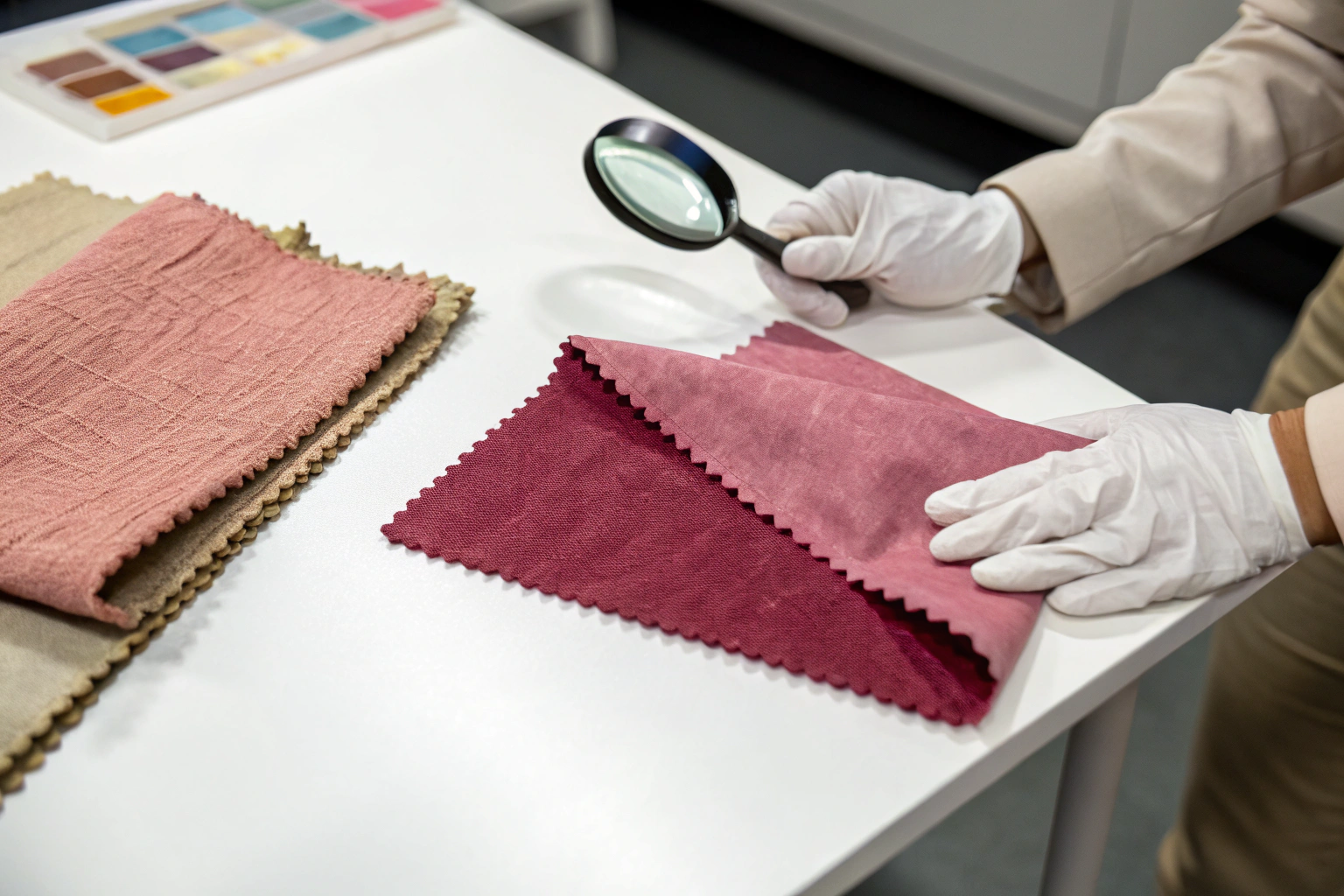
I was standing in a warehouse in New Jersey two years ago with a client who had just received two shipments. One was from a factory he had used for years. The other was his first order from us. He pulled out a hoodie from each box. He laid them side by side on the table. He didn’t say a word for about thirty seconds. He just touched the fabric. He rubbed it between his fingers. He held it up to the fluorescent light. Then he looked at me and said, "I never knew fabric could feel like this at the same price point." That moment captures the entire reason we exist as a company.
Fumao fabric quality differs through a systematic commitment to three specific areas: superior raw yarn sourcing from certified mills, tighter quality tolerances during knitting and weaving inspection, and a proprietary finishing process that enhances hand-feel and durability without relying on cheap chemical softeners that wash out after three cycles.
Most factories treat fabric as a commodity input. They buy the cheapest greige goods they can find. They slap on a heavy chemical finish to make it feel soft in the showroom. That finish washes out after a few laundry cycles, revealing the rough, low-grade yarn underneath. The customer thinks they ruined the garment in the wash. They didn’t. The factory ruined it before it was even sewn. At Shanghai Fumao, we approach fabric differently because we know the fabric is the garment. The stitching matters. The fit matters. But the fabric is what the customer feels against their skin every single day.
What Raw Material Sourcing Standards Does Fumao Maintain
The journey of a premium garment starts months before it reaches a sewing machine. It starts with the yarn. And the yarn starts with the fiber. This is where most brands never look, and where most factories cut corners. You cannot make a soft, durable t-shirt from short, weak cotton fibers. You can only make one that feels okay for the first wash and then deteriorates into a rough, shapeless rag.
At Fumao, our raw material sourcing is guided by a strict fiber specification protocol. We reject yarn that does not meet our minimum requirements for staple length, strength, and purity. This adds cost upfront, but it eliminates the hidden costs of returns and dissatisfied customers downstream.
The difference is measurable. Standard carded cotton uses fibers averaging 1 inch in length. The short fibers create a fuzzy, uneven yarn surface that pills easily. We specify Combed Cotton for our premium basics. The combing process removes the short fibers and aligns the long fibers parallel. The result is a yarn that is 30% stronger and significantly smoother. You can see the difference. You can definitely feel it.

Why Does Yarn Count Significantly Impact Fabric Feel?
Yarn count is a number that describes the fineness of the yarn. It’s measured in Ne (English Cotton Count) . A higher number means a finer, lighter yarn. A lower number means a thicker, heavier yarn.
This is not just about weight. It’s about hand-feel and drape. A standard promotional t-shirt uses a coarse, open-end yarn around 18/1 Ne. It feels rough. It doesn’t drape well. It stands stiffly away from the body.
At Shanghai Fumao, our standard premium jersey uses 30/1 Ne or 40/1 Ne combed ring-spun yarn. The difference is night and day. The higher yarn count allows us to pack more individual fibers into every square inch of fabric. The surface is denser, smoother, and softer.
Here is a simple table that explains the hierarchy of yarn quality:
| Yarn Type | Staple Length | Process | Hand-Feel | Pilling Resistance |
|---|---|---|---|---|
| Open-End | Short fibers + Waste | Air jet twisted | Rough, stiff | Poor |
| Carded Ring-Spun | Medium fibers | Mechanically aligned | Average | Moderate |
| Combed Ring-Spun | Long fibers only | Combed to remove short fibers | Smooth, soft | Excellent |
| Compact Ring-Spun | Long fibers only | Additional compression | Extremely smooth, silky | Superior |
When a client asks me why our t-shirt feels more expensive than a competitor’s at the same weight, the answer is almost always in the yarn count and the combing process. We use finer, cleaner yarn.
How Does Fiber Origin Affect Dye Absorption and Colorfastness?
Not all cotton is created equal. The climate, soil, and harvesting methods of the growing region directly impact the fiber’s ability to absorb and retain dye.
Cotton from regions with consistent rainfall and long growing seasons, such as California Supima or select Egyptian Giza varieties, has a more uniform fiber structure. This uniformity allows dye molecules to penetrate evenly and bond securely.
Lower-grade cotton from regions with inconsistent weather often has "dead" or immature fibers mixed in. These fibers don’t absorb dye properly. They create a speckled, uneven appearance after dyeing. Worse, these fibers are weak. They break during washing, taking the dye with them. This is why cheap black t-shirts fade to a rusty gray after five washes.
At Fumao, we specify the origin of our cotton for our premium lines. We avoid blends with high percentages of unknown-origin short-staple fibers. This investment in raw material integrity means our colorfastness ratings consistently test at Grade 4-5 on the AATCC scale, even after multiple home launderings. The color stays rich. The black stays black. That’s what builds a reputation for quality.
How Does Fumao’s Quality Control Differ During Production
Sourcing good yarn is step one. Turning that yarn into flawless fabric is step two. This is where the discipline of the factory’s processes becomes visible. In many factories, fabric inspection is a formality. A worker glances at the roll as it speeds by. They miss subtle shading variances. They miss small holes that will only become apparent after the garment is cut and sewn.
At Fumao, our quality control during fabric production is based on a proactive, data-driven inspection system. We don’t just look at the fabric. We measure it against objective standards at multiple checkpoints.
The most critical of these checkpoints is the Four-Point Inspection System. This is an industry-standard method for grading fabric defects. Points are assigned based on the size and severity of the flaw. A hole larger than 8 inches receives 4 points. A small stain receives 1 point. The total points per 100 square yards of fabric determine if the roll is accepted or rejected.

What Is the Fumao Standard for Acceptable Defect Points?
Most factories selling to the promotional products market accept a defect rate of 40 points per 100 square yards. That means a roll of fabric can have multiple visible flaws and still be deemed "First Quality" by their low standards.
At Shanghai Fumao, our internal standard for premium garment fabric is 20 points per 100 square yards maximum. We also maintain a "zero tolerance" policy for specific critical defects regardless of the point score.
Here is a comparison of defect tolerance:
| Defect Type | Industry Average Tolerance | Fumao Tolerance | Action |
|---|---|---|---|
| Holes/Tears | Up to 4 points allowed | Zero Tolerance | Roll Rejected |
| Shading Variance | Within 10-15% shade range | Within 5% shade range | Roll Segregated or Rejected |
| Barre (Streaks) | Visible streaks often accepted | No visible streaks allowed | Roll Rejected |
| Broken Needle Lines | Up to 2 points allowed | Zero Tolerance | Roll Rejected (Safety Hazard) |
This strict inspection happens before the fabric is spread on the cutting table. If a roll fails, it is returned to the knitting or weaving mill. We do not pass defective fabric on to our clients and hope they don’t notice. We absorb the loss to protect the brand’s reputation. This is a fundamental difference in philosophy. We act as the first line of defense for your quality standards.
How Do We Ensure Shrinkage Control Before Cutting?
Shrinkage is the hidden enemy of garment fit. You design a beautiful dress with a specific length. The customer washes it once, and suddenly it’s two inches shorter. They are furious. They blame the brand.
Most shrinkage occurs because the fabric was not properly relaxed before cutting. In the rush to produce orders, many factories skip or shorten the relaxation period. They cut the fabric while it is still under tension from the knitting or weaving process. The garment is sewn to the correct measurements. Then it hits water. The fibers relax. The garment shrinks.
At Fumao, we enforce a strict Fabric Relaxation Protocol.
- 24-48 Hour Resting Period: All fabric rolls, especially knit fabrics, are unrolled and allowed to rest in a controlled environment for a minimum of 24 hours before cutting. This allows the fibers to contract naturally.
- Pre-Wash Shrinkage Testing: For every new fabric lot, we cut a marked square of specific dimensions. We wash and dry it according to care label instructions. We measure the change.
- Pattern Adjustment: If the shrinkage test reveals 5% length shrinkage, we digitally adjust the pattern to be 5% longer. The garment is cut large, shrinks in the customer’s wash, and arrives at the intended dimensions.
This process adds time and labor to our production cycle. It’s one of the reasons we are not the absolute cheapest factory. But it is also the reason our clients report a return rate for "fit issues" that is less than 1%. The industry average for online apparel returns due to fit is over 20%. That gap represents tens of thousands of dollars saved in return shipping and lost inventory value for our partners.
What Post-Production Finishing Enhances Fumao Fabric Longevity
The fabric is woven. The garment is sewn. For many factories, the job is done. But the fabric at this stage is often stiff from processing, covered in microscopic lint, and lacking the soft, inviting hand-feel that makes a customer want to wear it immediately. This is where finishing separates commodity manufacturers from premium partners.
At Fumao, our post-production finishing is designed to enhance the natural properties of the fiber, not mask them with temporary chemical coatings.
We use a combination of mechanical finishing techniques and, when required for specific performance needs, certified eco-friendly washes. We explicitly avoid heavy silicone softeners that are the hallmark of fast fashion. Silicone feels amazing on the rack. It washes out in three cycles, leaving the fabric rough and depleted. It’s a trick. We don’t use tricks.

What Is the Difference Between Enzyme Washes and Silicone Washes?
This is a critical distinction for any brand that claims to care about longevity and sustainability.
Silicone Wash: A chemical bath that coats the fibers in a plastic-like lubricant. It provides extreme softness and a slick hand-feel. It also traps odors, reduces the fabric’s breathability, and masks poor yarn quality. It is not durable. It is the equivalent of putting makeup on a pig.
Enzyme Wash: A biological process using natural enzymes that "eat" the tiny, loose fuzz and projecting fibers on the surface of the fabric. This process is also called Bio-Polishing. It permanently removes the micro-fibers that cause pilling. It smooths the surface of the fabric at a microscopic level. The result is a clean, soft hand-feel that is intrinsic to the fabric itself. It does not wash out. It actually improves the appearance of the garment over time.
At Shanghai Fumao, we use Neutral Cellulase Enzyme Washes for our premium cotton and rayon blends. This process adds cost and requires careful control of water temperature and pH levels. But the result is a garment that looks better after the fifth wash than a silicone-treated garment looks after the first.
How Does Fabric Weight Consistency Protect Brand Reputation?
Have you ever reordered a favorite t-shirt and found it felt thinner than the one you bought last year? That’s a fabric weight consistency failure. The factory substituted a lighter weight fabric to save money, hoping you wouldn’t notice.
Fabric weight is measured in GSM (Grams per Square Meter) . A 180 GSM jersey is noticeably different from a 160 GSM jersey. It drapes differently. It wears differently. It lasts longer.
At Fumao, we maintain a strict tolerance on fabric weight. Our standard is +/- 5% GSM variance. If a client orders 200 GSM fleece, the finished fabric will weigh between 190 and 210 GSM.
We achieve this consistency through:
- Greige Goods Inspection: We weigh the raw fabric before dyeing.
- Post-Dye Shrinkage Calculation: We account for the slight weight gain or loss during the dyeing and finishing process.
This attention to weight consistency means that the hoodie your customer buys in 2026 will feel exactly like the one they bought in 2025. That consistency builds trust. It eliminates the "this isn’t the same quality" complaint that plagues so many growing brands. Your brand’s reputation rests on that consistency. We protect it.
Conclusion
The difference in Fumao fabric quality is not a single secret ingredient. It is a cumulative result of dozens of small, disciplined decisions made at every stage of the textile lifecycle. We’ve traced the journey from the raw yarn—where our insistence on combed, long-staple fibers creates a foundation that cheap, open-end yarn cannot match. We’ve examined the production floor, where our 20-point defect standard and rigorous shrinkage control prevent the flaws and fit failures that trigger customer returns. Finally, we’ve detailed our finishing approach, which relies on permanent enzyme treatments rather than temporary silicone masks to deliver a hand-feel that endures wash after wash.
In a market flooded with garments designed to look good only on the hanger, Fumao fabric is engineered to look good and feel good for the life of the garment. This is the quality that builds a loyal customer base. This is the quality that reduces return rates and increases the lifetime value of every person who buys your brand.
If you are ready to experience the difference that systematic, disciplined fabric quality can make for your collection, we invite you to feel it for yourself. We can provide a sample pack of our core fabric qualities so you can compare them directly to what you are currently using.
For a personalized consultation and fabric samples, please contact our Business Director, Elaine.
Contact Elaine at: elaine@fumaoclothing.com








