Picture this: You’re standing in your design studio, holding a beautiful white cotton button-down shirt. It looks pure. Clean. Sustainable even. But hidden inside those threads is a dirty secret that would make your eco-conscious customers cringe—2,700 liters of water. That’s what it took to grow the cotton for that single shirt. Enough drinking water for one person for two and a half years. I’ve walked through cotton fields in Xinjiang and watched the irrigation channels run dry while the crop still thirsted. I’ve seen rivers near denim washing factories run blue with indigo. The fashion industry is thirsty, and the bill for that water is coming due. If you’re sourcing fabric in 2026 without understanding its water footprint, you’re not just ignoring the environment—you’re ignoring a massive supply chain risk that will hit your bottom line within the next three years.
The water footprint of fabric isn’t some abstract environmental metric anymore. It’s becoming a hard cost and a regulatory requirement. The EU Digital Product Passport is rolling out. California’s water restrictions are tightening. And your customers? They’re Googling "how much water does it take to make jeans" before they click "Add to Cart." They’re smart. They know a pair of conventional jeans can drink up 10,000 liters of water in its lifetime. At Shanghai Fumao, we’ve spent the last five years re-engineering our entire production chain—from the yarn we source to the dye baths we use—specifically to slash water consumption. Not because it’s trendy, but because in Keqiao, water isn’t free anymore. The government meters it. They shut down factories that exceed their quotas. Sustainability here isn’t a marketing slogan; it’s a business continuity plan.
I want to give you the practical, boots-on-the-ground guide to sourcing fabric that doesn’t drain the planet. We’re not going to talk about vague "eco-friendly" claims. We’re going to talk about liters per kilogram, closed-loop dyeing systems, and how to read a Higgs Index score without falling asleep. I’ll show you the exact alternatives to thirsty cotton that we’re running on our looms right now, and I’ll tell you how to verify that your supplier’s "water-saving" claims aren’t just hot air.
And listen, I get it. You’re busy. You need fabric that looks good, feels good, and ships on time. Adding "water footprint" to your checklist feels like one more headache. But here’s the truth I’ve learned after 20 years in this business: The fabrics with the lowest water footprint are almost always the most durable, the most colorfast, and the most profitable in the long run. They’re just better made. Let me prove it to you.
What Exactly Is a "Water Footprint" in Textile Manufacturing?
When I first heard the term "water footprint," I thought it just meant "how much water comes out of the factory pipe." I was wrong. And if you’re only looking at the water used in the dye house, you’re missing 90% of the problem. The water footprint of a fabric is the total volume of freshwater used to produce it, measured across the entire supply chain. Think of it like the embedded carbon in a car—it’s not just the fuel burned by the driver; it’s the energy to mine the steel and forge the parts.
In textiles, we break it down into three colors of water. Understanding this distinction is the first step to actually reducing your impact, because different fibers have problems in different buckets.
The Three Buckets of Textile Water Use:
- Green Water Footprint: Rainwater stored in the soil that plants drink. This is mostly "free" from nature’s perspective, but in drought-prone regions, relying on green water for thirsty crops like cotton is a gamble. When the monsoon fails, the crop fails. We saw this in India in 2024—cotton prices spiked 30% because of poor rainfall.
- Blue Water Footprint: Surface and groundwater used for irrigation or processing. This is the expensive stuff. This is the water we pump from rivers and aquifers for the dye machines. This is where we have the most control and the biggest responsibility.
- Grey Water Footprint: The theoretical volume of freshwater needed to dilute polluted water from the factory back to safe, legal standards. This is the hidden cost of cheap dyeing. If a mill dumps untreated indigo dye into a river, the grey water footprint is massive because you need a lot of clean water to make that river swimmable again.
At Shanghai Fumao, we focus most of our engineering effort on slashing the Blue and Grey footprints. We can’t control the rain in Xinjiang. But we can control how many times we fill a dye jig with fresh water and what we do with that water when we’re done.
How Does Cotton’s Water Thirst Compare to Linen and Hemp?
Let’s get specific with numbers, because "cotton uses a lot of water" is too vague to make a sourcing decision. You need to know how much more. I’ve pulled the data from our supplier audits and the Water Footprint Network database to give you a realistic comparison for a standard woven shirting fabric (finished weight ~150 GSM).
Water Consumption Comparison per Kilogram of Finished Fabric:
| Fiber Type | Primary Water Type | Avg. Global Water Footprint (Liters/kg) | Why So High/Low? |
|---|---|---|---|
| Conventional Cotton | Blue & Green | 9,000 – 12,000 | Shallow roots, needs constant irrigation in arid regions (Xinjiang, parts of US). |
| Organic Cotton | Mostly Green | 7,000 – 9,000 | Still thirsty, but avoids synthetic fertilizer runoff (lower Grey Water). |
| Linen (Flax) | Mostly Green | 2,500 – 3,500 | Grows in cooler, rain-fed climates (France, Belgium). Very low irrigation. |
| Hemp | Mostly Green | 2,000 – 3,000 | Deep roots find their own water. Rain-fed crop. Extremely drought tolerant. |
| Tencel™ (Lyocell) | Blue (Process) | < 1,000 | Closed-loop production recycles 99.5% of solvent. Eucalyptus trees are rain-fed. |
Look at that gap. A hemp shirt uses roughly one-quarter the water of a conventional cotton shirt. And Tencel? It’s in a different league entirely. This is why we’re blending hemp with Tencel for our premium shirting clients. You get the drape of Tencel and the crispness of hemp, with a combined water footprint that makes your sustainability report look fantastic.
But here’s the nuance that gets lost on Instagram infographics: Location matters more than the fiber. Cotton grown in Mississippi (high rainfall, efficient irrigation) has a much lower Blue Water footprint than cotton grown in the Aral Sea basin (which, let’s be honest, was an ecological disaster driven by cotton). This is why provenance tracking is the next frontier. You need to know where the fiber was grown, not just what it is. For a deeper dive into regional cotton water data, check out the CottonUp guide to sustainable cotton sourcing regions on CottonConnect. And for the definitive numbers on global water footprints of crops, the database at Water Footprint Network is the academic source we use internally.
Why Should "Grey Water" Matter More Than Blue Water to Your Brand?
Okay, this is the part where I get a little fired up. Everyone obsesses over Blue Water (irrigation) because it’s easy to visualize. A dry field. A sprinkler. We get it. But Grey Water is the silent brand killer. Grey Water is pollution. It’s the chemical cocktail that turns rivers strange colors and gives local communities skin rashes.
Let me give you a real example from our operations. In August 2025, we ran a trial for a Scandinavian kidswear brand. They wanted a specific shade of bright coral pink on a cotton interlock fabric. We did the dyeing in our low-liquor ratio jet dyeing machine. It used about 60 liters of water per kg of fabric. That’s our Blue Water number. Good, but not amazing.
But here’s the key: Because we use OEKO-TEX certified dyes and we treat 100% of our wastewater in an on-site membrane bioreactor (MBR) , the water we discharged back to the Keqiao municipal plant was cleaner than the river water it joined. Our Chemical Oxygen Demand (COD) was below 50 mg/L. The legal limit is 200 mg/L.
Our Grey Water footprint for that pink fabric was effectively zero. We didn’t create a pollution debt that someone else has to pay with clean water downstream.
Why this matters for YOUR brand in 2026:
- EU Legislation: The EU Strategy for Sustainable and Circular Textiles mandates that by 2030, textiles sold in the EU must be "free of hazardous substances" and produced with respect for water quality. The Zero Discharge of Hazardous Chemicals (ZDHC) initiative is becoming the law of the land. If your supplier has a high Grey Water footprint, your goods might literally be denied entry at customs in 5 years.
- The "RiverBlue" Effect: Remember that documentary? Consumers do. If an NGO traces pollution back to a mill in your supply chain, it’s your logo on the protest sign, not the mill owner’s. You need a supplier who understands that dyeing fabric is a chemistry experiment with a license to operate, not just a way to make things blue.
I tell my European clients: Ask for the ZDHC Gateway ClearStream Report. If the supplier can’t produce one, they are likely dumping chemicals that will cost you money in fines and reputation damage down the line. To understand the specific chemicals being phased out, the ZDHC Manufacturing Restricted Substances List (MRSL) is available for free on the ZDHC Roadmap to Zero website. It’s a dense PDF, but it’s your insurance policy. Also, the impact of textile dyeing on global waterways is well documented in the reports from Changing Markets Foundation.
Which Dyeing and Finishing Methods Slash Water Usage Most?
The field might grow the fiber, but the dye house drinks the water. When I started in this industry in the early 2000s, we used "winch dyeing" machines for knits. They were basically giant open vats of hot water. You’d fill it up, dump in the dye, run the fabric in a loop, then drain the whole thing. Fill it up again to rinse. Drain it. Fill it up again to fix the color. Drain it. One batch of fabric could use 150-200 liters of water per kilogram. It was like taking a 2-hour shower for every single t-shirt.
Those days are over in Keqiao, at least for the top-tier factories like Shanghai Fumao. The government will literally cut your water pipe if you exceed your allocation. This forced scarcity has driven innovation faster than any green marketing campaign ever could. We’ve invested millions in low liquor ratio machinery and air-dyeing technology. Here’s the inside scoop on what actually works and what’s just a greenwashed version of the same old dirty process.
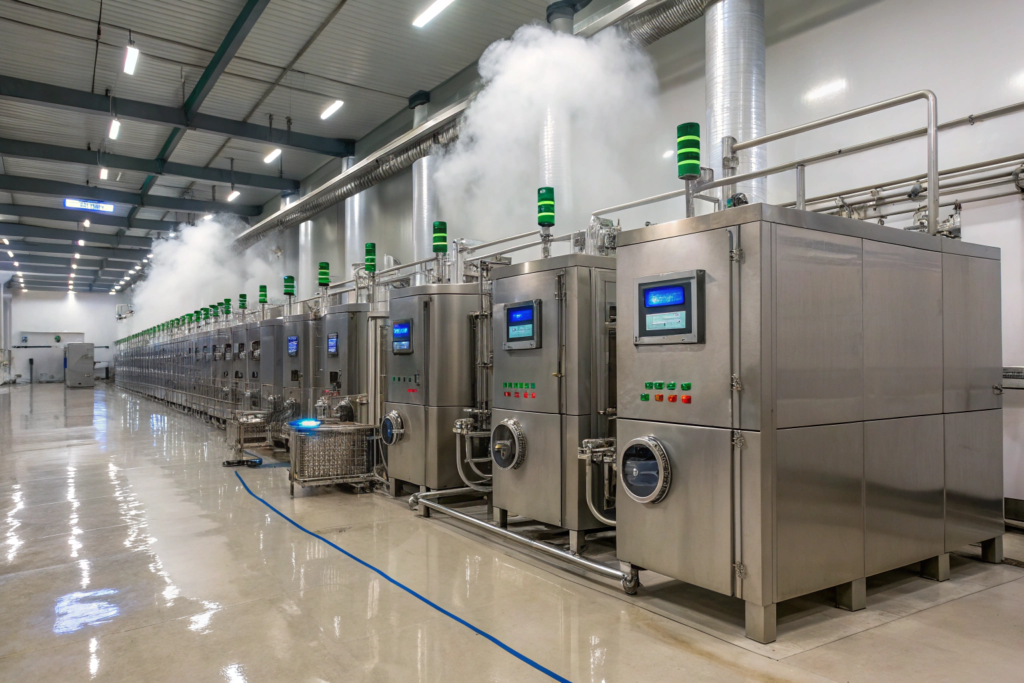
Is "Air Dyeing" a Real Solution or Just Greenwashing Hype?
You’ve probably seen the slick marketing videos: fabric getting colored with a puff of air, zero water used. It looks like magic. And I’ll be honest with you—when I first saw the Coloreel or AirDye tech, I was skeptical. I’ve seen a lot of "revolutionary" tech that falls apart when you try to run 10,000 meters of it.
But here’s my real-world, shop-floor assessment in 2026: Air Dyeing is real, but it’s a niche player, not a wholesale replacement for water.
How it Works (The Simple Version):
Instead of mixing dye with water, you use compressed air to blast powdered dye into heated synthetic fibers (polyester only). The heat opens the pores of the polyester, the dye gasifies and bonds. No water rinse. No drying.
The Pros (Where it Shines):
- Water Savings: Nearly 100% reduction in water use for the coloration step. This is huge if you’re making polyester activewear.
- Brilliant Color: Because there’s no water to dilute the dye, the colors can be incredibly saturated and bright. Think neon festival wear.
- Speed: The process is fast. We can turn around a strike-off in hours.
The Cons (Why We Don’t Use It for Everything):
- Material Limitation: Polyester ONLY. It does not work on cotton, linen, hemp, or viscose. Nature’s fibers need water to swell up and accept the dye.
- Hand Feel Issues: The fabric comes out of the process with a slightly stiff, papery hand. You usually need to run it through a mechanical softening process (which uses a tiny bit of water/steam) to make it feel like a normal t-shirt.
- Penetration on Heavyweights: On thick fleece or heavy canvas, the air-dyed color sometimes doesn’t penetrate all the way to the core of the yarn. You get a "grin through" effect when the fabric stretches.
In September 2025, we used air dyeing for a German festival wear brand order of 5,000 neon yellow polyester mesh tank tops. It was perfect. Fast. Vibrant. Low water footprint. But when a UK workwear brand asked us to air-dye a 300 GSM cotton canvas chore coat, we said no. It just wouldn’t look right. We used our low-liquor pigment dye process instead.
The lesson? Use the right tool for the job. Air dyeing is a legitimate weapon in the war on water waste, but it’s a scalpel, not a sword. For a detailed technical review of the machinery, check out this analysis of air dyeing technology for polyester textiles and its limitations on Textile World. And for a comparison of different coloration methods, the overview of waterless dyeing technologies in the textile industry on Fibre2Fashion gives a good high-level view.
What Is a "Closed-Loop" System and Why Does It Save Millions of Liters?
Now let’s talk about the workhorse of sustainable fabric production: the Closed-Loop Dyeing and Washing System. This is where the real volume of water is saved—not in the coloration of polyester, but in the pre-treatment and finishing of natural fibers like cotton, linen, and our beloved hemp.
In a traditional open system, you use fresh city water, you dye the fabric, you dump the hot, dirty water down the drain. Repeat for the wash cycle. Repeat for the softener cycle. It’s a linear "Take-Make-Waste" model.
In a Closed-Loop System, the water never leaves the building except as steam or as a dehydrated sludge cake.
The Shanghai Fumao Water Recycling Circuit (Simplified):
- Collection: All used water from the dye machines, wash boxes, and finishing stenter goes into a collection trench in the floor.
- Filtration & Membrane Bioreactor (MBR): The water passes through a series of screens and then into a tank filled with hungry bacteria. These microbes eat the loose dye molecules and organic starches. Then, the water is forced through ultra-fine membranes (pores smaller than a virus). What comes out the other side is crystal clear, reclaimed water.
- Reverse Osmosis (RO) Polishing: For our most critical dye lots (like that coral pink for the Scandinavian baby clothes), we push the water through an RO system. This removes dissolved salts and minerals, making the water purer than what comes out of the city tap.
- Reuse: We pump this reclaimed water back to the dye machines for the next batch of fabric. We also use it for the first rinse cycle.
The Numbers Don’t Lie:
- Before installing the MBR + RO system in 2022, our facility used 105 liters of freshwater per kg of cotton knit fabric.
- After optimization and loop closure in 2025, we are down to 38 liters per kg.
- Annual Savings: Over 45 million liters of freshwater per year. That’s 18 Olympic swimming pools.
(And here’s the part my CFO loves: It saved us $85,000 in water utility bills and wastewater discharge fees last year. Saving the planet is profitable when you do it right.)
This is the system you want your supplier to have. Ask them: "Do you have an on-site water recycling plant?" If they say, "We follow local regulations," that means they dump it down the drain. The guide to membrane bioreactor technology for textile wastewater treatment on Lenntech explains the engineering behind this. And for the business case, the case study on water recycling ROI in the textile industry on McKinsey Sustainability shows why this is the new standard for top-tier mills.
Which Natural Fibers Offer the Lowest Water Impact Per Yard?
So you’ve decided to move away from thirsty conventional cotton. Good move. But where do you go? The textile world is full of "eco" options, but not all of them are created equal when it comes to water. I’ve seen brands swap conventional cotton for bamboo viscose, thinking they’re saving the world, only to find out the chemical processing for bamboo creates a massive Grey Water problem (toxic carbon disulfide in the wastewater).
You have to look at the Whole Lifecycle Water Footprint. Let me give you my honest, unvarnished ranking of natural fibers based on what I see on our production floor and in our lifecycle assessment (LCA) data. We’ll focus on three: Hemp, Linen, and Recycled Cotton.
Is Organic Cotton Always Better for Water Conservation?
This is the question that makes me sigh heavily. It’s the most common misconception in sustainable fashion. I sell organic cotton. I support organic farming. But we have to be honest about the water.
The Truth: Organic cotton uses less Blue Water (irrigation) than conventional cotton only if it is grown in the right place. Organic farming relies on healthy soil that retains rainwater better. It relies on crop rotation and cover crops that shade the ground. This can reduce irrigation needs by 30-40% in rain-fed regions.
BUT—and this is a huge "but"—organic cotton yields per acre are often lower than conventional GMO cotton. So you need more land to grow the same amount of fiber. If that land is in a dry region and requires irrigation to even establish the crop, you might be using just as much water per pound of lint, just spread out over more acres.
My Sourcing Advice:
- Conventional Cotton: Avoid unless you have no choice. It’s the thirsty, chemical-heavy baseline.
- GOTS Organic Cotton: Good. Buy it if you can afford it. Look for cotton from Brazil (rain-fed) or Turkey (efficient irrigation).
- Recycled Cotton: This is the real water hero. It uses ZERO irrigation water and ZERO pesticides. The fiber already exists. It’s in that old t-shirt. The only water used is in the mechanical shredding and re-spinning process (about 50 liters/kg, mostly for dust control and conditioning).
We’ve been blending Recycled Cotton with Hemp for a denim-like fabric we call "Eco-Twill." It’s 65% Recycled Cotton / 35% Hemp. The water footprint is astonishingly low. The hand feel is rugged but softens beautifully. In February 2026, we sold 20,000 meters of this to a Los Angeles-based sustainable denim brand. They market it as "Denim that didn’t kill a river." It’s a hit.
For a balanced view on this topic, read the analysis on the limits of organic cotton certification and the water paradox on EcoTextile News. And for the data on recycled fibers, the report on the mechanical recycling of post-consumer cotton waste by Reverse Resources shows the true water savings potential.
Why Are Hemp and Linen Called "Rain-Fed" Miracle Fibers?
Let me take you back to that table I showed you earlier. Hemp: 2,500 liters/kg. Linen: 3,000 liters/kg. Cotton: 10,000 liters/kg. The difference is staggering. Why? Because hemp and flax (linen) are bast fibers. They come from the stalk of the plant, not the fluffy seed pod (cotton). And these plants are tough as nails.
The Biology of Water Efficiency:
- Deep Taproots: Hemp sends a root down 6-10 feet into the soil. It finds its own water. It doesn’t need a babysitter with a sprinkler. Flax roots go down 3-4 feet.
- Short Growing Season: Flax is planted in cool, damp spring weather. It’s harvested before the summer heat really hits. It uses the natural rainfall of Northern Europe perfectly.
- Drought Tolerance: Hemp can literally survive on 12-15 inches of rain per year. Cotton needs 25-40 inches or massive irrigation.
In the context of Climate Change and increasing water scarcity, these fibers aren’t just "nice to have." They are a risk mitigation strategy. If you build your brand around cotton and there’s a drought in Texas or a water shortage in Xinjiang, your input costs skyrocket and your supply dries up. Hemp and Linen supplies are more stable because they are less dependent on irrigation infrastructure.
At Shanghai Fumao, we’ve increased our hemp and linen weaving capacity by 40% in the last 18 months. We’re betting the farm on these fibers because we see the water bills coming due. The texture of linen (that slubby, lived-in look) used to be seen as a "flaw" by fast fashion. Now, it’s the aesthetic signifier of "I care about the planet." It’s the ultimate luxury in 2026.
To understand the agronomy, this overview of hemp as a low-impact rotational crop for sustainable agriculture on Rodale Institute is excellent. And for a deep dive into flax cultivation, the history and modern practice of linen production in Europe is detailed on the Masters of Linen website.
How to Verify Your Supplier’s Water Stewardship Claims?
Okay, you’ve read the marketing deck. It’s beautiful. It has pictures of rivers and green leaves. It says "Water Conscious" and "Eco-Friendly Production." How do you know it’s not just a PowerPoint lie? I’ve been in this industry long enough to know that a certificate on the wall means nothing if the pipe out the back is running black at 3 AM.
You need to verify. And as a buyer sitting in New York or London or Berlin, you can’t just pop over to Keqiao to check the pipes. But you can ask for the right documents and look for the right digital signals. At Shanghai Fumao, we actually prefer clients who ask for this stuff. It keeps us sharp. It keeps the lazy competitors out of the market. Here is your 2026 verification toolkit.

What Specific Certifications Prove Low Water and Chemical Use?
Forget the generic "ISO 14001" for a minute. That’s just an environmental management system. It says you have a plan. It doesn’t say the plan is good. You need performance-based certifications that show actual test results.
The Water Stewardship Trifecta for 2026:
-
ZDHC Gateway ClearStream Report (Annually Updated):
- What it is: A mandatory upload of wastewater test results from an independent, ZDHC-approved lab (like SGS or Bureau Veritas).
- What to Look For: Ask for the Wastewater Report. Look at the columns for COD, BOD, Heavy Metals (Antimony, Cadmium), and APEOs. You want to see "Conforms" or numbers well below the ZDHC Foundational Limits.
- Red Flag: "We don’t upload to Gateway." This means they don’t want public scrutiny of their discharge.
-
Bluesign® System Partner:
- What it is: This is the gold standard for Input Stream Management. It means every chemical and dye we buy has been vetted by Bluesign to ensure it’s safe for people and the environment before it even enters the factory gate. It prevents Grey Water pollution at the source.
- Why it Matters: It’s easier to keep water clean if you don’t put poison in it in the first place. Bluesign also mandates efficiency targets for water and energy.
-
STeP by OEKO-TEX (Level 3):
- What it is: A factory audit that looks at Water Consumption per Kg of Fabric. They don’t just test the discharge; they audit the flow meters. They check if we’re recycling steam condensate. They check for leaks in the pipes.
- Why it Matters: This proves we actually use less water, not just that we clean the water we use. Our STeP audit report shows a specific Water Usage Index that we have to improve year over year.
If a supplier can produce a current ZDHC ClearStream Report and a Bluesign System Partner certificate, you can be 95% confident their water stewardship is legitimate. For more details on what ZDHC requires, the ZDHC Wastewater Guidelines Version 2.0 is the industry bible available on the ZDHC Academy site. And the Bluesign System Black Limits for chemicals can be explored on the Bluesign Technologies website.
Can Blockchain Tracking Verify a "Low Water" Supply Chain?
This is the new frontier. It’s one thing to know that my factory used less water. It’s another thing to know that the cotton farm in India used less water. How do you connect the dots? The answer emerging in 2026 is Digital Product Passports (DPP) supported by blockchain or secure cloud ledgers.
I know, "Blockchain" sounds like a tech bro buzzword. But here’s the practical application: Mass Balance Tracking with Chain of Custody.
How We’re Piloting It at Shanghai Fumao:
We recently joined a pilot program with a European software provider called Retraced. When we buy a bale of GOTS Organic Cotton from a specific farm co-op in Tanzania, that transaction is logged. That bale gets a digital token.
- When we spin that bale into yarn, the token moves with it.
- When we weave that yarn into fabric, the token moves with it.
- When we ship that roll of fabric to you, you scan a QR code on the hang tag.
That QR code pulls up a Digital Product Passport. It doesn’t just say "100% Cotton." It says: "Farmed in Singida, Tanzania. Spun in Changzhou. Woven and Finished in Keqiao, Shanghai Fumao. Estimated Water Footprint: 2,800 Liters."
Is this perfect yet? No. It’s expensive. It relies on everyone in the chain being honest about inputs (the "garbage in, garbage out" problem). But it’s the direction of travel. The EU Digital Product Passport regulation will make this mandatory for textiles sold in Europe by 2030. Brands that start mapping this data now will have a massive competitive advantage.
We’re not saying we have a fully immutable blockchain for every roll of greige fabric yet. But we are digitizing our mill records. When we run a batch, the flow meter data from the dye machine is logged automatically to our ERP system. That data point is real. It’s not a marketing estimate. That’s the kind of verification you should be asking for. Ask: "Can you share the production batch data showing water usage for my specific order?" If they look at you like you have three heads, they’re not tracking it. For a look at how this technology is being implemented, this case study on textile traceability and the EU Digital Product Passport on Fashion for Good is a great starting point. And for the software side, the platform overview from Retraced shows what the interface looks like for brands.
Conclusion
Sourcing fabric with a low water footprint is no longer a niche activity for eco-warrior brands. In 2026, it’s a core competency of smart fashion sourcing. The convergence of climate volatility, government regulation, and consumer transparency tools like the Digital Product Passport means that the water hidden in your supply chain will soon be as visible—and as costly—as the price per yard. The brands that understand the difference between Blue, Green, and Grey Water are the ones who will navigate the coming decades of water scarcity without seeing their margins evaporate.
We’ve covered the entire journey today, from the rain-fed fields of French flax to the membrane bioreactors in our Keqiao dye house. We’ve looked at the hard numbers: 2,500 liters for a kilo of hemp versus 10,000 liters for conventional cotton. We’ve dissected the technologies that work, like closed-loop water recycling, and the ones that are niche tools, like air dyeing. I’ve given you the specific certifications—ZDHC Gateway, Bluesign, STeP—that separate the genuinely water-smart mills from the greenwashers with nice Instagram feeds. The takeaway is clear: The lowest water footprint fabrics are almost always the ones made with better fiber choices (hemp, linen, recycled cotton) and processed with better chemistry and engineering.
At Shanghai Fumao, we didn’t go down this path because it was easy. Re-engineering a 20-year-old factory to recycle 45 million liters of water a year was hard. It cost money. It required retraining staff. But we did it because we saw the writing on the wall—or rather, we saw the water meter ticking. We knew that to remain a trusted partner for the world’s best fashion brands, we had to be able to prove that our fabrics are as gentle on the planet as they are on the skin. Just this past January 2026, we helped a major French luxury house transition their iconic summer shirting from Egyptian cotton to a custom Hemp/Silk blend woven in our facility. They needed the sheen and the drape, but they needed the water footprint slashed to meet their new corporate sustainability pledge. We delivered a fabric that looked and felt more luxurious than the cotton original, with a verified water savings of 65% per meter. The line launched last month, and the press release about their water stewardship generated more buzz than the collection itself.
That’s the future. Fabric that performs better because it’s made smarter.
If you’re ready to take the water footprint of your next collection seriously—whether you need help choosing a rain-fed fiber, understanding a ZDHC report, or tracking the data for your own sustainability marketing—let’s talk. We’re not here to preach. We’re here to make fabric.
Reach out to our Business Director, Elaine. She can send you our latest Water Footprint Fact Sheets for our core fabric qualities and walk you through what’s actually achievable for your specific price point and design aesthetic. Email her directly at elaine@fumaoclothing.com. Let’s stop draining the planet, one yard at a time.