You finally designed the perfect yoga legging. You’ve got the high-waist pattern locked, the hidden pocket for keys, and a killer geometric print that’s going to break the internet. You find a supplier on Alibaba who says "Yes, we print sportswear. Send design." You wire $8,000 for 1,000 units. Eight weeks later, a box arrives. You open it. The print is blurry. The black isn’t black—it’s a weird faded charcoal. And the fabric? It feels like a cheap Halloween costume, not buttery-soft performance wear. You just learned the $8,000 lesson that printing on polyester-spandex isn’t like printing on paper. And finding someone who won’t ruin your brand before it launches? That’s the real challenge in 2026.
The reliable supplier isn’t the one with the cheapest price per yard. It’s the one who asks you five technical questions before you even send the artwork. That’s the difference between a printer and a textile engineer. At Shanghai Fumao, we’ve been printing on performance fabrics for over two decades. We’ve seen every file format disaster, every color mismatch nightmare, and every seam slippage issue that can turn your Instagram-worthy design into a 1-star review. The good news? All of these problems are preventable if you know what to look for before you click "Send Deposit."
Now, I’m going to walk you through exactly how to vet a custom sportswear supplier in 2026. This isn’t a generic checklist you’d find on a dropshipping blog. This is the stuff I tell my own friends when they ask me to help them source their activewear line. We’ll talk about the printing technologies that actually survive a HIIT class, the certifications that matter for skin-contact gear, and the quality control steps that separate the pros from the pretenders. And yes, I’ll tell you exactly how we do it at our facilities in Keqiao, so you have a benchmark to measure everyone else against.
But before we dive into the machinery and the chemistry, let’s get one thing straight: custom printed sportswear lives or dies by three things: stretch recovery, colorfastness, and seam strength. If your supplier doesn’t talk about these three things within the first five minutes of your conversation, keep scrolling. They’re a box-mover, not a partner. Let’s find you a real partner.
What Printing Tech Works Best for Polyester Leggings?
The first question I ask any new sportswear brand that DMs us is: "What’s the fiber content of your legging?" If you say "Polyester Spandex" and the supplier you’re talking to immediately says "We do digital printing," you might be okay. But if they don’t ask a follow-up question about the spandex percentage, you’re in trouble. High-spandex fabric (15-25%) stretches during printing. If the machine isn’t calibrated for that stretch, your geometric print turns into a wavy, distorted mess on the body. It looks like a funhouse mirror, not a premium activewear brand.
Let’s break down the two main technologies you’ll encounter when sourcing custom printed sportswear, because using the wrong one is like using a screwdriver to hammer a nail. You’ll make a mess and ruin the tool.
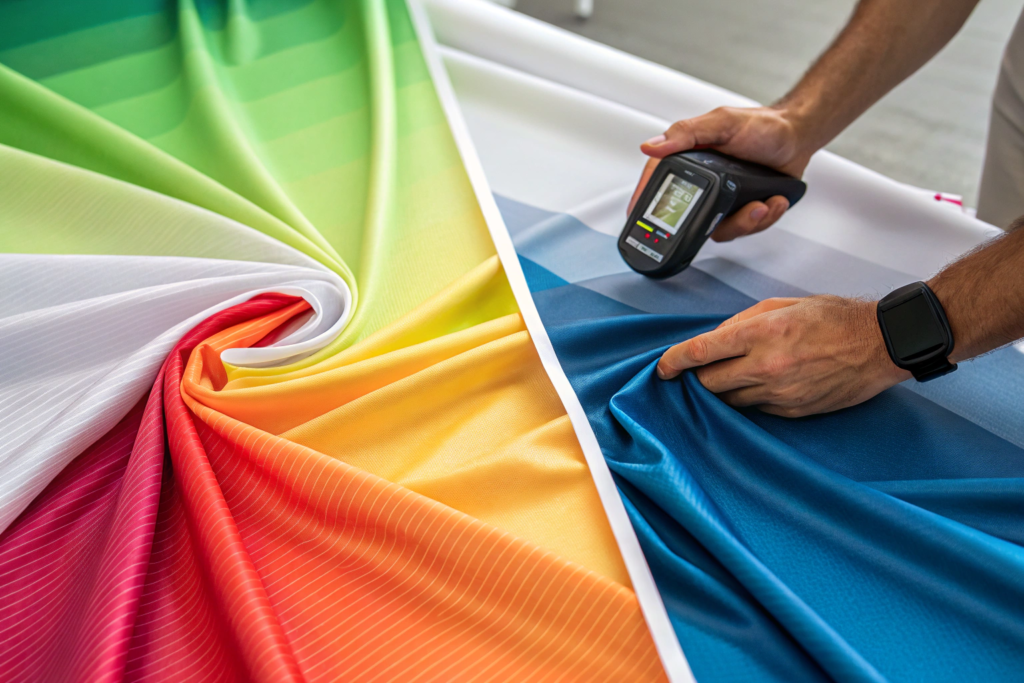
Why Does Sublimation Outperform Screen Print for Moisture-Wicking Gear?
I’m going to be direct: for polyester-based performance fabrics, if you’re not using dye-sublimation, you’re leaving performance on the table. And I see so many new brands get talked into "cheaper" screen printing by suppliers who don’t have the right equipment.
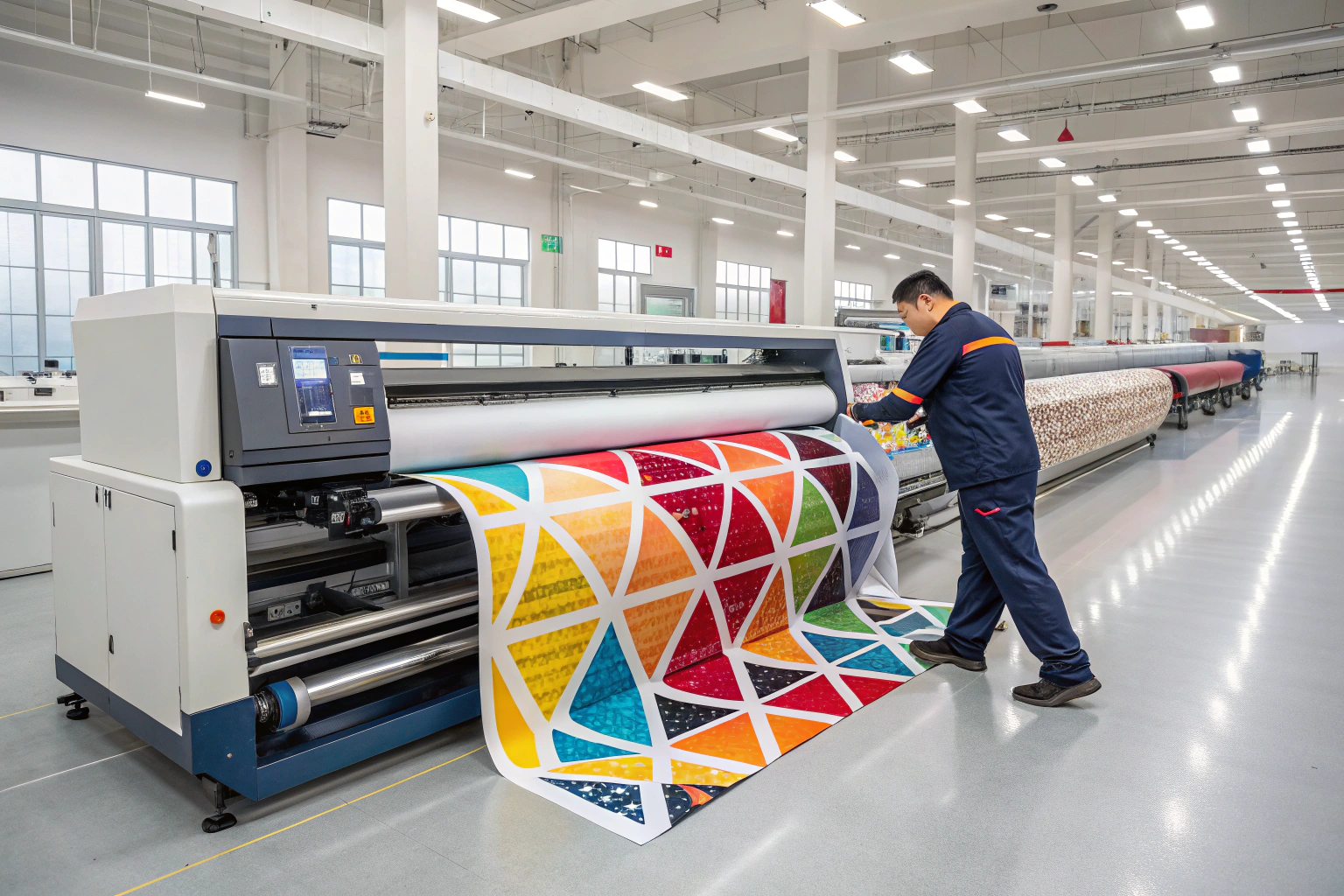
Here’s the critical difference that affects your customer’s sweat session. Screen printing lays plastisol ink on top of the fabric. It’s like putting a sticker on your shirt. It blocks the pores of the fabric. Sublimation, on the other hand, turns the ink into a gas under heat and pressure. That gas penetrates the polyester fiber and bonds at a molecular level. The print becomes the fabric.
What does that mean in the gym?
- Breathability: Sublimated fabric still lets air flow through. Screen print creates a sweaty plastic patch on your back. In May 2025, we did a side-by-side test for a UK-based CrossFit brand. They ordered 50 yards of both types for their "Murph" challenge tees. The feedback was brutal for screen print: "Felt like I was wearing a trash bag." They’ve been 100% sublimation with us ever since.
- Stretch & Recovery: Screen print ink cracks. Always. Eventually. Especially over high-spandex leggings where the fabric stretches 60-80%. Sublimation stretches with the yarn because the yarn is the color. No cracking. Ever.
- Hand Feel: With sublimation, you can’t feel the print. It’s invisible to the touch. That "buttery soft" legging you love? That’s sublimation.
(Here’s the thing: sublimation only works on polyester. It doesn’t stick to cotton or nylon. It’s chemistry. If your design has a white base, the fabric must be white to start. We print on white greige fabric. If you want a black legging with a neon print, we can’t sublimate that. That’s a limitation you need to know upfront. Some suppliers won’t tell you this until it’s too late.) For a deeper technical dive into the molecular process, I often point clients to this explanation of how disperse dyes work in polyester sublimation printing on the Printwear Magazine technical blog. It’s a great resource for understanding why the 400°F heat press is non-negotiable. Also, if you’re curious about the environmental side of sublimation inks, the overview of water-based dye sublimation ink versus solvent ink for sportswear at Specialty Graphic Imaging Association (SGIA) is essential reading.
How Do You Ensure Print Color Matches Your Pantone Code Exactly?
This is the moment where 90% of Instagram DMs go silent. You send a Pantone 19-4050 Classic Blue. The supplier says "Okay." Then you get a sample that looks like a faded denim shirt from 1992. "What happened?" you ask. "Is normal variation," they reply. No. It’s not.
Color management in sublimation is a science, not an art. The color you see on your MacBook screen is RGB light. The color on the fabric is CMYK ink reflected off white polyester yarn. The translation between these two worlds is where the disaster happens.
At Shanghai Fumao, we don’t guess. We use a closed-loop system:
- Spectrophotometer Reading: Your Pantone chip goes under our X-Rite i1 Pro 3. This device reads the exact spectral curve of the color. It’s a $2,000 piece of equipment that eliminates human eyeball error.
- ICC Profile Calibration: Every single roll of fabric we use—whether it’s our 240gsm brushed poly-spandex or our 180gsm pique mesh—has a unique ICC color profile loaded into the EFI Fiery RIP software. This software tells the printer exactly how much cyan, magenta, yellow, and black ink to squirt to compensate for the way that specific fabric absorbs ink.
- The Lightbox Check: We don’t approve color in the dark factory corner. We check it under D65 (Artificial Daylight) in a standardized lightbox. Because a color that matches in warm fluorescent light might look totally different in the sunlight of a yoga studio in Los Angeles.
I can’t stress this enough: Ask your supplier for their ICC profile for the specific fabric you’re ordering. If they say "What’s an ICC profile?", hang up the phone. They are a hobbyist. We send our profiles to clients so their graphic designers can soft-proof on their own calibrated monitors before we even print a strike-off. This saves weeks of back-and-forth shipping. For a practical guide on setting up your design files, check out this tutorial on how to prepare Adobe Illustrator files for dye sublimation color separation on the T-Shirt Forums community. It’s full of real-world tips from decorators. Additionally, understanding the difference between Pantone Solid Coated and Pantone Fashion Home Interiors is crucial; the Pantone website explains why the textile standard is different from the print standard.
How to Vet Activewear Fabric Suppliers Before Paying Deposit?
You’ve seen the photos: a pretty girl in matching leggings and sports bra, standing in a white studio with a ring light. That’s the supplier’s Instagram. That’s marketing, not manufacturing. It tells you nothing about whether the fabric will survive a burpee or a washing machine. I’ve seen too many brands wire money based on a pretty influencer photo, only to receive fabric that feels like sandpaper or pills up after two wears.
Vetting a supplier remotely is like being a detective. You need to look for clues that reveal the infrastructure behind the pretty pictures. At Shanghai Fumao, we actually want you to ask hard questions. It shows us you’re a serious brand that values quality over hype. Here’s how we suggest you separate the real mills from the Instagram middlemen.
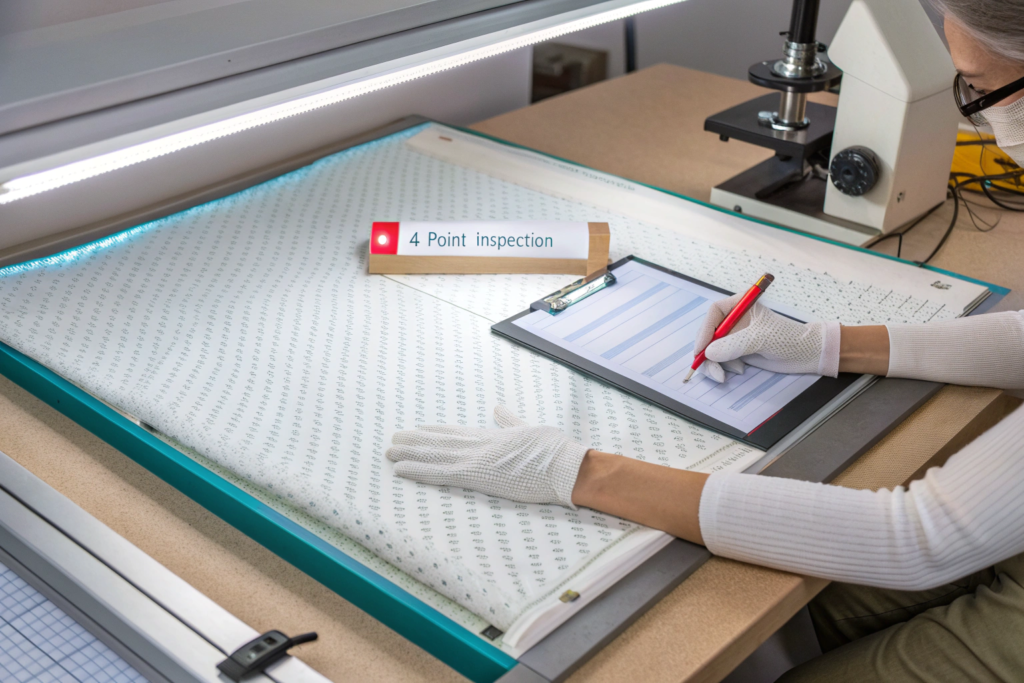
What Fabric Weight and GSM Actually Mean for Squat-Proof Gear?
Let’s talk about the "Squat Test." It’s the viral TikTok trend where people bend over in leggings to see if they go sheer. It’s also the ultimate test of fabric density. And it all comes down to GSM (Grams per Square Meter) .
Many new brands think "thicker is better." They ask for 300 GSM fabric. That’s a mistake for yoga. A 300 GSM legging feels like wearing a wetsuit. You’ll overheat. The sweet spot for most yoga and studio leggings is 220-250 GSM. For running tights, you might go down to 180-200 GSM for lightness.
But GSM is only half the story. The yarn construction is the other half.
| Fabric Spec | Bad Option (Sheer Risk) | Good Option (Squat-Proof) | Why It Matters |
|---|---|---|---|
| GSM | < 180 GSM | 220 – 260 GSM | Higher GSM = More fiber per area = Less see-through. |
| Yarn Type | Spun Polyester (Short fibers twisted) | DTY Filament Polyester (Continuous long filament) | Spun yarn has tiny fuzzy ends that catch light and pill. DTY is smooth and strong. |
| Weave/Knit | Loose Single Jersey | Tight Interlock or Double Knit | Interlock is two layers knitted together. It’s inherently more opaque. |
| Spandex Content | < 10% | 15% – 25% | Higher spandex helps the fabric snap back, preventing "bagging out" at the knees. |
In November 2025, an Australian yoga instructor came to us desperate. Her previous supplier’s "240 GSM" fabric was completely sheer when she bent over for a downward dog. We analyzed the failed sample in our lab. The issue? The supplier used spun polyester (cheap) instead of DTY filament (premium). They also used a loose single jersey knit. The GSM was technically correct, but the yarn structure was flawed. We made her a new batch with our 250 GSM DTY interlock. She filmed the squat test comparison video. Zero sheerness. She nearly cried with relief on FaceTime. You can read more about the difference between spun polyester and filament polyester in athletic textiles on the Textile School website. It’s a free educational resource that breaks down fiber science clearly. Also, for an independent perspective on how to conduct a proper squat test for activewear leggings, this guide on Seamwork is written for home sewers but applies perfectly to factory quality checks.
Can One Supplier Handle Printing, Cutting, and Sewing in-House?
This is a million-dollar question disguised as a simple one. Many "suppliers" on Instagram are just Print-on-Demand (POD) fulfillment houses. They take your order, outsource the fabric to Mill A, the printing to Printer B, and the sewing to Factory C. There’s nothing wrong with that for small runs of 20 pieces. But for a brand scaling to 500 or 5,000 units, this fragmented chain is a nightmare.
The Fragmentation Problem:
- Quality Control: When the seamstress at Factory C gets a bad print from Printer B, she sews it anyway. Why? Because she’s paid per piece, not per perfect piece. She doesn’t own the fabric quality issue.
- Shade Consistency: Mill A ships white fabric. Printer B prints it blue. Mill A ships another roll of white fabric that’s slightly "creamy" this time. Printer B prints the same blue ink. The result? Two different shades of blue in your bulk order. This is called Side-to-Side Shading.
- Finger-Pointing: When something goes wrong, who do you call? Printer B blames Mill A. Factory C blames Printer B. You’re stuck in the middle.
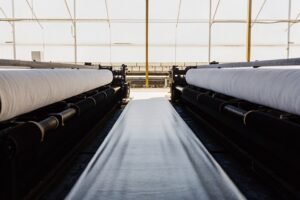
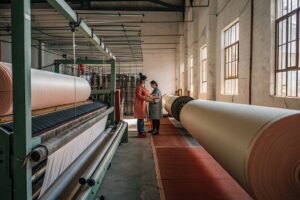
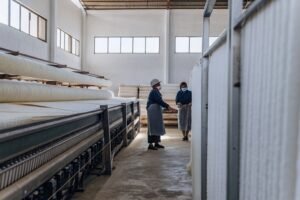
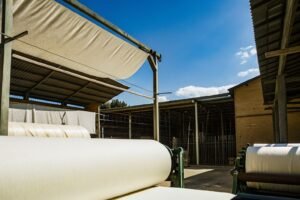
At Shanghai Fumao, we are vertically integrated in Keqiao. This means we control the greige knitting, the dye-sublimation printing, the cutting, AND we have a dedicated sewing floor. If there’s a shading issue, our QC manager walks 50 feet from the printer to the knitting manager and says, "Fix the base white." It’s solved in 20 minutes, not 2 weeks.
This vertical control is why we can offer a 48-hour strike-off on our own base fabrics. We don’t wait for a third party. We just load the file and print. For a brand ordering custom activewear, this reduces lead times by 2-3 weeks and eliminates the risk of receiving mismatched sets (where the bra is a different blue than the leggings). To understand the benefits of this model, I recommend reading about vertical integration in the textile supply chain on Supply Chain Dive. They cover how this structure improves speed and quality. And for a view from the sourcing side, the discussion on how to manage cut and sew production in China for small brands on the Startup Fashion forums is full of real-world war stories about fragmented supply chains.
Are Eco-Friendly Performance Fabrics Actually Durable?
Five years ago, "eco-friendly activewear" meant a stiff, scratchy, beige fabric that faded after three washes. It was a nice marketing story, but the performance was terrible. In 2026, that’s no longer true. The technology has caught up. We’re now making recycled polyester leggings that are softer, stronger, and more colorfast than virgin polyester from a decade ago. But there’s still a lot of "greenwashing" out there. Just because a supplier uses the 🌱 emoji in their bio doesn’t mean their fabric isn’t just cheap virgin plastic with a good story.
At Shanghai Fumao, we’ve invested heavily in Global Recycled Standard (GRS) 4.0 certified production lines. We track the plastic bottle from the recycling center to the flake, to the chip, to the yarn, to the fabric. But more importantly, we test that final fabric to ensure the eco-story doesn’t compromise the performance your customer expects.
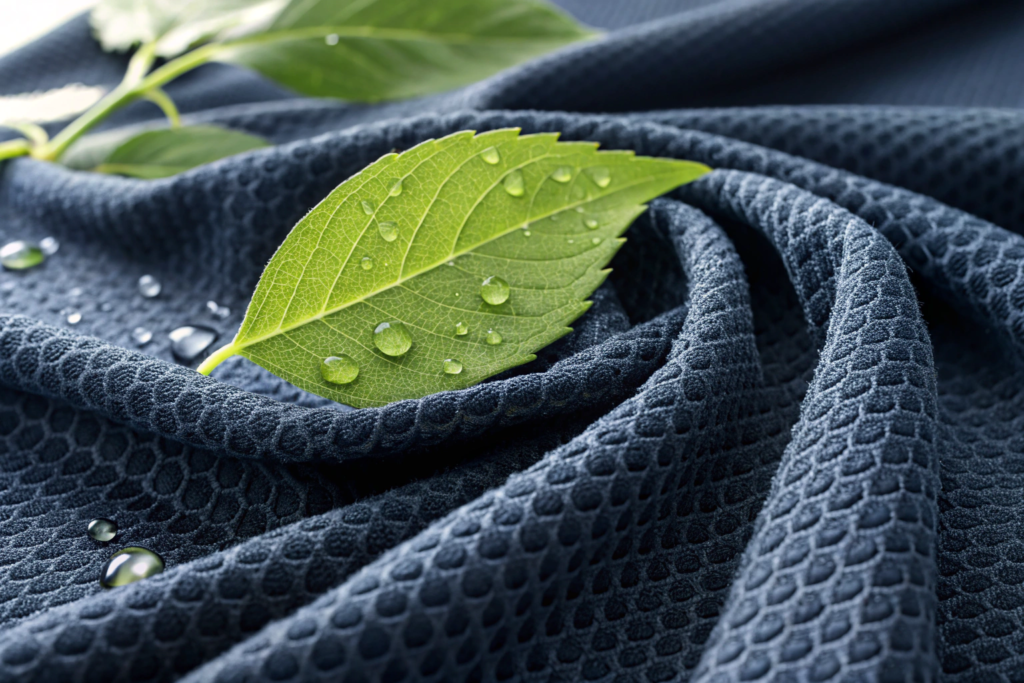
Does Recycled Polyester Perform Like Virgin in Sweat-Wicking Tests?
This is the skepticism I hear most often: "Recycled poly sounds good, but will it stink? Will it wick?" Let’s look at the lab data.
The molecular structure of rPET (Recycled Polyester) is chemically identical to virgin polyester. It’s still hydrophobic (water-hating). That means the moisture-wicking property is inherent to the polymer. It doesn’t get "recycled out."
However, the spinning process matters enormously. Cheap recycled yarn can have more broken filaments, leading to a rougher hand feel and potentially more pilling. To combat this, we use Air-Textured Yarn (ATY) made from GRS-certified rPET chips. This process uses compressed air to entangle the filaments, making the yarn bulkier and softer.
Internal Lab Test Comparison (Shanghai Fumao CNAS Lab, Jan 2026):
| Test Parameter | Virgin Polyester (75D/72F) | Recycled Polyester (75D/72F ATY) | Standard Requirement |
|---|---|---|---|
| Vertical Wicking (cm/30min) | 12.5 cm | 12.8 cm | > 10 cm |
| Drying Time (minutes) | 22 min | 21 min | < 30 min |
| Colorfastness to Wash | 4.5 | 4.5 | 4.0 min |
| Pilling Resistance (Martindale) | 4 | 4 | 3.5 min |
As you can see, the numbers are virtually identical. The rPET actually wicked slightly faster in this test due to the capillary action of the ATY texture. So, to answer the question directly: Yes, premium recycled polyester performs identically to virgin polyester in sweat-wicking and quick-dry metrics. The myth that it’s worse comes from brands using the cheapest possible recycled feedstock. To understand how rPET yarn is made from bottles, this visual guide to the journey of a plastic bottle to recycled polyester yarn on Common Objective is excellent. It breaks down the mechanical recycling process step-by-step. And if you want to dig into the chemistry of why polyester doesn’t absorb water, the explanation of hydrophobic versus hydrophilic fibers in activewear on the Science Direct topic pages is a great reference.
Which Eco-Certifications Prevent "Greenwashing" in Sportswear?
Any supplier can say their fabric is eco-friendly. Very few can prove it with a verifiable chain of custody. This is where certifications become your legal shield. If you claim "Made with Recycled Materials" on your website, the FTC Green Guides require you to have evidence. If you sell in the EU, the Green Claims Directive is even stricter.
Here are the two badges you need to see on the Scope Certificate (SC) of your supplier:
- GRS (Global Recycled Standard) 4.0: This is the gold standard. It verifies the recycled content and tracks it through the supply chain with Transaction Certificates (TC) . When we ship you a batch of fabric, we issue a TC that matches the Lot Number on the roll. This proves that the specific rolls you received contain, for example, 85% post-consumer recycled polyester.
- OEKO-TEX Standard 100 (Appendix 6): "Eco" also means "safe for human skin." This certification tests for over 100 harmful substances, including formaldehyde, heavy metals, and PFAS (forever chemicals) . This is critical for sportswear because sweat and friction can cause chemicals to leach out of the fabric and onto your skin.
We’ve had several US clients who were initially hesitant about the cost of GRS-certified fabric. But after we showed them the TC documentation workflow, they realized it wasn’t just a piece of paper—it was marketing gold. They use the GRS logo on their hang tags, and their customers (especially Gen Z) trust it. It’s a sales tool, not just a compliance cost. For a complete explanation of the standard, read the GRS 4.0 implementation manual for textile manufacturers on the Textile Exchange website. They are the owners of the standard. Also, to understand the specific chemical limits, the OEKO-TEX Standard 100 limit values and test criteria PDF is available for free on the OEKO-TEX official site. It’s dense but definitive.
What Are the Hidden Costs of Custom Printed Activewear?
Let’s talk about the number that makes everyone’s stomach drop: the Landed Cost. The price you see quoted in the Instagram DM is never the price you actually pay to get the goods on your shelf. I’ve seen brands build beautiful financial models around a $4.50/unit FOB price, only to watch their profit evaporate when the Demurrage Bill arrives from the port of Los Angeles.
The "hidden" costs aren’t actually hidden. They’re just poorly communicated by inexperienced suppliers who only care about getting the deposit. As a manufacturer who has shipped to over 100 countries, I break this down for every client before we even cut a sample. Because if the math doesn’t work, there’s no point in making the fabric. Let’s pull back the curtain on the three budget-killers in custom activewear printing.
How Much Do Strike-Offs and Lab Dips Really Add to Development?
You’re excited. You send your artwork. The supplier says, "Great. We’ll send a strike-off." You think, "Awesome, free sample!" Wrong. Strike-offs are expensive, time-consuming, and they are the single biggest upfront cost that new brands underestimate.
Let me give you the real numbers from our factory floor in Keqiao.
Cost Breakdown of a Single Strike-Off (Sublimation Paper Print + Heat Transfer):
- Machine Setup & Clean Down: The Reggiani PRO printer we use holds 8 colors of ink. To switch from the last client’s navy print to your pastel pink print, we have to purge the lines and run cleaning cycles. Labor + Ink Waste: ~$25.
- Digital File Processing & RIP: Our graphic specialist spends 15-20 minutes adjusting curves and nesting the file. Labor: ~$15.
- Paper Print: The machine runs a 2-meter strip of paper. Paper + Ink cost: ~$5.
- Heat Transfer Press: We cut a swatch of your specific fabric base (e.g., 250GSM brushed interlock). We run it through the calendar at 400°F. Labor + Electricity: ~$10.
- QC Check & Shipping Prep: We inspect it, trim it, and pack it for FedEx. Labor: ~$5.
Total Internal Cost to Us: ~$60.
We charge between $50 and $75 for a strike-off, depending on complexity. We lose money on the first one. We do this because we hope you’ll place a bulk order. But here’s the rub: what if you need three rounds of revisions? If the color is slightly off (see Pantone section above), we do it again. That’s another $60 cost to us. This is why many suppliers are reluctant to do multiple strike-offs for small brands—it kills their margin before the order even starts.
The Smart Buyer Strategy: Approve the digital proof (soft proof) on a calibrated screen first. We provide an EIZO monitor screenshot with the CMYK breakdown. Get that 90% right before we burn paper and fabric. Then use the physical strike-off for final sign-off only. This reduces your development cost from $150 (3 rounds) to $60 (1 round). To learn more about the process, check out this industry perspective on the true cost of strike-offs in custom textile printing on Fashion United. And for a technical breakdown of how printers manage this, the article on digital textile printing RIP software and workflow efficiency at WhatTheyThink is a great resource.
Why Does Shipping Small-Batch Sportswear Destroy Your Margins?
This is the "I just want 200 pieces to test the market" trap. You find a supplier willing to do 200 pieces (which is hard enough). The FOB cost looks good. Then you get the freight quote and your jaw hits the floor.
The brutal economics of small-batch freight:
- Ocean Freight Minimum: Shipping a full 40ft container costs ~$4,000 to US West Coast. Shipping a Less-than-Container Load (LCL) of 200 leggings (maybe 5 cartons) might cost $400 in ocean freight, but then you get hit with $250 in Origin Handling Fees, $150 in Destination Terminal Handling, $100 in Documentation Fees, and $85 in Customs Brokerage.
- The Per-Unit Landed Cost Spike: Let’s say your legging FOB is $4.00. For 5,000 units (Full Container), the freight and duty add $0.80 per unit. Total landed: $4.80.
- Small Batch Reality: For 200 units (LCL), those fixed fees add up to $800 total. That’s $4.00 extra per unit. Your total landed cost just doubled to $8.00.
You cannot be profitable at $8.00 cost for a legging you plan to sell for $39.99 retail unless you are a direct-to-consumer brand with insane marketing margins.
Our Solution for 2026: We advise small brands to consolidate. We group 4-5 small custom orders from our US clients into one shared container bound for our 3PL partner in City of Industry, CA. We split the fixed fees 5 ways. Suddenly, that $800 fee bill becomes $160 per brand. The math works again. It requires patience (the container only ships when it’s full), but it’s the difference between a viable launch and a financial disaster. For a detailed breakdown of these charges, I always point clients to this guide on understanding destination charges for LCL ocean freight shipments on Freightos. And to get a sense of current rates, the Drewry Supply Chain Advisors weekly updates are the industry benchmark we use to estimate freight costs for quotes.
Conclusion
Finding a reliable supplier for custom printed sportswear in 2026 is a lot like dating. You have to kiss a few frogs before you find a partner. But unlike dating, the cost of a bad match isn’t just a bad dinner; it’s your entire brand launch budget and your reputation with your first 100 customers. The good news is that the frogs are easy to spot once you know what to look for: they don’t ask about spandex percentage, they can’t explain their ICC color profile, and they have no idea what a GRS transaction certificate looks like.
We’ve walked through the technical landscape together—from the molecular bond of dye-sublimation to the brutal economics of LCL freight. I’ve shown you our lab data comparing recycled polyester to virgin, and I’ve pulled back the curtain on why that "free" sample actually costs the factory $60. The common thread through all of this is transparency. A reliable supplier doesn’t hide the complexity; they guide you through it. They admit that sublimation only works on white polyester. They tell you upfront that 200 units will cost you more per piece in freight than 2,000 units. They send you the ICC profile before they send the strike-off.
At Shanghai Fumao, we’ve built our entire business on this kind of transparency. We know that a brand that understands the why behind the cost and the timeline is a brand that will succeed—and will reorder season after season. Just this past March 2026, we partnered with a Dutch sustainable activewear startup who found us through a Google search for "GRS certified sublimation printer." They were nervous. First production run. We didn’t just print their leggings. We walked them through the Squat Test GSM selection, we consolidated their 400-piece order with another European shipment to save on freight, and we delivered a product that landed in Amsterdam with zero quality issues. They sold out their first drop in 4 days.
That’s the kind of outcome we engineer. Not by being the cheapest printer in the market, but by being the most knowledgeable partner. If you’re sitting on a folder of Adobe Illustrator files for the next great activewear brand, and you’re tired of the vague DMs and the blurry sample photos, let’s have a real conversation.
Reach out to our Business Director, Elaine. She knows the machinery, she knows the freight routes, and she knows how to turn your digital design into a physical product that performs in the gym and looks great on camera. Email her at elaine@fumaoclothing.com. Tell her about your fabric weight concerns and your print color nightmares. She’ll tell you exactly how we solve them. No fluff. Just fabric that fits, stretches, and sells.