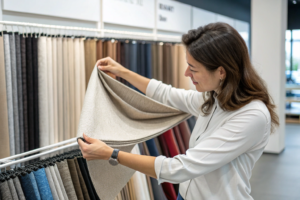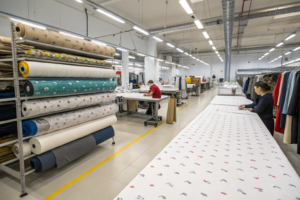
I remember a meeting I had in Amsterdam about three years ago with a buyer from a large European fashion retailer. We had been working together for years, and I thought I knew what mattered to him: quality, reliability, price. We sat down to discuss a new collection, and I started with my usual pitch about our weaving capabilities and quality control. He stopped me about two minutes in. "That's all good," he said. "But what's the carbon footprint of this fabric? Show me the data."
I wasn't ready for that question. I had some basic information about our energy use, but nothing quantified. No lifecycle assessment. No carbon accounting. I stammered through an answer, and I could see him mentally checking out. He placed the order anyway, but he told me that in the future, he would need real data. He wasn't being difficult. He was under pressure from his own customers, from his board, from European regulators. His job depended on proving that his supply chain was sustainable.
That meeting was a wake-up call for me. I realized that carbon footprint wasn't a nice-to-have anymore. For European buyers, it was becoming a deal-breaker. Since then, I've watched the landscape change rapidly. The European Union has passed regulations that require companies to report on their environmental impact. Consumers are demanding transparency. Brands that can't prove their sustainability credentials are losing market share.
At Shanghai Fumao, we've invested heavily in measuring and reducing our carbon footprint. We've learned what European buyers are looking for, what data they need, and how to provide it. In this article, I'm going to share what I've learned about why your European buyer cares about carbon footprint, what they expect from their suppliers, and how you can prepare to meet those expectations.
What Regulations Are Driving the Demand for Carbon Footprint Data?
The demand for carbon footprint data isn't coming from nowhere. It's being driven by a wave of European regulations that hold companies accountable for their environmental impact. If you're selling fabric or garments to Europe, these regulations affect you, whether you're directly subject to them or your buyer is.
What Is the EU's Corporate Sustainability Reporting Directive (CSRD)?
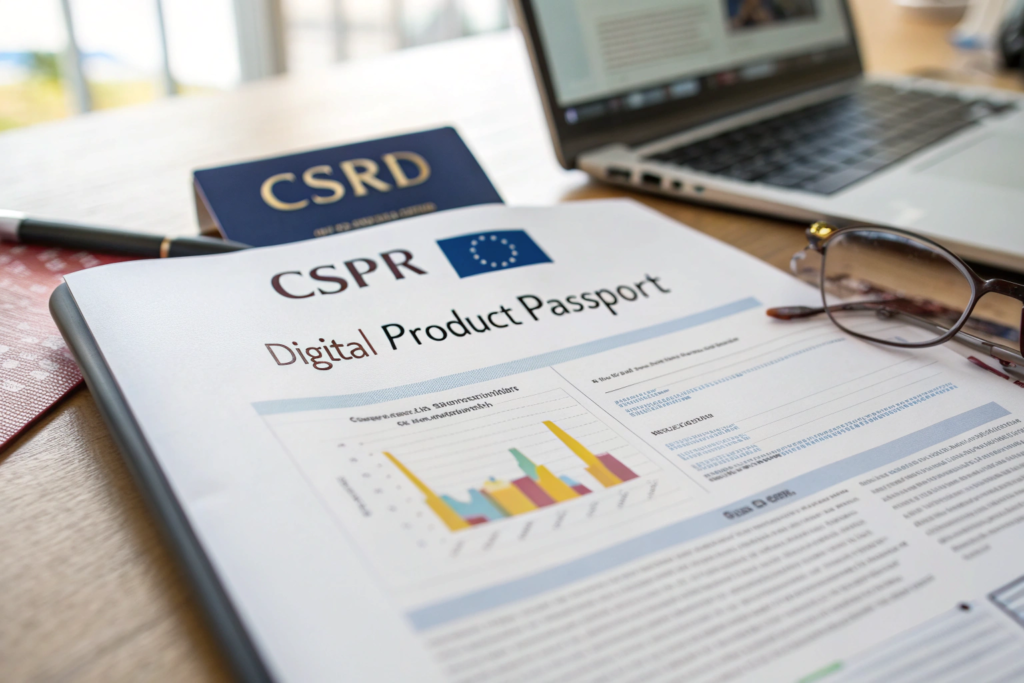
The CSRD is a major piece of European legislation that came into effect in 2024. It requires large companies operating in the EU to report detailed information on their environmental and social impacts. This includes their supply chains. If you're a fabric supplier to a European brand, that brand now has to report on your environmental performance as part of their own reporting.
The CSRD covers thousands of companies. It's not just European companies. Any non-European company with significant operations in the EU is also subject. For our clients, this means they need data from us. They need to know our energy use, our water consumption, our waste generation, and most importantly, our carbon emissions. Without that data, they can't complete their reports. And without complete reports, they face fines and reputational damage.
I had a client from a German outdoor brand who came to us last year with a new requirement. They needed us to complete a detailed sustainability questionnaire that covered everything from our energy sources to our wastewater treatment. It took our team weeks to gather all the data. But we did it. The client told us that we were one of the few suppliers who could provide complete answers. That made us a preferred partner. For a detailed explanation of the CSRD and its implications for suppliers, this European policy resource offers a guide to CSRD compliance for non-EU companies.
What Is the EU's Ecodesign for Sustainable Products Regulation (ESPR)?
The ESPR is another game-changer. It's a regulation that sets requirements for the environmental performance of products sold in the EU. It covers everything from durability to recyclability to carbon footprint. For textiles, this means that products will need to have a Digital Product Passport—a QR code or similar that provides information on the product's environmental impact.
This regulation is still being rolled out, but it's coming. When it does, every garment sold in the EU will need to have this passport. And that passport will need data from every stage of the supply chain. The fiber producer, the yarn spinner, the fabric mill, the dyer, the finisher, the garment maker—all of them will need to provide data.
I've been preparing for this. We've started tracking our carbon footprint at the batch level. We can now tell a client exactly how much carbon was emitted to produce their specific order. We're working on implementing the Digital Product Passport system so that our clients can pass that data down the chain. It's a significant investment, but I believe it will be a competitive advantage when the regulation fully takes effect.
For a comprehensive overview of the ESPR and its impact on textiles, this industry analysis article explains what textile suppliers need to know about the new ecodesign rules.
What Are European Consumers Demanding from Fashion Brands?
Regulations are one driver. But the other driver is consumer demand. European consumers are increasingly aware of the environmental impact of their clothing. They're asking questions. They're reading labels. They're voting with their wallets. And that pressure is flowing back through the supply chain to us.
Why Is "Fast Fashion" Falling Out of Favor?
For years, fast fashion dominated the European market. Cheap clothes, rapid turnover, disposable trends. But that model is under pressure. Consumers are realizing that cheap clothes have hidden costs. They're made from synthetic fibers that shed microplastics. They're produced in factories with poor environmental controls. They end up in landfills after a few wears.
A growing segment of European consumers is shifting to what's called "slow fashion" or "conscious fashion." They're buying fewer clothes, but higher quality. They're looking for natural fibers, durable construction, and transparent supply chains. They want to know that the clothes they buy didn't come at the expense of the environment.
I saw this shift firsthand with a client from a sustainable fashion brand in Denmark. They started about eight years ago as a tiny operation selling organic cotton t-shirts. Today, they're a major brand with a loyal following across Europe. Their customers aren't just buying clothes. They're buying a story—a story of sustainable materials, ethical production, and low environmental impact. Our carbon footprint data is a key part of that story. The brand uses it in their marketing. They tell their customers that their fabric comes from a mill that uses renewable energy and recycles water. That story sells.
For a look at consumer trends in European fashion, this market research article discusses the rise of conscious consumerism in textiles.
How Does Carbon Footprint Data Influence Purchasing Decisions?
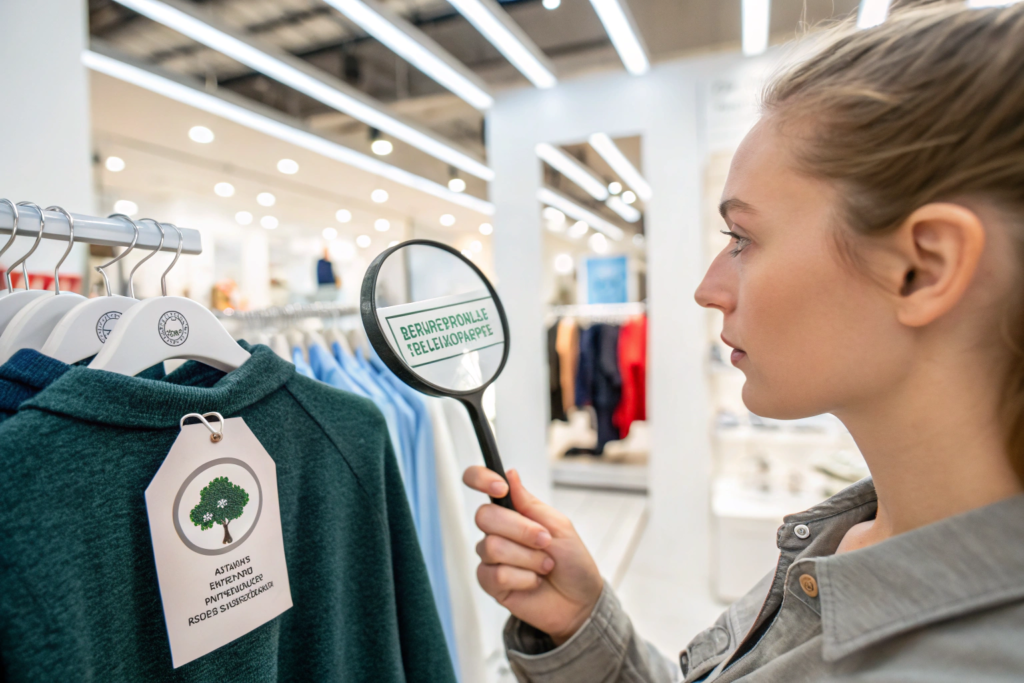
The data matters. It's not enough to say "we're sustainable." European consumers want proof. They want numbers. They want to know that the carbon footprint of their shirt is lower than the industry average. They want to see third-party certifications.
A study we did with one of our European clients found that including carbon footprint data on the garment label increased purchase intent by 15% among their target demographic. That's a huge number. For a brand operating on thin margins, a 15% lift in sales can be the difference between profit and loss.
The client told us that their customers specifically mentioned the carbon footprint label in reviews. "I bought this because I could see exactly how much carbon was saved compared to a conventional shirt," one customer wrote. "It makes me feel good about my purchase." That's the power of transparency. It turns a transaction into a values-aligned exchange.
For a discussion of how brands are using carbon footprint data in marketing, this fashion marketing blog has examples of effective sustainability communication.
How Are European Brands Holding Suppliers Accountable?
The pressure from consumers and regulations is forcing European brands to be much more rigorous with their suppliers. It's no longer enough to say "we trust our supplier." Brands are auditing, requiring certifications, and setting specific carbon reduction targets. If you want to keep selling to Europe, you need to be prepared for this level of scrutiny.

What Certifications Are European Buyers Looking For?
There are several certifications that European buyers commonly require. The most important is GOTS—the Global Organic Textile Standard. GOTS covers not just the fiber content but also the environmental and social practices throughout the supply chain. If you're selling organic cotton, you almost certainly need GOTS certification.
For recycled materials, the key certification is GRS—the Global Recycled Standard. GRS verifies the recycled content and also covers environmental and social criteria. Many European brands now require GRS certification for any recycled polyester or recycled cotton.
For carbon footprint specifically, there's no single standard yet, but buyers are looking for ISO 14064 or similar for greenhouse gas accounting. They also value participation in programs like the Science Based Targets initiative (SBTi), which commits companies to reduce emissions in line with climate science.
We've invested heavily in these certifications over the past five years. We have GOTS and GRS certifications for our organic and recycled products. We've calculated our baseline carbon footprint using ISO 14064. And we're working towards setting a Science Based Target for emissions reduction. It's been a lot of work, but it's opened doors. We've had clients tell us that they chose us because of our certifications.
For a guide to textile certifications and what they cover, this industry resource offers a comparison of major textile sustainability standards.
How Do European Brands Set Carbon Reduction Targets?
Many European brands are now setting public carbon reduction targets. H&M, for example, has committed to reducing emissions by 56% by 2030. Zara's parent company Inditex has committed to net zero by 2040. These targets don't just apply to the brand's own operations. They apply to their entire supply chain. That means the fabric mills, the yarn suppliers, the trim makers—all of them are expected to reduce emissions in line with the brand's targets.
This is a huge shift. Five years ago, a brand might ask for a certificate of organic content. Today, they're asking for your carbon footprint data and your emissions reduction plan. They're setting targets that you need to meet if you want to keep their business.
I had a client from a British fashion brand who told us that they were switching suppliers for one of their product lines. Not because of price or quality. But because the incumbent supplier wouldn't share their carbon footprint data. The brand had a target to reduce supply chain emissions, and they couldn't meet it without data from their suppliers. The supplier who got the order was the one who provided the data and had a credible plan for reduction.
For a detailed look at how European brands are setting supply chain emissions targets, this industry analysis article explains the science-based targets initiative and textiles.
What Can You Do to Reduce Your Fabric's Carbon Footprint?
If your European buyer is asking about carbon footprint, you need to have answers. But more than that, you need to be actively working to reduce it. The good news is that there are practical steps you can take that not only reduce your carbon footprint but also save you money in the long run.
How Can You Switch to Renewable Energy?
The biggest contributor to carbon footprint for most textile mills is energy use. Weaving, dyeing, finishing—all of these processes consume huge amounts of electricity and heat. If you can switch that energy to renewable sources, you can dramatically reduce your carbon footprint.
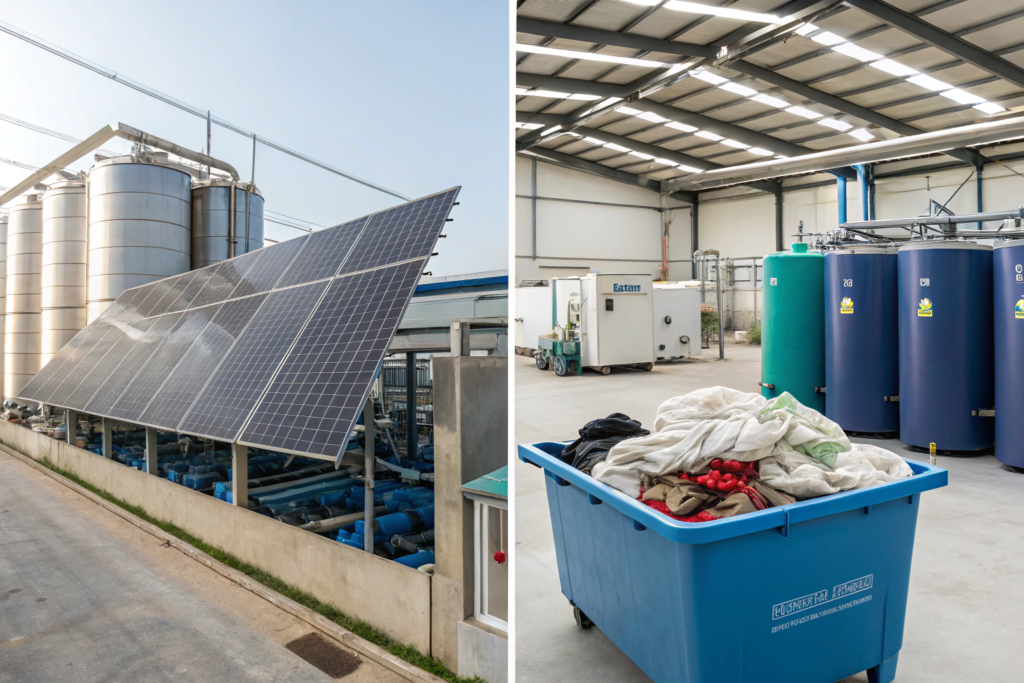
In our facilities, we've installed solar panels on the roof. They now provide about 20% of our electricity needs. We're working on a power purchase agreement to buy additional renewable electricity from the grid. And for our heat needs—critical for dyeing and finishing—we're exploring biomass boilers that use agricultural waste instead of coal.
The investment is significant. But the payback is there. Solar panels pay for themselves in about five to seven years through reduced electricity bills. And the benefit for our clients is immense. We can now tell them that their fabric was made with 20% renewable energy, and we have a plan to get to 50% by 2030.
For a guide to renewable energy options for textile mills, this industry resource offers a practical guide to solar and biomass for manufacturing.
How Can You Reduce Water Use and Waste?
Water use is another major environmental impact. Dyeing and finishing are water-intensive processes. Reducing water use not only lowers your environmental footprint but also saves you money on water bills and wastewater treatment.
We've invested in closed-loop water recycling systems in our dyeing operations. Instead of discharging wastewater after each batch, we treat it and reuse it. We've reduced our water consumption by about 40% over the past three years. That's a huge saving. And it's a story that our European clients love to hear.
We've also invested in waste reduction. Fabric waste from cutting and sewing used to go to landfill. Now we separate it. Clean cotton waste goes to a recycler that turns it into yarn again. Polyester waste goes to a different recycler. We've reduced our waste to landfill by over 60%.
I had a client from a French fashion brand who visited our facility last year. They were doing a sustainability audit. When they saw our water recycling system and our waste segregation, they were impressed. They told us that we were one of the few suppliers they had visited with real, tangible sustainability practices. They've since increased their orders with us by 30%.
For a detailed guide to water and waste reduction in textile manufacturing, this sustainability resource offers best practices for textile mills.
How Do You Communicate Your Carbon Footprint to European Buyers?
You've done the work. You've measured your carbon footprint. You've invested in reductions. Now you need to communicate that to your buyers. This is where many suppliers fall short. They have good data, but they don't know how to present it in a way that European buyers trust.

What Data Should You Include in Your Sustainability Report?
Your sustainability report should be detailed but clear. It should include your baseline carbon footprint—the total emissions from your operations. It should break that down by scope: Scope 1 from direct fuel use, Scope 2 from purchased electricity, and Scope 3 from supply chain and logistics if you have it.
It should also include your reduction targets. Where do you want to be in five years? In ten years? And what are you doing to get there? Buyers want to see a plan, not just a number.
Finally, it should include certifications. List all your relevant certifications—GOTS, GRS, OEKO-TEX, ISO 14001. Include the certification numbers so buyers can verify them.
We've created a standard sustainability report that we update annually. It's about 20 pages. It includes our carbon footprint, our water use, our waste data, and our certifications. We give it to every new client. And we update it with their specific order data when they ask. The feedback has been overwhelmingly positive. Buyers tell us it's one of the most comprehensive supplier sustainability reports they've seen.
For a template of what to include in a textile sustainability report, this industry resource offers a guide to supplier sustainability reporting.
How Do You Provide Order-Specific Carbon Data?
Increasingly, European buyers want carbon data for their specific order, not just the factory average. This is more complex, but it's becoming a competitive advantage. If you can tell a buyer exactly how much carbon was emitted to produce their fabric, you're providing a level of transparency that most suppliers can't match.
We've been working on this for the past two years. We now track energy use at the batch level. When we run an order, we know how much electricity and heat were consumed. We know how much water was used. We know how much waste was generated. We can calculate the carbon footprint for that specific batch.
When we ship the order, we provide a carbon footprint report. It shows the emissions per meter of fabric. It shows how that compares to the industry average. It shows the certifications that apply. And it includes a QR code that links to the full data.
A client from a Swedish outdoor brand told us that this order-specific data was a game-changer for them. They used it to calculate the carbon footprint of their finished garments. They put that data on their website. Their customers loved it. The brand's sales increased by 20% the following season.
For a technical guide to calculating product-level carbon footprints, this lifecycle assessment resource explains how to do LCA for textiles.
Conclusion
Your European buyer cares about your fabric's carbon footprint because their world has changed. Regulations like the CSRD and ESPR are making carbon reporting mandatory. Consumers are demanding transparency and choosing brands that align with their values. And brands themselves are setting ambitious emissions reduction targets that depend on their suppliers.
If you want to keep selling to Europe—and I believe you do, because the European market values quality and is willing to pay for it—you need to get serious about carbon footprint. You need to measure it. You need to reduce it. And you need to communicate it.
The good news is that this isn't just a compliance exercise. It's a business opportunity. Suppliers who can provide credible carbon data and demonstrate real reductions are becoming the preferred partners. They're winning orders that would have gone to cheaper, less transparent competitors. They're building relationships that last.
At Shanghai Fumao, we've been on this journey for five years. We've measured our carbon footprint. We've invested in solar panels, water recycling, and waste reduction. We've gotten the certifications. We've built the reporting systems. It's been hard work, but it's paying off. Our European clients tell us that our sustainability work is a key reason they choose us.
If you're a European buyer reading this, I want you to know that we understand your needs. We have the data. We have the certifications. We have the reductions. We're ready to be your partner in building a more sustainable supply chain.
If you're a supplier reading this, I encourage you to start your own journey. Measure your carbon footprint. Set reduction targets. Get the certifications. Your European buyers are asking for it now. They'll be demanding it soon. The suppliers who act early will win.
And if you're ready to work with a supplier who takes carbon footprint seriously, let's talk. We'll show you our data. We'll share our plan. And we'll produce fabric that you can be proud to sell in Europe.
Contact our Business Director, Elaine, to discuss your sustainability requirements.
Email: elaine@fumaoclothing.com
Let's build a lower-carbon future together.