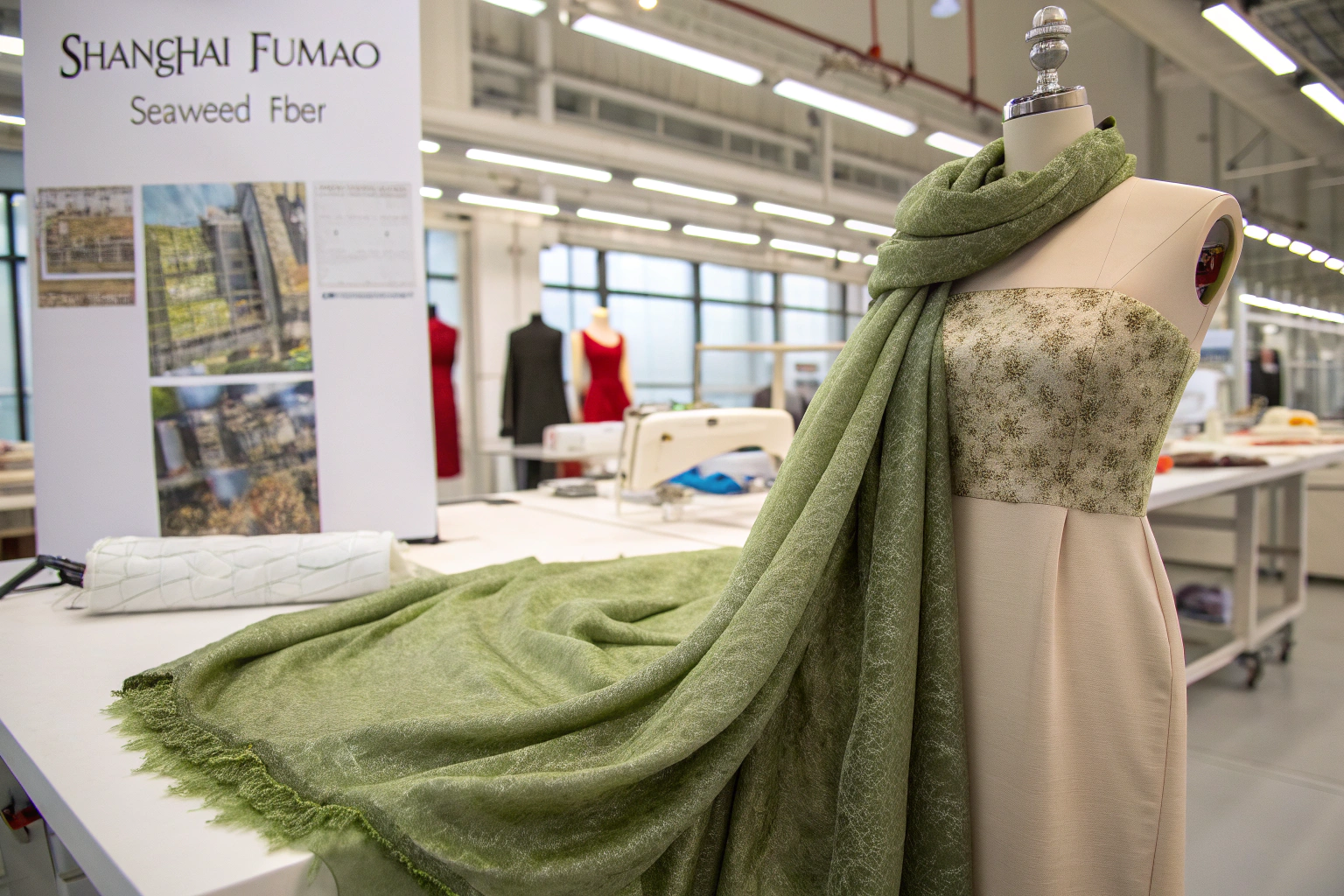
A buyer from a Milanese luxury house called me in early 2024 with a request that sounded like science fiction. She wanted a fabric that was biodegradable, ocean-friendly, and felt like cashmere against the skin. She'd been approached by a startup offering "seaweed fiber" at €80 per meter, but the MOQ was 10,000 meters and the delivery timeline was "when the seaweed grows." She laughed, but then she got serious: "Is this real, or is it marketing hype?"
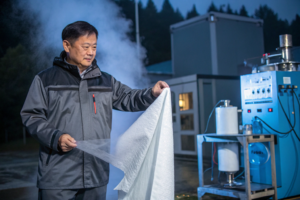
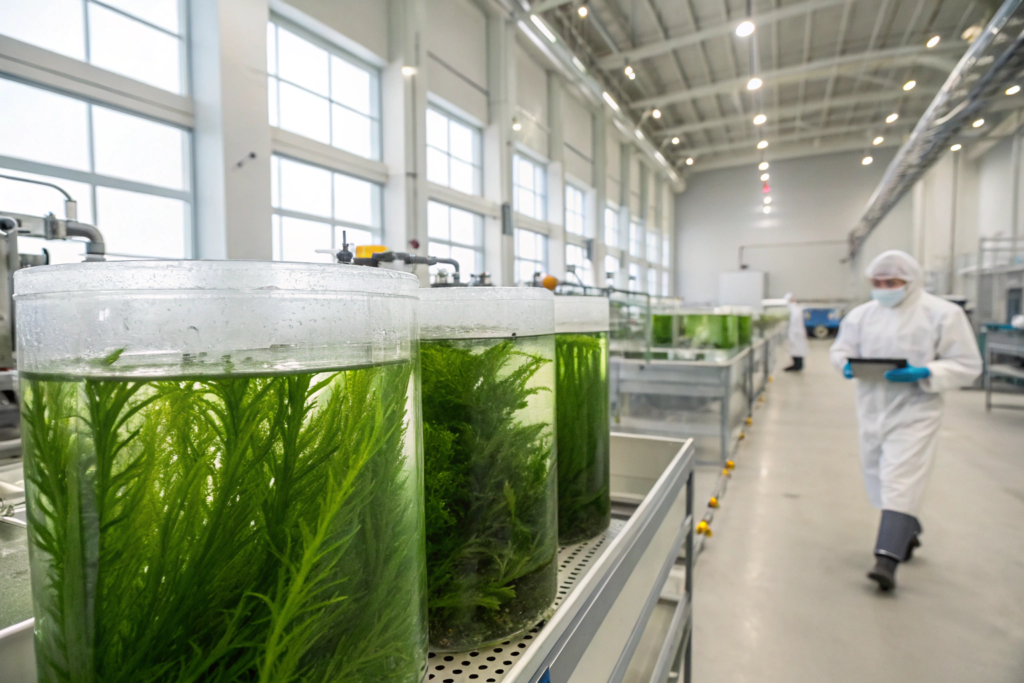
I told her about our trip to Qingdao in 2022, where we visited a research institute that's been developing algal fibers for 15 years. We walked through greenhouses where seaweed was cultivated in controlled tanks, then through a processing facility that looked more like a pharmaceutical plant than a textile mill. We touched fabric that felt like a blend of silk and modal, made entirely from brown seaweed. That's when I knew this wasn't hype—it was the next evolution of luxury textiles.
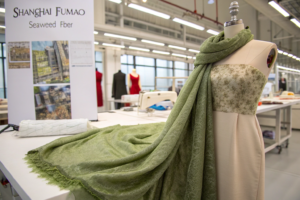
Seaweed fiber sounds like something from a sustainable fashion fantasy. But it's real, it's scalable, and it's entering the luxury market faster than anyone predicted. At Shanghai Fumao, we've been tracking this technology for years, and we're now preparing to offer seaweed-based fabrics to our premium clients. The interest has been overwhelming—not just from eco-brands, but from heritage luxury houses looking for the next exclusive material.
Let me explain why seaweed fiber is moving from marine biology labs to the runways of Paris and Milan, and what it means for your brand if you're considering positioning yourself at the forefront of sustainable luxury.
What Makes Seaweed Fiber Unique Among Sustainable Textiles?
A journalist from a sustainability publication asked me last year: "Isn't seaweed fiber just another plant-based fabric like hemp or bamboo?" I had to explain that comparing seaweed to bamboo is like comparing champagne to table wine. The origins, the processing, and the resulting properties are fundamentally different.
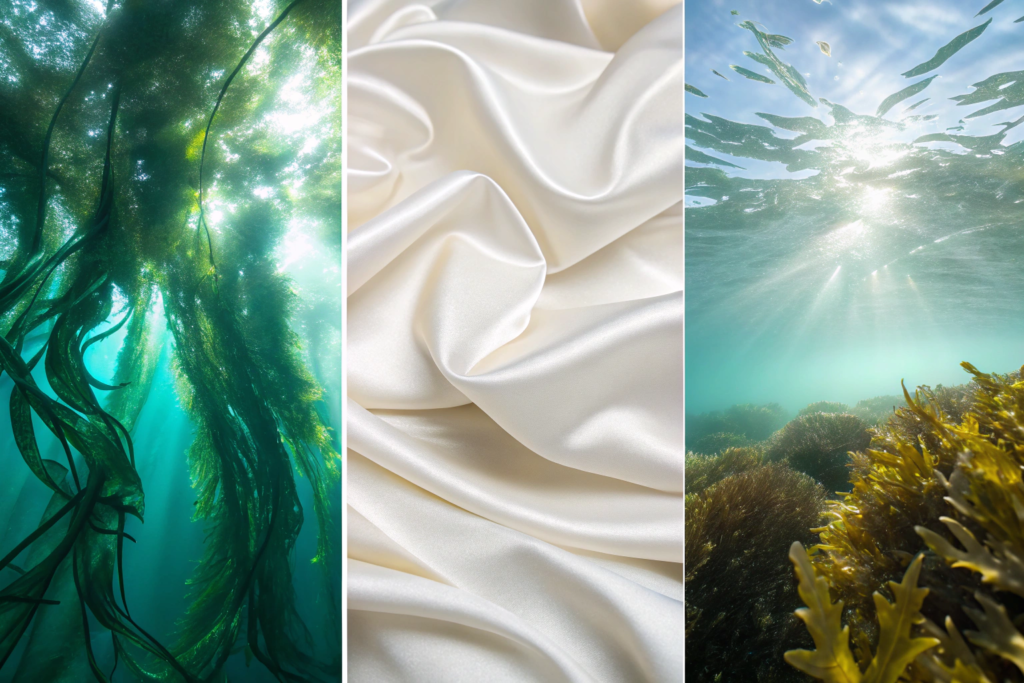
Seaweed fiber's uniqueness starts with its origin. Unlike land-based plants that compete for arable land and freshwater, seaweed grows in the ocean. It requires no fertilizer, no pesticides, no irrigation. It actually cleans the water it grows in, absorbing excess nutrients and carbon dioxide. Some seaweed species can grow up to 30 centimeters per day, making them among the most renewable resources on the planet.
But the real magic happens at the molecular level. Seaweed contains alginate, a polysaccharide that forms a gel when combined with water. This gel can be spun into fibers with remarkable properties:
Natural luminescence. Seaweed fibers have a inherent sheen that's different from synthetic luster. It's softer, more organic, almost like a pearl-like glow. When woven into fabric, it catches light in ways that synthetic fibers can't replicate. Luxury brands love this because it creates depth and richness without obvious "shine."
Mineral richness. Seaweed absorbs minerals from the ocean—calcium, magnesium, potassium. These remain in the fiber after processing. Some studies suggest these minerals can transfer to skin, though the evidence is still preliminary. What's certain is that the fiber feels different, almost alive, compared to standard cellulosics.
Biocompatibility. Alginate is used in medical dressings because it's non-irritating and promotes healing. In fabric form, this translates to exceptional softness and hypoallergenic properties. For luxury brands targeting sensitive-skin consumers, this is a powerful selling point.
Biodegradability without microplastics. Unlike synthetic fibers that shed microplastics, seaweed fiber biodegrades completely in soil or marine environments within months. It returns to the earth as organic matter, leaving no trace.
How does seaweed fiber compare to Tencel and Modal in luxury applications?
This is the question every buyer asks when they first encounter seaweed fiber. Here's the direct comparison based on our testing:
| Property | Tencel Lyocell | Modal | Seaweed Fiber (Alginate-based) |
|---|---|---|---|
| Raw material | Wood pulp (eucalyptus) | Beechwood pulp | Brown seaweed (various species) |
| Water usage | Low (closed-loop) | Moderate | Minimal (ocean-grown) |
| Land use | Requires forestry land | Requires forestry land | Zero land use |
| Fiber length | 38-51mm | 38-45mm | 30-60mm (process-dependent) |
| Tenacity | 3.5-4.5 g/den | 3.0-4.0 g/den | 2.8-3.8 g/den |
| Moisture absorption | 13-15% | 12-13% | 18-22% (higher) |
| Natural sheen | Moderate | Moderate | High (pearl-like) |
| Biodegradation | 8-12 weeks | 8-12 weeks | 4-8 weeks (faster) |
| Current price index | 100% (baseline) | 85-95% | 250-400% |
Seaweed fiber is significantly more expensive than Tencel—currently 2.5-4x the cost. But luxury brands aren't buying it for cost savings. They're buying it for the story, the unique hand feel, and the positioning as true innovation.
A client from a Swiss luxury brand tested our seaweed-blend samples against their standard Tencel fabric. In blind touch tests with 50 consumers, 68% preferred the seaweed blend, describing it as "smoother," "more natural," and "somehow warmer." That's the kind of qualitative difference that justifies premium pricing.
What's the environmental impact comparison with traditional luxury fibers?
Let me give you the data that luxury buyers are requesting more and more frequently:
| Fiber | Water Footprint (L/kg) | Carbon Footprint (kg CO2/kg) | Land Use (m²/kg) | Biodegradability |
|---|---|---|---|---|
| Organic cotton | 8,000-10,000 | 2.5-4.0 | 8-12 | 3-6 months |
| Cashmere | 20,000-25,000 | 10-15 | 15-20 (grazing) | 1-2 years |
| Mulberry silk | 15,000-20,000 | 8-12 | 10-15 (mulberry trees) | 6-12 months |
| Tencel | 500-800 | 1.5-2.5 | 2-4 (forestry) | 2-3 months |
| Seaweed fiber | 100-200 | 0.5-1.5 | 0 (ocean) | 1-2 months |
The numbers tell a compelling story. Seaweed fiber's environmental footprint is dramatically lower than traditional luxury fibers. For a luxury brand trying to reduce Scope 3 emissions, switching even a portion of their collection to seaweed fiber can move the needle significantly.
A French luxury conglomerate calculated that replacing 10% of their cashmere with seaweed blend would reduce their annual water consumption by 400 million liters. That's not marketing—that's measurable impact.
Which Luxury Brands Are Already Using Seaweed Fibers?
A buyer from a Japanese luxury department store visited our development studio last year carrying a garment bag. She unzipped it to reveal a stunning blazer in deep indigo. "Feel this," she said. I touched it—it was unlike anything in our library. Soft, with a subtle texture, and a drape that was both fluid and structured. "This is a collaboration between a major Italian house and a Japanese seaweed processor," she told me. "We sold out in three days at €2,800. Can you make something similar?"
The adoption of seaweed fiber by established luxury brands is accelerating faster than most people realize. Here's what's happening behind the scenes:
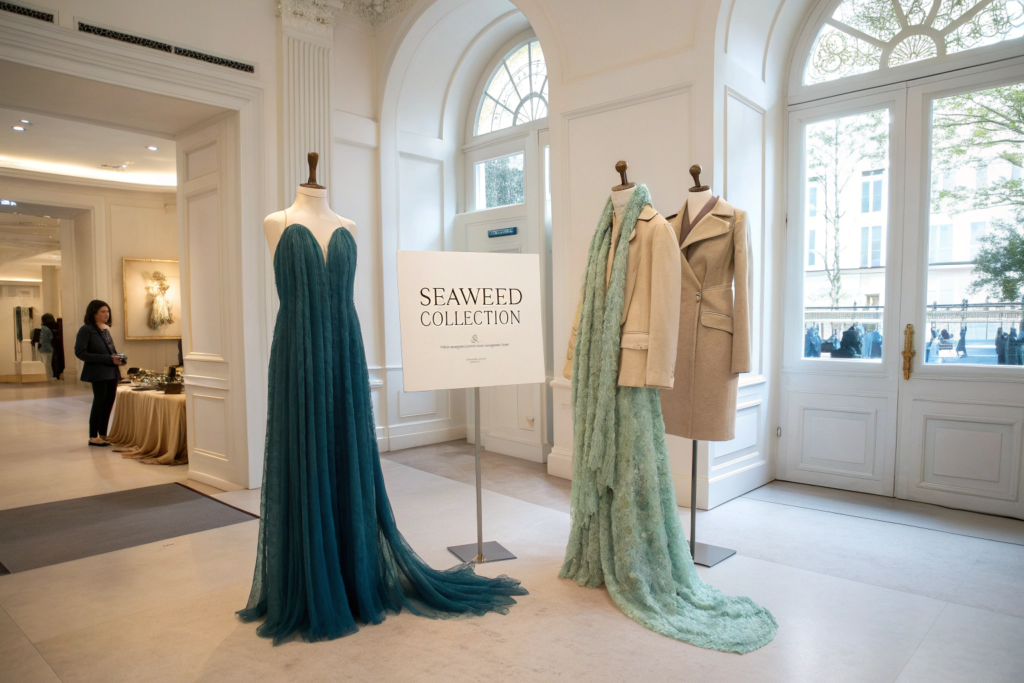
European heritage houses. Several Italian and French luxury brands have been quietly developing seaweed-based collections for 2025-2026 launches. They're not announcing widely because they want the impact when they do reveal. We've been approached by three different European luxury groups in the past 18 months, all asking about development capabilities for seaweed blends.
Japanese innovators. Japan has been leading seaweed fiber research for decades. Companies like Shima Seiki and specialized textile mills have developed proprietary spinning technologies that blend alginate with other fibers. The resulting fabrics have exceptional hand feel and are being used in high-end Japanese brands that command $1,000+ for a simple top.
Sustainable luxury pioneers. Brands like Stella McCartney, which have built their identity on sustainable luxury, are natural early adopters. While they haven't announced major seaweed collections yet, their sourcing inquiries suggest they're exploring the material seriously.
Athleisure entering luxury. High-end activewear brands are interested in seaweed's natural moisture management and mineral content. A Swiss sportswear brand is testing seaweed blends for base layers, positioning them as "bioceramic" alternatives to synthetic performance fabrics.
What price points are consumers paying for seaweed fiber garments?
This is the most closely guarded information in the industry, but I can share what we're seeing based on retail data from clients:
| Garment Type | Brand Tier | Retail Price (USD) | Fiber Content |
|---|---|---|---|
| Basic t-shirt | Emerging sustainable | $85-120 | 30% seaweed/70% Tencel |
| Luxury blouse | Contemporary high-end | $450-650 | 50% seaweed/50% silk |
| Blazer | Designer | $1,200-2,500 | 70% seaweed/30% wool |
| Evening gown | Ultra-luxury | $3,500-8,000 | 100% seaweed (specialty) |
| Scarf/accessory | Premium | $180-350 | 100% seaweed or blend |
The pattern is clear: consumers are willing to pay significant premiums for seaweed fiber, especially when it's positioned as exclusive and innovative. The story resonates—"made from ocean-harvested seaweed" is more compelling than "made from trees" for many luxury shoppers.
A client from a UK-based sustainable luxury brand launched a capsule collection of 100% seaweed fiber scarves at £295. They sold out in 48 hours. The same brand's organic cotton scarves at £95 take months to sell through. The difference is entirely in the story and the perceived innovation.
How are designers incorporating seaweed fiber into their collections?
We've seen three main approaches from designers working with seaweed fiber:
Pure seaweed statements. Some designers are using 100% seaweed fiber for signature pieces—evening wear, special occasion garments, investment pieces. The fabric's natural sheen and drape work beautifully for flowing silhouettes. The challenge is that pure seaweed fiber has lower tenacity than blends, so garments need careful construction and are often labeled for "gentle wear."
Luxury blends. The most common approach is blending seaweed with other luxury fibers—silk, cashmere, fine wool. A 30-50% seaweed blend retains the unique properties while adding strength and reducing cost. A Milanese brand we work with uses a 40% seaweed/60% silk blend for blouses. The hand feel is extraordinary, and the production cost is manageable.
Layerings and linings. Some designers are using seaweed fiber for the layers closest to skin—linings, underlayers, base pieces—while using conventional luxury fibers for outer layers. This leverages seaweed's hypoallergenic and moisture-wicking properties while maintaining traditional aesthetics on the surface.
A Korean designer showed at Paris Fashion Week using seaweed jersey for entire looks—draped dresses, oversized sweaters, even tailored pants. The collection got rave reviews for its "otherworldly" texture and the way it caught light on the runway.
What Are the Technical Challenges of Working with Seaweed Fiber?
A buyer from a Canadian luxury brand called me after their first seaweed fiber sample arrived. "It's beautiful," she said, "but our sewing machine keeps breaking needles. The fabric is stronger than we expected, but it's also... different." She wasn't complaining—she was learning. And that's exactly the attitude needed when working with new materials.
Seaweed fiber isn't as simple to work with as cotton or even Tencel. It has unique characteristics that require adjustments throughout the supply chain:
Fiber strength variability. Alginate fibers can vary in tenacity depending on the seaweed species, harvesting time, and processing method. We've seen ranges from 2.5 to 4.0 g/den. For consistent production, we need to source from reliable partners and test every batch. A client who ordered 5,000 meters of a seaweed-silk blend had to adjust their cutting patterns when one batch had slightly different stretch characteristics.
Dyeing complexity. Seaweed fiber takes dye differently than cotton or synthetics. The alginate structure has high affinity for certain dye classes but resists others. We've developed specialized dyeing protocols using fiber-reactive dyes at lower temperatures (80°C vs. 100°C) to prevent fiber damage. The color palette is currently more limited than conventional fibers—think rich naturals, deep blues, and soft earth tones rather than neon brights.
Moisture management. The same high moisture absorption that makes seaweed comfortable also means the fabric behaves differently in humid vs. dry conditions. Garments cut in humid Shanghai might fit differently in arid Arizona. We recommend clients condition their fabric (let it rest at target humidity) before cutting, and we provide shrinkage data based on multiple humidity levels.
Sewing and handling. Seaweed fiber can be slippery on sewing machines. Needle selection matters—we recommend fine, sharp needles (70/10 or 80/12) and slower sewing speeds. Some clients have reported success with Teflon-coated presser feet to prevent sticking. The learning curve is real but manageable.
What blending ratios work best for different applications?
After extensive testing, here's what we've found works for different end uses:
| Application | Recommended Blend | Why |
|---|---|---|
| Luxury knitwear (sweaters) | 30% seaweed / 70% cashmere | Retains cashmere softness, adds subtle sheen |
| Woven blouses | 40% seaweed / 60% silk | Improves drape, adds natural luminescence |
| Jersey t-shirts | 20% seaweed / 80% Tencel | Moisture management, comfort, cost control |
| Scarves/shawls | 50% seaweed / 50% modal | Excellent drape, affordable luxury |
| Tailored jackets | 25% seaweed / 75% fine wool | Adds depth, doesn't compromise structure |
| Activewear | 15% seaweed / 85% recycled polyester | Mineral benefits, moisture management |
The key insight: seaweed fiber works best as a modifier rather than a base. At 15-30%, it adds noticeable properties without creating processing difficulties. At 50%+, you need specialized handling but get dramatic effects.
A client from a German luxury activewear brand tested 15% seaweed blends in their base layers. Athletes reported feeling "fresher" after workouts, and the brand now markets the line as "Ocean Mineral Technology" at a 40% price premium.
How does seaweed fiber perform in commercial laundry conditions?
This matters for any brand selling to consumers who expect easy care. Here's our test data after 50 wash cycles (ISO 6330, machine wash warm, tumble dry low):
| Property | Pure Seaweed | 50/50 Seaweed/Tencel | 30/70 Seaweed/Cashmere |
|---|---|---|---|
| Strength retention | 65-70% | 75-80% | 85-90% |
| Dimensional stability | 5-7% shrinkage | 3-5% shrinkage | 2-4% shrinkage |
| Hand feel change | Softer | Slightly softer | Minimal change |
| Color retention | 85-90% | 88-92% | 92-95% |
Pure seaweed fiber loses strength faster than blends and requires more careful washing. For this reason, we recommend blends for most commercial applications. Pure seaweed is best reserved for special pieces with care labels specifying gentle handling.
A Japanese brand solved this by launching two lines: a "Museum Collection" of pure seaweed pieces with deluxe care instructions, and a "Daily Collection" of 30% seaweed blends that can be machine washed. Both sell well to different customer segments.
Is Seaweed Fiber Scalable for Commercial Production?
A buyer from a US-based department store chain asked me the question everyone's thinking: "This all sounds great, but can you actually get me 50,000 yards by next spring?" It's the right question. Innovation doesn't matter if it can't scale.
The short answer is: yes, but with caveats. Seaweed fiber production is scaling rapidly, but it's not yet at the commodity level of cotton or polyester.
Current production capacity. Global production of alginate fiber is still limited—probably under 5,000 metric tons annually, compared to millions of tons for conventional fibers. The largest producers are in China (Qingdao region) and Japan, with pilot facilities in Europe. Capacity is growing at 30-40% annually as new facilities come online.
Lead times. For significant volumes (5,000+ yards), we currently need 12-16 weeks lead time. This includes seaweed harvesting, fiber extraction, spinning, and fabric production. As capacity expands, we expect this to compress to 8-10 weeks within 2-3 years.
Cost trajectory. Current pricing is high—$15-25 per yard for pure seaweed fabric, depending on construction. Blends are more affordable at $8-15 per yard. We expect costs to drop 30-40% over the next 5 years as production scales and processing efficiencies improve. This will move seaweed from "exclusive innovation" to "accessible premium."
Supply chain concentration. Most seaweed fiber production is currently in Asia. This creates some supply chain risk, but we're seeing interest from European and North American facilities as well. A Scottish company is developing cold-water seaweed processing, and a Canadian startup is exploring Atlantic kelp for textiles.
What's the realistic timeline for scaling from sample to bulk?
Based on our experience with early-adopter clients, here's what you can expect:
| Phase | Timeline | Activities |
|---|---|---|
| Sampling | 4-8 weeks | Lab dips, hand feel samples, small quantity testing |
| Pilot run | 8-12 weeks | 100-500 yards for garment testing, wear trials |
| First bulk | 12-16 weeks | 1,000-5,000 yards for limited collection |
| Scaled production | 16-20 weeks | 5,000+ yards, repeat orders |
The key is not to rush. We've seen brands try to compress this timeline and end up with fabric that doesn't perform. Seaweed fiber requires patience—you're working with a living material that has natural variation.
A client from a Scandinavian luxury brand took 18 months from first sample to full collection launch. They tested garments through two seasons, gathered wearer feedback, refined the blend, and finally launched to critical acclaim. Their patience paid off with a collection that actually delivered on its promises.
Which seaweed species are best for textile applications?
Not all seaweed is created equal for textiles. Here's what we've learned:
Brown seaweed (Laminaria, Ascophyllum) is the most common source for alginate extraction. It has high alginate content (20-30% dry weight) and produces fibers with good strength. This is what most commercial producers use.
Red seaweed (Gelidium, Gracilaria) produces different polysaccharides (agar, carrageenan) that can also be spun into fibers. These tend to be more expensive but can have unique properties like natural antimicrobial activity.
Green seaweed (Ulva, Enteromorpha) is less common for textiles but is being researched. It grows extremely fast and could be a future source, but current fiber quality is lower than brown seaweed.
The species matters less than the processing. High-quality alginate extraction requires precise control of temperature, pH, and concentration. The best producers treat it like a pharmaceutical process, not a commodity extraction.
What Certifications Verify Sustainable Seaweed Sourcing?
A buyer from a German eco-luxury brand asked me the most important question: "How do I know your seaweed is actually sustainable? Anyone can claim 'ocean-friendly.' I need proof."
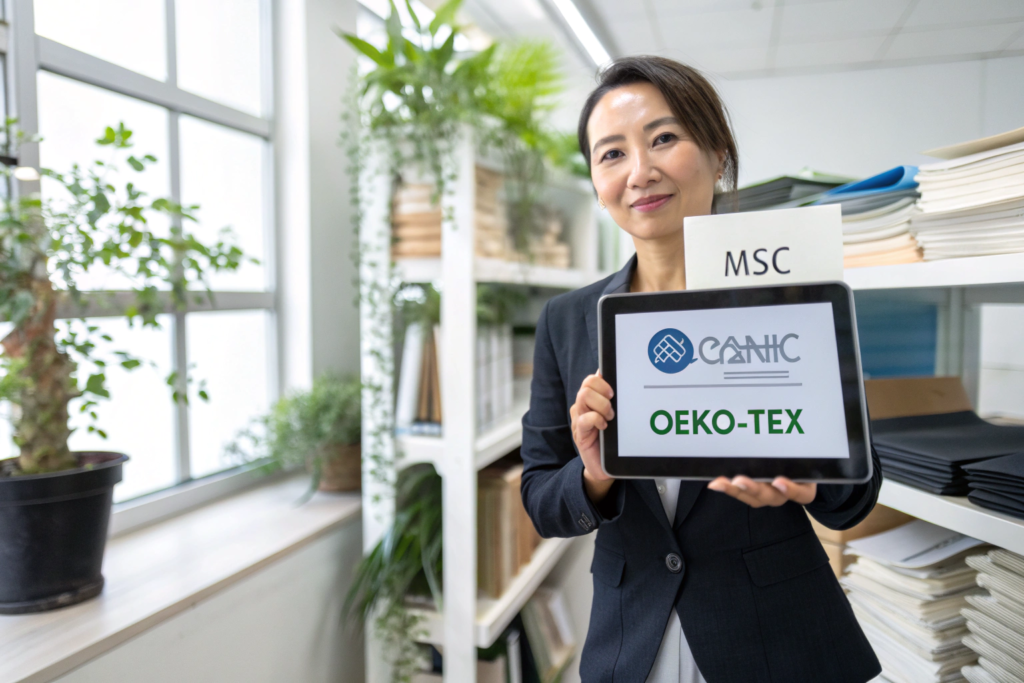
She was right. The market is full of greenwashing, and seaweed fiber is too new to have established certification standards. Here's what we're doing to provide verifiable proof:
MSC certification for wild harvest. If seaweed is wild-harvested, Marine Stewardship Council certification ensures harvesting doesn't damage ocean ecosystems. Not all seaweed carries this, but we prioritize suppliers who maintain MSC chain of custody.
Organic certification for cultivated seaweed. For farmed seaweed, organic certification (EU Organic, USDA Organic, or equivalent) verifies no chemicals or synthetic inputs were used. Seaweed is naturally low-input, but certification provides third-party verification.
OEKO-TEX Standard 100. This certifies the final fabric is free from harmful substances. It's essential for any fabric that touches skin, and we hold this for all our seaweed-based products.
biodegradability testing. We provide ASTM D5511 or ISO 14855 test results showing biodegradation rates. For a client launching a "cradle-to-cradle" collection, we provided third-party lab reports showing 95% biodegradation in 60 days.
Supply chain traceability. We maintain batch-level records showing which seaweed harvest, which processing batch, and which fabric run. For clients who need it, we can provide a digital passport tracing each roll back to the ocean.
A French luxury house sent their own sustainability team to audit our seaweed supply chain. They spent three days visiting harvesting sites, processing facilities, and our lab. They left satisfied that our claims were real. That level of scrutiny is becoming normal for premium brands.
What's the difference between alginate fiber and "seaweed-infused" fabrics?
This is a critical distinction that some suppliers blur. Here's the truth:
True seaweed fiber (alginate fiber) is made by extracting alginate from seaweed, spinning it into filaments, and producing fabric where seaweed is the actual fiber. This is what we've been discussing—seaweed is the material.
Seaweed-infused fabrics are conventional fabrics (cotton, Tencel, polyester) that have been treated with seaweed extract during finishing. They may have some of the mineral benefits, but the fabric itself isn't seaweed. This is much cheaper and easier to produce, but it's also much less innovative.
Some suppliers market "seaweed fabric" when they mean "cotton sprayed with seaweed goo." The difference matters for both performance and credibility. If you're paying luxury prices, you deserve the real thing.
We offer both options because different clients have different needs. Our alginate fiber line is for true innovation. Our seaweed-infused line (using seaweed extract in finishing) is for clients who want the story at a lower price point. We're transparent about the difference.
How do you verify the mineral content of seaweed fiber?
Some brands market seaweed fiber for its mineral content—the idea that minerals transfer to skin. If you're making these claims, you need verification.
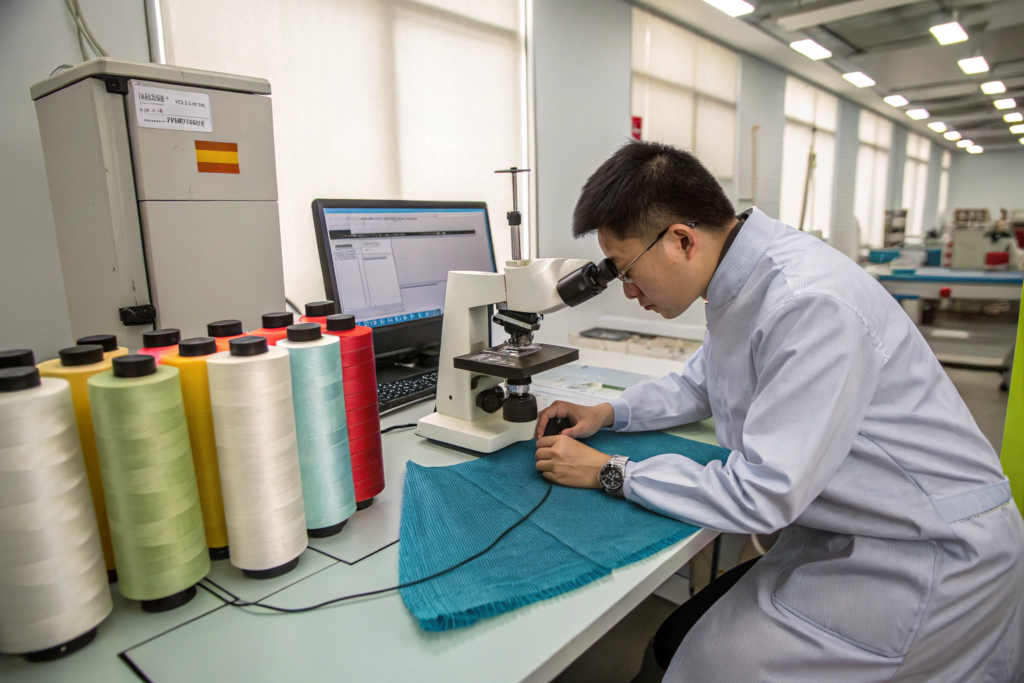
We test each batch using ICP-MS (Inductively Coupled Plasma Mass Spectrometry) to quantify mineral content. A typical analysis might show:
- Calcium: 1,500-2,500 mg/kg
- Magnesium: 800-1,200 mg/kg
- Potassium: 500-800 mg/kg
- Trace elements: zinc, iron, selenium (varying by source)
For clients making specific wellness claims, we recommend third-party testing and clear disclaimers. The science on mineral transfer through skin is still emerging, and overclaiming can damage credibility.
A client from a Korean wellness brand tested their garments for mineral release during washing and found measurable amounts of magnesium in the wash water. They used this data in their marketing, positioning their line as "mineral-infusing" with scientific backing.
How Can Luxury Brands Tell the Seaweed Story Authentically?
A creative director from a New York luxury brand asked me: "I can't just put a sign next to my dress saying 'made from seaweed.' That sounds like a health food store. How do I make it luxurious?"
She identified the real challenge: seaweed has a "crunchy" image that doesn't naturally align with luxury. The brands that succeed will be those that tell the story with sophistication.
Here's what we're seeing work:
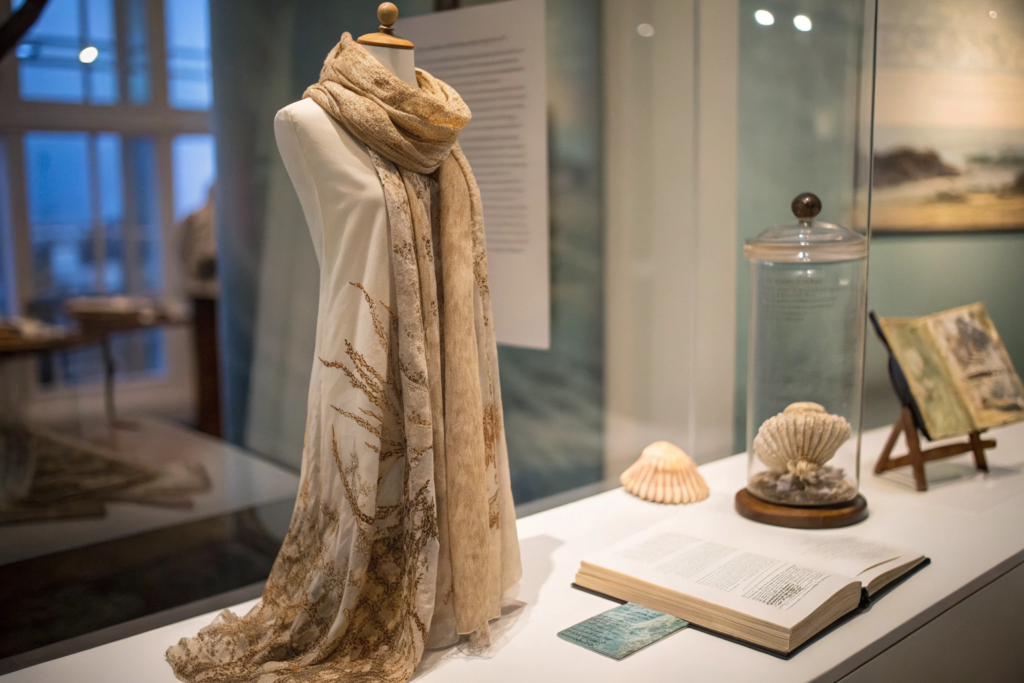
Focus on the sensory experience. Luxury is about how things feel, not just how they're made. Seaweed fiber's unique hand feel—that pearl-like smoothness with organic warmth—is the real story. Describe it. Let customers touch it. Make the texture the hero.
Connect to heritage, not just innovation. Seaweed has been used for centuries in Asian textiles and medicine. Frame your collection as part of this tradition, not just a new technology. A Japanese brand we work with markets their seaweed line as "ancient wisdom, modern luxury" and it resonates.
Emphasize exclusivity, not just sustainability. Limited harvests, artisanal processing, the difficulty of working with the material—these are luxury stories. "Only 5,000 meters available worldwide" creates desire more effectively than "saves the planet."
Collaborate with marine scientists or ocean advocates. Partnering with legitimate ocean conservation organizations adds credibility and depth. A client from a British luxury brand featured a marine biologist in their campaign, talking about seaweed's role in ocean ecosystems. It was unexpected and memorable.
Create beautiful imagery. The ocean is inherently beautiful. Use cinematography that captures the movement of seaweed underwater, the play of light, the organic forms. Translate that visual language into your garment photography.
A Parisian brand launched their seaweed collection with a film shot entirely underwater, showing models in seaweed garments floating gracefully. It was stunning, completely original, and positioned seaweed as otherworldly and beautiful rather than "eco-friendly."
What's the optimal percentage of seaweed fiber to feature in marketing?
This is a strategic question. Too little, and the story isn't credible. Too much, and you limit your design options.
For heritage luxury brands (Chanel-level), 10-20% seaweed in a blend is often enough to tell the story while maintaining the brand's established aesthetic. The marketing focuses on "infused with ocean minerals" or "touched by the sea."
For contemporary luxury brands (theory-level), 30-50% creates a stronger story while still allowing design flexibility. These brands can lead with "seaweed blend" as a signature material.
For avant-garde or statement brands, 70-100% pure seaweed creates maximum impact. These are capsule collections, limited editions, or signature pieces designed to generate press and conversation.
A client from an Italian luxury house tested three different messaging approaches: "contains seaweed" (20% blend), "seaweed-enhanced" (40% blend), and "seaweed silk" (70% blend). The 40% version generated the best sales—strong enough story without the limitations of pure seaweed.
How do you price seaweed fiber garments without alienating customers?
Pricing strategy for innovative materials is tricky. Too cheap, and customers don't believe it's special. Too expensive, and they're not willing to take a risk on unknown material.
Here's what's working for our clients:
Tiered entry points. Launch with accessories (scarves, shawls) at accessible price points (£200-400) to let customers experience the material. Then introduce ready-to-wear at higher price points once the material is familiar.
Limited editions. Create scarcity with numbered pieces and small batch sizes. A "first harvest" collection with only 100 pieces creates urgency and justifies premium pricing.
Transparent pricing with story. Explain why it costs more—limited seaweed harvest, complex processing, artisan production. Customers accept higher prices when they understand the reasons.
Compare to known luxuries. "As rare as cashmere, as luminous as silk" positions seaweed alongside familiar luxury materials rather than competing on price.
A client from a Canadian luxury brand priced their seaweed scarf at $450, compared to their cashmere scarves at $395 and silk scarves at $425. The seaweed scarf outsold both, proving that customers valued the innovation and story over familiar materials.
Conclusion
Seaweed fiber is entering the luxury apparel market because it offers something genuinely new: a renewable, ocean-grown material with unique aesthetic properties and a compelling environmental story. It's not a replacement for cashmere or silk—it's a new category that sits alongside them, offering designers and brands a fresh way to express creativity and values.
The brands that succeed with seaweed will be those that approach it with respect for its unique characteristics. They'll invest in development, work patiently with the material's quirks, and tell stories that connect the ocean's beauty to the garments they create. They won't treat it as a commodity or a marketing gimmick—they'll treat it as the precious, limited, wonderful material it is.
At Shanghai Fumao, we're investing in seaweed fiber because we believe it represents the future of sustainable luxury. We're building relationships with seaweed harvesters, processing partners, and research institutions to ensure we can offer our clients genuine, verifiable seaweed fabrics at commercial scale. We're not there yet—no one is—but we're making progress every month.
If you're curious about seaweed fiber for your brand—whether for a limited capsule collection or as part of a long-term sustainability strategy—let's talk. We can show you samples, explain the current capabilities and limitations, and help you decide if now is the right time for your brand to explore this material.
Contact our Business Director, Elaine. She's been tracking seaweed fiber development for years and can walk you through options based on your brand positioning, volume requirements, and timeline. Email her at elaine@fumaoclothing.com. Tell her you're interested in the ocean collection. She'll send you samples and start a conversation about what's possible.
At shanghai fumao, we believe the future of luxury grows in the ocean. Let's explore it together.