If you’re like Ron, my client from America, you probably opened this article feeling frustrated. You’ve seen your COGS climb, your freight quotes jump, and your net profit shrink. You’re asking yourself: “Is this just inflation, or is there something specific happening in the fabric market in 2026 that’s eating into my margins?”
I’ve been in the textile game in Keqiao for over two decades. I’ve weathered cotton crises, polyester shortages, and trade wars. But right now, I’m seeing a perfect storm of factors driving up costs for my clients—especially those shipping from China to the U.S. It’s not just about a line item on an invoice; it’s about how you plan your cash flow, how you set your retail prices, and ultimately, whether you’ll hit your target margin this season.
Let’s break down exactly what is happening with pricing in 2026, why your suppliers aren’t just trying to squeeze you, and most importantly—what we can actually do about it to protect your bottom line.
How exactly are raw material prices impacting my 2026 fabric costs?
We all see the headlines about oil prices and cotton futures. But when you’re a buyer sitting in New York, it’s hard to translate that Bloomberg ticker into the price per yard you’re quoted from your China supplier. You need to know which part of your bill is going up and why.
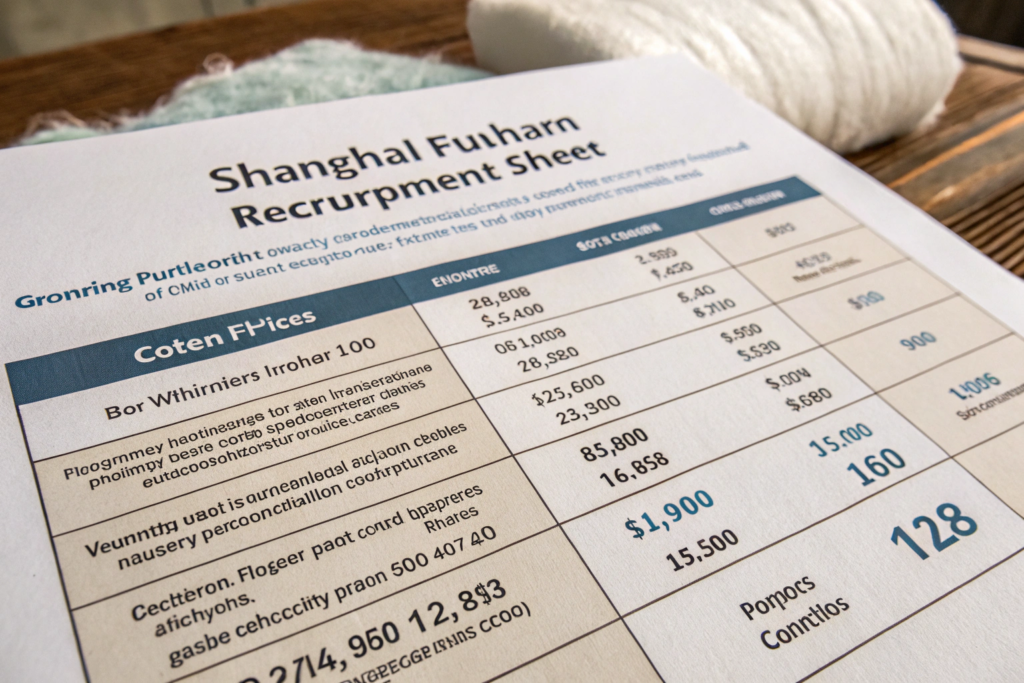
The short answer is that raw material costs for both natural and synthetic fibers have hit a cyclical high in Q1 of 2026. For cotton, unpredictable weather patterns in major growing regions have tightened global stocks. For synthetics like polyester and nylon, the price of crude oil—their base ingredient—has remained stubbornly high. This directly flows into the yarn prices we pay. When I check our daily procurement sheets at Shanghai Fumao, I see that our average cost for recycled polyester chips is up roughly 18% compared to the same time last year.
But here’s the nuance most blogs miss. It’s not just the raw polymer or the cotton bale. The real cost driver in 2026 is the energy required to process it. Spinning, weaving, dyeing—these are energy-intensive processes. With European energy prices still affecting global demand for coal and natural gas, Chinese factories (especially dyeing houses) are facing higher operational costs. These costs get passed down the supply chain.
Why are cotton prices so volatile right now?
It's a combination of logistics and climate. I was talking to a cotton merchant in Xinjiang last week. He explained that while the harvest was decent, the transportation of cotton from the farms to the spinning mills faced delays due to rail capacity being prioritized for other goods. This creates a temporary bottleneck. For a buyer like Ron, this means that if you order a pure cotton canvas, you aren't just paying for the fiber; you're paying for the logistical friction of moving that fiber. To understand more about sustainable alternatives that avoid this volatility, many of our clients are learning how to source GOTS certified organic cotton from China to lock in more stable pricing. We also see a shift toward blends, as the cost of importing responsibly produced viscose fibers has actually become more predictable than cotton.
Is the price of recycled polyester really stable?
It’s a common myth that recycled polyester (rPET) is immune to oil prices. It’s not. It's still a plastic. However, the price volatility is slightly less dramatic than virgin polyester because the raw material (plastic bottles) has a different supply chain. But in 2026, we are seeing a new challenge: competition for bottles. As more global brands commit to recycled content, the demand for food-grade recycled plastic is soaring. This competition is pushing up the cost of the flakes we use to make our filament yarn. We counteract this at Fumao by locking in long-term contracts with our bottle suppliers, which is why we can often offer more competitive pricing on our rPET fabrics than spot buyers can find on the open market. (Here’s a tip: ask us about our in-stock recycled program—the prices are locked for 90 days.)
What are the hidden costs in the supply chain affecting my margins?
Ron, you mentioned tariffs and logistics as pain points. You’re right on the money. The FOB price is only half the story. The cost that truly kills a margin is the one you don’t see coming until the goods are on the water.
Beyond raw materials, the two biggest margin-killers in 2026 are unpredictable ocean freight and the administrative burden of proving origin to avoid tariffs. With the ongoing trade policies, proving that your fabric is actually Chinese-made (or Vietnamese-assembled) requires a mountain of paperwork. If that paperwork is wrong, your goods get held at customs, and you rack up storage fees—sometimes thousands of dollars a day.
I recently had a client, a denim brand from the UK, who nearly lost $20,000 because their forwarder misclassified a blended fabric. The paperwork said "Cotton Trousers" but the composition was 60% Cotton/40% Polyester, which falls under a different HTS code with a higher duty rate. We had to step in and provide our mill test reports to prove the exact composition to customs. This is where the "hidden cost" lies—in accuracy and speed.

How does fabric inspection prevent margin erosion?
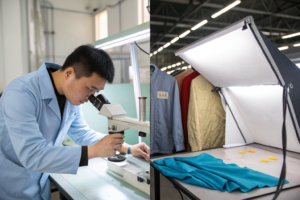
We talk about QC as a quality thing, but it's really a financial tool. If a fabric flaw isn't caught until you're cutting it in your factory in LA, that's a total loss. You've paid for the fabric, the freight, and now the wasted labor. That’s why we have our own CNAS-accredited lab. We don't just do a visual check. We run a full battery of tests: shrinkage, colorfastness, and tensile strength. For a sportswear line we shipped to a Canadian distributor in late 2025, our pre-shipment inspection caught a 5% variance in the width of a single roll. That might sound small, but over 10,000 yards, that’s a huge loss in yield for their cutter. We flagged it, re-made the roll, and air-shipped it at our cost to save their production line. This is why we always recommend a strict, third-party-style fabric quality control checklist for international shipping to every buyer.
Can you really mitigate US tariffs through smart sourcing?
Yes, but you have to be smart about it. The "China + 1" strategy is real. We have partners in Vietnam and Bangladesh. But here’s the reality: the fabric often still comes from China. So, to get the tariff benefit, you need to ensure your fabric qualifies for the relevant Free Trade Agreement rules of origin. For example, shipping fabric to Vietnam to be cut and sewn doesn't automatically make it duty-free into the US. The fabric itself must undergo substantial transformation there. We handle this for our clients by managing the "triangular trade." We ship the fabric from China to our partner factory in Vietnam, and then we help the garment maker file the correct Certificate of Origin (Form VK) to ensure the final goods enter the US with a lower duty rate. It’s complicated, but it saves our clients a fortune. We actually have a dedicated logistics team at Shanghai Fumao that does nothing but manage this paperwork.
How do China’s production peaks and holidays disrupt my delivery timelines?
Remember the context I shared earlier about the European brand planning around Chinese New Year? That’s not just a nice-to-have; it’s a survival tactic. If you miss the production window because you didn't account for a holiday, you miss your season. Period.
The biggest timeline trap in 2026 is the assumption that production runs at 100% speed, 52 weeks a year. It doesn't. In China, the rhythm of the year dictates the rhythm of the factory floor. March to May and August to October are absolute chaos—everyone is trying to produce. June, July, November, and December are slower, which is great for sampling and small runs. And then you have the holidays: Chinese New Year (basically a 4-week national pause) and Golden Week (1 week in October).
The key takeaway here is capacity planning. During peak seasons, every loom in Keqiao is running. If your order requires a specific yarn that isn't in stock, you could be waiting an extra two weeks just for that yarn delivery. During slower periods, I can push your order to the front of the line because I'm not juggling 50 other rush jobs.
What happens inside a factory during Chinese New Year shutdown?
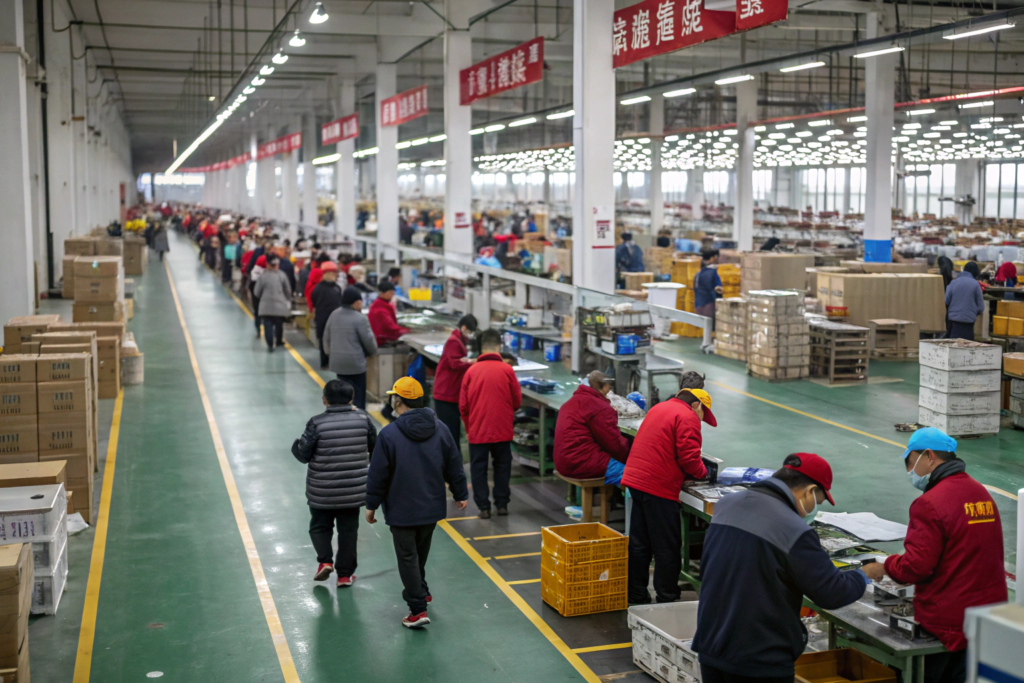
Imagine an entire city of 80,000 textile factories turning off the lights. That’s Keqiao during CNY. Workers go home for a month. It's not just about the holiday week; it's about the ramp-up. When they come back, factories don't just flip a switch. They need to re-hire and re-train staff. It takes a full two weeks to get back to 100% efficiency. I’ve seen buyers place an order in late January expecting delivery in March, and they don't realize that for three of those weeks, absolutely nothing happened. We advise clients to get their pre-production samples approved at least six weeks before the holiday starts. That way, we can stage the raw materials and be the first ones spinning yarn when the machines fire up again. For a practical guide, you can read this breakdown from a logistics provider on how to plan factory production around Chinese holidays.
Is the "slow season" a good time for sampling and development?
Absolutely. June and July are my favorite months to work on new developments with clients. The dye houses aren't as busy, so we can get lab dips matched in 24 hours instead of 72. The weaving mills have capacity to run small trial lots for new structures. Just last July, we worked with a Russian athleisure brand to develop a custom moisture-wicking double knit. Because the factory wasn't slammed with bulk orders, we went from concept to finished sample in 10 days. In peak season, that same process would have taken three weeks. So, if you have a complex project or a new tech pack, aim to do your R&D in the slower months. This lets you hit the ground running when the peak production windows open up. We always keep a stock of basic greige goods during these times, so if you need a quick sample of a custom dyed fabric for a startup clothing line, we can usually turn it around in a week.
How can I accurately forecast costs and secure better pricing in 2026?
So, we’ve painted a pretty complex picture—volatile raw materials, tricky logistics, and a stop-start production calendar. It sounds like a nightmare to forecast. But honestly, it just requires a different approach than ordering from a catalog.
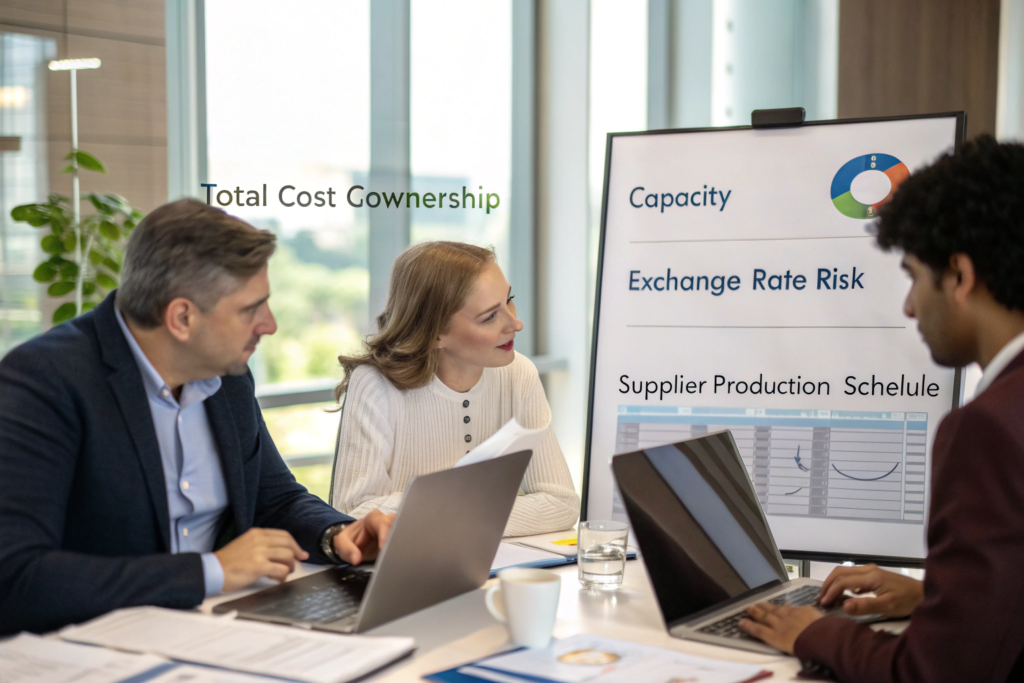
The secret to protecting your margin in 2026 isn't just bargaining for a lower price per yard. It's about total cost of ownership. It’s about locking in capacity, fixing your exchange rate risk, and knowing your supplier's production schedule as well as your own. We help our clients move from transactional buying to partnership-based planning.
We use a "forward-booking" model with our key clients. For example, a major Australian surf brand books their core fabric requirements with us six months out. They pay a deposit, we buy the yarn, and we guarantee them a price—even if the market goes up. This gives them the stability to set their wholesale prices confidently. It’s a win-win: they get security, and we get the volume to negotiate better rates with our own yarn suppliers.
What are the benefits of bulk yarn purchasing for pricing?
When you come to me with a project, I don't just look at the cost of fabric on the loom. I look at the supply chain from the fiber up. If you need 50,000 yards of a specific nylon taffeta, I know I can get a better price per kilo on the nylon yarn if I buy it for three orders at once. If you order 10,000 yards now and 10,000 yards next month, you pay the higher spot price twice. But if you commit to 30,000 yards over the next six months, I can hedge the raw material cost for you. We did this for a Canadian workwear company in early 2026. They needed a flame-retardant cotton blend. By committing to the full year's volume upfront, we saved them 12% on the total material cost compared to if they had ordered quarterly. It’s about leveraging the scale of Shanghai Fumao’s supply chain to your advantage.
How do exchange rates affect my final invoice?
This is a big one for US buyers in 2026. The dollar has been strong, but currency fluctuations can wipe out your margin overnight if you're paying in RMB. Most Chinese suppliers quote you in USD to make it easy, but we have to pay our workers and our yarn suppliers in RMB. If the dollar weakens between the time we quote you and the time you pay, that loss is ours—and we might have to adjust prices on the next order to recover. To avoid this, we offer clients the option to fix the exchange rate in their contract for a small fee. Alternatively, for very large orders, we can quote and transact in RMB. It sounds complicated, but we have banking partners that make it seamless. It gives you total visibility. A good resource for understanding these complexities is this guide on managing foreign exchange risk for importers.
Conclusion
Navigating the fabric market in 2026 requires a shift in mindset. It’s no longer just about finding the cheapest quote on Alibaba. It’s about understanding the physics of the supply chain: Why cotton is expensive, why energy costs matter, and why a holiday in China can delay your launch in New York. It’s about looking at your margin not as a simple subtraction (Retail Price - FOB Price), but as a complex equation that includes logistics, tariffs, yield from quality fabric, and the value of a reliable partner who flags problems before they become disasters.
You need a partner who doesn't just take your order, but who helps you plan it. A partner with the labs to ensure quality, the logistics team to navigate tariffs, and the production insight to schedule around the lunar calendar.
At Shanghai Fumao, we live and breathe this every day. Our team of 40+ professionals is ready to help you de-risk your supply chain. Whether you need help sourcing a sustainable alternative to a volatile cotton fabric, planning your production schedule around the October Golden Week, or simply understanding how to structure an order to fix your price for the next six months—we are here.
Don't let rising costs eat your lunch. Let's build a smarter supply chain together. For a direct consultation on your upcoming Fall 2026 collection, please reach out to our Business Director, Elaine. She can walk you through our current inventory, our forward-booking program, and how we can specifically protect your margins. Contact Elaine directly at: elaine@fumaoclothing.com. Let's get to work.