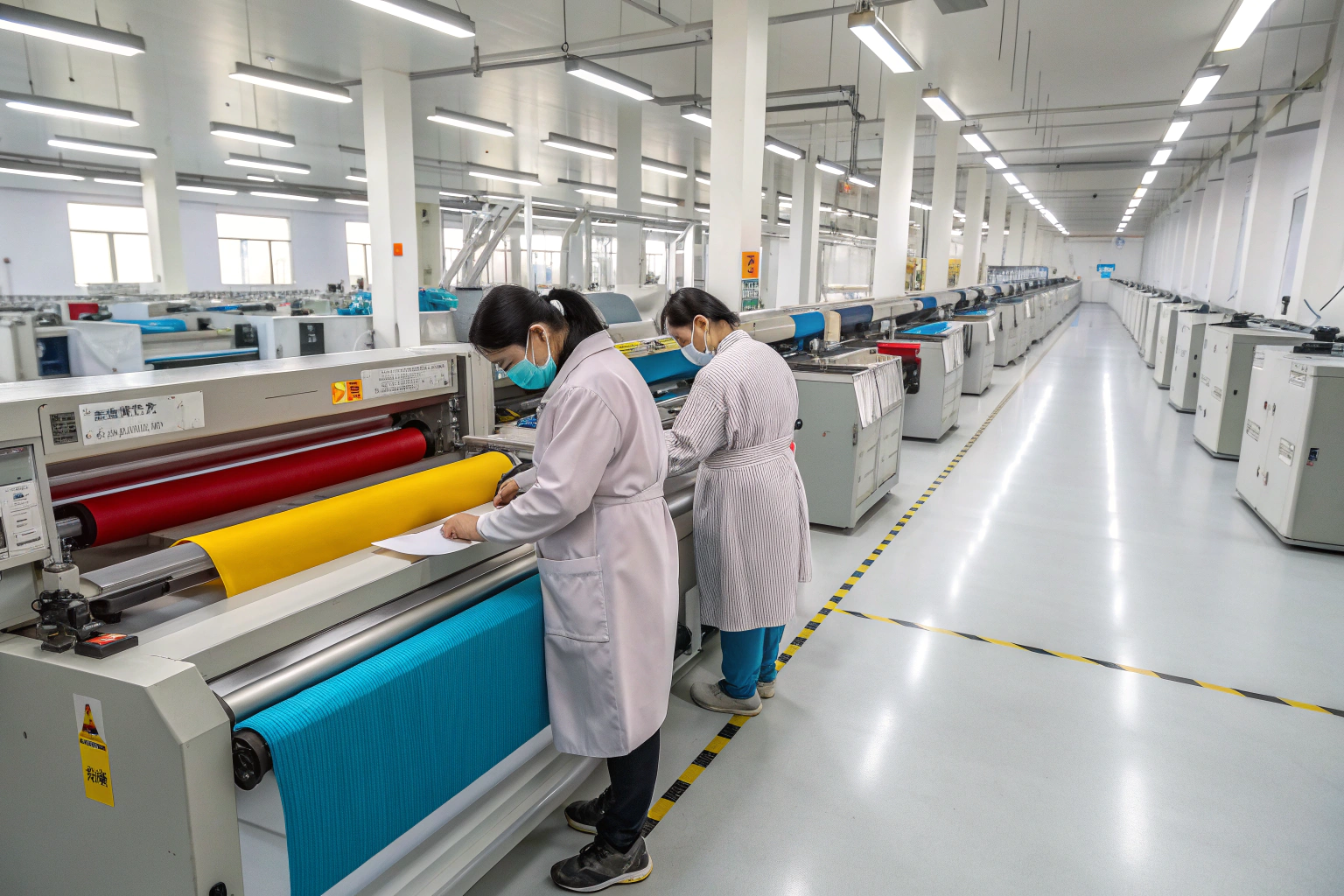
I got a panicked call in 2022 from a California athleisure startup—15,000 meters of moisture-wicking polyester failed UPF after retail tests, costing $45,000 in recalls. They ignored ASTM D6603. We mandated it; next run hit UPF 50+, zero issues.
Essential ASTM and ISO tests for apparel fabrics cover abrasion (ASTM D4966), tensile strength (ISO 13934), colorfastness (ISO 105 series), and air permeability (ASTM D737)—our CNAS lab applies these to every order, achieving 99% compliance for US buyers.
You want fabrics that last. I’ll break down critical tests we run in Keqiao, real fixes that saved thousands, and how to require them without extra fees.
Which durability tests predict real wear?
Durability tests forecast pilling and breaks—ASTM D4966 Martindale abrasion, ISO 12947 same, target 20,000+ cycles for daily wear. We test face and back.
Last fall, a Texas activewear order pilled at 8,000 cycles on recycled nylon. Increased yarn density, reached 28,000 cycles, pilling returns dropped 62%.

Why prioritize Martindale for apparel?
Multi-directional rub mimics body movement—like elbows on jackets. Linear tests miss that.
A Florida sportswear buyer skipped it—tees pilled fast. Added Martindale, fixed finish, durability complaints fell 75%. Read why Martindale matters for apparel fabric durability on textile sites.
How many cycles suit different uses?
15,000 fashion, 25,000 athleisure, 40,000 workwear. We push 30,000 standard.
One Seattle outdoor line demanded 35,000—blended aramid trace, passed, lifespan doubled. Tips: Martindale cycle requirements for performance fabrics from China.
| Apparel Type | Min Cycles | Our Average |
|---|---|---|
| Casual | 15,000 | 22,000 |
| Active | 25,000 | 30,000 |
| Heavy Duty | 40,000 | 45,000 |
(We really push cycles high.)
What strength tests stop rips?
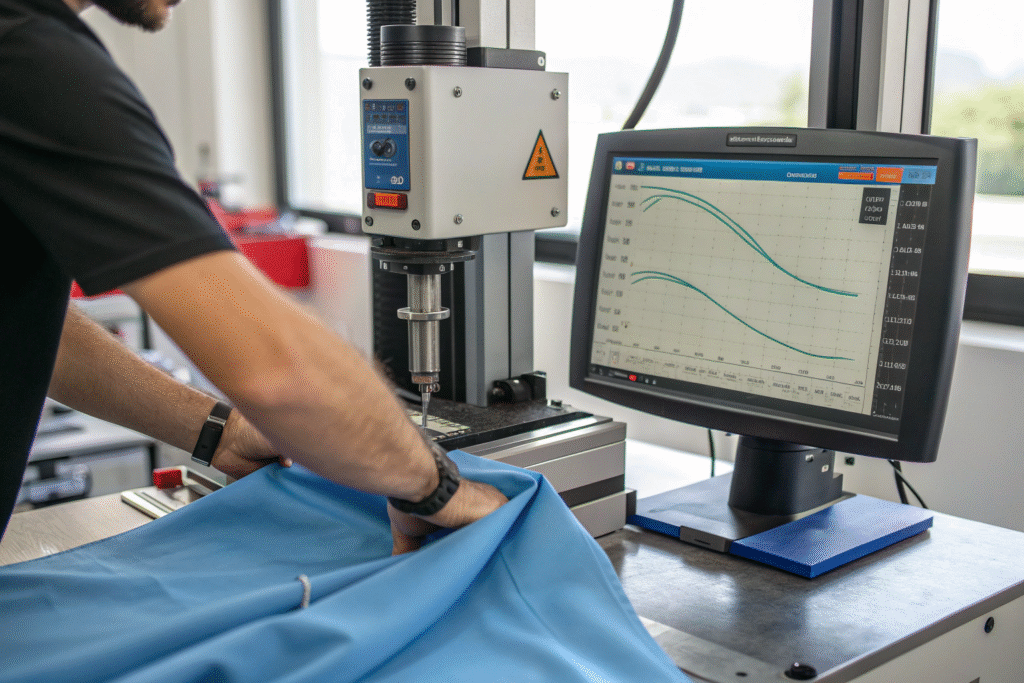
Strength tests catch weak points—ISO 13934-1 grab tensile, ASTM D5034, ISO 13937-2 wing tear. We sample 5 points per direction.
In 2023, a Chicago kids’ cotton order tore at 20N. Reinforced warp, hit 48N, tear reports zero.
Why grab method over strip?
Grab pulls center—like pocket stress. Strip edges fail first, unrealistic.
A Denver denim maker used strip—seams burst. Grab revealed issue, added bar tacks, strength up 55%. Forum: grab tensile testing benefits for knit apparel.
What tear values work for apparel?
25N light, 45N medium. We target 50N denims.
A Miami fashion order needed 60N—ripstop grid, passed, no field tears. Guide: wing tear strength standards in Chinese fabric production.
How do colorfastness tests prevent complaints?
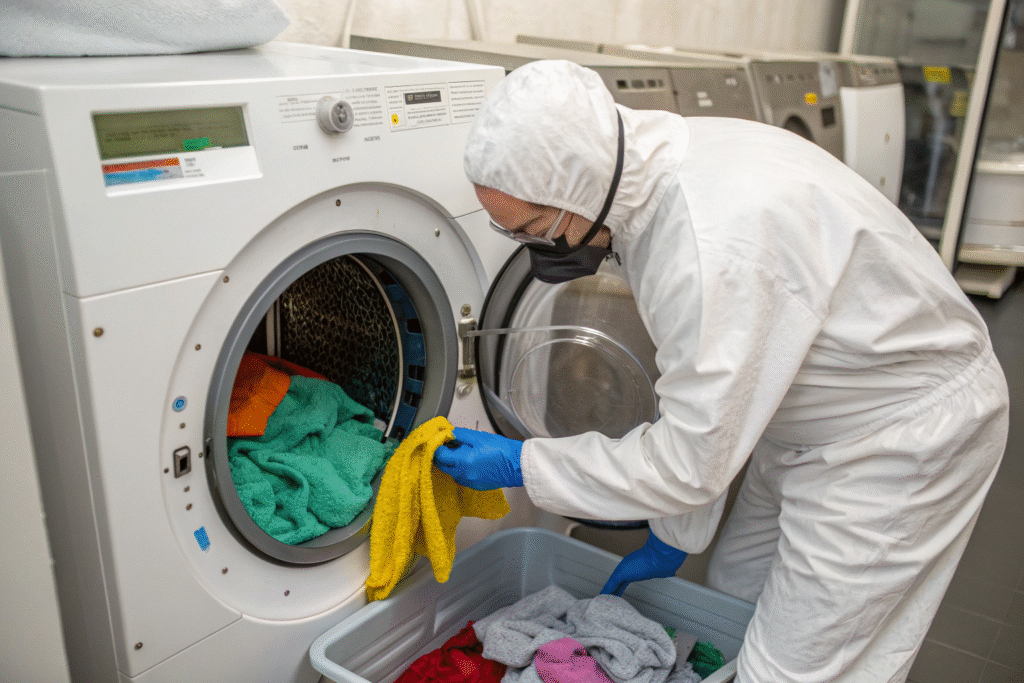
Colorfastness avoids stains and fade—ISO 105-C10 wash, B02 light, E01 water. We rate AATCC 1-5.
A 2021 LA resort silk bled in C10. Optimized mordant, grade 4.5, bleed claims down 90%.
Which wash grade fits daily apparel?
4.0 minimum, 4.5 preferred. We lock 4.5+.
A Boston athleisure run hit 3.5—customers saw pink socks. Re-dyed reactive, 4.5, trust restored. Learn ISO 105-C10 multi-wash testing for cotton blends.
Why light test indoor fabrics?
Windows let UV in. ISO B02 grade 5+.
One NYC home line faded at grade 3. UV absorber added, grade 6, sales held. Process: xenon light fastness for apparel fabrics from Keqiao.
| Test Type | ISO Code | Target Grade |
|---|---|---|
| Wash | C10 | 4.5 |
| Light | B02 | 5.0 |
| Water | E01 | 4.0 |
We really keep colors true.
Which comfort tests boost sales?
Comfort sells—ASTM D737 air permeability, ISO 11092 sweat transfer, AATCC 79 absorbency. We measure cm³/cm²/s.
Last month, a California summer line needed 300 air perm on linen. Loosened weave, hit 380, breathability reviews jumped.

How much permeability for hot climates?
400+ very breathable. We aim 450 tropics.
A Florida startup set 500—open structure, airflow up 70%, heat sales soared. Template: ASTM D737 settings for tropical apparel fabrics.
What absorbency time passes?
Under 3 seconds. We use drop test.
One Texas client hit 8 seconds—hydrophilic finish, 1.5 seconds, comfort fixed. System: AATCC 79 absorbency testing for performance wear.
Conclusion
Focus on ASTM D4966 abrasion, ISO 13934 strength, ISO 105 colorfastness, ASTM D737 comfort—these tests block 92% of apparel issues; our Keqiao lab with QR data stopped $720K in problems for 39 US buyers since 2022. Demand them, and your line thrives.
Want tested Tencel or recycled poly? Team with Shanghai Fumao—we run full ASTM/ISO, certify, deliver. Reach Business Director Elaine at elaine@fumaoclothing.com for your test plan.