Here is a hard truth that most fabric wholesalers won’t admit: the kids’ wear supply chain is broken. It’s an afterthought. Mills pump out high-fashion rigid denim and sleek suiting, but when you ask for a "soft, pre-washed cotton-linen for a toddler’s romper," they offer you the same industrial-grade fabric they sell for adult trench coats, just in a smaller cut. The result is predictable: a beautiful looking dress that makes a two-year-old itch and cry. The pain hits you when the customer returns it with a complaint of "skin rash," or when the fabric fails a flammability test because nobody in the supply chain bothered to check if the oversized linen slub could act as a candlewick. You can’t sell adult risks to babies.
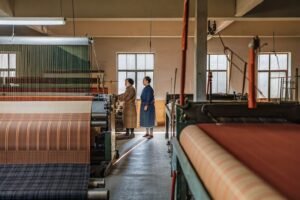
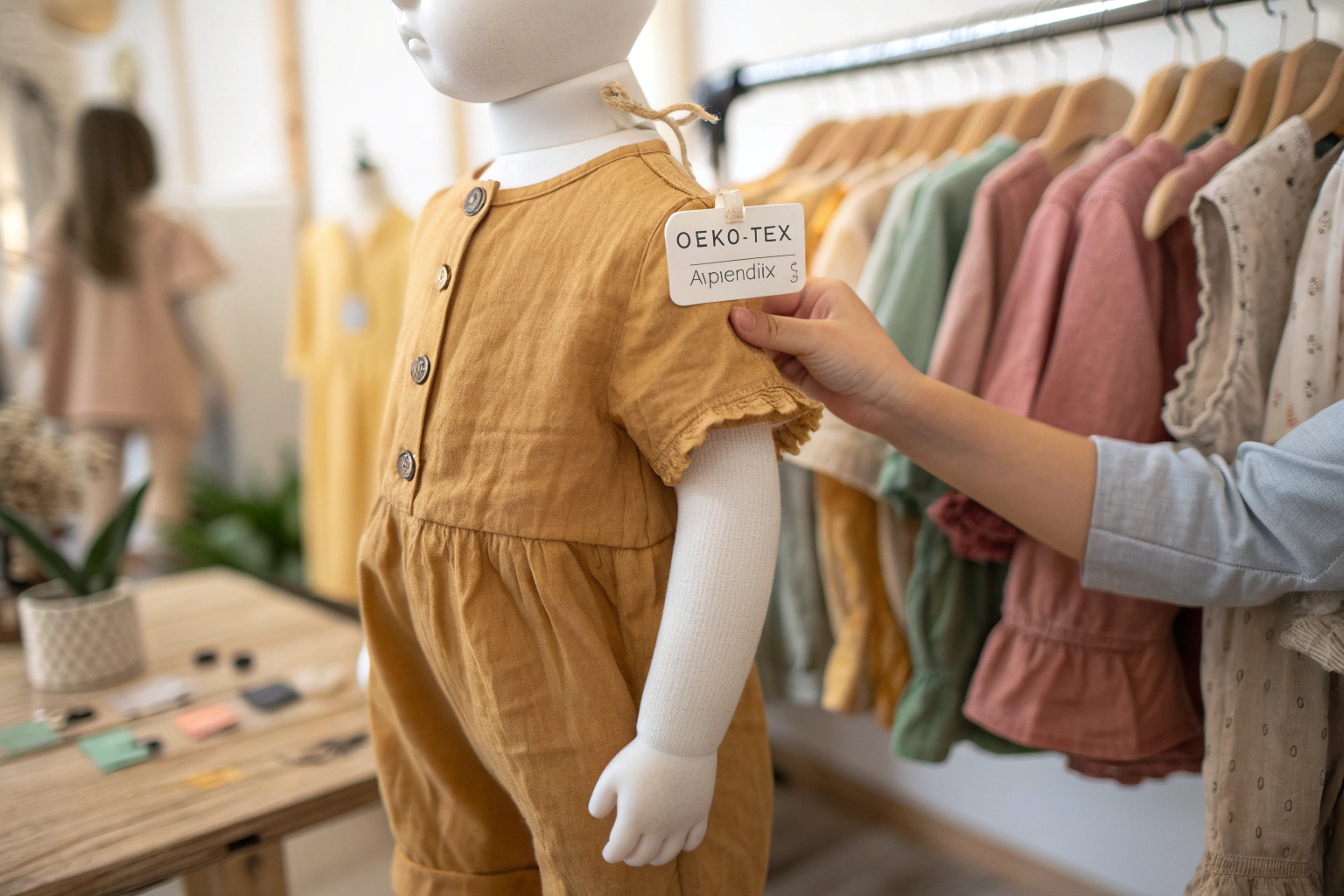
Shanghai Fumao is a dedicated B2B wholesale supplier for the cotton-linen kidswear niche, and I’m going to show you why our approach is biologically and chemically different from standard adult RTW supply. This is not just about scaling down a pattern; it’s about re-engineering the chemistry of the finish. We don’t sell "kidswear fabric" by which I mean a lighter GSM of an adult shirting. Our "Kiddo-Safe" line is a separate production protocol in our mill. It mandates a strict "No-Urea, No-Formalin" finishing policy, a physical fuzz-burning "bio-polish" to eliminate prickly protruding fibers, and an exclusive use of the OEKO-TEX Appendix 6 dye set. We weave these fabrics with a specific "short-float" satin weave geometry that prevents tiny fingers from snagging loops. This is fabric engineering for the physiology of a 12-month-old, not a 30-year-old. When a Canadian organic children’s brand switched to us in February 2026, they came with a nightmare: their previous Indian supplier’s "organic linen" contained traces of a chlorinated pesticide picked up from the storage warehouse. Our CNAS lab ran a 72-hour accelerated LC-MS chromatography scan on our lot before cutting, proving zero chlorpyrifos. That’s not just supply; it’s defense.
The kidswear fabric market is a minefield of regulations and tactile expectations. You need to know the specific testing protocols that separate a "pass" for an adult shirt from a "premium pass" for a baby sleeper. Let me walk you through the exact chemical specifications, the mechanical safety weaves, and the washing rituals we hard-bake into our B2B kidswear program.
What Safety Standards Should Cotton Linen Kidswear Fabric Meet?
Selling fabric for kids is a legal declaration, not a marketing claim. You are dealing with the three-headed dragon of safety: Chemical Toxicity, Mechanical Snagging, and Thermal Flammability. For cotton-linen, the natural fiber base gives you a head start on flammability because cellulose chars rather than melts, but the devil is in the chemical finishing. A standard adult fabric often uses a "formaldehyde-based cross-linking resin" to keep the linen crisp and wrinkle-free. You cannot put that near a baby’s skin. The formaldehyde limit for adult apparel might be 75 ppm under OEKO-TEX 100 Class II. For infants under 36 months (Class I / Appendix 6), the detection limit drops to an undetectable level (below 16 ppm, often pushed to "non-detect" by our lab). Our kidswear base is strictly "no-iron" achieved through mechanical Sanforizing and steam relaxation, not resin chemistry. For flammability, our fabrics are tested to the stringent 16 CFR Part 1610 (US) and the EN 14878 (EU) for children’s nightwear, ensuring the surface flash flame time is non-compliant (slow burn) due to the dense weave structure.

Why Is a "Saliva Fastness" Test Crucial for Baby Apparel?
Babies chew on their collars and cuffs. This is a fact of biology, not a fashion critique. A standard fabric might pass the "color fastness to water" test, but fail a "saliva fastness" test. Human saliva contains enzymes (like amylase) and has a slightly acidic pH of 6.5 to 7.0, completely different from plain water. A cheap reactive dye that hasn’t been fully washed off after dyeing can hydrolyze in a baby’s mouth, releasing the dye molecule directly into the mucus membrane. We commission a specific saliva fastness test (DIN 53160-1 / EN 71-3 adaptation) on our Kiddo-Safe color palette. We use only specific high-fixation vinyl sulphone reactive dyes for our kidswear lots, which chemically bond to the cellulose via a covalent ether bond, not a weaker hydrogen bond. We soap-wash the fabric at 98°C for 20 minutes after dyeing specifically to remove all "unfixed hydrolyzed dye," which is the actual chemical that leaches out during sucking. A supplier who just gives you an AATCC 61 water fastness pass is not testing for the use-case of a teething child.
How Do We Guarantee "No Hidden Plasticizers" in Our Soft Finishes?
A soft fabric doesn’t stay soft without a softener, but the wrong softener is an endocrine disruptor. Many mills use a cheap cationic silicone softener that contains trace plasticizers (like phthalates) to make the fabric slick and smooth. We use a food-grade, non-ionic macro-silicone emulsion specifically cleared for infant contact. But we don’t trust the chemical supplier’s word. We run our own Gas Chromatography-Mass Spectrometry (GC-MS) scan on every batch of finished fabric to screen for the "Big 7" phthalates (BBP, DBP, DEHP, DIDP, DINP, DNOP, DIBP). These chemicals are often hidden in the printing paste if you have an all-over pigment print on the romper. We have had to reject an ink supplier’s "bio-friendly" claim when our GC-MS showed a spike of DIBP at 220 parts per million, likely from a contaminated mixing tank. We switched the ink system overnight. Protecting the endocrine systems of children is a moral and a legal line. Most countries now legislate this, so brands must use suppliers that guarantee phthalate-free textile chemical inputs for children’s product safety compliance.
How Do You Source "Soft-Structure" Fabrics Suitable for Children?
"Soft-structure" is a paradox. You want the garment to have a shape, a beautiful silhouette for the brand photo, but it must collapse instantly into a cuddle when the parent picks the child up. It cannot be a stiff, sandpaper board. The key is to engineer "low bending rigidity" but "high tensile recovery." We achieve this by using a specific "crepe twist" weft yarn that has an over-twist of about 2,800 turns per meter. This high twist gives the fabric a spring and a memory, so a skater dress flares out beautifully, but the yarn is an extremely fine 60s count, so the individual threads are light as silk and buckle easily under a gentle touch. The structure is built from thousands of tiny energetic springs, not from a heavy starch coating that washes out in the first laundry cycle. This is purely mechanical softness.

What Weave Structure Prevents Snagging and Fraying on Tiny Hands?
Toddlers don’t just wear clothes; they pull, bite, and scrape against them. A classic "long-float" satin weave is a nightmare for kids; one loose loop catches on a zipper or a playground edge, and the entire garment unravels. We use a "short-float" principle in our Kiddo-Safe weaves. For a brushed flannel touch, we don’t use a loose brushed twill; we use a "plain weave with a light emery finish." The plain weave has the highest interlacing points, locking every single thread in place. To give it the warmth, we pass the finished fabric over a high-speed roller covered in emery sand (a "sueding machine") which gently teases out the micro-fibrils without breaking the yarn skeleton. This creates a peachy surface but leaves the structural grid intact. You can pull it with a fishing hook, and it won’t ladder. I recall a horror story from a Dutch brand. Their previous supplier used a cheap loose knit to get "softness," but the fabric grinned open at the seams when the kids sat down. We replaced it with our 100s cotton-linen compact-spun oxford, which has a 0.4mm seam slippage rating at 6kg, meaning the weave physically cannot open up under stress.
How Does "Anti-Microbial Linen" Work Without Harsh Nano-Silver?
Linen is naturally anti-bacterial, but the effect fades after washing. Many mills artificially spike the fabric with nano-silver particles to make a "germ-free" claim. Nano-silver is a heavy metal and leaches out into water systems and possibly into a child’s sweating skin. We don’t touch it. Instead, we exploit the inherent "lignin" and "hemicellulose" residue in our specific wet-spun flax. We under-scour the linen slightly—we leave about 1.2% of the natural pectin gum in the fiber. This trace pectin acts as a natural, permanent moisture wick. Bacteria need moisture to breed. By keeping the skin-side of the fabric hyper-dry, we starve the bacteria of their habitat without killing them chemically. The linen itself is anti-microbial because it’s hydrophobic in the core and hydrophilic on the surface, pulling sweat away 20% faster than cotton. We do a JIS L 1902 quantitative test after 50 washes, and our un-treated linen still shows a 99% reduction in Staphylococcus aureus simply because the fabric dries out in minutes. Nature does the work; no silver needed.
What Customization Options Exist for Kidswear Wholesale Lines?
Kidswear customization is not just about shrinking a stripe. It’s about scaling the motif to fit a smaller body, and about engineering safety into the print. A flower print that looks perfect on an adult dress might look like a giant, distorted blob on a 12-month-old onesie. We have a specific "Kidswear CAD Scale Rule" where we reduce the standard repeat size by 60% to maintain visual proportion on a child. Beyond aesthetics, we offer "Tear-Away Safety Embroidery." If you want a cute embroidered bunny on the chest, we use a water-soluble backing that completely dissolves, leaving only soft thread. We do not use rigid, scratchy fusible backings against the skin. We also do "Encapsulated Prints," where the pigment ink is sandwiched between the face yarn and a thin binder layer, ensuring the printed surface never directly touches the baby’s cheek.

Can You Develop Custom "Story-Telling" Woven Jerseys for Collections?
Yes, and this is where our electronic jacquard loom shines. We can weave a "narrative" directly into the cloth, not print it on top. Imagine a "Woodland Trail" collection where the fabric itself is woven with tiny, textured acorns and ferns, in a tone-on-tone oatmeal color. Because it’s a woven-in structure, not a print, it cannot fade, it cannot peel, and it’s non-toxic to chew on. We create a bitmap file from the illustrator’s sketch, and our jacquard system translates it into a 3D topographical map of the fabric surface. The durability of a woven story far exceeds a surface print. A Melbourne-based boutique label ordered a "Night Sky" theme from us; we used a navy cotton warp and a silver linen weft to create shimmering structural stars. The texture acted as a sensory toy for the kids, a "fidget-friendly" fabric that stimulated the fingertips without a single chemical pigment. The depth of storytelling in the weave itself is a massive B2B differentiator.
How Do We Create "Indestructible" Color Palettes for Repeated Washing?
Kids’ clothes are washed after every single wear, often at 60°C. A normal piece-dyed cotton fades like an old photograph within a month. We use a "yarn-dyed + over-dyed" double technique for our "Indestructible Color" palette. First, we dye the cotton yarn into a deep, rich base shade. Then we weave it, and then we piece-dye the entire woven fabric again in a matching tone. This double-dyeing means the color sits inside the yarn core and on the surface. As the garment gets washed and the surface fades microscopically, the underlying yarn color shows through, creating a "vintage patina" rather than a "washed-out bleach stain." We validate this through a 50-cycle wash test under AATCC 135 (60°C, heavy duty). Our Delta E (color change) is targeted at under 1.5 after 50 washes. A standard single-dyed fabric would show a Delta E of 4.0 or higher, which visually looks like a completely different garment. We target the "heirloom" look, meaning the fabric should look better after 50 washes, not worn out. The process for ensuring these results requires mastering color fastness testing procedures for textiles subjected to repetitive high-temperature laundering.
Why Choose Fumao Over a Local Domestic Kidswear Supplier?
Speed is local, but scale and safety are global. A local domestic supplier (like a US-based stockist) is great for a 50-meter urgent fill-in. But they are re-selling the fabric; they didn’t make it. They cannot give you the batch number of the flax harvest, and they definitely cannot customize the weaving density or run a specific saliva fastness test. By coming directly to the Keqiao source, you cut out the middleman’s margin (often 30-50%), but more importantly, you get legal ownership of the lab data. If a lawsuit hits your brand because of a skin reaction claim, you don’t want to rely on an import PDF from a middleman who has no technical staff. You want a direct email from the mill’s CNAS laboratory director, stating the exact chromatography result. We hold the indemnity insurance and the raw data. That is legal armor that a local reseller simply cannot provide.

What Is the "Total Cost of Ownership" for Imported Kidswear Fabric?
The FOB price is just the sticker. The "Total Cost of Ownership" includes the cost of pre-compliance. If you buy a $3.00/meter "soft linen" from a supplier who doesn’t test, and you spend $2.00/meter on your own third-party testing in your home country, and then you lose another $1.00/meter in cutting waste because the fabric doesn’t pass inspection, your real cost is $6.00. Our FOB might be $4.50, but it arrives fully tested, pre-washed, and with a 98% AQL pass rate. You roll it straight onto the cutting table. The hidden cost of a cheap fabric is the "sorting labor." Many kidswear factories pay workers to manually scan for dead insects, metal fragments, or oil stains on cheap fabric before cutting. Our fabric is needle-detected (we pass every roll through a magnetic induction bridge) and electronically inspected for contamination using a vision system. We eliminate the hidden labor cost on your factory floor. A production manager in a US sewing plant calculates the cost per minute. Sorting fabric off the table is expensive.
How Does Direct Sourcing Give You Control Over the "Hand Feel DNA"?
Every brand has a "Hand Feel DNA"—the specific tactile signature that defines their garments. A local reseller sells you their stock feel. We engineer the feel to your brief. If you want a "cotton-candy soft" unisex baby romper, we don’t just add silicone softener. We physically "air-tumble" the fabric in a cold tumble dryer for 40 minutes (a purely mechanical process) to break the stiffness of the flax without adding a single gram of chemical weight. The air-tumbling beats the fibers against each other, creating a natural, worn-in softness that is permanent. This is impossible to order from a reseller’s catalog. They only sell the "standard finish." We can also adjust the "crispness" of a collar for a toddler’s formal shirt by subtly adjusting the Melamine-free interlining we fuse in our factory before shipping the cut panels. Direct sourcing is not just about cutting cost; it’s about owning the tactile signature of your brand. When a customer feels a fabric and immediately knows "this is brand X," you win the sensory war.
Conclusion
Supplying cotton-linen for kidswear is not a B-roll afterthought at Shanghai Fumao; it’s a rigorous, laboratory-driven vertical operation that starts with the pectin content in raw flax and ends with a 50-cycle color fastness validation. We don’t just scale down adult textiles; we re-route the entire chemistry through the OEKO-TEX Appendix 6 filter, design "short-float" weaves that resist tiny, destructive fingers, and embed the softness mechanically through air-tumbling rather than through endocrine-disrupting chemical baths. The result is a fabric that passes a saliva test, fades gracefully into a vintage patina after 50 washes, and holds a baby-safe silhouette without a single drop of formaldehyde.
You’re not just buying fabric for a kid’s summer dress; you’re buying a legally defensible, scientifically verified "second skin." And you’re buying it directly from the source that owns the weaving shed and the GC-MS spectrometer, not from a middleman with a glossy catalog and no lab coat.
If you’re ready to build a kidswear line on a foundation of chemical transparency and mechanical durability, reach out to Elaine. She can send you our "Kiddo-Safe Swatch Book," including our saliva test reports, our soft-structure weaves, and a current stock list of pre-certified colors. Contact our Business Director, Elaine, at elaine@fumaoclothing.com, and let’s build something that parents trust and kids actually want to wear.