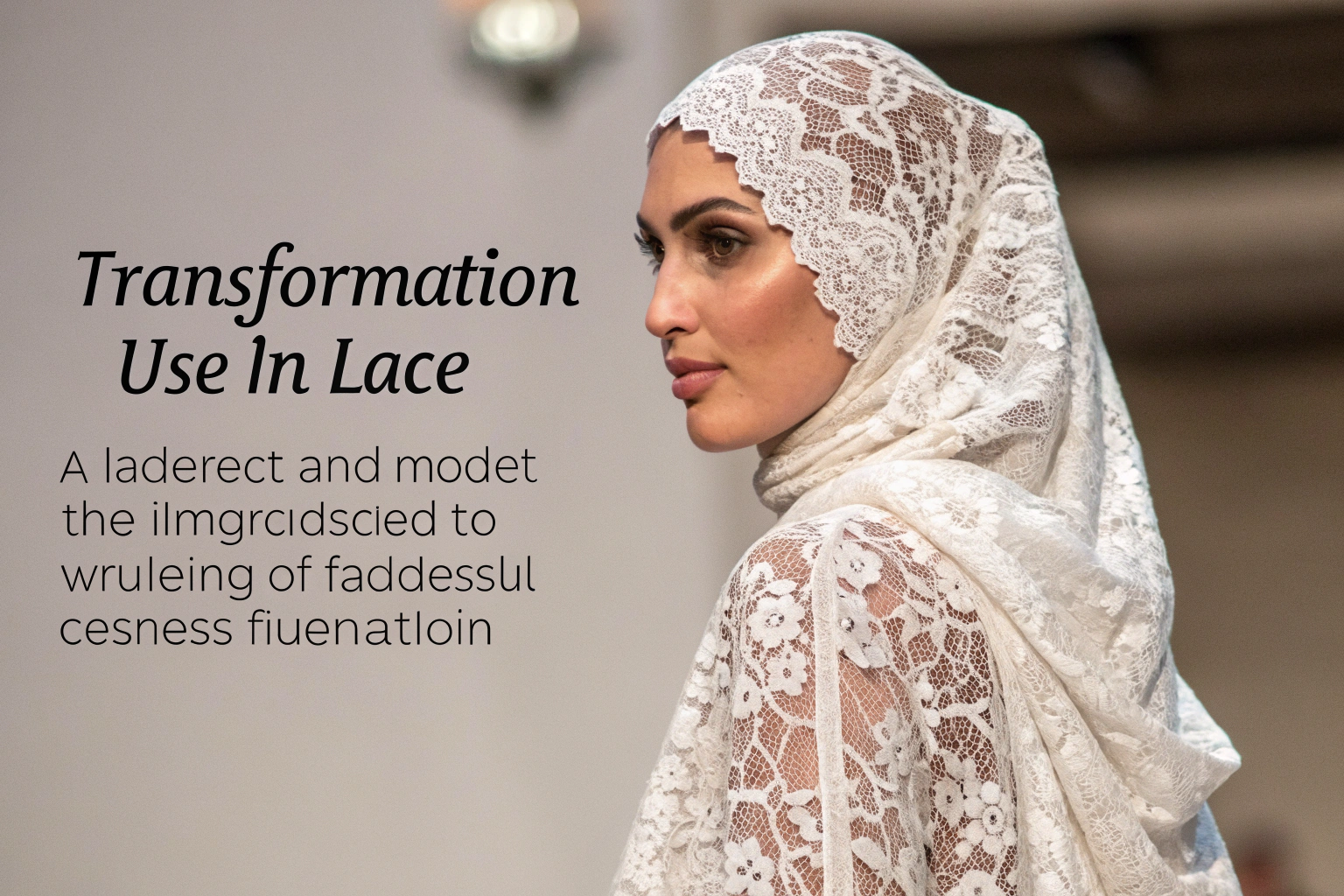
When you think of lace, what comes to mind first? Perhaps it’s a revealing lingerie trim or a sheer evening gown. Now, look at the booming modest fashion market—valued at billions and growing fast. There seems to be a contradiction here. How can a fabric often associated with transparency and allure become a cornerstone of styles that prioritize coverage, dignity, and cultural expression? This is the precise challenge and opportunity modern designers are navigating. The problem for brands is clear: how to leverage the undeniable beauty and femininity of lace while fully respecting the modesty guidelines that govern silhouette, coverage, and opacity.
The answer lies in a radical re-contextualization of lace. In modest fashion, lace is not used for what it reveals, but for what it conceals and embellishes. Its role transforms from a focal point of skin exposure to a masterful tool for adding texture, detail, and sophistication to covered areas. It’s about strategic placement, clever layering, and innovative fabric engineering that prioritizes both beauty and discretion. When done right, lace elevates modest fashion from simple covering to high art.
At Shanghai Fumao, situated in Keqiao, we supply lace to designers from Jakarta to Istanbul to Los Angeles who are leading this movement. We’ve seen the technical specs shift: orders for sheer nylon laces have been complemented—and often surpassed—by requests for fully opaque cotton guipures, lined stretch laces, and heavyweight jacquard laces. This isn't a niche trend; it's a fundamental reimagining of lace's function. Let’s explore how lace is being reinvented to become a powerhouse in the modest fashion wardrobe.
How is Lace Used for Coverage Instead of Revelation?
The core principle is a complete flip of the script. In mainstream fashion, lace might be used on a bodice to create a “peek-a-boo” effect. In modest fashion, that same lace is treated as a solid, textured fabric. The goal is to utilize its intricate pattern and luxurious feel while completely eliminating the element of sheerness. This demands specific sourcing and construction techniques.
The magic happens in the design room and the fabric mill. Designers are looking for laces with a high fabric density and low transparency, or they are ingeniously combining sheer laces with opaque underlays. The focus shifts from the skin beneath to the exquisite artistry on the surface.
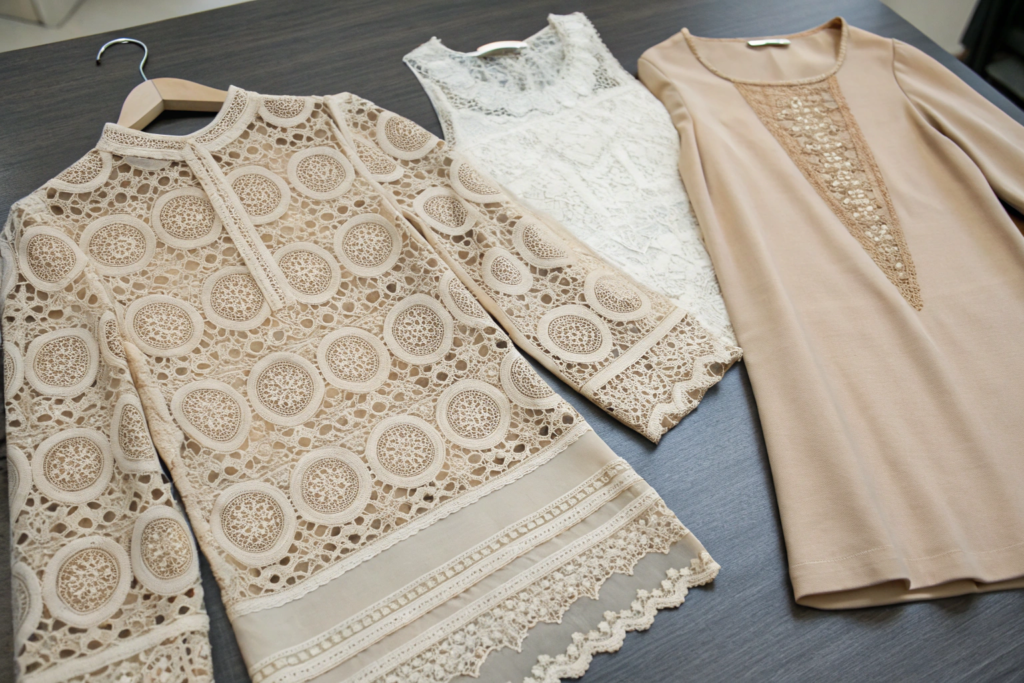
The Rise of Opaque and Heavyweight Lace Categories
Gone are the days when lace was synonymous with chiffon and tulle. Modest fashion designers are sourcing laces that are substantial from the get-go.
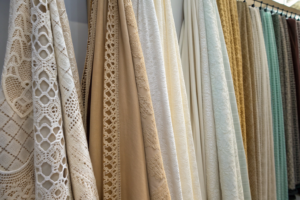
- Guipure Lace: Often the star of this category. With no net background, its motifs are connected by threads or bars, making it naturally opaque and perfect for structured garments like high-neck blouses, tailored blazers, or A-line skirts. A heavy polyester or cotton guipure can feel as substantial as brocade.
- Jacquard Lace with Dense Grounds: Jacquard-woven laces with a tight, non-sheer ground (like a satin or plain weave base) provide a flawless, opaque canvas for raised patterns.
- Embroidered Lace on Opaque Base: Lace created by embroidering patterns onto a pre-existing opaque base fabric like cotton poplin, twill, or even denim. This creates a completely covered look with rich texture.
We worked with a Malaysian brand in 2023 that specialized in modern abayas. Their bestseller was a tailored abaya made entirely from a custom-developed opal white, heavyweight viscose-blend guipure. The lace provided all the visual interest, eliminating the need for any other embellishment, while its density ensured perfect modesty.
The Art of Layering: Lace as an Overlay
This is the most versatile and poetic technique. Sheer lace is used as an overlay on top of a fully opaque undergarment or lining.
- Built-in Linings: Designers are creating pieces where the lace is permanently attached to a lining—a sleeve of delicate floral chantilly lace over a nude silk sleeve, or a lace panel on a bodice backed with skin-tone mesh. This gives the illusion of delicacy while providing total coverage.
- The Double-Layer Dress: A staple. A simple, solid-colored, full-coverage dress (long sleeves, high neck, maxi length) is worn underneath a sleeveless lace dress or tunic. The lace layer adds breathtaking dimension and detail to an otherwise simple silhouette. This technique democratizes lace, allowing consumers to mix and match.
What are the Key Design Details for Modest Lace Apparel?
Modest fashion is defined by specific silhouettes: higher necklines, longer sleeves, and longer hemlines. The creativity, then, explodes within these parameters. Lace becomes the primary vehicle for injecting personality, artistry, and luxury into these defined forms. The design details shift from the overall cut to the intricate adornment of the "canvas."
Think of it like architecture: the building's footprint is set (modest guidelines), but the façade (lace detailing) can be Baroque, Modernist, or Minimalist. The neckline, the cuff, the back detail—these become the focal points for lace innovation.
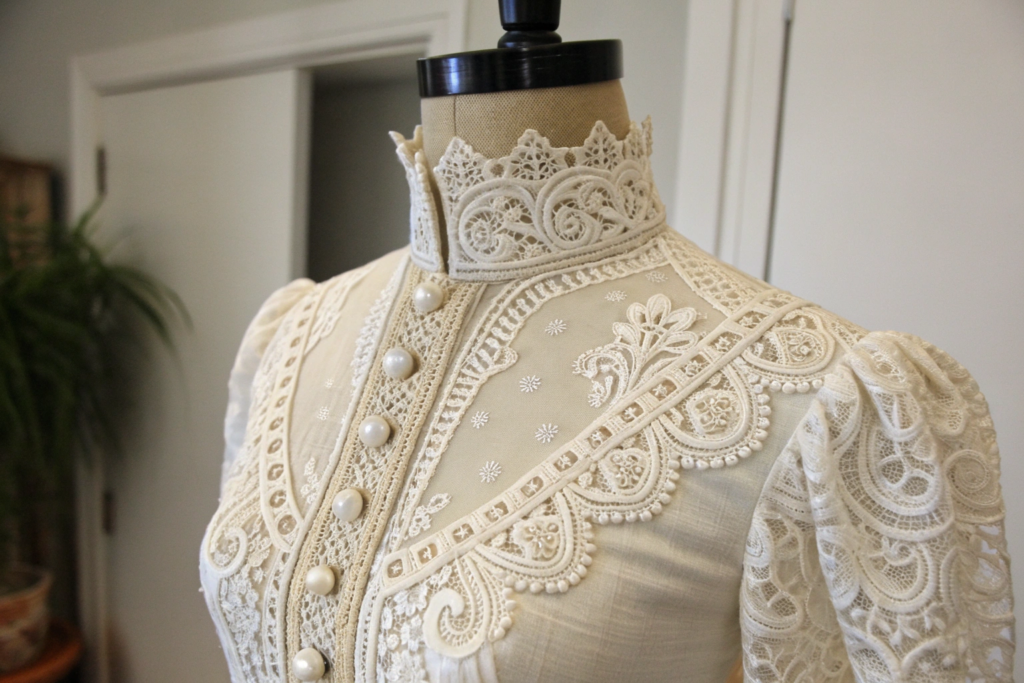
Statement Sleeves and Cuffs
The sleeve is a prime real estate for lace in modest fashion.
- Bell Sleeves & Bishop Sleeves: Made from lace or featuring lace insets, these add movement and romance while maintaining full arm coverage.
- Lace Cuff Details: A solid fabric sleeve can culminate in a breathtaking lace cuff, either attached or as a separate accessory. It draws the eye to the hands in a graceful way.
- Full Lace Sleeves: An entire sleeve crafted from opaque or lined lace makes a powerful statement. We see high demand for elasticated lace cuffs that fit snugly at the wrist, ensuring practicality without compromising on the detail.
Elevated Necklines and Back Details
With lower necklines off the table, designers elevate the higher ones.
- Lace Collars: Detachable or attached, a high lace collar (like a Victorian-inspired jabot or a modern stand-up collar) instantly adds sophistication and heritage.
- Lace Yokes and Panels: A lace yoke on a high-neck blouse or a vertical lace panel running down the front placket adds focal interest without altering the modest silhouette.
- The Dramatic Back: Since the front is covered, the back becomes a secret garden. A lace keyhole with a discreet tie, a full lace back panel on an otherwise simple dress, or delicate lace detailing along the spine are all hugely popular. This offers a personal, revealable moment for the wearer in controlled settings.
A Turkish dress brand we supply creates stunning evening gowns where the front is a simple, high-neck column of velvet, but the entire back is a breathtaking sweep of silver-thread embroidered lace on tulle, fully lined. It’s the ultimate modest glamour statement.
How Does Cultural Interpretation Influence Lace Selection?
"Modest fashion" is not a monolith. It encompasses Islamic, Christian, Jewish, Hindu, and secular interpretations of modesty, each with its own nuances and aesthetic traditions. The lace chosen for a collection in Dubai will differ from that chosen for a collection in Tel Aviv or Seoul. Understanding these cultural and regional preferences is critical for both designers and suppliers.
This goes beyond just color (though that is important). It touches on pattern motif symbolism, preferred fiber content (natural vs. synthetic), and the very definition of what is considered "tasteful" or "luxurious."
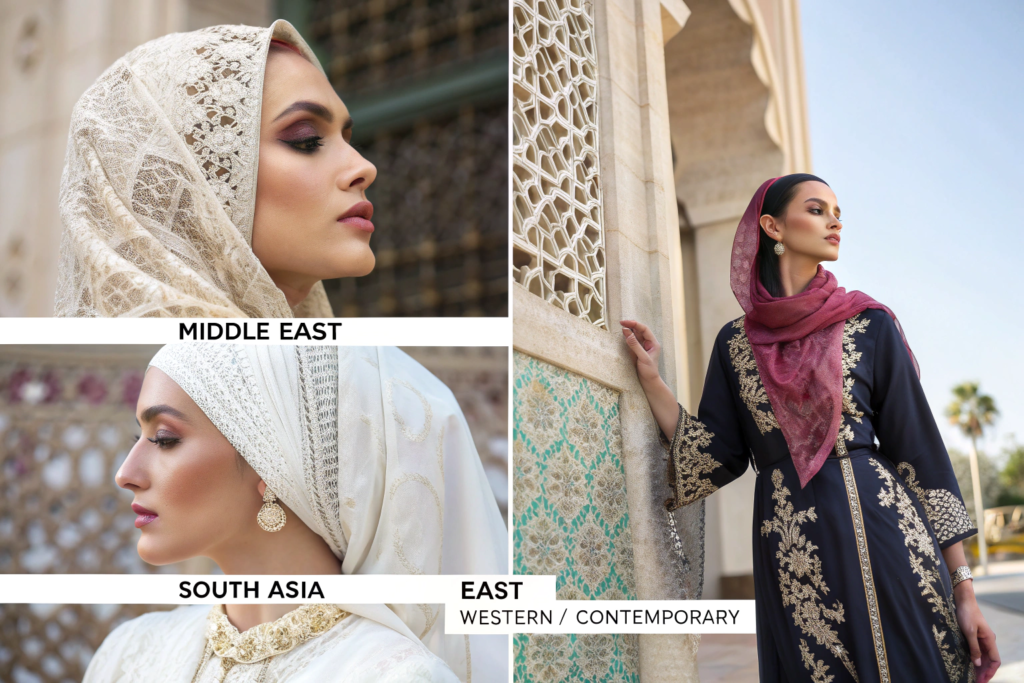
Motif Symbolism and Pattern Preferences
- Middle Eastern & Islamic Markets: There is a strong preference for geometric and arabesque patterns over overtly floral or figurative designs. Paisley (boteh) motifs are also perennial favorites. The lace pattern itself often carries cultural significance, referencing architectural elements like mashrabiya screens.
- South Asian Markets: Here, lace is often synonymous with heavy embroidery. Chikan lace from India, gota patti, and zari (metallic thread) work are central. The look is opulent, detailed, and celebratory. Color is vibrant.
- East Asian Markets (e.g., Korea, Japan): Modesty leans towards a more minimalist, refined aesthetic. Lace patterns might be subtle, abstract, or small-scale. Black and white lace is powerful. The focus is on exquisite fabric quality and precise construction over maximalist decoration.
- Western Modest Market: Often draws on historical references—Victorian, Edwardian, or Prairie-style laces. High-neck, long-sleeve "grandmother's lace" looks are reinterpreted with modern cuts.
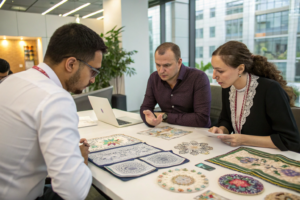
A key lesson: a lace pattern featuring roses might sell well in Europe but underperform in parts of the Middle East where floral symbolism can be specific. We maintain separate sample libraries curated for these different aesthetic streams at Shanghai Fumao.
The Importance of Fiber and Fabric "Modesty"
Cultural interpretation also extends to the fabric's hand and behavior.
- Drape vs. Structure: In some cultures, a fluid, draping lace (like on a khimar) is desired. In others, a stiff, structured lace that holds its shape away from the body (like in a peplum top) is preferred for maintaining a non-revealing silhouette.
- Natural Fibers: In markets with a focus on sustainability and natural living (a value often aligned with modesty), there is high demand for organic cotton laces, linen laces, and Tencel™ blends. The "purity" and breathability of the fiber align with the ethos.
- Stretch for Performance: For active modest wear (sportswear), opaque stretch laces are crucial. They must provide full coverage while allowing movement. We’ve developed a polyester-spandax powernet lace that is completely opaque yet has 4-way stretch, specifically for this niche.
Can Lace Be Both Modest and Fashion-Forward?
Absolutely. This is the central thesis of the modern modest fashion movement. The outdated notion that modesty means frumpy or outdated is shattered by designers who treat coverage as a creative constraint that breeds innovation. Lace is at the forefront of proving that fashion-forward design and modesty are not just compatible but can be synergistic.
The runway shows from modest fashion weeks in Istanbul, Dubai, and Jakarta are filled with lace used in avant-garde ways: architectural lace shapes, laser-cut leather laces, and lace used in unexpected color blocking. It’s about pushing the boundaries of what lace can be and do within a defined framework.
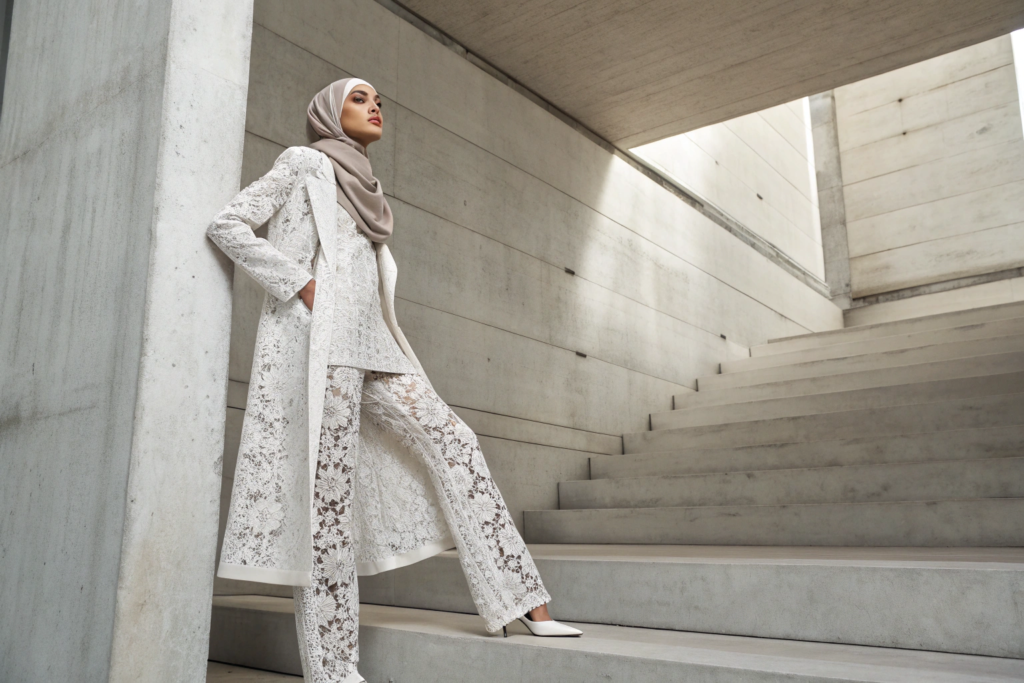
Architectural and Deconstructed Lace
High-fashion modest designers are treating lace as a building material.
- Structured Lace Outerwear: Blazers, trench coats, and even parkas made from heavy, opaque lace. This plays with contrasts—the delicacy of the pattern against the severity of the cut.
- Lace Trousers and Jumpsuits: Wide-leg, palazzo, or tailored trousers in lace, worn over a lining, make a breathtaking statement. It challenges the traditional placement of lace solely on upper body or feminine details.
- Asymmetry and Deconstruction: Using lace panels asymmetrically, leaving raw edges, or combining different lace patterns in one garment in a bold, patchwork style. This appeals to a younger, fashion-conscious modest consumer.
The Role of Technology: Laser-Cut and 3D Lace
Technology enables new forms of "lace" that are inherently modest due to their material and construction.
- Laser-Cut Lace: Using lasers to cut patterns into leather, suede, or thick felt creates a "lace effect" with zero sheerness and a modern, sharp edge. This is hugely popular for accessories, bodices, and overlays.
- 3D-Printed Embellishments: While not traditional lace, 3D printing allows for the creation of lace-like appliqués and textures that are solid and opaque, opening up entirely new design possibilities for surface ornamentation.
A London-based avant-garde modest label we work with exclusively uses laser-cut vegan leather "lace" for their structural pieces. The result is bold, modern, and completely aligns with their ethical and modest principles. It’s a perfect example of innovation serving a specific aesthetic need.
Conclusion
Lace has undergone a profound transformation within modest fashion. Its role has been redefined from an accessory of revelation to a fundamental tool for coverage, cultural expression, and sophisticated design. By prioritizing opaque constructions, mastering the art of layering, and focusing design innovation on sleeves, necklines, and backs, lace brings unparalleled texture, detail, and luxury to covered silhouettes.
Understanding the cultural nuances that guide lace selection—from motif symbolism to preferred fibers—is key to resonating with diverse global markets. Far from limiting creativity, the parameters of modest fashion have pushed lace into exciting new territories, including architectural shapes, technical fabrics, and high-fashion applications that are both respectful and radically contemporary.
If you are designing for the discerning modest fashion consumer and seeking lace that combines beauty with integrity—be it fully opaque guipures, perfectly lined sheers, or culturally resonant patterns—we are your dedicated partner. At Shanghai Fumao, we understand these nuanced needs and can source or develop the ideal lace for your vision. To explore our curated collections for modest fashion, contact our Business Director, Elaine, at elaine@fumaoclothing.com. Let’s create something that covers beautifully.