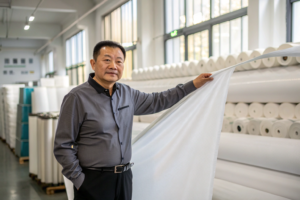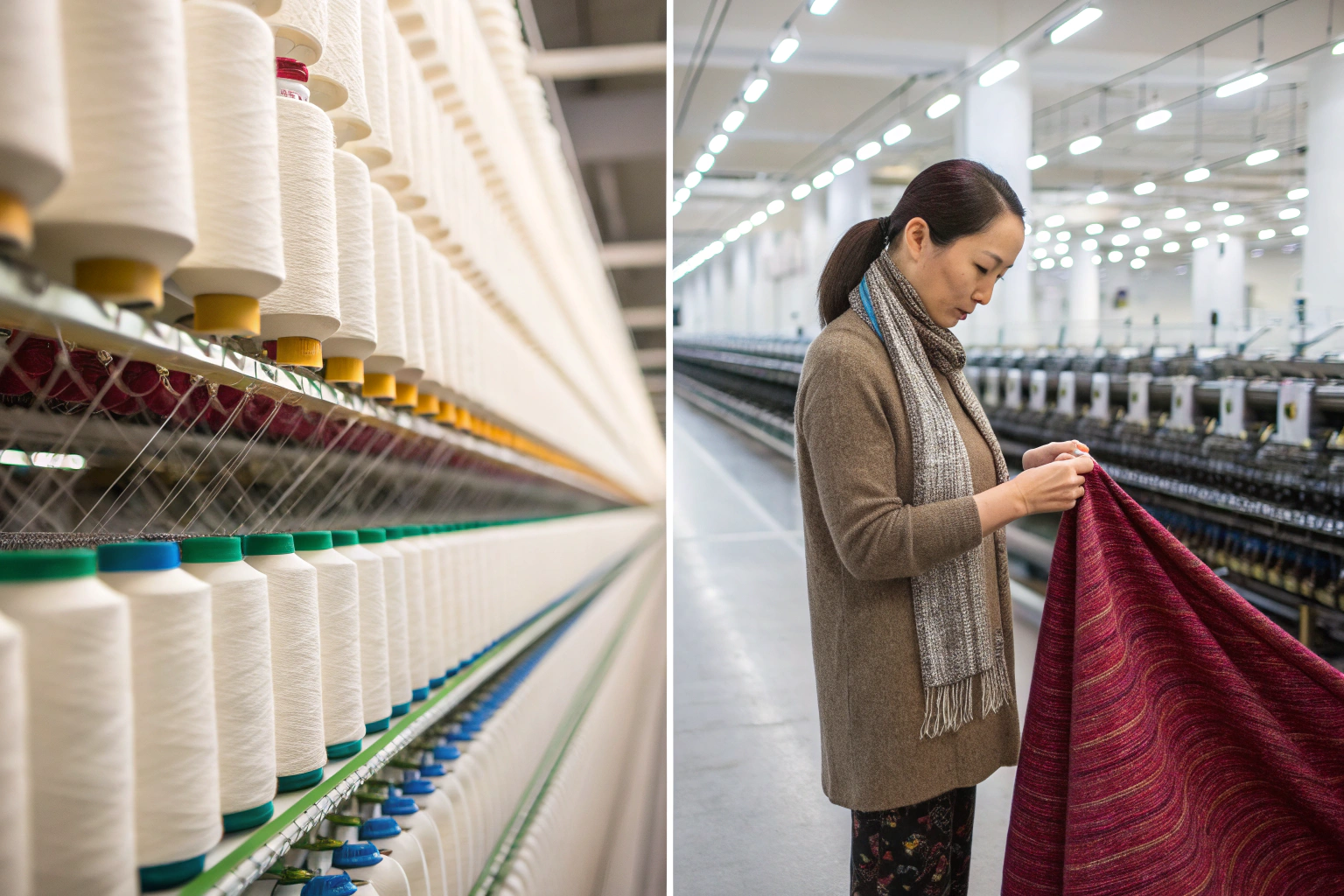
Have you ever picked up a t-shirt or a jacket and wondered how it got that cool, heathered look? It’s not printed on; the color is actually woven into the very fiber of the fabric. That is the magic of melange. But for a long time, as a buyer, you might have just seen it as a simple fabric option. You place an order, cross your fingers, and hope the color comes out right. You’re dealing with price checks, worrying about shipping delays, and constantly asking, "Is the quality control really there?" I know this pain. I've been in this business for over 20 years, sitting on the other side of the table.
The process of creating melange yarn and fabric is a meticulous journey of blending, spinning, and weaving that starts not with dyeing the whole cloth, but with dyeing the fiber itself. It’s a complex, multi-step manufacturing process that, when done right, produces a fabric with unique depth and color variation. When done wrong, it’s a QC nightmare. Let me pull back the curtain on how we do it here at Shanghai Fumao, and how understanding this process can actually solve your biggest sourcing headaches.
The global textile industry is shifting, and melange fabrics are more popular than ever, especially in the athleisure and sustainable fashion sectors. But why go through the trouble? Because the visual texture is impossible to replicate with simple piece dyeing. It offers a soft, natural, "authentic" look that consumers love. But to get that look reliably, from a sample to a full container shipment, you need a partner who controls every single step. At Shanghai Fumao Textiles International, we don’t just buy yarn; we engineer it from the ground up in our own ecosystem of factories in Keqiao. We ensure that your vision of the perfect heather gray isn’t lost in translation—or in the 2-month wait for a boat.
How Does Fiber Selection Impact the Final Melange Fabric Quality?
I always tell my new clients, especially the ones from the US and Europe who are super concerned about price, that melange fabric is like a good recipe. You can't just throw ingredients together and hope for the best. It starts with the raw material. The quality of the final fabric—its softness, its strength, and how that heather effect actually looks—is decided here, before a single machine even starts spinning. If you use low-quality fiber, you’ll get low-quality melange, period.
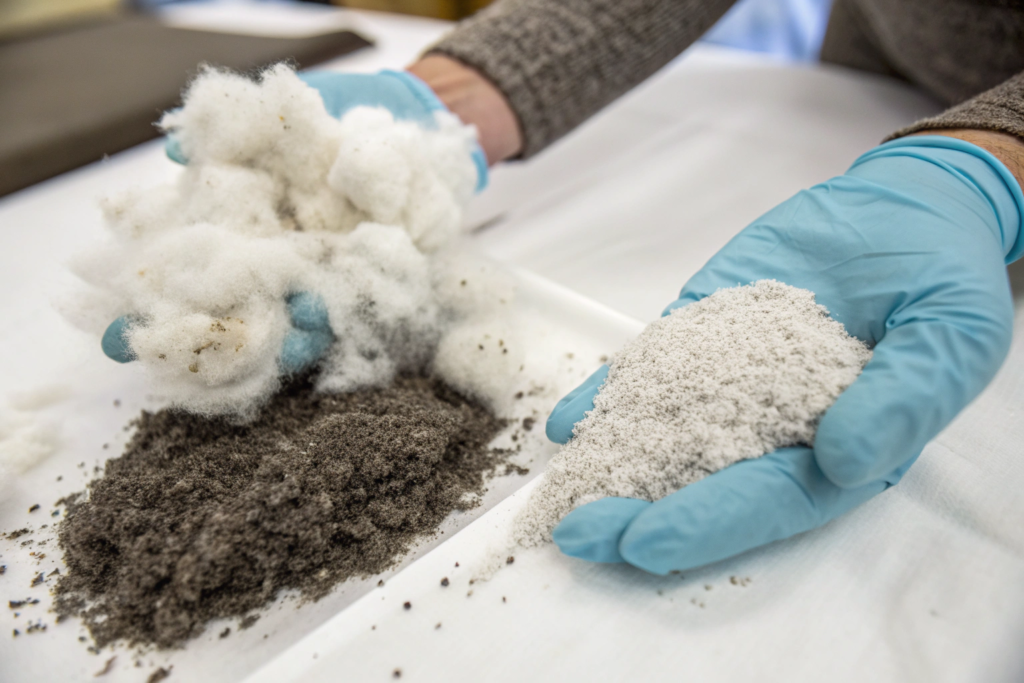
What is the right mix of raw white and dyed fibers for a 60/40 melange?
This is the million-dollar question. The "60/40" refers to the proportion of dyed fiber to undyed (or differently dyed) fiber. Getting this ratio physically correct is where most factories stumble. We use a precise weighing and layering process. For a standard grey melange, we might take 60% black-dyed cotton and 40% raw white cotton. But it's not just about dumping them in a hopper. We create layers—like a fiber lasagna—alternating the dyed and undyed stock. This physical layering before the initial mixing guarantees that the fibers intermingle evenly. I remember a German client in early 2023 who was struggling with inconsistent shading in their melange sportswear line. Their previous supplier wasn't doing this layering right. When we showed them our process, and how we even use a guide to selecting cotton types for specific yarn strengths, they understood immediately why our consistency was better. We then use a series of blending machines that open, clean, and further mix these layers. The goal is a homogeneous mix where every inch of yarn, and therefore every inch of fabric, has the exact same 60/40 visual distribution.
How do different fiber origins (like Egyptian vs. Upland cotton) change the dye absorption?
This is a detail that separates a one-time fabric seller from a long-term manufacturing partner. Different cottons absorb dye differently. For example, Egyptian cotton, with its longer staple length, has a different surface chemistry compared to standard Upland cotton. If you're creating a melange fabric using a blend of origins, or even a blend of natural and man-made fibers like Tencel, the dye uptake will vary. We have to account for this. Our CNAS-accredited lab tests every single batch of raw fiber. For a recent order of organic cotton melange for a high-street brand, we noticed that the organic fibers from one specific farm in Turkey were absorbing the reactive dye at a rate 15% slower than our control sample. We adjusted the dyeing time and temperature for that specific fiber lot before blending it with the white. Without that step, the final fabric would have looked washed out. It's this kind of technical deep dive into dyeing different cellulose fibers that ensures the "fastness" and color accuracy you demand. We're not just mixing colors; we're managing the chemistry of each individual fiber to create a perfect final blend.
Why Is the Spinning Process Critical for Achieving Consistent Melange Effects?
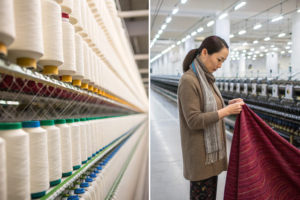
Once the fibers are perfectly blended into a homogeneous "lap" or "sliver," the real magic happens at the spinning frame. This is where the blended mass of fibers gets drafted, twisted, and transformed into a strong, usable yarn. In melange production, the spinning process isn't just about making yarn; it's about locking in the blend and defining the final aesthetic. A slight change in tension or twist here can completely alter the fabric's hand feel and even the perceived color.
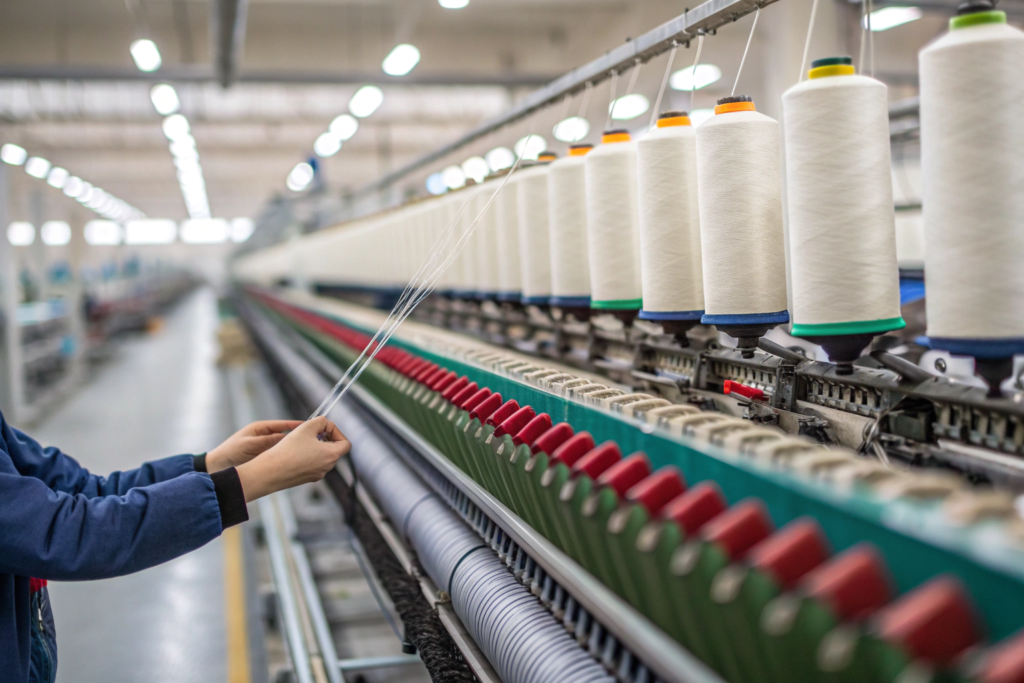
What are the key differences between carded, combed, and compact spinning for melange yarns?
Choosing the spinning method is like choosing the resolution for a digital image. It determines the clarity and quality of your final product. For melange yarns, this choice is even more critical.
- Carded Yarn: This is the most basic and economical method. The fibers are carded to align them, but shorter fibers remain. For melange, carded yarn can sometimes look a bit "hairy" and the heather effect might be slightly less distinct. It's great for heavier, rustic fabrics like certain denims or workwear where that texture is desirable.
- Combed Yarn: Here, we take the carded sliver and put it through a combing machine. This process removes the short fibers and any remaining impurities, leaving only the long, parallel, high-quality staples. For a premium melange used in fine knits or high-thread-count woven shirting, combing is non-negotiable. The resulting yarn is smoother, stronger, and the color contrast between the fibers is sharper and more defined. We use combed yarn for about 80% of our melange production, especially for clients who need that soft, premium hand-feel.
- Compact Spinning: This is an evolution of ring spinning. It uses a suction system to condense the fiber strand before twisting, virtually eliminating the spinning triangle. This creates an exceptionally clean, strong, and hair-free yarn. For melange fabrics destined for high-end athleisure or luxury outerwear, compact spinning is the gold standard. The fabric surface is smoother, colors are more vibrant, and pilling resistance is dramatically improved. We invested heavily in compact spinning frames in 2022, and it has been a game-changer for our European clients who demand that Lululemon-tier quality in their melange performance fabrics.
How do we control yarn evenness to prevent "barre" or streaking in the final fabric?
"Barre" is a dirty word in the textile industry. It refers to those unwanted, horizontal streaks or bands that sometimes appear in knitted or woven fabric, usually caused by variations in the yarn. In melange fabrics, because the visual effect relies on a uniform blend, barre is even more noticeable and unacceptable. It's often caused by inconsistent yarn tension or mass during spinning.
Our solution is 100% data-driven. Every single spinning frame in our facility is equipped with real-time monitoring sensors from Uster, the industry standard. These sensors measure the yarn's mass and diameter at thousands of points per second. If there's even a micro-variation, the system alerts our technicians immediately. We can then pinpoint the exact spindle causing the issue and correct it before a single pound of bad yarn is produced. For a recent order of melange jersey for a US-based activewear startup, this system flagged a slight tension variation. We caught it, adjusted the machine, and the entire 5,000kg order was delivered barre-free. This kind of in-depth analysis of fabric defects like barre and how to prevent them is what we live by. You aren't paying for just fabric; you're paying for our vigilance in preventing these costly defects.
What Role Do Finishing Processes Play in Enhancing Melange Aesthetics?
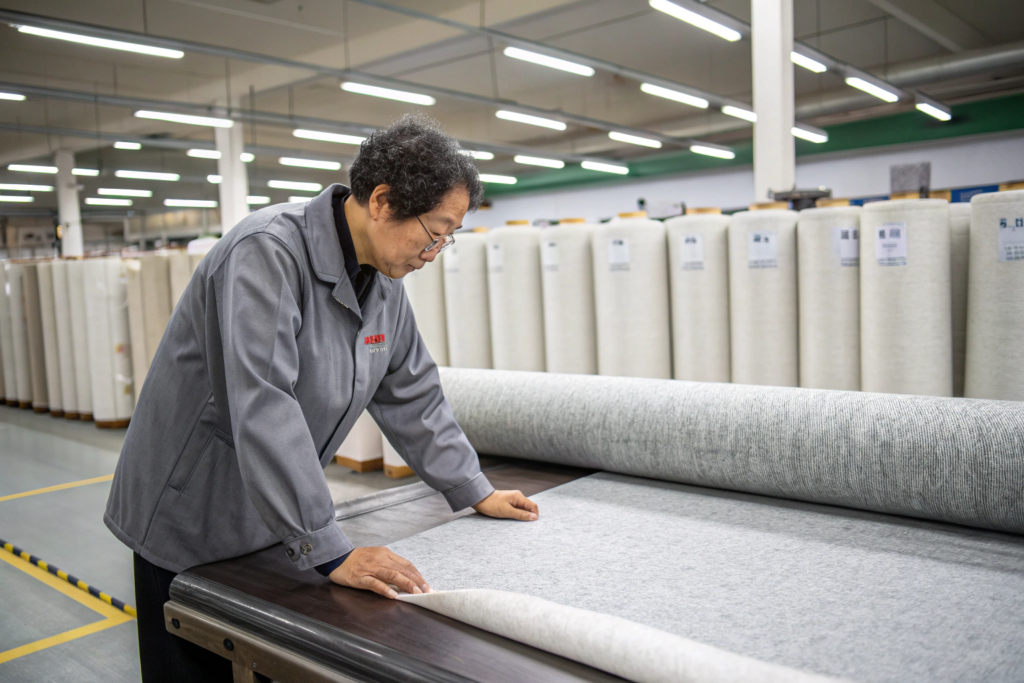
The yarn is spun, the fabric is woven or knitted. You might think the job is done. But this is where we add the final layer of value, literally. The finishing processes are what transform a good melange fabric into an exceptional one. It's about setting the handle, stabilizing the construction, and ensuring that the unique visual depth you created in the spinning process isn't washed away or obscured.
Why is mercerization sometimes skipped for melange fabrics, and why is that a mistake?
Mercerization is a chemical finish applied to cotton fabrics (or yarns) to swell the fibers. It increases luster, strength, and its affinity for dyes. Some manufacturers skip it for melange because they think, "The fiber is already dyed, what's the point?" That's a huge mistake. Mercerizing a melange fabric does two critical things: First, it dramatically enhances the color contrast. The dyed fibers become richer and more vibrant, while the undyed fibers become brighter and more translucent. This creates a much more pronounced and luxurious heather effect. Second, it improves the fabric's dimensional stability, meaning it won't shrink as much in the customer's first wash. For a premium brand, this is essential. We always recommend mercerization for any high-end melange shirting or dress fabric. It adds that "premium sheen" that clients feel when they touch the garment.
How do mechanical vs. chemical finishing affect the "hand feel" of a melange sweater fabric?
The "hand feel" is everything, especially for sweaters and winter wear. A melange fabric can look perfect but feel like sandpaper, and it won't sell. We have two main ways to soften it: chemical and mechanical.
- Chemical Finishing: This involves applying softeners, silicones, or other agents to the fabric. It's effective and can give a very slick, soft feel. But for melange fabrics, you have to be incredibly careful. Too much softener can "fill" the fabric and mute the color contrast, making the heather effect look muddy. We use precise, low-foam applicators to ensure the chemicals coat the fibers without blurring the visual boundaries.
- Mechanical Finishing: This is my preferred method for premium melange. We use processes like sueding or peaching, where the fabric passes over high-speed, rotating brushes or sand rollers. This gently lifts a micro-fuzz of fibers from the surface. On a melange fabric, this has a stunning effect. It softens the hand dramatically but also "blooms" the color, making the heather effect look incredibly soft and natural, almost like a watercolor painting. We used this technique on a consultant's guide to different fabric finishing techniques for a Norwegian outdoor brand last year for their melange fleece line. The result was a fabric that was both technically warm and aesthetically beautiful, with a hand feel that their customers rave about.
How Can You Mitigate Tariff and Logistics Risks When Sourcing Melange from China?
Let's be real. You're reading this because you want to source amazing product, but the fear of the unknown—logistics, tariffs, communication breakdowns—keeps you up at night. You're not alone. For a US-based buyer like Ron, the journey from a factory floor in China to a warehouse in America is fraught with potential pitfalls. But here's the thing: a robust, predictable supply chain is built, not found. And it starts with a partner who understands the entire landscape, from HS codes to the final mile.

What is the correct HTS classification for melange fabrics to minimize tariff exposure?
This is where a sourcing agent earns their keep. The Harmonized Tariff Schedule (HTS) is a nightmare, and one wrong digit can cost you thousands of dollars in unexpected duties. Melange fabrics don't have a single, special code. They are classified by their construction (woven or knit) and fiber composition. A cotton melange jersey will fall under a different code than a polyester-cotton melange woven fabric. For example, a cotton knit fabric might be under 6109.10.00, while a woven one is under 5208 or 5209. The key is precision. We work with a customs broker who helps us verify the correct classification for every single order. We ensure the commercial invoice, packing list, and country of origin certificates are 100% accurate. Furthermore, we help clients navigate the complexities of Section 301 tariffs. By ensuring the product is correctly classified, you aren't paying duties you don't owe. We often advise clients to use a specialized trade tariff resource to understand current rates and exemptions, ensuring full compliance.
How does our "One-Stop" production model protect your sailing schedule from delays?
The biggest killer of timelines is the handoff. Fabric made in one factory, sent to a dyer in another, then to an embroiderer somewhere else. Each handoff is a chance for a delay, a miscommunication, or a quality issue. This is our biggest advantage. Because Shanghai Fumao controls the weaving, dyeing, printing, embroidery, coating, and inspection under one cohesive operational umbrella in Keqiao, there are no handoffs. When your melange fabric comes off the loom, it moves to our finishing department the same day. If you need embroidery on that melange fabric, it goes directly to our in-house embroidery floor. There are no trucks, no waiting lists, and no "lost" pallets. This vertical integration means that what might take another supplier 8 weeks, we can often do in 5. For a UK-based buyer last year, during the peak pre-Chinese New Year rush, this was the difference between hitting their spring launch window and missing it entirely. We kept their production line moving because we controlled every machine. And when it's ready, our dedicated logistics team works with our partner freight forwarders to book your container on the next available vessel, ensuring your sailing schedule is met.
Conclusion
So, the process of creating melange yarn and fabric is far from simple. It's a journey that requires precision, from the initial blend of fibers to the final finishing touch. It's about understanding how Egyptian cotton takes dye differently than Upland, why compact spinning prevents defects like barre, and how a simple mechanical finish like peaching can transform the hand feel from ordinary to extraordinary. You're not just buying a roll of cloth; you're investing in a complex manufacturing process that, when managed correctly, delivers a superior product your customers will love.
We've spent over two decades perfecting this process. We've built the labs, the factories, and the team to ensure that the melange fabric you order is the exact fabric you receive—on time, at the agreed-upon quality, and with the documentation you need to clear customs without a hitch. We know the challenges you face, from tariff costs to tight deadlines. We've built our entire operation to be your solution.
If you're ready to stop worrying about supply chains and start focusing on your designs, let's talk. We can handle the rest. Contact our Business Director, Elaine, directly to discuss your next project. She understands the nuances of the US and European markets and can guide you through every step. Reach her at elaine@fumaoclothing.com. Let's co-create value.