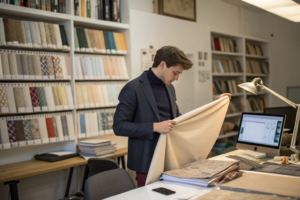
If you have ever touched a piece of devoré velvet, you know the feeling. Smooth, soft velvet areas, next to sheer, see-through sections. All in one piece of fabric. It feels like magic. How can one fabric be both plush and transparent? I remember the first time I saw it, back in 2003 when I was still learning the trade in Keqiao. A French buyer walked into our office with a small swatch. She asked, "Can you make this?" I looked at it. Velvet here, sheer there. I had no idea how it was made. I said yes anyway. That was a mistake. It took us six months of trial and error, wasting thousands of meters, before we finally got it right. That experience taught me everything about devoré. And now, 20 years later, it is one of our specialties.
So here is the simple answer: Devoré, also called "burn-out," is a fabric where part of the pile is chemically dissolved to create a pattern. The word "devoré" comes from French, meaning "devoured." And that is exactly what happens. An acid paste "eats" away certain fibers, leaving a design of opaque and sheer areas. Usually, the fabric is made of two different fiber types. One fiber resists the acid. The other dissolves. The most common combo? Polyester for the base, and viscose for the velvet pile. Or silk for the base, and cotton for the pile. The acid destroys the cellulose fibers (cotton, viscose, linen) but leaves the protein or synthetic fibers (silk, polyester) untouched.
Let me be real with you: Devoré is not an easy fabric to make. It takes experience, precision, and patience. One wrong chemical mix, one bad printing stroke, and the whole batch is garbage. But when it is done right, it is beautiful. It is used by high-end fashion brands for evening wear, scarves, and tops. It has a luxury feel that normal velvet cannot match. And if you are sourcing from China, you need a supplier who actually understands the chemistry, not just someone who prints and prays. At Shanghai Fumao, we learned the hard way, so you do not have to.
What are the fiber combinations needed for devoré fabric?
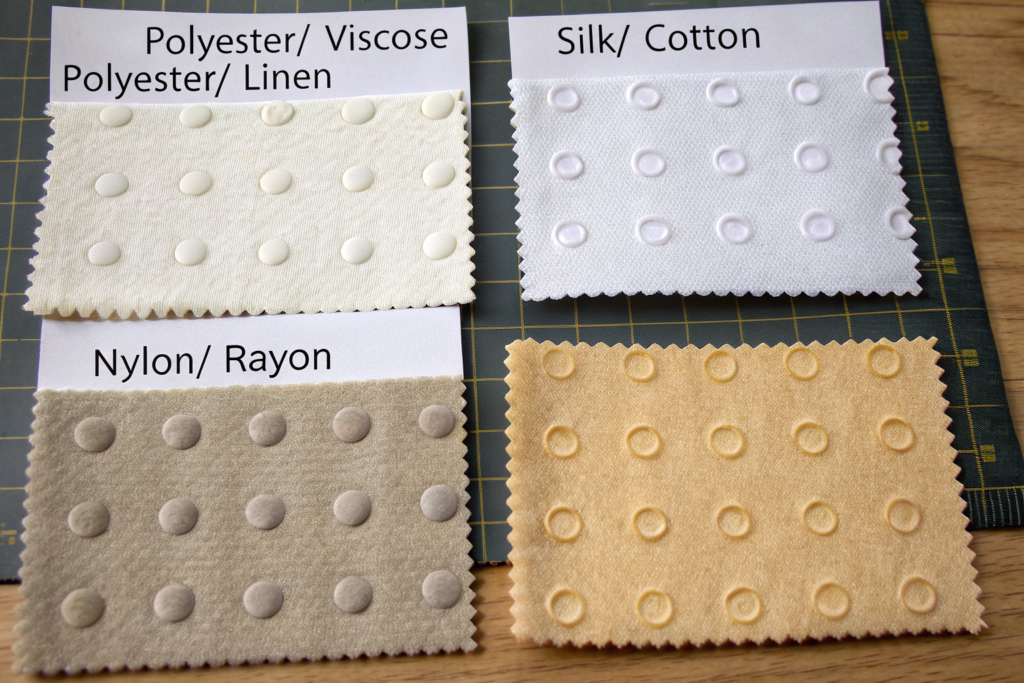
The secret to devoré is not in the printing. It is in the yarn. You cannot just take any velvet and burn out a pattern. The fabric must be constructed with two different fiber types. One fiber must be cellulose-based (plant fibers like cotton, viscose, modal, linen, or bamboo). The other must be protein-based (silk, wool) or synthetic (polyester, nylon). The acid in the printing paste eats the cellulose fibers. It leaves the protein or synthetic fibers completely alone. So the design appears where the cellulose pile is destroyed.
Polyester base with viscose pile: This is the most common combination in China. Why? Because it is affordable and stable. Polyester resists acid. Viscose (which is regenerated cellulose) dissolves. We use this for mass production. A US fast fashion brand in 2021 ordered 50,000 meters of this from us. It worked perfectly. The base stays strong, the pile burns out exactly where we print the acid.
Silk base with cotton pile: This is the luxury version. Pure silk for the ground, and cotton for the velvet loops or cut pile. The acid destroys the cotton but leaves the silk untouched. The result is incredibly soft and breathable. But expensive. We did a run for an Italian scarf maker in 2022. 5,000 meters of silk-cotton devoré. Cost three times more than polyester-viscose. But the client sold those scarves for €200 each.
Nylon base with rayon pile: Nylon is also acid-resistant. Rayon dissolves. This combination gives good stretch if needed. We used this for a sportswear-inspired evening wear collection for a German designer. Unusual, but it worked.
Polyester base with linen pile: Linen gives a more textured, natural look. The burn-out areas are rougher, more organic. A French home textile brand asked for this for decorative pillows. The contrast between smooth polyester and rustic linen burn-out was striking.
Important note: You cannot mix fibers in the same yarn. They must be separate. Usually, the pile (the fluffy part) is the cellulose fiber. The base (the ground fabric) is the acid-resistant fiber. This way, when we print the acid, it only touches the pile on top. It eats through the pile, exposing the base below. That is how you get the sheer effect.
Why does the fiber composition matter for the final result?
The fiber choice decides everything: the hand feel, the durability, the price, and even the color. For example, if you use a silk base, after burn-out, the exposed silk areas are shiny and smooth. They reflect light differently than the velvet areas. That contrast is beautiful. But silk is weak when wet. So during processing, we have to be extra careful. Too much tension and the silk tears. With polyester base, the process is easier. Polyester is strong and cheap. But the final fabric feels more synthetic. It does not breathe as well. A Swedish buyer once told me: "The polyester base feels cold against the skin." So she switched to silk base for her winter collection. She paid more, but her customers loved it.
For the pile fiber, viscose gives the best burn-out. It dissolves cleanly and evenly. Cotton can also work, but it leaves a bit of residue sometimes. We have to wash it thoroughly. Linen is harder to burn out evenly because the fibers are thicker and more variable. We adjust the acid strength for linen. More acid, longer reaction time. But too much acid can damage the base. So it is a balance. We keep detailed records of every fiber combination we have ever tried. Over 200 combinations in our database. That is our secret weapon.
How does the chemical printing process actually work?
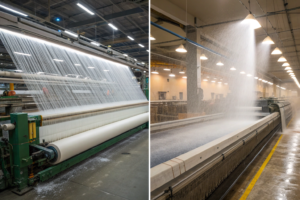
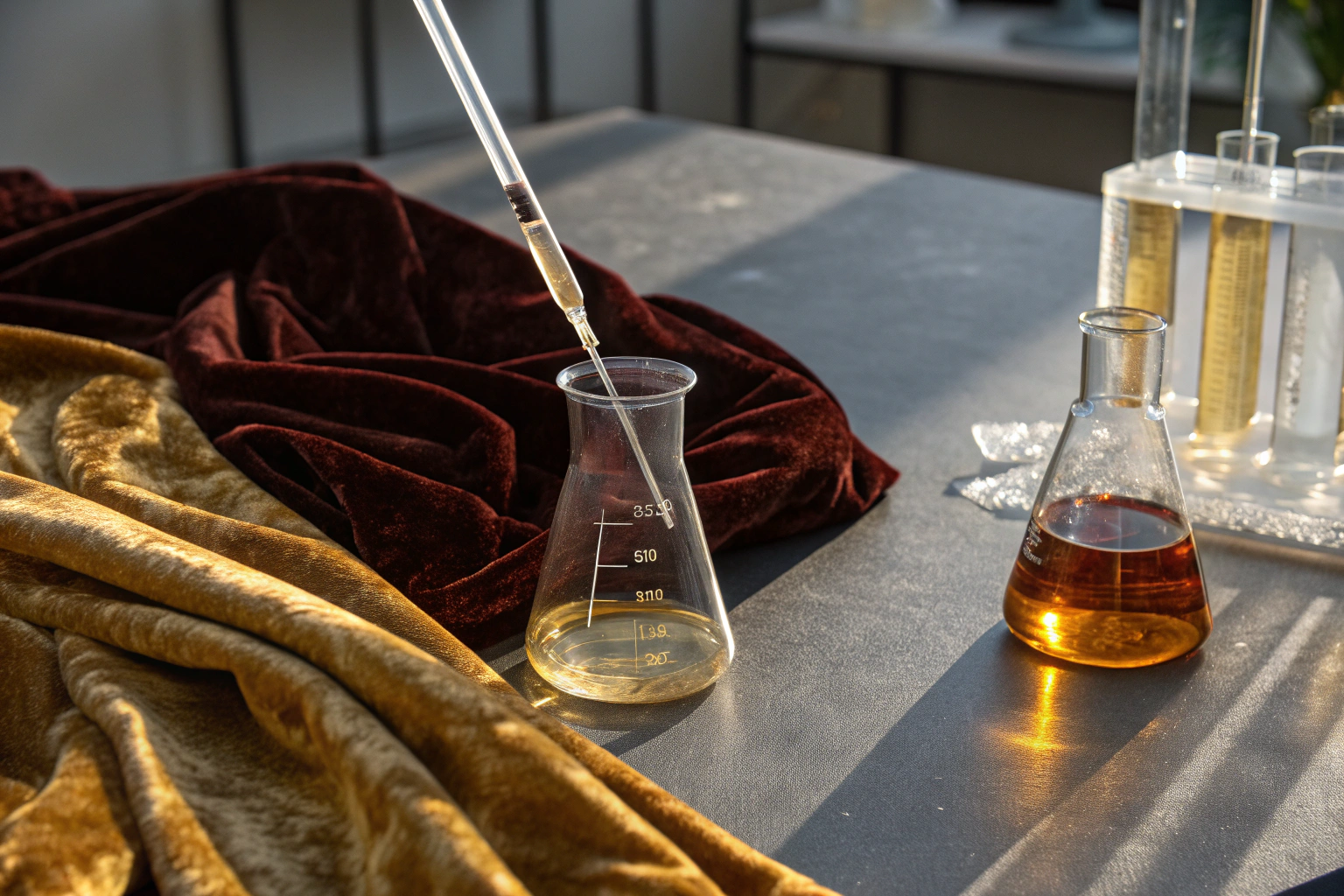
The printing process for devoré is different from normal fabric printing. We are not printing color. We are printing destruction. The "ink" is actually a thick paste containing a strong acid. Usually sulfuric acid or a similar chemical. We mix it with a thickener so it stays in place on the fabric. It cannot run or bleed, or the design will be blurry. We print this paste onto the velvet using a flatbed screen printer or a rotary screen printer. The screen has the design. Where there is an opening in the screen, the paste goes onto the pile. Where the screen is solid, no paste. The paste sits on top of the velvet pile, soaking into the cellulose fibers.
After printing, the fabric goes through a drying chamber. This is not just to dry it. The heat starts the chemical reaction. At around 100°C to 120°C, the acid begins to char and destroy the cellulose fibers. The fibers turn brown and brittle. They are literally burning, but controlled burning. Then the fabric goes into a curing oven. Higher heat, around 150°C to 180°C, for 2 to 3 minutes. This finishes the destruction. The cellulose fibers are now dead. They are just crispy brown specks stuck in the fabric.
Then comes the wash. We wash the fabric vigorously in water. The mechanical action, plus sometimes chemicals, washes away the destroyed fibers. What is left? Only the acid-resistant base fibers where the paste was printed. The velvet pile is gone in those areas. The fabric is now sheer. The unprinted areas still have the full velvet pile. The contrast is there. Beautiful.

What safety measures are required when handling burn-out acids?
I have to be very clear: This is dangerous work. Sulfuric acid is not something to play with. In our factory, we have strict rules. Only trained workers handle the paste. They wear acid-resistant gloves, aprons, and full face shields. The printing area has ventilation and emergency showers. If acid spills, we have neutralizers ready. We store the acid in double-contained tanks. We monitor the air quality constantly. I remember one incident in 2018. A worker lifted a screen too fast, and paste splashed. It hit his apron, not his skin. Thank God. We reviewed our training that week. Now we have even stricter protocols. If you are sourcing devoré, ask your supplier about their safety certifications. If they cannot show you, run away. They are cutting corners. And corners in chemical handling mean risk for you and your supply chain.
How do we control the depth of the burn-out effect?
Depth is a matter of timing and chemical strength. For a full burn-out, where the pile is completely removed and the base is exposed, we use a stronger acid and longer curing. For a partial burn-out, where we only shorten the pile but do not remove it completely, we use a weaker acid or shorter time. This creates a "semi-sheer" effect. The fabric has three levels: full pile, half pile, sheer base. It is very high-end. We did this for a Japanese designer in 2023. They wanted a gradual fade from velvet to sheer. We experimented with gradient screens and varying acid concentrations. It took three months, but we got it. The fabric looked like mist fading into solid. Stunning.
We also control the washing. If we wash too gently, some destroyed fibers might stick. If we wash too hard, we might damage the remaining pile. So we adjust water pressure, temperature, and washing time for each fabric type. Our washing line operators have years of experience. They can feel the fabric and know if it is clean enough. Machines cannot replace that touch.
What are the common challenges in devoré production?
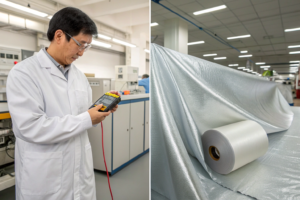
Devoré is not a forgiving process. Many things can go wrong. I have seen it all in 20 years. Blurry designs, holes where there should be pile, pile that did not burn out, base fabric dissolving by accident. Each problem has a cause, and each cause has a solution. But you have to catch it early. That is why we inspect every batch at multiple stages. Before printing, after printing, after curing, after washing, after drying. Five inspections minimum.
Uneven burn-out: This happens when the paste is too thin, or the screen pressure is uneven. The acid spreads beyond the design, burning pile where it should not. We fix this by adjusting the paste viscosity and checking screen tension. If the screen is loose, the paste bleeds. We replace screens regularly.
Base fabric damage: If the acid is too strong, or the curing too long, the acid eats through the pile AND attacks the base. Then you get holes. Real holes, not design holes. The fabric is ruined. We test each new batch of chemicals on samples first. We measure the acid concentration exactly. No guessing.
Residue left on fabric: If washing is insufficient, the burned cellulose stays stuck. The fabric looks dirty, and it feels scratchy. We increase washing time or add enzymatic washes to clean it. Sometimes we have to pass the fabric through the washing line twice. That costs money, but it is better than shipping bad fabric.
Color differences: The velvet pile and the exposed base often take dye differently. Even if they are the same fiber type, the texture changes how light reflects. So a solid color can look like two different shades. This is actually a design feature sometimes, but if the client wants it perfectly matched, we have to work hard. We choose dyes carefully and test on both surfaces. For a Swedish client in 2022, we did 15 lab dips to match the velvet and base exactly. They paid for the extra work, and the final product was perfect.
How do we prevent design registration errors?
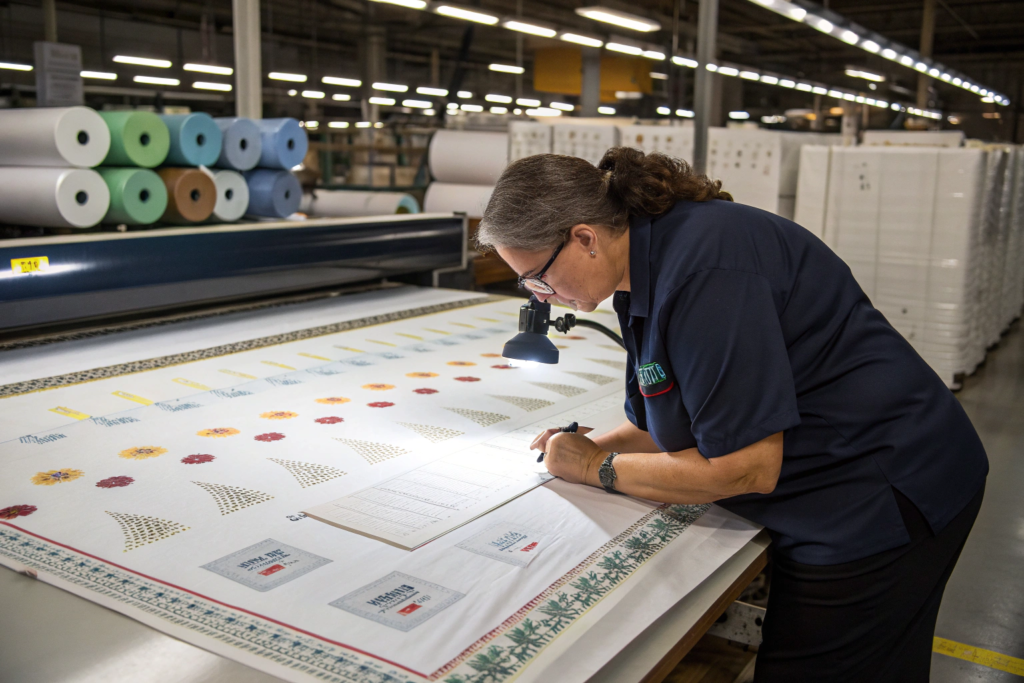
Registration means the pattern lining up correctly. In devoré, we sometimes print the acid first, then later print colors. If the acid print and the color print do not align, the design looks messy. This is called "mis-registration." To prevent it, we use reference marks on the fabric. We also use modern printing machines with automatic alignment sensors. But the biggest factor is fabric stability. If the fabric stretches between the acid printing and the color printing, registration fails. So we control tension carefully. We let the fabric relax after each process. For a US brand making high-end dresses, we even printed registration marks that we could scan electronically. It added cost, but zero defects.
What happens when the chemical reaction goes wrong?
I will give you a real example. 2019, we had a big order for a French fashion house. 20,000 meters of devoré velvet. Polyester base, viscose pile. Everything looked good on the first 5,000 meters. Then we noticed: the burn-out areas were not fully clear. Little fuzz balls remained. We stopped production. We tested the acid batch. It was weaker than usual—a supplier error. We had to re-wash all 5,000 meters with a stronger washing agent. It worked, but we lost a week. The client was understanding because we caught it and told them immediately. If we had shipped it, they would have rejected the whole order. Honesty saved us. We now test every chemical delivery before it goes into production. No exceptions.
What are the cost factors and production timelines?
Devoré is more expensive than regular velvet. That is just a fact. The chemicals cost more. The process is slower. The rejection rate can be higher. And you need experienced workers. So when a client asks me, "Why is this so expensive?" I show them the breakdown. Raw fabric is just the start.
Raw fabric cost: The base fabric for devoré is specially constructed. It is not a standard velvet. We have to weave or knit it with the exact fiber combination. That costs 20% to 40% more than normal velvet. For silk-based fabrics, much more.
Chemical costs: The acid paste, thickeners, and washing chemicals add up. For a typical polyester-viscose devoré, chemicals add about $0.50 to $1.00 per meter.
Printing cost: Devoré printing is slower than normal printing. The screens wear out faster because of the acid. We produce fewer meters per hour. So labor and machine costs are higher. Add $0.30 to $0.60 per meter.
Washing and finishing: The wash after burn-out is critical. We use more water, more energy. Sometimes we add softening finishes because the acid can make the fabric harsh. Add $0.20 to $0.40 per meter.
Inspection and waste: Rejection rates for devoré can be 5% to 10%, compared to 2% for normal fabric. We have to spread that cost across the good meters. So the price goes up.
Total, a basic polyester-viscose devoré might cost $3.50 to $5.50 per meter FOB China. A silk-cotton devoré can be $12 to $20 per meter. For a US client in 2023, we produced a custom devoré with a specific pattern repeat. It cost $7.80 per meter. They sold their blouses for $129 each. The math worked.

How long does devoré production take from order to shipment?
Timeline depends on complexity, but here is a realistic schedule from our factory:
Week 1-2: Sampling and approval. We make lab dips for color and small swatches for burn-out effect. Client approves. If the design is new, we make screens. That takes another week.
Week 3-4: Fabric production. We weave or knit the base velvet. This is the longest step because loom time is booked. For standard fabrics we stock greige, so it is faster.
Week 5: Printing and curing. The actual devoré printing takes a few days, but we schedule it carefully. We do not rush this step.
Week 6: Washing and finishing. The wash line must be free of residues from other fabrics. We clean it thoroughly before starting a devoré batch. Then washing, drying, and final inspection.
Week 7: Packing and shipping. We pack carefully, usually on rolls with interleaving paper to protect the pile. Then arrange shipping.
Total: 7 to 8 weeks for a standard order. For urgent orders, we can rush, but quality might suffer. I always tell clients: "Give me 8 weeks, and I will give you perfect fabric. Give me 4 weeks, and I will give you fabric." They usually take the 8 weeks.
What are the minimum order quantities for devoré?
Minimums are higher for devoré because of the setup. The screens cost money. The chemical mixing takes time. The machine cleaning takes time. So for a new design, we usually ask for 3,000 meters minimum per color. For repeat orders, we can go down to 1,500 meters. For very small designers, we sometimes do 500 meters, but the per-meter price is much higher. We have a "small designer program" started in 2022. We keep standard devoré designs in stock—no screen cost, just print on demand. Minimum 300 meters. A Brooklyn-based designer used this for her capsule collection. She ordered 350 meters of a floral devoré. Paid $8.20 per meter. Sold out her collection in two weeks. She is now a regular client.
How do you care for and design with devoré fabric?
Devoré is delicate. It is not a workwear fabric. It is for special occasions. And it needs special care. I always tell my clients: "If your customer throws this in a washing machine with jeans, the fabric will not survive." Because the sheer areas are thin. They can tear. The velvet areas can catch on zippers. So we provide clear care instructions with every shipment.
Dry clean only: For most devoré, especially with silk bases, dry cleaning is safest. The chemicals in home laundry can attack the fibers. The mechanical action can break the sheer areas.
If hand washing: Use cold water, mild soap, no wringing. Squeeze gently, roll in a towel to remove water, lay flat to dry. Never hang devoré wet—the weight of the water stretches the sheer areas.
Ironing: Use low heat, and iron on the reverse side. Or use a steamer. Never put a hot iron directly on the velvet—it will crush the pile.
Storage: Store rolled, not folded, to avoid crease marks. If folding is necessary, use tissue paper between layers.
For a German client making scarves, we printed care instructions directly onto the fabric label. It seemed extreme, but they had returns from customers who washed scarves incorrectly. After adding the label, returns dropped 80%.
What design techniques work best with burn-out patterns?
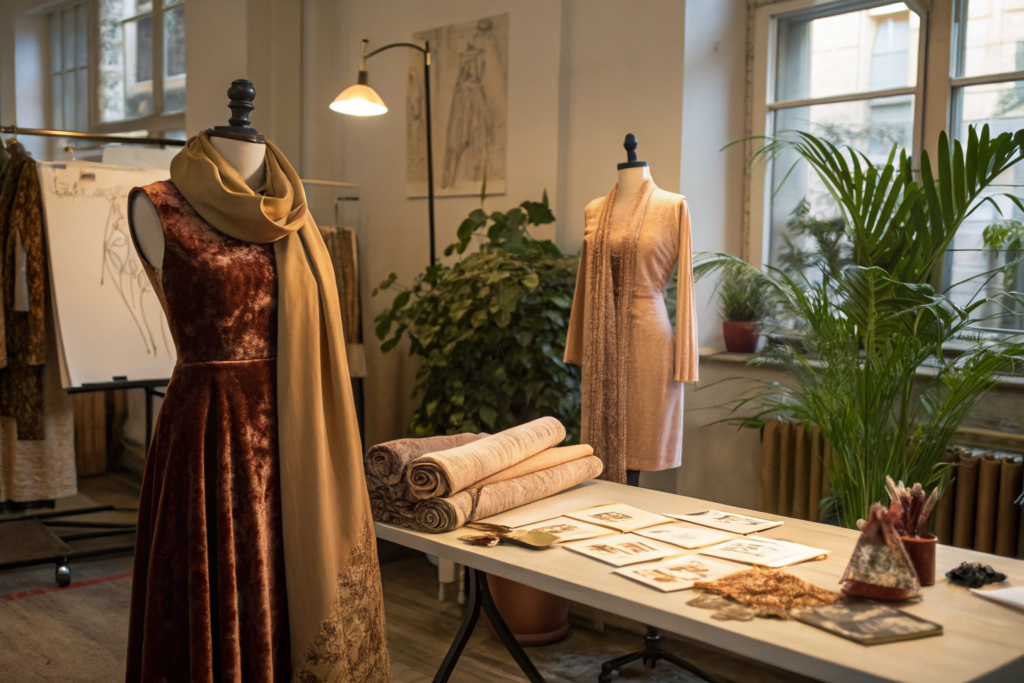
Designers love devoré because it adds texture without adding weight. You can have a full-coverage print, but with see-through areas. It is like two fabrics in one. Here are some popular approaches:
Floral patterns: The most classic. Velvet flowers on a sheer background, or sheer flowers on a velvet background. We see this a lot for evening wear.
Geometric designs: Stripes, dots, chevrons. Modern and edgy. A London-based streetwear brand used a geometric burn-out on hoodies in 2023. Unexpected, but cool.
Gradual fade: As I mentioned earlier, a gradient from solid to sheer. This requires special screens and precise chemical control. High-end designers pay for this.
Layered designs: Print the burn-out, then overprint with colors. The sheer areas get color, the velvet areas get different color. Complex registration, but beautiful.
Reverse devoré: Some designers ask us to burn out the background, leaving the design in velvet. This is the opposite of normal. It works well for large patterns.
We have a design team that helps clients develop patterns. We advise on what is technically possible and what is too risky. For a Canadian swimwear brand (yes, devoré for cover-ups), we suggested larger patterns because small details can get lost in the burn-out. They listened, and the cover-ups were a hit.
Conclusion
Devoré velvet is one of those fabrics that looks like magic. But behind the magic is real chemistry, real engineering, and real experience. It is not a fabric you can source from just anyone. You need a partner who understands the fibers, the acids, the machines, and the finishing. You need someone who has made the mistakes already and learned from them. That is Shanghai Fumao. We have been doing this for over 20 years. We have a dedicated devoré production line, with experienced technicians who have been with us for a decade. We know how to handle the tricky parts. We know how to fix problems before they become your problems.
If you are planning a collection that includes devoré, or if you have a design in mind but are not sure if it is possible, reach out to us. We can guide you through the process, from fiber selection to final shipment. We can make samples, adjust the burn-out effect, and help you price your products correctly. And we handle the logistics, including US customs, so you do not have to worry about tariffs.
Contact our Business Director, Elaine, directly. She oversees our specialty fabric division and knows devoré inside and out. Email her at elaine@fumaoclothing.com. Tell her about your vision. Tell her about your timeline. She will connect you with our technical team, and together we will make your design a reality. Because at Shanghai Fumao, we do not just sell fabric. We solve problems. We create possibilities. And we make sure your fabric arrives exactly as you imagined it—magic and all.