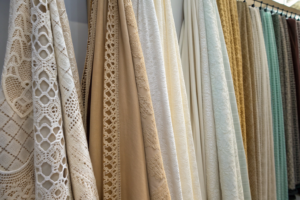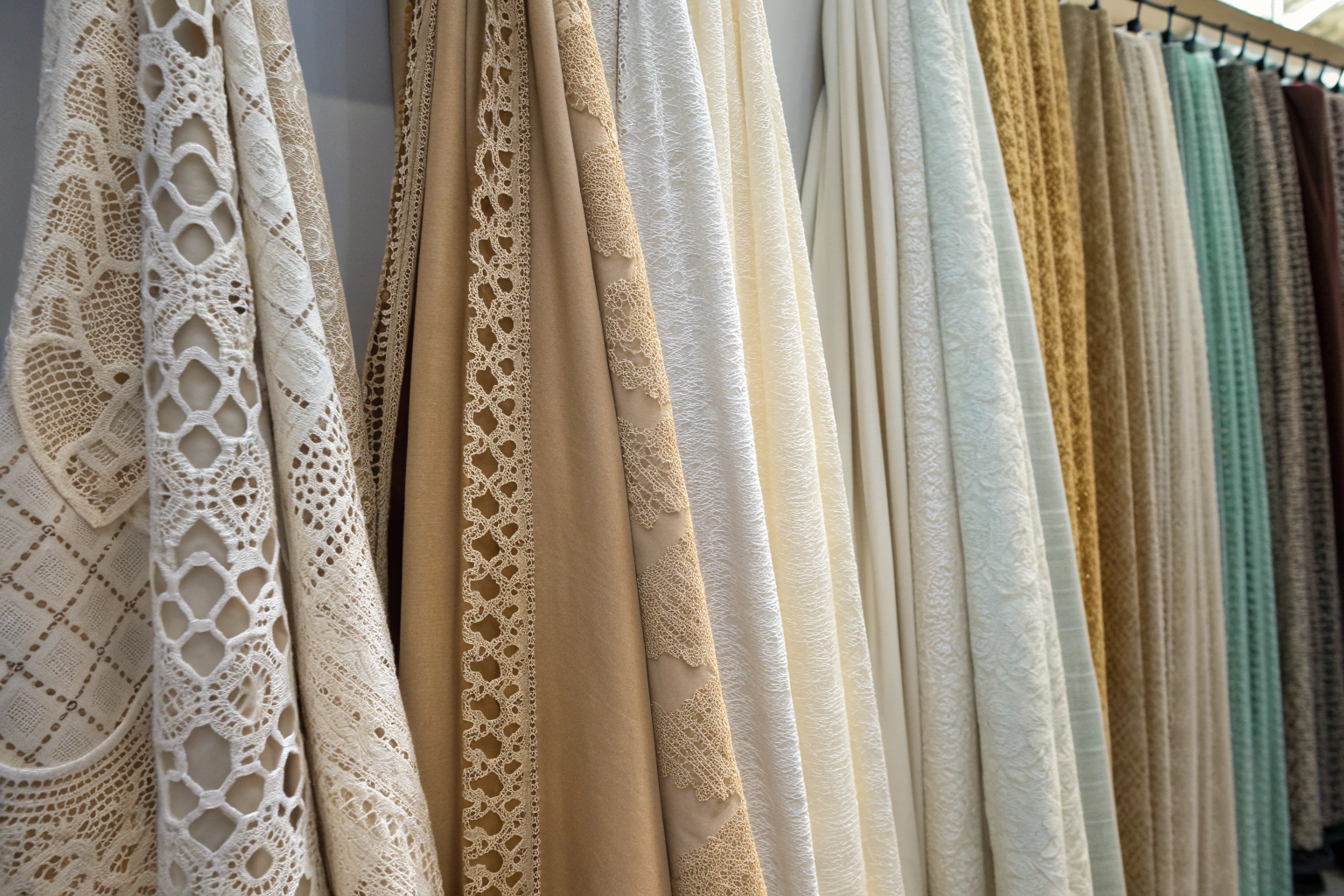
You’ve found a lace with the perfect pattern. But when you drape it on the mannequin, it falls all wrong—maybe it stands away stiffly like cardboard, or collapses limply without any graceful flow. That stunning embroidery feels heavy and restrictive, or that delicate design loses all shape. This heartbreak happens when fiber choice is an afterthought. The problem is real: focusing solely on aesthetics while ignoring the fundamental physics of the fiber leads to garments that look beautiful on the hanger but fail to move and live with the wearer.
The solution lies in becoming fluent in the language of fibers and their inherent personalities. The drape and stiffness of lace aren’t accidental; they are direct, predictable outcomes of the raw material’s molecular structure, yarn construction, and weight. By strategically selecting the fiber first—based on the desired movement and handfeel—you engineer the foundation of your design’s success. It’s the difference between forcing a material to behave and choosing one that naturally wants to perform your vision.
For over twenty years at Shanghai Fumao, working from Keqiao’s global textile crossroads, I’ve had countless conversations with designers wrestling with this exact issue. We’ve conducted side-by-side draping tests in our showroom, comparing how a polyester guipure holds its shape versus a viscose-based one. Let me break down how fiber choice is the master lever controlling the dance of your lace.
How Do Fiber Properties Dictate Drape Physics?
Forget “soft” or “hard” for a moment. Think about density, flexural rigidity, and moisture absorption. A fiber’s drape is essentially a battle between its innate stiffness and its willingness to bend under its own weight. Stiffness comes from strong, rigid molecular bonds and a dense, smooth filament structure. Fluid drape comes from fibers that are less dense, more pliable, and often have a more textured or porous structure that allows internal movement.
It’s like comparing a steel rod to a willow branch. Both can be thin, but their inherent material properties dictate how they flow. This isn’t just theory; it’s quantifiable. The modulus of elasticity of a fiber (its resistance to stretching) directly influences how a fabric made from it will hang. Your first sourcing question should never be “Do you have a floral lace?” It should be “What is this lace made from, and what is its weight per square meter (GSM)?” The fiber is the DNA of the drape.
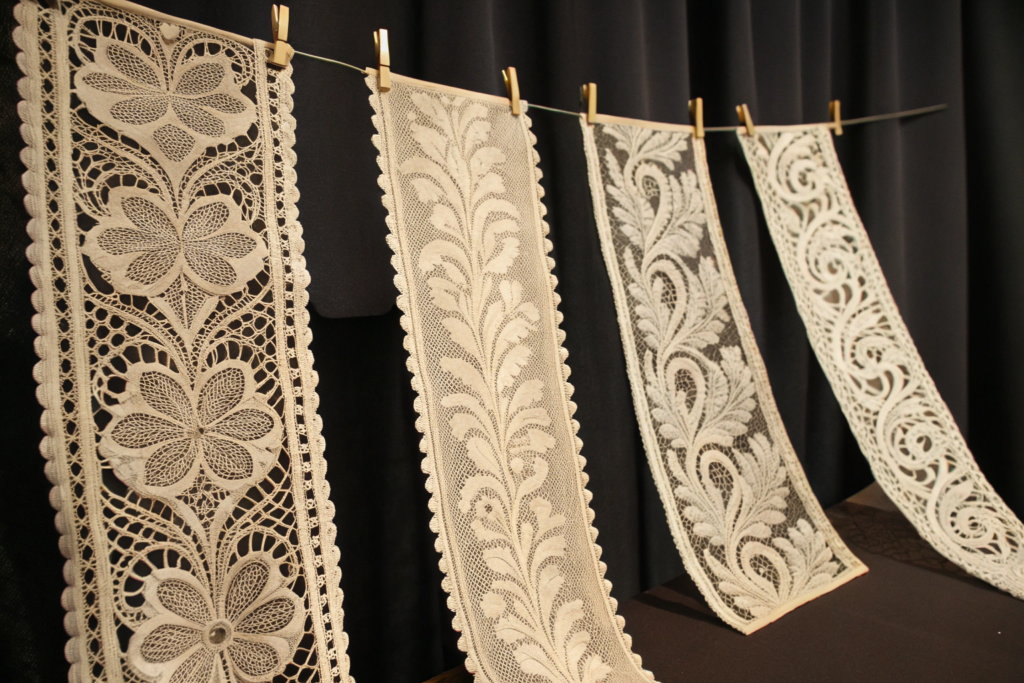
Why are Nylon and Polyester Often Stiffer in Lace?
These synthetic workhorses, especially when used in filament form, are champions of molecular regularity and strength. Their polymer chains are long, aligned, and packed tightly. This gives them:
- High Tensile Strength: They resist stretching, which is great for durability but can translate to a perceived stiffness in dense laces.
- Low Moisture Absorption: They don’t “plasticize” or soften with humidity like natural fibers, maintaining their dry, crisp hand.
- Smooth Surface: The filament creates a dense, non-porous fabric architecture that has less internal “give.”
This is why polyester or nylon guipure lace is so popular for structured garments—corsets, sculptured bodices, collars, or appliqués that need to hold their shape without interfacing. A Los Angeles-based contemporary brand in 2023 used our heavy polyester filament guipure for a sculptural peplum detail; the fiber’s innate body provided the architectural support they needed without adding multiple lining layers.
To dive deeper into material science, resources like Explaining Fabric Drape and Hand Feel provide a solid technical foundation. For practical sourcing, understanding the role of yarn denier in fabric stiffness is crucial—a higher denier (thicker filament) almost always means a stiffer hand in synthetic laces.
What Makes Rayon and Silk the Drape Champions?
These fibers win on pliability and density.
- Rayon/Viscose: A regenerated cellulose fiber, it has an amorphous (less ordered) molecular structure compared to polyester. This makes it more flexible and less resilient. It’s also denser and heavier for its thickness, which contributes to a beautiful, fluid, weighted drape that skims the body. A rayon-based lace feels luxurious and heavy in a good way.
- Silk (especially Mulberry): The ultimate natural protein filament. It has a combination of strength and a fine diameter, resulting in a fabric that is both strong and astonishingly fluid. Its triangular prism-like structure refracts light beautifully and allows it to bend with minimal resistance.
A client from New York creating a fluid, bias-cut evening gown needed lace that would “pour” over the body. We steered them away from polyester and toward a matte rayon lace. The result was a dress that moved with a hypnotic, liquid grace—the fiber’s inherent weight and suppleness made the design vision a reality.
Natural vs. Synthetic: A Drape and Stiffness Showdown?
This is the classic debate, but it’s often oversimplified. The truth is, both categories have a vast range. A stiff linen lace can be more rigid than a soft polyester microfiber lace. However, general lineages exist based on the core properties of the fiber families. The key for sourcing is understanding these lineages and then identifying the exceptions that prove the rule.
Think of it as two different toolboxes. The natural fiber toolbox tends to offer more textural, breathable, and often temperature-responsive options. The synthetic toolbox offers consistency, resilience, and often a wider range of extreme effects (from ultra-stiff to ultra-stretchy). Your design’s functional and aesthetic needs should guide which toolbox you open first.
When Does Cotton Lace Feel Stiff or Soft?
Cotton’s behavior is a masterclass in how processing dictates drape.
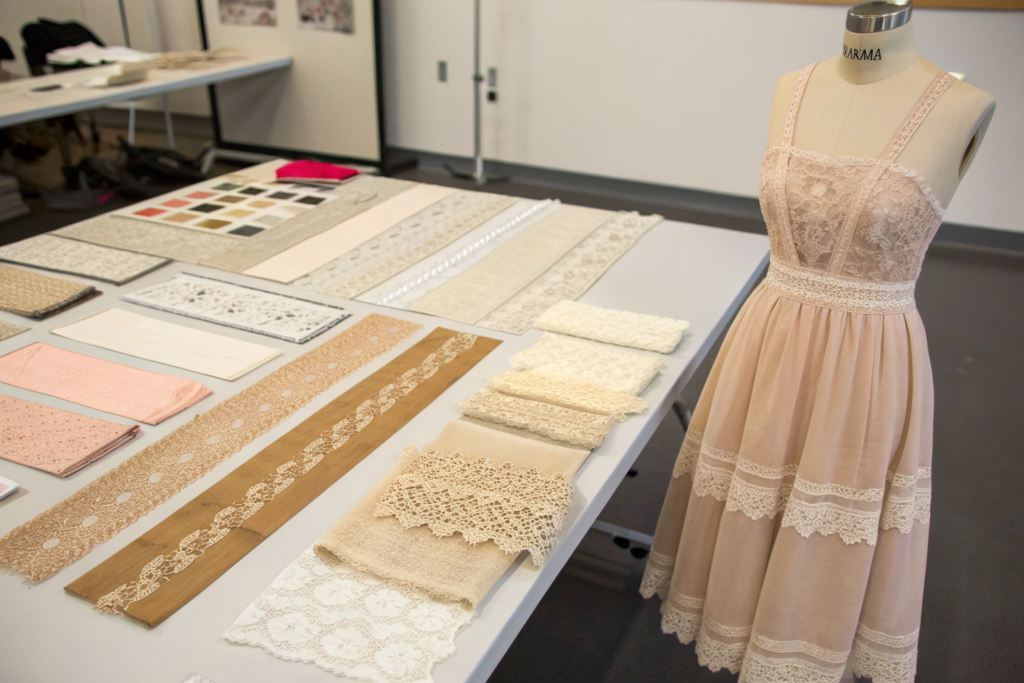
- Stiff Cotton Laces: Think heavier guipures, broderie anglaise (eyelet), or cluny lace. Here, the stiffness comes from the dense, often multi-layer construction and the use of thicker, carded yarns. The fiber itself is relatively inelastic, and the fabric structure does the work. It’s a “structural” stiffness, perfect for crisp sundresses, collar details, or home decor.
- Soft/Drapable Cotton Laces: These use fine, combed, or mercerized cotton yarns in lighter constructions like burn-out laces or delicate valenciennes lace. Mercerization adds a slight luster and increases strength without sacrificing the natural fiber’s pleasant, breathable hand. The result is a soft, matte lace with a gentle drape, ideal for baby clothes, lightweight blouses, or tiered sleeves.
We worked with a Portuguese children’s wear brand that was very specific: they needed a soft, GOTS-certified organic cotton lace for christening gowns. The challenge was finding a construction light enough to be soft but durable enough for heirloom use. We sourced a mill specializing in fine-count organic yarns for lace, achieving that perfect balance of ethereal drape and substance.
Can Synthetic Lace Be Engineered for Fluid Drape?
Absolutely. This is where modern textile engineering shines. While basic polyester filament lace can be stiff, mills have multiple tricks to defeat that inherent rigidity:
- Microfiber Polyester: Using filaments finer than silk (less than 1 denier), the resulting lace is incredibly soft, lightweight, and gains a surprising fluidity. This is a game-changer for lingerie and fluid eveningwear.
- Textured Yarns: Using air-jet textured (Taslan) or crinkle-set polyester filaments breaks up the smooth density, introducing air pockets and crimp that dramatically improve softness and drape.
- Blending with Drapable Fibers: A common tactic is a polyester-rayon blend. The polyester adds strength and cost-effectiveness, while the rayon instantly injects weight and fluidity into the drape. This is a workhorse solution for many mid-market flowing garments.
A sportswear brand wanted a stretch lace with a fluid drape for athletic-inspired dresses. Standard nylon-spandax lace was too bouncy and “activewear.” We developed a blend using microfiber polyester wrapped around a fine spandex core, which gave the necessary stretch but with a much softer, more elegant fall.
How Does Fiber Choice Interact with Lace Construction?
The fiber provides the raw potential, but the construction—the way the lace is actually made—is the conductor that organizes that potential into the final performance. A heavy fiber in an open, net-like construction can feel light. A light fiber in a dense, embroidered construction can feel stiff. The interaction is multiplicative, not additive.
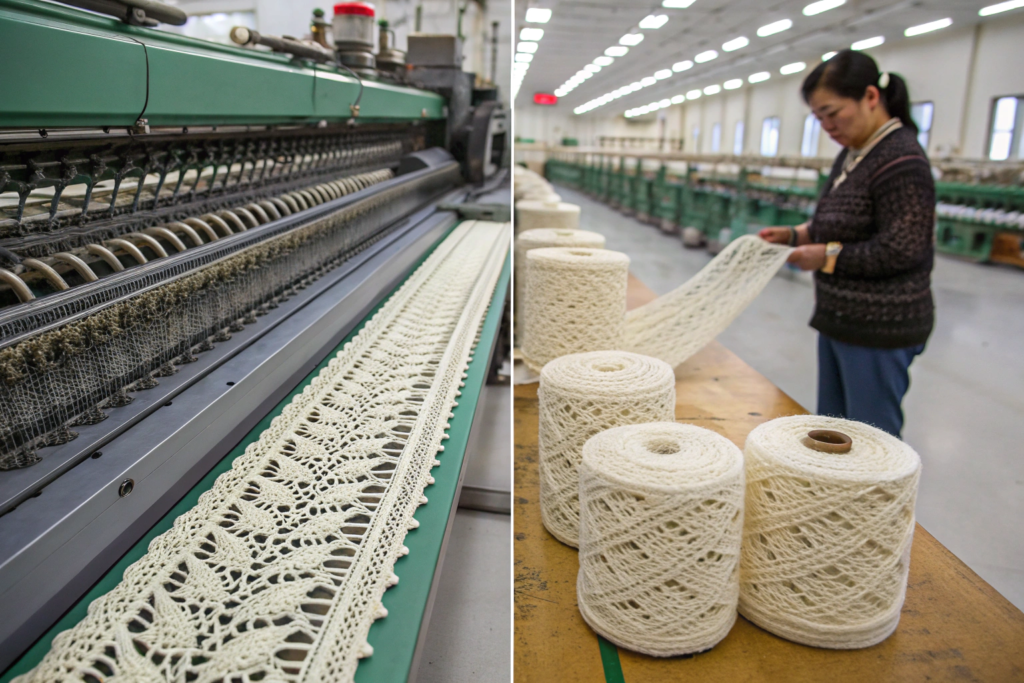
You must analyze both variables together. Leavers lace (a type of warp-bobbin lace) tends to have a firmer, more defined hand due to its tight twist and dense ground. Raschel knitted lace, on the other hand, has more inherent stretch and a softer, often limier hand. The same fiber will behave differently in these two machines.
Does Embroidery or Guipure Always Mean Stiff?
Not always, but it’s a strong tendency. Guipure (lace where the motifs are connected by threads or bars, not a net ground) and re-embroidered lace (where motifs are stitched onto a base net) add layers of yarn and stitching. This adds mass and physical structure.
- The Fiber’s Role: If the embroidery yarn is a heavy cotton or stiff polyester, the lace will be very rigid. If the embroidery uses a fine silk or soft rayon thread, the stiffness is significantly reduced, resulting in a pliable yet textured lace.
- The Base’s Role: A guipure with a heavy horsehair braid or linen cord outlining the motifs will be board-stiff. One connected by fine brides (bars) or a lightweight cord will have more flex.
A European couture house was creating a sleeve that needed to be fully sculptural yet allow slight arm movement. We developed a custom guipure using a silk-wool blend yarn for the motifs and fine silk brides. The natural fibers’ slight give and the delicate connections created a lace that was dramatic in form but subtly yielding—a perfect example of fiber taming construction.
How Does Stretch Fiber (Spandex) Transform Lace Drape?
Introducing even 2-5% spandex (elastane) into a lace fundamentally changes its category. It’s no longer just about drape; it’s about recovery and conformability.
- Impact on Drape: Spandex allows the lace to cling and stretch over curves, creating a body-conforming drape that non-stretch laces can’t achieve. However, the base fiber still controls the quality of that drape. A nylon-spandax lace will have a bouncy, athletic drape with strong recovery. A rayon-spandex lace will have a heavier, more languid stretch with a softer recovery.
- Sourcing Must-Know: Always ask for the spandex percentage and direction of stretch (two-way or four-way). For a Canadian lingerie brand’s flagship bodysuit, the spec was 15% spandex content with four-way stretch in a microfiber nylon base—this provided the ultimate combination of softness, conformance, and durability for a garment under tension.
What Are the Practical Sourcing Tests for Drape and Hand?
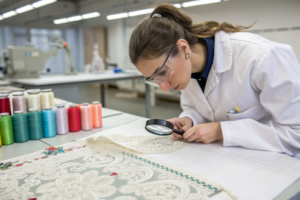
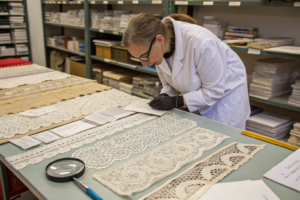
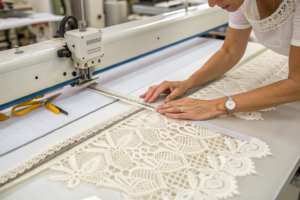
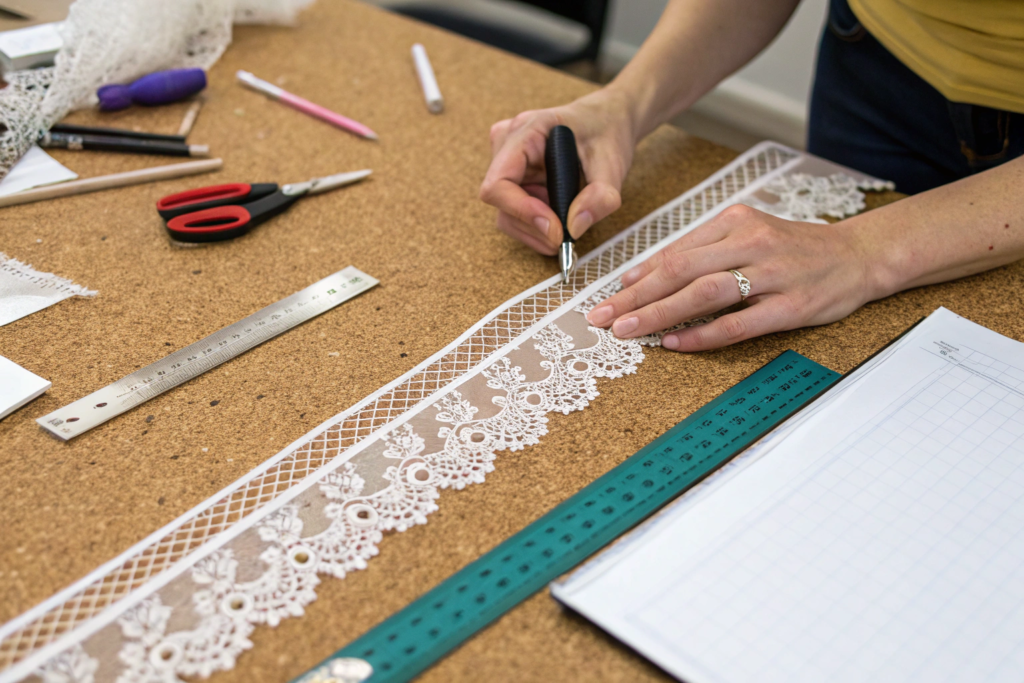
Before you commit to 1,000 meters, you need to move beyond looking at a sample and actually interrogate it. Sourcing is hands-on. Develop a simple, repeatable evaluation protocol. Your time spent testing a 20x20cm swatch can save you from a catastrophic bulk production error.
The tests don’t require a lab—they require observation and tactile sense. Train your hands and eyes to feel what the numbers mean. At Shanghai Fumao, we encourage clients to perform these basic tests on our development samples. It builds a common language and ensures we’re aligned before proceeding.
The “Drape Over the Edge” and “Fist Crush” Tests
These are your go-to, instant diagnostic tools.
- Drape Over the Edge: Cut a strip of lace (about 10cm x 30cm). Pin one short end to a table edge and let the rest hang free. Observe:
- Does it fall in a soft, continuous curve (rayon/silk)?
- Does it hold a stiff, angular shape (heavy polyester/linen)?
- Does it spring back slightly into a shorter curve (nylon/stretch lace)?
- Fist Crush Test: Take a handful of the lace and gently crush it in your fist for five seconds. Release.
- How quickly does it spring back to its original shape? (Fast recovery indicates resilience, like polyester or nylon).
- Does it hold the wrinkles? (Slow recovery indicates pliability, like rayon or cotton).
- Does it feel crisp or soft in your hand?
A designer for a drape-focused brand once told me they automatically reject any lace that doesn’t form a smooth, U-shaped curve in the edge test. That simple rule saved them from countless unsuitable “stiff-but-pretty” samples.
Why GSM and Fiber Content Are Your Best Friends
Never source lace without these two data points. They are your objective anchors.
- GSM (Grams per Square Meter): This is the single best indicator of density and, by proxy, potential stiffness. A 80 GSM lace will always be more fluid than a 300 GSM lace of the same fiber. Ask for it upfront.
- Fiber Content Percentage: “100% Polyester” is not enough. Is it 100% filament polyester or 100% spun polyester? Is it a 95/5 Poly/Spandex blend? Demand precise breakdowns. A reputable supplier like Shanghai Fumao provides this on every spec sheet. In fact, our digital QR code tracking for bulk rolls includes the exact batch-specific fiber composition and average GSM, so there are no surprises.
Conclusion
The drape and stiffness of your lace are not mysterious traits; they are the direct, logical outcome of deliberate fiber selection, modified by construction and finish. Choosing a fiber is the first and most critical design decision you make for a lace garment—it sets the parameters for how the piece will move, feel, and ultimately, live on the body. From the architectural rigidity of polyester guipure to the liquid grace of silk georgette lace, each fiber tells a different story of motion.
Mastering this relationship empowers you to source with confidence, predicting performance from a small swatch. It transforms sourcing from a visual matching exercise into a technical specification process, ensuring the lace that arrives not only looks like your vision but behaves like it too.
If you’re tired of guessing how a lace will perform and want to source based on predictable, engineered properties, let’s connect. At Shanghai Fumao, we provide more than just lace—we provide the material intelligence behind it. Our team can guide you to the perfect fiber-construction match for your specific drape and stiffness requirements. For technical swatches with full fiber and GSM specifications, contact our Business Director, Elaine, at elaine@fumaoclothing.com. Let’s ensure your designs move as beautifully as they look.