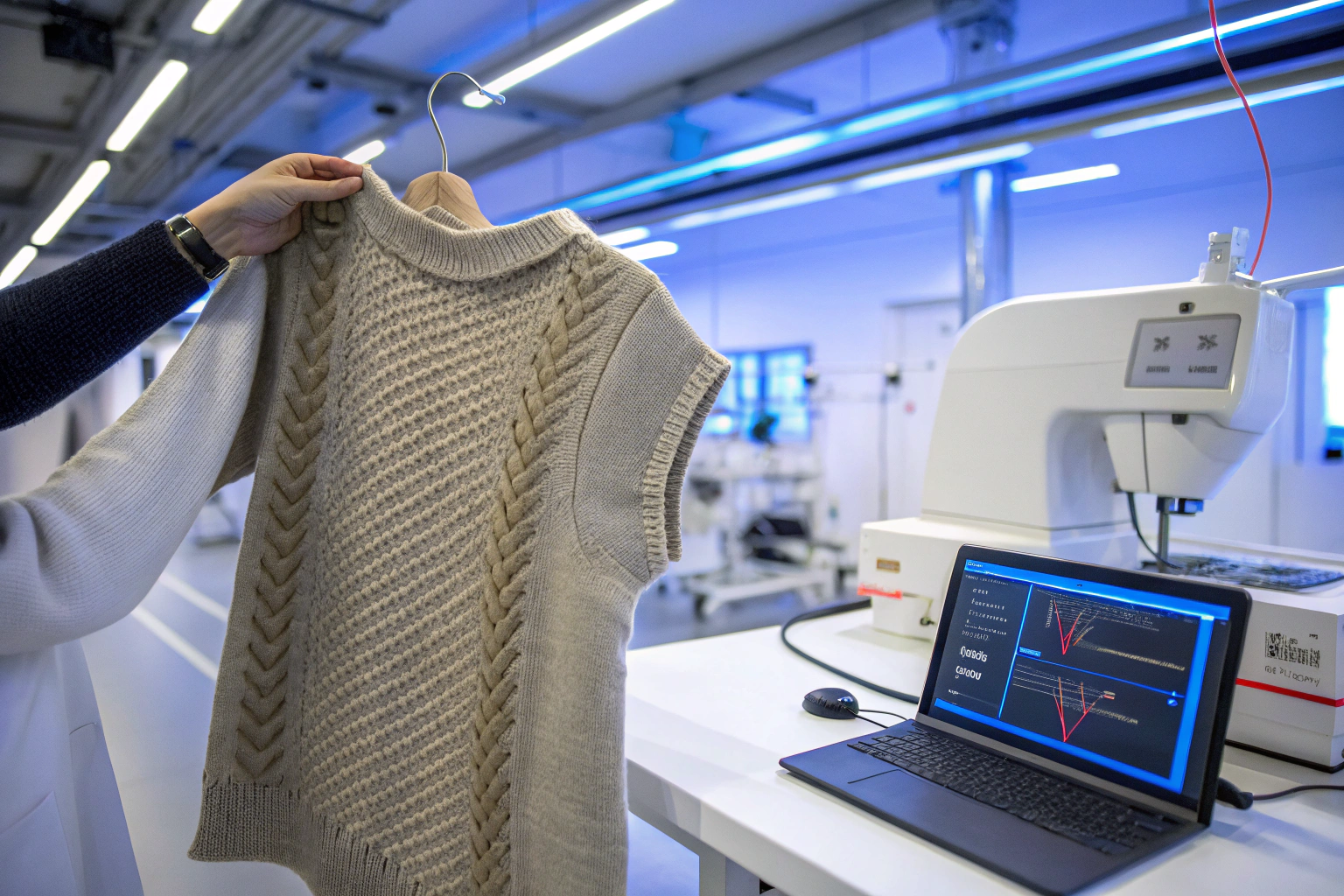
I remember a conversation I had about three years ago with a young designer from a sportswear brand in Berlin. She was showing me a concept she was working on—a knitted shirt that could measure your heart rate and body temperature, and send the data to your phone. I was skeptical. I've been in textiles for twenty years, and I've seen a lot of "future fabric" concepts come and go. Most of them never made it past the prototype stage. They were too expensive, too fragile, or just not practical for real-world wear.
But this designer was different. She had a working sample. She put it on. She connected it to her phone. I could see her heart rate on the screen. She ran in place, and the numbers changed. I touched the fabric, and it felt like a normal knit—soft, stretchy, comfortable. There were no wires. No hard sensors. Just fabric.
That was my first real encounter with what smart fabrics have become. They're not science fiction anymore. They're real. And they're coming to market faster than I ever expected. At Shanghai Fumao, we've been watching this space closely. We've started working with clients who are developing smart knitted garments. We've invested in the technology to produce them. In this article, I'm going to share what I've learned about the future of smart fabrics in knitted garments—the technology, the applications, the challenges, and where I think it's all heading.
What Are Smart Fabrics and How Do They Work?
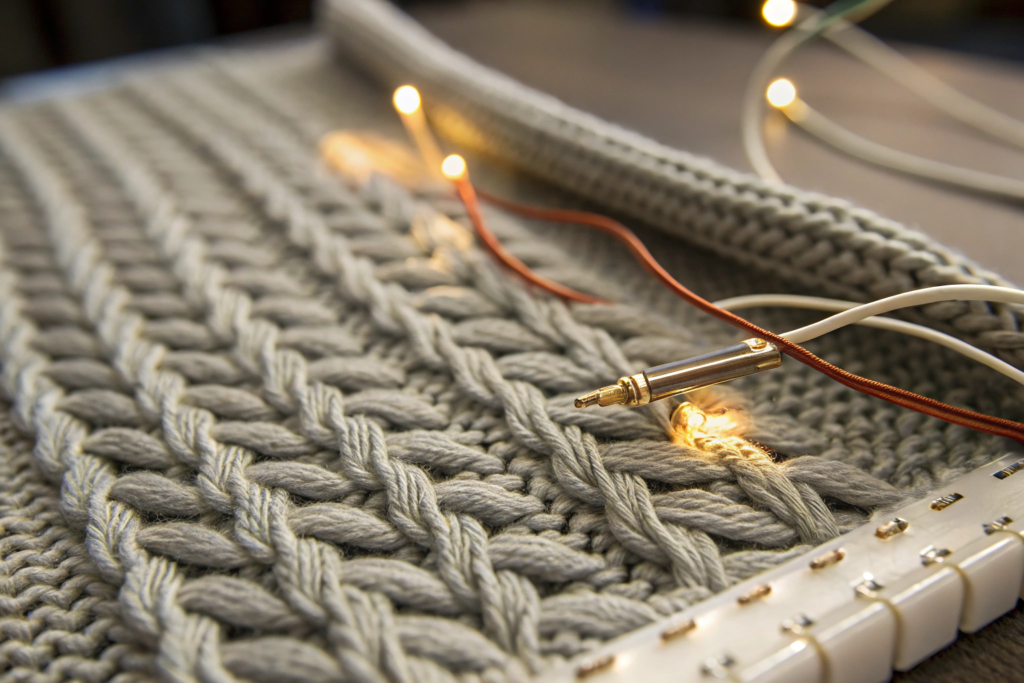
Smart fabrics are textiles that have been integrated with technology to sense, react, or communicate. They're not just fabrics with electronics sewn on. They're fabrics where the technology is part of the textile itself. The conductive threads are knitted into the structure. The sensors are part of the yarn. The whole garment becomes the device.
What Is the Difference Between Active and Passive Smart Fabrics?
There are two main categories of smart fabrics. Passive smart fabrics sense the environment or the wearer. They can measure temperature, heart rate, movement, or moisture. They collect data, but they don't act on it. These are the most common smart fabrics today. You'll find them in sportswear, medical garments, and even some high-end fashion.
Active smart fabrics go a step further. They sense and then respond. They can change color based on temperature. They can tighten or loosen based on movement. They can heat up or cool down. They can even communicate—sending data to your phone or to a medical professional. These are more complex and are still mostly in development.
I had a client from a medical device company in Sweden who was developing a passive smart fabric for monitoring elderly patients. The fabric was a knitted base layer with conductive threads that measured heart rate and respiration. The data was transmitted to a nurse's station. The fabric was comfortable enough to wear all day. The client told us that the garment was reducing hospital readmissions by monitoring patients at home. That's the power of passive smart fabrics—they work quietly in the background, improving lives.
For a technical deep dive into smart fabric categories, this textile research article offers a classification of smart textiles.
How Are Conductive Threads Integrated into Knits?
The key to smart knitted garments is conductive threads. These are yarns that have been treated with conductive materials—usually silver, copper, or carbon. They can be knitted directly into the fabric on the same machines that knit regular fabrics. The conductive threads become part of the structure. They carry signals from sensors to a small transmitter, which is usually attached to the garment like a button or a tag.
The challenge is making the conductive threads durable. They need to withstand washing, stretching, and wearing. They need to be comfortable against the skin. And they need to maintain their conductivity over time. The technology has improved dramatically in the past few years. The conductive threads we're using today are much finer, softer, and more durable than what was available five years ago.
I remember a project with a client from a sports technology company in California. They were developing a smart shirt for runners. The first version used thick, stiff conductive threads that were uncomfortable against the skin. We worked with them to source a finer, silver-coated nylon thread that could be knitted directly into a soft polyester base. The result was a shirt that felt like a normal performance knit but could measure heart rate, breathing rate, and stride cadence. The client sold 50,000 units in the first year.
For a guide to conductive yarns and their applications, this textile technology resource offers an overview of conductive fibers.
What Are the Current Applications of Smart Knitted Garments?
Smart knitted garments are already being used in several industries. The most developed applications are in sportswear, healthcare, and military. But we're starting to see them in fashion, workplace safety, and even home textiles. The range of applications is growing fast.
How Is Sportswear Using Smart Knits?
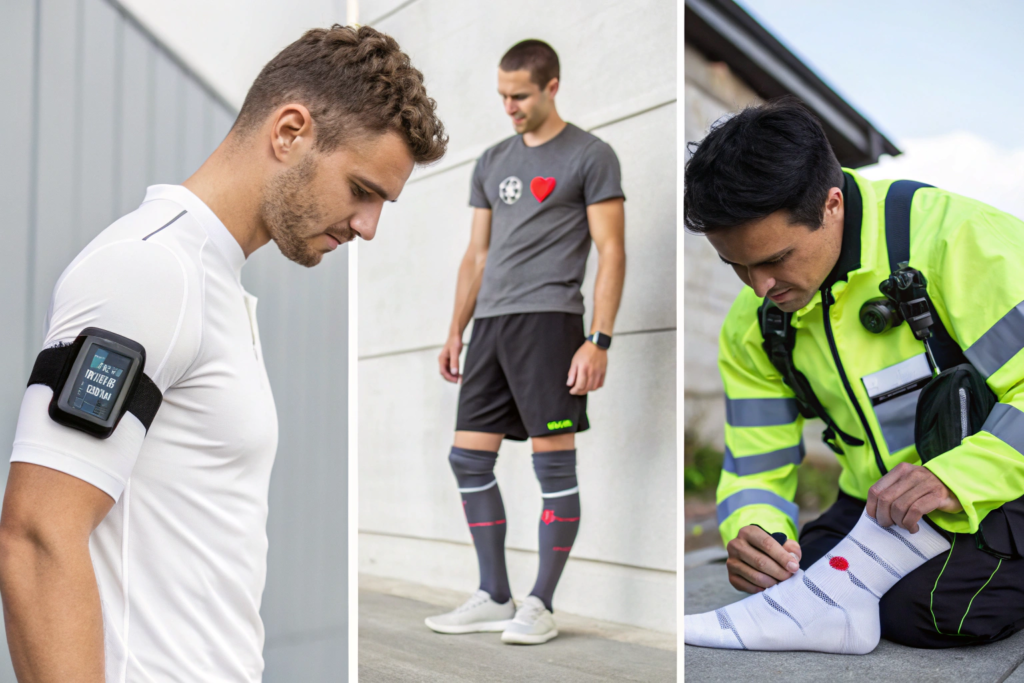
Sportswear is the biggest market for smart fabrics right now. Athletes want data. They want to know their heart rate, their breathing, their cadence. They want to optimize their performance. Smart knitted garments provide that data without the need for a chest strap or a bulky sensor.
Companies like Hexoskin and OMSignal have been making smart shirts for years. But the technology is now becoming more mainstream. Major sportswear brands are integrating smart features into their premium lines. A shirt that measures your heart rate and syncs with your phone is no longer a novelty. It's becoming an expectation.
I had a client from a European cycling brand who wanted to develop a smart jersey for competitive cyclists. The jersey needed to be aerodynamic, breathable, and comfortable for hours in the saddle. It also needed to measure heart rate and body temperature, and transmit the data to a bike computer. We developed a knitted fabric with integrated conductive threads in the chest and back. The sensors were woven directly into the fabric. The cyclist didn't have to wear anything extra. The jersey just worked. The client told us that the product was one of their best-selling items that year.
For a look at the latest in smart sportswear, this sports technology resource offers a review of smart athletic apparel.
How Is Healthcare Using Smart Knits?
Healthcare is another huge market for smart fabrics. The aging population needs monitoring. Patients with chronic conditions need to be tracked. Hospitals want to reduce readmissions. Smart knitted garments can provide continuous monitoring without the discomfort of traditional medical devices.
A smart sock can monitor circulation in diabetic patients. A smart shirt can monitor heart rate in cardiac patients. A smart bandage can monitor wound healing. These garments are comfortable enough to be worn all day, and they provide data that can alert doctors to problems before they become emergencies.
I visited a medical textile company in the UK about two years ago. They were developing a smart knitted garment for monitoring infants. The garment was a soft onesie with conductive threads knitted into the chest area. It measured heart rate and breathing rate and sent the data to a parent's phone. If the baby stopped breathing, an alarm would sound. The garment was designed to prevent SIDS. The company told us that they had already saved several lives. That's the power of smart fabrics in healthcare.
For a comprehensive overview of smart textiles in healthcare, this medical technology resource offers a guide to wearable health monitors.
What Are the Technical Challenges of Smart Knitted Garments?
Despite the progress, smart knitted garments still face significant challenges. The technology is expensive. The durability is not yet where it needs to be. And the integration with electronics is still clunky. These challenges are being solved, but they're not solved yet.
How Do You Make Conductive Threads Durable?
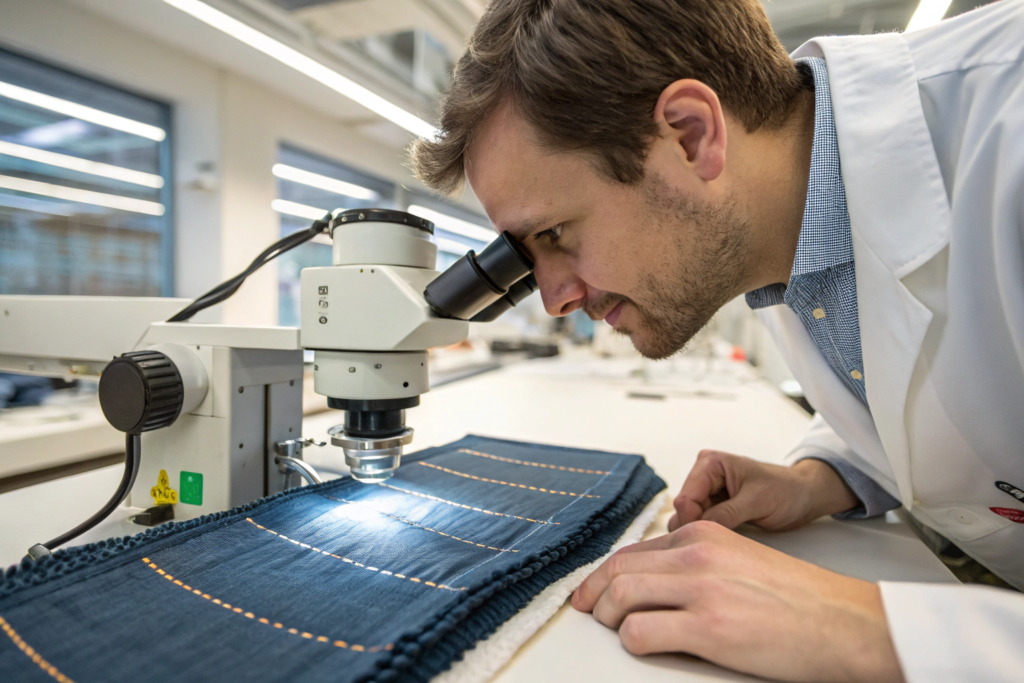
The biggest challenge is durability. Conductive threads need to withstand washing, stretching, and wearing. They need to maintain their conductivity after dozens of washes. They need to be comfortable against the skin. And they need to be affordable.
The early conductive threads were stiff and fragile. They broke after a few washes. They were uncomfortable to wear. They were expensive. The new generation of conductive threads is much better. Silver-coated nylon is soft, stretchy, and durable. Carbon-based threads are even more flexible. But they're still more expensive than regular yarns, and they still have limitations.
I had a client who developed a smart shirt that worked perfectly when it was new. After ten washes, the conductivity dropped by 30%. The heart rate sensor became unreliable. The client had to redesign the garment with a new conductive thread that was more durable. The new thread cost more, but it maintained conductivity through 50 washes. The client passed the cost to the consumer. The shirt sold for $200 instead of $150. Customers paid it because the shirt worked.
For a technical discussion of conductive thread durability, this textile research article offers a study on washability of conductive textiles.
How Do You Integrate Electronics Without Compromising Comfort?
The sensors are knitted into the fabric. But the electronics—the battery, the transmitter, the processor—need to be attached somehow. Currently, they're usually attached as a small module that can be snapped or sewn onto the garment. The module is about the size of a large button or a small watch face.
The challenge is making the module comfortable. If it's too big, it digs into the skin. If it's too heavy, it pulls on the fabric. If it's not waterproof, it can't be washed. The industry is working on making the modules smaller, lighter, and more integrated. Some companies are developing modules that are knitted directly into the fabric. Others are using flexible circuits that conform to the body.
I saw a prototype from a Japanese company that had integrated the electronics into a small, flexible patch that was knitted directly into the fabric. The patch was barely noticeable. It was waterproof. It could be washed. The battery lasted for a week. The technology isn't in mass production yet, but it's close. In a few years, the electronics will be as invisible as the conductive threads.
For a look at the latest in electronic integration for textiles, this wearable technology resource offers a guide to flexible electronics.
What Is the Future of Smart Fabrics in Fashion?
Beyond sportswear and healthcare, smart fabrics are starting to appear in fashion. High-end designers are experimenting with fabrics that change color, light up, or respond to the environment. These are early days, but the potential is enormous.

Will Smart Fabrics Become Mainstream Fashion?
I believe they will. But it will take time. The first smart fashion garments will be high-end, limited edition, and expensive. They'll be worn for special occasions—a dress that changes color at a party, a jacket that lights up at a concert. As the technology gets cheaper and more durable, smart features will become more common in everyday fashion.
I think the first mainstream applications will be subtle. A jacket that heats up in cold weather. A scarf that changes color with your mood. A shirt that tells you when you're stressed. These are features that add value without being intrusive. They're not trying to be computers. They're just making clothes smarter.
I had a client from a high-end fashion brand in Milan who wanted to develop a dress with integrated LED lights. The lights were knitted directly into the fabric. They were powered by a small battery hidden in the waistband. The dress was stunning. It sold for $5,000. Only a few were made. But the client learned about the technology. Their next collection had a jacket with integrated heating elements. That sold for $1,200 and sold out. The market is moving from novelty to utility.
For a look at smart fashion trends, this fashion technology resource offers a forecast for smart textiles in apparel.
How Will Sustainability Impact Smart Fabrics?
Sustainability is a huge consideration for the future of smart fabrics. Smart fabrics are made from synthetic fibers, conductive metals, and electronics. They're not easily recyclable. They contain materials that can be harmful if they end up in landfills.
The industry is working on solutions. Some companies are developing biodegradable conductive threads. Others are designing smart garments that can be disassembled at the end of their life, with the electronics removed and recycled separately. Still others are working on making the electronics themselves biodegradable.
I think sustainability will be a major driver of innovation in smart fabrics. The brands that solve the sustainability challenge will have a huge advantage. Consumers want smart features, but they also want to feel good about what they buy. A smart garment that can be recycled or composted at the end of its life will be a winner.
I had a conversation with a sustainability expert at a trade show last year. She told me that the next frontier in smart textiles is "cradle-to-cradle" design—designing garments that can be safely returned to the earth or to the manufacturing stream. She was optimistic. She said the technology is close. Within ten years, we'll have smart fabrics that are as sustainable as they are smart.
For a discussion of sustainability in smart textiles, this environmental resource offers a guide to circular design for wearables.
How Is the Knitting Industry Adapting to Smart Fabrics?
The knitting industry is adapting rapidly. New machines are being developed that can knit conductive threads alongside traditional yarns. New finishing processes are being developed that don't damage the conductive elements. New quality control systems are being developed to test conductivity at every stage.
What New Equipment Is Needed for Smart Knits?
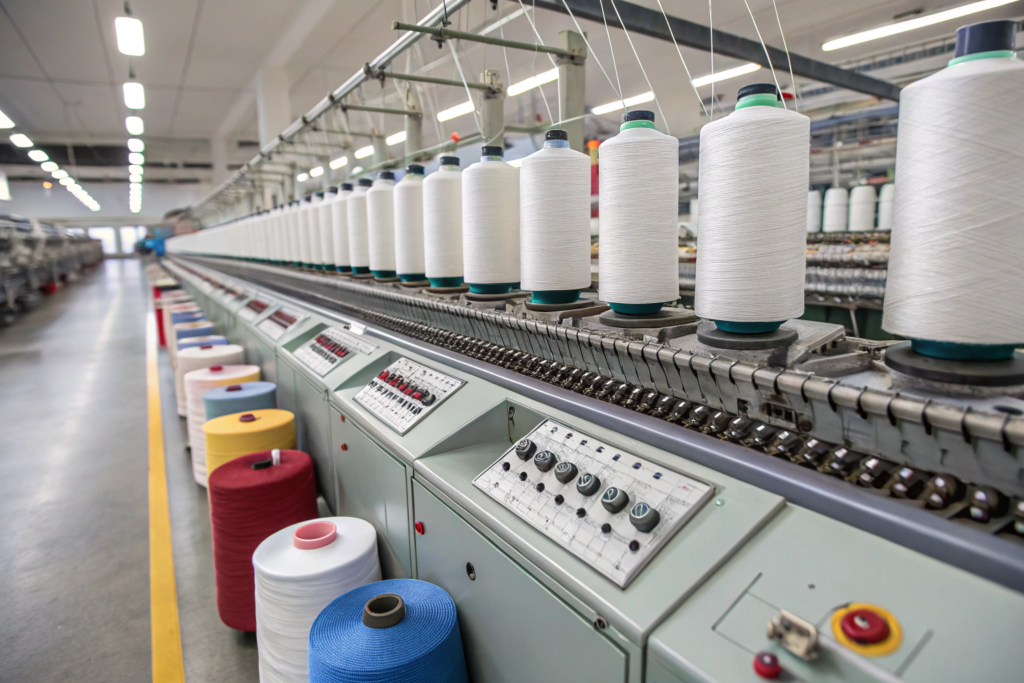
Knitting smart fabrics requires specialized equipment. The knitting machines need to handle conductive threads without breaking them. They need to maintain consistent tension across different types of yarns. They need to integrate sensors and electronics during the knitting process, not after.
We've invested in new machines that can handle these requirements. They have multiple yarn feeds, including feeds for conductive threads. They have tension controls that adjust automatically. They have sensors that monitor conductivity in real time. If a conductive thread breaks, the machine stops immediately.
The cost of these machines is significant. A standard circular knitting machine might cost $50,000. A smart knitting machine can cost $200,000 or more. That's a barrier for many mills. But as demand grows, prices will come down. Within five years, I expect smart knitting capabilities to be standard in most modern mills.
For a technical overview of smart knitting equipment, this textile machinery resource offers a guide to machines for smart textiles.
How Are Quality Control Processes Changing?
Quality control for smart fabrics is different from traditional textiles. You're not just checking for holes and color. You're checking for conductivity. You're checking that the sensors are in the right place. You're checking that the electronics are properly integrated.
We've had to develop new QC processes. Every roll of smart fabric is tested for continuity. We run conductivity tests across the entire fabric width. We test the sensor locations. We test the connections to the electronic module. We do all of this before the fabric leaves the factory.
I had a client who received a shipment of smart fabric from another supplier. The fabric looked fine. But when they started making garments, they found that the conductive threads in one batch were broken in multiple places. The fabric was unusable. The supplier hadn't tested for conductivity. Now, we test every roll. We provide a conductivity report with every shipment. Our clients know that the fabric will work.
For a guide to QC for smart textiles, this quality control resource offers a checklist for testing conductive fabrics.
Conclusion
The future of smart fabrics in knitted garments is bright. The technology is advancing rapidly. Conductive threads are getting finer, softer, and more durable. Electronic modules are getting smaller, lighter, and more integrated. Applications are expanding from sportswear and healthcare into fashion, safety, and home textiles.
But there are still challenges. Cost is high. Durability needs to improve. Sustainability is a concern. Integration with electronics is still clunky. These challenges are being solved, but they're not solved yet. The next five to ten years will be critical as the industry figures out how to make smart fabrics that are affordable, durable, and sustainable.
At Shanghai Fumao, we're excited about the future of smart textiles. We've invested in the equipment. We've trained our team. We've developed new QC processes. We're working with clients who are pushing the boundaries of what's possible. We believe that smart fabrics will transform the textile industry in the coming decade.
If you're developing a smart knitted garment, or if you're curious about what's possible, let's talk. We can help you with the fabric development, the conductive thread selection, the knitting process, and the quality control. We've done it before. We can do it for you.
Contact our Business Director, Elaine, to discuss your smart fabric project.
Email: elaine@fumaoclothing.com
Let's knit the future together.