I will never forget the phone call from a New York buyer in 2016. She was furious. She had ordered 5,000 meters of striped fabric for men's shirts. The sample was perfect. But the bulk production looked wrong. The stripes were dull, not crisp like the sample. I flew to her office. I looked at the sample. I looked at the bulk. They were different. Then I realized: the sample was yarn-dyed stripe. The bulk was printed stripe. The supplier had switched the process to save money. They did not tell her. She lost sales. She lost trust in her customers. That was not our fabric, but it taught me a lesson: you must know the difference.
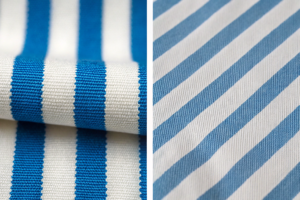
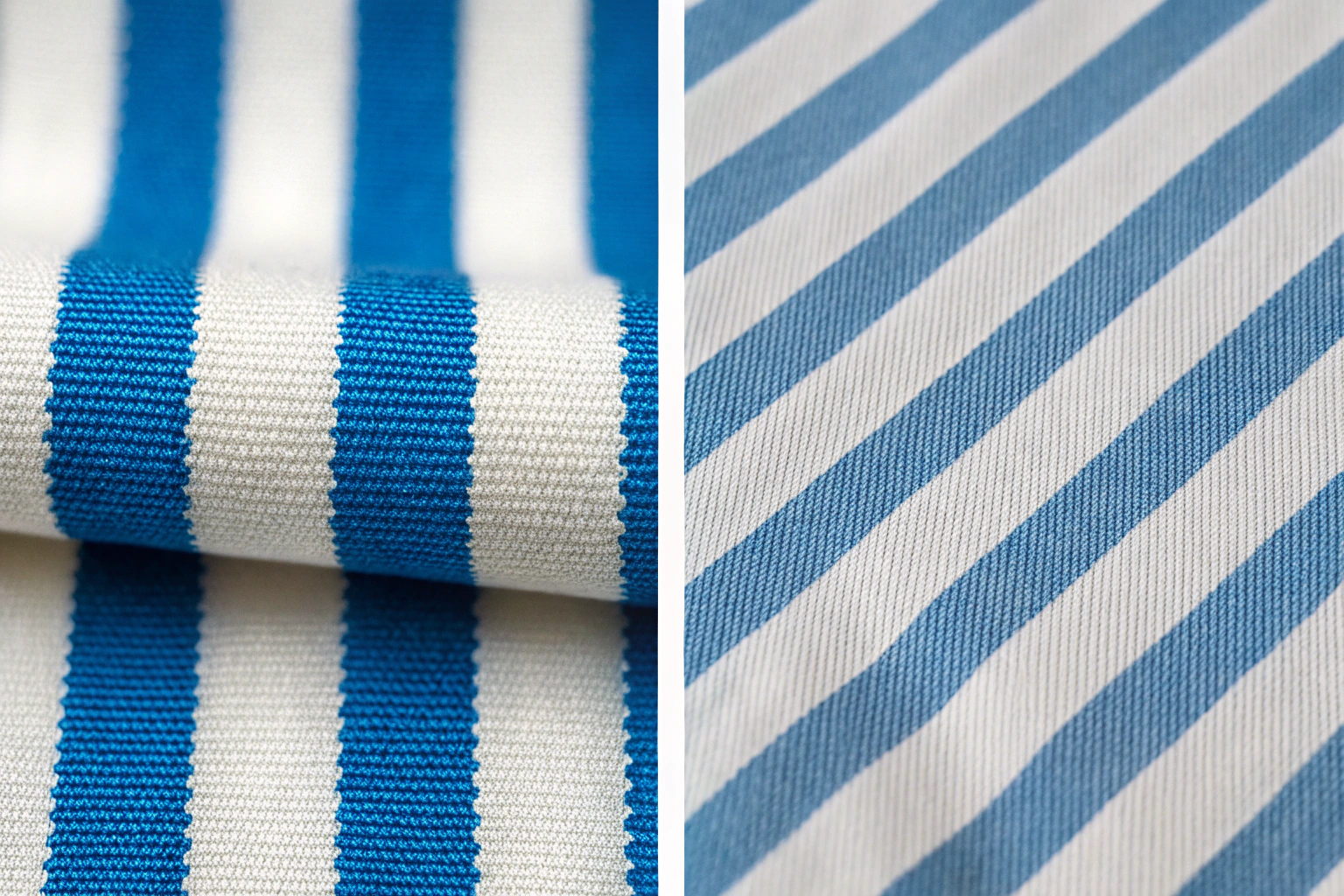
So, what is the difference between yarn-dyed stripes and printed stripes? In simple terms: yarn-dyed means the yarns are colored before weaving. The stripes are created by weaving different colored yarns together. Printed means the fabric is woven first (usually white or natural), then the stripe pattern is printed on top. The result looks similar from a distance, but up close, the difference is huge. In this guide, I will explain the differences in quality, cost, durability, appearance, and applications. By the end, you will know exactly which one you need for your product.
How are yarn-dyed stripes made?
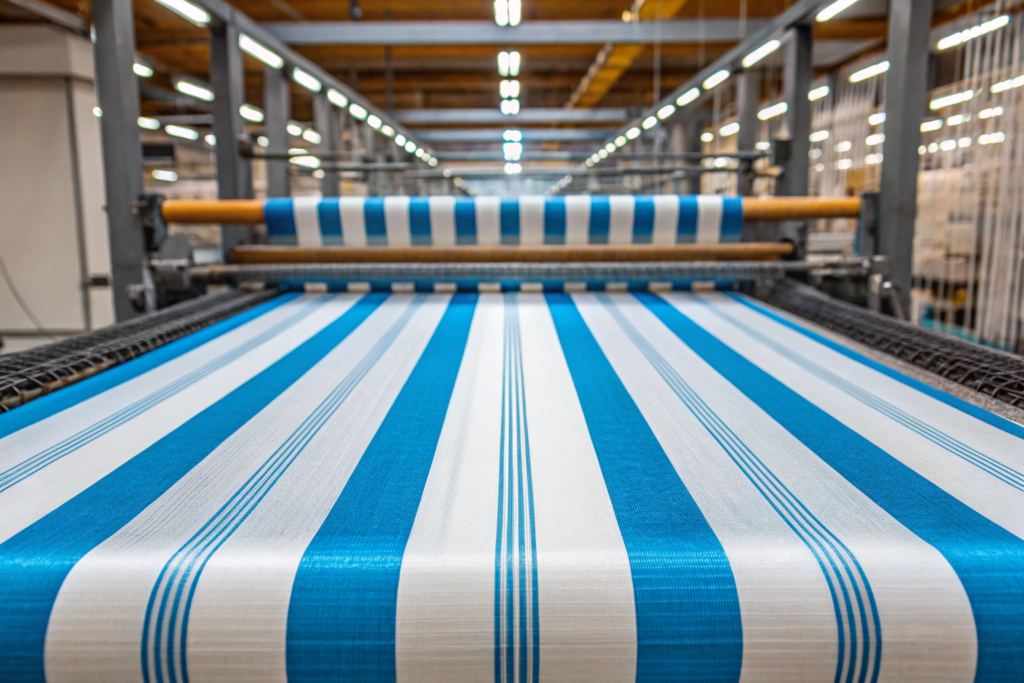
Yarn-dyed stripes are made by dyeing the yarns first, then weaving them into fabric. It is like painting the threads before you make the cloth. Here is the step-by-step process we use in our partner mills.
Step 1: Yarn selection. We start with greige yarn (undyed). For cotton, this is natural white or off-white. For polyester, it is usually white.
Step 2: Yarn dyeing. The yarn is dyed in batches. For cotton, we use reactive or vat dyes. For polyester, disperse dyes. The yarn is wound onto packages or cones, and dye is circulated through. This ensures the color penetrates the entire yarn, not just the surface. This is key.
Step 3: Warping. For woven fabric, the warp yarns (lengthwise) need to be arranged on a beam. For stripes, the warp yarns are arranged in a specific order: blue, white, blue, white, etc. This is called a "striped warp." The order determines the stripe pattern. The precision must be perfect. If one yarn is out of place, the stripe shifts.
Step 4: Weaving. The warp beam is mounted on the loom. The weft yarn (crosswise) is usually one color (often white or a contrasting color). As the loom weaves, the colored warp yarns create the stripes. The weft color can add effects. For example, a blue weft on a blue and white warp can create a different look.
Step 5: Finishing. The fabric is finished: desizing, scouring, maybe mercerizing. The colors are set. The fabric may be sanforized to control shrinkage. The result: stripes that are part of the fabric structure.
Key point: In yarn-dyed stripes, the color goes all the way through the yarn. If you look at the back of the fabric, you see the same stripes (though maybe reversed). If you cut the yarn, the inside is the same color.
What about different stripe patterns?
Yarn-dyeing allows many patterns:
- Warp stripes: Stripes run lengthwise (the most common).
- Weft stripes: Stripes run crosswise (less common, requires changing weft yarn color during weaving, which is slower).
- Check patterns: Like gingham, where both warp and weft have colored yarns in a pattern.
- Multi-color stripes: Using multiple colors in the warp.
The complexity of the stripe affects the cost. A simple two-color stripe is cheaper than a six-color stripe with different widths.
How are printed stripes made?
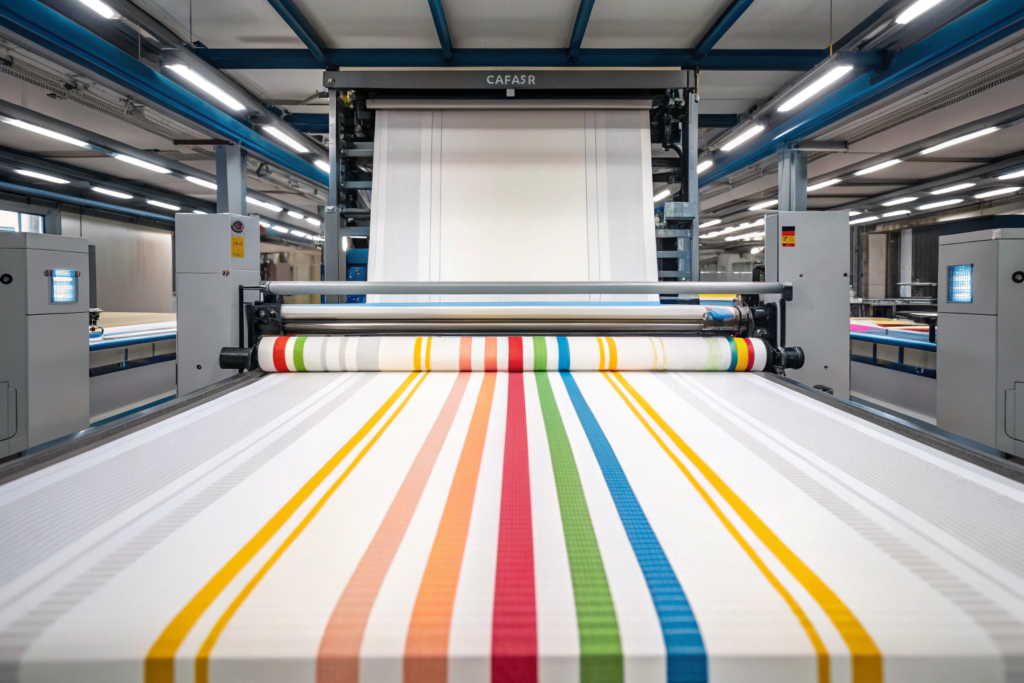
Printed stripes are made by weaving the fabric first (usually white or light-colored), then printing the stripe pattern on top. It is like painting the stripes onto the finished cloth. Here is the process.
Step 1: Weaving the base fabric. The fabric is woven from undyed or white yarns. It is usually a plain weave or twill. The fabric is called "greige" or "prepared for printing."
Step 2: Pre-treatment. The fabric is scoured, bleached, and sometimes mercerized to prepare it for printing. It must be clean and absorbent.
Step 3: Printing. There are several printing methods:
- Rotary screen printing: The most common for stripes. A cylindrical screen with the stripe pattern is used. Print paste (dye or pigment) is forced through the screen onto the fabric. Each color needs a separate screen. For a two-color stripe, two screens.
- Flatbed screen printing: For smaller runs or wider fabrics.
- Digital printing: For very complex stripes or short runs. Inkjet printers apply the color directly. No screens needed.
Step 4: Fixation. The printed fabric goes through a steamer or dryer to fix the colors. For dyes, steam sets the color. For pigments, heat cures them.
Step 5: Washing (for dyes). Excess dye and chemicals are washed off. For pigment prints, washing is minimal.
Step 6: Finishing. The fabric is finished as usual.
Key point: In printed stripes, the color sits on the surface. It does not penetrate the yarn. If you look at the back, you see little or no color. If you cut a yarn, the inside is white. Over time and washing, the color can fade or wear off, especially at creases and seams.
What about different printing methods for stripes?
- Rotary screen: Best for long runs. Crisp stripes, but each color adds cost. Minimum order usually 3,000 meters per color.
- Flatbed screen: Good for shorter runs or very wide fabrics. Slower.
- Digital: Best for short runs, complex patterns, or photo-realistic stripes. No screen cost, but higher cost per meter. Minimums can be as low as 100 meters.
What are the visual and tactile differences?
To the untrained eye, both fabrics can look similar. But if you know what to look for, the differences are clear.
From the front:
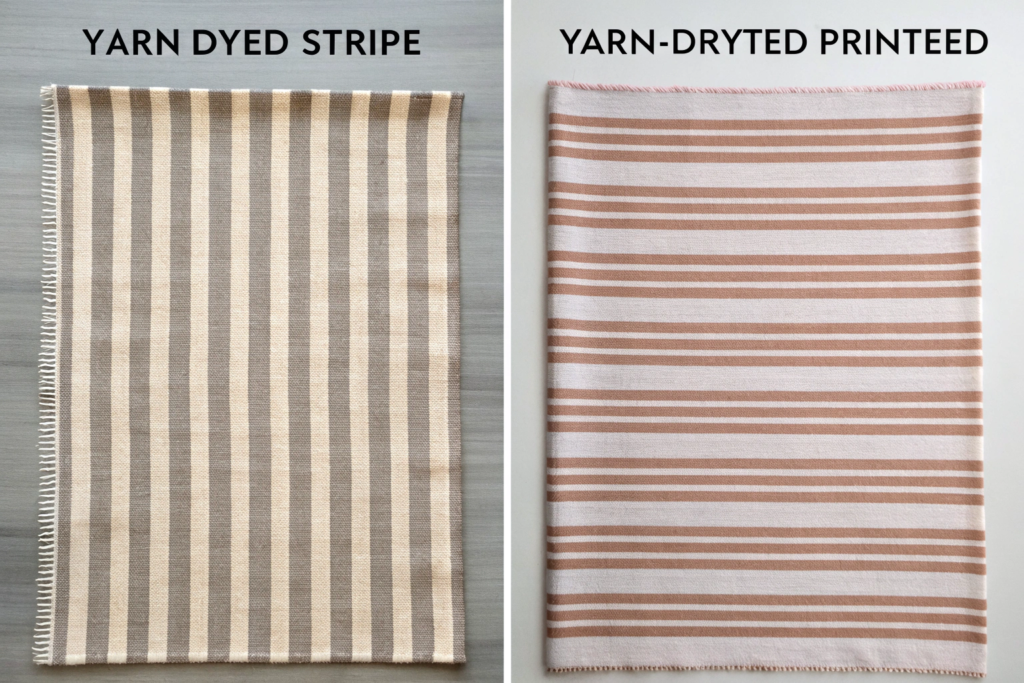
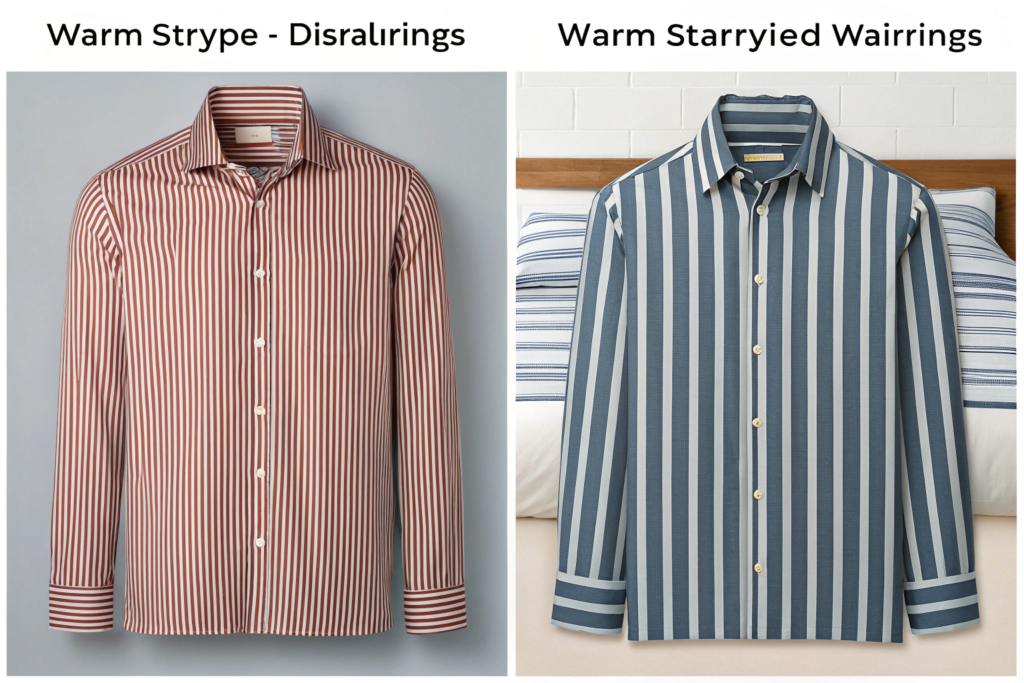
- Yarn-dyed: The stripes have a slightly textured, "woven" look. The edges of the stripes are defined by the yarns, so they are perfectly straight but have a natural yarn texture. The color may vary slightly between yarn batches (called yarn dye lot variation), which can add character.
- Printed: The stripes are perfectly flat and smooth. The color sits on the surface. The edges are very sharp if screen printed, or slightly less sharp if digitally printed. There is no yarn texture variation.
From the back:
- Yarn-dyed: The stripes are visible, though sometimes reversed in color order. The color is there.
- Printed: The back is mostly white or the base color. You might see a faint shadow of the stripe, but no solid color.
On the bias (diagonal):
- Yarn-dyed: The stripes remain continuous as the fabric stretches or drapes.
- Printed: The stripes may crack or show white at the crease if the fabric is stretched or folded sharply.
Feel:
- Yarn-dyed: The feel is of the fabric itself. The dye does not change the hand feel much.
- Printed: Depending on the print method, the fabric may feel slightly stiffer where the print is, especially with pigment prints.
Washing and wear:
- Yarn-dyed: Color fades gradually and evenly. Stripes remain crisp even after many washes. May soften with washing.
- Printed: Over time, the color can fade, especially at seams and creases. The print may crack or wear off. With poor quality prints, colors may bleed.
Which one is more durable?
Yarn-dyed stripes are more durable. The color is part of the yarn. It cannot wash off. It fades slowly and evenly. For garments that will be washed frequently (shirts, uniforms, bedding), yarn-dyed is better.
Printed stripes are less durable. The color is on the surface. With washing and wear, it can fade, especially in high-friction areas like collars and cuffs. But for low-wash items (like decorative fabrics) or short-life fashion, printing can be acceptable.
How do cost and MOQ compare?
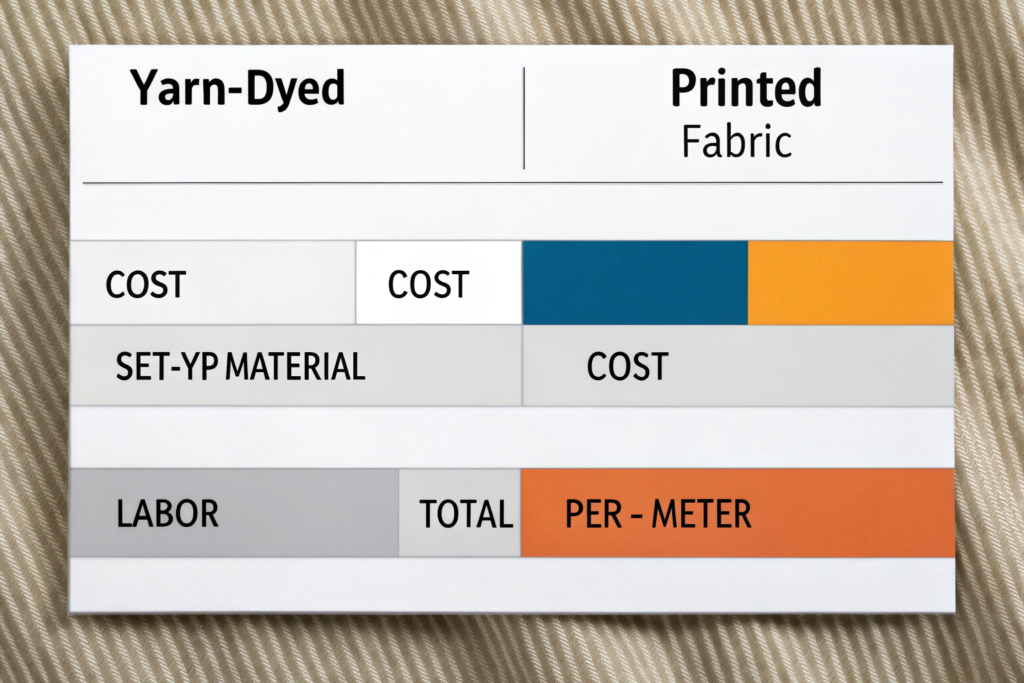
Cost is a major factor. Here is how they compare based on our production data.
Yarn-dyed stripes:
- Higher initial cost: Dyeing yarn takes time and labor. Setting up a striped warp is precise work.
- Material cost: Yarn dyeing can have some waste. Different colors require separate dye baths.
- MOQ: Usually higher. For a custom stripe pattern, you need to order enough yarn of each color. Minimums are often 3,000 to 5,000 meters per color combination. But if you choose from stock stripe fabrics, MOQ can be as low as 100 meters.
- Per-meter cost: For long runs, cost per meter becomes very competitive. For 10,000 meters, yarn-dyed can be cheaper than printing.
- Lead time: 8-12 weeks for custom colors and patterns. Stock stripes: 1-2 weeks.
Printed stripes:
- Lower initial cost: For short runs, printing is cheaper. No need to dye yarns.
- Screen cost: For rotary screen printing, screens cost money (around $100-$300 per color). For 2-color stripe, $200-$600 screen cost. For digital, no screen cost.
- MOQ: Screen printing: 1,500 to 3,000 meters per design. Digital printing: as low as 100 meters per design.
- Per-meter cost: For short runs, lower than yarn-dyed. For very long runs, screen printing per-meter cost drops, but yarn-dyed may become cheaper at very high volumes.
- Lead time: Screen printing: 6-8 weeks (including screen making). Digital: 4-6 weeks.
Which is cheaper for small quantities?
For small quantities (under 1,000 meters), digital printing is cheapest. No screens, no yarn dyeing. You pay a premium per meter, but no large set-up fees.
For medium quantities (1,000 to 5,000 meters), screen printing is often cheaper than yarn-dyeing, especially if you use standard base fabric.
For large quantities (over 10,000 meters), yarn-dyeing becomes very cost-effective. The set-up cost is spread over many meters.
What are the applications for each?
Both have their place. Here is where each excels.
Yarn-dyed stripes are best for:
- Men's dress shirts: Classic, durable, washable. The stripes stay crisp. Brands like Brooks Brothers, Thomas Pink use yarn-dyed.
- Uniforms: Corporate wear, school uniforms. They need to withstand frequent washing.
- Bedding: Sheets, duvet covers. Washed often, need durability.
- Upholstery: Furniture fabric that will be cleaned and worn.
- High-end fashion: When quality matters and the look is classic.
- Products where both sides are visible: Like scarves, or garments with turn-back cuffs.
Printed stripes are best for:
- Fast fashion: Quick turnaround, low cost, short life.
- Small collections: Designers testing a stripe pattern without big commitment.
- Multi-color complex stripes: If you want 10 colors, printing is easier (and cheaper) than yarn-dyeing.
- Photo-realistic or gradient stripes: Printing can do effects that weaving cannot.
- Products where only one side shows: Like lining, or garments with a fixed facing.
- Home decor accents: Throw pillows, where the back is hidden.
What about blending both?
Sometimes we combine both. For example, a yarn-dyed base with an over-printed design. Or a printed stripe on a yarn-dyed ground. It is possible, but expensive.
How do you choose the right one for your product?
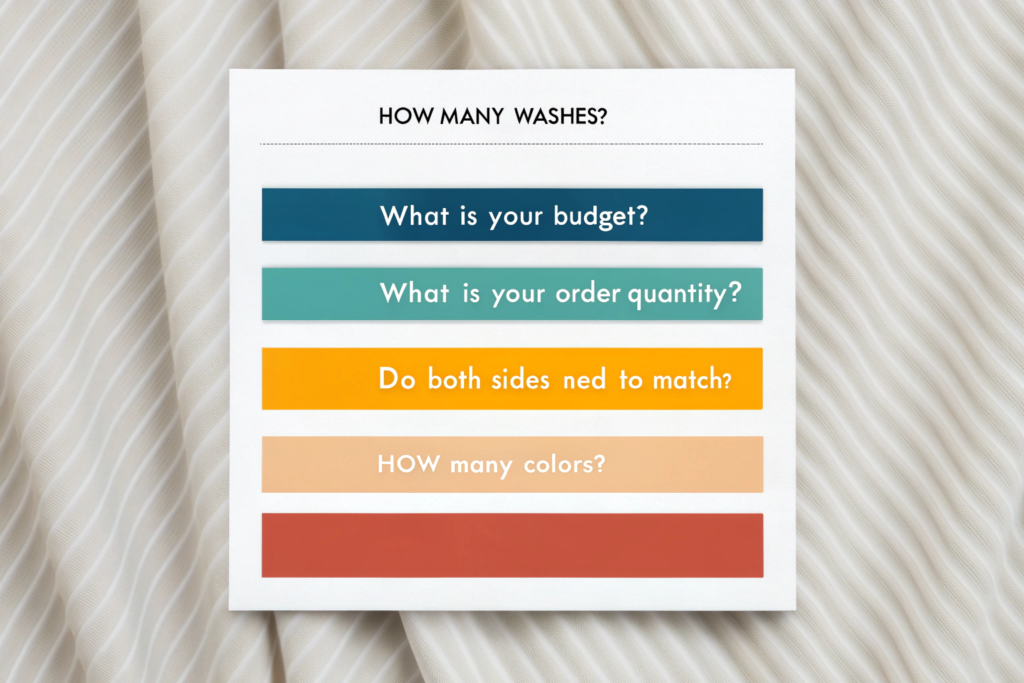
When clients ask me which to choose, I ask them these questions:
1. How many washes will the garment see?
- Many (over 20) → Yarn-dyed.
- Few (under 10) → Printed may be okay.
2. Do both sides of the fabric need to match?
- Yes (scarves, open garments) → Yarn-dyed.
- No (lined garments, one-side visible) → Printed works.
3. What is your order quantity?
- Under 1,000 meters → Digital print.
- 1,000-5,000 meters → Screen print or stock yarn-dyed.
- Over 5,000 meters → Yarn-dyed custom.
4. How many colors in the stripe?
- 1-3 colors → Both possible. Yarn-dyeing economical at scale.
- 4+ colors → Printing is much easier and cheaper.
5. What is your budget per meter?
- Low budget → Printing for small runs, yarn-dyeing for very large runs.
- Premium budget → Yarn-dyed for quality.
6. What is the fabric fiber?
- Cotton, linen, wool → Both possible.
- Polyester → Yarn-dyed possible (solution-dyed), but often printed.
7. How important is colorfastness?
- Critical (uniforms, babywear) → Yarn-dyed.
- Less critical (fashion items) → Printed.
A real example from our experience
In 2022, a US brand wanted striped fabric for a line of resort wear. They expected to sell 2,000 units (about 3,000 meters). They wanted 5 colors in the stripe. The garment was a beach cover-up, not washed often, and only one side showed. We recommended digital printing. Cost per meter was higher than screen, but no screen cost, and they could start small. They sold out, reordered 5,000 meters, and switched to screen printing for the second run. It worked perfectly.
Conclusion
Yarn-dyed stripes and printed stripes are not the same. They look different, feel different, wear differently, and cost differently. Yarn-dyed is the classic, durable choice. The stripes are part of the fabric. They last. Printed is the flexible, fast, and cost-effective choice for many applications. Neither is better. They are different tools for different jobs.
At Shanghai Fumao, we produce both. We have mills that do yarn-dyeing with precision warping for perfect stripes. We have partners with rotary screen and digital printing for every stripe imaginable. We help clients choose the right method for their product, their budget, and their market.
If you are sourcing striped fabric, contact our Business Director, Elaine, directly. She can guide you through the decision, provide samples of both types, and help you get the best quality for your needs. Email her at elaine@fumaoclothing.com. Tell her about your product, your quantities, and your stripe dreams. She will help you make the right choice. Because at Shanghai Fumao, we believe that the difference is in the details. And stripes are all about detail.