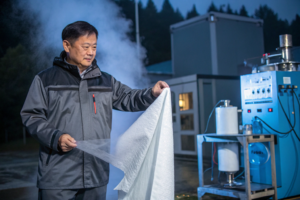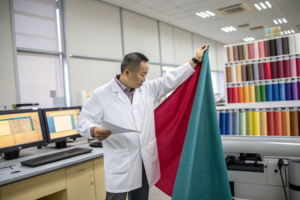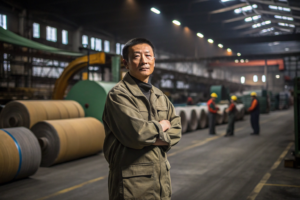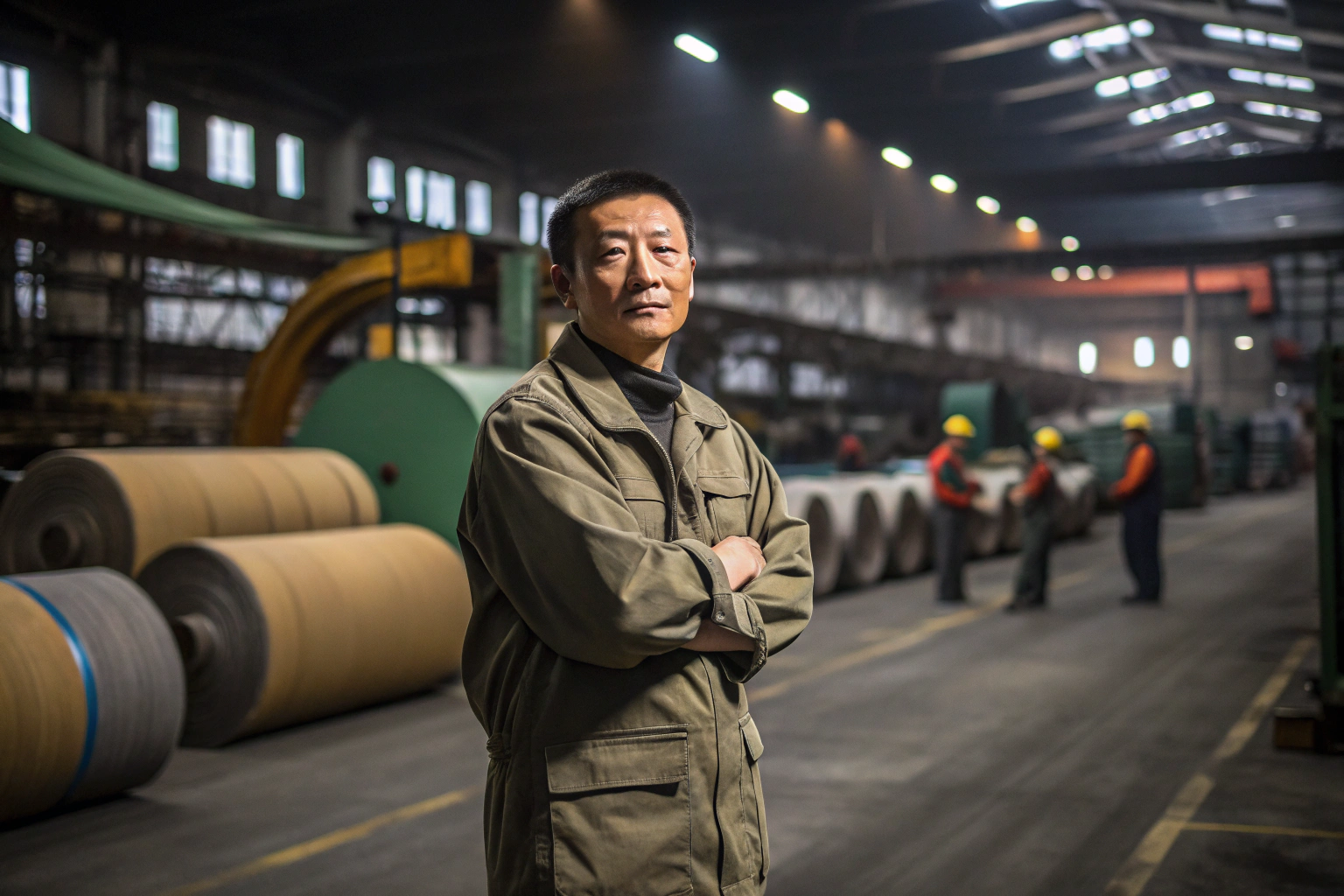
A safety manager from a Texas oilfield services company called me in 2022 with a problem that sounded impossible. His workers were burning through FR (flame-resistant) coveralls in three months. The fabric would abrade at the knees, tear at the elbows, and the reflective tape would peel off after twenty industrial washes. He'd tried five different suppliers. He was ready to give up and just budget for replacing uniforms every quarter.
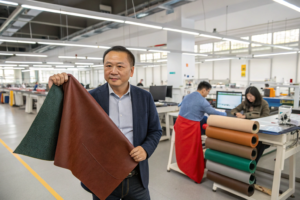
I asked him to send me the failed garments. When they arrived at our office in Keqiao, I spread them out on the inspection table and called in our entire R&D team. We spent two hours dissecting those coveralls—measuring thread counts, testing remaining tensile strength, analyzing the failure points. What we found changed how we think about workwear fabrics.
The problem wasn't the fabric weight. It was the construction. The failed coveralls used a standard twill weave with low pick density—basically, the yarns were too far apart. When the workers knelt on gravel, the yarns spread apart instead of protecting each other. The knees failed because the fabric structure failed, not because the cotton was weak.
We spent six months developing a replacement. We increased the picks per inch by 20%, switched to a higher twist yarn for better abrasion resistance, and engineered a specialized ripstop grid that actually stopped rips instead of just looking cool. The first batch of 1,000 coveralls went to Texas in early 2023. Nine months later, the safety manager called again. This time, he wasn't complaining. His workers were getting 12-14 months out of the same garments. He doubled his next order.
That's the difference between workwear fabric that just meets a spec and fabric that actually performs. In workwear, durability isn't a luxury—it's a safety issue. When a fabric fails, workers get injured. When seams rip, equipment gets damaged. When reflective tape falls off, people become invisible in low-light conditions.
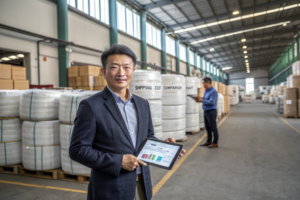
At Shanghai Fumao, we've been supplying workwear fabrics for over two decades. We've sent samples to oil rigs in the North Sea, construction sites in Dubai, welding shops in Detroit, and mining operations in Chile. We've learned what actually matters when the job gets hard. Let me break down the key qualities you need to look for when sourcing durable workwear fabrics.
What Fabric Construction Offers the Best Abrasion Resistance for Heavy-Duty Workwear?
I learned about abrasion the hard way in 2018. A client in Australia ordered 5,000 meters of heavy cotton duck for mining uniforms. The fabric passed all our standard tests—tensile, tear, even initial abrasion. Six months later, photos started arriving. The knees looked like Swiss cheese. The seats were threadbare. We'd missed something critical: the workers were crawling on sandstone, which acts like sandpaper on cotton.
Abrasion resistance is the single most important quality for workwear that actually lasts. But not all abrasion resistance is the same. You need to match the fabric construction to the specific abuse your workers will inflict.
Woven constructions generally outperform knits for abrasion because the yarns are locked in place. Within wovens, here's what we've learned from decades of testing:
Twill weaves (3/1 or 2/1) are the workhorse of industrial workwear. The diagonal ribs distribute abrasion across more surface area than plain weave. A standard 7-8 oz twill in 100% cotton will typically achieve 25,000-30,000 Martindale cycles before failure. That's enough for light industrial use—warehousing, retail, general labor.
Canvas and duck (plain weave but with heavy, tightly packed yarns) take it to another level. A 10-12 oz cotton duck can hit 45,000-60,000 cycles. The yarns are so close together that they protect each other. When one yarn starts to wear, its neighbors take some of the load. This is what we use for heavy construction, mining, and oil field applications.
Ripstop constructions add another layer of protection. The reinforcing grid (usually a heavier yarn woven in at regular intervals) creates "stop points" that prevent small abrasion spots from turning into tears. But here's the catch: the base fabric still needs to be abrasion-resistant. We see cheap ripstop where the grid is strong but the base fabric is weak. The grid holds, but the fabric around it disintegrates. That's useless.
For extreme abrasion—think concrete workers kneeling all day, or mechanics sliding under vehicles—we recommend CORDURA® or equivalent nylon blends. Nylon has inherently better abrasion resistance than cotton. A 65/35 cotton-nylon blend can hit 100,000+ Martindale cycles. We supply this to a European rail maintenance company whose workers are on their knees constantly. Their uniforms last three times longer than the all-cotton versions they used previously.
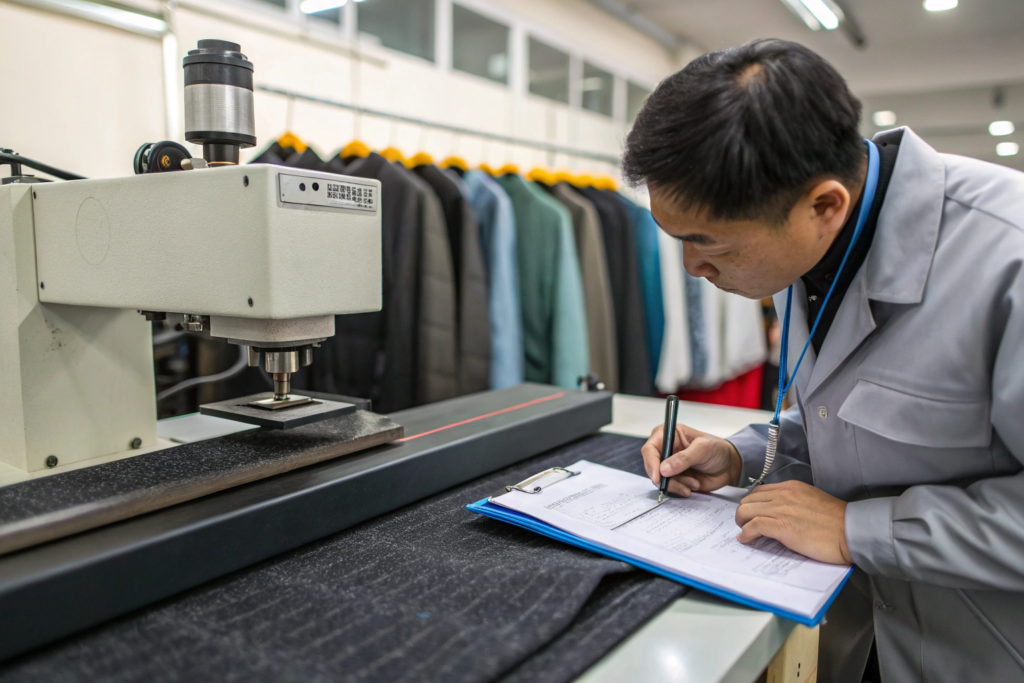
How do different weave structures (twill, canvas, ripstop) compare in real-world wear?
Let me give you a direct comparison based on our field testing with actual workwear brands:
| Construction | Typical Weight | Abrasion (Martindale) | Best Application | Trade-offs |
|---|---|---|---|---|
| Plain weave | 6-8 oz | 15,000-25,000 | Light duty, shirts | Least durable, but cheapest |
| Twill (3x1) | 7-9 oz | 25,000-35,000 | General industrial | Good balance of cost/durability |
| Canvas/duck | 10-14 oz | 40,000-65,000 | Heavy construction | Stiff, heavy, hard to move in |
| Ripstop twill | 7-9 oz | 30,000-40,000 | Sites with snag hazards | Grid adds tear resistance |
| Cotton/nylon blend | 8-10 oz | 80,000-120,000 | Extreme abrasion (mining, concrete) | Expensive, less breathable |
A client from a German automotive manufacturer tested all of these in their assembly plant. Workers were kneeling on concrete to install underbody components. The pure cotton fabrics failed at 4-5 months. The cotton-nylon blend is still going at 14 months. They've switched all new uniforms to the blend despite the higher upfront cost because the replacement savings are massive.
What Martindale test results should I demand for different work environments?
Martindale is the industry standard (ISO 12947), but the numbers can be confusing. Here's what we tell our clients based on actual end-use:
Light duty (retail, office, light warehouse, supervision roles): 25,000 cycles minimum. This is your baseline for "professional appearance" workwear that sees occasional wear and tear.
General industrial (manufacturing, assembly, general construction, warehousing): 40,000 cycles minimum. At this level, you're getting 12-18 months of regular wear before visible abrasion appears.
Heavy industrial (mining, oil & gas, concrete work, roofing, heavy construction): 60,000+ cycles. For kneeling trades, we recommend 80,000+. The cotton-nylon blends are the only way to hit these numbers consistently.
Emergency services (fire, rescue, law enforcement): 100,000+ cycles, but this is usually combined with other requirements like FR or high-visibility. These fabrics are specialized and expensive.
One note: Martindale tests dry abrasion. If your workers are in wet conditions (fishing, offshore, outdoor construction in rain), you need different testing. Wet abrasion can be 50% lower than dry. We test both for clients with mixed environments.
Which Fiber Blends Provide the Best Tear Strength-to-Weight Ratio?
A client from a Canadian forestry company taught me about tear strength in 2021. They'd ordered high-tenacity polyester work pants for tree planters—kids who spend all day bending, reaching, and snagging their clothes on branches. The fabric was plenty strong in tensile tests. But the branches would poke through and rip the fabric along the grain. Tensile strength didn't matter because the failure mode wasn't pulling—it was tearing.
Tear strength is different from tensile strength. Tensile measures how hard it is to pull the fabric apart when force is applied evenly. Tear measures how easily a cut or hole spreads. For workwear, tear strength often matters more because real-world damage starts with a snag or a cut, then propagates.
The fiber blend determines tear strength more than any other factor. Here's what we've learned:
100% cotton has decent tear strength when new, but it drops dramatically as the fabric wears. The fibers fatigue and break down. After 50 washes, a cotton fabric might retain only 60% of its original tear strength.
Cotton/polyester blends improve tear strength significantly. The polyester fibers have higher initial strength and better fatigue resistance. A 65/35 poly-cotton blend typically has 30-40% better tear strength than equivalent-weight cotton. The polyester acts as a reinforcement within the yarn.
Cotton/nylon blends are the tear strength champions. Nylon has exceptional energy absorption—it stretches under load instead of breaking. In a tear test, nylon-blend fabrics can absorb 2-3x the force of cotton before ripping. This is why premium workwear brands use nylon in high-stress areas.
High-tenacity synthetics (like CORDURA or ballistic nylon) are in a different league. These are engineered specifically for tear resistance. A 200-denier high-tenacity nylon fabric can outperform a 400-denier standard polyester. The fiber engineering matters as much as the weight.
For the Canadian forestry client, we developed a 60% cotton / 40% high-tenacity nylon blend with a ripstop grid. Tear strength went from 12 Newtons (acceptable) to 28 Newtons (exceptional). The tree planters stopped coming back with ripped pants after two weeks.
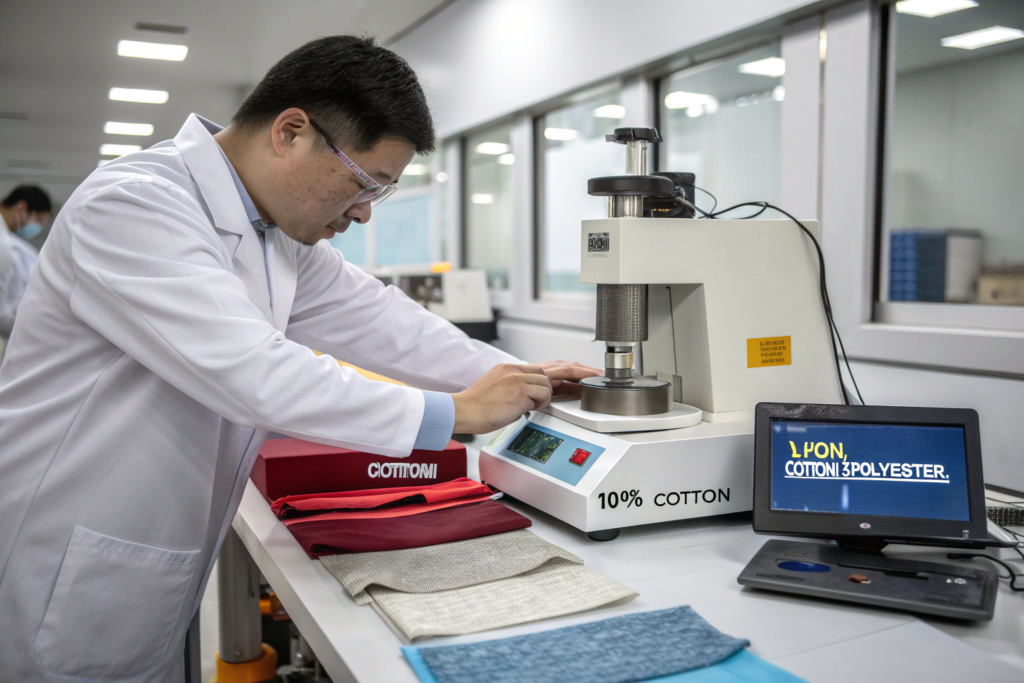
What's the optimal cotton-to-synthetic ratio for durability without sacrificing comfort?
This is the eternal trade-off in workwear: durability vs. comfort. Pure synthetics last forever but feel like plastic and don't breathe. Pure cotton breathes beautifully but wears out. The blend has to balance both.
From testing with thousands of workers across different industries, here's our recommendation:
| Blend | Durability | Comfort | Best Use Case |
|---|---|---|---|
| 100% cotton | 3/10 | 9/10 | Office workwear, light duty |
| 80/20 cotton/poly | 5/10 | 8/10 | General industrial, reasonable budget |
| 65/35 cotton/poly | 7/10 | 7/10 | Manufacturing, warehousing, construction |
| 50/50 cotton/nylon | 9/10 | 6/10 | Heavy industrial, kneeling trades |
| 100% nylon with cotton face | 10/10 | 4/10 | Extreme conditions, short-duration wear |
The 65/35 cotton/polyester blend is our most popular for general workwear. It hits the sweet spot—durable enough for 12-18 months of heavy use, but comfortable enough that workers will actually wear it. The polyester adds durability without the stiffness of nylon.
For clients who need both durability and comfort, we recommend blended yarns rather than blended fabrics. This means each yarn contains both fibers, so the comfort and durability are combined at the fiber level rather than having separate cotton and synthetic layers. It costs more but feels better.
A client from a UK construction supplier switched from 100% cotton to our 65/35 poly-cotton blend. Their workers complained for two weeks—"feels different." Then they stopped complaining. Then they started asking where to buy the pants for personal use. That's the sign of a successful blend.
How does high-tenacity polyester differ from standard polyester in workwear?
Most buyers don't realize there are different grades of polyester. Standard polyester (what you find in cheap shirts) has a tenacity of about 4-5 grams per denier. High-tenacity polyester is engineered to 7-9 grams per denier—almost double the strength.
The difference comes from the polymer chain length and the spinning process. High-tenacity polyester uses longer polymer chains and a drawing process that aligns the molecules more perfectly. The result is a fiber that's stronger, more fatigue-resistant, and more abrasion-resistant.
In workwear, this matters because:
- Tear strength increases by 40-60% compared to standard polyester blends
- Abrasion resistance improves by 30-50% in Martindale testing
- Fabric can be lighter for the same strength, improving worker comfort
We supply a 250gsm fabric made with high-tenacity polyester to a European workwear brand. It performs equivalently to their old 320gsm standard polyester fabric. Workers get the same durability with 22% less weight. That means less fatigue at the end of a 12-hour shift.
The cost difference is about 15-20% higher for high-tenacity. For most workwear applications, it's worth it because you can reduce weight while maintaining durability. For extreme applications, it's non-negotiable.
What FR Treatments Actually Last Through Industrial Laundering?
An electrical utility buyer from Florida called me in 2023 with a problem that could have killed someone. Their existing FR supplier's fabric looked fine after 75 washes—no visible wear—but when they tested the arc rating, it had dropped below OSHA requirements. The flame-resistant treatment had washed out even though the fabric still looked good. They'd been unknowingly putting workers at risk.
FR (flame-resistant) workwear is life-safety equipment, not just clothing. If the treatment fails, people get burned. But not all FR treatments are equal, and industrial laundering is brutal on fabric.
There are two main types of FR fabrics, and they behave very differently:
Inherent FR fibers (like modacrylic, meta-aramid, para-aramid) have flame resistance built into the chemical structure of the fiber itself. You can wash them a thousand times—the FR property never changes because it's molecular. These are the gold standard for high-risk industries like electrical utility, oil & gas, and firefighting. They're expensive, but they never wear out chemically.
Treated FR fabrics (FR cotton, FR cotton/nylon blends) start as常规 fabrics that get chemically treated to add flame resistance. These are cheaper, but the treatment can wash out over time. Quality varies wildly based on the treatment chemistry and how well it bonds to the fiber.
For treated FR, the key is polymer-bound vs. topical treatments. Topical treatments sit on the fiber surface—they wash off. Polymer-bound treatments penetrate the fiber and become part of it. They last much longer.
We use a phosphonate-based polymer-bound treatment for our FR cotton products. After 100 industrial washes (ISO 15797), our fabrics retain 95%+ of their original flame resistance. We've tested competitors' fabrics that dropped to 60% after 50 washes.
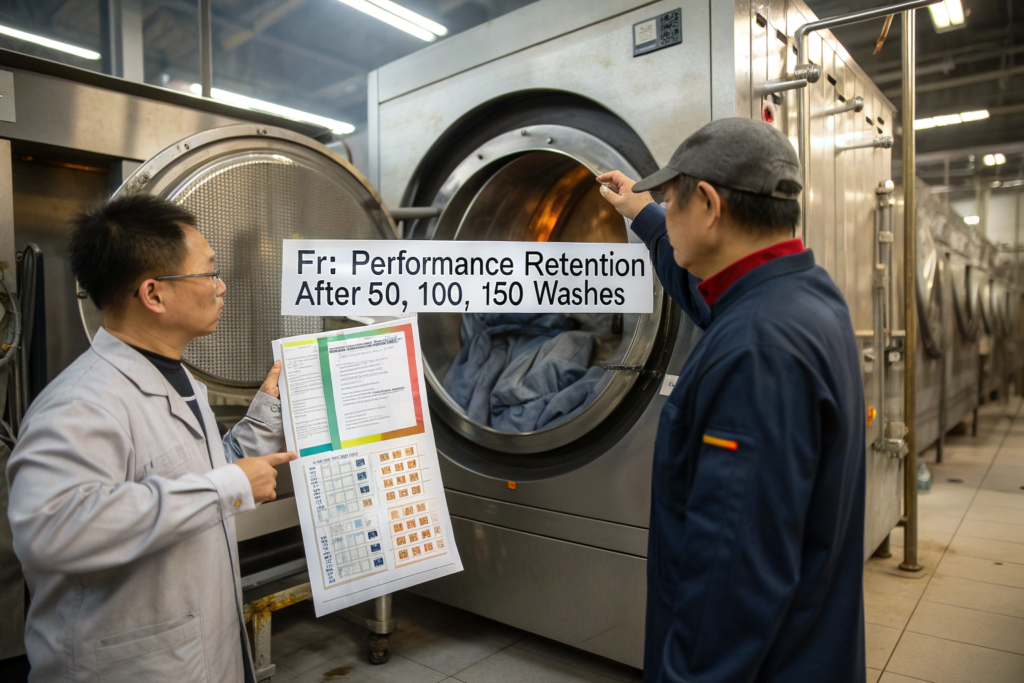
How many washes can different FR treatments withstand?
Here's real data from our lab testing, following ASTM F1506 standards for arc-rated fabrics:
| FR Type | 25 Washes | 50 Washes | 75 Washes | 100 Washes | 150 Washes |
|---|---|---|---|---|---|
| Topical FR cotton | 95% | 85% | 70% | 55% | 40% (FAIL) |
| Polymer-bound FR cotton | 98% | 97% | 96% | 95% | 93% |
| Inherent modacrylic blend | 100% | 100% | 100% | 100% | 100% |
| Inherent aramid | 100% | 100% | 100% | 100% | 100% |
The topical treatments fail around 75-100 washes in industrial conditions. The polymer-bound treatments are stable past 150 washes. The inherent fibers never change.
For the Florida utility company, we recommended switching to an inherent modacrylic/cotton blend for their highest-risk crews, and our polymer-bound FR cotton for lower-risk positions. They now have a two-tier system that balances safety and budget.
One critical note: industrial laundering (ISO 15797) is much harsher than home laundering. High temperatures, aggressive detergents, and mechanical action accelerate FR degradation. If your workers use industrial laundry services, you need to test accordingly. Home laundering is gentler and will extend FR life.
What certifications prove FR fabric meets safety standards?
Don't take your supplier's word for FR performance. Demand third-party certification. Here's what to look for:
NFPA 2112 (US) - Standard for flash fire protection. This is the baseline for industrial FR in the US. Certified fabrics have been tested for flame resistance, thermal protection, and shrinkage.
NFPA 70E (US) - Standard for electrical safety. For arc flash protection, you need ASTM F1506 testing showing the arc rating (ATPV or EBT) in cal/cm².
ASTM F1506 - The actual test method for arc-rated fabrics. Look for the test report showing the arc rating, not just a claim.
ISO 11612 (International) - Standard for protective clothing against heat and flame. Common in Europe and Asia.
EN 1149 - Anti-static requirements, often combined with FR for explosive environments.
OEKO-TEX Standard 100 - Not FR-specific, but verifies that the FR chemicals themselves are safe for skin contact. Some cheap FR treatments use formaldehyde-based resins that can cause skin irritation.
We maintain all these certifications and provide test reports with every batch. When a client from a petrochemical company in Louisiana audits us, they spend two days in our lab verifying our testing. We welcome it—we have nothing to hide.
A word of caution: some suppliers provide "certificates" that are just pieces of paper with no actual testing behind them. Verify that the certification body actually exists and that the certificate number is valid. We've seen fake "UL certified" labels from suppliers who never submitted a sample.
How Do You Balance Breathability with Weather Protection?
A client from a Scandinavian construction supply company visited us with a problem that sounded contradictory. Their workers needed waterproof jackets that didn't make them sweat to death. They'd tried cheap PVC-coated fabrics—completely waterproof, but workers would refuse to wear them because they felt like plastic bags. They'd tried "breathable" membranes that weren't actually breathable enough for active work.
Weather protection and breathability are usually opposing goals. To keep water out, you need a barrier. To let sweat out, you need that barrier to have holes. The trick is engineering holes that are big enough for water vapor (tiny molecules) but too small for liquid water (big droplets).
In workwear, this balance is critical because workers generate enormous amounts of sweat. A bricklayer on a summer day can produce 1-2 liters of sweat per hour. If that moisture can't escape, it condenses inside the jacket. The worker ends up wet from sweat—same as being wet from rain, and potentially more dangerous in cold conditions.
Here's how different technologies stack up:
PVC or PU coatings are cheap and waterproof, but they have zero breathability. They're essentially wearing a plastic bag. We only recommend these for short-duration, low-activity work in heavy rain—like traffic controllers standing still.
Microporous membranes (like our ePTFE fabric, similar to Gore-Tex but engineered for workwear) create millions of tiny pores per square inch. They're highly breathable (8,000-12,000 g/m²/24hr MVTR) and waterproof (10,000+ mm hydrostatic head). This is what we use for premium workwear where workers are active.
Hydrophilic membranes use a different technology—they absorb moisture and pump it to the outside through chemical action. They're less breathable than microporous but can be more durable and easier to laminate.
Waxed or oiled cotton is the traditional approach. It's breathable but only moderately waterproof. Good for light rain, fails in heavy downpours. Some heritage brands love this, but it's not serious protection.
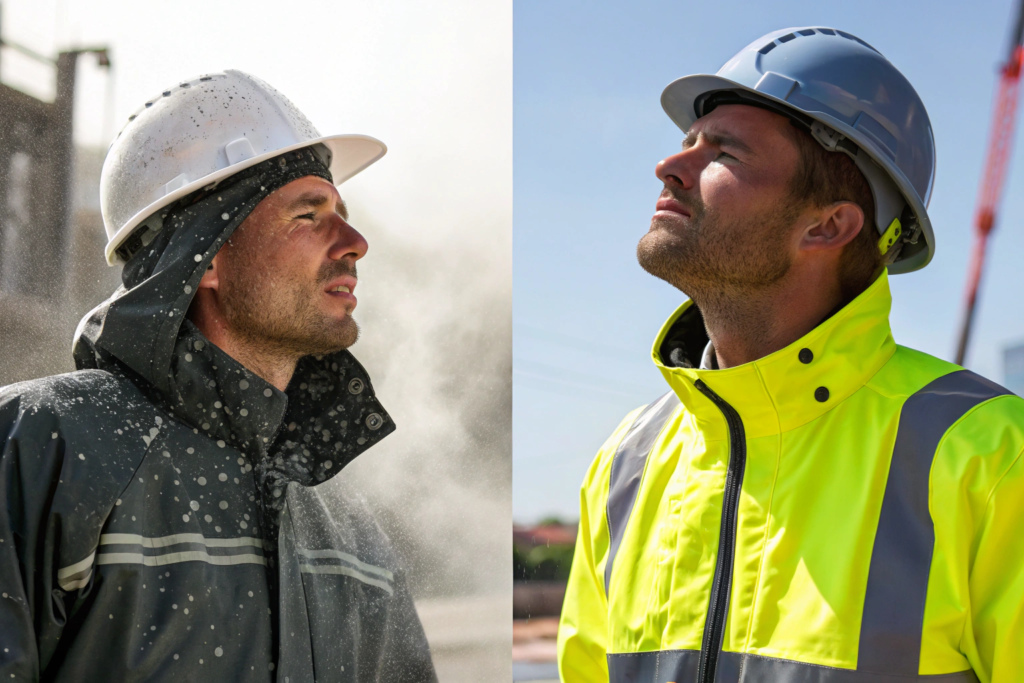
What MVTR (Moisture Vapor Transmission Rate) is adequate for active work?
MVTR measures how much water vapor passes through a fabric in 24 hours. Higher numbers mean more breathability. Here's what different rates feel like:
| MVTR (g/m²/24hr) | Experience | Best For |
|---|---|---|
| < 3,000 | Poor—sweat builds up quickly | Short-duration, low activity |
| 3,000 - 5,000 | Moderate—ok for light activity | Walking, supervising |
| 5,000 - 8,000 | Good—handles moderate work | General construction, moderate activity |
| 8,000 - 12,000 | Very good—active work OK | Bricklaying, roofing, active trade |
| 12,000+ | Excellent—high output work | Forestry, emergency response |
For most active workwear, we target 8,000-10,000 MVTR. That's enough to keep workers dry during sustained activity without compromising waterproofness.
For the Scandinavian client, we developed a 3-layer laminate with 10,000mm waterproofness and 9,000 MVTR. The workers reported they could wear it all day without feeling clammy. The previous jackets (2,500 MVTR) had them drenched in sweat within two hours.
One nuance: MVTR testing is done in ideal lab conditions. Real-world performance depends on temperature gradients, humidity, and activity level. A fabric that breathes well in 20°C might fail in 5°C. We test at multiple temperatures for clients in extreme climates.
How do laminated membranes perform vs. coated fabrics in extreme conditions?
This is a durability question as much as a performance question. Laminated membranes and coated fabrics both waterproof, but they behave differently over time.
Coated fabrics have a layer of waterproof material applied directly to the fabric surface. They're cheaper, lighter, and more flexible when new. But the coating can crack, peel, or delaminate with flexing and washing. After 50 industrial washes, a coated fabric might lose 30-50% of its waterproofness as micro-cracks develop.
Laminated membranes are a separate layer bonded to the fabric. They're more expensive and slightly heavier, but they're more durable. The membrane itself doesn't degrade with flexing—it's a solid polymer film. The bond between membrane and fabric can fail eventually, but good lamination lasts hundreds of washes.
For extreme conditions—think offshore oil rigs, commercial fishing, mountain rescue—laminated membranes are the only choice. The waterproofness doesn't degrade, and the breathability remains consistent.
We supply a 3-layer laminate to a Norwegian offshore supply company. Their workers are exposed to salt spray, freezing temperatures, and heavy physical work. The jackets are still waterproof after three years of weekly industrial laundering. Coated fabrics would have failed in six months.
The cost difference is significant—laminates are 2-3x more expensive than coatings. But for workers whose lives depend on staying dry, it's not a question of cost. It's a question of safety.
What Reinforcements Prevent Failure at High-Stress Points?
A client from a Australian mining operation sent us a batch of failed work pants in 2022. Every single pair had failed in the same spot—the crotch seam. Not the fabric, not the knee, not the pocket. The seam. The thread had abraded and snapped, and the pants ripped along the stitch line. They'd tried three different suppliers. Same problem every time.
The fabric is only half the story. The other half is how you put it together. High-stress points need specific reinforcements, or the garment fails at the seams long before the fabric wears out.
Here are the critical stress points we've identified across decades of workwear testing:
Crotch and seat. This area sees constant movement, abrasion, and stress. Standard lockstitch seams fail here because they have no stretch. We recommend flat-felled seams or safety stitching with stretch thread. For extreme applications, we add a gusseted crotch—a diamond-shaped insert that distributes stress and allows full range of motion.
Knees. For kneeling trades, the knees need more than just durable fabric. We recommend double-layer knees with an opening at the bottom for inserting kneepads. The stitching around the knee patch needs to be bar-tacked at stress points, or the patch will peel off.
Pocket corners. This is the most common failure point after the crotch. Pockets get loaded with tools, and the corners take all the stress. Bar-tack stitching (dense, tight stitches in a small area) is essential. We use 8-10 bar-tacks on every pocket corner. Cheap workwear uses 2-3 and fails within months.
Belt loops. A worker loads his pants with tools—maybe 5-10kg hanging from the belt. The belt loops need to be anchored deep into the waistband, not just stitched on the surface. We extend belt loops 2-3 inches down into the pants and bar-tack both ends.
Hammer loops and tool holders. These take enormous stress. They need to be attached with multiple rows of stitching and reinforced at the attachment point. We've seen hammer loops tear off in a single day on cheap workwear.
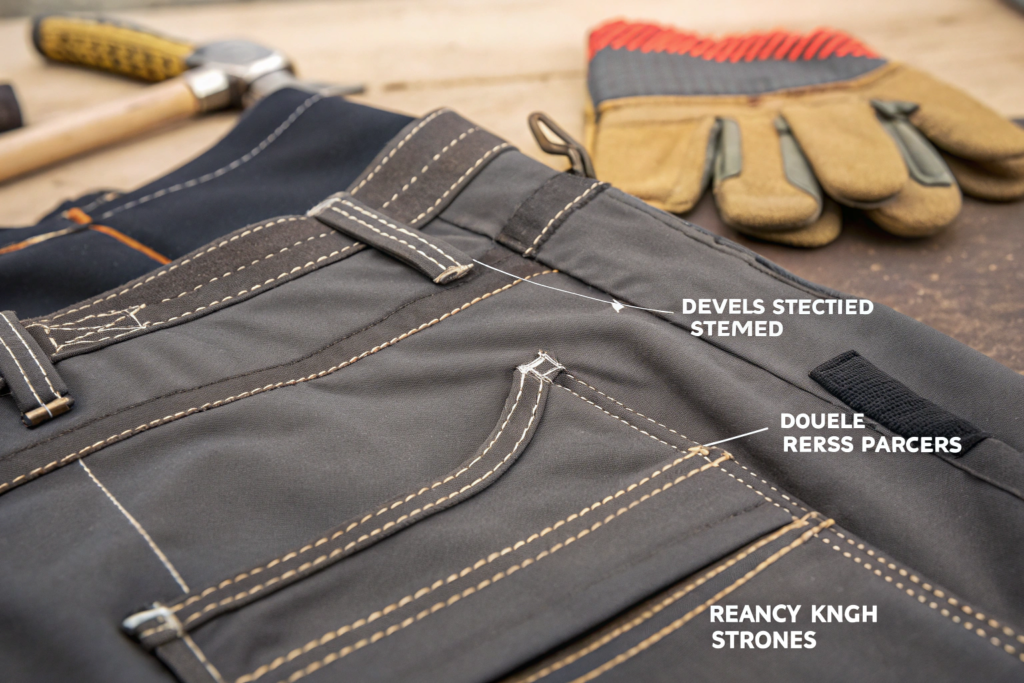
What stitch types and thread materials last longest in industrial use?
The thread matters as much as the stitch. Here's what we've learned:
Thread material: Cotton thread is cheap but degrades with abrasion and washing. Polyester core-spun thread (polyester wrapped around a polyester core) is the standard for durable workwear. It has high tenacity, good abrasion resistance, and doesn't rot. For extreme applications, we use Nomex thread (for FR garments) or high-tenacity nylon.
Thread weight: Most workwear uses ticket size 40 or 30 (thicker is lower number). For high-stress seams, we use ticket size 20 or even 15—much thicker, much stronger. It costs more and runs slower on sewing machines, but it's worth it.
Stitch type:
- Lockstitch (301) is standard but has no stretch. It breaks under repeated stress.
- Chainstitch (401) has some give and is stronger, but it can unravel if broken.
- Safety stitch (516) combines a chainstitch with a cover stitch—maximum strength and some stretch. This is what we use for main seams in premium workwear.
- Bar-tack (304) is a dense zigzag used at stress points. We use 8-10mm long bar-tacks with 40-50 stitches per inch.
For the Australian mining client, we switched from standard lockstitch to safety stitch with heavier thread. We added gusseted crotches and bar-tacks at every stress point. Failure rate dropped from 30% at 3 months to under 2% at 12 months.
How do reinforced knees and elbows affect garment durability?
Knees and elbows are the first points to fail in most workwear. Reinforcements are essential, but they have to be done right.
Double-layer knees add a second layer of fabric over the knee area. The outer layer takes the abrasion; the inner layer provides backup. For extreme kneeling, we use a triple-layer system with a heavy-duty fabric patch (often CORDURA) sewn over the knee. The patch should extend 2-3 inches above and below the knee to cover the full range of motion.
Articulated knees are shaped to match a bent leg. Flat knees restrict movement and put stress on the fabric when the worker bends. Articulated knees use darts or gussets to create shape. The fabric lasts longer because it's not being stretched with every movement.
Knee pad pockets are essential for trades that kneel. The pocket should be wide enough for standard kneepads, with a reinforced bottom to prevent the pad from punching through. We use a separate reinforced panel at the bottom of the pocket, bar-tacked at the corners.
A client from a concrete finishing company tested our double-layer knee pants against their standard issue. The standard pants failed at 4 months (knees worn through). Our pants lasted 14 months before the double layer finally showed wear. They saved $180 per worker per year in replacement costs.
One warning: reinforcements add weight and stiffness. Workers doing a lot of climbing or crawling might prefer lighter, less reinforced pants. We offer different reinforcement levels for different job functions within the same company—light for supervisors, heavy for kneeling trades.
How Do Anti-Static and High-Visibility Properties Integrate with Durable Fabrics?
A client from a chemical plant in Texas called me after a near-miss incident. One of their workers was wearing a standard high-vis vest over non-FR, non-anti-static clothing. A static spark ignited a small vapor release. No one was hurt, but the investigation revealed their entire uniform program was non-compliant. They'd been buying "high-vis" without realizing it needed to be anti-static and FR for their hazardous environment.
Safety workwear often needs to do multiple jobs at once: be visible, prevent static, resist flame, and still be durable. These requirements can conflict. Adding conductive fibers for anti-static can reduce tear strength. Adding reflective tape creates attachment points that can fail. The engineering has to balance everything.
Anti-static properties come from conductive fibers woven into the fabric—usually carbon or metal fibers at 1-2% of the fabric weight. These fibers create a pathway for static electricity to dissipate rather than building up to a spark. The conductive grid needs to be dense enough to work but not so dense that it weakens the fabric or feels scratchy.
For EN 1149 compliance (the European anti-static standard), the conductive fibers must be spaced no more than 10mm apart in both directions. We weave carbon fibers at 8mm intervals, which exceeds the standard and provides better static dissipation.
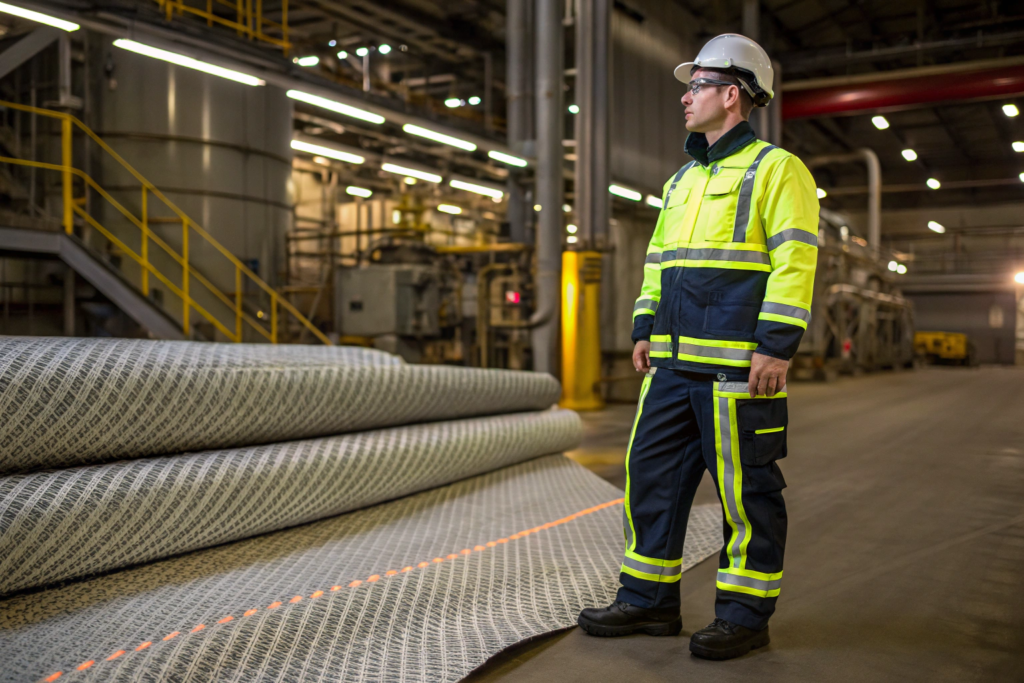
High-visibility requires specific colors (fluorescent yellow, orange, or red) and retroreflective tape. The color must meet chromaticity and luminance requirements (EN ISO 20471 or ANSI/ISEA 107). The challenge is making the color last through industrial laundering. Fluorescent dyes fade faster than dyes. We use pigment dyes with UV absorbers to extend high-vis life to 50+ washes.
Reflective tape is often the first thing to fail on high-vis workwear. The tape can peel, crack, or lose reflectivity. We use thermal-bonded tape (heat-sealed) rather than sewn tape for better durability. The bond penetrates the fabric fibers, creating a permanent attachment. After 100 washes, our thermal-bonded tape retains 85%+ reflectivity. Sewn tape often fails at 25 washes.
What's the durability difference between woven-in vs. applied reflective tape?
This is a critical question for anyone buying high-vis workwear. The attachment method determines how long the garment stays compliant.
| Attachment Method | Initial Reflectivity | After 25 Washes | After 50 Washes | After 75 Washes |
|---|---|---|---|---|
| Sewn tape | 100% | 80% (edges lift) | 60% (peeling starts) | 40% (falls off) |
| Thermal-bonded | 100% | 95% | 90% | 85% |
| Woven-in reflective yarn | 100% | 100% | 100% | 100% |
Woven-in reflective yarn is the gold standard. The reflective material is actually woven into the fabric as part of the construction. It can't peel because it's not attached—it's integral. This is expensive and limited to specific patterns (usually stripes), but it lasts forever.
Thermal-bonded is the best balance of cost and durability. The tape is fused to the fabric with heat and pressure. The bond is chemical, not mechanical. It won't catch on things like sewn tape, and it survives industrial laundering well.
Sewn tape is the cheapest and most common, but it's also the least durable. The stitching creates holes that weaken the fabric, and the edges lift with washing. For short-life garments (like promotional giveaways), it's fine. For serious workwear that needs to last a year, it's a problem.
For the Texas chemical plant, we use thermal-bonded tape on our FR/anti-static/high-vis fabric. After 18 months of weekly industrial laundering, the tape is still 90% reflective. Their safety manager tests every garment quarterly with a retroreflectometer. Not a single failure yet.
How do conductive fibers affect fabric durability and comfort?
Workers often complain that anti-static fabrics feel different—stiffer, scratchier, or "weird." This is usually because the conductive fibers (carbon or metal) are stiff and don't flex like textile fibers.
The key is fiber placement. Cheap anti-static fabrics use thick carbon fibers that feel like fishing line. Premium fabrics use micro-fine carbon fibers (0.1mm or less) that are barely perceptible. They're woven into the fabric at intervals that provide conductivity without affecting hand feel.
We use carbon-sulfide coated nylon for our conductive fibers. The coating is molecular-thin, so the fiber retains the flexibility of nylon while gaining conductivity. Workers can't feel the difference between our anti-static fabric and standard fabric in blind touch tests.
The conductive fibers also affect durability slightly. They're stronger than textile fibers, so they actually improve tear strength in small amounts. Too much (over 3% by weight) starts to weaken the fabric because the stiff fibers create stress points. We keep it at 1.5-2%, which optimizes both conductivity and durability.
For a client in the munitions industry (where static is life-safety critical), we developed a fabric with 5mm grid spacing using ultra-fine conductive fibers. It meets the strictest NATO standards while still being comfortable enough for all-day wear. The secret was in the weaving tension—too tight, and the conductive fibers snap; too loose, and they shift. We spent 8 months dialing it in.
Conclusion
Durable workwear fabrics aren't magic. They're engineering. Every decision—from the fiber blend to the weave construction to the reinforcement stitching—affects how long the garment will last and how well it will protect the worker.
The key qualities we've covered—abrasion resistance, tear strength, FR durability, breathability, reinforcement, and safety integration—all work together. A fabric that excels in one area but fails in another isn't a good workwear fabric. It needs to balance everything for the specific application.
At Shanghai Fumao, we've spent 20 years learning these balances. We've tested fabrics on oil rigs and construction sites, in chemical plants and forests. We've seen what works and what fails. We've built our workwear line around the real-world needs of workers, not just lab specs.
If you're sourcing workwear fabrics—for uniforms, protective clothing, or specialized industrial applications—let's talk. We can help you select the right construction, the right blend, and the right reinforcements for your specific environment. We'll provide test data, wash testing, and samples that you can abuse in your own facilities.
Contact our Business Director, Elaine. She manages our technical workwear division and has helped companies from oilfields to construction sites find fabrics that actually perform. Email her at elaine@fumaoclothing.com. Tell her about your workers, their environment, and the problems you're trying to solve. She'll connect you with our technical team to develop a solution that keeps your people safe and your replacement costs down.
At shanghai fumao, we don't just sell fabric. We help protect the people who build our world.