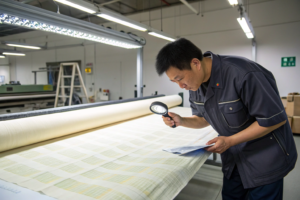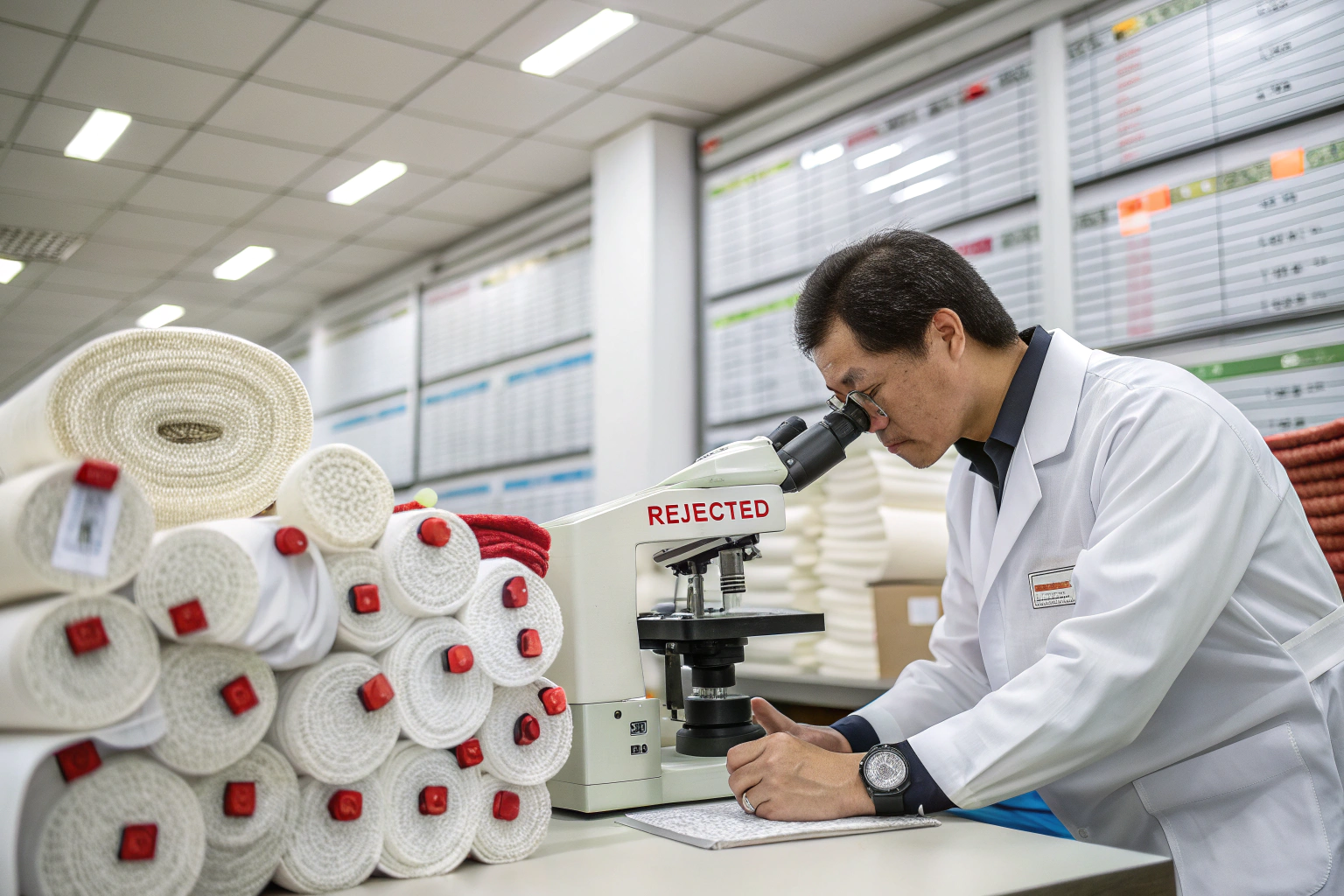
I have been in the garment manufacturing business for over twenty years. I have sourced fabric from all over Asia. I have worked with mills in China, Vietnam, India, Bangladesh, and Pakistan. I have seen good fabric. I have seen bad fabric. And I have seen the damage that bad fabric can do to a brand. Every year, a new brand comes to me with a story. They found a great price on fabric from a new supplier. The sample looked fine. They ordered a large quantity. Then the problems started. The color was not consistent. The fabric shrank more than expected. The quality was not the same from roll to roll. The garments came out wrong. They lost money. They lost time. They lost customers. They learned the hard way that cheap fabric is not cheap at all.
The hidden costs of cheap fabric from developing countries include production delays from quality issues, higher defect rates leading to increased waste, failed quality inspections that stop shipments, customer returns and refunds, damage to brand reputation, and the cost of rework or replacement orders. A fabric that saves you $1 per yard can easily cost you $5 per garment by the time it reaches your customer. The initial savings disappear quickly when hidden costs add up.
This is what I want to share with you today. I am a factory owner who has seen both sides of this equation. I know what cheap fabric really costs. I will walk you through the hidden costs that many brands do not see until it is too late. I will use real examples from my own experience. By the end, you will understand why paying a little more for reliable fabric is one of the smartest decisions you can make.
How do quality inconsistencies increase your production costs?
The first hidden cost of cheap fabric is quality inconsistency. When fabric quality varies, your production process suffers. You cannot cut efficiently. You cannot sew consistently. Your waste goes up. Your labor costs go up.
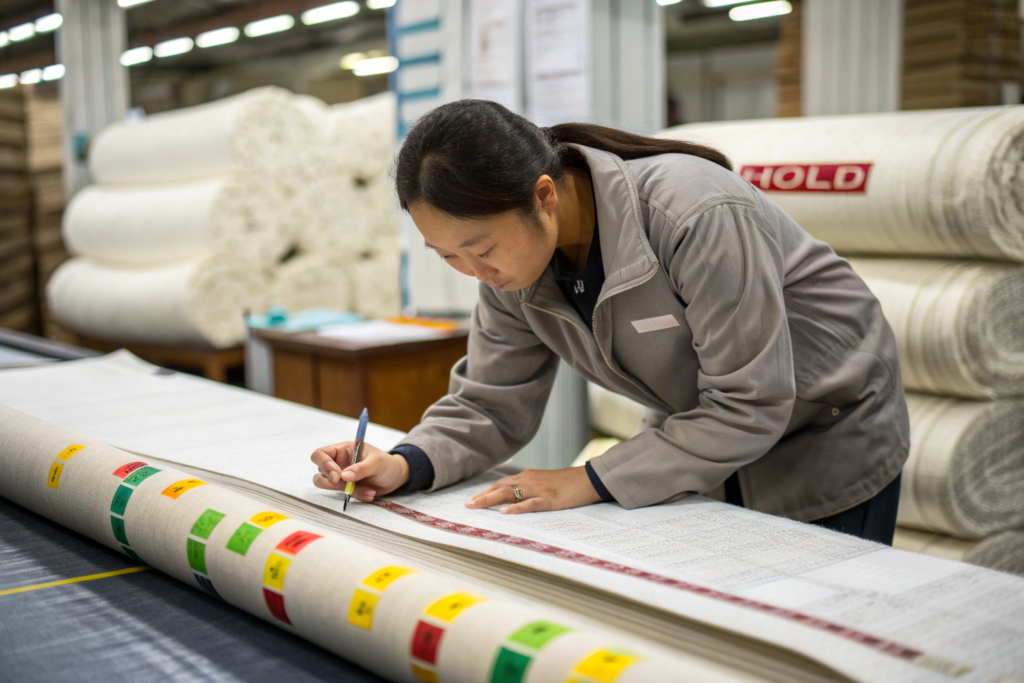
How does inconsistent fabric affect cutting efficiency?
When fabric is consistent, you can lay many layers and cut them all at once. This is efficient. It saves time and labor. When fabric varies, you cannot do this. You have to cut smaller batches. You have to separate rolls. This takes more time. It costs more money.
I remember a client from Chicago in 2022. They bought fabric from a new supplier in Bangladesh. The price was $0.80 per yard less than our usual source. They saved about $4,000 on the fabric. But when the fabric arrived, we saw problems. The width varied from 56 inches to 60 inches. The color varied from roll to roll. We could not cut the fabric in large stacks. We had to cut each roll separately. Our cutting time increased by 40%. The extra labor cost was $2,800. The $4,000 savings became $1,200.
Here is how fabric inconsistency increases cutting costs:
| Quality Issue | Impact on Cutting | Additional Cost |
|---|---|---|
| Width variation | Cannot use spreader efficiently | 15-25% more labor time |
| Color variation | Must cut separate batches | 20-30% more setup time |
| Shading within roll | Cannot nest patterns efficiently | 10-15% more fabric waste |
| Slubs and defects | Must inspect and cut around flaws | 5-10% fabric waste |
How does inconsistent fabric affect sewing productivity?
Sewing operators work faster when fabric is consistent. They do not have to adjust for variations. Cheap fabric forces them to slow down. It causes machine jams. It creates uneven seams.
A client in Denver had this problem. They bought inexpensive knit fabric. The fabric had uneven stretch. Some pieces stretched too much. Some did not stretch enough. The sewing operators had to constantly adjust their tension. Seams were wavy. Some garments had to be resewn. Production time increased by 25%. The client paid for extra labor. They also paid for rework. The cheap fabric ended up costing more than quality fabric would have.
Here is how fabric inconsistency affects sewing:
| Quality Issue | Impact on Sewing | Additional Cost |
|---|---|---|
| Uneven stretch | Seam puckering, wavy seams | 15-30% rework |
| Thickness variation | Needle breaks, skipped stitches | Machine downtime, needle replacement |
| Slubs and knots | Machine stops, fabric tears | 5-10% rejected pieces |
| Shading variation | Color mismatch in assembled garments | 10-20% re-cutting |
At Shanghai Fumao, we reject fabric that is inconsistent. We would rather delay production than use bad fabric. The short-term delay is cheaper than the long-term cost of quality problems.
How do defect rates impact your profit margin?
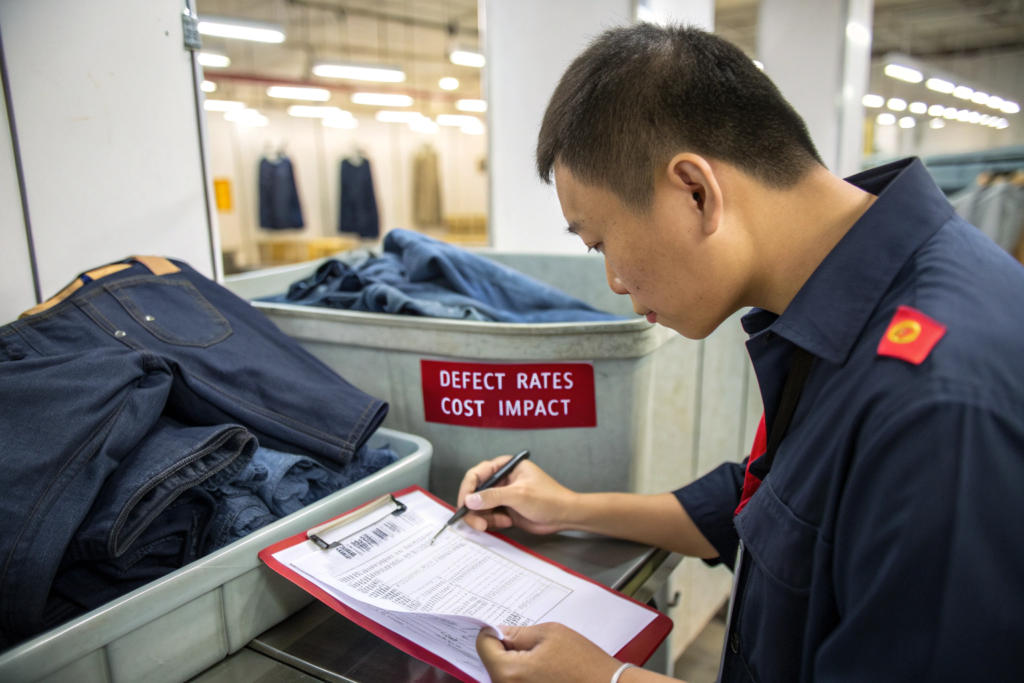
Every fabric has some defects. Good fabric has a low defect rate. Cheap fabric has a high defect rate. Every defective garment is lost money. You paid for the fabric. You paid for the labor. You cannot sell the garment. That cost is hidden.
What is the real cost of fabric defects?
A client in Texas learned this lesson in 2021. They bought cheap woven fabric for shirts. The fabric had a high rate of slubs and weaving defects. In production, 8% of the garments were rejected. That meant for every 100 shirts they planned to sell, they only had 92. They had to increase their order quantity to get the same number of sellable garments. The extra fabric and labor cost ate up all the savings from the cheap fabric.
Here is the math:
| Item | Quality Fabric | Cheap Fabric |
|---|---|---|
| Fabric cost per yard | $3.50 | $2.80 |
| Fabric needed for 1,000 shirts (yards) | 2,500 | 2,500 |
| Fabric cost | $8,750 | $7,000 |
| Defect rate in cutting | 2% | 8% |
| Additional fabric for waste | 50 yards | 200 yards |
| Additional fabric cost | $175 | $560 |
| Labor cost for extra handling | $200 | $800 |
| Total fabric-related cost | $9,125 | $8,360 |
The cheap fabric saved $765 on paper. But after accounting for the higher waste, the actual savings were only $765. And this did not include the cost of rejected garments after sewing.
What happens when defects are found after sewing?
The worst cost is when defects are found after the garment is fully sewn. You have already spent money on cutting, sewing, and finishing. Now you must discard the garment or rework it.
I had a client in Seattle who bought cheap denim. The denim had a high rate of weft distortion. The problem was not visible until the jeans were sewn and washed. Then the legs twisted. The jeans looked wrong. About 12% of the jeans were rejected. The client had already paid for fabric, cutting, sewing, washing, and finishing. They lost about $15 per rejected jean. The total loss was $18,000 on an order of 10,000 jeans. The cheap fabric saved them $5,000. The loss was $18,000. They lost $13,000.
Here is the math:
| Cost Item | Per Garment |
|---|---|
| Fabric cost | $4.50 |
| Cutting labor | $1.20 |
| Sewing labor | $5.50 |
| Washing and finishing | $2.80 |
| Total cost per garment | $14.00 |
| Rejected garments (1,200 units) | 12% |
| Total loss | $16,800 |
The cheap fabric cost $5,000 less. But the rejection loss was $16,800. The net loss was $11,800.
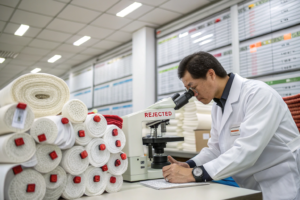
At Shanghai Fumao, we test fabric before cutting. We measure shrinkage. We check for distortion. We test color fastness. We catch problems early. This saves our clients money.
How do failed inspections delay your shipments?
When fabric is poor quality, garments fail final inspection. This happens after the goods are made. They are packed and ready to ship. But they cannot go. The shipment is delayed. This is one of the most costly hidden problems.

What happens when a shipment is rejected?
When garments fail inspection, you have options. You can rework them. You can sell them at a discount. You can scrap them. All of these options cost money. And all of them delay your shipment.
A client in Boston had a shipment of 5,000 jackets rejected. The fabric had poor color fastness. The color bled when the jackets were washed. The client had already booked the shipment. They had a launch date. They had pre-sold the jackets. The rejection meant they missed their launch. They had to air freight the replacement order. The air freight cost was $12,000. They lost sales from the delay. They lost customer trust.
Here is the cost breakdown:
| Cost Item | Amount |
|---|---|
| Original ocean freight (paid) | $2,500 |
| Air freight for replacement | $12,000 |
| Lost sales from delay | $15,000 |
| Customer goodwill | Priceless |
| Total hidden cost | $29,500+ |
How do you calculate the cost of delays?
Delays cost more than just freight. They cost sales. They cost marketing spend. They cost customer relationships.
A client in Miami calculated their cost of a 4-week delay. They had spent $20,000 on marketing for the launch. The launch was delayed. The marketing spend was wasted. They had to spend another $15,000 to relaunch. The delay cost them $35,000 in marketing alone. The cheap fabric that caused the delay saved them $3,000. The net loss was $32,000.
Here is a formula for calculating delay costs:
| Cost Category | How to Calculate |
|---|---|
| Extra freight | Air freight cost minus original ocean freight |
| Lost sales | Daily sales projection × days delayed |
| Marketing waste | Marketing spend that did not convert |
| Customer churn | Estimated loss of future sales |
| Rework labor | Hours × labor rate |
At Shanghai Fumao, we do final inspection before packing. We catch problems early. We fix them. We do not ship bad goods. This protects our clients from these hidden costs.
How do returns and refunds destroy your profitability?
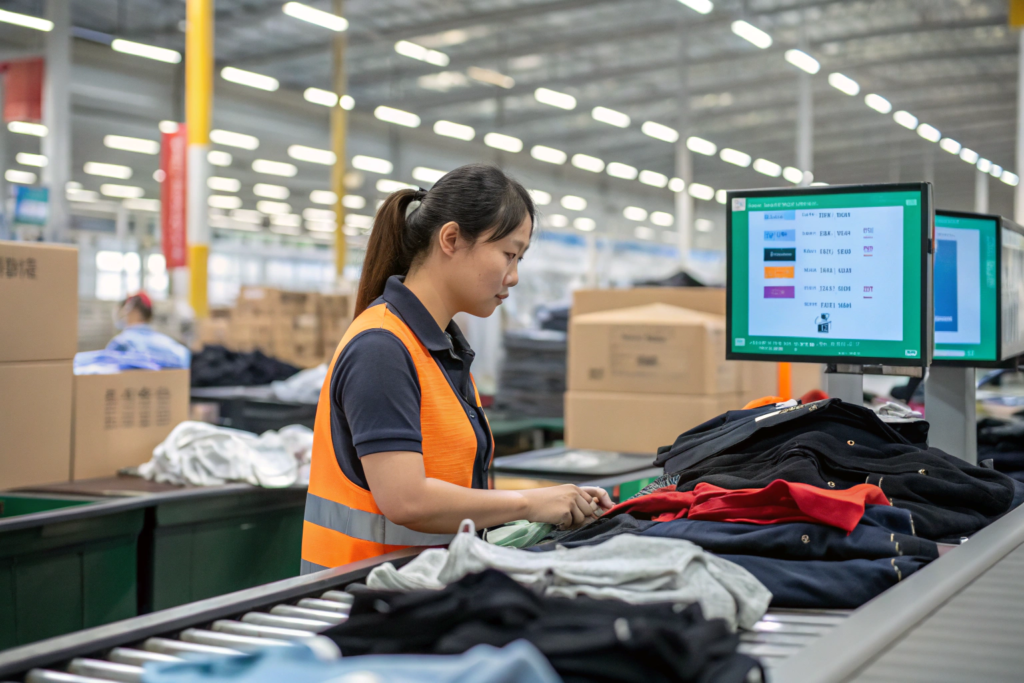
When poor fabric reaches your customers, they return the garments. Each return costs you money. You lose the sale. You pay for shipping. You pay for processing. You lose customer trust.
What is the true cost of a return?
A client in San Francisco tracked their return costs. They sold dresses made from cheap fabric. The fabric had pilling problems. Customers returned the dresses after a few washes. Each return cost the client:
- Shipping both ways: $12
- Processing and restocking: $5
- Discount on replacement or refund: $15
- Lost future sales from that customer: estimated $200
The direct cost per return was $32. The indirect cost was much higher. The client's return rate was 15%. For every 100 dresses sold, they had 15 returns. That cost them $480 in direct costs. It also cost them future sales.
Here is the math for a 1,000-unit order:
| Item | Quality Fabric | Cheap Fabric |
|---|---|---|
| Units sold | 1,000 | 1,000 |
| Return rate | 2% | 15% |
| Returns | 20 | 150 |
| Direct return cost per unit | $20 | $20 |
| Total direct return cost | $400 | $3,000 |
| Lost future sales (estimated) | $1,000 | $7,500 |
| Total return-related cost | $1,400 | $10,500 |
The cheap fabric saved $2,000 on fabric cost. The return-related costs were $9,100 higher. The net loss was $7,100.
How do returns affect your brand reputation?
The worst cost is not financial. It is reputational. Customers who return poor-quality products do not come back. They tell their friends. They leave bad reviews.
A client in Portland had a line of children's pajamas made from cheap fabric. The fabric shrank and faded. Customers were angry. They left negative reviews. The client's average rating dropped from 4.8 to 3.2. Sales dropped 40%. The client had to rebuild their reputation. It took two years. The cheap fabric cost them hundreds of thousands in lost sales.
At Shanghai Fumao, we test for durability. We test for shrinkage. We test for pilling. We want your customers to be happy. We want them to come back.
How do hidden costs add up in your supply chain?
The hidden costs of cheap fabric do not show up on the fabric invoice. They show up in other parts of your business. You need to see the full picture.
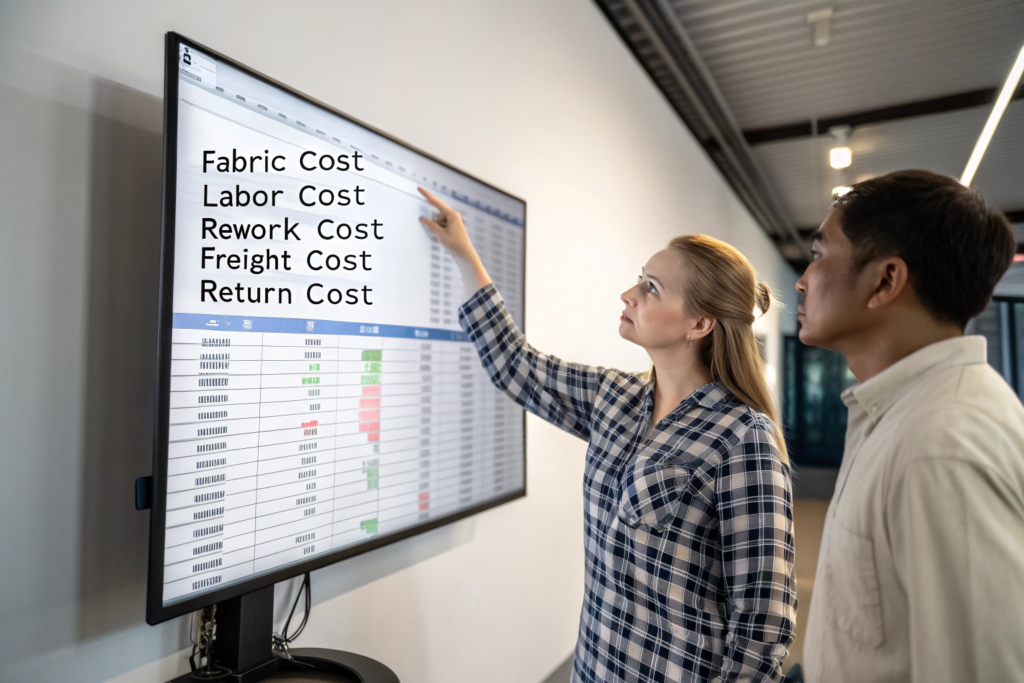
How do you calculate total cost of ownership for fabric?
Total cost of ownership includes everything. The fabric price is just the start. You need to add:
- Extra fabric for waste
- Extra labor for handling
- Rework costs
- Rejected garments
- Shipment delays
- Air freight
- Returns and refunds
- Lost future sales
I helped a client in New York calculate their total cost for two fabric suppliers. Here is what we found:
| Cost Category | Supplier A (Cheap) | Supplier B (Quality) |
|---|---|---|
| Fabric cost for order | $18,000 | $22,000 |
| Extra fabric for waste | $1,200 | $300 |
| Extra cutting labor | $800 | $200 |
| Rework labor | $1,500 | $300 |
| Rejected garments (cost) | $2,800 | $700 |
| Air freight from delays | $3,500 | $0 |
| Return processing | $2,500 | $400 |
| Lost sales from delays | $5,000 | $0 |
| Customer acquisition cost lost | $3,000 | $0 |
| Total cost | $38,300 | $23,900 |
Supplier A had a lower fabric price. But the total cost was $14,400 higher. The cheap fabric was much more expensive.
How do you choose the right fabric supplier?
Price is important. But it is not the only factor. You need to look at total cost. You need to look at reliability. You need to look at quality.
Here is what I recommend:
| Factor | What to Check | Why It Matters |
|---|---|---|
| Quality consistency | Test multiple rolls | Avoids production delays |
| Defect rate | Ask for historical data | Reduces waste and rework |
| Lead time reliability | Check past delivery records | Avoids shipment delays |
| Technical support | Can they help with problems? | Faster problem resolution |
| Certifications | OEKO-TEX, GOTS, etc. | Protects your brand |
At Shanghai Fumao, we work with reliable fabric suppliers. We test every batch. We reject bad fabric. We protect our clients from hidden costs.
Conclusion
Cheap fabric from developing countries often comes with hidden costs. The low price on the invoice is misleading. The real cost shows up in your production process. Inconsistent fabric increases cutting and sewing costs. High defect rates create waste and rework. Failed inspections delay shipments and force expensive air freight. Returns and refunds destroy your profit margin and damage your brand reputation.
I have seen this happen too many times. A brand tries to save money on fabric. They think they are being smart. Then the problems start. The savings disappear. The losses mount. The brand suffers. In the end, cheap fabric is not cheap at all.
The smart brands understand this. They choose reliable fabric suppliers. They pay a fair price for quality. They know that quality fabric saves money in the long run. It reduces waste. It speeds up production. It prevents delays. It keeps customers happy. It protects the brand.
At Shanghai Fumao, we help our clients make smart fabric choices. We do not just take orders. We advise. We test. We inspect. We reject bad fabric. We protect our clients from hidden costs. We want you to succeed.
If you are looking for a factory that will help you avoid the hidden costs of cheap fabric, I invite you to talk to us. Let us discuss your fabric needs. Let us show you how quality fabric saves money.
You can contact our Business Director, Elaine, directly. She can walk you through our fabric selection process. She can explain how we test and inspect fabric. She can help you understand the true cost of your fabric choices. Her email is: elaine@fumaoclothing.com. Let us build quality into your products from the start.