Let me tell you something I've learned in my 20+ years in textiles: workwear isn't just clothing—it's equipment. When a nurse runs a 12-hour shift, a mechanic crawls under a car, or a chef stands over a flaming grill, their uniform is their first line of defense. I saw this firsthand when a large European airline came to us in 2021. Their cabin crew uniforms, made from a standard polyester blend, were failing. They pilled after three months, the dark navy faded to purple under constant UV light from aircraft windows, and the fabric trapped odors in the recycled air. Crew morale was low, and replacement costs were high. We co-developed a custom high-twist recycled polyester with silver-ion anti-odor treatment and enhanced UV stabilizers. The new uniforms lasted 2.5 times longer and passed crew satisfaction surveys with flying colors. That's the impact of getting workwear fabric right.
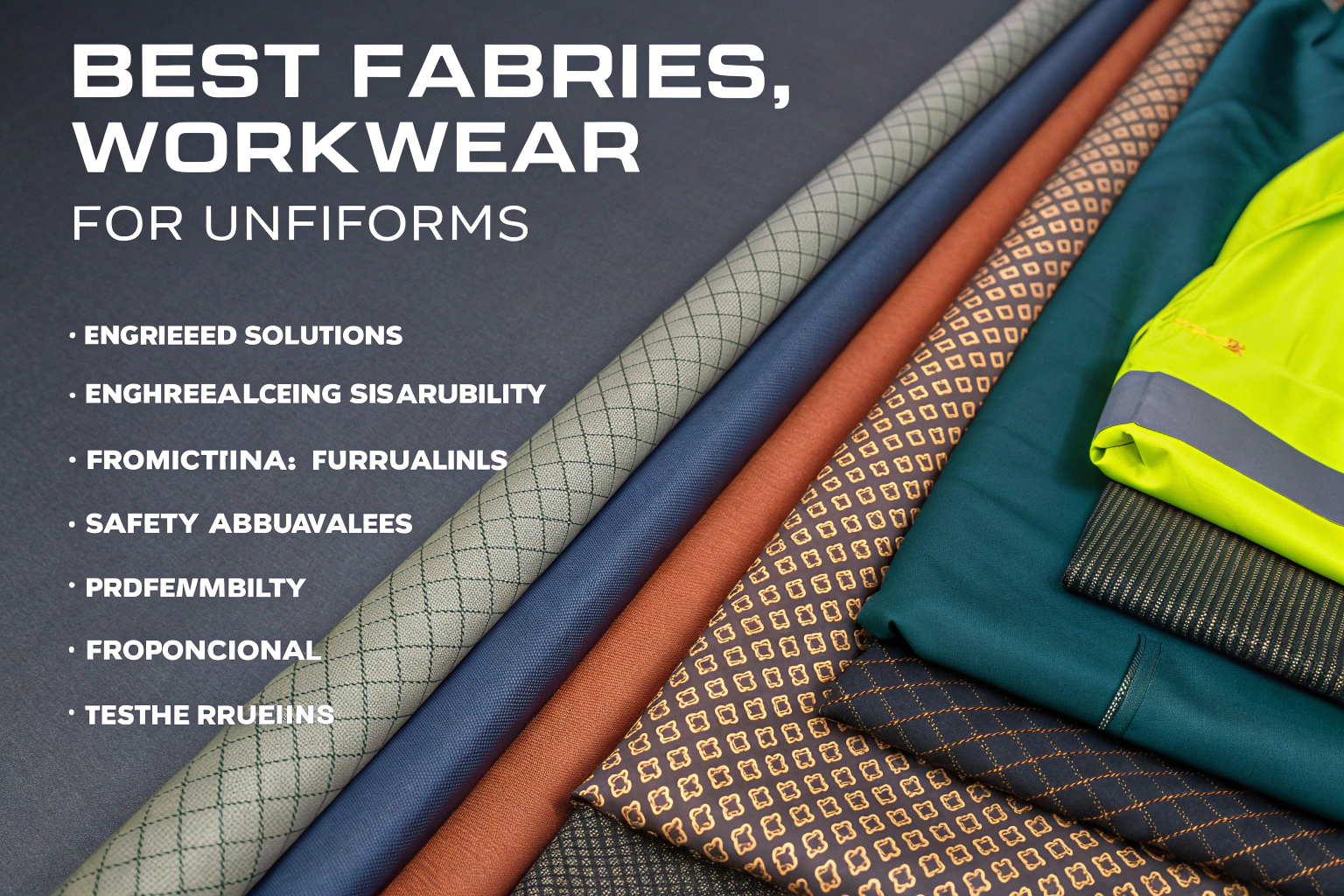
The best fabrics for workwear and uniforms are engineered solutions that prioritize durability, functionality, safety, and professional appearance above all else. They must withstand industrial laundering, physical abrasion, and environmental stressors while providing comfort and meeting specific industry regulations. This isn't about fashion fabrics; it's about performance textiles designed for the rigors of the job.
Forget picking from a standard catalog. Let's get into the mindset of a workwear fabric engineer. I'll break down the core pillars, give you specific fabric recommendations by industry, and share the behind-the-scenes testing and construction details that separate a garment that falls apart from one that becomes a trusted tool. This is how we at Shanghai Fumao approach every uniform project, from hospital scrubs to refinery coveralls.
What Are the Core Functional Pillars of Workwear Fabric?
Before we talk about specific fibers, we need to establish the non-negotiable job requirements for the fabric. These are the pillars that hold everything up. If a fabric fails any one of these, the entire uniform fails.
Think of these as the "specs" on a piece of machinery. You wouldn't buy a drill that can't handle daily use; don't choose a fabric that can't handle the daily grind. These pillars guide every decision, from fiber selection to finish.
Why is Durability and Abrasion Resistance #1?
Workwear fabrics live a hard life. They are scraped against concrete, rubbed by tool belts, and bent at the knees and elbows thousands of times a day.
- Key Tests: The Martindale or Wyzenbeek rub test is the gold standard. For heavy-duty workwear (construction, utilities), you want a rating of 50,000+ cycles. For hospitality or corporate uniforms, 20,000-30,000 cycles may suffice.
- Fiber & Construction: High-tenacity synthetic fibers like polyester and nylon are inherently more abrasion-resistant than cotton. However, 100% synthetics can feel clammy. The solution is often a 65/35 polyester-cotton blend in a twill or ripstop weave. The polyester provides strength, the cotton provides comfort, and the tight weave resists tearing. A ripstop grid of thicker threads woven into the fabric stops small tears from propagating.
- Reinforcement: In high-wear areas (knees, elbows), consider double-layer fabric, bonded foam padding, or Cordura® nylon overlays. We've even developed uniforms with Kevlar® thread sewn into stress points for arborists.
A resource like Industrial Fabrics Association International (IFAI) provides detailed technical resources on specifying fabrics for demanding industrial applications, which is essential reading for procurement managers.
How Do Safety and Compliance Dictate Choice?
This is where fabric becomes life-saving equipment. Regulations are not suggestions.
- Flame Resistance (FR): For electricians, oil & gas, and metal workers, FR is mandatory. FR fabrics are not just treated; they are engineered. Inherent FR fibers (like modacrylic or certain aramids) have the protection built into their chemical structure and won't wash out. Treated FR fabrics (like cotton with an FR chemical finish) must be tested after every industrial wash to ensure the finish remains effective. The specific standard (e.g., NFPA 2112, EN ISO 11611/11612) dictates the test requirements.
- High-Visibility: For road crews and emergency services, fabric must meet EN ISO 20471 or ANSI/ISEA 107. This isn't just about "bright color." It specifies the exact fluorescent background material (e.g., fluorescent yellow-green) and the amount and placement of retro-reflective tape that reflects light back to its source.
- Antistatic & Chemical Protection: For industries like electronics manufacturing or chemical handling, fabrics may need dissipative properties or be coated with materials like PVC or PU for liquid repellency.
Understanding the nuances of global certifications for protective clothing is critical, and organizations like SATRA offer comprehensive testing and guidance on these complex standards.
Which Fabrics Excel in Specific Industries?
There's no one-size-fits-all. A fabric perfect for a chef would be dangerous for a welder. Let's match the fabric to the mission. This is where our role shifts from supplier to industry-specific consultant.
We keep a dedicated library of performance-tested fabrics for key verticals. Here’s a breakdown of the champions in three major sectors.
What Fabrics Dominate Healthcare and Hospitality?
Here, the battle is against stains, microbes, and frequent, hot laundering—all while maintaining a crisp, clean look.
- Healthcare Scrubs: The modern standard is a polyester-cotton or polyester-rayon blend (e.g., 65/35 or 70/30). Why? Polyester provides wrinkle resistance and durability for 80+ industrial washes. Cotton/Rayon provides absorbency and comfort. The critical upgrade is a fluorocarbon-free durable water repellent (DWR) finish to repel bodily fluids and a silver-ion or copper oxide antimicrobial treatment at the fiber level to reduce odor-causing bacteria. In 2022, we supplied a major hospital group with a Tencel™-polyester blend with these features; their laundry reported a 30% reduction in stain-related rewashing.
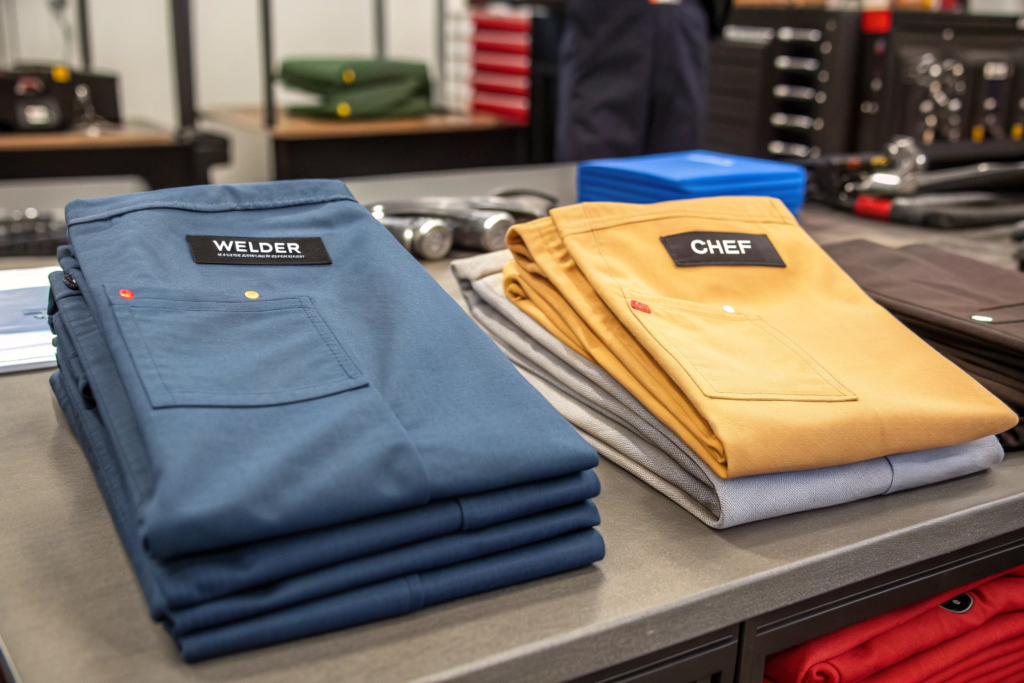
- Hospitality & Chef Wear: For chef coats, cotton-rich poplin or twill is still king for its breathability. However, for front-of-house, a fine polyester-viscose blend in a suiting or shirting weight offers a sharp, professional drape that resists wrinkles from long shifts. A stain-release finish (like 3M's Scotchgard™) is invaluable. For aprons, a heavy cotton canvas or denim is standard, but for a more upscale look, a waxed cotton or polyester herringbone is trending.
Forums like Professional Clothing Industry Association Worldwide (PCIAW) provide insights into the latest trends and functional requirements in corporate and hospitality uniform design.
What are the Heavy-Duty Choices for Industrial and Outdoor Work?
This is the toughest category. Fabrics here are armor.
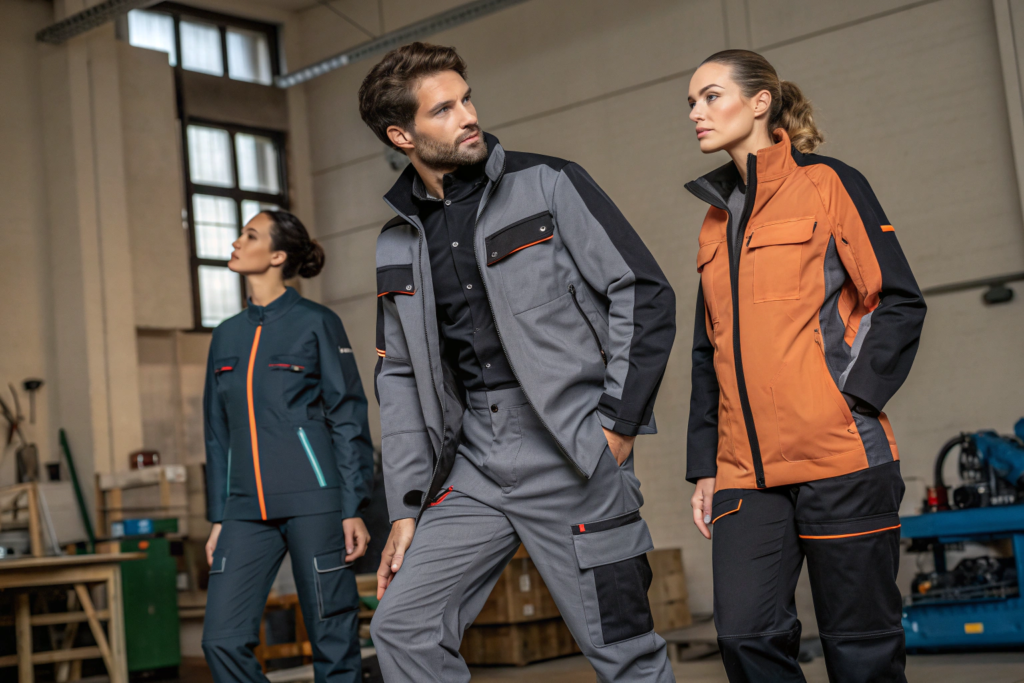
- Construction & Logistics: The workhorse is poly-cotton ripstop or canvas. For winter, a softshell fabric (a knitted face with a DWR finish and often a brushed back for warmth) provides mobility, weather resistance, and insulation. For true waterproof-breathable needs, 3-layer laminated fabrics with a membrane (like ePTFE or PU) are used for rain gear. A key innovation is puncture-resistant fabrics woven with ultra-high molecular weight polyethylene (UHMWPE) fibers for workers handling sharp materials.
- FR Sector: As mentioned, inherent FR fabrics are preferred for their longevity. Common bases include modacrylic-cotton blends or aramid blends (Nomex®). These are often used in a twill weave for a balance of strength, comfort, and a professional appearance that doesn't scream "hazard suit."
How Do You Ensure Longevity Through Care and Construction?
You can choose the world's best fabric, but if the garment is poorly constructed or can't survive its own cleaning cycle, it's worthless. This is about the marriage of material and making.
The garment's entire lifecycle—from the cutting table, through industrial washing, to repair and disposal—must be considered in the fabric choice. We work backwards from the laundry cart.
What Laundry Factors Are Often Overlooked?
Industrial laundering is brutal: high temperatures, strong chemicals, and giant extractors.
- Colorfastness: The fabric must withstand washing at 60-70°C with industrial detergents and chlorine or oxygen bleach. We test for AATCC 61 (laundering) and AATCC 8 (crocking). Solution-dyed fabrics are the gold standard here—the pigment is added to the polymer before the fiber is extruded, making the color virtually impervious to fading. This is why so many corporate uniforms are in solution-dyed polyester.
- Dimensional Stability (Shrinkage): If a uniform shrinks 5% after its first wash, it's unusable. We guarantee less than 3% shrinkage (often under 1%) through pre-shrinking processes like sanforization for wovens and heat-setting for knits. We provide the test reports (AATCC 135) to prove it.
- Finish Durability: Will the DWR, FR, or antimicrobial finish survive 50, 100 washes? This must be tested and guaranteed. Our FR blends are tested for durability through up to 100 industrial wash cycles as per the relevant standard.
(Here's a factory insight: using polyester core-spun threads for sewing is crucial. Cotton threads shrink and break down faster in industrial laundry, causing seams to fail.)
Why Does Fabric Construction Impact Durability?
It's not just the fiber; it's how it's put together.
-
Weave Matters: A 2x1 or 3x1 twill weave is stronger and more tear-resistant than a plain weave of the same weight because the diagonal float distributes stress. A ripstop weave with reinforced grids is essential for any workwear that might catch on sharp edges.
-
Weight (GSM/oz): This is a direct indicator of durability. Here’s a quick guide: Application Recommended Weight (GSM) Recommended Weight (oz/yd²) Lightweight Corporate Shirts 120 - 160 3.5 - 4.7 Healthcare Scrubs / Chef Trousers 200 - 240 5.9 - 7.1 Heavy-Duty Work Trousers / Coveralls 250 - 350 7.4 - 10.3 Winter Jackets / Heavy Canvas 350+ 10.3+ -
Pilling Resistance: Pilling looks unprofessional. Fabrics made from long-staple fibers and with a tight twist in the yarn resist pilling. We test pilling using the Martindale pilling test (ASTM D4970).
A community-driven knowledge base like The Workwear Guru blog often features tear-downs and long-term reviews of workwear, providing real-world data on how different fabrics and constructions hold up over time.
What Are the Emerging Trends in Workwear Fabrics?
Workwear isn't static. The same way sportswear adopted moisture-wicking technology, workwear is now embracing smart fabrics, sustainability, and enhanced comfort to attract a new workforce and meet corporate ESG goals.
The frontier is about adding intelligence and responsibility to the existing foundation of durability and safety. This is where the most exciting R&D is happening.
How is Sustainability Transforming the Sector?
The demand for "green" uniforms is exploding from corporations wanting to reduce their carbon footprint.
- Recycled Materials: Recycled polyester (rPET) from plastic bottles is now standard in many poly-cotton blends. The performance is identical to virgin polyester. We also offer recycled nylon and recycled wool blends.
- Bio-based Fibers: Fabrics like Tencel™ Lyocell (from wood pulp) and PLA (from corn) are entering the uniform space for their softness, breathability, and compostable end-of-life options in some blends.
- Eco-Friendly Finishes: Moving away from PFC-based (C8) DWR finishes to fluorocarbon-free or C6 alternatives is a major trend, driven by brand safety and environmental regulations in Europe and North America.
We've invested in traceability systems, so clients can get a breakdown of recycled content and the carbon footprint of their fabric lot, which they can use in their own sustainability reporting.
What Does "Smart Workwear" Look Like?
This is the next wave. It's about integrating functionality at the material level.
- Phase Change Materials (PCM): Microcapsules embedded in the fiber that absorb, store, and release heat to regulate body temperature. Ideal for workers moving between extreme environments (e.g., cold storage to loading docks).
- Conductive Threads: For integrating wearable electronics (communication devices, biometric sensors) directly into the garment without bulky wires.
- Advanced Odor Control: Moving beyond silver ions to triclosan-free, plant-based antimicrobials and odor-adsorbing technologies that trap smell molecules.
A client in the security sector is currently trialing our fabric with thermochromic threads that change color at a specific temperature, providing a visual warning for heat exposure near machinery. While still niche, these innovations point to the future.
Conclusion
Selecting the best fabric for workwear and uniforms is a serious investment in your workforce's safety, productivity, and professionalism. It requires moving beyond basic aesthetics to a forensic understanding of the job's demands, the regulatory landscape, and the brutal reality of industrial care cycles. The right fabric is a balanced system of high-performance fibers, intelligent construction, and durable functional finishes—all verified by rigorous, standardized testing.
The most forward-thinking companies now view their uniform program as a strategic asset. It's an opportunity to demonstrate care for employees, commitment to sustainability, and a professional brand image that lasts through the toughest shifts.
If you're looking to upgrade your uniform program with fabrics engineered for real-world performance, backed by technical expertise and transparent testing, let's build that solution together. At Shanghai Fumao, our dedicated workwear fabric division combines CNAS laboratory testing, vertical production control, and deep industry knowledge to deliver uniforms that work as hard as your team does. Contact our Business Director, Elaine, to discuss your specific requirements and request fabric swatches and test reports. Email Elaine at elaine@fumaoclothing.com.