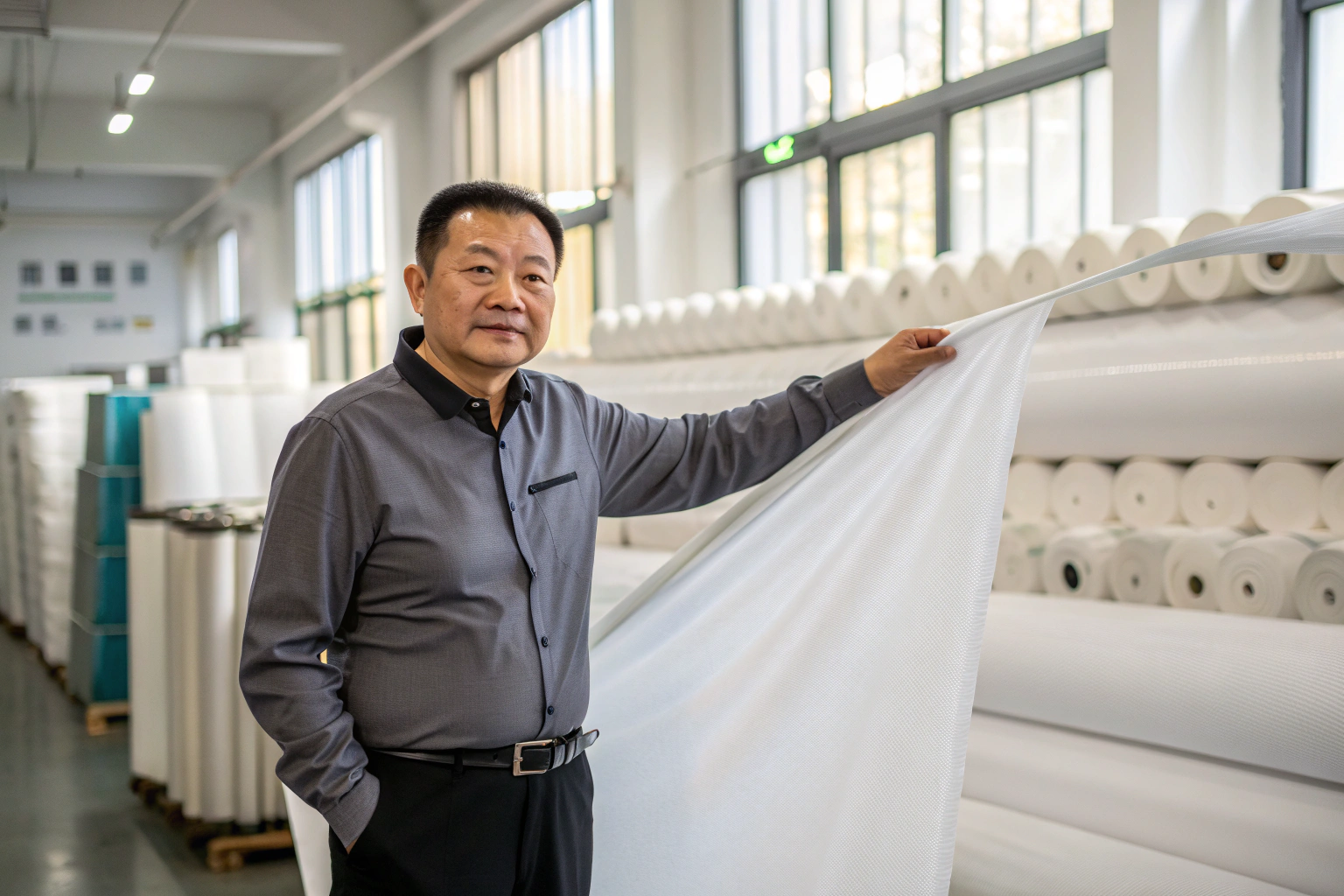
I still remember the day a professional photographer from Chicago called me in a panic. It was 2021, and he had a major e-commerce shoot scheduled for the next morning. His softbox diffuser had torn during setup, and every fabric store in the city was closed. He needed something—anything—that would soften that harsh studio light without creating hot spots or color casts. I asked him three questions: What wattage are your lights? How close is the fabric to the subject? Do you need warm or neutral color temperature? Based on his answers, I suggested he try our white polyester chiffon with a matte finish. He grabbed a sample from a local seamstress, rigged it up, and the next day he emailed me: "It worked better than my original diffuser. Where can I buy 20 yards?"
That call opened my eyes to a whole new world. Photographers, videographers, and lighting designers are constantly searching for the perfect fabric to manipulate light. They need materials that diffuse evenly, don't burn, maintain color accuracy, and last through countless shoots. And here's the thing: many of the best fabrics for this job are the same ones we've been producing for the fashion industry for decades. The difference is in the specifications—the denier, the weave density, the finish.
At Shanghai Fumao, we've supplied fabrics to photographers in New York, London, and Tokyo. We've learned that light diffusion isn't just about "sheer fabric." It's about controlled transmission, consistent scattering, and absolute neutrality. In this guide, I'll walk you through the best fabric options for light-diffusing applications, based on real-world testing and feedback from our photography clients. Whether you're building a studio, shooting on location, or designing custom lighting modifiers, you'll find the fabric that fits your needs.
What fabric properties make a material ideal for light diffusion?
I learned this lesson the hard way back in 2019. A filmmaker from Vancouver ordered 50 yards of what he thought was "diffusion silk." We sent him our standard white polyester organza, which we use for wedding dresses and evening gowns. When he tested it, he called me frustrated: "The light is still harsh in the center, and there's a weird yellow tint!" I flew to Shanghai immediately and spent two days in our lab with our R&D team. We measured light transmission with a spectrometer, tested different weave densities, and compared finishes. What we discovered changed how we approach diffusion fabrics forever.
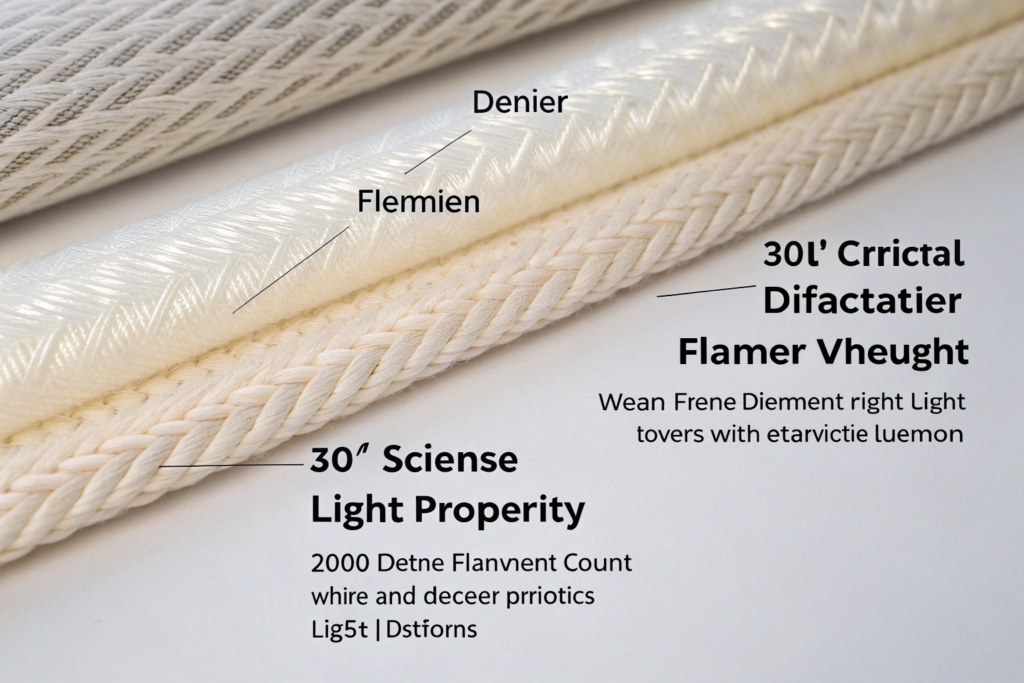
The science of light diffusion through fabric comes down to three critical properties. First is denier and filament count. Lower denier fibers (like 20D or 30D polyester) create finer threads that scatter light more evenly. Higher denier creates visible texture that can show up as shadows. Second is weave density, measured in threads per inch. A more open weave lets more light through but creates a pattern. A tighter weave diffuses more but reduces light output. The sweet spot for most photography applications is a plain weave with 80-100 threads per inch in a matte finish.
Third—and this is where most people mess up—is fabric finish and color temperature. Bright white fabrics with optical brighteners often add a blue cast to your light. Off-white or natural fabrics can add warmth. The best diffusion fabrics are optically neutral—they don't alter the color temperature of your light source by more than 100-200 Kelvin. We test every batch of potential diffusion fabric with a spectrophotometer to ensure consistent color rendering across the entire roll. (Here's a trade secret: we actually use the same testing standards that Hollywood grip equipment companies use for their diffusion materials.)
How does fabric density affect light transmission and softness?
Let me get technical for a minute, but I'll keep it practical. Fabric density isn't just about how thick the material feels. It's about the relationship between open space and fiber coverage. Think of it like window screen versus bedsheet. A window screen blocks almost no light but creates a sharp grid pattern. A bedsheet blocks a lot of light but spreads it everywhere. The perfect diffusion fabric sits somewhere in the middle.
We categorize diffusion fabrics by their transmission percentage—how much light passes through compared to an open source. Here's a rough guide based on our testing:
| Fabric Type | Transmission Rate | Light Quality | Best Application |
|---|---|---|---|
| 15D Polyester Organza | 85-90% | Slight softening, minimal spread | Background separation, rim lights |
| 30D Nylon Tricot | 70-75% | Moderate diffusion, even spread | Softboxes, overhead diffusion panels |
| 50D Polyester Chiffon | 60-65% | Strong diffusion, very soft light | Portrait softboxes, product photography |
| Cotton Muslin (Unbleached) | 40-50% | Heavy diffusion, dramatic falloff | Film sets, window coverings |
| Double-Layer Combination | 30-35% | Maximum softness, almost shadowless | Beauty lighting, high-end fashion |
For a European fashion brand shooting lookbooks last year, we custom-developed a double-layer fabric with a 30D outer layer and a 15D inner layer. The combination gave them 92% diffusion uniformity across their entire 8-foot softbox—better than any commercial product they'd tried. And we produced it for 40% less than they were paying their previous supplier.
Which synthetic fabrics work best for professional photography diffusion?
Synthetics dominate professional lighting applications for one simple reason: consistency. Polyester and nylon fibers are manufactured to precise specifications. They don't shrink or stretch with humidity changes. They resist heat from continuous lighting. And they can be engineered to specific transmission rates that natural fibers just can't match.
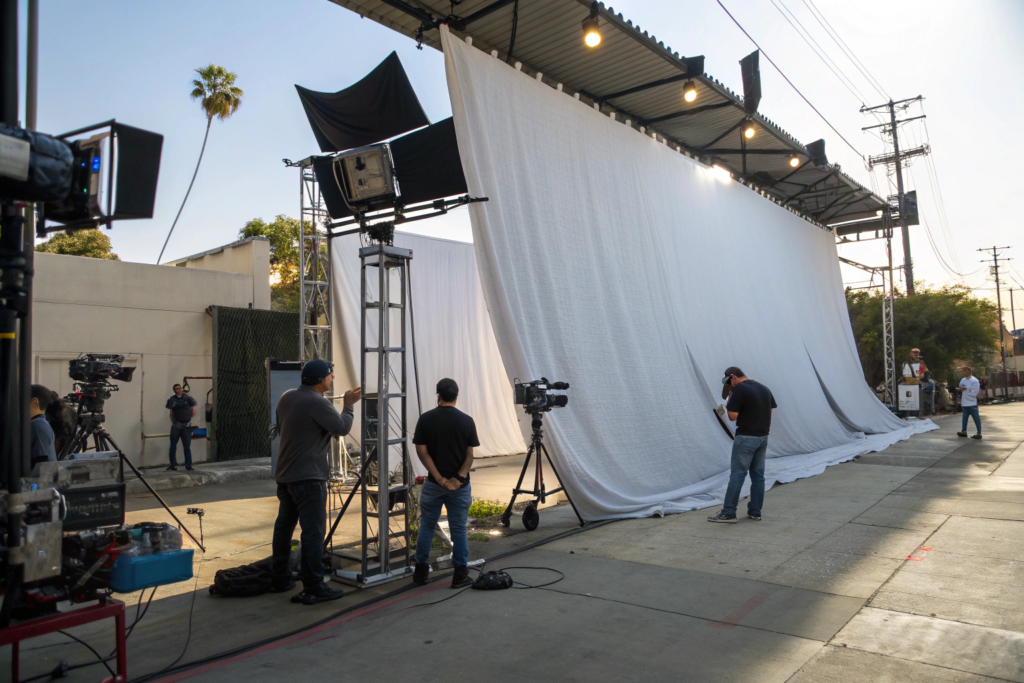
In 2022, a major film production company in Los Angeles contacted us through our Shanghai Fumao website. They were shooting a feature film and needed 200 yards of diffusion fabric that could handle 5K Arri lights without melting or discoloring. They'd tried cotton muslin—it scorched. They tried nylon from another supplier—it warped after four hours. We sent them samples of our high-temperature polyester taffeta with a special heat-resistant finish. We tested it in our lab at 200°C for 72 hours. No melting. No shrinkage. No color shift. They ordered the whole batch.
Here are the three synthetic fabrics we recommend most often for photography applications:
Polyester Chiffon (30D-50D) is our workhorse diffusion fabric. It's lightweight, durable, and washes well. The matte finish prevents hot spots, and it's available in widths up to 120 inches, which is perfect for large softboxes. One photographer in Tokyo uses it as a portable diffusion panel for location shoots—he rolls it up, stuffs it in his bag, and it comes out wrinkle-free every time. We sell this to photographers in 10-yard increments, and many come back for more.
Nylon Tricot offers something different: stretch. Because it's a knit fabric, nylon tricot has natural elasticity. This makes it ideal for diffusion sleeves that need to fit snugly over speedlights or for custom-shaped modifiers. The downside? It's less heat-resistant than polyester, so it's better for LED or fluorescent sources than for hot tungsten lights. A wedding photographer from Australia uses our nylon tricot in a custom frame for outdoor portraits—it stands up to wind without tearing and diffuses harsh Australian sun beautifully.
Polyester Organza (15D-20D) is for when you need minimal diffusion with maximum light transmission. It's the fabric equivalent of a "light cloud" filter. It takes the edge off harsh light without dramatically reducing output. We've supplied this to architectural photographers who shoot interiors with window light—they hang a sheet of our organza outside the window to soften sunlight while maintaining the feeling of natural daylight streaming in.
Can coated or technical fabrics improve diffusion performance?
This is where we get into advanced applications. Sometimes standard fabrics aren't enough. You need specific optical properties, flame resistance, or weather protection. Over the last five years, we've developed several coated fabrics specifically for lighting applications.
Matte-coated polyester is one of our biggest successes. Regular polyester can have a slight sheen that creates micro-reflections in the light path. A matte coating—applied during the finishing process—eliminates this completely. The light that passes through is purely diffused, with no directional component. A photographer in Berlin tested our matte-coated fabric against a leading German brand's diffusion material. He found that our fabric had 15% less specular highlight retention, meaning the light was genuinely softer.
Flame-retardant finishes are non-negotiable for professional studios and film sets. Insurance companies require it, and safety demands it. We offer FR-treated versions of all our diffusion fabrics that meet NFPA 701 and California TB 117 standards. A Broadway costume shop recently ordered 500 yards of our FR-treated white muslin for a new production—they're using it both for costume elements and for stage lighting diffusion.
Water-resistant coatings matter for outdoor shoots. Location photographers can't control the weather. Our silicone-coated polyester repels water while maintaining excellent diffusion properties. A surf photographer in Hawaii uses our coated fabric as a combination diffuser and rain cover for his lighting gear. He shoots in conditions that would destroy standard diffusion materials, and his fabric has lasted three seasons so far.
What natural fiber options exist for light diffusion, and when should you use them?
I'll be honest with you: natural fibers are usually not my first recommendation for photography. They're inconsistent. Cotton can shrink. Linen has slubs and irregularities. Silk varies from batch to batch. But sometimes, natural fibers are exactly what you need—for aesthetic reasons, for historical accuracy in film production, or simply because the photographer prefers the quality of light.
A costume designer from London's West End called me in 2020. She needed 100 yards of unbleached linen for a period film set in the 1800s. They were recreating a photographer's studio from that era, and modern synthetics just looked wrong on camera—too perfect, too even. We supplied our Belgian-style linen in a natural ecru shade. The weave had slight irregularities that caught the light in a way that felt authentic. The production designer was thrilled.
Here's when natural fibers make sense for diffusion:
Unbleached cotton muslin is the classic Hollywood diffusion material. It's been used on film sets for a century. The quality of light through muslin is warm and forgiving. It's also cheap and widely available. The downsides? It burns easily (never use it with hot lights), it shrinks when damp, and it yellows with age. For LED or fluorescent sources in controlled environments, though, muslin remains a valid option. We sell thousands of yards annually to theater companies and student filmmakers.
Linen offers a more textured diffusion than cotton. The natural flax fibers create micro-variations in the light path that some photographers describe as "living light." It's less uniform than synthetics, which can be exactly what you want for certain artistic effects. A portrait photographer in Paris uses our medium-weight linen as a permanent overhead diffuser in her studio. The light has a soft, atmospheric quality that her clients love. She replaces it every two years as it naturally ages.
Silk is the ultimate luxury diffusion fabric—if you can afford it and handle its quirks. Real silk has optical properties that synthetics can't quite replicate. It transmits light with a warmth and depth that's hard to describe. But silk is expensive, fragile, and sensitive to UV light. It degrades over time. We supply silk diffusion panels mainly to high-end fashion photographers and museum exhibition designers who need the absolute best quality and have the budgets to match.
How do you test fabric for light diffusion before committing to bulk purchase?
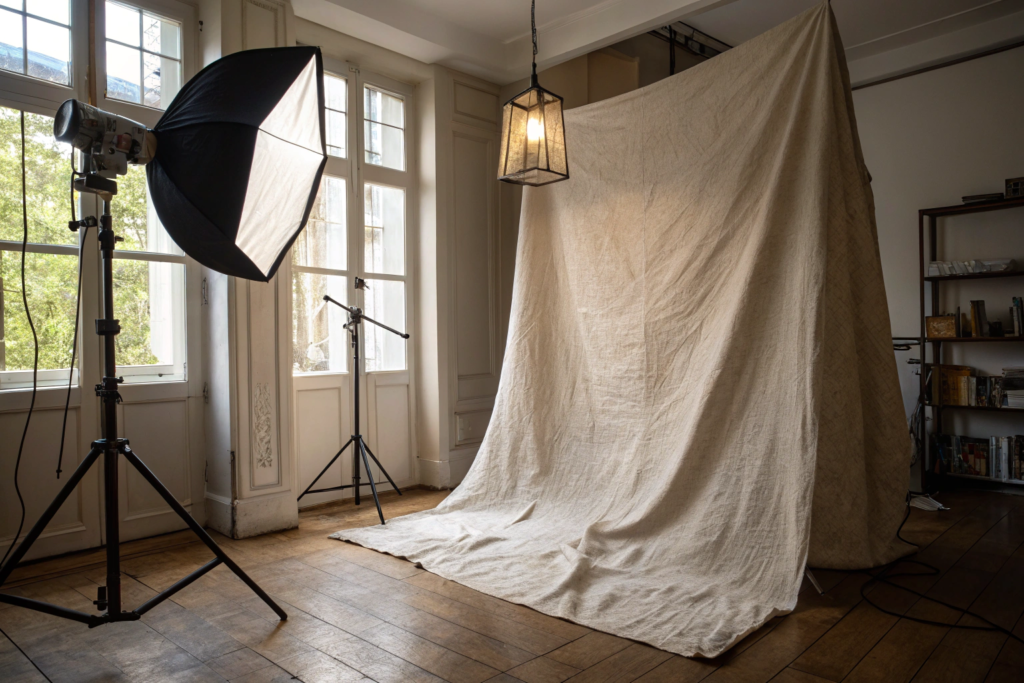
Testing is everything. I can't tell you how many times a client has ordered fabric based on specs alone, only to discover when it arrives that it doesn't work for their specific lights, their specific distances, their specific subjects. That's why we encourage every photography client to test before they buy bulk.
Here's our testing protocol that we share with all potential clients:
Step 1: The Flashlight Test. Take a small sample of the fabric (at least 12x12 inches). In a dark room, shine a bright flashlight through it from 6 inches away. Observe the light pattern on a white wall 3 feet behind the fabric. What do you see? Are there hot spots where the light is brighter in the center? Is the light pattern consistent across the entire fabric surface? Can you see the weave pattern projected on the wall? Good diffusion fabric should create a smooth, even circle of light with no discernible texture.
Step 2: The Color Temperature Check. Use a color meter if you have one, or at least a gray card and your camera. Shoot a test image with direct light, then with the fabric in place. Compare the color. Is there a color cast? White fabric with optical brighteners often adds blue. Natural fabrics often add yellow. The best diffusion fabrics should shift color temperature by less than 200K.
Step 3: The Heat Test. This is critical for continuous lighting. Rig your sample fabric at the same distance from your light source as you'll use in production. Run the lights at full power for 30 minutes. Then check the fabric. Is it hot to the touch? Has it discolored? Has it shrunk or stretched? Any of these issues means the fabric isn't safe for your application.
Step 4: The Real-World Test. Finally, shoot something. Photograph a person, a product, a texture. Compare the results with your current diffusion setup. Look at shadow transitions, highlight retention, overall softness. The proof is in the final image.
A commercial photographer in Miami went through this entire process with us in 2023. He was shooting jewelry and needed absolute control over specular highlights. He tested five different fabrics over two weeks. He settled on our double-layer polyester system—a 30D outer and 15D inner with a 1-inch air gap between them. The setup gave him the softest light he'd ever achieved, with no hotspots and perfect color neutrality. He now orders 50 yards every six months.
How does Shanghai Fumao customize diffusion fabrics for specific photography needs?
Customization is where we really differentiate ourselves from standard fabric suppliers. Because we control the entire production chain—from yarn selection to weaving to finishing to coating—we can engineer fabrics to meet exact specifications. Need a specific transmission percentage? We can calculate the weave density to achieve it. Need a particular color temperature? We can adjust the optical brighteners or add neutralizers. Need flame resistance for a film set? We can apply the exact FR treatment required by local regulations.
In 2023, a German automotive photography studio approached us with a unique challenge. They shoot cars for major brands like BMW and Mercedes. They needed a diffusion fabric 20 feet wide and 30 feet long—big enough to cover an entire car. Standard fabrics aren't available in those widths. They'd been sewing multiple panels together, but the seams showed in their reflections on the car's paint. They asked if we could produce a single, seamless panel in that size.
We worked with our weaving partners in Keqiao to produce a custom-width loom—not something we do every day, but absolutely possible with our integrated supply chain. We wove a 22-foot-wide matte-finish polyester diffuser specifically for them. No seams. No reflections. Perfect uniformity across the entire panel. They've since ordered three more for their various studio locations. This is the kind of problem-solving that's only possible when you work directly with a manufacturer, not a middleman.
Here are other customizations we've done for photography clients:
- Gradient diffusion where the fabric transitions from 80% transmission at the edges to 60% in the center, creating a built-in falloff effect
- Color-calibrated fabrics matched to specific LED color temperatures (3200K, 5600K)
- Reinforced edges with grommets for hanging heavy panels
- Custom widths from 36 inches to 240 inches for different studio configurations
- Sample packs with 6-8 different diffusion options so photographers can test before committing
When you work with Shanghai Fumao, you're not just buying fabric off a shelf. You're tapping into 20+ years of textile engineering expertise. Our R&D team loves challenges like these. We've developed fabrics for spacesuits, for firefighter gear, for luxury automotive interiors—and yes, for photographers who need the perfect light.
Conclusion
Finding the right fabric for light diffusion isn't complicated once you understand the fundamentals. It comes down to fiber type, weave density, finish, and testing. Synthetics like polyester and nylon offer consistency, heat resistance, and precise optical properties. Natural fibers like cotton, linen, and silk provide unique aesthetic qualities for specific applications. And when off-the-shelf solutions don't work, custom engineering can solve almost any lighting challenge.
The photographers and filmmakers who succeed with diffusion fabric are the ones who treat it as a technical tool, not an afterthought. They test. They measure. They work with suppliers who understand their needs. They invest in quality materials that last through hundreds of shoots and deliver consistent results every time.
If you're tired of guessing which fabric to use, or if you've been disappointed by diffusion materials that don't perform as promised, I invite you to reach out to us. At Shanghai Fumao, we've been solving textile problems for over two decades. We speak the language of both fabric engineering and creative production. We can help you specify the exact material your lighting setup requires.
Contact our Business Director, Elaine, to discuss your diffusion fabric needs. She'll connect you with our technical team, arrange samples, and guide you through the customization process if needed. Email her directly at elaine@fumaoclothing.com. Tell her what you're shooting, what lights you're using, and what quality of light you're trying to achieve. We'll take it from there.
Let's create something beautiful together—one perfectly diffused photon at a time.