I remember a conversation I had with a buyer from a mid-sized fashion brand in the UK about five years ago. She was exhausted. She was managing seven different suppliers just to produce one collection. One factory for the woven fabric. Another for the knit fabric. A third for the printing. A fourth for the embroidery. A fifth for the cutting and sewing. A sixth for the packaging. And a seventh for the logistics. Every supplier had its own lead time, its own MOQ, its own quality standard. When something went wrong—and something always went wrong—she was the one in the middle, trying to coordinate fixes across seven different companies. She told me she spent more time managing suppliers than designing clothes.
That conversation stuck with me. I realized that a lot of the stress in fashion sourcing comes from fragmentation. The more suppliers you have, the more points of failure you have. Each handoff is a risk. Each separate shipment adds cost. Each different quality standard creates inconsistency.
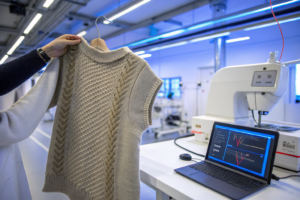
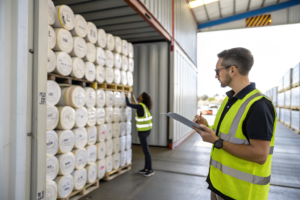
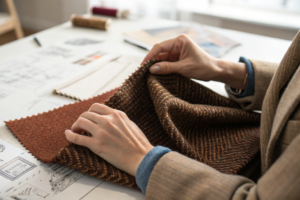
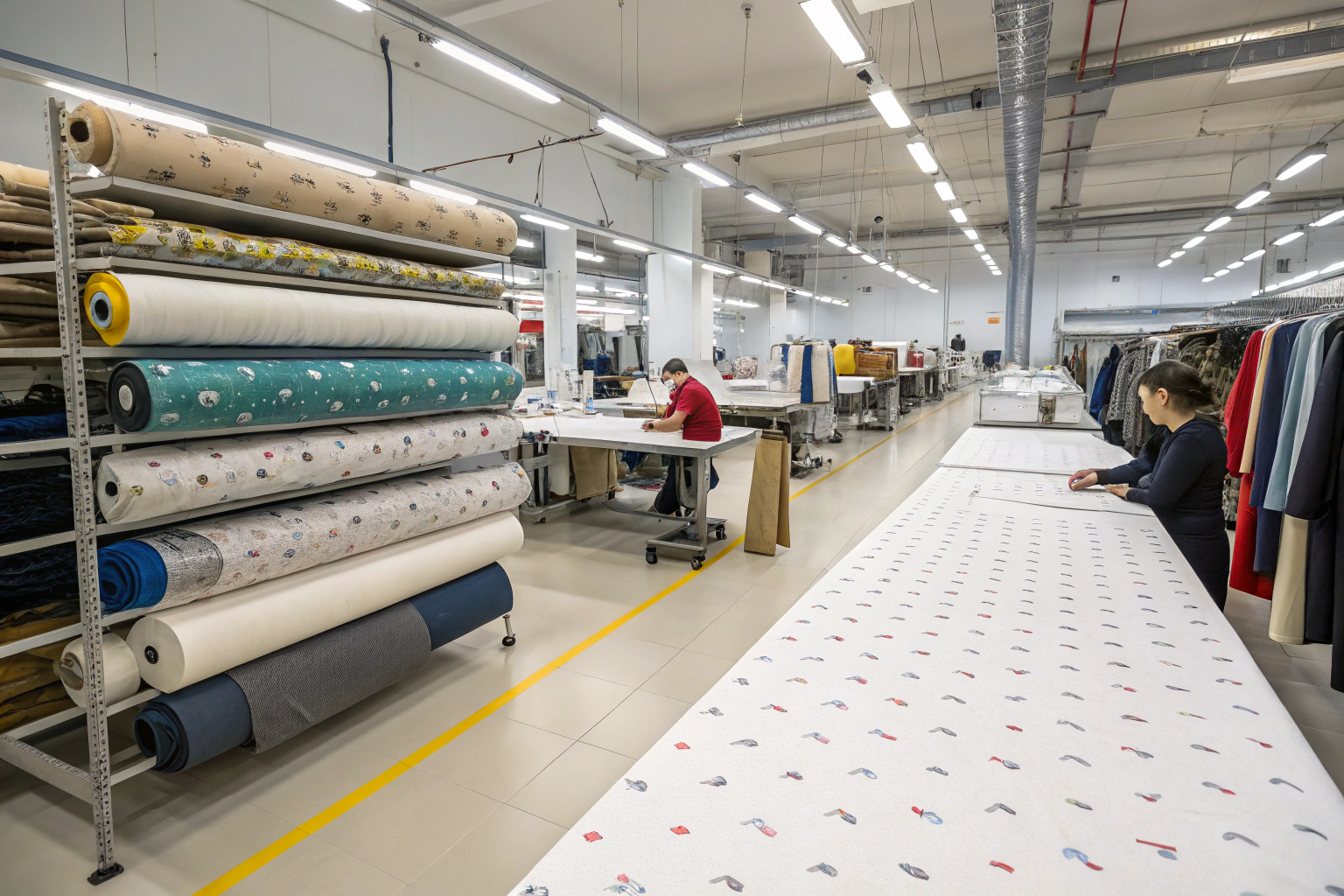
At Shanghai Fumao, we've built our model around the opposite approach. We are a one-stop garment factory. We weave the fabric. We dye it. We print it. We embroider it. We coat it if needed. We inspect it. We cut it. We sew it. We package it. We ship it. Everything under one roof, or under a tightly coordinated network that functions as one roof. In this article, I'm going to walk you through the advantages of working with a one-stop factory, based on twenty years of serving clients from New York to Milan to Melbourne.
How Does a One-Stop Factory Simplify Your Supply Chain?
The most obvious advantage is simplification. Instead of managing ten suppliers, you manage one. Instead of ten purchase orders, you have one. Instead of ten shipments, you have one. Instead of ten quality control processes, you have one. The complexity of your supply chain drops dramatically.

What Is the Real Cost of Managing Multiple Suppliers?
The cost of managing multiple suppliers goes far beyond the price of the fabric. There's the time cost. Your team spends hours on emails, calls, and meetings with each supplier. There's the coordination cost. When one supplier is late, it affects all the others. There's the logistics cost. Multiple shipments mean multiple freight bills, multiple customs clearances, multiple points of delay.
I worked with a client from a children's wear brand in Australia who was managing six suppliers for a single collection. The fabric came from one mill. The trim from another. The printing from a third. The sewing from a fourth. The packaging from a fifth. The logistics from a sixth. She told me that she spent about 15 hours a week just on coordination. That's 15 hours she wasn't spending on design, marketing, or growing her business.
When she switched to working with us as a one-stop supplier, everything changed. One order. One point of contact. One quality standard. One shipment. Her coordination time dropped to about two hours a week. She redirected that time into launching a new product line. That line now accounts for 30% of her revenue. For a discussion of the hidden costs of fragmented supply chains, this industry blog has an article on the true cost of supplier fragmentation.
How Does One-Stop Reduce Communication Errors?
When you have multiple suppliers, communication errors are almost inevitable. The fabric supplier thinks the trim supplier is handling the zippers. The trim supplier thinks the fabric supplier is handling the labels. The sewing factory doesn't know which shipment is which. The result is delays, rework, and frustration.
With a one-stop factory, communication is internal. The person managing your order sits in the same building as the weaving mill, the printing shop, and the sewing floor. When there's a question, they walk down the hall and get an answer. When there's a problem, they see it immediately and fix it.
I remember a project where we were producing a complex printed jersey for a client in the US. The fabric was being woven in one part of our facility, printed in another, and sewn in a third. During production, our QC team noticed that the print registration was slightly off on one batch. The fabric hadn't even left the printing department. Our account manager walked over, saw the issue, and stopped the printing. We corrected the problem and restarted. The client never knew there was an issue. If this had been three separate suppliers, the fabric would have shipped to the printer, the printer would have shipped it to the sewer, and the sewer would have cut and sewn it before anyone noticed the defect. The result would have been thousands of unusable garments.
Internal communication eliminates the gaps where errors hide. For a guide on how integrated supply chains reduce errors, this manufacturing article explains the benefits of vertical integration.
How Does One-Stop Improve Quality Consistency?
Quality is the biggest concern for any buyer. When you work with multiple suppliers, quality consistency is a constant battle. The fabric from one mill has a certain standard. The printing from another has a different standard. The sewing from a third has yet another standard. The final product is only as good as the weakest link.
How Does One-Stop Ensure Consistent Standards Across All Processes?
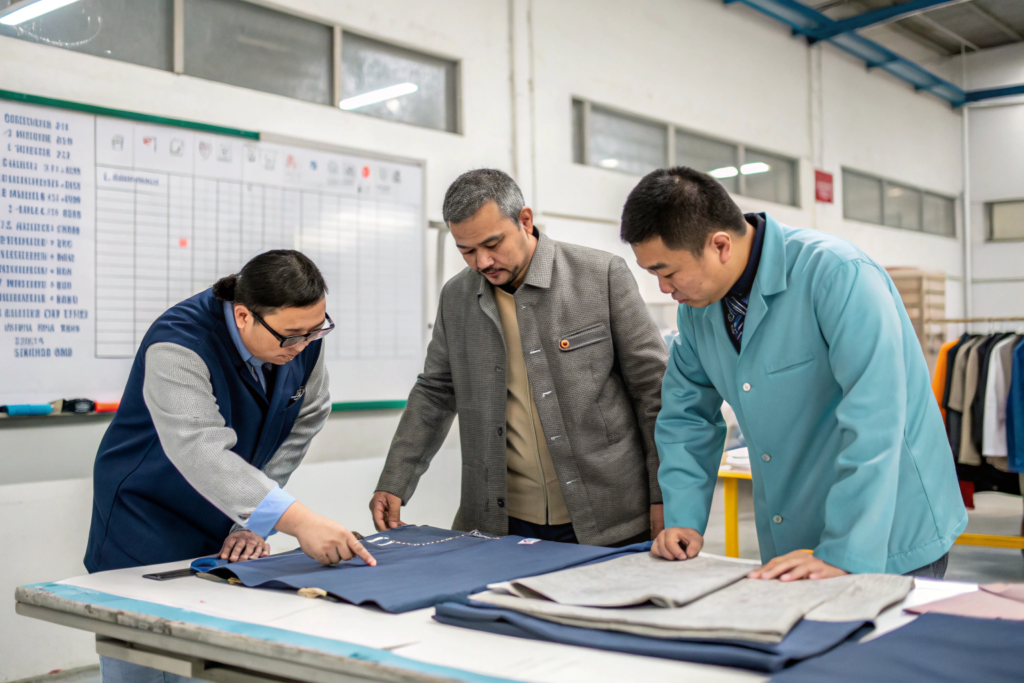
When all processes are under one roof, quality standards are consistent. The same QC team that inspects the incoming yarn also inspects the finished garment. The same quality culture applies to weaving, printing, cutting, and sewing. There's no handoff where quality standards drop.
At our facility, we have a single quality management system that covers every stage. The yarn is tested before weaving. The fabric is inspected after weaving. The print is checked for registration and colorfastness. The cut pieces are inspected before sewing. The sewn garments are inspected before finishing. The finished garments are inspected before packaging. The same standards apply at every stage. The same people are accountable throughout.
I had a client from a luxury handbag brand in Italy who was struggling with quality inconsistency. The leather came from one supplier, the lining from another, the hardware from a third, and the assembly from a fourth. Every batch was different. Some bags were perfect. Others had lining that puckered or hardware that scratched. They could never predict which batch would be which.
When they moved to working with us for their textile components and assembly, the inconsistency disappeared. We sourced the fabric, we cut it, we sewed it, we attached the hardware. One QC team inspected every bag. The defect rate dropped from 8% to under 2%. The client told me that their customers noticed the difference. Returns dropped by 60%. For a discussion of how integrated manufacturing improves quality, this quality control blog has an article on consistency in vertically integrated factories.
How Does One-Stop Handle Defects and Rework?
When a defect occurs in a fragmented supply chain, it's a nightmare. Who caused the defect? The fabric supplier? The printer? The sewer? Who pays for the rework? Who pays for the replacement fabric? The finger-pointing can go on for weeks.
In a one-stop factory, the answer is simple. We own the entire process. If there's a defect, we fix it. We don't spend time arguing about who is responsible. We just make it right. That's the advantage of having a single point of accountability.
I remember a situation where a client from a sportswear brand in Canada had an order of 5,000 hoodies. After the garments were sewn, our QC team noticed that the print on one batch was slightly off-center. It was a subtle issue—most customers probably wouldn't notice. But it wasn't perfect. We could have shipped it and hoped the client didn't notice. Instead, we stopped the shipment, reprinted the affected pieces, and delayed delivery by one week. We absorbed the cost. The client never knew there was an issue until we told him. He appreciated the honesty. He's now one of our biggest clients.
That's the power of one-stop accountability. When you own the whole process, you own the whole solution. For advice on how to structure accountability in your supply chain, this sourcing guide offers a framework for supplier accountability.
How Does One-Stop Reduce Lead Times?
Speed is everything in fashion. The faster you can get from design to shelf, the more seasons you can capture and the less risk you take on inventory. A one-stop factory can dramatically reduce lead times because there are no handoffs between suppliers.
What Is the Lead Time Difference Between Fragmented and One-Stop?
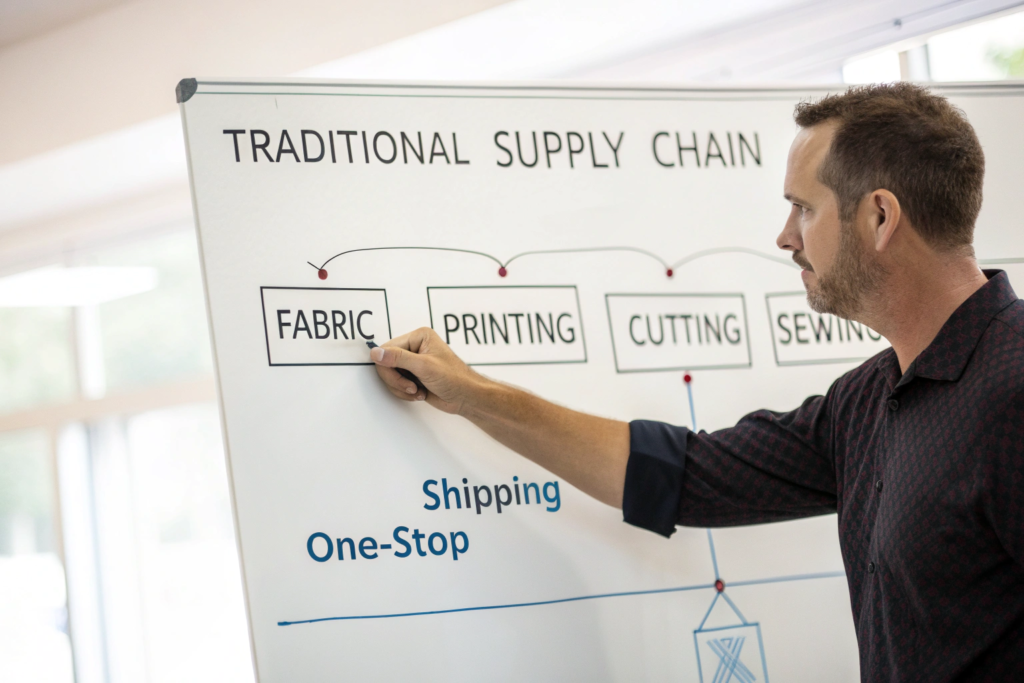
In a fragmented supply chain, lead times add up. Fabric supplier: 4 weeks. Printing supplier: 2 weeks. Cutting and sewing: 3 weeks. Packaging: 1 week. Logistics: 2 weeks. That's 12 weeks, assuming no delays. And there are always delays. The real timeline is often 14 to 16 weeks.
In a one-stop factory, those lead times run in parallel, not in series. While the fabric is being woven, we're also planning the cutting layout. When the fabric comes off the loom, it goes straight to printing or dyeing. When it's finished, it goes straight to cutting. There's no waiting for one supplier to finish before the next starts.
I had a client from a fast-fashion brand in Spain who needed a rush order of 10,000 units for a surprise celebrity endorsement. The timeline was eight weeks from concept to delivery. In a fragmented supply chain, that would have been impossible. But we did it. We sourced the yarn, wove the fabric, printed the custom design, cut and sewed the garments, and shipped them—all in seven weeks. The client hit their window. The endorsement campaign was a huge success.
The key is integration. When all the processes are coordinated under one management, you can overlap timelines in ways that are impossible with separate suppliers. For a detailed comparison of lead times in integrated vs. fragmented supply chains, this manufacturing blog has a case study on lead time reduction.
How Does One-Stop Handle Rush Orders and Changes?
In a fragmented supply chain, rush orders are almost impossible. If you need to add 2,000 units to an order, you have to coordinate with the fabric supplier, the trim supplier, the sewing factory, and the logistics provider. One of them will say no. In a one-stop factory, we can absorb changes because we control the capacity.
I remember a client from a streetwear brand in Los Angeles who had a viral moment. A celebrity wore one of their hoodies, and suddenly they had 5,000 orders in 24 hours. They called me in a panic. Could we produce an additional 5,000 units in three weeks? In a fragmented supply chain, the answer would have been no. But we were already producing their main order. We had fabric on hand. We had cutting capacity. We had sewing capacity. We shifted resources, ran extra shifts, and delivered the additional 5,000 units in 18 days. The client captured the viral moment. That one rush order made their year.
A one-stop factory gives you flexibility. You're not at the mercy of multiple suppliers' capacity constraints. You have a partner who can flex with you. For advice on building flexibility into your supply chain, this sourcing article discusses how to work with suppliers for rush orders.
How Does One-Stop Lower Your Total Cost?
The price per unit from a one-stop factory might not be the lowest you can find for each individual component. But the total cost—when you factor in coordination, logistics, quality issues, and delays—is almost always lower. Let me break down how.
What Are the Hidden Savings of One-Stop?
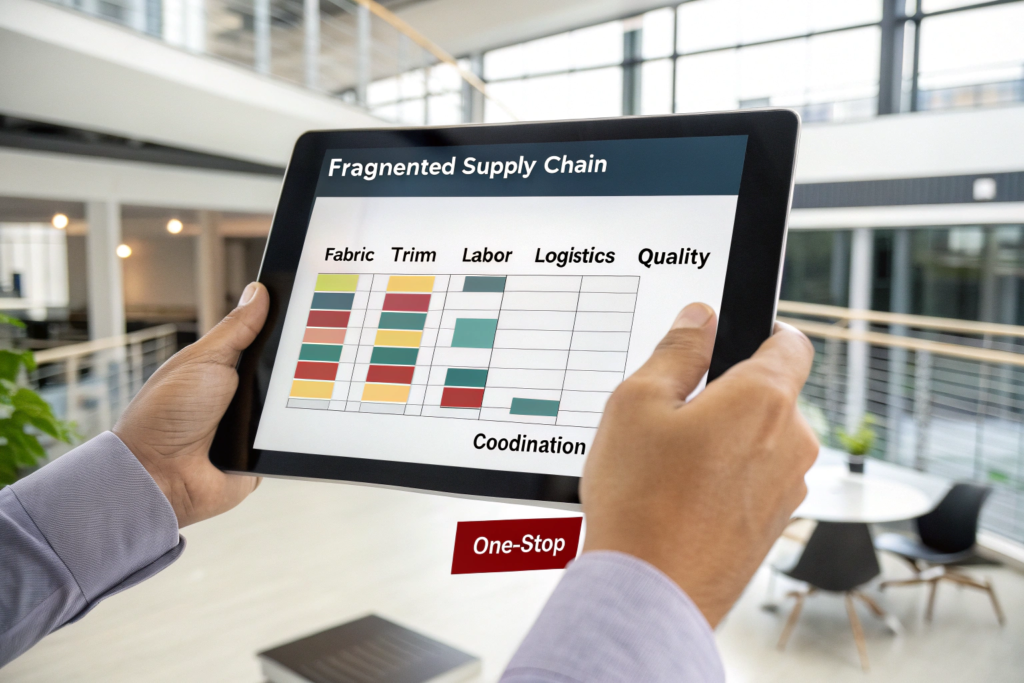
The savings start with logistics. One shipment instead of multiple shipments means one freight bill, one customs clearance, one set of paperwork. The savings can be 10 to 20% on total logistics costs.
Then there's the savings from reduced quality issues. When you have multiple suppliers, each handoff is a quality risk. In a one-stop system, those risks are eliminated. The defect rate drops. The rework cost drops. The return rate drops.
There's also the savings from reduced inventory. When you manage multiple suppliers, you need buffer inventory to account for delays. You need to order extra fabric in case the printer messes up. You need to hold more trim in case the sewing factory runs short. In a one-stop system, you can run leaner because the coordination is tighter.
I had a client from a workwear brand in Germany who did a detailed cost analysis after switching to us. His per-unit fabric cost was slightly higher than his previous fabric supplier. But his total landed cost per garment dropped by 18%. How? He eliminated three separate logistics shipments. His defect rate dropped from 5% to under 1%. His inventory holding costs dropped because he no longer needed safety stock for multiple suppliers. And his team's time spent on supply chain management dropped by 70%. The higher fabric price was more than offset by all the other savings.
Don't just look at the per-unit price. Look at the total cost of ownership. For a framework for calculating total cost of ownership in sourcing, this supply chain guide offers a TCO calculator for textile sourcing.
How Does One-Stop Protect You from Hidden Fees?
In a fragmented supply chain, hidden fees are everywhere. The fabric supplier charges for samples. The printer charges for setup. The sewing factory charges for pattern making. The logistics provider charges for consolidation. By the time you add it all up, the "low price" you started with has doubled.
In a one-stop factory, these costs are bundled. You pay one price that includes everything from yarn to finished garment. There are no surprises. No "oh, we forgot to mention the setup fee." No "that's a separate charge." You know your cost upfront.
I remember a client from a startup in New York who was quoted a very low price for fabric from one supplier, a low price for printing from another, and a low price for sewing from a third. She thought she had found a great deal. Then the invoices started coming. The fabric supplier charged for samples. The printer charged a plate fee. The sewing factory charged for patterns and markers. The total was 40% higher than she expected. She had no margin left.
When she came to us, we gave her one price for the finished garment. She knew exactly what her cost would be. She could price her products confidently. Her margins stabilized, and her business grew. That's the value of transparency. For a discussion of how to avoid hidden fees in sourcing, this industry blog has an article on common hidden costs in garment sourcing.
How Does One-Stop Support Sustainability and Transparency?
Sustainability is becoming a non-negotiable for brands, especially in Europe and North America. Customers want to know where their clothes come from. They want to know that the fabric is sustainable, that the workers are treated fairly, that the environmental impact is minimized. A one-stop factory makes sustainability easier to verify.

How Does One-Stop Make Traceability Easier?
When you have multiple suppliers, traceability is a nightmare. The fabric comes from one place, the trim from another, the sewing from a third. If you want to prove that your garment is made from organic cotton, you need certificates from the yarn supplier, the fabric supplier, the dyer, the printer, and the sewer. Each certificate is a separate document. Each needs to be verified.
In a one-stop factory, traceability is straightforward. We control the entire chain. We know exactly where the yarn came from. We know exactly how it was woven, dyed, printed, and sewn. We have one set of certifications that covers the whole process.
A client from a sustainable fashion brand in Denmark needed to prove that their garments were made from GOTS-certified organic cotton and that the entire production process met strict environmental standards. In a fragmented supply chain, they would have needed certificates from five different suppliers. With us, they had one certificate covering the entire process. Their customers could scan a QR code on the garment and see the full production history—from the organic cotton farm in India to the finished garment in their hands. That transparency became a key selling point. Their sales increased by 25% in the sustainable category.
Traceability is not just a nice-to-have anymore. It's a requirement for many markets. A one-stop factory makes it achievable. For a guide to textile traceability standards, this sustainability resource explains how to implement supply chain traceability.
How Does One-Stop Reduce Environmental Impact?
A one-stop factory can also reduce environmental impact through consolidation. Instead of shipping fabric from one mill to a printer, then to a sewer, then to a warehouse, everything happens in one location. Fewer shipments mean lower carbon emissions. Less handling means less waste.
We've invested heavily in sustainable processes at our facilities. We capture and reuse water in our dyeing operations. We use solar panels for a portion of our energy. We recycle fabric waste from cutting and sewing. Because all these processes are under one roof, we can manage the environmental impact holistically.
A client from a European outdoor brand chose us partly because of our sustainability credentials. They were under pressure from their customers to reduce their carbon footprint. By consolidating their production with us, they eliminated three separate logistics shipments per order. They calculated that this reduced their carbon emissions by about 15% for that product line. That's a meaningful reduction. For a discussion of sustainability in integrated manufacturing, this industry article covers the environmental benefits of vertical integration.
Conclusion
Working with a one-stop garment factory changes everything about your sourcing experience. Instead of managing a fragmented network of suppliers, you have one partner. Instead of coordinating multiple lead times, you have one timeline. Instead of chasing quality issues across multiple vendors, you have one accountable team. Instead of hidden fees and surprise costs, you have one transparent price.
The advantages are real and measurable. Simpler communication. Fewer errors. Consistent quality. Faster lead times. Lower total cost. Better traceability. Reduced environmental impact. These aren't just nice-to-haves. They're competitive advantages that can make the difference between a collection that succeeds and one that struggles.
I've seen it happen with so many clients over the years. The buyer who was spending 15 hours a week on coordination now spends that time on design. The brand that was struggling with quality returns now has a defect rate under 1%. The startup that was barely making margin now has healthy profits. The sustainable brand that was struggling to prove their credentials now has a story they can tell with confidence.
At Shanghai Fumao, we've built our entire model around being that one-stop partner. We weave. We dye. We print. We embroider. We coat. We cut. We sew. We package. We ship. All under one coordinated system. All with one quality standard. All with one point of accountability. We do it because we believe it's the best way to serve our clients. And our clients—from the big European retailers to the small US startups—tell us they agree.
If you're tired of managing a fragmented supply chain, if you're frustrated with quality inconsistencies and hidden costs, if you want a partner who can take your garment from yarn to finished product with one order and one timeline, let's talk.
Contact our Business Director, Elaine, to discuss how we can simplify your supply chain.
Email: elaine@fumaoclothing.com
Let's make your next collection simpler, faster, and more profitable.