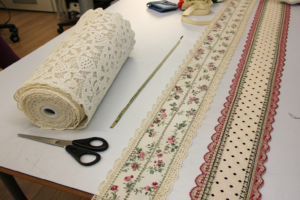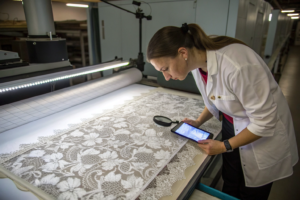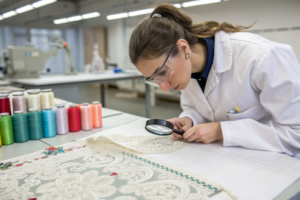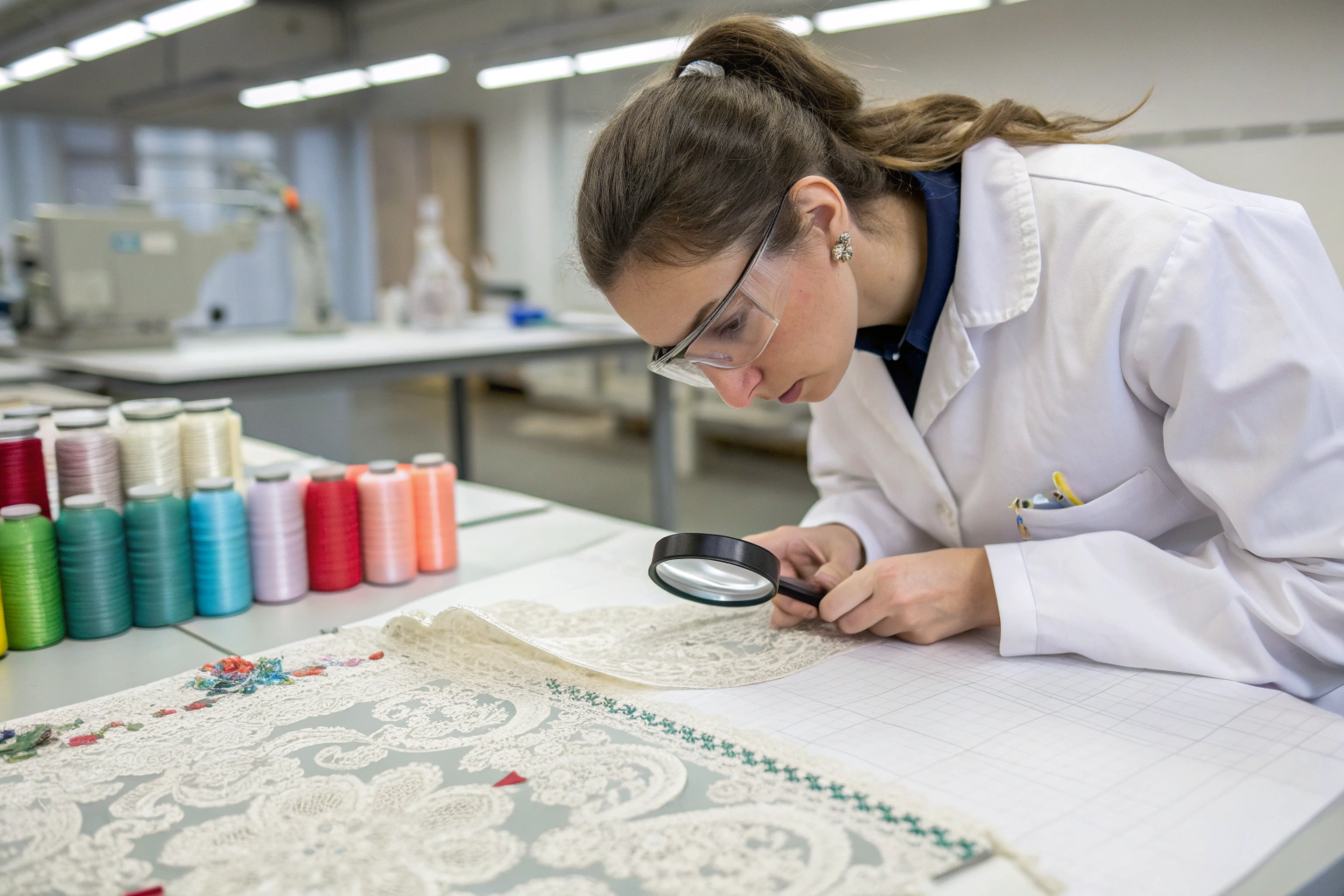
Ever spent hours designing a beautiful embroidered pattern, only to have it look stiff and heavy on the garment? Traditional embroidery adds bulk, and removing the stabilizer can be a nightmare. The secret to achieving those airy, delicate, and intricate embroidered effects—like the stunning 3D appliqués or the gossamer netting on high-end lingerie—lies not just in the thread, but in the very foundation you embroider on: water-soluble (or soluble) lace.
So, how do you source this magical material? The answer is more than just finding a supplier; it's about understanding the material's types, the precision manufacturing behind it, and navigating the specialized supply chain, particularly in China, the global hub for textile innovation. A successful sourcing strategy combines technical knowledge with a reliable partner who can control the process from fiber to finished soluble fabric.
This guide will cut through the confusion. We'll break down exactly what water-soluble lace is, reveal the key questions to ask potential suppliers, expose the common pitfalls in the sourcing process, and provide a clear action plan to find and vet the right manufacturer. By the end, you'll know how to source not just any soluble lace, but the right soluble lace to bring your most delicate designs to life without drowning in complications.
What Exactly is Water-Soluble Lace and How Does It Create Different Effects?
You might see “water-soluble lace,” “soluble stabilizer,” or “vanishing fabric” and wonder if they’re all the same. They work on the same principle but have different end uses. At its core, water-soluble lace is a non-woven fabric made from a special polymer, like polyvinyl alcohol (PVA), that dissolves completely in warm or hot water. Think of it like a sophisticated, high-strength version of those packing peanuts that melt away. You embroider your design directly onto this stable, paper-like sheet. After stitching, you immerse the piece in water, the lace base dissolves, and you’re left with only the freestanding embroidery thread structure.
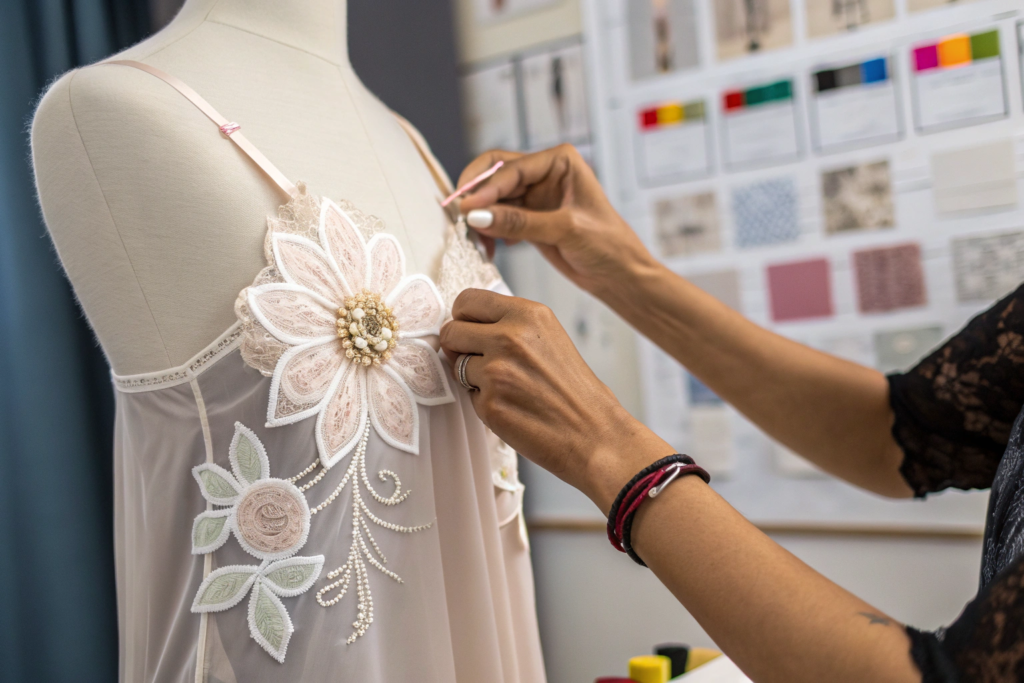
But not all soluble fabrics are created equal for every job. The key sourcing question is: what final effect are you trying to achieve? The type and weight of the soluble lace you need depend entirely on your answer. We learned this firsthand when a German lingerie brand approached us in late 2023. They wanted a feather-light, self-supporting floral motif for a bra cup. We initially provided a standard mid-weight soluble lace, but the result was too rigid. By switching to a ultra-fine, low-gsm variant from our specialized water-soluble fabric supplier, we achieved the drape and delicacy they needed, reducing the finished motif weight by 40%.
What Are the Main Types and Weights of Soluble Lace Available?
Sourcing starts with knowing your options. The market primarily offers two types, defined by their dissolution method and final result:
- Hot/Warm Water-Soluble: This is the most common type. It dissolves in water temperatures typically between 60°C to 85°C (140°F to 185°F). It’s reliable and leaves minimal residue. Ideal for most embroidery projects.
- Cold Water-Soluble: This dissolves in lukewarm or even cold water. It’s excellent for projects involving heat-sensitive materials (like certain plastic sequins or beads) that might warp in hot water. However, it can sometimes feel slightly tacky and requires very precise water temperature control during washing.
Beyond dissolution type, the Grammage (GSM - Grams per Square Meter) is your most critical specification. It determines the lace’s stability during embroidery and the final hand-feel of your design.
| GSM Range | Stability During Embroidery | Ideal For | Final Effect After Washing |
|---|---|---|---|
| Low (20-40 GSM) | Delicate, requires expert hooping & tension | Ultra-fine 3D lace, veiling, lingerie appliqués | Extremely soft, drapeable, almost weightless |
| Medium (40-70 GSM) | Good all-round stability | Most freestanding lace, motifs, collar inserts | Defined structure, good dimensional stability |
| High (70-100+ GSM) | Very stiff, excellent for dense designs | Heavy-duty 3D logos, structured ornaments, baskets | Firm, self-supporting, substantial feel |
Pro Tip from the Factory Floor: Always request physical samples in multiple GSMs for a stitch test. A design that looks perfect on 60 GSM might collapse on 30 GSM or be too bulky on 80 GSM. We keep a sample library for this exact reason—it saves clients weeks of trial and error.
How Does the Choice of Base Material Impact My Final Product?
The “lace” itself is just the canvas. The real magic—and the source of your quality headaches or triumphs—lies in the embroidery thread and the machine setup. This is where partnering with a source that understands the entire chain is invaluable.
- Thread Compatibility: Not all threads work well. Rayon threads are popular but can bleed color if not high-quality and colorfast. Polyester threads offer excellent color fastness and strength. For the whitest, brightest effects, you need to ask your supplier about options for sourcing high-quality embroidery threads that resist discoloration in water. A dull thread can ruin an intricate piece.
- Machine & Stabilizer Synergy: Even with the perfect soluble lace, you often need a temporary underlay stabilizer (like a tear-away) for very dense designs to prevent puckering. The needle size and tension must be adjusted. A supplier who just sells you the lace might not tell you this. One of our clients, a US-based activewear brand, learned this the hard way in early 2024 when their intricate geometric patterns kept distorting. Our QC team suggested a simple switch to a sharper, smaller needle and a lighter underlay stabilizer, which solved the problem and cut their production waste by 15%. (Here’s a tip from our production floor: always run a test with your exact thread and design first).
What Are the 5 Must-Ask Questions When Vetting a Soluble Lace Supplier in China?
Finding a supplier on Alibaba is easy. Finding a reliable, knowledgeable supplier for a specialized material like soluble lace is harder. You need to move beyond price-per-kilo and ask technical, process-oriented questions. Price-focused buyers often get stuck with inconsistent materials that dissolve incompletely or leave a gummy residue, destroying entire batches of embroidery.
Your goal is to identify partners who are experts, not just traders. Based on our 20 years in Keqiao, the heart of China’s textile industry, here are the five questions that separate the best from the rest. When you ask these, you’re speaking their language.

Can You Provide a Technical Data Sheet and Dissolution Test Report?
Any legitimate manufacturer should have a Technical Data Sheet (TDS) for their soluble lace products. This isn’t a sales brochure; it’s a spec sheet. It should list:
- Base Polymer Type: (e.g., PVA, PVOH).
- Standard GSM & Thickness: With tolerances (e.g., 55 GSM ±5%).
- Dissolution Temperature & Time: Precise parameters (e.g., dissolves completely in 75°C water within 3 minutes).
- Residue Level: Should specify “non-tacky” or “minimal residue.”
- Storage Conditions: Soluble lace is hygroscopic (absorbs moisture), so proper storage is key.
Demand a Dissolution Test Video or Report. A trustworthy supplier like Shanghai Fumao will gladly send you a video showing a sample dissolving clearly in water, leaving no cloudiness or sticky film. This single test filters out low-grade producers. We once audited a cooperative factory that claimed to have high-quality soluble lace. Their in-house test showed fast dissolution, but our CNAS-accredited lab tested the residue pH and found it was slightly acidic, which could potentially weaken embroidery threads over time. We rejected the batch and worked with them to correct their process.
What is Your Minimum Order Quantity (MOQ) and Sample Policy?
This is where dreams meet reality. Soluble lace is often a specialty item.
- MOQ: For standard types and weights, MOQs might start at 500-1000kg per color/type. However, for truly custom development (like a specific shade or additive for faster dissolution), the MOQ can be much higher. Ask about stock options for common weights—this can be a game-changer for smaller designers.
- Samples: Always, always get physical samples before committing to a bulk order. Pay for them if necessary; it’s worth the investment. A good supplier will offer sample swatches (often for free) and can produce a custom sample bolt for a fee if you need a large quantity for prototyping. Ask: “Can I order a 5kg sample roll to test in my full production run?” Their answer reveals their flexibility and commitment to your success. For a startup client from Australia last year, we provided a 10kg sample roll in three different GSMs. They tested all through their production, chose one, and then scaled to a 5-ton annual order. That initial trust-building step was everything.
How Can I Avoid Common Pitfalls in the Sourcing and Logistics Process?
You’ve found a good supplier, tested the samples, and placed your order. Now, the real challenges can begin if you’re not prepared. The pitfalls aren’t just about the product; they’re about timing, communication, and the journey from the factory floor to your workshop.
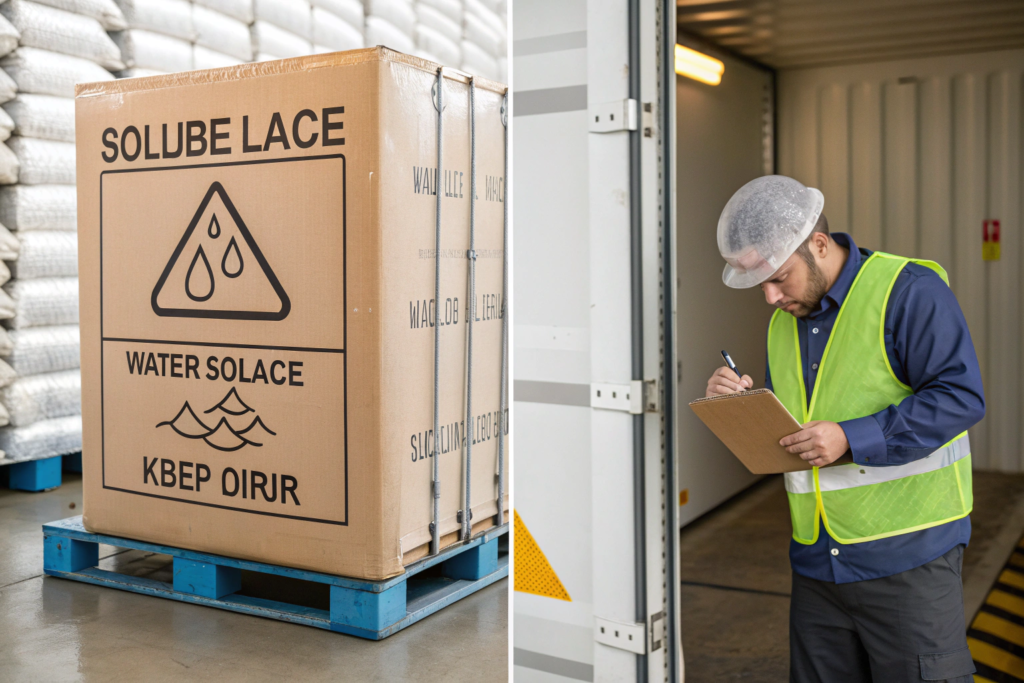
Planning is everything. The most common disaster we see is a container of perfect soluble lace arriving sticky and clumped together because it was stored in a humid port or exposed to rain during transit. Another is a designer missing their peak production season because they didn’t account for the Chinese New Year shutdown. Let’s navigate these hidden rocks.
How Do I Ensure Consistent Quality Across Production Batches?
Batch-to-batch consistency is the holy grail of manufacturing, and for a material that literally disappears, it’s non-negotiable. Your embroidery machine settings are calibrated for a specific thickness and dissolution rate. A variation can stop your production line.
Here is how to manage it:
- Define Clear Acceptance Criteria: Your purchase order should reference the TDS and include specific quality parameters (GSM, width, dissolution time).
- Implement Pre-Shipment Inspection (PSI): Hire a third-party inspection firm (like SGS or BV) or rely on your supplier’s in-house QC. At Shanghai Fumao, our QC team conducts a 12-point check on every batch, including a mandatory dissolution test from the middle of the roll, not just the edge. We then share the report and video with the client before shipping.
- Build a Relationship with the Factory’s QC Lead: Get their direct contact. When our UK-based client had a concern about slight color variation in a white lace batch (some rolls appeared brighter), they messaged our QC lead directly. We immediately compared under standard D65 lighting, confirmed it was within tolerance, and sent them comparison photos to approve. Transparency prevents disputes.
What Are the Critical Logistics and Timeline Considerations?
Soluble lace is sensitive. You must factor its physical properties into every logistics decision.
- Packaging: It must be vacuum-sealed in plastic with desiccant (silica gel) bags and then placed in a sturdy, moisture-proof corrugated box. Never accept standard fabric roll packaging.
- Shipping: Air freight is faster and reduces climate exposure but is costly. Sea freight requires careful planning. The container must be dry and, ideally, equipped with a humidity monitor. You must discuss best practices for shipping hygroscopic textiles from Asia with your freight forwarder.
- Production Timelines: Remember the manufacturing cycles you mentioned. If you need soluble lace for an August production peak, ordering in July during China’s busy season will add weeks. Smart brands use slower periods (like June-July) to build inventory. A European fast-fashion client we work with now completes all their pre-production and material sourcing for post-Chinese New Year collections by early December. This ensures their factories have everything to start immediately after the holiday, gaining a 3-4 week advantage over competitors. Plan backward from your production start date, not your launch date.
How Do I Develop a Long-Term, Successful Partnership with My Supplier?
The final step isn’t a transaction; it’s building a partnership. Your soluble lace supplier should become an extension of your R&D team. This is how you unlock innovation, secure better terms, and ensure supply chain resilience.
Think of it like this: buying lace is a cost. Partnering for development is an investment that pays back in unique products and faster time-to-market. When you treat your supplier as a strategic partner, you gain access to their deepest expertise and future innovations.
How Can We Collaborate on Custom Development and Innovation?
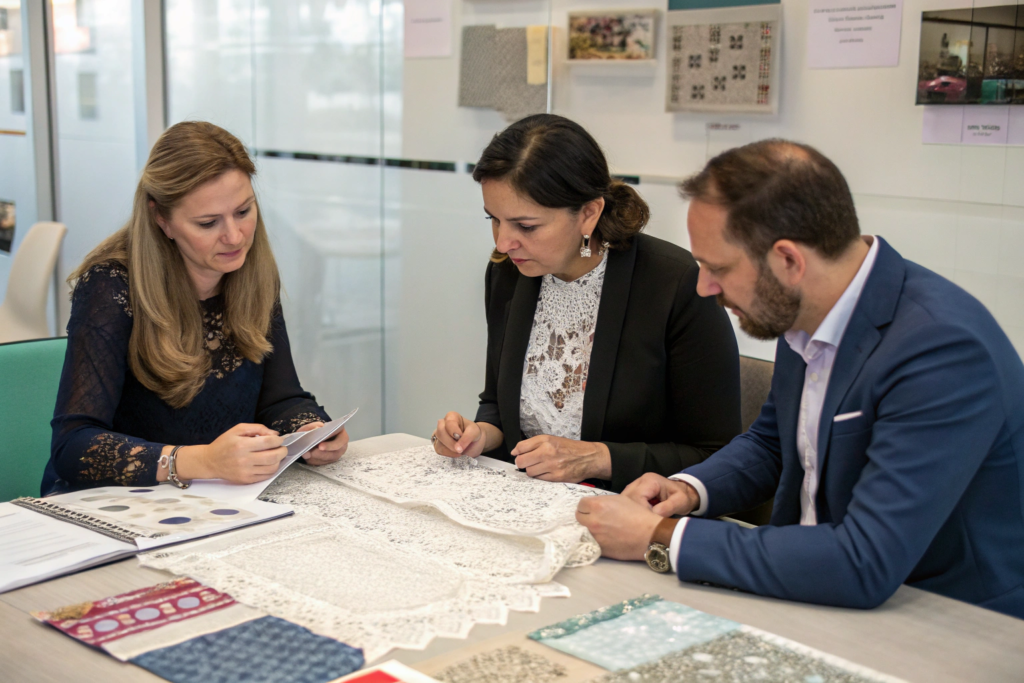
The real magic happens when you go beyond the catalog. Maybe you need a soluble lace that leaves a soft, flexible mesh behind instead of dissolving completely for a new technical apparel concept. Or you need a specific color that’s infused into the PVA itself.
This is where a supplier with vertical integration or strong cooperative networks shines. With our connections to specialized chemical fiber plants and our own R&D focus, we’ve co-developed:
- Faster-dissolving variants for brands with shorter washing cycles.
- Bio-based soluble films for clients requiring enhanced sustainability credentials.
- Pre-printed guideline markers on the lace itself for perfect embroidery placement every time.
Approach your supplier with your vision, not just a spec sheet. Ask: “This is the effect I want to achieve. Can we develop a material together to make it possible?” A partner will be excited by this question. A mere vendor will give you a high MOQ and a long lead time to discourage you.
Why is Communication and Mutual Investment Key to Success?
A partnership is a two-way street. Clear, frequent communication is the grease that keeps everything running smoothly.
- Be a Good Client: Provide clear, detailed feedback. Pay invoices on time. Forecast your demand as accurately as possible so they can plan raw material procurement. This builds immense goodwill.
- Visit the Factory: If possible, go to Keqiao. Seeing the production line, meeting the team, and having dinner together builds unbreakable trust. It transforms you from an email address to a partner. During these visits, you’ll also see their other capabilities—like our digital fabric printing services—that you might leverage later.
- Invest in the Relationship: Share your brand’s direction. The more your supplier understands your long-term goals, the more they can proactively suggest solutions and new materials. When you grow, they grow with you. We’ve had clients start with 50kg sample orders and grow into top-tier partners over 5 years. That journey starts with a single, well-executed project built on trust.
Conclusion
Sourcing water-soluble lace is a nuanced journey that blends material science with strategic supply chain management. It begins with a clear understanding of your desired effect—whether it’s a weightless 3D blossom or a structured freestanding logo—which dictates the type, weight, and thread you’ll need. Success hinges on moving beyond simple price quotes to vet suppliers with technical questions about dissolution reports, MOQs, and their sample integrity. You must then navigate the practicalities of safeguarding this sensitive material through rigorous QC, specialized packaging, and savvy logistics planning that respects China’s manufacturing cycles. Ultimately, the greatest advantage comes from evolving a transactional supplier into a true innovation partner, co-developing custom solutions and building a resilient, communicative relationship for the long term.
Mastering this process unlocks a world of creative embroidery possibilities, letting you design with freedom and execute with precision. If you’re ready to move from concept to stunning, scalable reality, we should talk. At Shanghai Fumao, we don’t just supply fabric; we provide integrated solutions from our hub in the world’s largest textile cluster. Let’s discuss how our end-to-end control, from specialized soluble lace production to guaranteed logistics, can bring your most unique embroidered effects to market faster and more reliably. For a direct conversation about your project, reach out to our Business Director, Elaine. She and her team are ready to help you weave your vision into reality. Contact Elaine at: elaine@fumaoclothing.com.