I have been manufacturing women's wear for over twenty years. Every summer, my clients ask the same question. "How do I protect my customers from the sun without making them wear heavy, hot clothes?" It is a real problem. Women want to be outside. They want to enjoy the beach, the park, the patio. But they also want to protect their skin. Sunscreen is messy. It wears off. It needs to be reapplied. More and more women are looking for clothing that does the work for them. UV-protective fabric is the answer. But sourcing it is not as simple as buying regular fabric. There are standards. There are tests. There are claims that are not always true.
Sourcing UV-protective fabric for summer women's wear requires understanding UPF ratings, testing fabric properties, choosing the right fibers and constructions, working with certified suppliers, and balancing protection with comfort and style. Not all fabrics block UV rays effectively. A dark cotton shirt may provide good protection, but it is hot to wear. A light polyester shirt may be cool but offer poor protection if not engineered correctly. The best UV-protective fabrics are specifically designed to block harmful rays while remaining lightweight, breathable, and fashionable.
This is what I want to share with you today. I am a factory owner who has sourced UV-protective fabrics for dozens of women's wear brands. I know what works and what does not. I will walk you through the entire sourcing process. I will use real examples from my own experience.
What Is UPF and How Is It Measured?
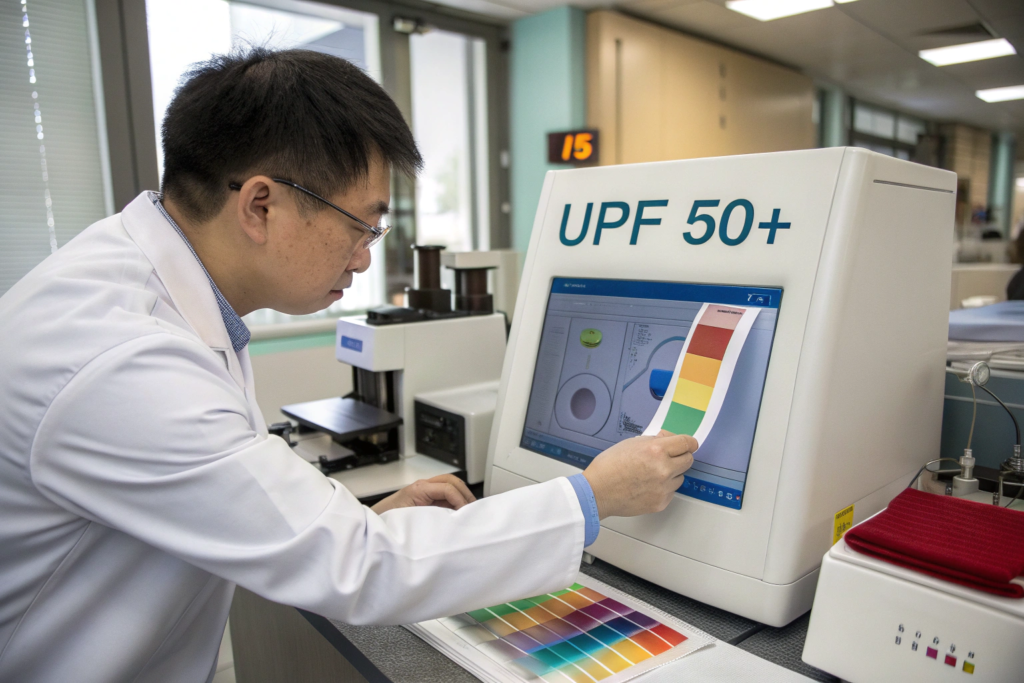
The first thing you need to understand is UPF. UPF stands for Ultraviolet Protection Factor. It is the standard measure for fabric sun protection.
What Do UPF Ratings Mean?
UPF ratings tell you how much UV radiation a fabric blocks. A UPF 50 fabric blocks 98% of UV rays. A UPF 30 fabric blocks 96.7%. A UPF 15 fabric blocks 93.3%. The higher the number, the better the protection.
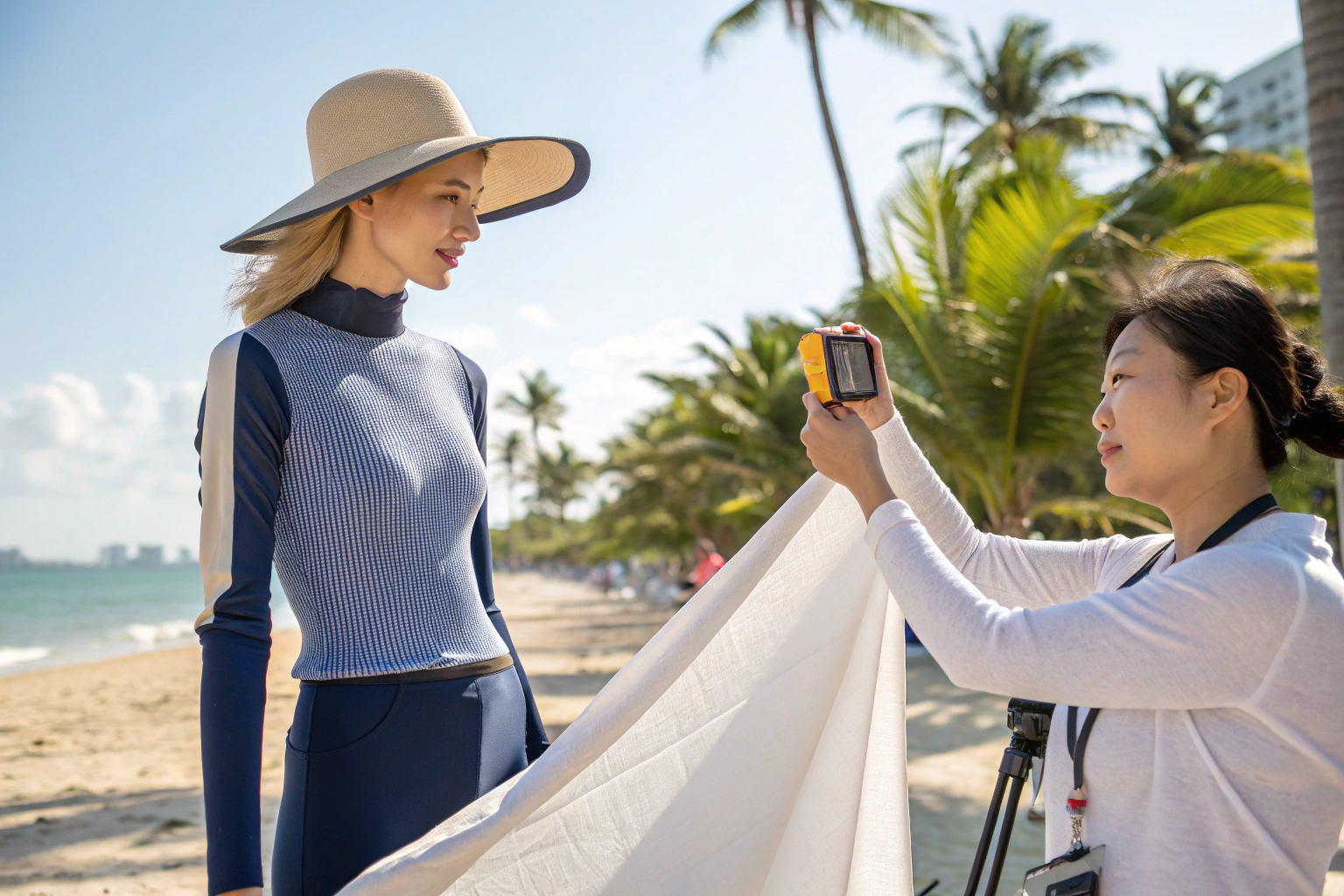
I had a client from Florida in 2022. They wanted to launch a line of UV-protective beach cover-ups. They found a fabric supplier who claimed "UV protection." But the supplier did not provide a UPF rating. I advised the client to test the fabric. The test came back at UPF 15. That is the minimum for a "good" rating. But for Florida sun, the client wanted UPF 50. They found a different supplier. The first supplier was not lying. But they were not telling the full truth either.
Here is the UPF rating scale:
| UPF Rating | UV Blocked | Protection Level | Best For |
|---|---|---|---|
| 15-20 | 93.3-95% | Good | Brief sun exposure |
| 25-35 | 96-97.1% | Very good | Moderate sun exposure |
| 40-50+ | 97.5-98%+ | Excellent | Extended sun exposure |
How Is UPF Tested?
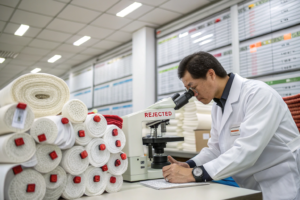
UPF is tested using a spectrophotometer. The machine measures how much UV passes through the fabric. The test is done on dry fabric. Some standards also test wet fabric, because wet fabric can lose protection.
A client from California learned this lesson. They sourced a fabric that tested UPF 50 when dry. But when wet, the UPF dropped to 25. For swimwear and beachwear, this was a problem. Women would be in and out of the water. The client needed fabric that maintained protection when wet. They found a supplier that tested both dry and wet.
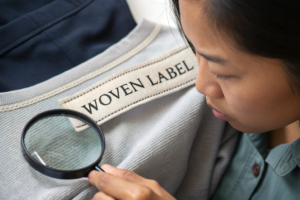
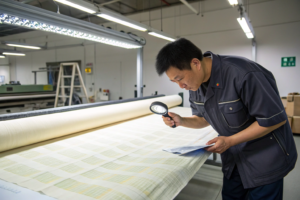
At Shanghai Fumao, we require UPF test reports from our suppliers. We also test randomly ourselves. We want to be sure the fabric meets the claimed rating.
What Fabric Properties Affect UV Protection?
Not all fabrics provide the same UV protection. Several factors determine how well a fabric blocks UV rays.
How Does Fiber Type Affect UV Protection?
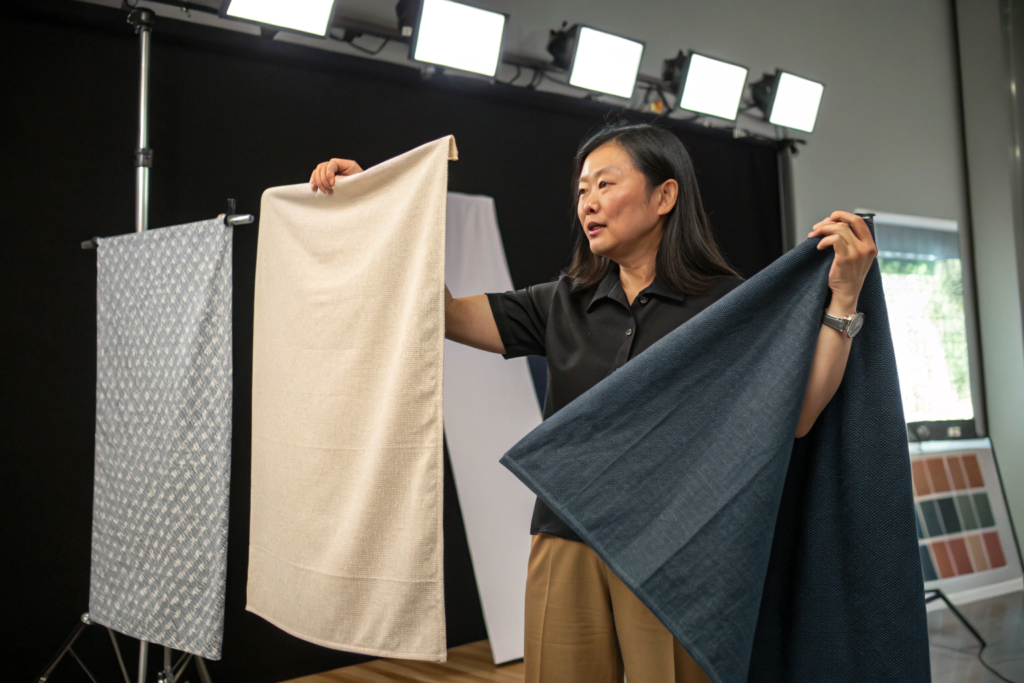
Different fibers have different natural UV-blocking abilities. Polyester and nylon are excellent. They absorb UV rays. Wool is good. Cotton and linen are poor. They allow more UV to pass through.
I had a client from Texas who wanted a lightweight summer shirt. They chose a white linen fabric. Linen is comfortable in heat. But it has poor UV protection. The shirt had a UPF of only 5. The client was surprised. They thought all fabric blocked UV. I explained that light, loose-weave natural fibers offer little protection. We blended the linen with polyester. The new fabric had UPF 40. It was still lightweight. But it protected the wearer.
Here is how different fibers perform:
| Fiber | Natural UV Protection | Best Use |
|---|---|---|
| Polyester | Excellent | Activewear, swimwear |
| Nylon | Excellent | Athletic wear, outerwear |
| Wool | Good | Cool weather sun protection |
| Cotton | Poor | Needs treatment or tight weave |
| Linen | Poor | Needs blend or treatment |
| Rayon/Viscose | Poor | Needs blend or treatment |
How Does Fabric Construction Affect UV Protection?
The weave or knit matters. Tightly constructed fabrics block more UV. Loose weaves let UV pass through. The color also matters. Dark colors absorb more UV than light colors.
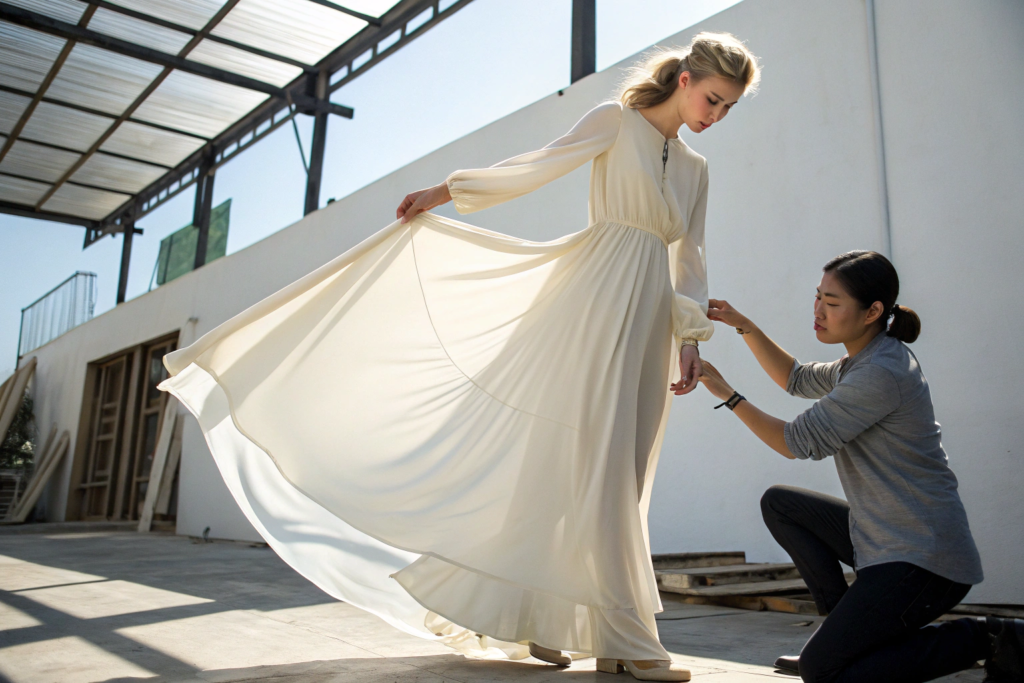
A client from Arizona wanted a UV-protective white blouse. White is the worst color for UV protection because it reflects less and allows more UV to pass through. We used a tightly woven polyester fabric. The weave was so tight that light barely passed through. The white blouse achieved UPF 45. The client was happy.
Here is how construction affects protection:
| Factor | Increases Protection | Decreases Protection |
|---|---|---|
| Weave density | Tight weave | Loose weave |
| Color | Dark (black, navy) | Light (white, pastel) |
| Weight | Heavy fabric | Light fabric |
| Stretch | No stretch (less gaps) | High stretch (gaps when stretched) |
| Finish | UV-absorbing treatment | None |
At Shanghai Fumao, we consider all these factors when sourcing UV-protective fabric. We help clients choose the right combination for their design.
What Are the Best UV-Protective Fabrics for Summer Women's Wear?
The best UV-protective fabric depends on the garment type. A swimsuit has different needs than a beach cover-up. A hiking shirt has different needs than a casual blouse.
What Fabrics Work Best for Swimwear and Beachwear?
Swimwear needs high UV protection, even when wet. It also needs stretch, quick drying, and chlorine resistance.
I had a client from Hawaii who makes high-end swimwear. They use a nylon-spandex blend with a UV-absorbing finish. The fabric has UPF 50+ dry and UPF 45 wet. It stretches well. It dries quickly. It holds up to salt water and chlorine. Their customers love it.
Here are recommended fabrics for swimwear:
| Fabric | UPF Range | Features | Best For |
|---|---|---|---|
| Nylon-spandex | 45-50+ | Stretchy, quick-dry, chlorine-resistant | Swimsuits, rash guards |
| Polyester-spandex | 45-50+ | Stretchy, colorfast, chlorine-resistant | Competitive swimwear |
| Recycled polyester | 40-50 | Eco-friendly, good stretch | Sustainable swimwear |
What Fabrics Work Best for Casual Summer Clothing?
For casual wear, comfort and style are as important as protection. The fabric must be lightweight, breathable, and fashionable.
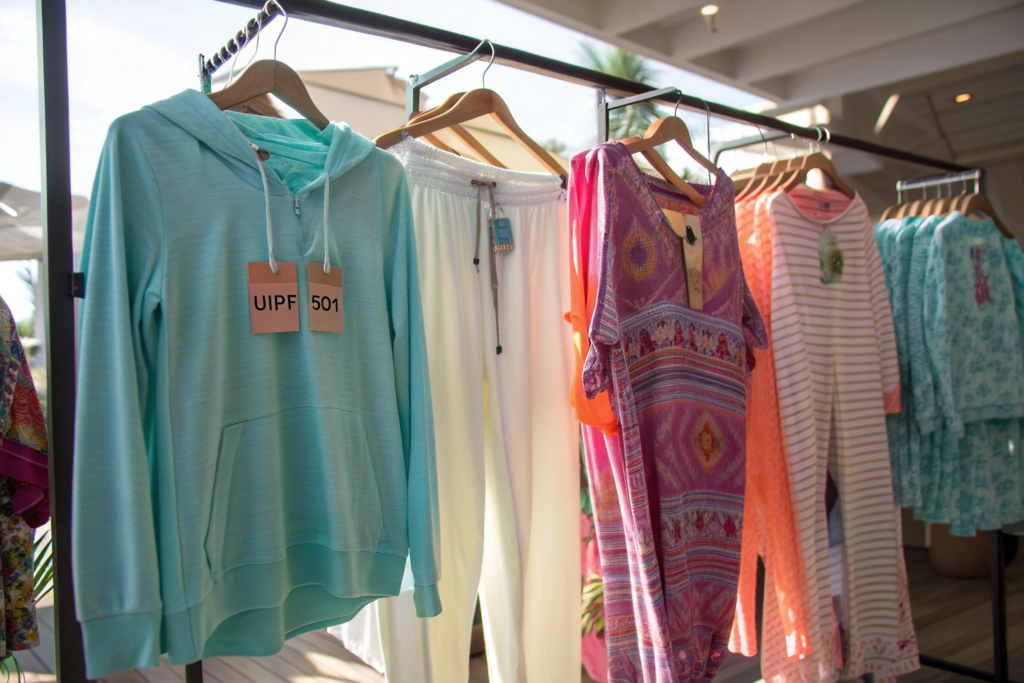
A client from Oregon makes UV-protective dresses for summer. They use a polyester-cotton blend. The polyester provides UV protection. The cotton provides breathability and softness. The fabric is printed with colorful patterns. Women buy them because they are pretty. They keep wearing them because they are comfortable and protective.
Here are recommended fabrics for casual wear:
| Fabric | UPF Range | Features | Best For |
|---|---|---|---|
| Polyester-cotton blend | 30-50 | Breathable, soft, good drape | Dresses, blouses, shirts |
| Treated cotton | 30-40 | Natural feel, comfortable | Casual tops, pants |
| Nylon taffeta | 40-50 | Lightweight, packable | Jackets, windbreakers |
| Bamboo-poly blend | 30-45 | Soft, eco-friendly, breathable | T-shirts, loungewear |
At Shanghai Fumao, we maintain a library of UV-protective fabrics. We help clients select the right one for their specific garment.
How Do You Verify a Supplier's UV Protection Claims?
Many suppliers claim their fabric has UV protection. Not all claims are true. You need to verify.

What Documentation Should You Request?
Always ask for test reports from an accredited laboratory. The report should show the UPF rating. It should show the testing standard used. It should show the date of testing.
I had a client from New York who found a supplier with a good price on UV-protective fabric. The supplier provided a test report. But the report was three years old. And it was from a lab I had never heard of. I advised the client to request a new test. The new test showed UPF 20, not the claimed UPF 40. The supplier's original report was from a different fabric. They were using an old report for a new fabric. The client avoided a bad purchase.
Here is what to check on a test report:
| Item | What to Look For | Red Flag |
|---|---|---|
| Testing standard | AATCC 183, AS/NZS 4399, or EN 13758 | No standard listed |
| Lab accreditation | ISO 17025 accredited lab | Unknown or no accreditation |
| Test date | Within 1-2 years | Older than 2 years |
| Fabric description | Matches your fabric | Different description |
| UPF rating | Clear number | "UV protection" without rating |
How Do You Test Fabric Yourself?
For extra confidence, you can test fabric yourself. There are portable UV meters. They are not as accurate as lab testing. But they can give you a rough idea.
A client in Colorado bought a portable UV meter. They tested fabric samples from three suppliers. One supplier's fabric measured UPF 15. The other two measured UPF 45+. They chose the higher-rated suppliers. The meter saved them from a bad choice.
At Shanghai Fumao, we have our own spectrophotometer. We test every batch of UV-protective fabric. We do not rely solely on supplier reports. We verify.
How Do You Balance UV Protection with Comfort and Style?
UV protection is important. But women will not wear the garment if it is uncomfortable or ugly. You need to balance protection with comfort and style.
How Do You Keep UV-Protective Fabric Cool and Breathable?
The challenge with UV-protective fabric is that it can be hot. Tight weaves and dark colors block UV but also trap heat. You need to find the balance.
I had a client from Arizona who wanted a UV-protective long-sleeve shirt for summer. Arizona is very hot. A heavy, dark shirt would be unbearable. We used a lightweight polyester with a loose knit. The knit was engineered to block UV while allowing airflow. The fabric had UPF 40. But it felt as light as a regular t-shirt. Women wore it in 100-degree weather. They stayed protected and cool.
Here are tips for keeping UV fabric comfortable:
| Challenge | Solution | Example |
|---|---|---|
| Heat | Lightweight, breathable construction | Mesh knits, loose weaves |
| Moisture | Moisture-wicking finish | Polyester with wicking treatment |
| Stiffness | Softener treatment or blend | Polyester-cotton blend |
| Darkness | Light colors with high UPF | White polyester with tight weave |
How Do You Make UV-Protective Clothing Stylish?
UV-protective clothing has a reputation for being frumpy. This is changing. Modern UV fabrics can be stylish.
A client in Los Angeles makes UV-protective clothing that looks like regular fashion. They use printed polyester fabrics. The prints are colorful and trendy. The silhouettes are modern. The garments have UPF 50. But you would not know they are "sun shirts" by looking at them. Women buy them for the style. They keep wearing them for the protection.
Here are style tips for UV-protective lines:
| Style Element | How to Execute | Example |
|---|---|---|
| Color | Use bright, fashionable colors | Coral, mint, lavender |
| Use trendy patterns | Floral, geometric, abstract | |
| Silhouette | Use current fashion shapes | Flowy, oversized, cropped |
| Details | Add fashion details | Ruffles, ties, cutouts (in covered areas) |
At Shanghai Fumao, we help clients create UV-protective lines that are both effective and beautiful. We source fabrics that perform and look good.
Conclusion
Sourcing UV-protective fabric for summer women's wear requires knowledge and care. You need to understand UPF ratings and how they are tested. You need to know which fibers and constructions provide protection. You need to choose the right fabric for each garment type. You need to verify supplier claims through testing. And you need to balance protection with comfort and style.
The market for UV-protective women's wear is growing. Women are more aware of skin cancer risks. They want to protect themselves. But they do not want to sacrifice fashion or comfort. The brands that succeed are the ones that offer effective protection in beautiful, wearable garments.
I have seen this shift in my own factory. More and more of my clients are adding UV-protective lines. They are selling well. Women are buying them. They are wearing them. They are coming back for more.
If you are considering adding UV-protective garments to your summer women's wear line, I invite you to talk to us. We have the experience. We have the supplier relationships. We have the testing capability. We can help you create a line that protects your customers and delights them.
You can contact our Business Director, Elaine, directly. She can walk you through our UV-protective fabric options. She can share test reports. She can help you select the right fabric for your designs. Her email is: elaine@fumaoclothing.com. Let us help you create sun-safe summer fashion.