I remember a conversation with a buyer from a corporate wear brand in London about seven years ago. She was frustrated. Her company made uniforms for a large bank, and the feedback from the employees was always the same: the trousers looked great but felt terrible. The woven fabric had no give. When the bankers sat at their desks for hours, the waistband dug in. When they walked to meetings, the fabric pulled across the knees. The employees hated wearing the uniforms, and the bank was threatening to switch suppliers. The buyer needed a fabric that looked like a professional woven but moved like a knit.
That was my introduction to the world of stretchy woven fabrics. I learned quickly that sourcing the right stretch woven is a balancing act. You need the structure and appearance of a traditional woven—the crispness, the drape, the professional look. But you also need the comfort and mobility of a knit—the stretch, the recovery, the ease of movement. Get it wrong, and your fabric either looks sloppy or feels restrictive. Get it right, and you have a fabric that makes people actually want to wear your clothes.
At Shanghai Fumao, we’ve been developing and supplying stretch wovens for over a decade. We’ve supplied them to corporate uniform programs, to fashion brands launching “workleisure” lines, to startups making comfortable but professional-looking dresses. In this article, I’m going to walk you through everything I’ve learned about sourcing stretchy woven fabric for office wear—the fibers, the weave structures, the testing, and the common pitfalls.
What Makes a Woven Fabric Stretchy?
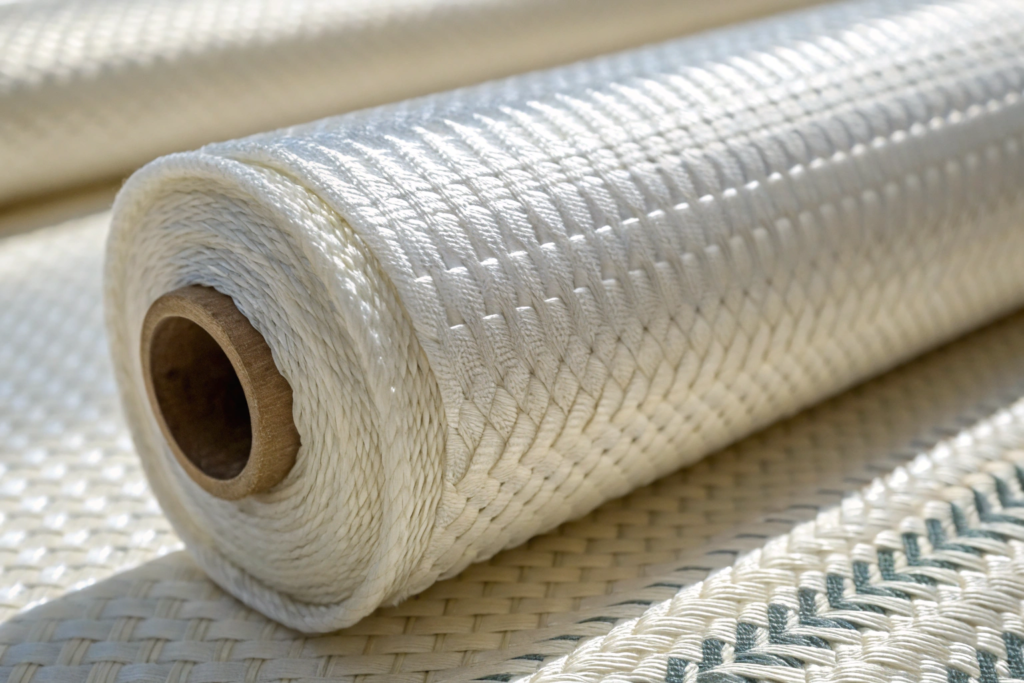
The first thing to understand is that stretch in a woven fabric is different from stretch in a knit. A knit fabric stretches because of its looped structure. A woven fabric, by contrast, is made of interlaced yarns that don’t naturally have much give. To make a woven fabric stretchy, you need to introduce elasticity either through the fibers themselves or through the way the fabric is constructed.
What Are the Different Types of Stretch in Woven Fabrics?
There are two main ways to create stretch in a woven fabric. The first is mechanical stretch, which comes from the weave structure. A fabric with a looser weave, like a basket weave or a twill with a longer float, will have a little more natural give than a tight plain weave. But mechanical stretch is limited. You’re talking about maybe 5 to 10% stretch. For office wear that needs to move with the body, that’s usually not enough.
The second, and more common, way is to use stretch yarns. The most popular is elastane, also known as spandex or Lycra. Elastane is a synthetic fiber that can stretch up to 500% of its length and return to its original shape. In a stretch woven fabric, elastane is usually combined with another fiber—cotton, polyester, wool, or a blend. The elastane provides the stretch. The other fiber provides the look and feel.
There are two ways to incorporate elastane. The first is to use a core-spun yarn, where a filament of elastane is wrapped with cotton or polyester fibers. This creates a yarn that looks and feels like a normal yarn but has stretch. The second is to use a covered yarn, where the elastane is twisted together with another yarn. Both work, but core-spun is generally more durable and has better recovery.
I had a client from a corporate wear program in the US who made a mistake early on. They sourced a stretch woven that used a cheap, poorly covered elastane yarn. The fabric stretched fine at first. But after a few washes, the elastane filaments started to break. The trousers lost their shape. The knees bagged out. The waistbands stretched permanently. The client had to replace thousands of uniforms. After that, they always specified core-spun elastane with a minimum of 15% elastane content by weight. For a technical deep dive into stretch yarns, this textile engineering article explains the differences between core-spun and covered elastane yarns.
What Is the Difference Between 2-Way Stretch and 4-Way Stretch?
This is a critical distinction for office wear. Two-way stretch means the fabric stretches in only one direction—usually the width, also called the weft direction. Four-way stretch means the fabric stretches in both the width and the length, also called the warp and weft directions.
For most office wear applications, two-way stretch is sufficient. Trousers, skirts, and blazers typically need stretch around the body—the width direction—more than they need stretch in the length. Two-way stretch is also easier to sew and more stable during cutting.
But for certain applications, four-way stretch is better. If you’re making a fitted dress that needs to move with the body in all directions, or a pair of skinny trousers that need to stretch both around the legs and down the legs, four-way stretch is the way to go. The trade-off is that four-way stretch fabrics are more expensive and can be trickier to sew because they move more on the cutting table.
I worked with a client from a womenswear brand in Sweden who was launching a line of “office-to-dinner” dresses. The dresses needed to be professional during the day but comfortable enough for after-work drinks. We developed a four-way stretch woven using a cotton-polyester-elastane blend. The fabric had 20% stretch in the width and 15% stretch in the length. The dresses were a huge hit. The client told me that customers kept coming back for more because they could wear the dress all day without feeling restricted. For a guide to choosing between 2-way and 4-way stretch, this sourcing blog has a practical comparison of stretch types.
What Fibers Work Best for Stretchy Office Wear?
The fiber content of your stretch woven determines how the fabric looks, feels, and performs. The right blend depends on what you’re making, what your budget is, and what your customers expect. There’s no single answer, but there are some tried-and-true combinations that work well for office wear.
Why Is Cotton-Polyester-Elastane a Popular Choice?
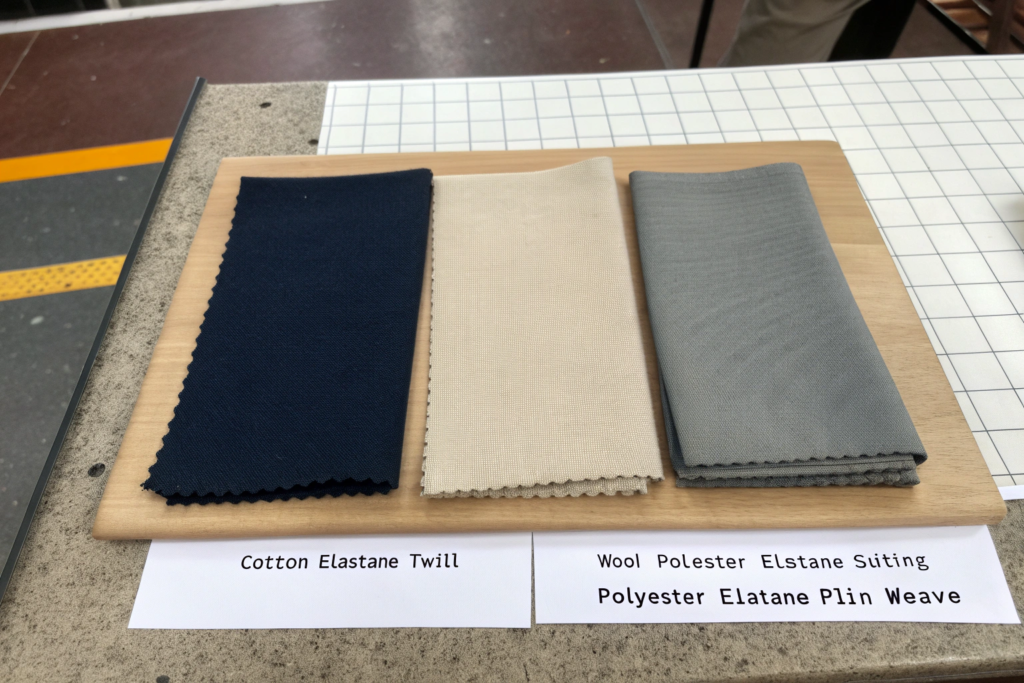
Cotton-polyester-elastane is probably the most common blend for stretch office wear, especially trousers and skirts. Cotton gives the fabric a natural, comfortable feel. Polyester adds durability, wrinkle resistance, and shape retention. Elastane provides the stretch.
The ratio matters. A typical blend might be 70% cotton, 28% polyester, 2% elastane. That gives you a fabric that looks and feels mostly like cotton but has enough polyester to resist wrinkling and enough elastane to provide comfortable stretch. If you want more stretch, you can increase the elastane content to 3% or 4%. But be careful—too much elastane can make the fabric feel rubbery and can cause seam puckering during sewing.
I had a client from a uniform company in Australia who was making trousers for a hotel chain. The staff were on their feet for 8-hour shifts. They needed trousers that looked crisp but moved with them. We supplied a 68% cotton, 30% polyester, 2% elastane twill. The cotton gave it a natural look. The polyester helped it resist wrinkles through long shifts. The elastane gave the staff room to move. The hotel was happy. The staff were comfortable. The client placed repeat orders for three years.
For a discussion of how to choose the right blend for your application, this fabric guide offers a breakdown of cotton-polyester-elastane blends.
When Should You Use Wool or Polyester for a More Premium Feel?
For higher-end office wear—suits, tailored trousers, blazers—wool blends are the standard. Wool has a natural drape, breathability, and a luxurious feel that cotton can’t match. Adding a small percentage of elastane to wool creates a fabric that moves with the body while maintaining the sophisticated look of traditional suiting.
A typical wool stretch suiting might be 97% wool, 3% elastane. The wool content is high enough that the fabric looks and feels like pure wool. The elastane content is just enough to add mobility. For trousers, this makes a huge difference. Traditional wool trousers can feel restrictive when you sit down. Wool with a little stretch feels like a second skin.
I worked with a client from a luxury menswear brand in Italy about four years ago. They were launching a new line of “travel suits”—suits designed for businessmen who spent a lot of time on planes and in meetings. We developed a 95% wool, 5% elastane fabric with a special wrinkle-resistant finish. The wool gave it the premium look they needed. The elastane gave it the comfort and mobility that frequent travelers demanded. The suits sold out in three months. The client told me that the stretch feature was the number one thing customers mentioned in reviews.
If wool is outside your budget, a high-quality polyester can be a good alternative. Polyester stretch wovens have come a long way. Modern microfiber polyester can mimic the look and feel of wool at a fraction of the price. A polyester-elastane blend with a brushed finish can be surprisingly soft and comfortable. For a comparison of wool and polyester stretch wovens, this industry article discusses the pros and cons of each fiber for suiting.
What Weave Structures Work Best for Stretch Wovens?
The weave structure affects both the appearance and the performance of a stretch woven. Some weaves are better at hiding the elastane and maintaining a professional look. Others are better at maximizing stretch and comfort. The right choice depends on your garment.
Why Is Twill a Favorite for Stretch Office Trousers?
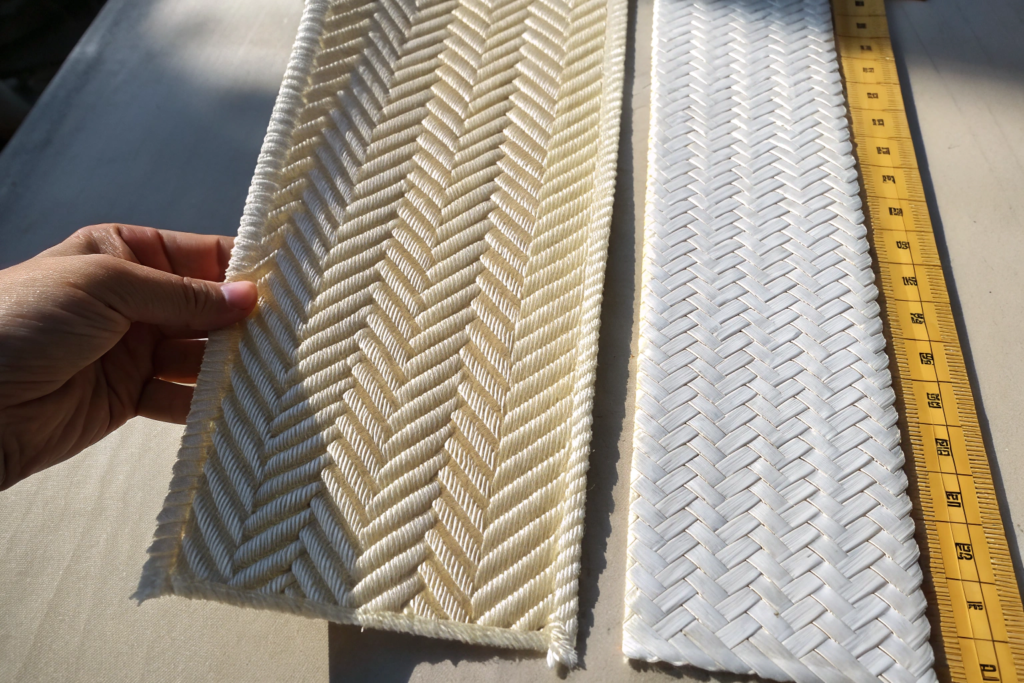
Twill is probably the most common weave for stretch office trousers. Twill has a diagonal rib pattern that gives the fabric a subtle texture. It drapes well, resists wrinkling, and hides dirt and stains better than a plain weave. For trousers, twill also has a little more natural give because of the longer floats in the weave.
The classic stretch twill is often called “stretch chino” or “stretch poplin” depending on the weight. A lightweight twill might be 200-220 GSM, perfect for spring and summer trousers. A mid-weight twill might be 250-280 GSM, good for year-round wear. A heavy twill might be 300-320 GSM, suitable for winter trousers or casual blazers.
I had a client from a workwear brand in Canada who needed stretch trousers for a construction company’s office staff. The trousers needed to look professional but be comfortable enough for site visits. We supplied a 260 GSM cotton-polyester-elastane twill. The twill structure gave the trousers a classic chino look. The weight was substantial enough to look professional but not so heavy that it was uncomfortable in warm weather. The client ordered 15,000 pairs. They’ve been using the same fabric for three years now.
For a guide to twill weights and applications, this textile resource offers a breakdown of twill fabric characteristics.
When Should You Use a Plain Weave or a Sateen?
Plain weave is the simplest and most stable weave structure. It’s good for lightweight stretch shirting, blouses, and dresses. The plain weave structure holds the elastane well and is less likely to shift during cutting and sewing. The downside is that plain weave doesn’t have as much natural give as twill, so you rely more on the elastane for stretch.
Sateen is a weave that creates a smooth, lustrous surface. It’s often used for stretch dress shirts, blouses, and skirts. The long floats in a sateen weave give the fabric a beautiful drape and a subtle sheen. But sateen can be more prone to snagging because the long floats are exposed. For office wear that will be worn daily, you need to balance the aesthetic with durability.
I worked with a client from a womenswear brand in the US who was launching a line of stretch button-down shirts. They wanted a fabric that looked crisp and professional but had enough stretch to move with the body. We supplied a 97% cotton, 3% elastane sateen. The sateen weave gave the shirts a subtle luster that looked elegant. The elastane gave them enough stretch to be comfortable all day. The shirts became one of their best-selling items. The client told me that customers loved that they could wear the shirts to the office without feeling constricted.
For a comparison of weave structures and their properties, this fabric education article explains the differences between plain, twill, and sateen weaves.
How Do You Test Stretch Wovens for Office Wear?
Testing is critical when sourcing stretch wovens. A fabric that stretches beautifully in the hand might lose its shape after a few wears. A fabric that feels soft off the roll might become stiff after washing. You need to test for stretch percentage, recovery, shrinkage, and durability.
What Stretch and Recovery Tests Should You Run?
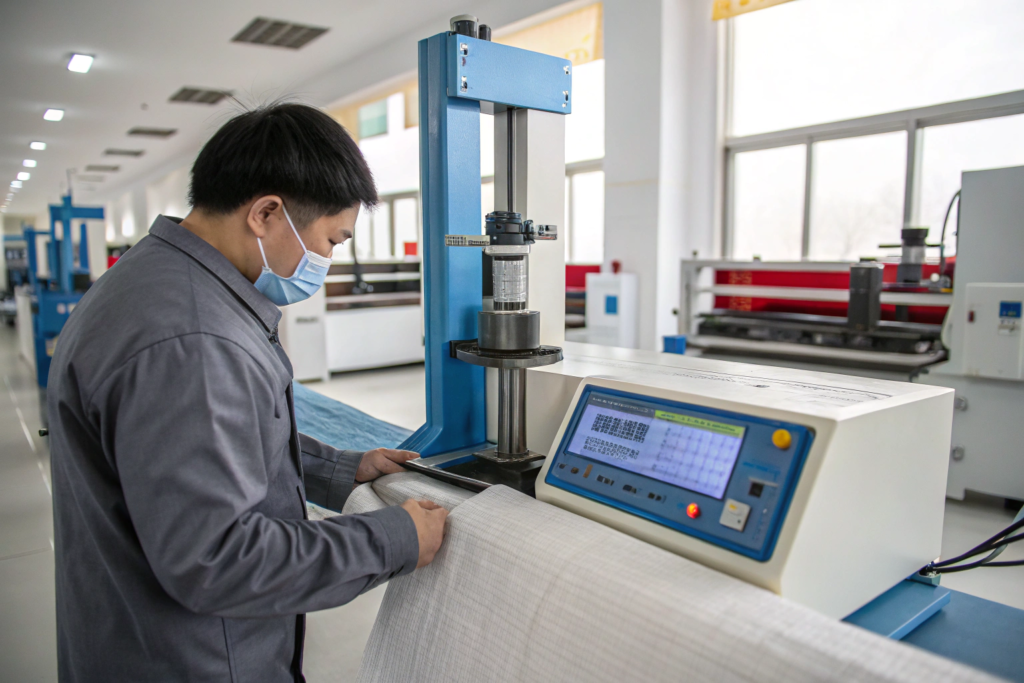
The first test is stretch percentage. This tells you how much the fabric can stretch. For office wear, you usually want 15-25% stretch in the width direction. That’s enough to allow comfortable movement without making the fabric feel like activewear.
The second test is recovery. This is the more important test for office wear. Recovery tells you how well the fabric returns to its original shape after being stretched. A fabric with good recovery will bounce back after you sit down or bend over. A fabric with poor recovery will bag out at the knees and seat.
In our lab, we test recovery by stretching the fabric to a certain percentage, holding it for a set time, and then measuring how much it returns. We look for recovery of at least 90%. That means if the fabric is stretched 20%, it should return to within 2% of its original length. If the recovery is lower, the garment will lose its shape over time.
I had a client from a corporate uniform program in Germany who had a bad experience with a stretch woven that had poor recovery. The fabric looked great in the sample. But after the employees wore the trousers for a week, the knees bagged out. The client received dozens of complaints. When we tested the fabric in our lab, the recovery was only 70%. The supplier had used a low-quality elastane that lost its elasticity quickly. After that, the client always specified a minimum 90% recovery in their contracts.
For a technical explanation of stretch and recovery testing, this quality control guide offers a detailed look at elastane fabric testing.
How Do You Test for Shrinkage and Durability?
Shrinkage is a big concern with stretch wovens, especially those containing cotton. A fabric that shrinks unevenly after washing can ruin the fit of a garment. We test every stretch woven for shrinkage after three washes. We look for shrinkage under 3% in both directions. For office wear that will be laundered frequently, you want a fabric that holds its shape.
Durability is also critical. Office wear gets worn and washed repeatedly. The fabric needs to withstand that without pilling, fading, or losing its stretch. We test for pilling resistance using the Martindale test. We test for colorfastness to washing and light. We test for seam slippage—the tendency of seams to pull apart under stress.
I remember a client from a hospitality uniform program in the UAE. Their staff wore the same trousers five days a week, and they were washed commercially every night. The fabric had to be extremely durable. We supplied a 65% polyester, 33% viscose, 2% elastane blend. The polyester provided durability. The viscose added breathability for the hot climate. The elastane provided comfort. We tested the fabric for 50 industrial wash cycles. The shrinkage was under 2%. The colorfastness remained excellent. The client told us that the uniforms lasted twice as long as their previous supplier's.
For a comprehensive guide to testing stretch wovens, this industry article covers the key tests for performance fabrics.
What Are the Common Pitfalls When Sourcing Stretch Wovens?
I’ve seen a lot of buyers make the same mistakes when sourcing stretch wovens for office wear. These mistakes can be expensive. Let me share a few so you can avoid them.
What Happens When You Choose the Wrong Elastane Content?
Too little elastane, and the fabric doesn’t provide enough comfort. Too much elastane, and the fabric feels rubbery and can cause sewing problems. I’ve seen buyers specify 5% or even 6% elastane thinking “more is better.” But in practice, 2-4% is the sweet spot for most office wear. Above that, the fabric starts to behave more like a swimsuit than a professional garment.
The sewing problems with high elastane content are real. The fabric stretches on the cutting table, so pattern pieces come out the wrong size. It shifts during sewing, causing puckered seams. It can even cause the needles to break. If you’re using a high-elastane fabric, you need a factory that knows how to handle it.
I had a client from a startup in New York who ordered a stretch woven with 8% elastane because they wanted maximum comfort. When the fabric arrived, their sewing factory couldn’t handle it. The seams were wavy. The waistbands were inconsistent. They had to find a new factory that specialized in stretch fabrics. The delay cost them their launch window. Now, they stick to 2-3% elastane for most of their products.
For advice on choosing the right elastane content for your application, this manufacturing guide offers recommendations for different garment types.
How Do You Avoid Uneven Stretch and Poor Recovery?
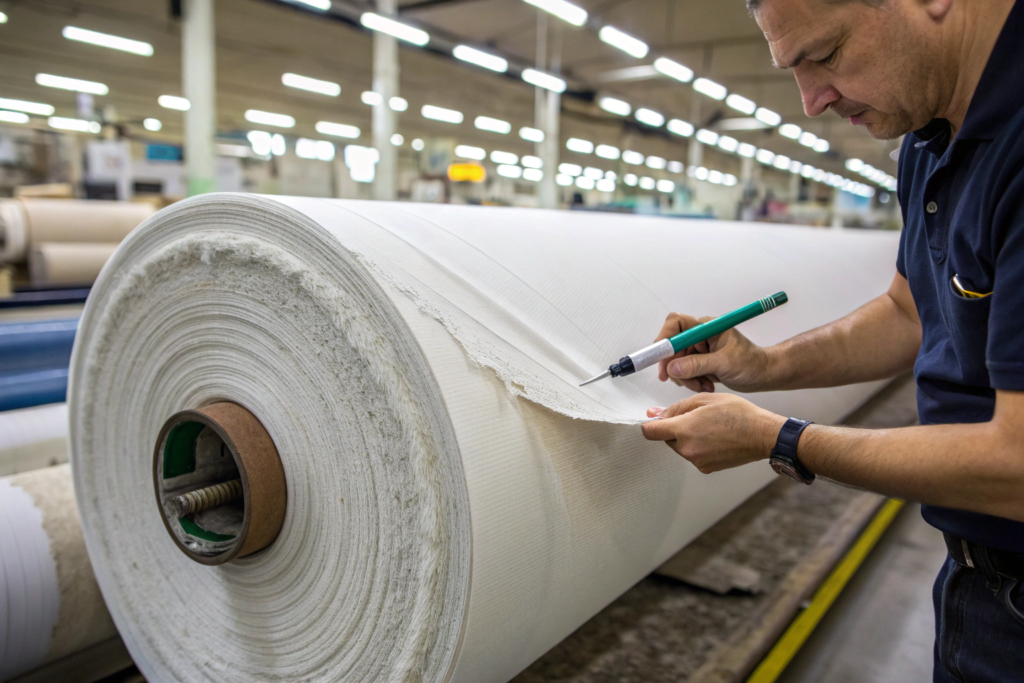
The other common pitfall is inconsistent stretch across the fabric width. A stretch woven should stretch evenly from selvage to selvage. If the stretch is uneven, the garment will twist and fit poorly. This is usually caused by inconsistent yarn tension during weaving or improper finishing.
Poor recovery is another hidden problem. A fabric can stretch beautifully in the showroom but lose its elasticity after a few wears. This is often caused by low-quality elastane or improper heat setting during finishing. Elastane needs to be heat-set at the right temperature to lock in its elasticity. If the finishing temperature is too low, the elastane will gradually lose its stretch.
I learned this lesson with a client from a European fashion brand about five years ago. They had sourced a stretch woven from a new supplier. The sample was beautiful. The bulk order came, and the fabric passed the initial inspection. But after the garments were made and worn, the customers started complaining. The trousers bagged out at the knees after a few wears. We tested the fabric and found that the elastane hadn’t been properly heat-set. The recovery was under 70%. The client had to replace hundreds of pairs. Now, they always ask for heat-setting documentation from their suppliers.
For a guide to quality control for stretch wovens, this sourcing blog has a checklist for inspecting stretch fabrics.
Conclusion
Sourcing stretchy woven fabric for office wear is about balance. You need a fabric that looks professional—crisp, structured, appropriate for a workplace. But you also need a fabric that feels comfortable—stretchy, breathable, forgiving of movement. Get the balance right, and your garments will be the ones people reach for every morning. Get it wrong, and they’ll end up at the back of the closet.
The key decisions are the fibers, the weave, and the elastane content. Cotton-polyester-elastane blends are a reliable choice for most office wear—comfortable, durable, and cost-effective. Wool-elastane blends offer a premium look and feel for high-end suiting. The weave structure matters too. Twill is the classic choice for trousers. Plain weave works well for shirting. Sateen adds a touch of luxury.
Testing is non-negotiable. You need to know the stretch percentage, the recovery, the shrinkage, and the durability. A fabric that looks beautiful in the hand but fails in the lab will cost you in returns and reputation. And don’t forget the pitfalls. Too much elastane can cause sewing problems. Poor recovery leads to baggy knees and seats. Uneven stretch creates twisted garments.
At Shanghai Fumao, we’ve been developing stretch wovens for office wear for over a decade. We know which blends work for different applications. We have the testing capability to verify stretch, recovery, and durability. And we have the production capacity to deliver consistent quality at scale. We’ve supplied stretch wovens to corporate uniform programs, to fashion brands launching “workleisure” lines, to startups making comfortable professional wear. We understand the balance.
If you’re looking for a stretch woven that combines professional appearance with all-day comfort, let’s talk. We can help you choose the right blend, the right weave, and the right specifications for your application. And we’ll test it to make sure it performs.
Contact our Business Director, Elaine, to discuss your stretch woven needs.
Email: elaine@fumaoclothing.com
Let’s make office wear that people actually want to wear.