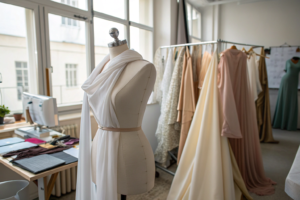
For years, I've watched designers fall in love with a fabric's color in a small swatch, only to have the finished dress look completely different because the drape was too stiff or the handle was too rough. It’s a costly mistake. You spend thousands on development, and the final product just doesn’t move the way you envisioned. We’ve seen this happen countless times in our 20 years at Shanghai Fumao, especially with buyers from the US and Europe who can’t physically touch the material before committing.
Sourcing fabric with a specific drape and handle isn’t about magic; it’s about understanding the engineering behind the cloth. You need to look past just the fiber content and dig into the weave structure, the yarn count, and the finishing processes. For example, a silk charmeuse has a completely different drape than a silk organza, even though they come from the same silkworm. The difference lies in how we weave and finish it in our facilities in Keqiao. So, how do you guarantee that the fabric you order from China feels and flows exactly like the sample in your hand? You need to get technical, ask the right questions, and work with a supplier who can control the entire production chain.
In this post, I’m going to walk you through the exact steps we use at our company to help clients—from large European fashion houses to NYC-based startup owners—nail their fabric drape and handle every single time. We’ll move past the theory and get into the real-world manufacturing details that make or break a garment’s silhouette.
What Exactly Defines Drape and Handle in Woven vs. Knit Fabrics?
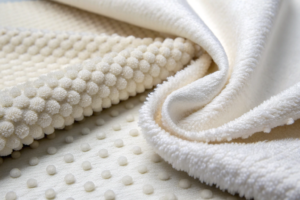
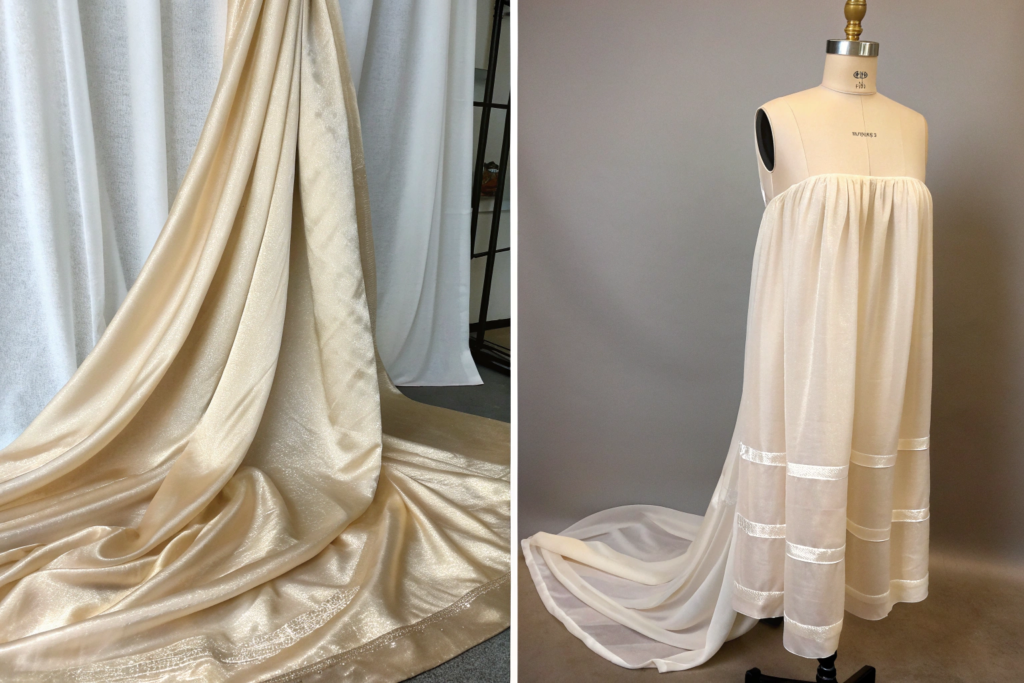
If you're a buyer or a designer, you've probably used words like "flowy," "crisp," or "soft" to describe fabric. But in the factory, these words aren't specific enough. We need to translate your artistic vision into measurable data. Drape refers to how a fabric falls and forms folds under its own weight. Handle (or hand feel) is the tactile sensation—the smoothness, stiffness, or warmth you feel when you touch it. These two properties are the soul of a dress, defining its silhouette and comfort.
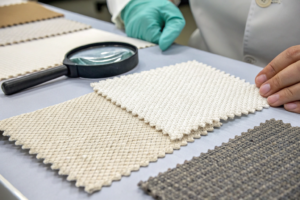
To get these properties right, you first have to understand the fabric's construction. A woven fabric, like denim or satin, is made on a loom with threads running perpendicular (warp and weft). This creates a stable structure. The drape of a woven is primarily controlled by the yarn count and the weave density. A high thread count with fine yarns in a satin weave will drape like liquid, while a low thread count with thick yarns in a plain weave will be stiff. Handle in wovens comes from the fiber and the finishing—mercerizing cotton, for example, gives it a silkier handle.
Knits, on the other hand, are made from loops of yarn. Think of a jersey t-shirt. The structure is inherently more flexible. The drape of a knit comes from the stitch length and the yarn’s elasticity. A longer stitch length creates a looser, drapier fabric. The handle is all about the yarn—using a combed, long-staple cotton versus a carded, short-staple one makes a huge difference in softness. I remember a project in early 2023 with a Canadian athleisure brand. They wanted a drapey knit for a dress but kept getting samples that were too flimsy. We solved it by switching from a plain jersey to a ponte roma knit, which gave them the drape they wanted with the structure needed to hold the garment’s shape. It’s all about matching the construction to the end use.
How does yarn twist affect the hand feel of a summer dress fabric?
This is one of the first dials we turn in the spinning process. Yarn twist is literally the number of times a fiber is twisted per inch to create a yarn. It’s a massive lever for controlling handle. For a soft, almost buttery hand feel in a summer dress, you want a low-twist yarn. This allows the fibers to bloom and spread, creating a fabric that's soft against the skin. Think of a classic voile or a lawn fabric—they use low-twist yarns.
But here’s the trade-off: low twist means less strength. So for a fabric that needs to be crisp and hold a sharp silhouette, like a structured shirt dress, we use a high-twist yarn. This makes the yarn tighter and stronger. The fabric will have a crisper handle and be more wrinkle-resistant. We’ve supplied high-twist yarn fabrics to clients in Italy for years because they love that "scrocchiarello" feel—that crisp, rustling sound. You can read more about the specifics of yarn engineering on this textile industry forum discussing yarn twist. If you are sourcing from China, always ask your supplier: "What is the twist per inch of this yarn, and is it optimized for a soft or crisp handle?" Another factor is whether the yarn is single-ply or two-ply. Two-ply yarns, where two single yarns are twisted together, are smoother and more durable, contributing to a cleaner handle. For example, a two-ply cotton poplin will have a much finer handle than a single-ply one. This blog post from a non-competing spinning mill explains the difference well.
Can the same fiber, like bamboo, create both a stiff and a fluid drape?
Absolutely. This is a misconception we clear up all the time. A fiber like bamboo (which is usually a regenerated cellulose fiber, often called bamboo viscose) is inherently known for being soft. But its drape is 100% dependent on how we process it. At Shanghai Fumao, we can make a bamboo fabric that feels like liquid silk, and another that feels like a crisp linen.
The difference comes down to two things: the yarn count and the weave. For a fluid drape, we use a very fine, high-count yarn and weave it in a satin or crepe de chine construction. The result is a fabric with incredible flow, perfect for maxi dresses. For a stiffer drape, we use a thicker, lower-count yarn and a plain weave. We might even add a little bit of polyester or use a specific finishing process to give it more body. We did this for a German client in late 2022. They wanted a bamboo fabric for a structured, A-line skirt. We developed a bamboo-linen blend with a tighter weave, and it held the shape perfectly while maintaining the sustainable, eco-friendly story they wanted. The key is to not just ask for "bamboo fabric." Ask for "bamboo fabric with a crisp handle for structured garments" or "bamboo fabric with a liquid drape for flowing dresses." This specificity helps us pull the right levers in production.
How Can Lab Testing Replace Subjective "Hand Feel" in Sourcing?
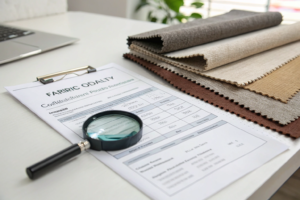
For years, the industry relied on the "hand of god"—the expert who could feel a fabric and grade its quality. But when you're sourcing from 7,000 miles away in New York, you can't reach through the screen and touch it. That's where objective lab testing comes in. We use our in-house, CNAS-accredited lab to turn subjective descriptions into hard data. This is how we eliminate the guesswork and ensure what lands on your cutting table is exactly what you approved.
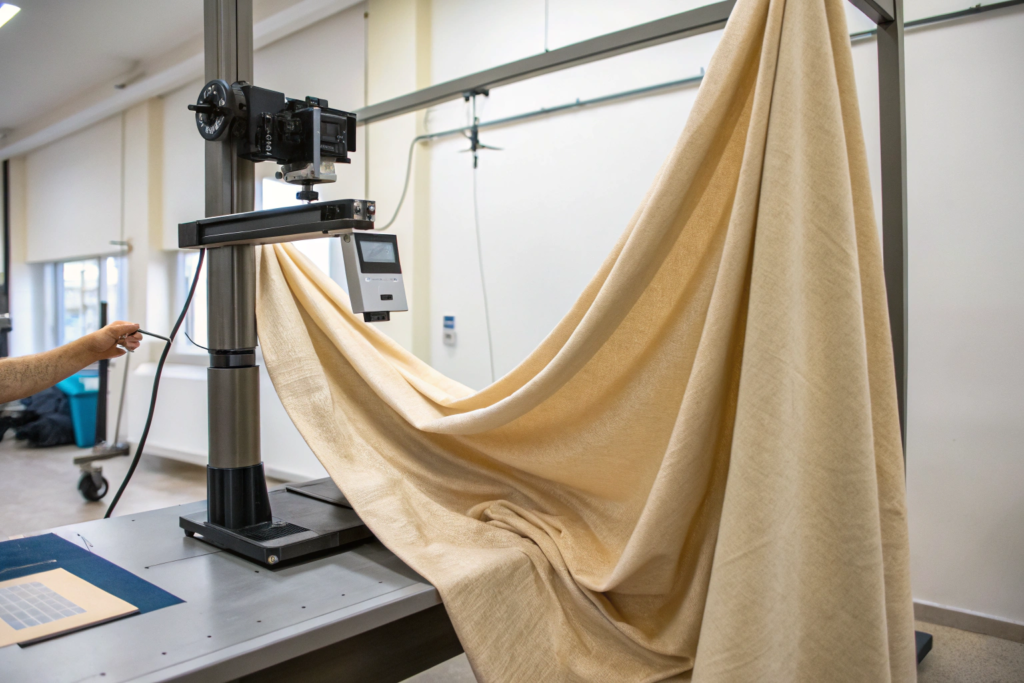
We rely heavily on standardized testing methods. For drape, we use a Cusick Drape Tester. We cut a circular sample of fabric, place it on a smaller circular disk, and let it drape naturally over the edges. A light above measures the shadow projected below. The software then calculates a "drape coefficient." A low coefficient (like 30%) means a very drapable fabric, like a jersey or a rayon challis. A high coefficient (like 80%) means a stiff fabric, like a heavy denim or a canvas. We provide this data in our tech packs to clients like a Dutch fashion brand we work with. They don't just ask for "good drape"; they ask for a "drape coefficient of under 45%," which we can then guarantee.
For handle, it’s a bit more complex, but equally measurable. We use a system like the Kawabata Evaluation System (KES) or simpler tools like a Thwing-Albert Handle-O-Meter. These instruments measure the friction, roughness, softness, and stiffness of the fabric. It pushes a fabric sample through a slot and measures the force required. A lower force means a smoother, softer handle. When a client from the UK told us they wanted a fabric that felt "like a peach skin," we used this data to tweak our peach-skin finishing process on a polyester crepe, ensuring the nap was consistent and the hand feel was exactly what they imagined. This objective data is crucial for QC. We can test pre-production samples and bulk production to ensure the handle doesn't change, which is a common pain point when scaling up. For more on these testing standards, you can check out the resources on the ASTM International website, which outlines many of these fabric testing procedures.
What specific shrinkage and spirality tests guarantee a dress keeps its shape?
A dress that looks perfect in a fit sample but twists after its first wash is a disaster. That's a returns problem waiting to happen. For dresses, especially knits, spirality (or torque) is the enemy. This happens when the tension isn't right during knitting or finishing, causing the seams to twist after washing. We test for this in our lab by marking a straight line on the fabric, washing it according to AATCC standards, and measuring the angle of distortion. We aim for less than 5% distortion. If it's higher, we adjust the knitting machine settings or the compacting process on our Santex frames.
Shrinkage is the other big one. We never ship a fabric without running a wash test. We cut a precise square, wash it in a specific temperature (e.g., 40°C for cold wash, 60°C for warm), and remeasure it. We provide shrinkage data in both directions (length and width). For a client in Australia sourcing viscose challis for a flowing dress, we found our initial sample shrunk 8%. That’s too much. We then pre-shrunk the fabric in our finishing process, running it through a special shrinking machine, and got it down to under 3%. We guarantee this in our QC report. You can see the types of shrinkage tests recommended by fabric quality specialists on this quality control blog. We also test for pilling, because a dress that looks fuzzy after one wear is a brand-killer. We use a Martindale Tester to rub the fabric in circles for thousands of cycles and then grade the pilling from 1 (severe) to 5 (no pilling). We only ship fabrics with a grade of 4 or higher for dress applications.
How does a QR code on a fabric roll provide traceability for your supply chain?
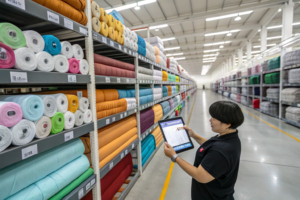
This is something we implemented about five years ago, and it's been a game-changer for our clients' confidence. Imagine you're a brand in San Francisco. You receive 50 rolls of fabric for your new dress line. How do you know that roll #23 is exactly the same as the pre-production sample we approved? With our QR code system, you scan it with your phone.
Instantly, you get the entire history of that specific roll. You see the lab test results: the drape coefficient, the shrinkage percentages, the colorfastness grade. You see the composition breakdown and the finishing recipes we used. It provides complete transparency. This was critical for a large Danish fashion brand we started working with in 2023. They have strict sustainability and quality requirements. By scanning the QR code, they could verify that the recycled polyester content was indeed certified and that the fabric met all their handle specifications without having to send it to their own lab first. It builds trust and saves time. It also helps us in our own factory. If a client ever has an issue, we scan the code on the remnant and instantly know which batch, which machine, and which operator handled it, allowing us to fix problems fast. This kind of traceability is becoming the standard, not the exception, for serious suppliers.
Why Are Finishing Processes the Secret to Perfect Fabric Handle?
This is where the magic really happens. We can weave the most beautiful fabric, but if the finishing isn't right, the handle will be off. Finishing is the final chemical or mechanical treatment we apply to the greige goods (the raw fabric off the loom). It's the difference between a stiff, papery linen and a soft, garment-washed linen dress. And because we have our own finishing partnerships in Keqiao, we have total control over this step, ensuring consistency for our customers.
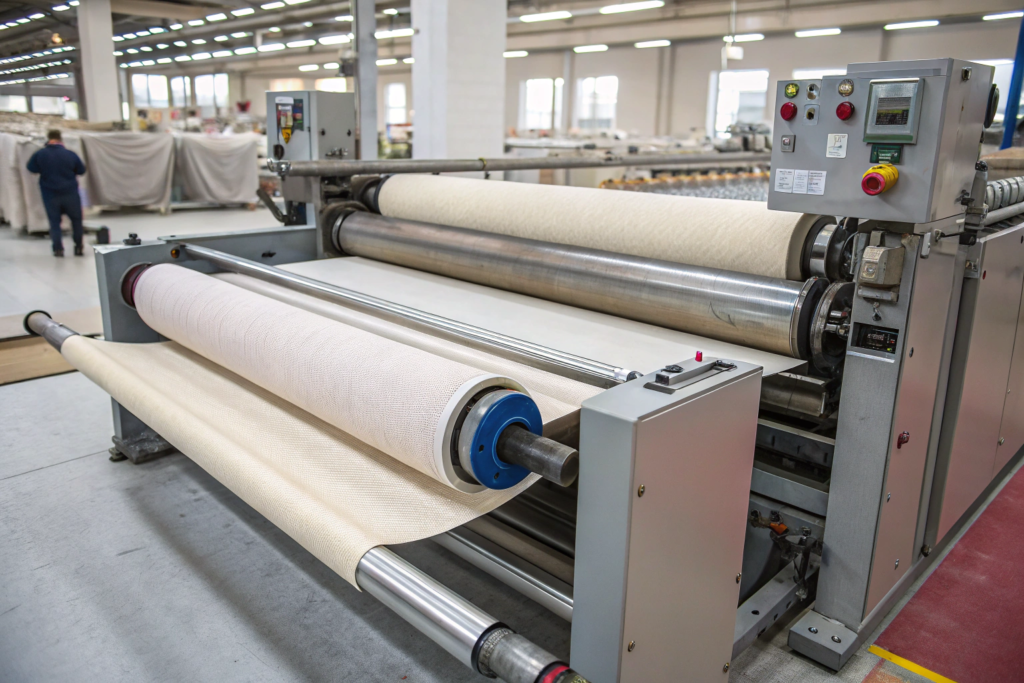
Let's talk about mechanical finishing first. One of the most important machines for handle is the sanforizer or compacting machine. It uses heat, steam, and pressure to physically compress the fabric, making it softer and reducing shrinkage. We also use calendering, where the fabric passes through heated rollers under high pressure. Depending on the roller, this can create a smooth, ironed flat handle (for a polished cotton) or a high-luster, glossy finish (for a satin). For a French lingerie brand that wanted an incredibly soft handle on their silk charmeuse, we used a special soft-calendering process that didn't crush the fabric's natural bounce but just made it glide against the skin.
Then there's chemical finishing. This is where we add substances to the fabric to change its properties. For a softer handle, we use a "softener" in the last wash bath. But it's not one-size-fits-all. There are silicone-based softeners, which give a very slippery, "silicone-y" feel (great for sportswear), and there are non-silicone, organic softeners, which give a more natural, cottony softness (preferred for eco-conscious brands). We choose the chemistry based on the fiber and the end use. For example, when we developed a Tencel blend for a New York designer's spring collection, we used a bio-based softener to enhance the natural softness of the Tencel without making it feel synthetic. This careful selection is why we can offer a variety of handle options from the same base fabric.
How does peach-skin or sanding finishing affect the handle of polyester dress fabrics?
Polyester gets a bad rap sometimes for being "plasticky," but with the right finishing, it can feel incredible. The peach-skin finish is a perfect example. It’s a mechanical process where we pass the polyester fabric over a series of high-speed, rotating rollers covered in very fine sandpaper or carbon fibers. These rollers gently abrade the surface of the fabric, breaking the very top filaments and creating a micro-nap.
The result is a fabric that feels incredibly soft and velvety to the touch, just like the skin of a peach. It also diffuses light, giving the fabric a matte, luxurious appearance. We do this a lot for our European clients who want the performance and durability of polyester (easy care, wrinkle resistance) but with a more natural, premium handle. We have to be very careful with the sanding pressure and the number of passes. Too much, and you can weaken the fabric or create a frosty, uneven look. Too little, and you don't get the desired softness. Our technicians check the fabric constantly during this process, using a light box to ensure the nap is even. You can see examples of different fabric finishing techniques on this textile finishing blog run by a machinery manufacturer. We also use a "suede" finish, which is similar but creates a slightly longer, denser nap, mimicking the feel of suede leather, which is popular for fall and winter dresses.
Why is "decatizing" crucial for achieving a high-end wool or wool-blend handle?
Wool is a tricky fiber. It has scales on its surface that can make it feel scratchy if not treated properly. Decatizing, also known as crabbing or blowing, is a high-stakes finishing process we use to set the fabric permanently and transform the handle. We essentially take the wool fabric and wind it tightly onto a perforated roller with a cotton or nylon blanket. Then we blow steam or hot water through the roll under pressure.
This process does several things. It relaxes any internal tensions in the yarn, setting the weave and preventing future shrinkage. It also swells the wool fibers, which smooths out the scales and makes the fabric much softer and more lustrous. The result is a beautiful, smooth handle and a stable fabric that will hold its shape beautifully in a tailored dress. We do a lot of this for clients in Russia and Northern Europe who need high-quality wool for winter garments. (Here’s where I’ll add a note: Our decatizing equipment is from a top Italian manufacturer, and our head finisher has 30 years of experience, so we really know how to get the best out of wool and wool blends). Without proper decatizing, a wool dress can feel coarse, and the seams might pucker after the first wear.
How Do You Bridge the Gap Between a Swatch and a Bulk Fabric Order?
This is the million-dollar question, Ron. You have a perfect 10cm x 10cm swatch in your hand from a trade show. It drapes perfectly. The hand feel is spot on. But how do you ensure that when we produce 3,000 meters of it in our Keqiao factory, it feels exactly the same? The gap between a swatch and bulk is where most sourcing nightmares happen. But it doesn't have to be that way if you follow a systematic process with your supplier.
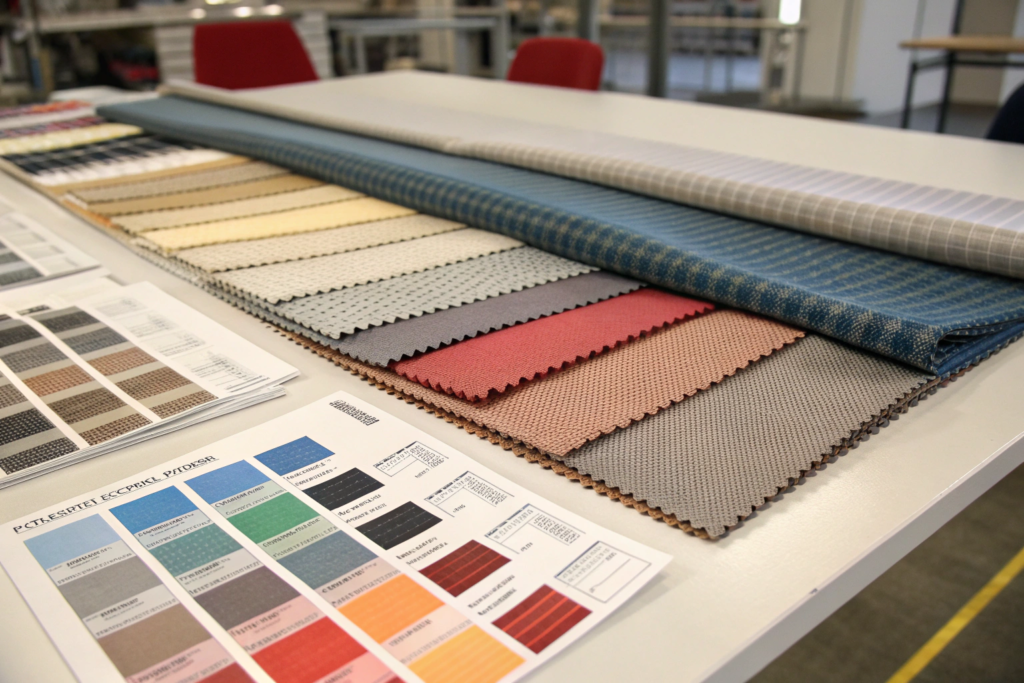
The first and most critical step is the "strike-off" or "lab dip" for solids, and the "print strike-off" for patterns. This isn't just about color. At Shanghai Fumao, we ask for your physical swatch, not just a Pantone number. Why? Because a Pantone number tells us the color, but it doesn't tell us how that color interacts with your specific fabric's texture. We then use our lab to create a strike-off on the exact base fabric we'll use for production. We'll send you a piece that's at least A4 size, so you can feel it, drape it, and check it under different lights (daylight, store light, home light). We did this for a UK-based bridal designer in early 2024. The first strike-off on a mikado silk was too yellow. We tweaked the formula based on her feedback, and the second strike-off was perfect. We approved the bulk order, and because we'd already done the groundwork, the bulk fabric matched the strike-off 100%.
Then there's the "hand feel" or "handle" sample. This is separate from the color. We can produce a small piece of the base fabric without any color, just to confirm the mechanical properties are right. We check the weight (GSM), the drape, and the handle against a reference sample. We might adjust the finishing process two or three times. For a client in Sweden who wanted a specific "dry touch" handle on a recycled polyester, we went through four handle samples, each time adjusting the amount of silicone softener we used, until it was exactly right. This iterative process is vital. It's much cheaper and faster to do this on a small scale than to have 5,000 meters of the wrong fabric sitting in a warehouse.
How can small-batch customization (MOQ 100-200 yards) help you test a new dress design?
I know one of the biggest frustrations for designers and small brands is the high minimum order quantity (MOQ). Many mills won't talk to you unless you're ordering thousands of yards. We operate differently because we've been in your shoes, working with everyone from to major brands. We offer small-batch customization, with MOQs often starting around 100-200 yards per color.
This is a game-changer for testing a new dress design. Instead of committing to a massive order of an untested fabric, you can order just enough for a pilot run. Maybe 50 to 100 dresses. You can test the market, see how the fabric performs in your local climate (Arizona heat vs. Minnesota cold), and gauge customer reaction. We had a client from Australia who wanted to launch a new line of bamboo-cotton sundresses. They ordered 150 yards in three colors. They sold out in two weeks. Based on that success, they placed a bulk order for 3,000 yards, and we already had the fabric recipe dialed in, so production was seamless. This approach de-risks the entire process. It allows for real-world testing without the financial pressure. It also allows for quick pivots. If a certain color or finish isn't selling, you haven't lost a fortune in deadstock.
Why is a QC report with 4-point inspection data non-negotiable for your fabric order?
This goes back to your pain points, Ron: quality control and security. A professional QC report is your insurance policy. We use the 4-point system for inspecting woven fabrics and the 4-point system adapted for knits. This is an industry standard where we deduct points for defects based on their size and severity. A one-yard defect might get 1 point, a two-yard defect 2 points, and so on. The total points are then calculated against the total yards inspected.
For example, for a fine dress fabric, we usually adhere to a standard of less than 20 points per 100 square yards. If a roll exceeds that, we'll flag it and discuss whether to accept it as a "second" or replace it. We don't just tell you the final score; we give you the full report. It details every defect we found—whether it was a slub in the yarn, a needle line in a knit, or a shading variation in the dye lot. This level of detail is crucial. One of our clients, a US-based online retailer, uses these reports to make decisions remotely. They don't need to fly to China to check the fabric; they trust our data because it's verifiable. For a deeper dive into how fabric inspection works, this guide from a third-party inspection company is really helpful. It gives you the knowledge to review our reports with confidence. This transparency builds the trust needed for a long-term partnership.
Conclusion
Sourcing dress fabric with the perfect drape and handle is a blend of art and science. It’s about translating your creative vision into technical specifications—from yarn twist and weave construction to precise finishing processes like decatizing or peach-skin sanding. It’s about moving beyond subjective descriptions and using objective lab data, like drape coefficients and shrinkage tests, to guarantee consistency from a small swatch to a bulk order of thousands of yards. And it’s about partnering with a supplier who has the in-house capabilities and transparent systems, like our QR code traceability and detailed 4-point inspection reports, to give you complete confidence, even when you're thousands of miles away.
At Shanghai Fumao, we’ve spent over two decades building these systems and this expertise in the heart of Keqiao’s textile district. We understand the urgency of your timelines, the critical nature of your quality standards, and the importance of getting the hand feel exactly right for your customers.
If you're ready to stop guessing and start producing dresses that feel and look exactly as you designed them, let's talk. We can handle everything from fabric development and sampling to production, QC, and shipping, all while navigating the complexities of international logistics, including US tariffs. For a detailed discussion on your next collection, please contact our Business Director, Elaine, at elaine@fumaoclothing.com. Let's co-create something exceptional.