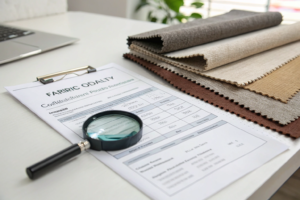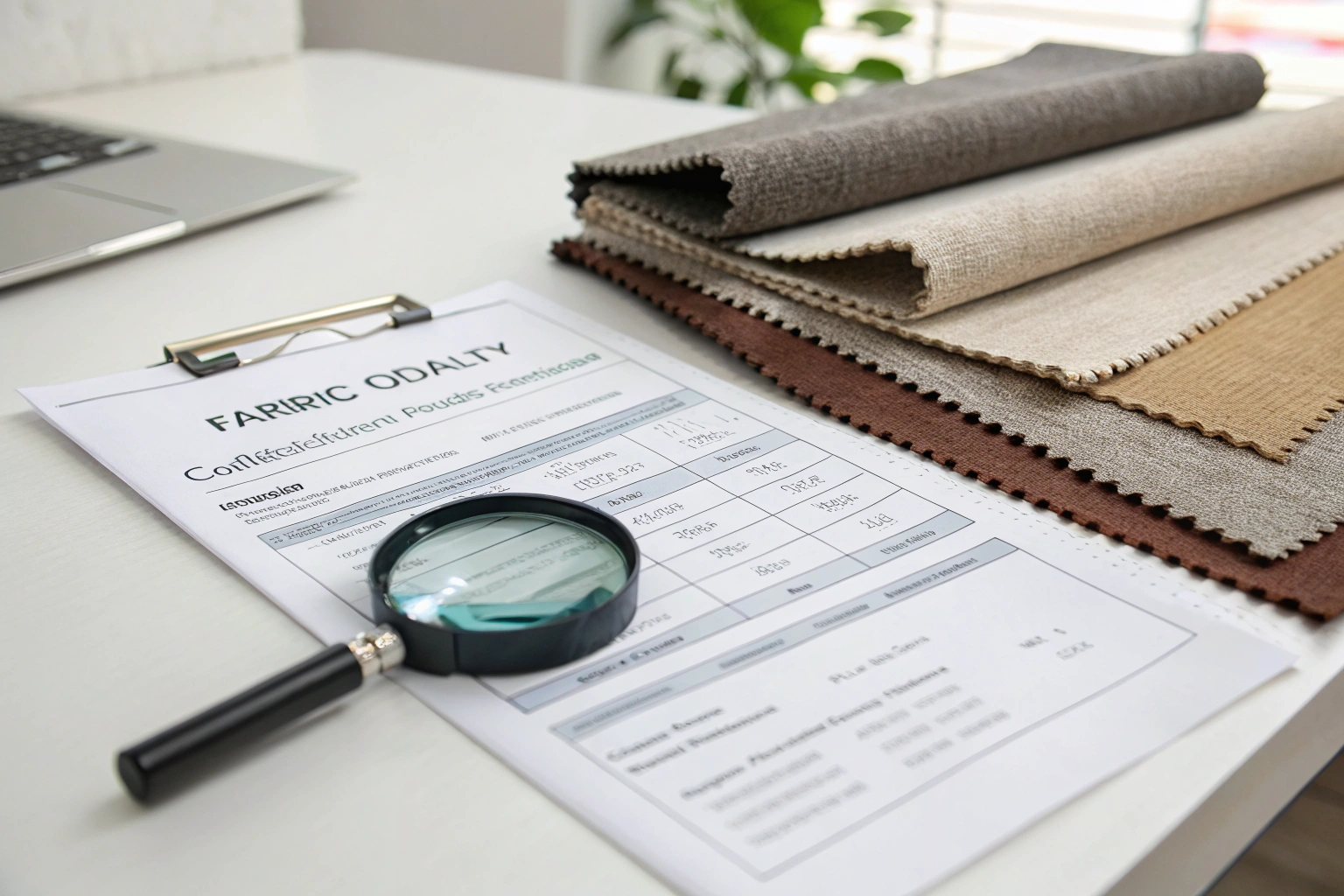
I still remember the day in 2015 when a German client rejected an entire container of fabric because the Certificate of Analysis didn't match our specifications. I was furious—until I actually read the certificate and realized they were right. The shrinkage test results were outside our agreed limits, but none of us had caught it during production. We'd all just filed the certificate without reading it. That $150,000 mistake taught me that a CoA isn't paperwork—it's the final quality check. Now every single one of our staff knows how to read them, and so should you.
A fabric Certificate of Analysis (CoA) is a technical document summarizing laboratory test results that verify fabric properties against specified requirements. It typically includes dimensional stability (shrinkage), color fastness, tensile strength, tear strength, pilling resistance, and fiber composition, with measured values compared to acceptable ranges. Reading it correctly helps you catch problems before they become expensive mistakes.
Let me walk you through exactly what each section means, what numbers matter, and how to spot issues that could affect your garments. A CoA looks intimidating with all its technical terms and numbers, but it's actually straightforward once you understand what you're looking at. And understanding it is essential for protecting your business.
What basic information should every CoA include?
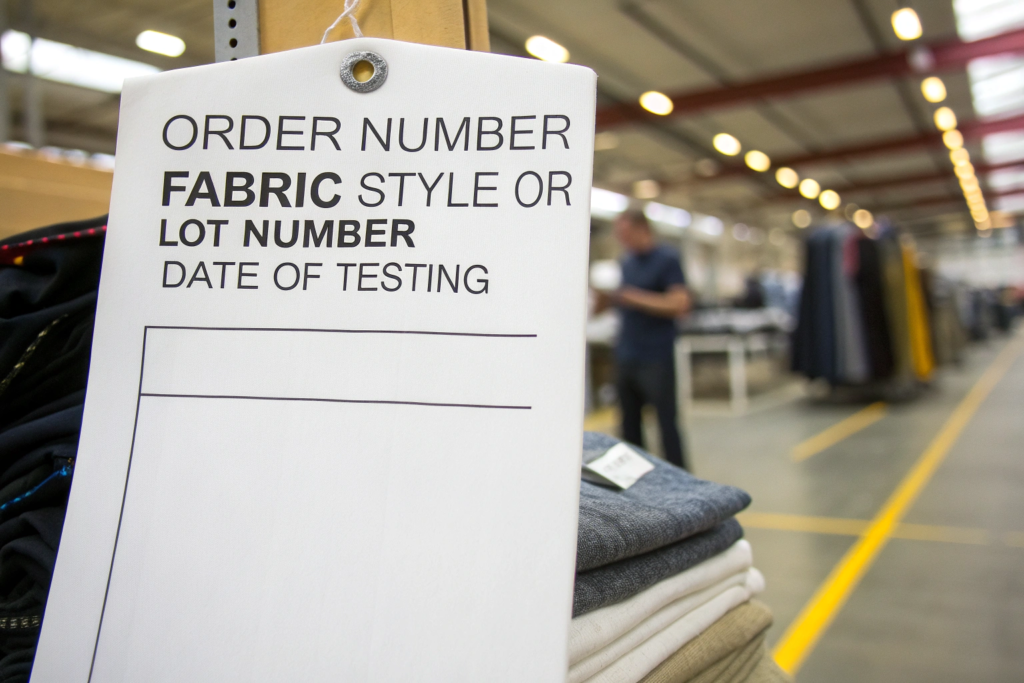
Before diving into test results, verify the basics. A proper CoA identifies exactly which fabric was tested, when, and by whom. Missing or vague information here is a red flag.
The header should include your order number, the fabric style or reference, the lot or batch number, and the date of testing. This ties the document to your specific production, not some generic certificate from another order. If the lot number doesn't match your order, the tests are meaningless.
Who performed the testing and is their lab accredited?
This matters enormously. Tests from a non-accredited lab may be unreliable or even fabricated. Look for ISO/IEC 17025 accreditation, which indicates the lab meets international standards for competence. Our CNAS-accredited lab in Keqiao displays our accreditation number on every CoA.
Some suppliers send "in-house" test reports from their own facilities. These can be useful for production monitoring but shouldn't be your only verification. Independent, accredited testing provides objective confirmation.
In 2019, a UK brand discovered their supplier's "lab reports" were completely fabricated—the numbers were copied from an old CoA and didn't match the actual fabric. The verifying fabric test lab accreditation supplier had no testing capability at all. Always verify the lab exists and is accredited for the tests performed. A quick check prevented a disaster for that brand.
Does the CoA reference your agreed specifications?
A CoA without specifications is just numbers. The document should show both the test results AND the acceptable ranges you agreed with your supplier. This lets you see at a glance whether the fabric passes or fails.
If your specifications aren't listed, request them or add them yourself. Compare every result against your requirements. A passing result means nothing if it's passing the wrong standard.
For a French lingerie brand, we include their specific requirements on every CoA—shrinkage max 3%, color fastness min 4, etc. The matching CoA results to fabric specifications buyer can instantly verify compliance without referencing separate documents. This transparency has built trust over years of partnership.
How do you interpret dimensional stability (shrinkage) results?
Shrinkage is one of the most common reasons for garment returns. If fabric shrinks after the first wash, garments don't fit. Understanding shrinkage test results helps you prevent this.
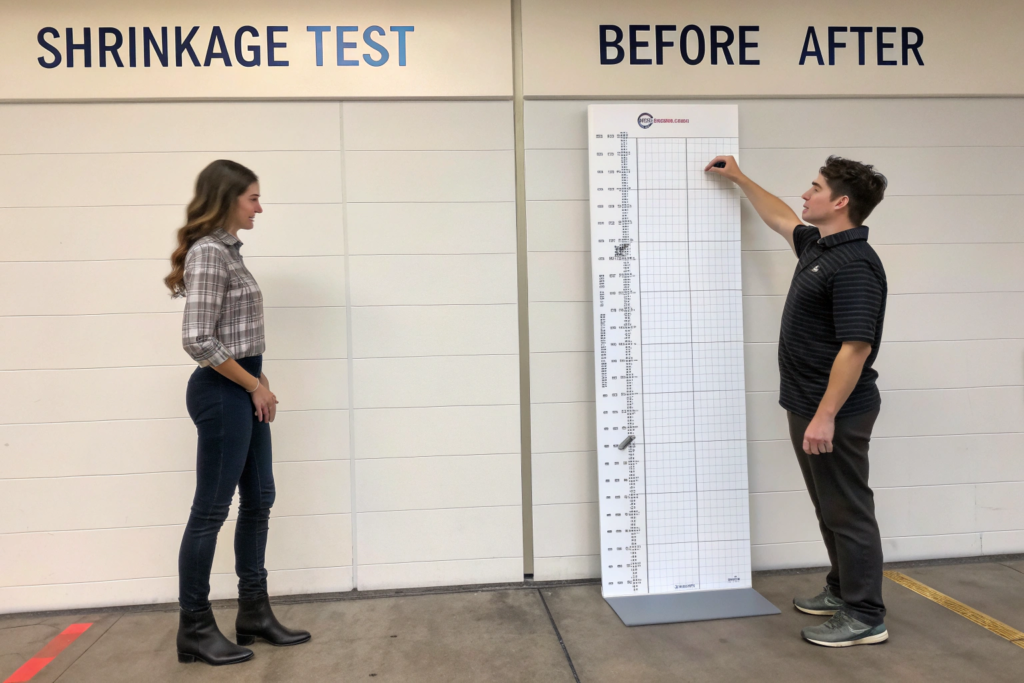
Shrinkage tests measure fabric dimension change after laundering or dry cleaning. Results are shown as percentages—negative numbers mean shrinkage, positive numbers mean growth (stretching). A result of -3% means the fabric got 3% smaller after washing.
What do the warp and weft directions tell you?
Results are always shown separately for warp (lengthwise) and weft (crosswise) directions because fabrics often shrink differently in each direction. A fabric might shrink 2% in warp but 5% in weft, which would cause garments to distort.
Acceptable shrinkage depends on your end use. For most apparel, 3% or less in both directions is standard. For high-end garments or those that won't be washed (like outerwear), tighter tolerances may apply. For garments that will be washed frequently, higher shrinkage might be acceptable if accounted for in pattern making.
The test method matters too. AATCC 135 (for home laundering) and ISO 6330 are common. Results may differ between methods, so ensure the test matches how your customers will actually care for the garment.
In 2020, a US basics brand received fabric with shrinkage results showing -2.5% warp, -2.8% weft—within their 3% tolerance. But their garment returns spiked. We discovered the interpreting fabric shrinkage test results test used a gentle cycle, while customers were washing on hot. We retested using hotter settings and found -4.5% shrinkage. The lesson: ensure test conditions match real-world use.
What about shrinkage after multiple washes?
Single-wash tests don't tell the whole story. Some fabrics shrink progressively over multiple washes. For garments expected to last, request testing after 3 or 5 wash cycles. This reveals cumulative shrinkage that single-wash tests miss.
For a Canadian workwear brand, we test shrinkage after 5 industrial washes because their uniforms go through commercial laundering. The multiple wash shrinkage testing for fabrics initial 3% after one wash becomes 5% after five—critical information for their pattern makers. They build this into their sizing, and their uniforms fit properly throughout garment life.
What do color fastness numbers actually mean?
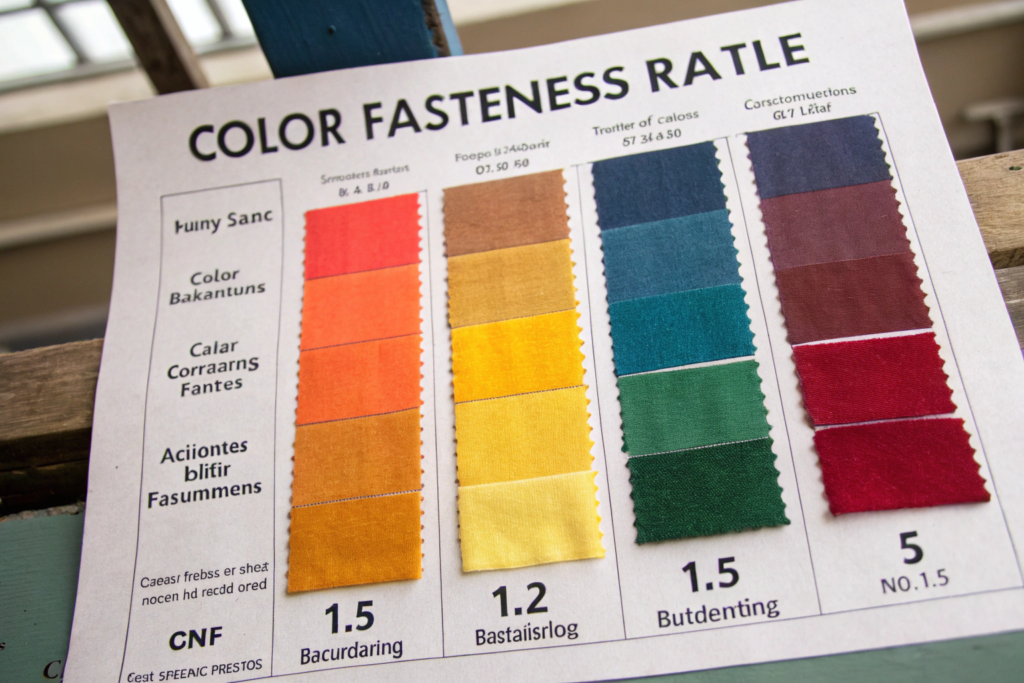
Color fastness tests measure how well fabric retains color when exposed to various stresses—washing, light, rubbing, perspiration. Results are typically reported on a 1-5 scale, with 5 being best. Understanding what these numbers mean in practice helps you set appropriate requirements.
A rating of 5 means no color change or transfer visible. Rating 4 means slight change visible under close inspection. Rating 3 means noticeable change. Rating 2 means significant change. Rating 1 means severe change. For most apparel, ratings of 4 or higher are expected for critical properties.
How do you interpret color fastness to washing?
This test (AATCC 61 or ISO 105-C06) measures both color loss (fading) and staining (color transfer to other fabrics). Results show two numbers—one for color change, one for staining. A result of 4/5 means color change rated 4, staining rated 5.
Staining matters for garments that will be washed with other items. A fabric that bleeds onto adjacent garments causes customer complaints even if it doesn't fade much itself.
For a Japanese brand selling white blouses with colored trim, staining resistance is critical. Their requirement is staining rating 5 minimum—no detectable transfer. We color fastness to washing test interpretation formulate dyes and finishes specifically to achieve this, and every batch is tested before shipment.
What about light fastness for outdoor or display applications?
Light fastness (AATCC 16 or ISO 105-B02) measures resistance to fading from sunlight or artificial light. This matters for outdoor apparel, swimwear, and anything that might be displayed in sunny windows. The scale is different—1 to 8, with 8 being best.
For most apparel, rating 4-5 is adequate. For outdoor gear or products that will face extended sun exposure, rating 6 or higher may be needed. The test can be accelerated (xenon arc) or natural (Florida exposure), with accelerated more common for production testing.
A Australian swimwear brand learned this lesson when their bright prints faded after one season in shop windows. We now specify light fastness minimum 6 for their light fastness requirements for swimwear fabrics fabrics, and test every color before production. The prints still look vibrant at season end, and their retail partners appreciate the quality.
How do you verify physical properties like strength and tear?
Physical property tests ensure fabric can withstand the stresses of garment construction and wear. These numbers matter for durability and performance, especially in activewear, workwear, and other demanding applications.
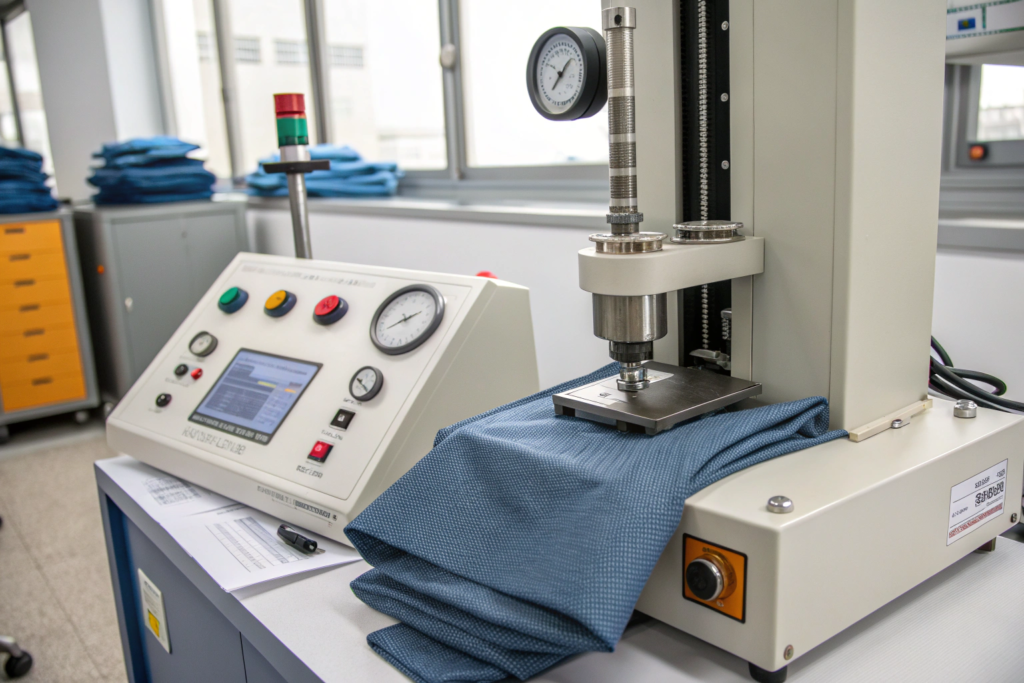
Tensile strength (ASTM D5034 or ISO 13934-1) measures how much force is needed to break the fabric, reported in pounds or Newtons. Higher numbers mean stronger fabric. For most apparel, 50-100 lbs (220-440 N) is typical. For workwear or outdoor gear, 150+ lbs may be required.
What's the difference between tensile and tear strength?
Tear strength (ASTM D2261 or ISO 13937) measures resistance to tearing once a cut is started. This matters for seams and stress points. A fabric might have high tensile strength but tear easily if the weave allows propagation.
Results are reported in pounds or Newtons of force needed to continue a tear. For most apparel, 5-10 lbs (22-44 N) is adequate. For workwear, 15+ lbs may be needed. The relationship between tensile and tear strength isn't linear—some constructions optimize one at the expense of the other.
For a German outdoor brand in 2021, we balanced tensile and tear strength through yarn selection and weave construction. Their requirement was minimum 200 lbs tensile AND minimum 15 lbs tear—challenging combination. Our tensile vs tear strength in fabric testing development achieved 220 lbs tensile and 16 lbs tear, passing their spec and performing beautifully in field tests.
How do you interpret abrasion resistance results?
Abrasion resistance (Martindale or Taber) measures how many cycles fabric withstands before showing wear. Higher numbers mean better durability. Results can be reported as cycles to failure or cycles to specific wear level.
For apparel, 10,000-20,000 cycles is typical. For upholstery, 30,000+ may be required. For workwear, requirements vary by application. The test method affects results—Martindale (AATCC 93 or ISO 12947) is common for apparel, Taber (ASTM D3884) for heavier fabrics.
A US uniform supplier specifies 25,000 cycles minimum Martindale for their fabrics. In 2022, a batch tested at 22,000—below spec. We rejected the fabric before shipment, saving them from premature wear complaints. The abrasion resistance testing standards and interpretation failed batch was reworked with different finishing, retested at 28,000, and shipped successfully.
What fiber composition information should you verify?
Fiber composition seems straightforward, but discrepancies happen. A CoA should confirm that the fabric contains exactly what you ordered, within accepted tolerances.
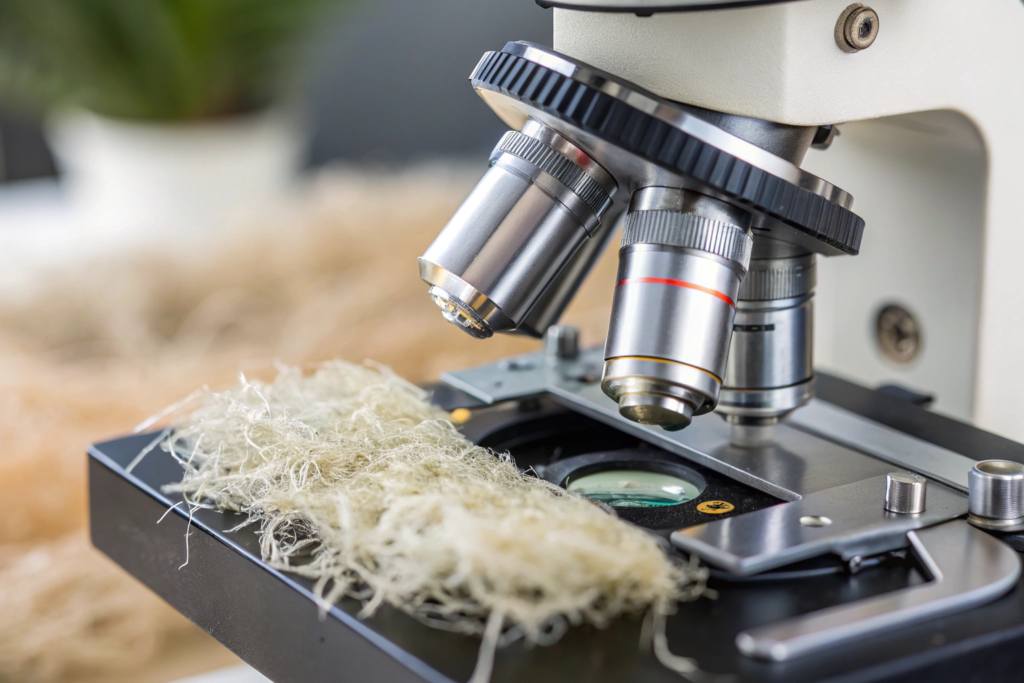
Composition is reported as percentages by weight—65% polyester, 35% cotton, for example. Testing methods include chemical dissolution (dissolving one fiber to measure remaining) or microscopic analysis. Results should match your order specifications within typical tolerances (usually ±3%).
What tolerances are acceptable for fiber composition?
Industry standards typically allow ±3% for single fibers, ±5% for blends. A 65/35 blend testing at 63/37 is usually acceptable. But significant deviations affect performance—too little cotton might compromise hand feel; too little polyester might reduce durability.
For claims like "organic cotton" or "recycled polyester," the CoA should reference certification documents. The fiber composition test confirms the fiber type but not its sustainability claims. Separate certification (GOTS, GRS, etc.) is needed for those.
In 2020, a UK brand discovered their "100% linen" fabric actually contained 15% cotton. The CoA from their supplier hadn't included fiber composition testing—it was just assumed. We now fiber composition testing and tolerances for fabrics recommend fiber testing for every batch, even from trusted sources. That brand now requires it from all suppliers.
How do you verify specialty fiber claims?
For modal, Tencel, bamboo, and other specialty fibers, simple composition testing may not distinguish between types. A fabric labeled "bamboo" might actually be standard viscose from bamboo sources—technically accurate but potentially misleading.
Advanced testing like infrared spectroscopy can identify specific fiber types. If you're paying premium for Lenzing Tencel or certified organic cotton, ensure the CoA includes this verification or request additional documentation.
A Swedish brand using our TENCEL™ Modal requires CoAs showing fiber identification confirming Lenzing origin, not just "modal" generic. We provide both composition analysis and verifying specialty fiber claims in fabric CoA Lenzing certificate of origin for every batch. This documentation supports their marketing claims and satisfies customer expectations.
Conclusion
A fabric Certificate of Analysis is your final quality check before fabric becomes garments. Learning to read it properly protects you from costly mistakes, ensures your products perform as expected, and builds trust with your customers. Every number tells a story about how your fabric will behave in cutting, sewing, washing, and wearing.
At Shanghai Fumao, we take CoA seriously. Our CNAS-accredited lab tests every production batch against your specifications. We provide clear, complete documentation with every shipment. And we train our team to flag issues before they become your problems. When you receive a CoA from us, you can trust that the numbers are accurate and the fabric has been verified.
If you're unsure about interpreting a CoA or want to establish specifications for your next collection, reach out to our Business Director, Elaine. She can walk you through our testing capabilities, explain what numbers matter for your applications, and help you develop specifications that balance quality and cost. Whether you're a seasoned buyer or new to fabric sourcing, we're here to help you get it right. Contact Elaine at [elaine@fumaoclothing.com]() to start a conversation about quality verification for your fabrics.