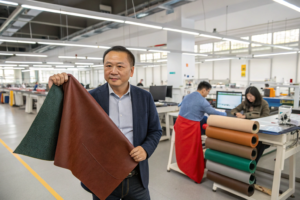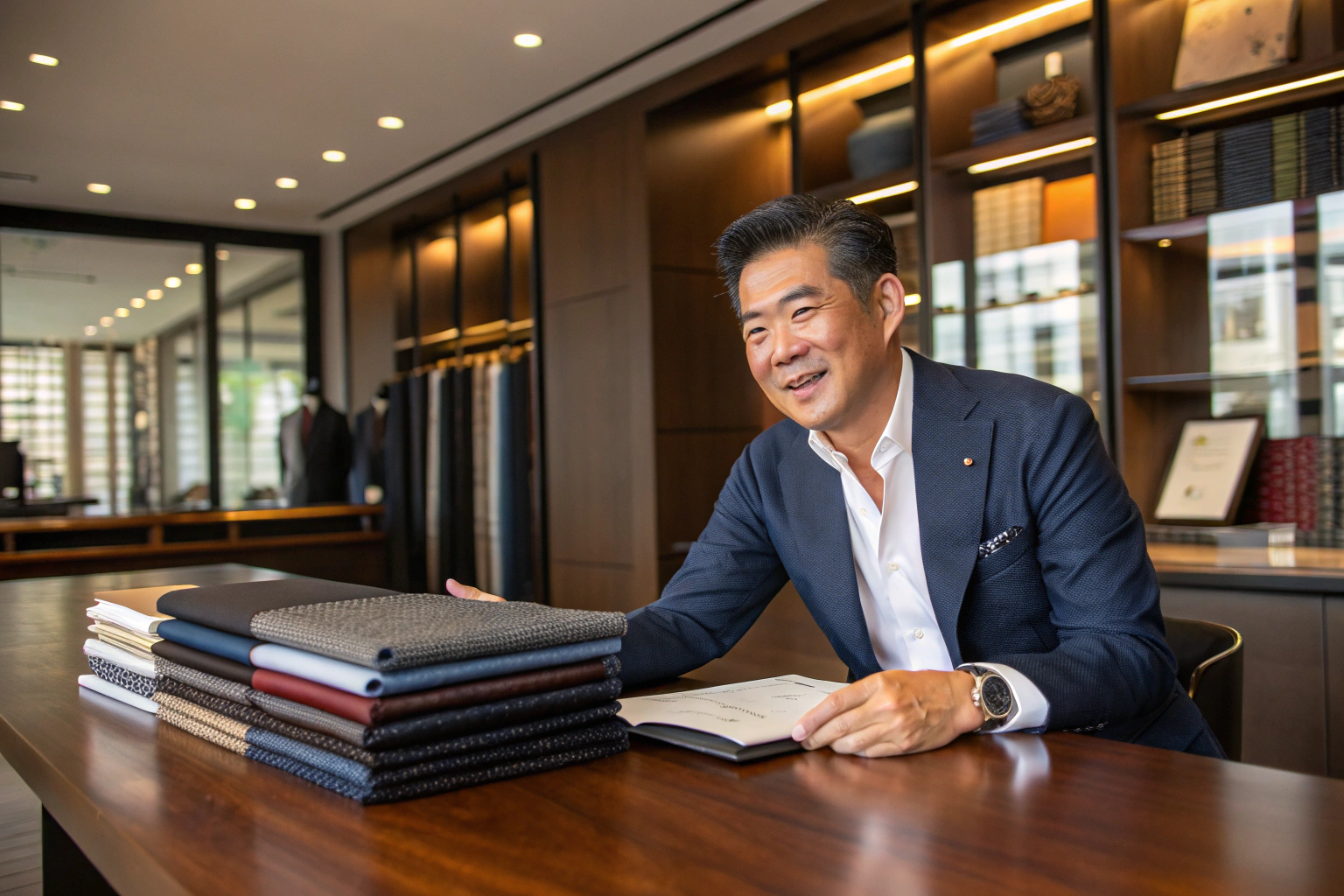
A buyer from a Parisian luxury brand walked into my office in March 2023 with a stack of competitor quotes and a determined expression. She'd been sourcing from Italy for years but wanted to explore China for cost savings. She laid out five quotes on my desk, all for similar fabrics—a heavy organic cotton twill, a recycled polyester satin, and a Tencel blend. The prices ranged from $4.20 to $7.80 per yard. She looked at me and said, "I know you're going to tell me your price is the best. But I need to understand why these prices are so different. What am I actually paying for?"
That question changed how I think about negotiation. She wasn't trying to beat me down to $3.50. She was trying to understand value. And once she understood—once I walked her through yarn quality, certification costs, sampling speed, and MOQ flexibility—she stopped comparing prices and started comparing partners. We've been shipping to her for two years now, and she's never asked for a discount. She asks for value.
Negotiating price for high-end customizable fabric isn't like buying commodity grey cloth. You're not negotiating for a roll of basic polyester. You're negotiating for development time, for quality consistency, for certification paperwork, for the ability to order 300 yards instead of 3,000. And if you negotiate the wrong way—if you push too hard on price—you'll get the cheap version of all those things, and your brand will suffer.
I've been on both sides of this table for over 20 years. I've watched buyers destroy relationships by squeezing suppliers for the last penny. I've also watched smart buyers build partnerships that save them money year after year because the supplier trusts them and gives them access to new developments, better payment terms, and faster sampling. The difference isn't about who's tougher. It's about who understands what actually drives cost.
Let me walk you through how to negotiate price for high-end customizable fabric in a way that gets you the best value—not just the lowest number on an invoice.
What Factors Actually Drive the Cost of Premium Custom Fabrics?
A New York-based designer called me last year frustrated that her "simple" custom development quote was three times higher than she expected. She said, "It's just a cotton-lycra jersey. How hard can it be?" I had to explain that her "simple" fabric required organic cotton certification, low-impact reactive dyes, a specific hand feel that required custom knitting tension, and a Pantone match that needed three rounds of lab dips. Nothing about it was simple.
Premium customizable fabric costs more for specific reasons. Understanding these reasons helps you negotiate intelligently—you know where costs can flex and where they can't.
Yarn quality and sourcing. The yarn is the foundation. A cheap yarn uses shorter fibers, more waste, and less twist. It pills, breaks, and feels rough. Premium yarn starts with longer staple fibers (35mm+ for cotton), higher thread count, and consistent tension. If you're specifying organic, recycled, or specialty fibers, the raw material cost can be 2-3x higher. Organic cotton yarn costs about $3.50-4.50/kg vs. $2.20-2.80 for conventional. That difference flows through to your fabric price.
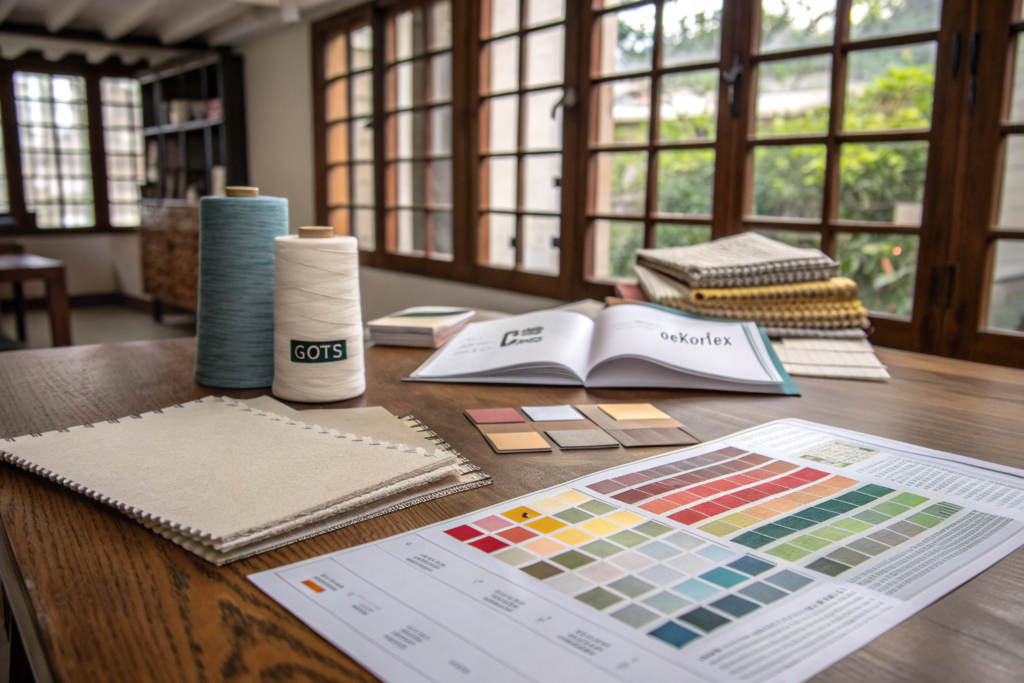
Certification costs. If you want GOTS, GRS, OEKO-TEX, or any other certification, that adds cost. The certification bodies charge for every step—fiber certification, spinning certification, fabric certification. We pay annual fees, per-batch testing fees, and audit fees. For a GOTS-certified fabric, these costs add $0.30-0.60 per yard depending on volume. If you negotiate too hard, the supplier might "forget" to maintain certifications, and your fabric arrives without the paperwork you need.
Development and sampling. Custom fabric isn't off-the-shelf. We have to engineer it. That means R&D time, sample yardage, lab testing, and often multiple iterations. A complex development with 3-4 sample rounds can cost us $2,000-5,000 before we sell a single yard of production. We recover that in the fabric price. If you order 500 yards, you pay more per yard for development. If you order 5,000 yards, the development cost spreads out.
Dyeing and finishing complexity. Standard colors on standard fabrics run efficiently. Custom Pantone matches? Specialty finishes? That requires machine cleaning, slower runs, and more quality checks. A reactive dye run for a standard black might cost $0.80/yard in processing. A custom fluorescent color with UV protection might cost $2.50/yard because of the specialty chemicals and slower line speeds.
MOQ flexibility. This is the biggest cost driver for small brands. Mills want to run 5,000 yards of one color because it's efficient. When you ask for 500 yards, we have to stop the machine, clean it, run your small batch, clean again, and restart. The per-yard cost is higher. We absorb some of that because we want to work with growing brands, but it has to be reflected in the price.
How do yarn quality and fiber origin affect the final price?
Let me give you a real breakdown from our costing sheets. For a premium 20/1 combed cotton jersey (the workhorse of luxury basics):
| Yarn Type | Yarn Cost/kg | Fabric Weight gsm | Yarn Cost/yd | % of Total Fabric Cost |
|---|---|---|---|---|
| Standard carded cotton | $2.40 | 180 | $0.43 | 25% |
| Combed cotton | $3.20 | 180 | $0.58 | 32% |
| Combed organic cotton | $4.10 | 180 | $0.74 | 38% |
| Combed organic + GOTS certified | $4.80 | 180 | $0.86 | 42% |
The yarn alone can swing the fabric cost by $0.43 per yard. That's before dyeing, finishing, or any profit.
Fiber origin matters too. Egyptian cotton isn't just a marketing term—the extra-long staple (36mm+) creates a stronger, smoother yarn. But it costs more. Pima cotton from the US is similar quality but different supply chain costs. We source from multiple origins depending on client needs and budget.
For recycled fibers, the cost depends on the source. Post-industrial recycled polyester (factory waste) is cheaper and more consistent. Post-consumer recycled (plastic bottles) requires more processing and has more variability. If you want GRS-certified post-consumer recycled, expect to pay 20-30% more than virgin polyester.
A client from a sustainable activewear brand insisted on "100% post-consumer recycled polyester" for their entire line. We worked with them to test post-industrial recycled for their black basics, reserving the more expensive post-consumer for their signature colors where the story mattered. They saved 18% on 70% of their volume without compromising their brand message.
What certification costs should you expect to absorb?
Certifications aren't free, and someone has to pay. Here's what they actually cost:
| Certification | Annual Fee | Testing Cost/Batch | Impact on Fabric Price |
|---|---|---|---|
| OEKO-TEX Standard 100 | $1,500-3,000 | $500-800 per fabric | $0.10-0.20/yd |
| GOTS (fabric stage) | $2,000-4,000 | $800-1,200 per audit | $0.20-0.40/yd |
| GRS (recycled content) | $1,500-2,500 | $400-600 per test | $0.15-0.30/yd |
| Organic Content Standard (OCS) | $1,000-2,000 | $300-500 per test | $0.10-0.20/yd |
| BCI (Better Cotton) | $500-1,000 | Minimal | $0.05-0.10/yd |
These add up. If you want a GOTS-certified organic cotton fabric that's also OEKO-TEX certified, you're looking at $0.30-0.60/yd in certification costs alone. That's before the higher raw material cost.
But here's the negotiation point: if you commit to volume, these costs spread out. A client ordering 20,000 yards per year pays pennies per yard for certifications. A client ordering 500 yards pays dollars per yard. We often suggest that small brands start with OEKO-TEX (which certifies the final fabric is safe) rather than full GOTS (which certifies the entire supply chain). It's 60% cheaper and meets most consumer expectations for "safe" fabrics.
How Can You Leverage Sample Orders to Build Pricing Leverage?
A buyer from a London-based contemporary brand came to me in 2022 with a problem. She needed six different custom fabrics for her next collection, but her budget only allowed for production of two. She asked if I could develop all six and then she'd "see which ones work" and order production later. I had to explain that each development costs us time and money—yarn sourcing, lab dips, sample yardage, testing. I couldn't fund six developments for the hope of one order.
The sampling process is where relationships are built and pricing leverage is earned. How you handle samples tells us what kind of partner you'll be.
Paid samples vs. free samples. Serious buyers pay for samples. Not because we can't afford to give them away—we can—but because payment signals commitment. When a buyer pays $50-100 for sample yardage, we know they're serious. When they ask for free samples of five different fabrics, we know they're shopping around. Guess who gets faster service and better pricing later? The serious buyer.
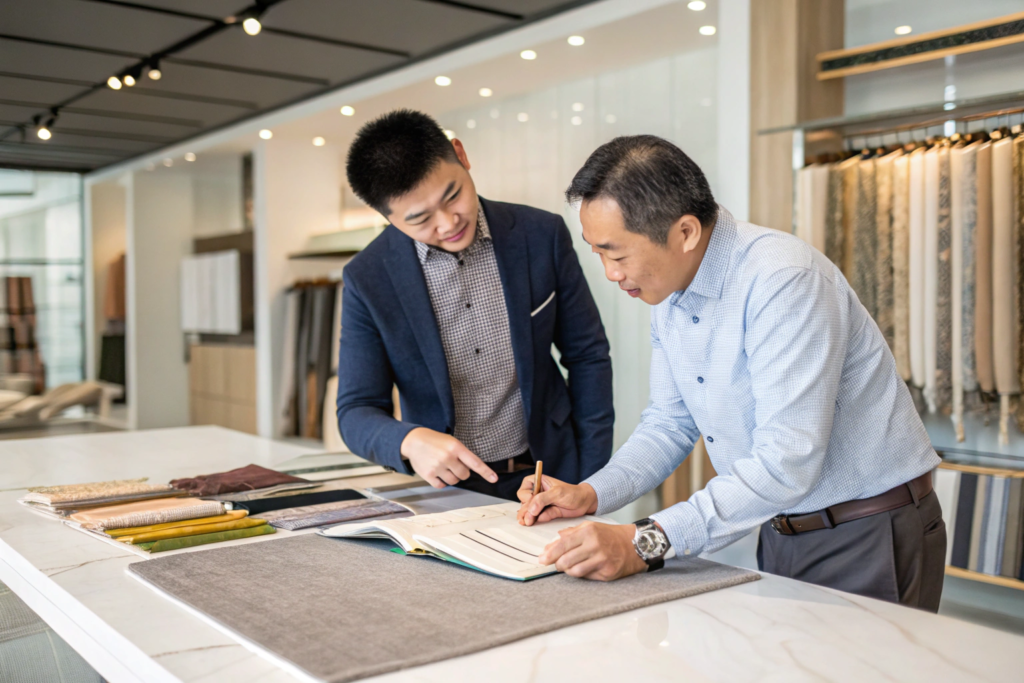
Sample volume matters. A 1-meter sample tells us you're curious. A 5-meter sample for a fitting garment tells us you're committed. A 20-meter sample for a small test run tells us you're ready to scale. Each level of sampling builds trust and gives us confidence to offer better terms.
Communication during sampling. When you give feedback—"this color is slightly too red, can we adjust 5%?"—you're teaching us what you need. When you approve a sample quickly, you're speeding up our process. When you ghost us for three weeks then ask for a rush, you're creating stress. The buyers who communicate clearly and promptly get better pricing because they're easier to work with.
We track every client's sampling history. When you come back for production, we know whether you were easy or difficult. The easy clients get our best price. The difficult clients get a cushion for the headaches we know are coming.
How many sample rounds are reasonable before production?
This is a common tension point. You want it perfect; we want it efficient. Here's what's reasonable:
For standard fabric with custom color: 2 rounds is typical. Round 1 gets you 90% there. Round 2 fine-tunes. If you need a third round, there's usually a communication gap or an unrealistic expectation.
For new fabric development (custom weight, custom blend): 3-4 rounds is normal. We have to engineer the yarn, adjust knitting tensions, test dye formulas. Each round teaches us something. We expect to invest in this learning, and we expect you to understand that each round adds cost.
For complex technical fabrics (waterproof coatings, FR treatments): 4-6 rounds isn't unusual. The chemistry is complicated, and small adjustments have big effects.
The key is consolidating feedback. We had a client who sent 12 emails over 3 weeks, each with tiny adjustments—"make it 2% bluer," "now 1% greener," "actually the first one was better." That's not reasonable. Good clients consolidate feedback into one clear brief per round.
If you're burning through sample rounds, ask yourself: is the problem technical (the fabric can't do what you want) or is it communication (you're not expressing clearly)? Technical problems require more rounds. Communication problems require better processes.
What information should you provide to speed up sampling?
Speed in sampling = lower development cost = better production pricing. Here's what helps us move fast:
Physical color standards. A 5cm x 5cm swatch of your target color, under standard lighting, is worth a thousand words. Digital colors shift on screens. We match to physical standards.
Reference fabrics. If you want a specific hand feel, send us a sample. "Like this but heavier" tells us more than "soft with drape."
Clear tolerances. "Match this color within Delta E 1.0" is precise. "Make it look good" is subjective and leads to rounds.
End-use information. Tell us what you're making. A dress needs different drape than a jacket. A bag needs different tear strength than a shirt. When we understand end use, we can suggest adjustments you might not have considered.
Timeline expectations. If you need samples in 3 days, we can often do it, but it costs more because we interrupt other work. If you need them in 2 weeks, we can schedule efficiently and keep costs down.
A client from a Milanese luxury brand sends us a complete tech pack with every sample request: color standards in both physical and digital Lab values, reference fabric swatches, end-use photos, and a timeline with buffer built in. Their samples are right 90% of the time in the first round. They pay standard prices but get premium service because they make our job easy.
What Volume Commitments Unlock the Best Pricing Tiers?
A buyer from a German outdoor brand once asked me for our "best price" on a custom recycled nylon fabric. I quoted $6.80/yd for 1,000 yards. She asked about 5,000 yards—$5.90. 10,000 yards—$5.40. 20,000 yards—$4.95. She looked shocked. "The price drops 27% just for ordering more?" Yes. That's how volume works.
Volume commitments are the single biggest lever you have in price negotiation. But you need to understand why volume matters so you can structure commitments that benefit both sides.
Economies of scale in production. Setting up a knitting machine takes 2-3 hours. Whether we run 500 yards or 5,000 yards, the setup cost is the same. With 5,000 yards, that cost spreads over 10x more fabric. Dyeing works the same way—cleaning the machine, mixing the dye, running the first samples. The per-yard cost drops dramatically as volume increases.
Yarn purchasing power. When we buy yarn for a 500-yard order, we're buying from a distributor at retail-like prices. When we buy for a 20,000-yard order, we're buying direct from the spinner at contract prices. The difference can be 15-25%. We pass that on to you.
Production scheduling efficiency. Small orders interrupt our flow. We have to stop a long run, clean machines, run your small batch, clean again, and restart. That downtime costs money. Large orders let us schedule efficiently, keeping machines running and costs down.
The key is committing to annual volume, not just per-order volume. A client who orders 2,000 yards every quarter is more valuable than a client who orders 8,000 yards once and disappears. The quarterly client lets us plan production, manage inventory, and build efficiency. The one-time client requires the same setup but provides no ongoing benefit.
What's the typical price break at different quantity thresholds?
This varies by fabric complexity, but here's a representative example for a mid-weight custom organic cotton twill:
| Quantity | Price per Yard | Price Index | Notes |
|---|---|---|---|
| 500 yards | $8.50 | 100% | Development cost heavily weighted |
| 1,000 yards | $7.20 | 85% | Development spreads |
| 2,500 yards | $6.40 | 75% | Yarn buying improves |
| 5,000 yards | $5.80 | 68% | Production efficiency kicks in |
| 10,000 yards | $5.20 | 61% | Container load, full efficiency |
| 20,000 yards | $4.75 | 56% | Annual contract, dedicated yarn sourcing |
The biggest drop is between 500 and 2,500 yards—that's where we move from "small batch" to "production run" pricing. The next big drop is at 10,000 yards, which is typically a full 40-foot container.
For a client from a Canadian activewear brand, we structured their ordering as 3,000 yards every 4 months instead of 1,000 yards monthly. The larger less-frequent orders let us schedule efficiently and reduced their per-yard cost by 14%. They saved $18,000 annually just by changing order timing.
How can you combine multiple fabrics to reach higher volume tiers?
This is the smartest move for brands with diverse lines. Instead of ordering 800 yards of five different fabrics, order 4,000 yards total but across fewer styles, or consolidate production timing.
Same base, different colors. If your fabrics use the same yarn and construction, we can knit all the greige at once, then dye to different colors later. This gives you volume pricing on the knitting while maintaining color flexibility. We do this for a Japanese brand that runs 6 colors per season—they commit to 12,000 yards of greige, then dye 2,000 yards per color. They get 12,000-yard pricing on 2,000-yard color runs.
Same fiber, different weights. If you use organic cotton in both jersey and fleece, we can buy yarn for both at once. The yarn is the same, just knitted differently. Buying 10,000kg of organic cotton yarn gets better pricing than buying 5,000kg for jersey and 5,000kg for fleece separately.
Same supplier, multiple categories. If you source both knits and wovens from us, we can combine volume across categories. The total spend matters more than the specific fabric. A client from a US lifestyle brand sources both their cotton jersey and their nylon outerwear fabric from us. Their total annual volume hits 25,000 yards, which qualifies them for our top tier pricing on everything, even though no single fabric exceeds 8,000 yards.
The negotiation principle: think in terms of total annual spend, not per-fabric volume. Show us your roadmap—what you're planning for the next 12-18 months. If we see growth potential, we'll price aggressively to earn your long-term business.
When Should You Walk Away from a Price Negotiation?
A buyer from a Los Angeles streetwear brand spent three months negotiating a price on a custom fleece. We went back and forth, adjusted specifications, reduced certification requirements, optimized the construction. We got to $5.20/yd—already below our normal margin. He asked for $4.95. I said no. He asked again. I said no. He walked away and found another supplier at $4.90. Six months later, he called me back. The fabric had pilled after three washes. The supplier disappeared. He needed 5,000 yards urgently and was willing to pay our original price. We couldn't help—we were booked solid.
Knowing when to walk away—or when to accept that the other side is walking away—is a critical negotiation skill. Not every deal is worth doing. Not every customer is worth keeping.
Here's when price becomes the wrong conversation:
When quality is non-negotiable. If you're pushing for a price that forces us to use cheaper yarn, skip testing, or reduce quality control, the fabric will fail. I'd rather lose the order than ship fabric that damages your brand and our reputation. We've walked away from deals that would have required cutting corners. Every time, the client came back later with a problem from the cheaper supplier.
When development costs are unrecovered. If we've spent $5,000 developing your custom fabric, that cost has to be recovered somewhere. If you order 500 yards at a price that doesn't cover development, we lose money. Sometimes we absorb development as an investment in a long-term relationship. But if you're not committing to volume, development has to be priced in.
When the relationship is unbalanced. If you're demanding faster sampling, tighter tolerances, and extra certifications while pushing for rock-bottom prices, the math doesn't work. We have to prioritize clients who value what we offer. If you're treating us as a commodity supplier, you'll get commodity service—and commodity service doesn't deliver premium fabric.
A client from a French luxury house once pushed us for a 15% discount on their fifth order. We'd already given them excellent pricing based on their volume. The discount would have put us below cost after factoring in their complex certification requirements. I explained the math, showed them our cost breakdown, and told them we couldn't do it. They accepted and placed the order at the existing price. They respected that we knew our numbers.
What signals indicate a supplier is cutting corners on price?
When a price seems too good to be true, it usually is. Here are red flags I've seen from suppliers who compete on price alone:
"We can match any price." No ethical supplier can match every price because costs are real. If someone promises to beat any quote, they're planning to substitute materials later.
Vague specifications. The quote says "cotton fleece" but doesn't specify yarn count, construction, or weight. When you press for details, they're evasive. That fabric will be whatever cheapest thing they can find when your order runs.
No certifications mentioned. If you're asking for organic or recycled and they quote a price 30% below others, they're not planning to provide certified material. The paperwork will be "lost" or "delayed."
Rush, rush, rush. A supplier who pushes you to decide today "because prices are going up" is often hiding that they have spare capacity they need to fill. Real suppliers can wait for you to make a thoughtful decision.
No samples, or samples that don't match. If they won't send samples, or if the samples are beautiful but the production fabric is different, run. The samples were probably specially made or even sourced from another mill.
We had a client who came to us after a "too good to be true" deal. They'd ordered 10,000 yards of what was supposed to be 100% organic cotton. Lab testing showed 40% polyester and pesticide residues. The supplier had disappeared. They lost $45,000 and six months.
How do you factor in non-price value like payment terms and MOQ flexibility?
Price is important, but it's not everything. When we negotiate with clients, we look at the whole package:
Payment terms. A client who pays 50% deposit with order and 50% before shipment costs us nothing in financing. A client who wants 30% deposit and 70% on 60-day terms costs us interest and carries risk. We can offer better prices to clients who pay faster.
MOQ flexibility. If you're willing to commit to annual volume, we can be flexible on per-color MOQs. That's value—you get variety without paying small-batch premiums. We price that flexibility into the annual agreement.
Lead time flexibility. If you need rush production every time, that costs us overtime and disrupts scheduling. If you plan ahead and give us 8-10 weeks, we can fit you into efficient production runs. That's worth a price break.
Stability and predictability. Clients who order regularly, pay on time, and communicate clearly are cheaper to serve. They don't require constant quoting, chasing, or problem-solving. We reflect that in pricing.
A client from a Swedish sustainable brand negotiated a 5% price reduction by agreeing to 50% deposit upfront, 8-week lead times, and annual volume commitments. They saved money, and we got predictability. Everyone won.
How Can Long-Term Partnerships Improve Pricing Over Time?
A client from a Danish design house celebrated their 10th anniversary with us last year. They sent a video of their team holding garments made from fabrics we'd developed together over a decade. The first order was 300 meters of basic organic cotton. Now they order 50,000 meters annually across 15 different fabrics. Their per-yard cost today is lower than it was 10 years ago, despite inflation, because we've grown together.
Long-term partnerships create value that transactional relationships can't match. And that value translates into better pricing over time.
Learning curve efficiency. The longer we work together, the better we understand your needs. We know your color preferences, your quality tolerances, your seasonal patterns. We make fewer mistakes, require fewer sample rounds, and produce faster. That efficiency saves money, and we share it with you.
Capacity planning. When we know your annual volume, we can reserve production capacity, buy yarn in bulk, and schedule efficiently. We pass these savings on. A client who commits to 12 months of orders gets better pricing than a client who orders month-to-month.
Priority access. When new yarns or finishes become available, we offer them first to long-term partners. Sometimes these innovations save money or improve quality. You benefit before the market catches on.
Problem-solving investment. When a long-term client has a problem, we invest resources to solve it. We'll do extra R&D, run extra tests, spend time on the phone. That investment doesn't show up on an invoice, but it saves you money by preventing failures.
A client from a US outdoor brand had a recurring issue with color consistency across batches of their signature green. After three years, we finally solved it by developing a custom pigment formula just for them. We don't charge extra for that formula because they're a long-term partner. The color is now perfect every time, saving them returns and reputation damage.
What loyalty benefits can you negotiate after multiple orders?
After 2-3 successful orders, you have leverage to ask for benefits beyond price:
Extended payment terms. We might offer 60-day terms instead of 30, improving your cash flow. We do this for clients who've proven they pay on time.
Reduced deposits. Instead of 50% down, maybe 30%. This frees up your working capital.
Inventory holding. We'll hold your finished fabric for 30-60 days at no charge, so you can order in bulk but take delivery in installments. This lets you hit volume pricing without warehouse costs.
Priority sampling. Your sample requests jump the queue. During peak seasons, this can save weeks.
First look at new developments. We'll show you new fabrics before we launch them publicly. You get early access to innovations that might differentiate your brand.
Dedicated account manager. You get a single point of contact who knows your history, your preferences, and your challenges. No repeating yourself to new people.
A client from an Australian swimwear brand asked after their third year if we could hold their seasonal fabric inventory and ship in three batches. We agreed. They now order 15,000 yards at once (better pricing) but only pay for shipping and duties as each batch releases. Their cash flow improved, and our production efficiency improved. Win-win.
How do you build trust that leads to better pricing?
Trust isn't abstract—it's built through specific actions:
Pay on time, every time. This is the foundation. If you pay late, we build in a risk premium. If you pay early, we remember.
Communicate problems early. If your order is delayed or your projections change, tell us immediately. We can adjust. Hiding problems until the last minute creates crises that cost everyone.
Visit when you can. A face-to-face meeting builds relationship faster than 100 emails. See our facility, meet our team, understand our process. When we know you as a person, not just an email address, we're more invested in your success.
Be reasonable with claims. If there's a quality issue, we'll fix it. But if you claim every minor variation as a defect, we'll build a cushion into your pricing. Fair clients get fair treatment.
Refer other brands. When you introduce us to another quality buyer, you're vouching for us and we appreciate it. We'll find ways to thank you—better pricing, faster service, or simply remembering your birthday.
A client from a UK luxury brand sends us a Christmas card every year with photos of their collection made from our fabrics. It costs them nothing but means everything. When they needed a rush order during Chinese New Year, we made it happen because they're family, not just a customer.
Conclusion
Negotiating price for high-end customizable fabric isn't about winning a battle. It's about building a partnership where both sides understand the value they're creating and sharing. The lowest price rarely delivers the best value because something has to give—quality, service, reliability, or innovation.
The smartest buyers I work with don't focus on price per yard. They focus on total cost of ownership: development time, sampling accuracy, quality consistency, certification reliability, and long-term partnership benefits. They ask questions that show they understand our business: "How can we structure volume to help your scheduling?" "What certifications add real value versus marketing value?" "If we commit to annual volume, what flexibility can you offer on MOQs?"
When you approach negotiation this way, you become a partner we want to invest in. We'll share our cost structures, explain our margins, and find creative ways to make the numbers work. We'll prioritize your samples, hold your inventory, and alert you to new opportunities. We'll do all the things that don't show up on an invoice but make your life easier and your brand stronger.
At Shanghai Fumao, we've worked with brands at every stage—from startups ordering 200 yards to global retailers ordering containers. The relationships that last are the ones built on mutual understanding, not just price pressure. We're always happy to explain our costs, show our certifications, and work through options. What we can't do is pretend that premium quality comes at commodity prices.
If you're ready to talk about your next custom fabric project—whether it's organic cotton, recycled polyester, Tencel blends, or something completely new—let's start the conversation. Tell us what you're trying to build, and we'll show you how to get there at a fair price that works for both of us.
Contact our Business Director, Elaine. She's helped hundreds of brands navigate custom fabric development and pricing. She'll ask about your volume, your timeline, your quality requirements, and your budget. Then she'll come back with options—different paths to your goal at different price points. Email her at elaine@fumaoclothing.com. Tell her what you're dreaming of making. She'll help you figure out how to make it real.
At shanghai fumao, we believe the best negotiations end with both sides feeling like they won. Let's find that win together.