I've been in this business for over two decades, and if there's one thing that keeps my clients—especially those in the US and Europe—up at night, it's inventory. You finally find the perfect fabric from a supplier in China. The quality is right, the price works, and the samples look amazing. But then reality hits: How much do I order? What if I order too little and run out mid-production? What if I order too much and I'm stuck with thousands of yards of deadstock that I can't use? I've seen fashion brands fold under the weight of bad inventory decisions.
The truth is, managing inventory when sourcing from overseas is a completely different beast than buying locally. You're dealing with long lead times, high minimum order quantities (MOQs), ocean freight schedules that can change overnight, and the risk of tariffs and customs delays. One wrong move and your cash flow is tied up in fabric sitting on a boat or, worse, sitting in a warehouse gathering dust. At Shanghai Fumao, we've spent years helping our clients navigate these exact challenges, and I'm going to share what we've learned.
In this post, I'll walk you through the strategies we use with our own customers—from global brands to startup designers—to keep their inventory lean, their production lines running, and their cash flow healthy. We'll cover everything from calculating safety stock to leveraging supplier-managed inventory, and I'll give you real examples of how we've helped clients avoid costly mistakes. Like the time in early 2023 when a Canadian activewear brand avoided a major stockout by using our QR code tracking system to reorder just in time. Let's dive in.
What's the Right MOQ for Your Business Size?
This is the first question every buyer asks me. Minimum Order Quantities are the gatekeeper to overseas sourcing. Most mills won't talk to you unless you're willing to buy thousands of yards per color. But here's the thing: MOQs aren't always set in stone, and the "right" MOQ depends entirely on your business model, your cash flow, and your sales velocity.
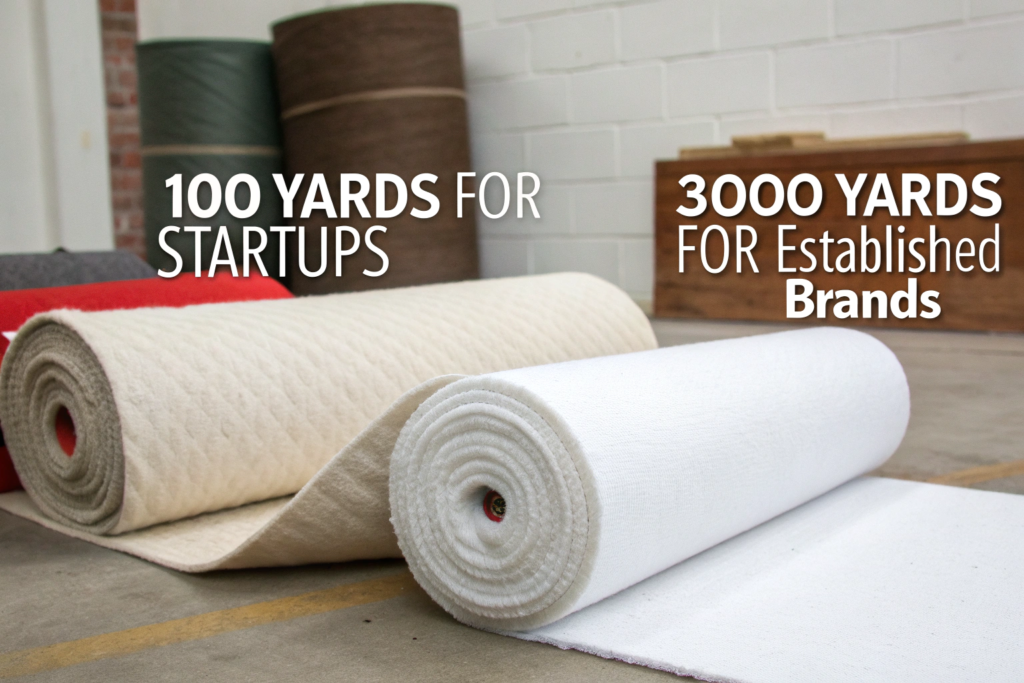
For a small brand or a startup designer, ordering 3,000 yards of a single fabric is terrifying. What if the style doesn't sell? What if the color is wrong? You're sitting on a massive liability. That's why we've structured our business to accommodate smaller MOQs, often starting at 100-200 yards per color for many of our stock fabrics. We do this because we remember what it was like working with years ago who had great ideas but limited capital. In 2022, a designer from Brooklyn came to us with a collection of bamboo jersey dresses. She needed six colors, but could only afford 100 yards of each. We made it work. She sold out her first run in three months and came back for 500 yards per color. By starting small, she proved her concept without risking everything.
For established brands, the math is different. You have historical sales data. You know that a particular style sells 5,000 units a season. You can confidently order 3,000 yards because you know you'll use it. But even then, you don't want to tie up all your cash in one go. We work with mid-sized European brands to set up staggered production. They commit to an annual volume, which allows us to secure the raw materials, but they release orders in smaller chunks based on real-time sales. This is called a "call-off" order, and it's a game-changer for inventory management. For more on negotiating MOQs, this fashion business blog for small brands has some practical scripts you can use with suppliers.
How do we calculate safety stock for fabric with 8-week lead times?
Safety stock is your buffer against the unexpected. A supplier machine breaks down. A port closes due to weather. A ship gets delayed. With lead times from China often running 6-10 weeks from order to arrival at your door, you cannot afford to run out.
The basic formula for safety stock is simple: (Maximum daily usage × Maximum lead time) – (Average daily usage × Average lead time). But let me make it real. Say you produce 1,000 dresses a month, and each dress uses 2 yards of fabric. That's 2,000 yards per month, or about 67 yards per day on average. Your lead time from order to delivery is usually 60 days, but in a worst-case scenario (Chinese New Year, peak shipping season), it could be 75 days.
Your reorder point should be when your stock hits 67 yards × 75 days = 5,025 yards. That means when you have about 5,000 yards left, you need to place your next order. Your safety stock is the buffer between your average usage and your maximum usage during that maximum lead time. We help our clients calculate this all the time. In late 2023, a UK-based loungewear brand was running low on their core organic cotton jersey. Their system said they had 8 weeks of stock left, but they hadn't factored in the Golden Week holiday in China, which would add a week to production. We flagged it, they placed an urgent order, and we expedited production to avoid a stockout. That's the kind of partnership that saves businesses. This supply chain management blog has a great calculator and more detailed explanations.
How Can Supplier Relationships Buffer Against Demand Fluctuations?
You can have the best inventory formulas in the world, but if you don't have a strong relationship with your supplier, you're still vulnerable. When demand spikes unexpectedly or a shipment gets stuck, a good supplier will move mountains for you. A transactional supplier will just say "sorry, not my problem." This is why we invest so heavily in relationships with our clients.
Trust and communication are the real inventory management tools. When we know a client well, we can anticipate their needs. We might see that a particular fabric is trending based on the inquiries we're getting, and we'll produce extra greige goods (unfinished fabric) in advance. Then, when a client suddenly needs a rush order, we can skip the weaving step and go straight to dyeing and finishing, cutting weeks off the lead time. We did exactly this for a French client in 2023. They had a best-selling style that suddenly blew up on social media. Their forecast said they had enough fabric, but the viral post changed everything. They called us in a panic. Because we had greige goods ready, we dyed their colors in one week and had the fabric on a plane within ten days. They kept selling while their competitors were stuck with empty shelves.
Another aspect of relationship is flexibility on payments. For clients we've worked with for years, we offer better payment terms. Instead of 30% deposit and 70% before shipment, we might do 20% deposit and the rest at 60 days after bill of lading. This eases their cash flow burden, which is a huge part of inventory carrying costs. When you're not paying for the fabric until it's almost at your door, you're in a much stronger financial position. This small business finance blog explains how negotiating better terms can free up working capital.

What is VMI and can it work for fabric sourcing?
VMI stands for Vendor-Managed Inventory. It sounds fancy, but the concept is simple: the supplier takes responsibility for maintaining the buyer's inventory levels. Instead of you placing orders, you share your sales data and stock levels with us, and we automatically ship more fabric when you're running low.
This is common in industries like automotive manufacturing, but it's rarer in fashion and textiles. However, we've started doing it with a few of our largest, most predictable clients. For example, a German workwear manufacturer we've partnered with for over a decade uses VMI. They have 20 different fabrics they use constantly. We hold the inventory for them in our warehouse in Keqiao. Every week, they send us their consumption data. When their stock of a particular fabric drops below an agreed level, we pack and ship a container. They don't have to issue a purchase order. They don't have to chase us. It just happens.
The benefits are huge for them: zero stockouts, reduced administrative costs, and better cash flow because they're not holding months of inventory. The benefit for us is loyalty and predictable, steady business. It only works with complete trust and transparency. Both sides have to be committed to the long term. If you're interested in exploring VMI for your business, start with a small number of core fabrics and build from there. This supply chain innovation blog has case studies from companies that have made it work.
What Technology Tools Help Track Fabric Inventory in Real-Time?
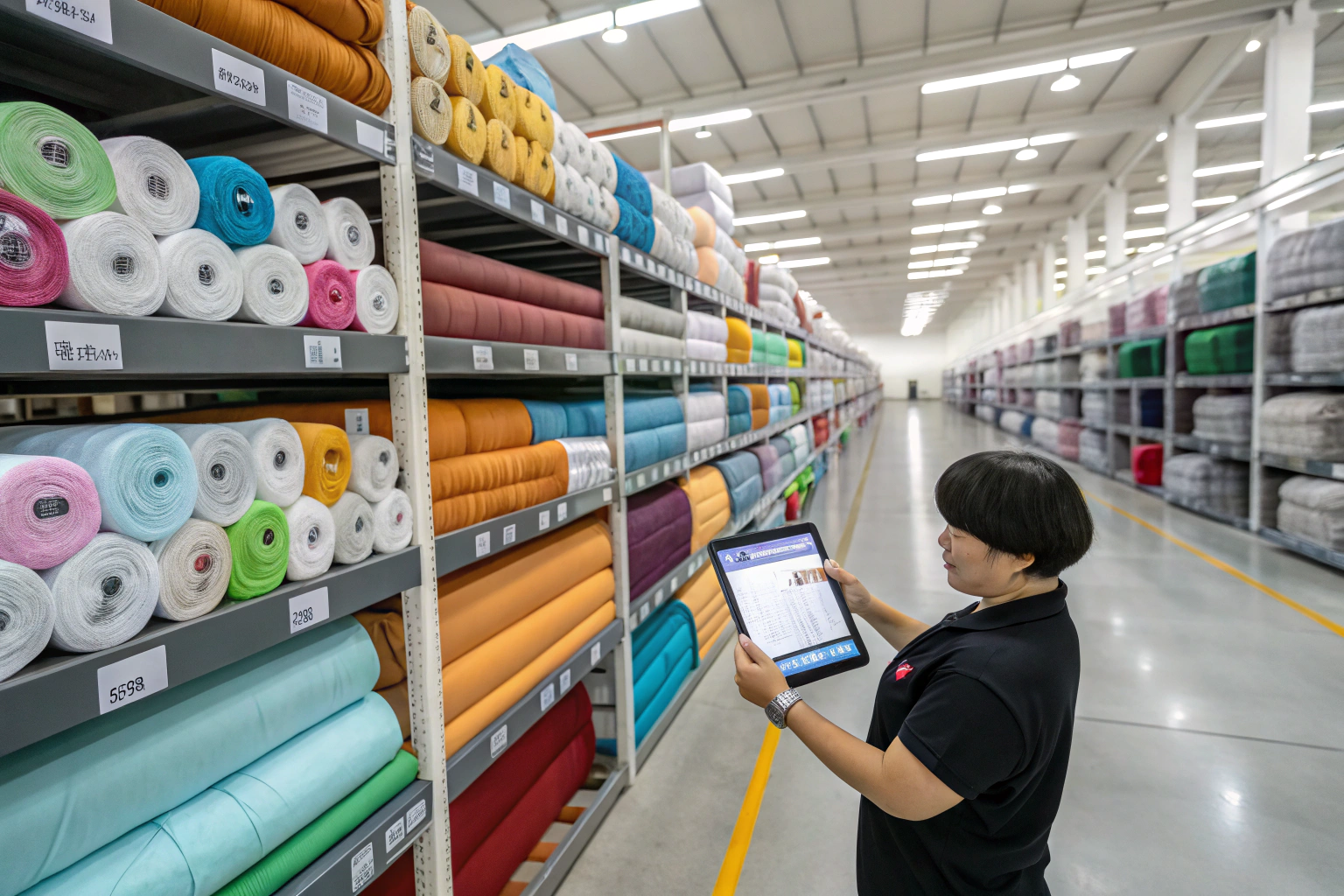
Gone are the days of spreadsheets and sticky notes. If you're managing a multi-million dollar inventory with pencils and paper, you're going to make mistakes. Today, technology gives us visibility into the supply chain that was unimaginable 20 years ago. At Shanghai Fumao, we've invested heavily in systems that give our clients real-time data on their fabric.
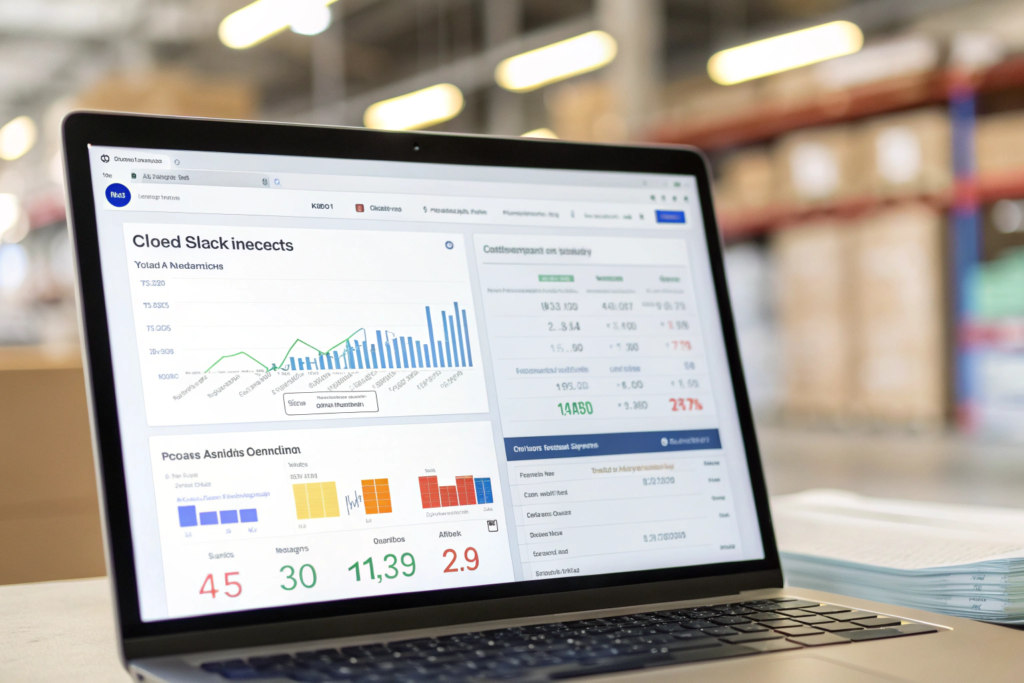
The backbone of our system is the QR code on every single roll. When we finish a roll of fabric, it gets a unique code. That code is linked to all the production data: the batch number, the dye lot, the test results, the exact yardage. When we ship, we scan every roll, and the client's inventory system gets updated automatically. They know exactly what's on the water, what's in our warehouse, and what's arrived at their door.
For a client in Sweden with multiple production facilities in Eastern Europe, this visibility is critical. They can see that a specific dye lot of recycled polyester is on vessel CMA CGM Magellan, due to arrive in Gdansk on a certain date. They can then plan their cutting room schedule with confidence. No guessing. No "I think it'll be here next week." This level of detail transforms inventory management from a guessing game into a science. There are many software options out there, from enterprise-level systems like SAP to cloud-based platforms designed for smaller brands. This fashion tech blog reviews the best options for different business sizes.
How does our QR code system prevent costly dye lot mismatches?
Dye lot variation is the silent killer of garment quality. You're making 1,000 black dresses. You receive fabric in two shipments, a month apart. If the dye lots don't match, half your dresses will be slightly off-black, and you'll have to sell them as seconds or take a massive write-down.
Our QR code system eliminates this risk. When you scan a roll, you see the exact dye lot number. You can instruct your cutting room to only use rolls from the same dye lot for a single production run. If you need to mix lots, you can physically compare the rolls first because you know exactly which ones are which.
I remember a client in Australia who had a nightmare before working with us. They received 50 rolls of a navy blue fabric from a different supplier, all supposedly the same color. But when they started cutting, they noticed some panels looked different under the lights. They had no tracking system, so they couldn't separate the rolls. They had to scrap thousands of dollars worth of cut pieces. Now, with our QR codes, they scan every roll as it arrives, log it into their system, and assign it to specific production batches. If there's ever a question, they scan and check. It's simple, but it saves fortunes. This quality control in manufacturing blog has more horror stories and solutions for dye lot management.
How Do Logistics and Shipping Impact Your Inventory Calculations?
You can have perfect inventory levels calculated, but if your fabric is stuck on a ship outside Long Beach for three weeks, your inventory is effectively zero. Logistics is the wild card in overseas sourcing, and it has to be factored into every inventory decision. At our company, we don't just sell fabric; we help clients navigate the chaos of international shipping.
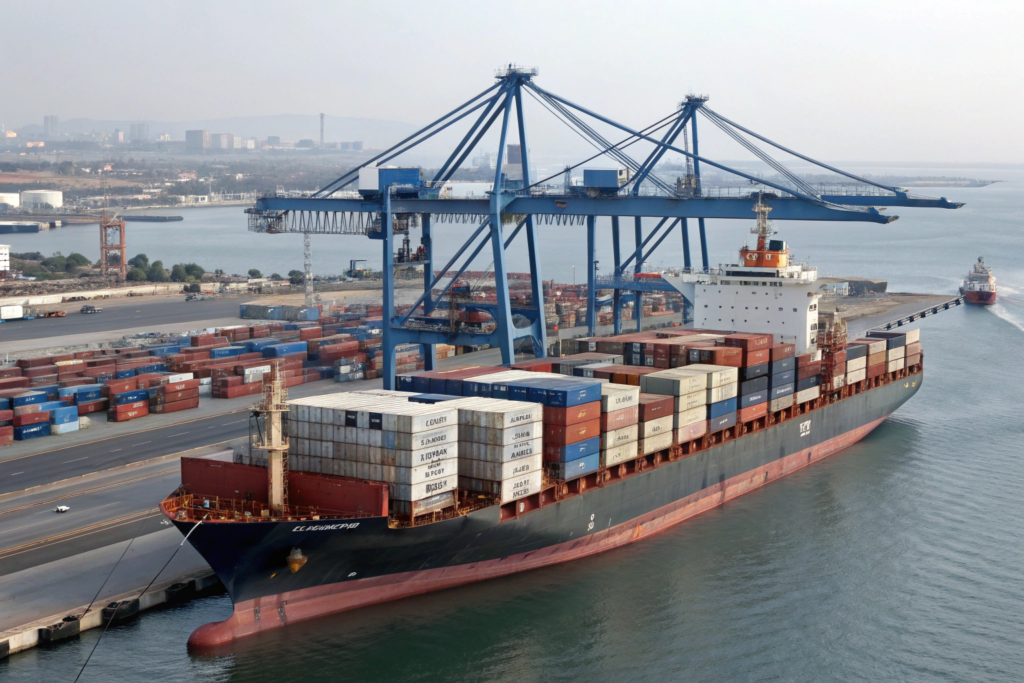
The first thing to understand is that shipping times are not stable. In 2021 and 2022, we saw delays of 4-6 weeks just to get a container off a ship in LA. The Red Sea issues in 2023 and 2024 added weeks to routes to Europe. You cannot rely on "typical" transit times anymore. You need to build in buffers, and you need real-time visibility. We work with freight forwarders who give us daily updates on vessel positions. We pass that information to our clients so they can adjust their production schedules accordingly.
Another factor is shipping frequency. Air freight is fast but expensive—sometimes 5-10 times the cost of sea freight. We use air freight for urgent reorders or samples. Sea freight is the workhorse, but you're at the mercy of sailing schedules. Some routes have ships every week; others only every two weeks. Missing a cutoff means a two-week delay. We help clients plan their production to hit those cutoff dates. For a US client in 2023, we coordinated production to finish on a Tuesday, allowing the container to be trucked to Ningbo, loaded on a Wednesday ship, and make the weekly sailing to Long Beach. That one-day coordination saved them two weeks of waiting. This international logistics blog has great tips on working with freight forwarders and understanding shipping schedules.
How do we handle US tariffs in inventory costing?
Tariffs are a reality for anyone importing fabric or finished goods into the US. They add cost, and that cost has to be factored into your inventory valuation and your pricing. At our company, we've become experts in navigating this.
First, we help with classification. The Harmonized Tariff Schedule (HTS) codes determine the duty rate. A small mistake in classification can mean paying the wrong rate or even having a shipment seized. We work with our clients and their customs brokers to ensure the correct HTS codes are used. For example, woven fabrics often have different rates than knits, even if the fiber content is the same.
Second, we structure our shipments to minimize duty where legally possible. There are provisions for goods assembled in certain countries, and we can help route production accordingly. We also provide all the documentation needed to support claims for exclusions or refunds. In 2022, a client was able to claim a refund on duties paid for a specific type of recycled polyester because we provided the certification proving it met the requirements for a temporary exclusion. Without our documentation, they would have lost thousands. This customs and trade blog is an excellent resource for staying updated on tariff changes and compliance requirements.
Conclusion
Managing inventory when sourcing fabrics from overseas is a complex balancing act. You need to order enough to meet demand and hit MOQs, but not so much that you're drowning in deadstock. You need to account for long lead times, shipping delays, and the unpredictable nature of global logistics. And you need a system—whether it's a simple spreadsheet or an advanced ERP—that gives you real-time visibility into your stock levels and your supply chain.
The key is partnership. You can't do this alone. You need a supplier who understands your business, who communicates transparently, and who has the systems and flexibility to help you adapt when things go wrong. At Shanghai Fumao, we've built our entire operation around this philosophy. From our QR code tracking system that gives you roll-level visibility, to our flexible MOQs for growing brands, to our deep logistics expertise that helps you navigate tariffs and shipping delays—we're here to make inventory management one less thing to worry about.
If you're tired of inventory surprises and want a partner who treats your business like our own, let's talk. Whether you're a startup needing 100 yards to test a market, or an established brand looking for VMI solutions, we can help. Please contact our Business Director, Elaine, at elaine@fumaoclothing.com. Let's build a supply chain that works for you.