I remember the first time I saw an ISO 14001 certificate. It was 2010. A big German buyer asked for it. I said, "Sure, we have that." But honestly, I did not really understand what it meant. I thought it was just a piece of paper. Then the buyer's auditor came. He spent three days in our factory. He checked our wastewater, our chemical storage, our waste disposal, our employee training. He asked for records. He interviewed workers. I was nervous. But we passed. And I learned something important: ISO 14001 is not a piece of paper. It is a way of working. It shows that a company cares about more than just profit. It cares about the planet.
So, how do you evaluate a fabric supplier's Environmental Management System? It is not enough to ask "Do you have ISO 14001?" and accept a PDF. You need to dig deeper. You need to understand what the certificate actually means, how it is implemented, and whether the supplier lives up to it. In this guide, I will share what I have learned as both a supplier who has been audited many times, and as a buyer who evaluates other suppliers. I will show you what to look for, what questions to ask, and what red flags to watch for. Because in today's world, environmental responsibility is not optional. It is expected.
What is ISO 14001 and why does it matter for fabric suppliers?
ISO 14001 is an international standard for Environmental Management Systems (EMS). It is not about the product itself. It is about the process. It sets requirements for how a company manages its environmental responsibilities. This includes things like:
- Legal compliance: The company must know and follow all environmental laws.
- Environmental policy: They must have a written policy, signed by top management.
- Planning: They must identify environmental aspects (like water use, energy, waste) and set goals to improve.
- Implementation: They must have procedures, train employees, and control operations.
- Checking: They must monitor, measure, and audit their performance.
- Review: Top management must review the system and improve it.
For a fabric supplier, ISO 14001 matters because textiles are dirty. Dyeing uses huge amounts of water and chemicals. Finishing releases emissions. Waste is a problem. A supplier with ISO 14001 has committed to managing these impacts. They are not just polluting and hoping no one notices. They have a system.
But here is the thing: ISO 14001 does not set specific performance targets. It does not say "you must use less than X liters of water per kg of fabric." It says "you must set your own targets and work towards them." So two companies can both be ISO 14001 certified, but one might be much greener than the other. That is why you need to evaluate beyond the certificate.
What are the limitations of ISO 14001?
I have seen suppliers with ISO 14001 who still pollute. How? Because they set weak targets. Their policy might say "we will reduce water use by 1% per year." That is easy. They meet it. But they are still wasting water. Or they might have the system on paper, but in practice, workers ignore it. So the certificate is not a guarantee. It is a starting point.
Another limitation: ISO 14001 does not cover product safety (like OEKO-TEX) or social responsibility (like SA8000). Those are separate. So a supplier might be green in their factory but use child labor. You need to look at the whole picture.
How to verify if a supplier's ISO 14001 is real and current?
Fake certificates exist. I have seen them. A supplier shows you a PDF with the ISO logo. But it is photoshopped. Or it expired years ago. Or it was issued by a fake certification body. So you must verify.
Step 1: Ask for the certificate. Get a PDF. Look at the dates. It should have an issue date and an expiry date. Usually valid for 3 years. Check that it is current.
Step 2: Check the certification body. Who issued it? Look for a recognizable name: SGS, BV, TÜV, DNV, LRQA, etc. If it is from "ABC Certification Services" that you never heard of, be suspicious. Google them. See if they are accredited by a national accreditation body (like UKAS, ANAB, DAKKS).
Step 3: Verify online. Most reputable certification bodies have online databases. You can enter the certificate number and check if it is valid. I do this for every new supplier. In 2021, a potential partner sent me a TÜV certificate. I checked online. It was expired. They had not renewed. I asked why. They said they were in the process. I asked for proof. They could not provide. I walked away.
Step 4: Check the scope. The certificate should say what activities are covered. Does it say "manufacturing of textiles"? Or just "trading"? If it is just trading, their factory might not be certified. A supplier once showed me a certificate for their "head office activities." Their factory was not included. That was misleading.
Step 5: Look for surveillance audits. ISO 14001 requires annual surveillance audits. The certificate might list surveillance dates. If there are gaps, they might have lost certification.
What if they say "we are in the process of getting certified"?
This is common. Many good suppliers are working towards certification but not yet done. That is okay. Ask for evidence:
- What stage are they at? Gap analysis? Documentation? Pre-audit?
- Who is their consultant or certification body?
- Can they show you their environmental policy?
- Can they show you some records (like waste disposal, water tests)?
If they are serious, they will have something to show. If they have nothing, they are probably just saying it to sound good.
What specific environmental aspects should you evaluate beyond the certificate?
The certificate is just the start. You need to dig into the actual performance. Here are the key areas I evaluate when visiting a supplier or auditing them.
Water management: Textile dyeing uses enormous amounts of water. Ask:
- How much water do they use per kg of fabric? (Industry average: 60-150 liters per kg for dyeing. Best practice: under 50 liters.)
- Do they treat their wastewater? On-site or off-site?
- Ask for recent wastewater test reports. Compare to local discharge standards.
- Do they recycle water? Some advanced factories recycle 30% to 50% of their water.
I visited a factory in 2022 that claimed to be green. Their wastewater report showed high levels of color and COD. They were not treating properly. I told my client to avoid them.
Chemical management: Textiles use many chemicals. Some are hazardous. Ask:
- Do they have a Restricted Substance List (RSL)?
- Do they require their own suppliers to comply?
- How do they store chemicals? Are containers labeled? Is there secondary containment?
- Do they use safer alternatives (like bluesign approved chemicals)?
- Ask for their chemical inventory. Look for anything banned (like certain azo dyes, APEOs).
A German client once asked for a list of all chemicals used in our factory. We provided it. They were happy. Another supplier refused. That told us something.
Energy management: Textile production is energy-intensive. Ask:
- What is their energy source? Coal? Gas? Renewable?
- Do they monitor energy use per kg of fabric?
- Have they implemented energy-saving measures? (LED lighting, efficient motors, insulation)
- Do they use renewable energy? Solar panels? Biomass?
A client from Sweden asked about our carbon footprint. We showed them our solar panels and our energy monitoring data. They loved it.
Waste management: Factories produce waste: fabric scraps, packaging, sludge from wastewater. Ask:
- How do they segregate waste? Hazardous vs non-hazardous?
- Do they recycle fabric scraps? Some sell them for recycling.
- How is hazardous waste disposed? Who is the licensed contractor? Ask for disposal records.
- What about sludge? Is it treated as hazardous? Dried and sent to landfill? Incinerated?
In 2020, a supplier told me they recycled all waste. I asked for records. They could not provide. Later I found they were dumping. I stopped working with them.
Air emissions: Dyeing and finishing can release volatile organic compounds (VOCs), dust, and odors. Ask:
- Do they have air filtration systems?
- Are stacks monitored? Ask for test reports.
- Do they have odor control? Neighbors complain?
Emergency preparedness: What happens if there is a spill? Ask:
- Do they have spill kits?
- Are employees trained?
- Is there a plan?
What documentation should you request?
If you want to evaluate seriously, ask for these documents:
- Environmental policy (signed by top management).
- List of environmental aspects and impacts.
- Environmental objectives and targets (with progress updates).
- Wastewater test reports (last 12 months).
- Air emissions test reports (if applicable).
- Hazardous waste disposal records (manifests).
- Chemical inventory and safety data sheets (SDS).
- Training records for employees on environmental topics.
- Internal audit reports.
- Management review minutes.
If they provide these willingly, they are confident. If they hesitate or make excuses, be suspicious.
How to conduct a simple on-site environmental audit?
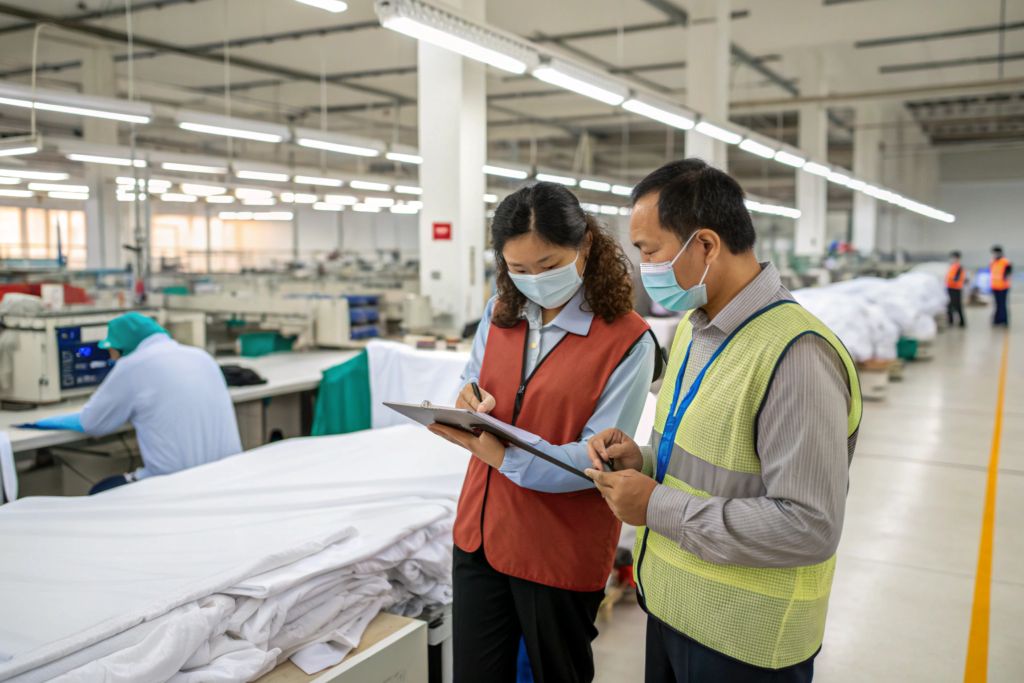
You do not need to be an expert to do a basic audit. Here is what I look for when I walk through a factory.
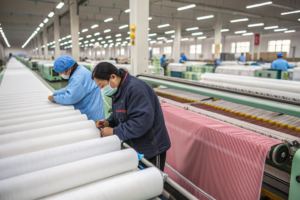
First impression: Is the factory clean? Not just production areas, but also outside. Are there overflowing bins? Stagnant water? Strange smells? A messy factory often means poor management.
Chemical storage: Go to the chemical warehouse. Are containers properly labeled? Are they on pallets (not directly on floor)? Is there a bund or containment to catch spills? Are incompatible chemicals separated? If you see rusting drums, leaking containers, or no labels, that is a red flag.
Waste areas: Look at the waste storage. Are different wastes segregated? Are hazardous waste containers labeled and closed? Is there evidence of spills? Take photos.
Wastewater treatment: If they have on-site treatment, ask to see it. Is it operating? Are there clear signs of maintenance? Look at the final discharge. Is it clear? Does it smell? Ask for the test results from that day.
Air handling: Look at exhaust stacks. Is there visible smoke or steam? Any unusual smells inside the factory? Good ventilation is a sign of attention to worker and environmental health.
Employee interviews: Talk to a few workers (with permission). Ask: "Have you been trained on environmental procedures?" "What do you do if there is a spill?" "Where do you put waste?" If workers do not know, the system exists only on paper.
Records spot-check: Ask to see a few records. For example, ask for last month's wastewater test. Or last week's hazardous waste pickup record. If they cannot find them quickly, their record-keeping is weak.
Surrounding area: Look outside the factory gate. Is the nearby river discolored? Are there dead plants? Local residents might tell you if the factory pollutes. I once visited a factory and saw a pipe discharging directly into a ditch. Not good.
What are the red flags?
From my experience, here are the biggest red flags:
- No visible environmental manager or team.
- Workers who cannot answer basic questions.
- Missing or expired permits.
- Evidence of past spills not cleaned up.
- Strong chemical smells outside the factory.
- Discolored drainage.
- Reluctance to show you certain areas.
- Certificates that do not match the site (e.g., certificate says one address, factory is another).
How do we at Fumao Fabric approach environmental management?
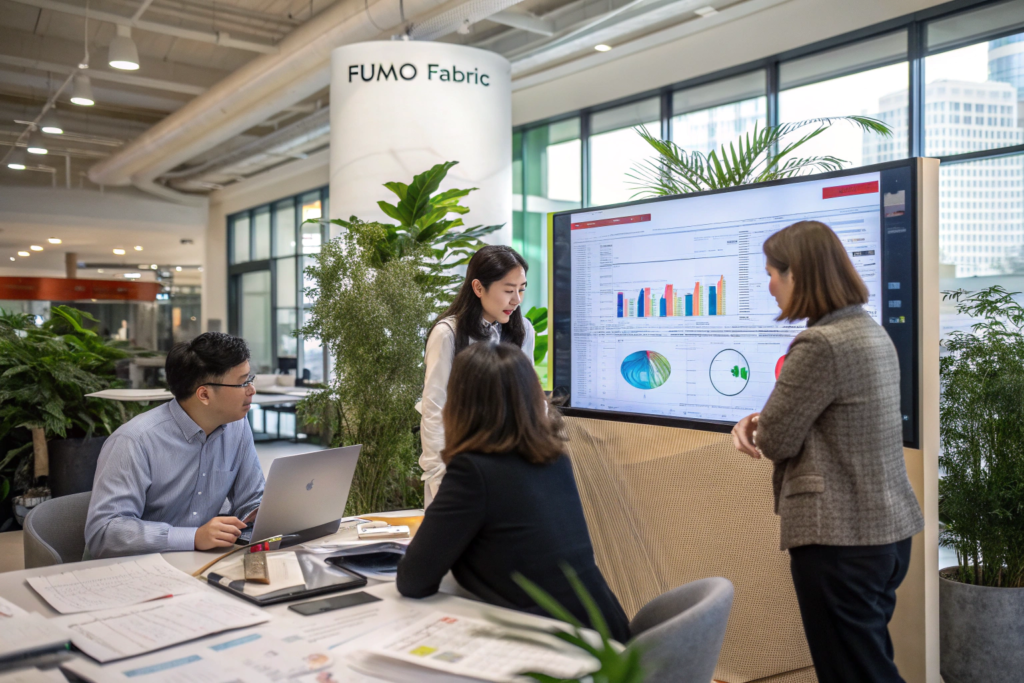
At Shanghai Fumao, we take environmental management seriously. We have been ISO 14001 certified since 2012. But we do not stop there. Here is what we do.
Beyond certification: We set our own targets. We aim to reduce water use by 5% every year. In 2023, we achieved 6% reduction by recycling more. We track energy per kg of fabric. We have solar panels on our warehouse roof. They provide 20% of our electricity.
Chemical management: We are bluesign system partner. That means we use only chemicals that meet strict safety and environmental criteria. We require our own suppliers to provide safety data sheets and test reports.
Wastewater: We have our own treatment plant. We test daily. We meet local standards, which are strict. We also test for parameters beyond legal requirements, like specific dyes.
Waste: We segregate everything. Fabric scraps are sold for recycling. Paper and plastic are recycled. Hazardous waste goes to licensed contractors. We keep every disposal record for 5 years.
Transparency: We share our environmental policy on our website. We provide environmental data to clients who ask. We have nothing to hide.
Continuous improvement: Every year, we review our objectives. We look for new technologies. We recently installed low-liquor dyeing machines that use 30% less water. We are always learning.
What do our clients say?
A US activewear brand audited us in 2023. They spent two days. They checked everything: permits, records, treatment plant, chemical storage, waste areas. At the end, the auditor said: "This is one of the cleanest factories I have seen in China." That made us proud. We work hard to earn that trust.
Conclusion
Evaluating a fabric supplier's environmental management system is not just about checking a box. It is about ensuring that your supply chain is responsible, sustainable, and prepared for the future. Regulations are getting stricter. Customers care more. And the planet cannot wait. A supplier with a real, working environmental management system is a better partner for the long term. They are less likely to get shut down for pollution. They are more efficient because they waste less. They are ready for the demands of big brands and conscious consumers.
At Shanghai Fumao, we welcome scrutiny. We are proud of our ISO 14001 certification, but we know it is just the foundation. We build on it every day. If you are looking for a fabric supplier who takes the environment seriously, we invite you to evaluate us. Come visit. Ask questions. Check our records. We will show you everything.
Contact our Business Director, Elaine, directly. She oversees our environmental compliance and can provide all the documentation you need. Email her at elaine@fumaoclothing.com. Tell her what you are looking for, what standards you need, and what questions you have. She will arrange a virtual tour, share test reports, and connect you with our environmental manager if needed. Because at Shanghai Fumao, we believe that good business and good environmental management go hand in hand. Always.