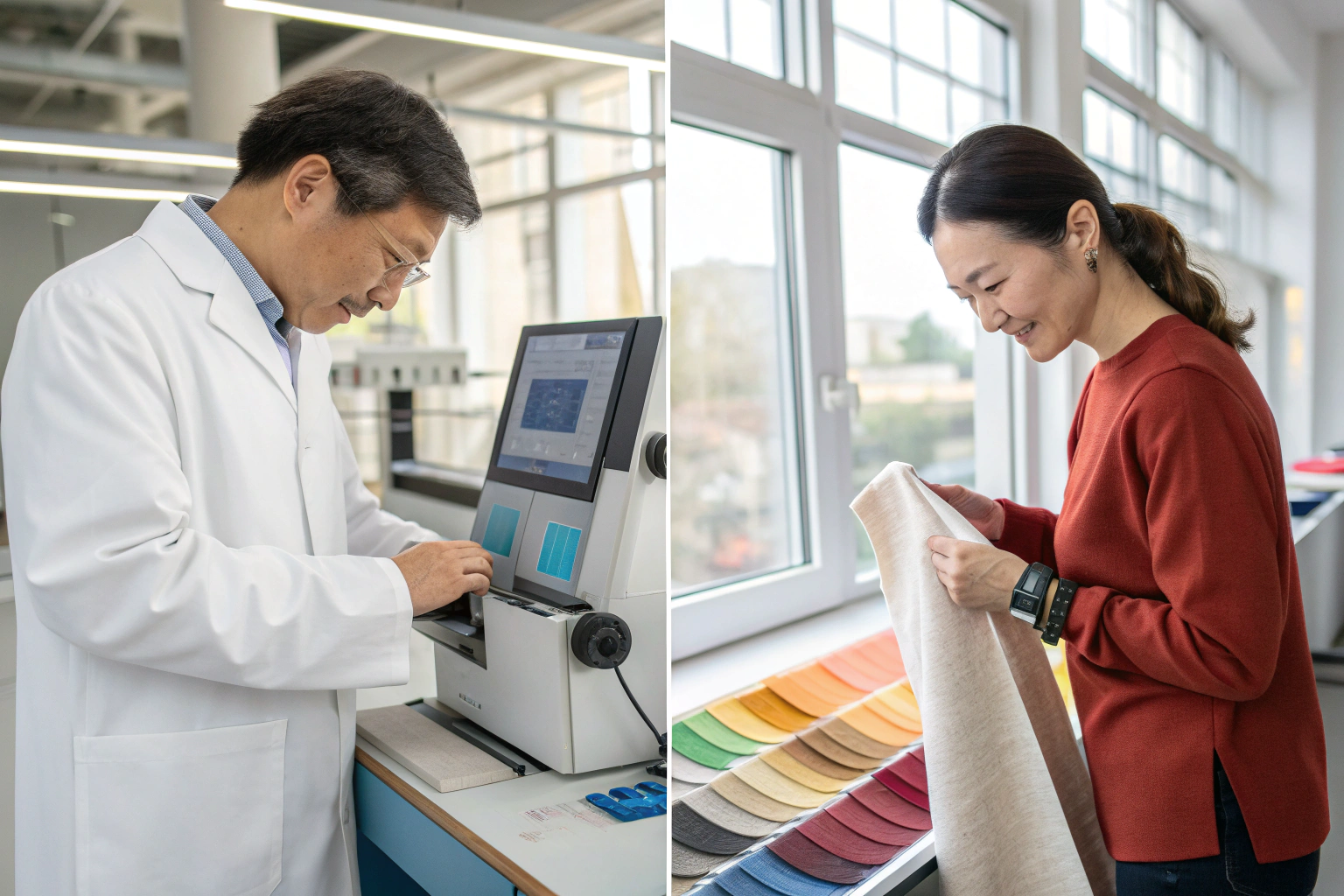
You know that sinking feeling. Your container finally arrives after 45 days at sea. You rush to open it, pull out a roll, and hold it next to the original sample you approved months ago. And your heart drops. The color is... off. It's not dramatically different, but it's just not right. Maybe it's a shade darker. Maybe it has a slight red cast the original didn't have. Now what? You've got garments to cut, a launch date looming, and a retailer who will reject 100% of the shipment if it doesn't match the spec. I've seen that look on buyers' faces more times than I care to remember over my 20+ years in this industry.
Ensuring fabric color consistency across different production batches isn't just about having a good dye house. It's about building a systematic, data-driven, and human-led quality assurance process that starts before the first yard is even woven and continues until the last roll is packed. At Shanghai Fumao, we've turned color consistency from a constant source of anxiety into a predictable, reliable outcome for our clients. And I'm going to walk you through exactly how we do it.
Let me be straight with you: perfect color consistency batch after batch is impossible. But "commercially acceptable" consistency—the kind that keeps your garments on the rack and your customers happy—is absolutely achievable. It requires three things: scientific measurement standards, rigorous physical testing, and a production flow designed to minimize variables. Most factories talk about QC. We built our entire operation around it.
What Causes Color Variation Between Fabric Batches in the First Place?
Before we can fix color variation, we have to understand where it comes from. And believe me, it's not just "the dyer messed up." Color inconsistency is the result of dozens of tiny variables lining up in the wrong way. The fiber itself might absorb differently. The water pH could shift. The dye bath temperature might fluctuate by just two degrees. The fabric tension during finishing could stretch the yarns and change how light reflects off the surface. Each variable alone is minor. But add them up, and you've got a shade difference you can see from across the room.
How do raw material variations in natural fibers like cotton or wool affect dye uptake?
This is the hidden gremlin in natural fiber dyeing. Unlike polyester, which is chemically uniform because it's man-made, cotton is a agricultural product. It grew in a field. It was subject to weather, soil conditions, and harvesting methods. I had a client from Italy in 2022 who ordered a specific oatmeal-colored melange in organic cotton. The first batch was perfect. The second batch, ordered three months later, came out noticeably duller. Same recipe, same machine, same dyer. What happened?
We traced it back to the cotton itself. The first batch used cotton from a specific harvest in Texas. The second batch, because of supply chain timing, used cotton from a different region in India. The micronaire—that's the fiber fineness and maturity—was different. The Indian cotton was slightly more mature and absorbed dye faster, even with the exact same dye formula. The result? A deeper, less vibrant shade.
Now, we test every incoming fiber lot for its dye absorption characteristics before we even blend it. We run a small laboratory dye test on the raw fiber itself. If the new lot behaves differently, we adjust the dye formula before production starts. This guide to understanding cotton fiber maturity and its effect on dyeing is something our lab team references constantly. You can't just assume all cotton is created equal. It's not.
What role does water quality play in creating consistent dye results?
Water is the invisible ingredient in every batch of dyed fabric. And it changes. I'm not just talking about the obvious stuff like dirt or sediment. I'm talking about the dissolved minerals—calcium, magnesium, iron—that make water "hard" or "soft." These minerals can react with dye molecules and completely alter the final color.
We learned this lesson the hard way about 15 years ago. We had a repeat order for a basic black poplin for a German workwear company. The first three batches were perfect. The fourth batch came out with a slight bronze cast. Not enough for most people to notice, but enough for their QC to flag it. We spent three days troubleshooting. Finally, we checked the water report from the municipal supply. They had done maintenance on the treatment plant the week before, and the water hardness had spiked temporarily.
Now? We don't rely on municipal water at all. Our dyehouse operates with a fully closed-loop water treatment and reverse osmosis system. We strip everything out of the water and rebuild it to a precise, consistent standard before it ever touches your fabric. Every drop that goes into the dye machine is identical, every single time. This detailed explanation of water quality parameters for textile dyeing shows why this matters. If you're not controlling your water, you're not controlling your color.
What Laboratory Standards and Measurements Guarantee Color Accuracy?
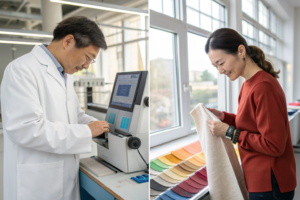
Good color consistency isn't achieved by someone squinting at fabric under a fluorescent light and saying, "Yeah, that looks close enough." That's how you get arguments, rejections, and frustrated buyers. Modern color management is a science. It uses instruments, standardized lighting, and mathematical formulas to remove subjectivity. At our CNAS-accredited lab, we've invested heavily in this science because we know it's the only way to deliver what our clients expect.
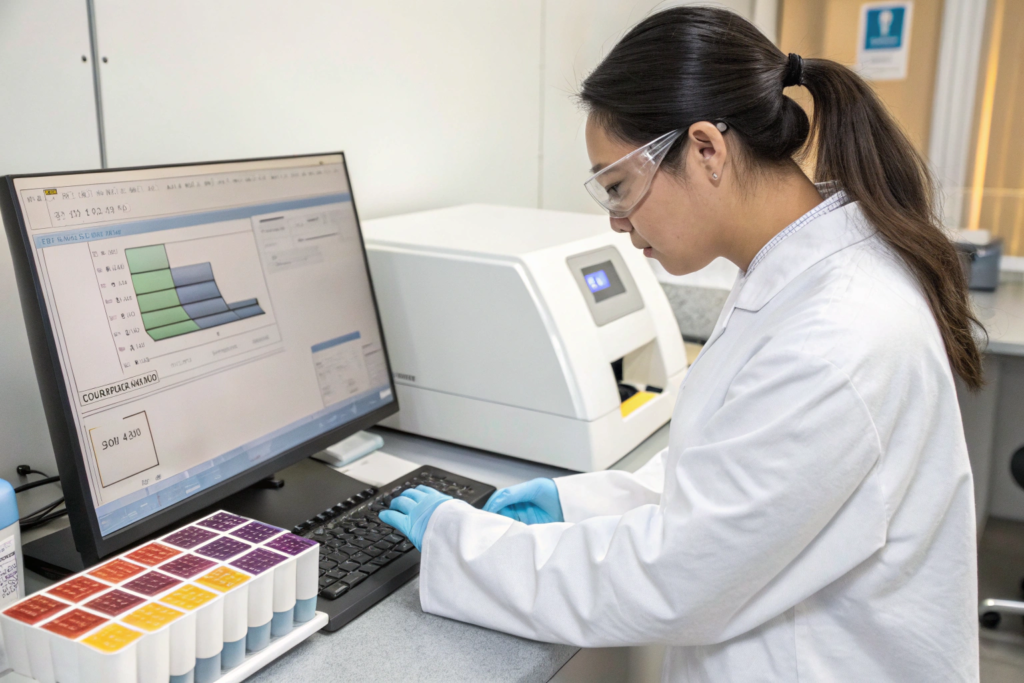
Why do we use spectrophotometers instead of visual assessment for color matching?
Look, I've got guys on my team who have been in the dyeing business for 30 years. They have incredible eyes. But even the best human eye can be fooled. Metamerism is the classic example. Two samples might look like a perfect match under the store's fluorescent lights, but when you take them outside into sunlight, they look completely different. The human eye can't predict that. A spectrophotometer can.
A spectrophotometer measures color the way a ruler measures length. It quantifies color across the visible spectrum and gives us numbers—specifically, Lab values. L is lightness to darkness. a is green to red. b is blue to yellow. If I give my dyeing team a target with specific Lab* numbers, they can formulate a dye recipe to hit that target mathematically. And when the next batch comes through, we measure it against the same numbers. No guessing. No "is this close enough?" arguments.
We set tolerance limits based on what's commercially acceptable. For most apparel fabrics, we work within a ΔE (that's the total color difference) of less than 0.8. For premium brands, we tighten that to 0.5. The human eye typically can't detect a difference below 1.0. So we're building in a safety margin. This explanation of how spectrophotometers work in textile quality control is worth reading if you really want to understand the tech behind your fabric.
How do we use lighting standards to eliminate metamerism issues?
Metamerism is the enemy of every fabric buyer. It happens when two samples match under one light source but not under another. You approve a sample under the fluorescent lights in the factory's sample room. But when your customer holds the final garment up to the window in their New York showroom, it looks wrong. Now you're stuck.
We prevent this by never approving a color match under just one light source. Every lab dip we send to clients is evaluated under at least three different standard light sources: D65 (simulated daylight), TL84 (typical store fluorescent), and A (incandescent home lighting). If a sample passes under all three, you're safe. If it only matches under one, we send it back to the lab to reformulate.
I remember a French luxury brand that rejected an entire shipment from one of our competitors because of metamerism. The fabric looked perfect in their Paris office under halogen lights, but when they took it to their outdoor photo shoot, it turned purple. Literally purple. We don't let that happen. Our guide to understanding and avoiding metamerism in fabric sourcing is something every buyer should read before placing their next order. It could save you from a very expensive mistake.
How Does Our Production Flow Maintain Color from Lab Dip to Bulk Shipment?
Getting a perfect lab dip is one thing. Scaling that up to a 10,000-meter production run is an entirely different challenge. The lab dip is made in a tiny beaker with perfect conditions. The bulk run happens in a massive machine with hundreds of kilos of fabric, water flowing, and heat exchanging. The leap from beaker to bulk is where most color consistency programs break down. Here's how we bridge that gap.
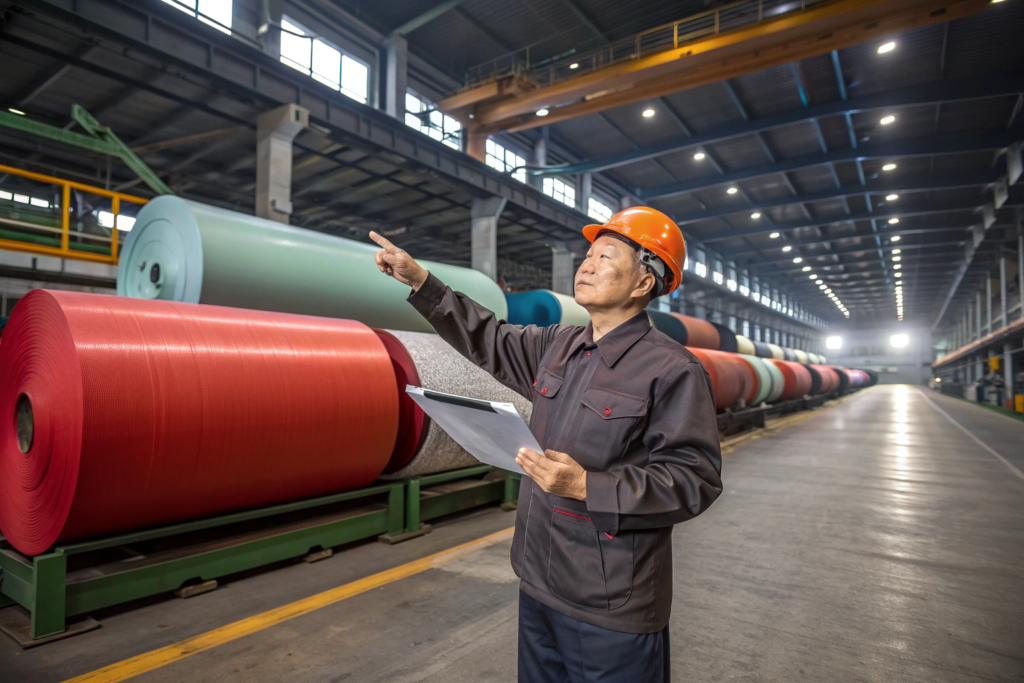
What is the "right-first-time" approach and why does it matter for your timeline?
"Right-first-time" (RFT) is a manufacturing philosophy, but in dyeing, it's a specific metric. It measures the percentage of batches that come out of the dye machine at the correct shade without needing any corrective additions—what we call "shading additions."
Here's why this matters to you: Every time a dyer has to add more dye to adjust the shade, it adds hours to the production time. It also adds stress to the fabric, potentially affecting the hand feel. And it increases the risk of ending up with a slightly different shade anyway, because you're correcting rather than hitting the target from the start.
Our RFT rate consistently runs above 92%. That means 9 out of 10 batches come out of the machine dead-on the first time. How? It's a combination of the precise lab work I mentioned earlier, plus computer-controlled dosing systems in our dye machines. The machines don't rely on an operator to open a valve at the right moment. They're programmed to add dyes and chemicals at exactly the right rate, temperature, and time.
When we had a Swedish activewear brand visit our facility last year, they were stunned to watch a 500kg batch of technical fabric come out of the machine and pass spectrophotometer testing immediately, no adjustments needed. Their previous supplier in another country had a 60% RFT rate, which meant constant delays and arguments. For them, our RFT rate wasn't just a quality metric—it was a timeline guarantee. This deep dive into right-first-time dyeing techniques and benefits explains why this should be a non-negotiable requirement when you're evaluating suppliers.
How do we manage "batch-to-batch" continuity for repeat orders?
This is where long-term relationships are made or broken. The first order goes smoothly. But the reorder, six months later? That's the test. Maybe the original dye chemist has moved on. Maybe the dye supplier changed their formulation slightly. Maybe the fabric construction is the same, but the greige goods came from a different weaving batch. Any of these can shift the color.
We have a simple rule: we never trust our memory. When a repeat order comes in, we don't just pull the old recipe and run it. We pull the physical archived sample from our sample bank—yes, we keep physical standards for every major order for at least five years. We measure it again on the spectrophotometer to confirm the Lab* values haven't drifted in our memory. Then we run a small lab dip using the current dyes and current water to verify the recipe still works.
Sometimes we find that a particular dye powder has been discontinued by the manufacturer and replaced with a slightly different version. If we just ran the old recipe with the new dye, you'd get a different color. By catching this in the lab first, we can reformulate before production, and your reorder matches your first order perfectly.
For a major UK retailer who orders the same three colors of jersey every season, this process is gold. They know that their "summer sky" blue from last spring will match the "summer sky" blue they order next spring, even if the garments are produced months apart. That consistency lets them plan collections with confidence. This industry best practice guide for managing repeatability in textile dyeing is something we literally wrote the book on.
What Quality Control Checks Happen Before Your Fabric Ships?
The dyeing is done. The fabric is finished. But it's not ready to ship yet. Not even close. The final step in our process—and the one that protects you from unpleasant surprises—is a multi-stage quality control protocol that examines every single meter you're paying for. We don't sample-test and hope for the best. We inspect systematically, and we document everything.
Why do we inspect 100% of production instead of using statistical sampling?
Statistical sampling—checking a certain percentage of rolls and assuming the rest are the same—is standard in many industries. But in textiles, it's a gamble. Color variation can happen within a single roll, not just between rolls. The outside of the roll might be a different shade than the inside because of exposure to air during winding. The selvedge might be darker than the center because of heat distribution in the stenter frame.
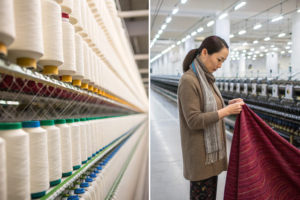
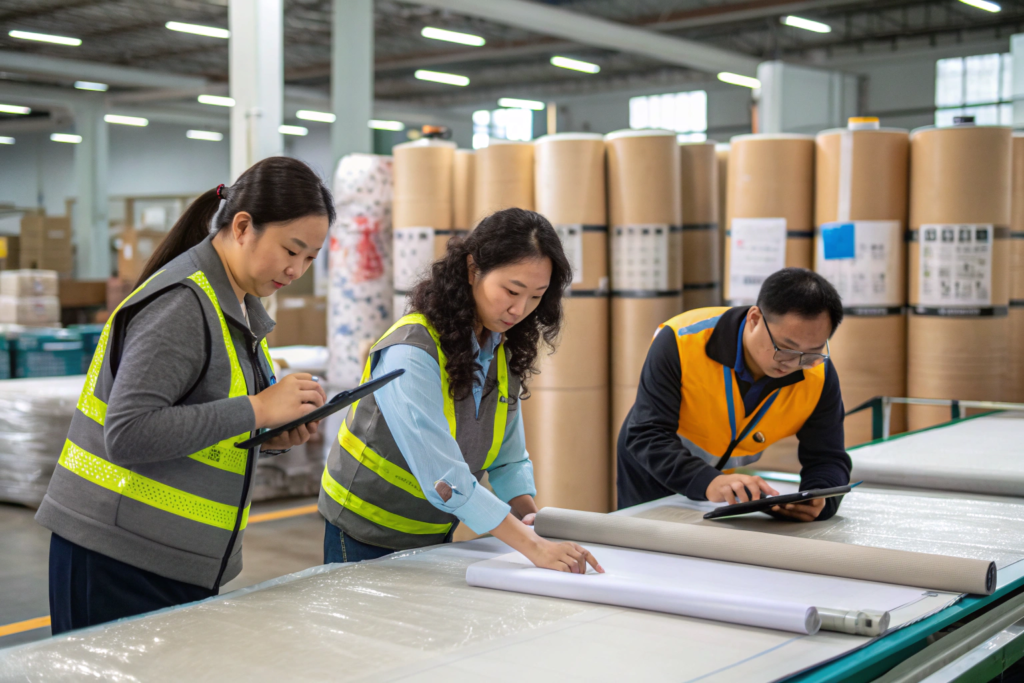
We inspect every single roll, 100%. Each roll is mounted on an inspection machine and runs over a backlit table at a controlled speed. Our inspectors are trained to look for shading variations from edge to edge and from beginning to end. If a roll shows any shading issues, we flag it, measure it with the spectrophotometer, and make a decision: cut out the defective section, downgrade the roll, or if it's a major issue, reject it entirely.
I had a Canadian outdoor gear company visit during an inspection of their order. They watched one of my inspectors stop the machine, mark a section of fabric with a red sticker, and continue. They asked what happened. The inspector had spotted a 2-meter section where the shade shifted slightly—barely perceptible, but present. My client was amazed. They said their previous supplier would have never caught that, and they would have discovered it only after cutting 500 garments, half of which would have been unusable. That's the difference 100% inspection makes. This article explaining different textile inspection standards like AQL and 4-point system shows why we've chosen to exceed industry norms.
How does our QR code tracking system give you real-time visibility into your batch quality?
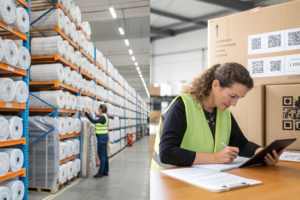
Here's where we bring everything together. Every single roll that passes inspection gets a unique QR code sticker. When you receive your shipment, you can scan that code with your phone and instantly see the complete quality record for that specific roll.
What's on that record? The spectrophotometer readings at the beginning, middle, and end of the roll. The fabric width at multiple points. The weight per square meter. The shrinkage test results. The colorfastness ratings. Any inspection notes. And photographs of the fabric surface.
This isn't just a gimmick. It's a tool that solves real problems. Imagine your cutter in Vietnam opens a roll and thinks the color looks different. Instead of stopping production and waiting for an email response from China, they scan the QR code, see the objective measurement data confirming the roll is within tolerance, and keep cutting with confidence. Or imagine your own quality team needs to verify a specific batch number for a customer complaint. One scan gives them the entire history.
We developed this system because we wanted to replace guesswork with data. And our clients love it. A Spanish fast-fashion brand we work with has integrated our QR data directly into their own quality management system. They don't have to inspect our fabric when it arrives—they trust our data, and they go straight to cutting. That trust saves them time and money, and it started with transparency. This explanation of how blockchain and QR code tracking are transforming textile supply chains shows where the industry is heading. We're already there.
Conclusion
Look, I won't pretend that achieving perfect color consistency batch after batch is easy. It's not. It requires investment in lab equipment that most factories avoid. It demands training and retraining of inspection teams. It means slowing down production to measure, verify, and document. And it requires a willingness to reject your own work when it doesn't meet the standard, even if it costs you money in the short term.
But here's what it gives you: peace of mind. When you work with Shanghai Fumao Textiles International, you're not hoping your fabric will match. You're not crossing your fingers and praying the container arrives without problems. You're relying on a system built over 20 years specifically to eliminate those anxieties. We've done the hard work so you don't have to.
We understand the pressures you face. The tight deadlines. The unforgiving retailers. The customers who notice everything. We built our entire operation—from our reverse osmosis water system to our CNAS-accredited lab to our 100% inspection protocol—to be your backstop. We're the reason you can sleep soundly while your fabric is in production.
So if you're tired of playing color roulette with your suppliers, if you're ready to work with a team that treats your quality standards as seriously as you do, let's talk. Our Business Director, Elaine, knows the US and European markets inside and out. She can walk you through exactly how we'd handle your next project. Email her at elaine@fumaoclothing.com. Tell her about your last color nightmare. She'll tell you how we make sure it never happens again.