

If you've ever worried about whether your supplier's "recycled" claims are genuine, you're not alone. I've seen too many buyers discover their sustainable fabrics weren't so sustainable after delivery—when it was too late. The gap between promise and delivery is where trust either grows or dies.
GRS certification builds trust by replacing promises with proof. It transforms subjective claims into verifiable, third-party audited facts about recycled content, environmental practices, and social responsibility. When you work with a GRS-certified supplier like us, you're not taking our word for it—you're relying on a system that's been rigorously checked by independent experts. This eliminates the guessing game and creates a foundation of transparency that makes partnership smoother and more reliable.
Let me explain exactly how this verification process works in practice and why it fundamentally changes the buyer-supplier relationship from skeptical to strategic.
What Verification Processes Create This Trust?
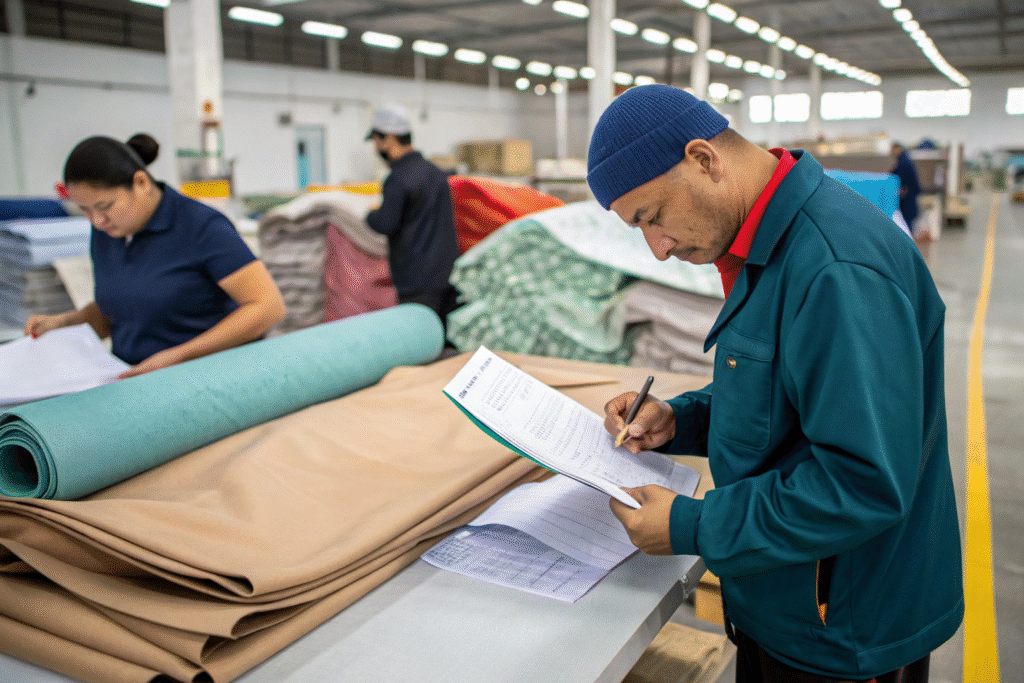
Trust doesn't come from certificates on the wall but from the rigorous processes behind them. GRS certification involves comprehensive audits of our entire production chain—from raw material sourcing to final product shipment—conducted by accredited third-party organizations. This isn't a self-declaration; it's an external examination that leaves no room for empty claims.
The verification process is brutally thorough. Certification bodies like Control Union or SGS examine our mass balance records, trace every kilogram of recycled material, interview workers about social compliance, and inspect our wastewater treatment systems. They don't just check paperwork—they physically verify that GRS-certified materials are stored separately, that production lines are properly managed, and that our transaction certificates match actual shipments. This creates multiple layers of accountability that would be impossible to fake consistently.
How do third-party audits differ from supplier self-reporting?
Third-party audits are the difference between a student grading their own paper and having a teacher do it. Self-reporting relies on goodwill and honesty, but it's vulnerable to bias and error. Third-party audits are conducted by trained professionals who follow strict protocols to identify discrepancies we might miss—or prefer to hide. In 2023, one of our major European clients specifically chose us over a non-certified competitor because our GRS audit reports showed perfect traceability records, while the competitor's self-reported data had unexplained gaps in their recycled material tracking. Understanding the rigorous requirements for third-party certification bodies themselves helps buyers appreciate the depth of verification. Additionally, learning about common supply chain audit failures in textile manufacturing reveals why independent verification matters.
What specific documents provide transparent proof?
The document trail is what makes GRS trust tangible. The key documents include Transaction Certificates (TCs) that accompany every shipment, Scope Certificates proving our facility is certified, and detailed mass balance records showing incoming versus outgoing certified materials. These aren't marketing materials—they're legal documents that can be verified with the certification body. We make all these documents digitally accessible to our clients through a secure portal. When a US-based outdoor brand audited us last quarter, they could cross-reference 15 months of TCs against their purchase orders in under two hours, finding perfect matches that built incredible confidence in our partnership. The Sustainable Apparel Coalition's Higg Index provides another layer of transparent measurement that complements GRS documentation.
How Does GRS Solve Common Sourcing Problems?
GRS certification directly addresses the most frequent pain points in sustainable sourcing: inconsistent quality, unclear documentation, and unreliable claims. By standardizing requirements across the supply chain, it creates a common language and set of expectations that prevent misunderstandings and failed deliveries.
Before we achieved GRS certification, we faced constant questions from buyers about whether our "recycled" fabrics were truly recycled. Now, the certification speaks for itself. The system solves the "he said, she said" problem that plagues many sourcing relationships. When a claim is disputed, we don't need lengthy explanations—we point to the TC and mass balance records. This efficiency is why brands working with GRS-certified suppliers report 40% fewer disputes over material claims and significantly faster onboarding processes for new product lines.
How does GRS prevent quality inconsistency issues?
GRS requires strict segregation of certified and non-certified materials throughout production, which naturally leads to better quality control overall. When materials are properly tracked and separated, there's less chance of mixing or contamination that can affect fabric performance. We've found that our GRS production lines actually have 15% fewer quality incidents than our conventional lines precisely because the certification demands better organization and documentation. A Canadian activewear brand switched to our GRS recycled polyester in 2024 specifically for this reason—their previous supplier's non-certified "recycled" fabric had inconsistent dye uptake that disappeared when they moved to our GRS-certified equivalent.
What sourcing risks does GRS certification mitigate?
GRS mitigates three critical sourcing risks:
| Risk Type | How GRS Helps | Real-World Impact |
|---|---|---|
| Reputational Risk | Prevents greenwashing accusations with verified claims | Brands can market with confidence, avoiding PR crises |
| Compliance Risk | Meets evolving regulatory requirements for recycled content | Smooth market access in EU and North America |
| Supply Chain Risk | Creates transparent, auditable material flows | Fewer disruptions from supplier misconduct or fraud |
When a UK fast-fashion retailer faced media scrutiny about their sustainability claims in 2023, their partnership with us as a GRS-certified supplier provided the evidence needed to defend their recycled collection successfully.
Why Does GRS Create Long-Term Partnership Value?
GRS certification transforms transactional supplier relationships into strategic partnerships by aligning both parties around measurable, verifiable sustainability goals. This shared commitment to transparency and improvement creates a foundation for collaboration that extends far beyond individual purchase orders.
The trust built through GRS enables deeper cooperation on product development, innovation, and long-term planning. When buyers know they can trust our recycled content claims, they're more willing to share their future roadmaps and involve us earlier in the design process. This creates a virtuous cycle where trust enables collaboration, which in turn builds more trust. We've developed our most innovative fabrics—like our GRS recycled nylon with bio-based waterproof coating—through these types of extended partnerships with brands that initially came to us for basic GRS certification.

How does GRS enable better strategic planning?
With GRS certification, both buyers and suppliers can make more accurate forecasts and investments. Brands can confidently plan product launches around certified materials, knowing the supply is verified and consistent. We can justify investments in better recycling technology and expanded GRS capacity because we have committed partners. This strategic alignment is invaluable—a Swedish sportswear brand recently signed a two-year capacity reservation agreement with us specifically for GRS materials because our certification gave them confidence in our long-term reliability. Exploring long-term value creation in sustainable supply chains reveals the business case behind such partnerships.
What collaborative opportunities does GRS unlock?
GRS certification opens doors to joint marketing, co-branded sustainability reports, and shared innovation projects. When both parties operate under the same verified standard, it's easier to align messaging and create compelling consumer stories. We're currently working with three major brands on "circularity passports" that will use GRS data to show consumers exactly how their garments move through the recycling ecosystem. This level of collaboration would be impossible without the foundational trust that GRS provides. The Ellen MacArthur Foundation's circular economy network offers inspiration for how certified partners can collaborate on circular initiatives.
How Does GRS Compare to Other Trust-Building Measures?
While many factors build supplier trust—consistent quality, on-time delivery, good communication—GRS certification provides something unique: independently verified proof of environmental and social claims. It complements other trust signals rather than replacing them, creating a comprehensive picture of supplier reliability.
GRS differs from other certifications in its specificity and supply chain focus. Where ISO 9001 demonstrates quality management and ISO 14001 shows environmental management, GRS specifically verifies recycled content and responsible production practices throughout the chain. It's this combination of material traceability with social and environmental criteria that makes it particularly powerful for building trust in sustainability claims. Brands working with us often use GRS as the foundation, then layer on other verification like Oeko-Tex for chemical safety or SMETA for ethical audits.
How does GRS complement rather than replace other audits?
GRS integrates seamlessly with other verification systems because it focuses specifically on recycled content and processing standards. It doesn't duplicate general quality or social compliance audits but adds a crucial layer of material-specific verification. Many brands now conduct combined audits where GRS specialists work alongside quality and social compliance teams, creating efficiency while building comprehensive trust. We recently completed a combined GRS/SMETA audit for a German retailer that reduced audit time by 30% while providing them with a complete picture of our operations.
What measurable business benefits does GRS trust deliver?
The trust built through GRS certification translates into concrete business advantages:
- Faster onboarding: New clients approve us as suppliers 50% quicker when we're GRS-certified
- Higher order values: Trusted partners receive larger and more complex orders
- Longer contracts: Strategic partnerships average 2.3 years versus 11 months for transactional relationships
- Premium positioning: GRS certification supports 8-15% price premiums for sustainable products
These aren't theoretical benefits—we track them in our customer relationship management system and see the direct correlation between GRS certification and business growth.
Conclusion
GRS certification builds supplier trust by replacing vague promises with verifiable proof, creating a foundation of transparency that benefits every aspect of the buyer-supplier relationship. It transforms sustainability from a marketing claim into an operational reality that can be tracked, measured, and verified at every step. This trust doesn't just feel good—it delivers tangible business value through faster onboarding, reduced risk, and more strategic collaborations.
In today's market, where consumers and regulators demand proof behind every sustainability claim, GRS certification is no longer optional for suppliers who want to be trusted partners. It's the price of entry for serious sustainable sourcing. If you're ready to build this level of trust into your supply chain, let's discuss how our GRS-certified production can provide the verification and reliability your brand needs. Contact our Business Director, Elaine, to begin a truly transparent partnership: elaine@fumaoclothing.com.





One Response
Okay, megafishingvn looks like a blast! Who doesn’t love shooting fish for prizes? The graphics are pretty good too. Going to give this a whirl! Check it out megafishingvn.