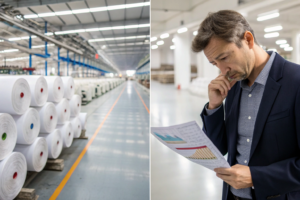
I remember sitting in my office in Keqiao about three years ago, getting a frantic call from a long-time client in Chicago. He'd just received 5,000 finished parkas at his warehouse. The style looked perfect. The fit was right. But after three days on the rack, he noticed something terrible—the black dye from the trim was bleeding onto the light grey shell fabric. He'd already sold half the inventory to a retailer. The return costs, the brand damage, the rush re-make... it nearly bankrupted his season.
That phone call still haunts me. Because here's the truth: by the time your goods land in the US, it's usually too late to fix quality problems. You can argue, you can ask for a refund, but your selling window? That's gone.
So how do you actually verify garment quality before your container leaves Shanghai? Not just a quick visual check, but real, reliable verification that protects your brand and your margins?
Let me walk you through exactly what we do at our facilities and what you should demand from any supplier. Because in 2026, with costs so tight and competition so fierce, one bad shipment can sink a whole year's work.
What are the critical inspection points before shipping?
Most buyers think inspection means walking into a factory, looking at a few random pieces, and saying "looks good, ship it." But that's not inspection—that's a gamble. Real verification is a systematic process that starts weeks before the cartons are sealed.
The critical points follow a logical sequence: raw materials check, in-line production inspection, pre-final inspection, and the final random sampling before loading. Each stage catches different types of defects. Skip one, and you're flying blind. At Shanghai Fumao, we actually have a dedicated pre-shipment inspection team that works independently from our production managers—they report directly to me if something's wrong.
Here's the thing most sourcing guides won't tell you: inspection isn't just about finding bad pieces. It's about understanding the defect rate so you can make an informed decision. AQL—Acceptable Quality Level—is the statistical tool we use. But explaining AQL to a buyer who just wants their goods is tough. So let me break it down simply.
What does AQL 1.5 actually mean for my order?
AQL stands for Acceptable Quality Limit. When we say we inspect to AQL 1.5 for major defects, that's an internationally recognized standard (ISO 2859). It doesn't mean "zero defects." It means that based on statistical sampling, we are 95% confident that the percentage of defective items in the whole shipment does not exceed 1.5%. For a typical order of 5,000 pieces, our inspector might pull 200 samples randomly. If they find 5 defective pieces (2.5%), that's above the limit, and the whole shipment gets flagged for re-inspection or rework. I had a German client last year who insisted on AQL 0.65 for their high-end blazers. That's tough—it requires nearly perfect production—but we did it by slowing down the line and inspecting every single piece at the factory. If you're new to this, reading about how to understand AQL tables for clothing inspection is a great starting point.
Should I inspect fabric rolls or finished garments?
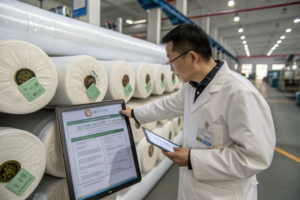
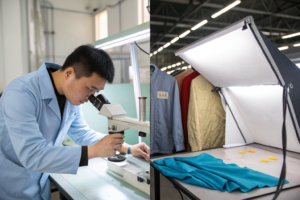
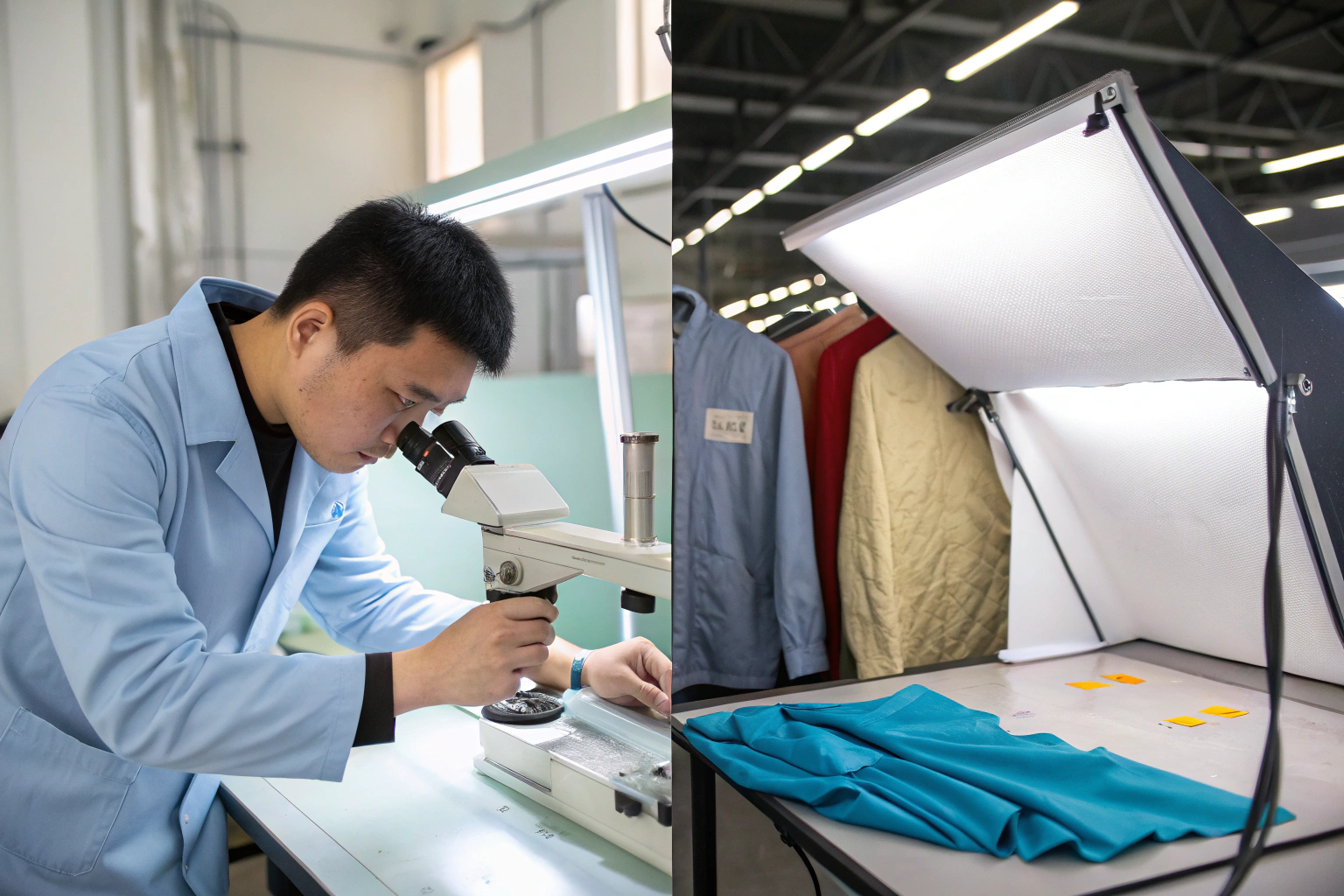
Both, but at different times. Fabric inspection—what we call "four-point system" inspection—happens before cutting. We run every roll over a light table and assign penalty points for defects. If a 100-yard roll has more than 40 points, we reject the whole roll. Why? Because if you cut that defective fabric into garment pieces, you're multiplying the loss. You waste cutting time, sewing time, and trims. Last year, a French lingerie brand asked us to skip fabric inspection to save three days. I refused. We did it anyway. Found 12% of the lace had a running flaw that would've made the bras unwearable. We replaced the rolls before cutting, and they shipped on time. That's the kind of call you need a partner who understands. For deeper insight, this guide on fabric roll inspection using the four-point system explains the math behind it.
How can I use third-party labs to verify compliance?
You've probably heard of SGS, ITS, or Bureau Veritas. These are the big names in testing. But when should you use them? And what tests actually matter for your specific product?
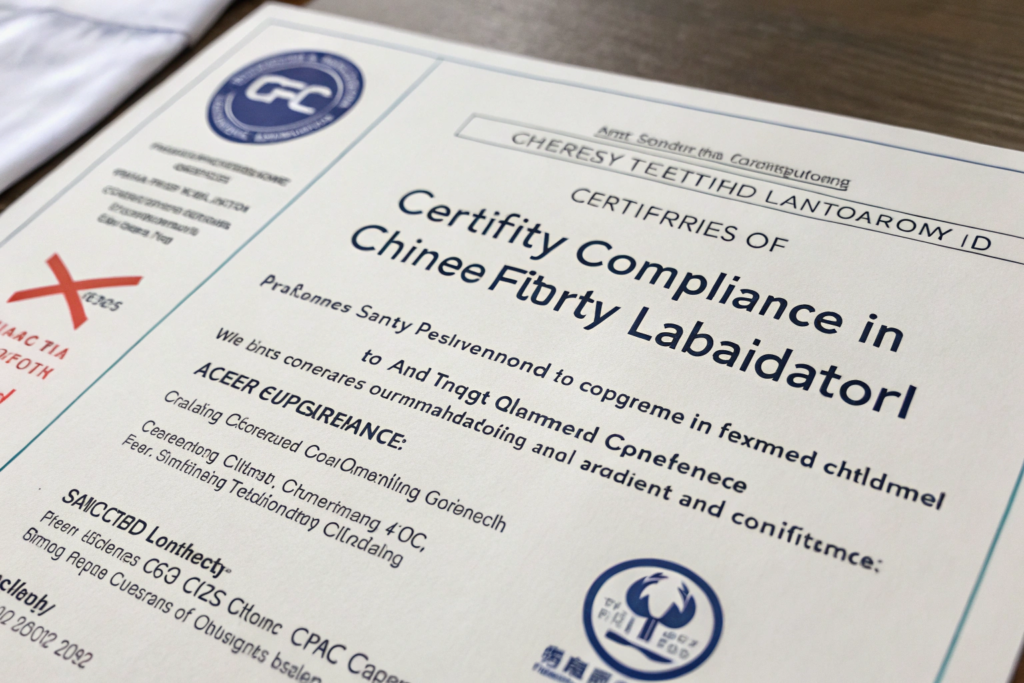
Third-party lab testing is essential for verifying that your garments meet safety, performance, and labeling regulations in your target market. For the US, that means CPSC compliance for children's sleepwear, flammability standards for all clothing, and accurate fiber content labeling (FTC rules). For Europe, it's REACH and OEKO-TEX. A reputable lab gives you a certificate you can show retailers and customs officers.
But here's the nuance: testing takes time. Colorfastness tests take 24-48 hours. Dimensional stability (shrinkage) tests require washing and drying cycles—that's 3-5 days. If you wait until the garments are finished to request testing, you're adding a week to your lead time. Smart buyers request "lab dips" and "fabric test reports" at the fabric stage, before cutting starts.
What tests do US buyers most often require in 2026?
Right now, the hot topics are PFAS (forever chemicals) in water-repellent finishes and lead/phthalates in prints and trims. For children's products, CPSIA compliance is non-negotiable. But the test I see failing most often is simple seam slippage. That's where you pull a seam and the fabric pulls apart at the stitching line. It happens with slippery satins or loose weaves. We test every formalwear fabric for seam slippage because if a guest at a wedding has their seam split while dancing, that dress is ruined—and the brand is blamed. We actually use our own CNAS-accredited lab to screen for this before sending samples to third parties. It saves time and money. For a full list, the Consumer Product Safety Commission's testing requirements page is the authoritative source.
Are there specific certifications that add value beyond compliance?
Yes, absolutely. OEKO-TEX Standard 100 is the baseline for harmful substances. But if you're selling to environmentally conscious markets, GOTS (Global Organic Textile Standard) for organic cotton or GRS (Global Recycled Standard) for recycled materials can justify a higher retail price. These certifications require supply chain traceability—meaning your fabric supplier, dye house, and garment factory all need certificates. We handle this for clients all the time. Just last month, we helped a Swedish brand get their entire puffer jacket line—shell, lining, down, zippers—GRS certified. It took coordination, but now they can put the certification label on their garments and charge a premium. If you're curious, here's the official GRS certification process explained by Textile Exchange.
What should I look for during a factory visit in Shanghai?
I know not every buyer can fly to China. But if you can, or if you're hiring an agent to visit for you, knowing what to look for makes all the difference. A factory tour isn't a vacation—it's an audit.
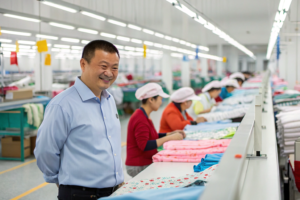
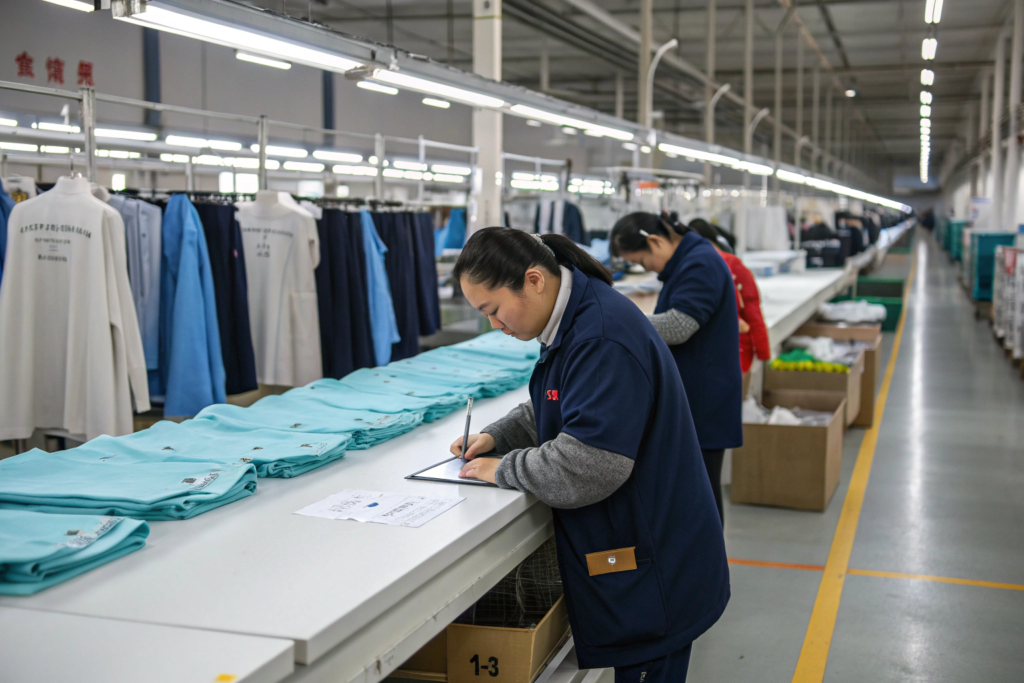
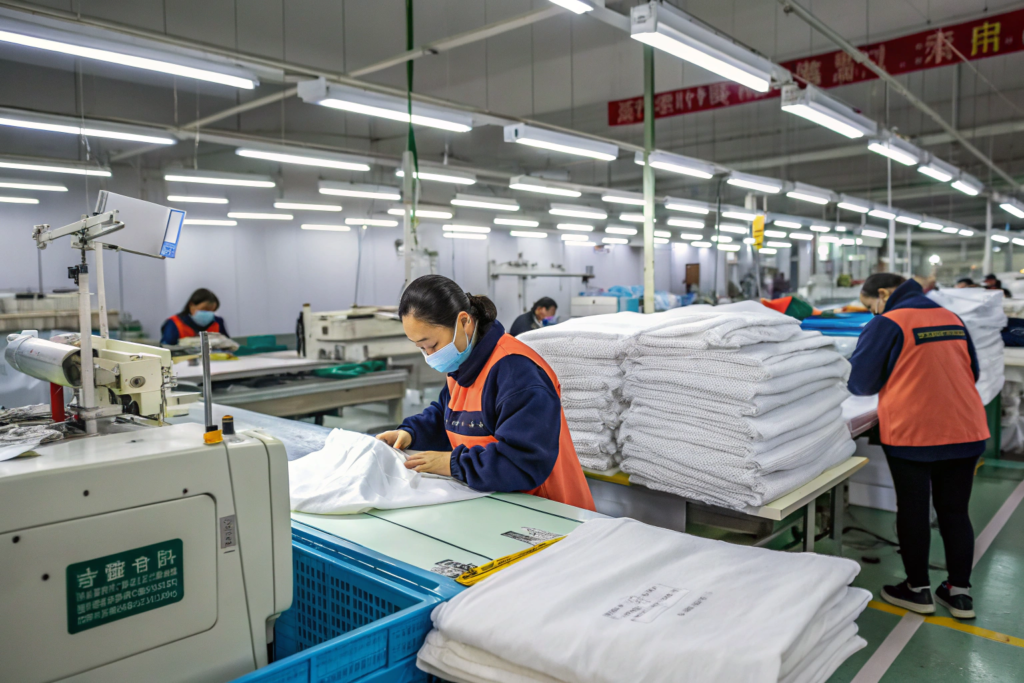
When I walk into a garment factory, I'm not just looking at the machines. I'm looking at the workflow. Are cut pieces stacked neatly with labels? Are workers handling fabric carefully? Is the lighting bright enough to see defects? Is there a dedicated QC station after every key operation? These physical clues tell you more about quality than any sales pitch.
I'll never forget taking a new Australian buyer to a potential supplier in Pudong. The showroom looked great—beautiful samples, nice people. But when we walked the production floor, I noticed fabric rolls stored directly on the concrete floor, some with water stains on the bottom layer. I asked the factory manager about their fabric storage policy. He shrugged. I turned to the buyer and said, "We're leaving." That fabric could have mildew, and once it's cut and sewn, you can't fix it. The buyer trusted me, and later we found a better factory that stored all fabric on racks in a climate-controlled room.
How can I assess a factory's quality management system?
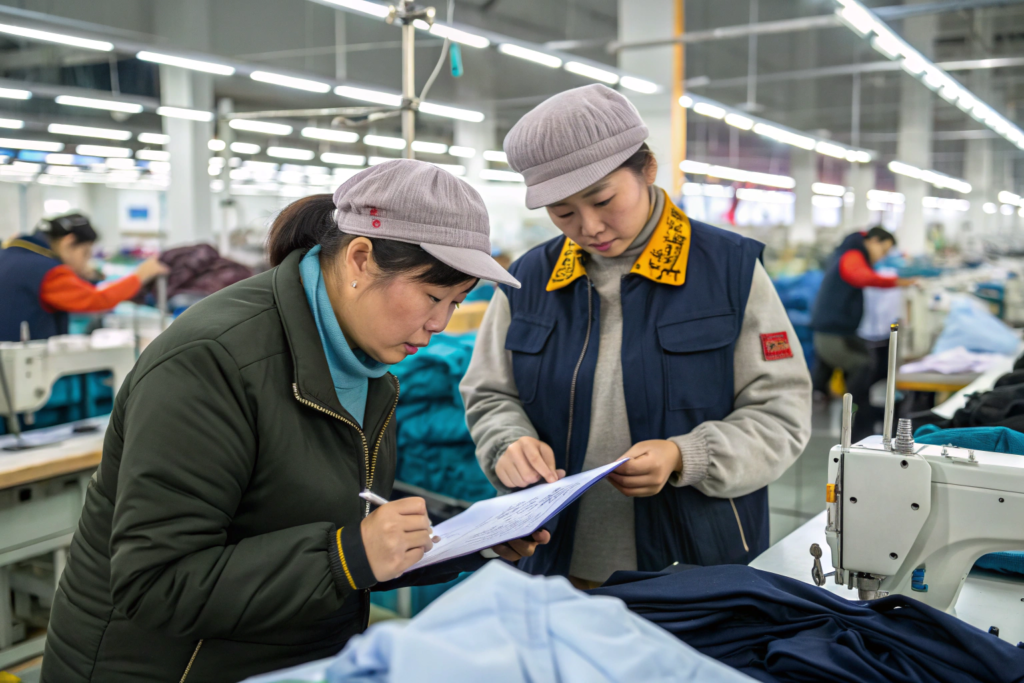
Look for the paperwork. Not the ISO certificate on the wall—everyone has that. I mean the real-time records. Ask to see the defect tracking sheets from yesterday's production. Ask how many machines are down for maintenance. Ask where they keep the "golden samples"—the approved reference samples that workers compare their work to. A well-managed factory can produce these documents in minutes. A poorly managed factory will make excuses. I also ask about their training program for new sewing operators. In Shanghai's competitive labor market, trained workers are gold. Factories that invest in training have lower defect rates. Period. For a deeper dive, this resource on apparel factory quality audit checklists breaks down what third-party auditors actually score.
What red flags should stop me from placing an order?
Bad lighting is a big one. If workers can't see, they can't sew straight. Dirty bathrooms—sounds weird, but if they don't care about their own space, they probably don't care about your garments. Disorganized fabric storage, as I mentioned. And the biggest red flag: a factory that promises delivery dates they clearly can't meet because they're already running at 110% capacity. I've seen factories take orders they can't fulfill just to get the deposit, then subcontract to unvetted workshops. That's how quality disasters happen. Always ask: "How many orders do you have running right now, and where is mine in the schedule?" If they can't show you a production board with your name on it, be careful.
How do I handle quality failures when they're found before shipping?
So the inspection happens. The report comes back. And it's bad. Maybe the color shading is outside the limit, or there's a recurring sewing defect. Now what? Panic? Blame? Those don't fix the problem.
When a quality failure is identified before shipment, you have options. You can reject the entire lot and demand a remake. You can accept the lot with a price concession (a discount) to cover the defect rate. Or you can ask for sorting—where the factory hires extra workers to inspect every single piece and remove the bad ones. The right choice depends on your timeline, your market, and how bad the defects really are.
I had a situation in late 2025 with a Canadian activewear brand. We produced 8,000 leggings. The final inspection showed that 6% had a slight variation in waistband tension—not enough to fail, but enough that the customer might notice. The buyer was furious initially. But we sat down, looked at the actual garments, and agreed on a solution: we discounted the order by 10%, which covered their cost of selling them as "seconds" through an outlet channel. They still made money, and we covered our costs. It was fair. The key was catching it before shipment, not after.
What is the "sorting" process and when does it make sense?
Sorting means exactly what it sounds like: someone goes through every single garment, piece by piece, and separates the good from the bad. It's expensive—you're paying for labor that already should have been done right. But if you absolutely need the goods tomorrow and the defect rate is high but not catastrophic, sorting can save you. We once sorted 3,000 woven shirts for a Japanese client. Took 20 people two full days. Cost us a fortune, but the client got 2,850 perfect shirts and shipped their order. Without sorting, they would have missed their retail launch. The alternative—rejecting everything and waiting 4 weeks for a remake—would have been worse. Just understand that sorting finds defects; it doesn't fix them. The factory should pay for sorting, not you, unless the contract states otherwise. Here's a solid explanation of garment sorting and grading standards used by retailers.
How do I negotiate a fair discount for defective goods?
This is where having an AQL standard in your contract protects you. If you agreed to AQL 1.0 and the inspection finds 2.0% major defects, the shipment fails. Now you negotiate. A typical discount might be 2-3 times the value of the defective percentage, because the defective pieces aren't just worthless—they create handling costs, disposal costs, and potential brand risk. For a 5% defect rate, I've seen discounts of 10-15% agreed. But don't get greedy. If the defects are minor—a loose thread, a slightly crooked label—maybe you accept the goods with a small allowance and move on. The relationship matters more than winning every argument. (Here's a reality check: we once had a buyer demand a 50% discount for a 3% defect rate. We refused, offered to remake the entire order, and they backed down. Fairness goes both ways.)
Conclusion
Verifying garment quality before shipment from Shanghai isn't about finding a magic inspector or buying the most expensive testing package. It's about building a system: fabric checks before cutting, in-line checks during sewing, final random sampling before packing, and third-party verification for compliance. Each layer catches different risks. Each layer gives you confidence.
At Shanghai Fumao, we've spent 20 years refining this system. Our CNAS-accredited lab tests fabrics before they're cut. Our QC team walks the production floor daily, not just at the end. Our independent pre-shipment inspectors report to me directly—so if something's wrong, I know before you do. And when problems happen (because they always do in manufacturing), we solve them together, fairly and fast.
You don't need to be a quality expert. You need a partner who is.
If you're planning your next collection and want to sleep well knowing your quality is locked in before the container leaves, reach out to our Business Director, Elaine. She'll walk you through our inspection protocols, our testing capabilities, and how we customize quality plans for brands like yours. No pressure, just practical talk about protecting your brand.
Email Elaine directly at: elaine@fumaoclothing.com. Let's build something great together—without the quality nightmares.