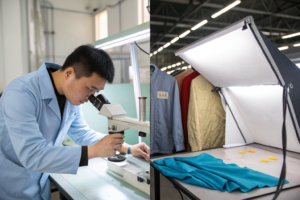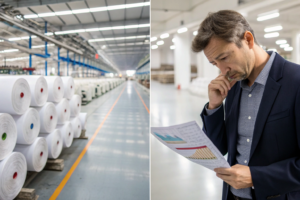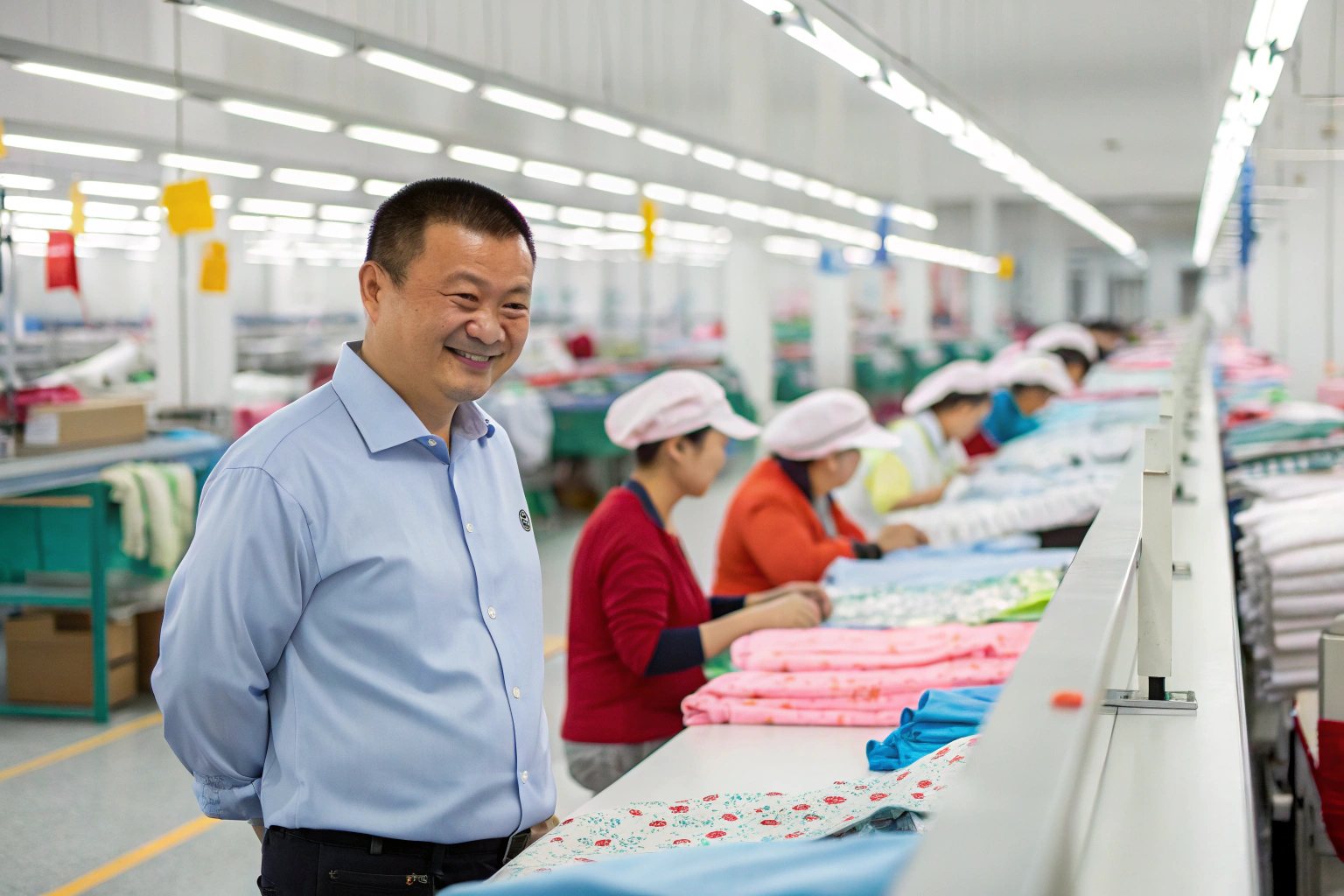
I had a call last month from a children's wear brand in Australia—let's call her Sarah. She'd been sourcing from a small workshop in Guangzhou for three years. Quality was okay, communication was fine. But her business had grown. She was now placing orders for 8,000 pieces per style, and her little workshop couldn't keep up. They'd push her order back, split shipments, sometimes subcontract to other factories without telling her. Quality started slipping. Deliveries got later. She was losing sleep and losing money.
She asked me: "How do I find a real manufacturer? One that's big enough to handle my volume but still cares about my brand?"
That's the sweet spot, isn't it? Not the giant factories that only want 50,000-piece orders. Not the tiny workshops that can't scale. A mid-sized factory with about five production lines—that's the goldilocks zone for growing brands. Enough capacity to handle your growth, but still hungry enough to give you attention.
Finding that specific manufacturer—a wholesale kids wear factory with around five lines—isn't about random Google searches. It's about knowing where to look, what questions to ask, and how to verify they're real. Let me walk you through exactly how to find them.
Where can I find kids wear manufacturers with specific production capacity?
Most buyers start with Alibaba. That's fine for sampling, but for finding a factory with exactly five production lines, you need more targeted methods. The right factories aren't always the ones with the biggest online presence.
The best places to find mid-sized kids wear manufacturers are: specialized trade shows (like CBME in Shanghai or Playtime in Paris), sourcing platforms that allow capacity filtering (Global Sources, Made-in-China), and industry networks (trade associations, LinkedIn connections with sourcing agents). But the most reliable method? Working with an experienced sourcing partner or a vertically integrated supplier who already vets factories for you.
When I'm helping a client find a specific type of factory, I don't just search "kids wear manufacturer." I look in specific clusters. Kids wear production in China is concentrated in certain areas: Huzhou (Zhejiang) for affordable basics, Qingdao (Shandong) for higher-end and export-oriented production, and Guangdong for a mix of everything. A factory with five lines in Huzhou might focus on simple cotton jersey for volume. One in Qingdao might specialize in organic cotton or more complex constructions. Knowing the geography helps narrow the search.
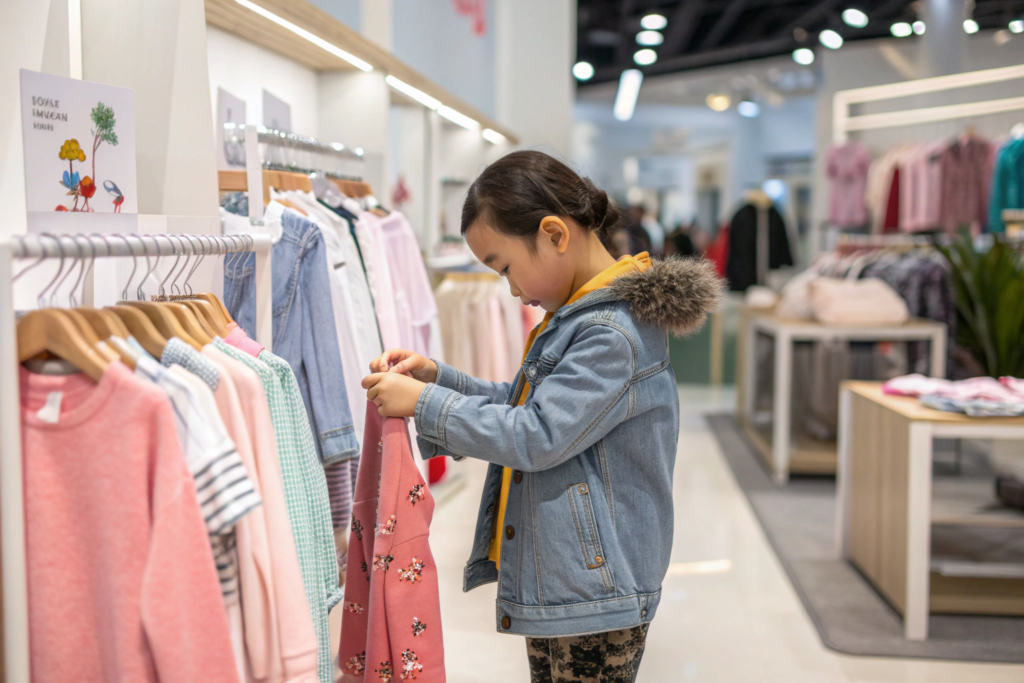
How do I search Alibaba for factories with 5 lines?
Alibaba's search is powerful if you use the right filters. Don't just search "kids wear manufacturer." Instead:
- Search for "children's clothing factory" or "kids apparel supplier"
- Go to the supplier's profile page and look for "Production Capacity"
- Look for "Number of Production Lines" in their company intro
- Check if they're a "Gold Supplier" and how many years they've been on the platform
- Request their "factory audit report" from Alibaba's inspection service
But here's the catch: some factories inflate their numbers. I've seen a factory claim "20 production lines" when they actually have 5 lines and 15 cutting tables. Always verify. The Alibaba supplier verification guide explains how their inspection process works.
What trade shows specialize in kids wear manufacturing?
The biggest one in Asia is CBME China in Shanghai (July each year). It's massive—over 3,000 exhibitors, including fabric suppliers, manufacturers, and brands. You can walk the floor, talk to factory owners directly, and ask "how many lines do you have?" right there. For Europe, Playtime Paris and Pitti Bimbo in Florence are great for finding higher-end manufacturers. In the US, the Children's Club show in New York connects brands with manufacturers. The key to trade shows is preparation: before you go, make a list of exhibitors, mark the ones in your target regions, and schedule meetings. The CBME China official website has exhibitor lists months in advance.
How do I verify a factory actually has 5 production lines?
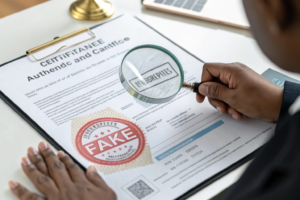
Any factory can say they have five lines. Proving it is harder. But there are ways to verify without flying to China—though flying helps.
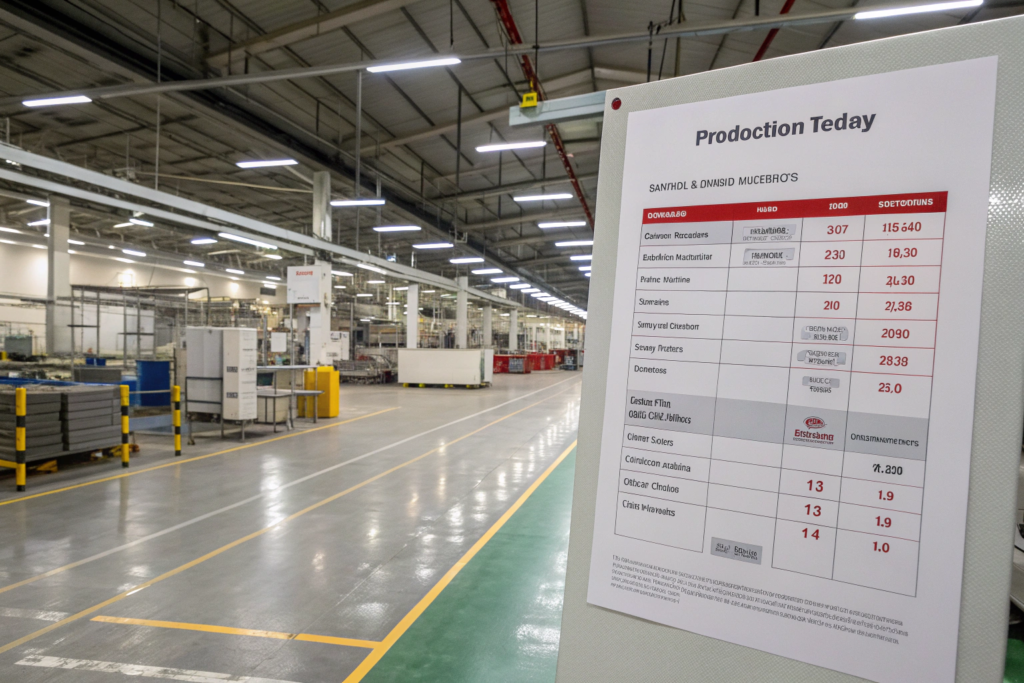
To verify production capacity, ask for: photos or video of the factory floor with today's date visible, a production schedule showing current orders and available capacity, a third-party audit report (like SGS or Bureau Veritas) that includes line counts, and references from other buyers of similar size. If they hesitate to provide any of these, red flag.
I once had a potential client ask me for a video walkthrough of our facility. Not just photos—a live WeChat video call where I walked through every line, showed him the machines running, counted the workers. I did it happily. Because a real factory has nothing to hide. If a supplier says "we can't do video calls" or "our factory is confidential," walk away. Transparency is the cheapest form of trust.
What should I ask in a factory audit report?
A professional audit report (from SGS, QIMA, Bureau Veritas, etc.) should include:
- Facility overview: Total area, number of buildings, age of equipment
- Production capacity: Number of lines, machines per line, monthly output in pieces
- Workforce: Total employees, breakdown by department (cutting, sewing, finishing, QC)
- Quality control: QC stations, inspection processes, AQL standards used
- Social compliance: Working hours, wages, health and safety, child labor checks
Don't just look at the summary—read the findings. An audit might say "5 production lines" in the overview, but in the notes mention "2 lines currently idle due to lack of skilled operators." That's different from 5 fully operational lines. The QIMA guide to factory audits explains what each section means.
How do I calculate if 5 lines can handle my order volume?
This is practical math. A typical garment production line with 20-25 operators can produce:
- Simple t-shirts: 400-600 pieces per day
- Woven shirts: 250-350 pieces per day
- Dresses with details: 150-250 pieces per day
- Outerwear/jackets: 100-200 pieces per day
So a 5-line factory running one shift can produce roughly 1,000-2,500 pieces per day depending on complexity. For an order of 10,000 simple t-shirts, that's 4-5 days of production. For 10,000 jackets, that's 8-10 weeks. When a factory tells you their capacity, ask for their "efficiency rate" (typically 60-80% for decent factories) and "style changeover time" (how long to switch from one style to another). These affect real output. This production capacity calculator for apparel is a useful reference.
What specific capabilities should a kids wear manufacturer have?
Kids wear isn't just smaller adult clothes. The safety requirements, fabric choices, and construction details are different. A factory that makes great women's dresses might struggle with children's pajamas.
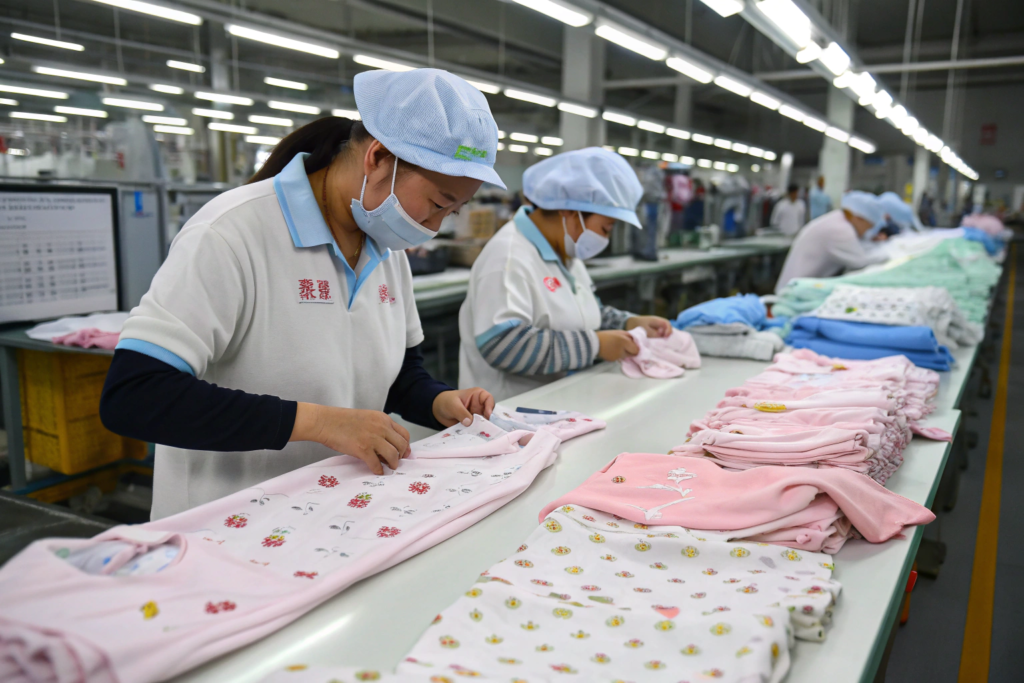
A qualified kids wear manufacturer should have: experience with children's safety standards (CPSIA in US, EN71 in Europe), ability to handle specialized fabrics (organic cotton, flame-retardant finishes), capability to do detailed trims (snaps, elastic, non-toxic prints), and knowledge of labeling requirements for different age groups (infant, toddler, child). They should also have experience with the specific product categories you need—sleepwear, outerwear, school uniforms, etc.
Safety in kids wear is non-negotiable. For infant wear (0-24 months), there are strict rules about snap strength (they must not be a choking hazard), drawstrings (banned in some countries), and flammability (especially for sleepwear). A factory that hasn't dealt with these requirements will make mistakes. I've seen factories use adult-sized snaps on baby onesies—a serious choking risk. You need a factory that knows the difference.
What safety certifications should the factory have?
For US-bound kids wear, demand:
- CPSIA compliance: Testing for lead and phthalates in all components (fabric, thread, snaps, labels)
- 16 CFR Part 1610: General flammability standard
- 16 CFR Part 1615/1616: Children's sleepwear flammability (if applicable)
- ASTM F1816: Safety standard for drawstrings on children's clothing
For EU-bound goods, look for:
- EN 14682: Safety of children's clothing—cords and drawstrings
- EN 71-3: Migration of certain elements (heavy metals in accessible parts)
- OEKO-TEX Standard 100 Class 1 (for babies) or Class 2 (for older kids)
Ask the factory for test reports showing they've passed these for similar products. The CPSC's business guidance for children's products is the definitive US resource.
Can the factory handle organic cotton and specialty fabrics?
If you're selling premium kids wear, you'll likely want organic cotton, bamboo, or other specialty fabrics. Ask the factory:
- Have they worked with organic cotton before?
- Do they have GOTS or OCS certification?
- Can they handle bamboo viscose (which behaves differently in sewing)?
- Do they know how to handle flame-retardant finishes for sleepwear?
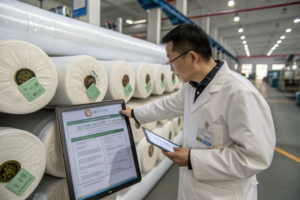
Organic cotton, for example, has shorter fibers than conventional cotton and can be more prone to pilling or shrinkage if not handled correctly. A factory experienced with organic knows to adjust thread tension, needle size, and finishing processes. Without that experience, your "premium organic" garment might look cheap after one wash. The Textile Exchange organic cotton guide explains why processing matters.
How do I evaluate quality control in a mid-sized factory?
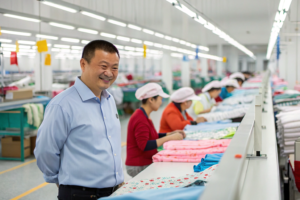
A factory with five lines is big enough to have systems, but small enough that quality can still be personal. The key is how they structure their QC.
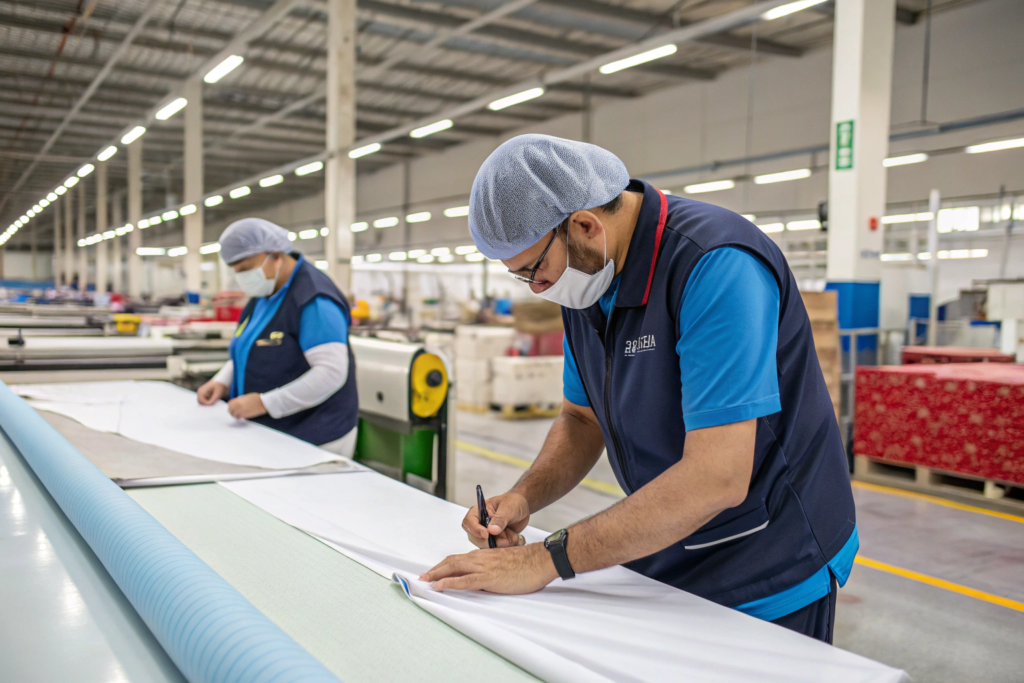
Look for QC at every stage: incoming fabric inspection (before cutting), in-line inspection (during sewing), end-of-line inspection (after finishing), and final random inspection (before packing). Ask who does the inspections—dedicated QC staff or the line supervisors? Dedicated QC is better—they're not rushed to meet production targets. Also ask about their AQL level (usually 1.0 or 1.5 for major defects) and whether they use third-party pre-shipment inspection.
I had a US client who found a factory with five lines, great price, nice samples. But when we visited, we noticed the QC station was just a table at the end of the line where the line supervisor quickly glanced at garments while also managing production. That's a disaster waiting to happen. In a well-run factory, QC is separate from production. The QC team reports to a quality manager, not the production manager. They have the authority to stop the line if they see recurring defects. That separation is critical.
What defect rates are acceptable for kids wear?
For mass-market kids wear, an AQL of 2.5% for major defects is common. For premium or baby wear, you want 1.0% or even 0.65%. But AQL is statistical—it doesn't mean "2.5% of garments can be defective." It means "based on sampling, we are confident the defect rate doesn't exceed 2.5%." The actual tolerance depends on your market. European buyers often demand stricter AQL than US buyers. Discuss this upfront and put it in your contract. The AQL table for garment inspection helps visualize the sampling plans.
How do I ensure consistency across multiple styles?
When you're producing different styles—say, t-shirts, pants, and dresses—consistency is harder. Each style has different sewing operations, different trims, different potential defects. Ask the factory how they manage style changeovers. Do they have documented work instructions for each style? Do they train operators before starting a new style? Do they have a "golden sample" at each workstation for comparison? A factory that treats each style change as a mini-project will give you more consistent quality than one that just switches threads and hopes for the best.
Conclusion
Finding a wholesale kids wear manufacturer with exactly five production lines isn't about luck—it's about targeted searching, smart verification, and knowing what questions to ask. You need a factory with the capacity to grow with you, the safety knowledge to protect your customers, and the quality systems to deliver consistently.
At Shanghai Fumao, we're not a kids wear factory—we're a fabric supplier. But we work with dozens of kids wear manufacturers across China, from small five-line shops to large export factories. We know which ones have GOTS certification, which ones excel at organic bamboo, and which ones have the QC systems to satisfy demanding buyers. When our clients need garment manufacturing, we connect them with vetted partners we've worked with for years.
If you're looking for a kids wear manufacturer and tired of guessing which ones are real, let's talk. We can introduce you to factories we trust, based on your specific needs—five lines, safety certifications, quality standards, the works.
Reach out to our Business Director, Elaine. She coordinates our garment manufacturing partnerships and can help you find the right fit. Email Elaine directly at: elaine@fumaoclothing.com. Let's find your perfect manufacturing partner together.